Fighter Production Numbers Discussion

SlothmanAllen

ACCESS: Confidential
Joined
3 January 2025
Messages
81
Reaction score
196
They really need that 5% of GDP budget to come along, especially in light of this recent Air and Space Forces Magazine article (in conjunction with the Mitchell Institute) that highlights Chinese industrial ramp up to producing as many as 300 manned fighter aircraft per year.

Revealed from Space: China’s Biggest Red Sword Exercise and a Rapid Industrial Buildup

Analysis of commercial satellite imagery indicates China held a major five-week air exercise encompassing eight bases and some 200 aircraft, across a 1,200-nautical mile swath of the country in late 2025.

At a remote PLAAF base used to test and evaluate secretive programs, for example, Dahm noted that in the past six months, the Chinese have built “an additional 60,000 square feet of hangar space and over 300,000 square feet of additional facility space.” He also spotted the prototype sixth-generation J-36 and J-50 fighters in satellite images parked in the open—suggesting the PLA may be deliberately showing off its latest developments.

China’s commercial aerospace industrial base is also growing rapidly, as indicated by comparing satellite images of four facilities belonging to AVIC. Dahm estimated that the Chinese have added 8 million square feet in aircraft manufacturing space since 2021—“more than the entire F-35 manufacturing complex in Fort Worth, Texas,” he noted. That space is on top of what AVIC already had, he added.

“I’d say that starting next year, AVIC will have the capacity to produce 300 fourth- and fifth-generation fighters for the PLA each year,” Dahm said. “Will they? They have the infrastructure. … We’ll have to see. Maybe annual production will cap out at 250 fighters per year, but I seriously doubt if it would be less than that.

“Based on the worst case numbers, the PLA Navy and Air Force will have a fighter force as large as the U.S. fighter force by 2028 that includes all U.S. Navy, Marine Corps, and Air Force fighters. By 2029, China will have the largest fighter force on the planet and will continue to grow.”
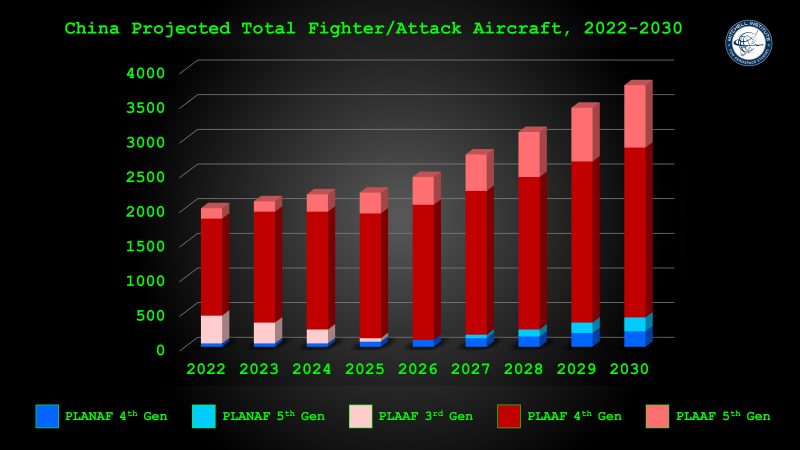
PLA-Fighter-Inventory-Chart-800x450.jpg


If these trends persist, the idea of the US being able to deter China from taking Taiwan by force will probably be non-existent by the mid 2030's.

An absolute minimum of 150 manned fighter aircraft procured per year will be needed. Oh, and there can be no production ramp up and then letting the industrial base atrophy like they did in the 90's against China. So they better start getting ready to replace the F-35 by the mid 2030's with China already flying the J-36 and J-50. I doubt they expect those aircraft to have 30 year lifespans. I expect they will move to replace them with more advanced platforms as soon as is possible.
 
So they better start getting ready to replace the F-35 by the mid 2030's with China already flying the J-36 and J-50. I doubt they expect those aircraft to have 30 year lifespans. I expect they will move to replace them with more advanced platforms as soon as is possible.
Possibly. I also expect them to cancel J-20 and J-35 and move to produce thousands of J-36's each year to quickly recapitalize to an all sixth gen fleet by 2030.
 
Possibly. I also expect them to cancel J-20 and J-35 and move to produce thousands of J-36's each year to quickly recapitalize to an all sixth gen fleet by 2030.
Well I wouldn't be that extreme lol, but I think the clear trend line is that China is capable of producing a massive number of fighter aircraft annually. It could be feasible that they have J-20, J-35, J-36 and J-50 (assuming this is not competing against J-36) in production simultaneously.

The US is letting itself fall dangerously far behind due to budget constraints and a "divest to invest"(?) strategy. They need fighter aircraft now. The era of taking 25-30 year old airframes and upgrading components should be over because they availability of those aircraft is getting abysmal due to the airframe age. They need new F-15 and F-16's (in large numbers) along with well trained maintenance crews and tons of spare parts. F-35 procurement needs to be ramped up as well.

This requires the budget to do so though. So unless they get a big budget bump I doubt they can make any meaningful progress to recapitalizing the Air Force.
 
I highly doubt anyone realistically expects that
And even if production was possible how many aircrew can you convert in that same time. There is not a great amount of value to mass producing an airframe you don't have the pilots to fly it. Yes you can AI a portion of that fleet but a large airframe like the J-36 does not seem like a good candidate for that.

I'm more worried about what China can do with a CCA fleet in 2035, that is where the industrial capacity can overcome the US's ability to field munitions capable of defeating them.
The US is letting itself fall dangerously far behind due to budget constraints and a "divest to invest"(?) strategy. They need fighter aircraft now. The era of taking 25-30 year old airframes and upgrading components should be over because they availability of those aircraft is getting abysmal due to the airframe age. They need new F-15 and F-16's (in large numbers) along with well trained maintenance crews and tons of spare parts. F-35 procurement needs to be ramped up as well.

This requires the budget to do so though. So unless they get a big budget bump I doubt they can make any meaningful progress to recapitalizing the Air Force.
Even with money there is an industrial limit to the number of airframes that can be manufactured in the US today, you can't simply say build more and it happens next year. This recent Def Aero podcast gives an insight into just one critical industrial limiter. So while the US could throw money at the problem industrially it isn't going to change for likely 5 to 7 years.
 
Possibly. I also expect them to cancel J-20 and J-35 and move to produce thousands of J-36's each year to quickly recapitalize to an all sixth gen fleet by 2030.
Greatly disagree. Even if the PLAAF was going to cancel J-20 and J-35 for J-36, it would be foolish to do so before the J-36 reaches IOC in 5-10 years. And while the Chinese do misread situations, they're not foolish.

I'm assuming
  • J-20s replacing their J-11s, Su-27s and Su-35s; ~800 total bought
  • J-35s replacing J-10s, JH-7s, J-16, and Su-30s; ~1300 total bought
  • J-36s equal in number to the J-20 buy as a fleet expansion; ~300-800 total bought.
2400-2900 aircraft, not counting CCAs, in the PLAAF.

I am further assuming 2 squadrons of J-35s per carrier and 2 squadrons of J-50s per carrier in the PLANAF.
 
If these trends persist, the idea of the US being able to deter China from taking Taiwan by force will probably be non-existent by the mid 2030's.

This ignores the fact that the PRC has intractable and worsening demographic issues (Not to mention severe and worsening economic problems too).
 
Even with money there is an industrial limit to the number of airframes that can be manufactured in the US today, you can't simply say build more and it happens next year.
The graph I posted above factors that in. Both Lockheed and Boeing have committed to increasing F-16 and F-15 production to levels that are stated in my near term buy years. At the peak it has the USAF buying about 120 aircraft a year.
 
This ignores the fact that the PRC has intractable and worsening demographic issues (Not to mention severe and worsening economic problems too).
You really gonna rely on that (especially for the next ten years..) when they still have a massive population with huge investment into automation? Trends are not pointing to the PLA magically stopping their massive buildup and technological advances, even if they are no longer having double digit economic growth.
 
Greatly disagree. Even if the PLAAF was going to cancel J-20 and J-35 for J-36, it would be foolish to do so before the J-36 reaches IOC in 5-10 years. And while the Chinese do misread situations, they're not foolish.

I'm assuming
  • J-20s replacing their J-11s, Su-27s and Su-35s; ~800 total bought
  • J-35s replacing J-10s, JH-7s, J-16, and Su-30s; ~1300 total bought
  • J-36s equal in number to the J-20 buy as a fleet expansion; ~300-800 total bought.

Given the pace of technology advancement by China the two sixth generation fighters should be ready in a couple of years allowing the sunsetting of J-20 and J-35 programs. Why buy obsolete 5th gen fighters with inferior performance across the board. Your numbers are mostly right but its going to be 2400-2900 sixth gen birds with 3-4 factories producing them at 100-200 per factory. So maybe not by 2030 but perhaps by 2032-2035. I also expect a larger four or five engine 6+ generation aircraft but probably later in 2033 or so.
 
I'm more worried about what China can do with a CCA fleet in 2035, that is where the industrial capacity can overcome the US's ability to field munitions capable of defeating them.
Ding ding ding. This is it. Yet, there is no answer to countering that 2035+ fleet besides leaning into more and cheaper CCAs.

This is why I'm not completely on board with just buying more 4th gen fighters to fill out fleets right now. The use for the high end fight is already clear. But If you are fighting a low intensity conflict, or punching down against countries that can't fight back, a smaller force of 4/5 gen aircraft + CCAs should be more than enough especially now that ground attack CCAs are coming. More extensive use of CCAs would also help development and the UAS industry.

Yes - we need to purchase more aircraft for the immediate future, but if you have to sustain them all the way to when you should be dumping money into CCAs and 5/6th gen aircraft, then that also becomes problematic. I'd hate to see the AF have to fight congress again because some congressman refuses to let the USAF retire aircraft that aren't going to be any use in a peer fight.
 
If these trends persist, the idea of the US being able to deter China from taking Taiwan by force will probably be non-existent by the mid 2030's.
You don't need to be numerically superior to deter. This may mean you'll likely lose all out war, but this isn't quite the same.
Greatly disagree. Even if the PLAAF was going to cancel J-20 and J-35 for J-36, it would be foolish to do so before the J-36 reaches IOC in 5-10 years. And while the Chinese do misread situations, they're not foolish.
Aircraft usually goes into production way before IOC. And J-36/SH are already flying for over a year, with mulptiple airframes in testing. Testing often stretches longer, but expectation that by 2030 both can reach service in operationally significant numbers is totally reasonable.
  • J-20s replacing their J-11s, Su-27s and Su-35s; ~800 total bought
  • J-35s replacing J-10s, JH-7s, J-16, and Su-30s; ~1300 total bought
J-16 have juuust about finished procurement, they aren't going anywhere anytime soon. While 2000s aircraft will probably start falling out of the fleet soon enough, overall with current production numbers we're firmly talking about fleet expansion - soon beyond US numbers, with (also soon) far more modern and likely capable fleet type to type.
Yes - we need to purchase more aircraft for the immediate future, but if you have to sustain them all the way to when you should be dumping money into CCAs and 5/6th gen aircraft, then that also becomes problematic.
Note that area where PLAAF has most overhang is quantity of quality "payload carriers" - aka 4th gen aircraft.
Something needs to generate sorties with payloads, even if payloads can be tasked with delivering themselves, and this fleet is nowhere near mere “trucks".
Part of the solution is EX, part is modernization of fleet(F-16 most importantly), but this isn't quite the same as thorough new builds China operates.
 
Last edited:
You really gonna rely on that (especially for the next ten years..) when they still have a massive population with huge investment into automation?

That's not what I was pointing out, it needs to be factored in because China's population is rapidly ageing so manpower levels in the PLA will start to become a serious issue within the next few years (I suspect probably around 2030).
 
Last edited:
Aircraft usually goes into production way before IOC. And J-36/SH are already flying for over a year, with mulptiple airframes in testing. Testing often stretches longer, but expectation that by 2030 both can reach service in operationally significant numbers is totally reasonable.
Correct, the J-36 will be in production for a few years while the others are as well.

But I'm saying you don't stop production and leave a gap in deliveries. You follow out the existing plan, and accept deliveries of current production until the new design is delivered. As in last J-20 or J-35 delivered on 31 Jan, first group of J-36 delivered on 1 Feb. (or a tapered delivery, depending)


J-16 have juuust about finished procurement, they aren't going anywhere anytime soon. While 2000s aircraft will probably start falling out of the fleet soon enough, overall with current production numbers we're firmly talking about fleet expansion - soon beyond US numbers, with (also soon) far more modern and likely capable fleet type to type.
Right. J-16s will likely be the last type to be replaced by J-35s, in ~10-15 maybe 20 years.
 
The graph I posted above factors that in. Both Lockheed and Boeing have committed to increasing F-16 and F-15 production to levels that are stated in my near term buy years.
Per the podcast I linked US forge presses are already at max capacity. With F-47 coming online in that same timeframe and with B-21 increasing production it is highly unlikely that is factored in...
At the peak it has the USAF buying about 120 aircraft a year.
120 tactical aircraft a year, not including F-47, B-21 and F/A-XX or from a forge press perspective factoring in Boeing's desire to increase production on 737Max and 787 lines.
 
You don't need to be numerically superior to deter. This may mean you'll likely lose all out war, but this isn't quite the same.
USA also needs to bring its numerical force half way around the world, while China's in its own backyard.

If you are decreasing numerical mass for more quality, you need to invest a lot more to bring much more significant part of that now smaller force, much faster than current projection capability allows for latest high tech complex systems, also to sustain.
 
Right. J-16s will likely be the last type to be replaced by J-35s, in ~10-15 maybe 20 years.
I personally don't think J-35A is J-16 replacement at all, just like J-35 is not J-15T replacement (as they were introduced and are produced effectively in parallel, 1-1.5 year of difference at most).

Future PLAAF structure is not parallel to current one, but IMHO most direct J-16 replacements are likely to be J-36s.
J-35A is roughly same thing to J-16 as F-35 blk.IV to F-15EX. Aka, J-16 is substantially more internal fuel, two seats, larger radar, and more heavy duty pylons with lesser weight/size restrictions.

J-36 is mostly a match to this description. J-35(A) is more of general purpose, 1st day multirole fighter/sead bird.
 
I personally don't think J-35A is J-16 replacement at all, just like J-35 is not J-15T replacement (as they were introduced and are produced effectively in parallel, 1-1.5 year of difference at most).

Future PLAAF structure is not parallel to current one, but IMHO most direct J-16 replacements are likely to be J-36s.
J-35A is roughly same thing to J-16 as F-35 blk.IV to F-15EX. Aka, J-16 is substantially more internal fuel, two seats, larger radar, and more heavy duty pylons with lesser weight/size restrictions.

J-36 is mostly a match to this description. J-35(A) is more of general purpose, 1st day multirole fighter/sead bird.
I view J-36 as creating an entirely new capability that was absent before, that is long range strike aircraft/tactical high speed fighter-bomber.

upgrade over legacy ones like Su34, or even older F111.

Though Ofcourse, J36 is much more than just that, with its future sensor suite.

But

I beleive J-50 to be more suitable as a direct replacement for J15,J16.
( P.S. Still beleive J-50 is carrier oriented, no folding wings in current prototype tho.)
 
I view J-36 as creating an entirely new capability that was absent before, that is long range strike aircraft/tactical high speed fighter-bomber.

upgrade over legacy ones like Su34, or even older F111.

Though Ofcourse, J36 is much more than just that, with its future sensor suite.

But

I beleive J-50 to be more suitable as a direct replacement for J15,J16.
( P.S. Still beleive J-50 is carrier oriented, no folding wings in current prototype tho.)
Well, Su-27 itself was a revolution in its own right - how much you can push a fully combat capable jet out. J-36 in this sense is more, further, capitalizing on 60 years of development, and built for a different theater. Su-30(i.e. J-16) capitalized on this independent remote ops, which went from pure remote area air patrol to multirole.
But Soviet Union, while also interested in Pacific, adapted for different part of Pacific, with overall lower ranges and patrol requirements. Soviet long range interceptor designs developed into a very different direction from J-36.
China designs very much for its own needs indeed. IMHO, the closest direct analogy is not even flankers, nor even jets. It's G3M and G4M - long range Rikko torpedo bombers, which even had their crews arranged in a ~ship like organization for action over open pacific. J-36 of course isn't just (or even primarily) a bomber.
I beleive J-50 to be more suitable as a direct replacement for J15,J16.
( P.S. Still beleive J-50 is carrier oriented, no folding wings in current prototype tho.)
J-50 is ultimately same bay length as J-20 and J-35. You won't fit inside neither PL-17, nor YJ-15, nor 2PZD-21.
Plus it's a single seater.

I.e. if we view it in replacement matrix (however applicable it is), it is quite likely to be flanker(J-11BG, Su-35) replacement, but not a twin one. Also a long range loitering aircraft, able to effectively operate behind Taiwan from mainland for example, but in a more known single seat flanker fashion.
Interesting part is of course that J-15T remains under a question mark. J-36T? :)
Removed J-36/XDS part under spoiler, we may consider moving to Chengdu thread. Overall, my point is J-35(aka direct F-35 counterpart) is probably out of this equation, as J-XDS is more of a F-47 counterpart as it appears... For F-35 new generation aircraf are either a threat or, if things turn badly, obsolescence criteria(for fighter role).
Even now it's honestly not pretty, as J-35(A) in all likelihood is a non-delayed blk.4 F-35, which significantly outdeploys it. With same 1 cycle delay for NGAD in the future. Not a disaster, just US in a usual Soviet position of perpetual red ketchup.
 
Last edited:
Per the podcast I linked US forge presses are already at max capacity. With F-47 coming online in that same timeframe and with B-21 increasing production it is highly unlikely that is factored in...
I don't know details down to forge presses, but one would think both Boeing and Lockheed's leadership would know what capacity they and their supply base have when they set on a path towards 48 aircraft per year and 24 aircraft per year respectively for the F-16 and F-15. Boeing has also said they can go further then that. So now the only question is if they achieve those numbers in 2026, 2027 or later. Both have goals to meet those rates in the 2026-27 timeframe but again we'll see where they actually end up. So you have 156 f-35's a year, plus 72 f-16/15s a year for a total of 228 aircraft per year. If Boeing is asked/funded to ramp F-15 from 24 to 36 a year, it we can be sitting at 240.

My scenario (in the graph above) maxes out procurement at 120 aircraft a year in FY-30, FY-31 and FY-32 (three procurement years) with 60 F-35's, 24 F-16's, and 36 F-15EX's procured in FY30, 72 F-35's, and 24 F-15 and F-16's (each) in FY31 and 32 allowing for three years of investments into achieving the stated ramp levels from Boeing and Lockheed Martin. I don't have the USAF getting to 72 F-35's per year until FY31 buy year given the export orders that LM has to deliver on. I think all of this is doable and you can always remove a dozen or so from the top numbers to make it more realistic. I did this exercise after the USAF itself released its tactical fighter report wanting hundreds of additional fighters over the next ten years relative to its current aircraft inventory and trajectory.

Per the podcast I linked US forge presses are already at max capacity. With F-47 coming online in that same timeframe and with B-21 increasing production it is highly unlikely that is factored in...

120 tactical aircraft a year, not including F-47, B-21 and F/A-XX or from a forge press perspective factoring in Boeing's desire to increase production on 737Max and 787 lines.

Here's an article from 2023 about Lockheed aiming for 48 F-16's per year. They are running behind but I understand that is still there goal. The prior administration even dispatched a senior OSD official to ensure they were focusing on this.

Here's an article from this year regarding Boeing doubling production to 24 F-15EX a year.

So now the question is what can the DOD do to invest and ensure these two companies reach those stated plans over the next 2-3 years. And whether Boeing can ramp further from 2 a month on EX to 2.5 or 3 a month by the end of the decade. And whether Lockheed can hold the F-35 steady at 156 per year with slated Blk 4 and APG-85 (NG) quantities to meet USAF needs. I am not talking about crazy Reagan era build up numbers here. I'm mostly working with what the stated ramp plans are with the exception of the EX which I think needs to scale from 2/month to 3/month given its going to be high up on the USAFs (ANG and perhaps active AF) wish list if more funds for tactical aircraft were made available

In my assumptions, I also don't factor F-47 front line deliveries occuring before FY-2033 which also determines when the AF begins buying it in higher quantities. Which is why there's a dip in F-35 procurement, and sunsetting of F-15EX procurement (and in a couple of years after that F-16 procruement) to make room for funds to go to buy F-47s at 18-24 per year or whatever rate they have planned.
 
Last edited:
I think its an interesting discussion to have. China's industrial rise and now dominance is going to reshape the global order in the decades to come. Social, economic, and political realities may make it impossible for the US to effectively respond.

Just look at the facilities the Chinese have constructed in the last ~5 years in the article I linked at the top of the page! Those are massive investments in future aircraft production capacity, so we have to assume they are going to take advantage of it.

The Chinese control basically every aspect of modern global manufacturing from taking it out of the ground, refining it and turning it into a final high quality product. Then look at all of the research their Universities are producing and dominating virtually every field. All of this stuff is related and works to give them a tremendous advantage.

Without a massive US defense boost (which might not be fiscally sustainable), I am not sure if they US will remain competitive past the late 2030's. China just has too many positive trend lines going in their favour.
 
The US had a great opportunity to isolate China and set the building blocks for a Pacific NATO back in 2015, but fumbled it big by killing the TPP. Theres no way we can increase our already bloated defense spending and most of the new spending will go to Golden Dome and border security. Best we can hope for is China's demographic collapse hits their defense budget.
 
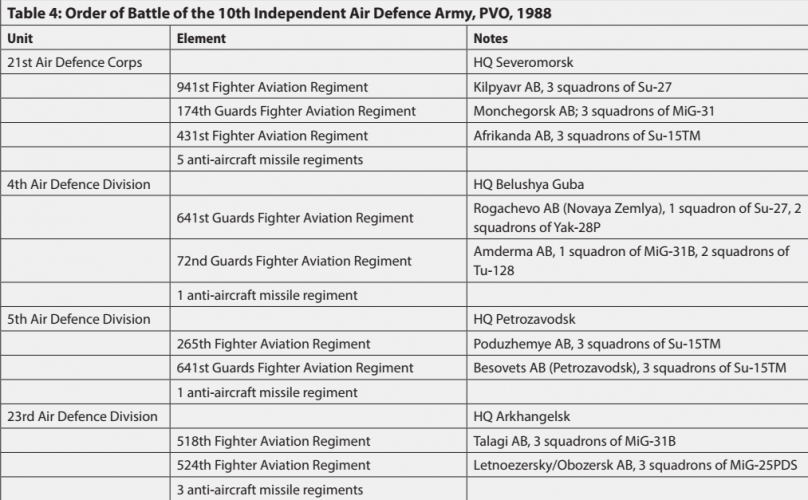
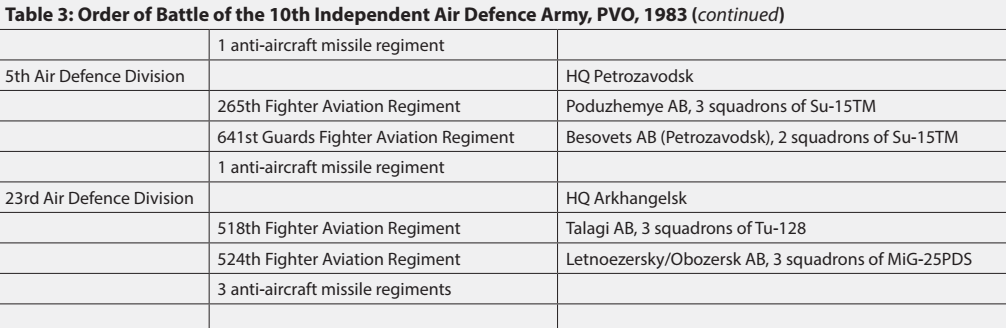
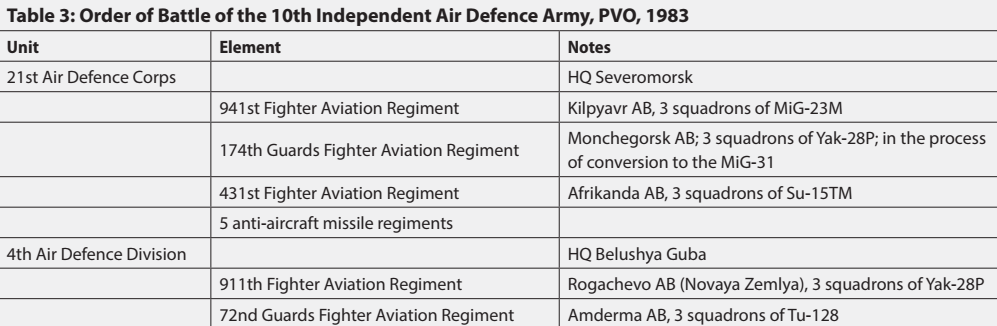
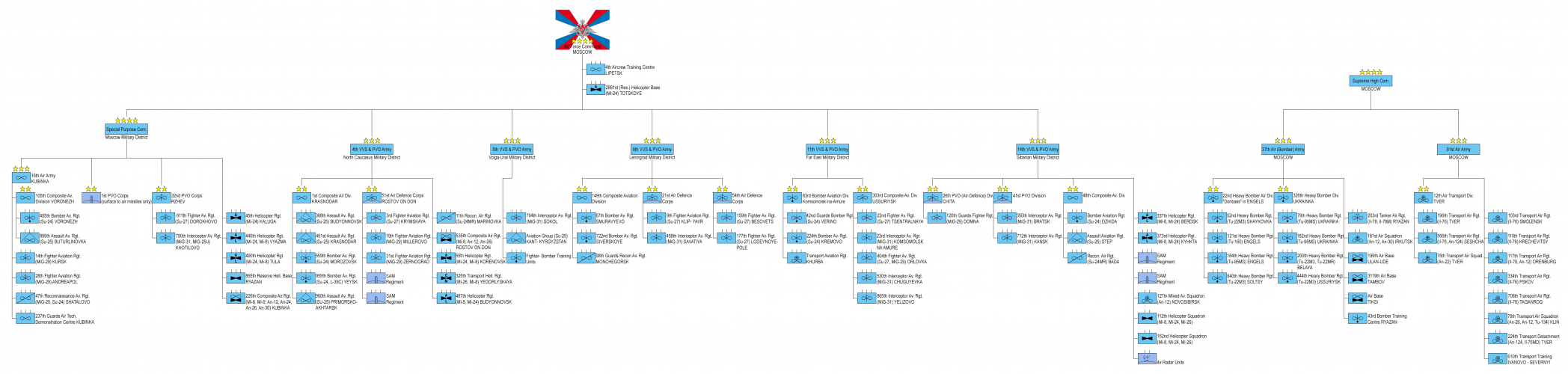
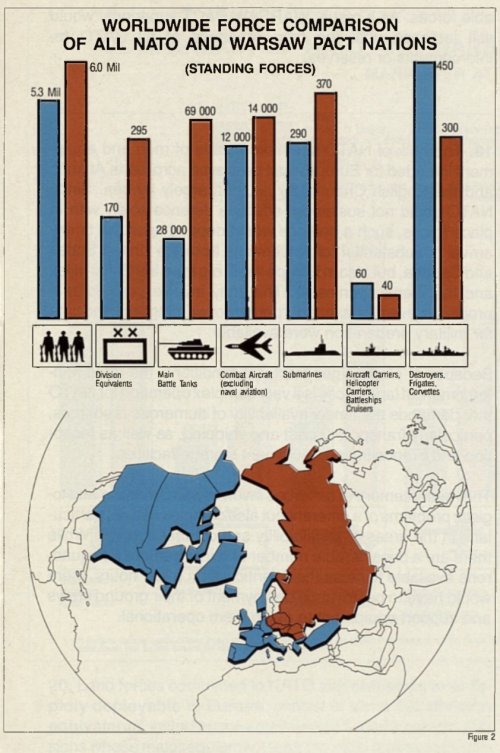
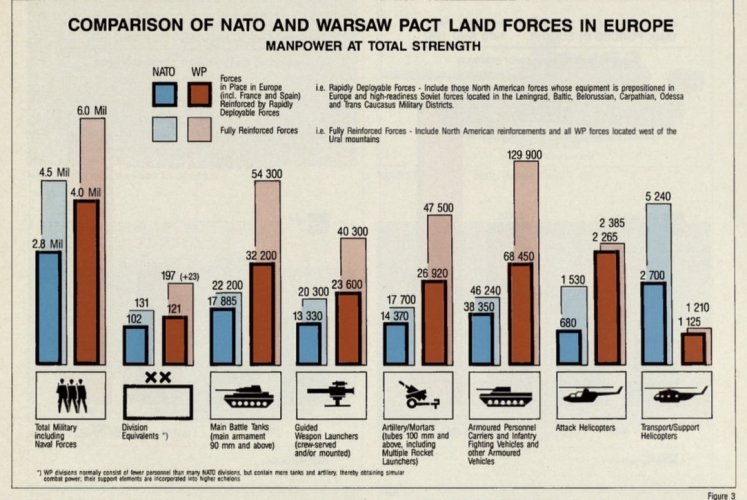
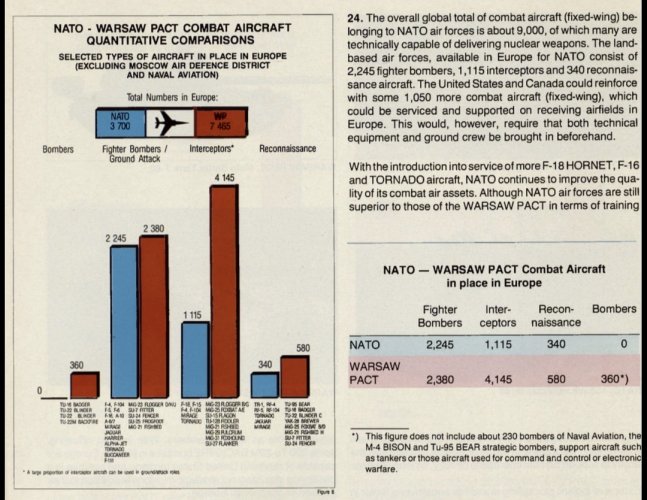
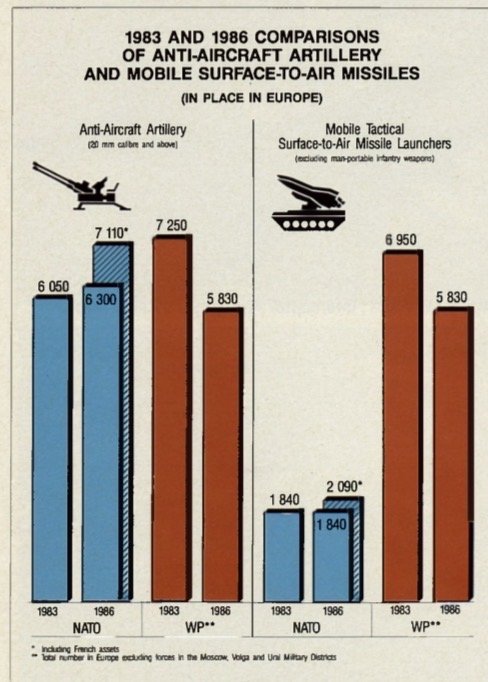
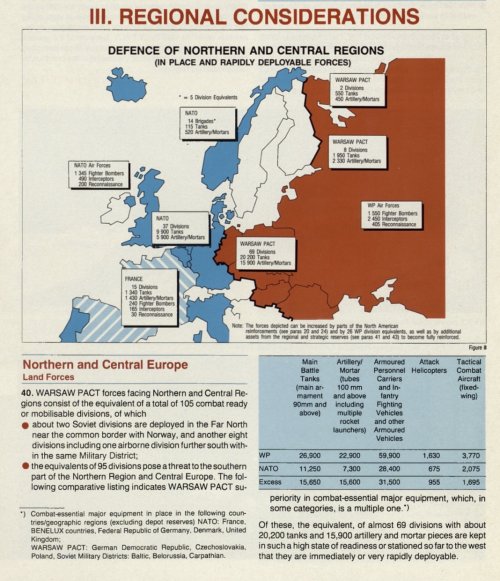
I hope late Cold War stuff okay.

Stuff with red and blue bars with beige background are from NATO vs Warsaw pact 1987 force comparison

Internal Soviet documents show that they were not worried about MiG-23MLA vs F-16 due to BVR armament
 

Attachments

  • IMG_9741.png
    IMG_9741.png
    136.9 KB · Views: 6
  • IMG_9742.png
    IMG_9742.png
    69.8 KB · Views: 6
  • IMG_9743.png
    IMG_9743.png
    74.4 KB · Views: 5
  • IMG_9745.png
    IMG_9745.png
    295.5 KB · Views: 5
  • IMG_9746.jpeg
    IMG_9746.jpeg
    240.6 KB · Views: 6
  • IMG_9747.jpeg
    IMG_9747.jpeg
    194 KB · Views: 6
  • IMG_9748.jpeg
    IMG_9748.jpeg
    244.8 KB · Views: 6
  • IMG_9749.jpeg
    IMG_9749.jpeg
    85.9 KB · Views: 6
  • IMG_9750.jpeg
    IMG_9750.jpeg
    359.5 KB · Views: 5
Removed J-36/XDS part under spoiler, we may consider moving to Chengdu thread. Overall, my point is J-35(aka direct F-35 counterpart) is probably out of this equation, as J-XDS is more of a F-47 counterpart as it appears... For F-35 new generation aircraf are either a threat or, if things turn badly, obsolescence criteria(for fighter role).
Even now it's honestly not pretty, as J-35(A) in all likelihood is a non-delayed blk.4 F-35, which significantly outdeploys it. With same 1 cycle delay for NGAD in the future. Not a disaster, just US in a usual Soviet position of perpetual red ketchup.
You do know that J-35 is the size of a Su-57, right?
 
You do know that J-35 is the size of a Su-57, right?
You must be joking. It is 25% longer almost and weighs more then twice as much empty or at max.

J-35 uses an engine of same size class as RD-33, F-404, it is medium weight fighter like MiG-29/F-16/18 and now F-35.
 
It is not; ~50% less installed power.
J-35 is more powerful than one engine from F-35 - but it flies on two engines.
So, do you mean to write power and not size? Becuase more thrust does not make a plane larger or a larger size class

Regardless. If we consider original engine, each J-35 engine has less then 80% the thrust of each Su-57 engine. 70% if we consider the new AL-51 engine. You must be facetious or mistaken.
 

Similar threads

Back
Top Bottom