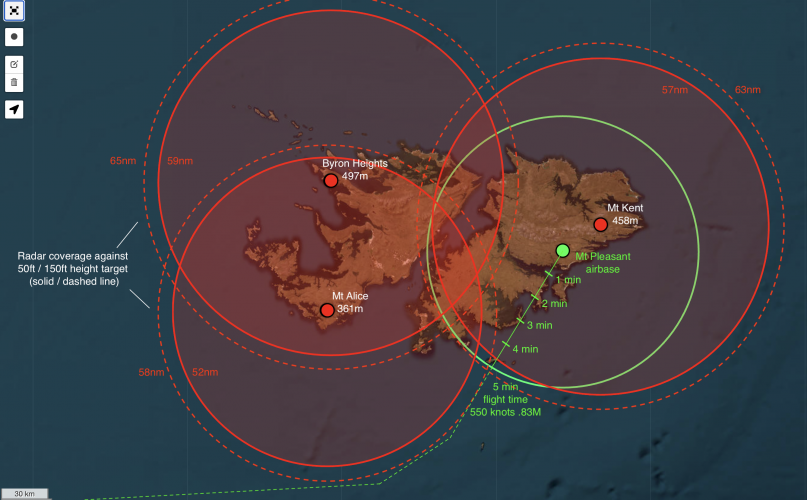
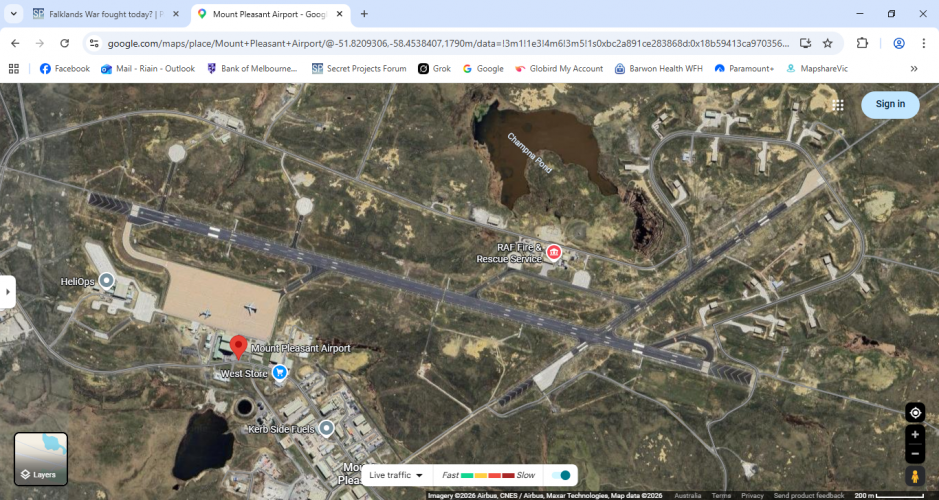
One flight of 4 down each runway, and maybe two flights across the ramp on the west end.
Some thoughts from my extensive research on this topic.
1. Damaging the 2 runways through direct attack is likely too dangerous due to the SAM defenses which would prevent any overflight. This method would require sophisticated anti-runway cruise missiles with submunitions.
2. Also typically runway attacks are at an angle, aiming for a "cut". This enhances chances of survival but the number of cuts required to prevent Typhoons from short take offs would be prohibitive... the long runway alone would need 6 cuts, the short runway 3 cuts, all perfectly positioned. More in practice to account for bombing accuracy, in flight aborts, and aircraft losses.
3. The better option by far is to hit the 3 Typhoons directly, if you can determine where they are located. There are 20 possibilities (16 hardened aircraft shelters and 4 QRA pads). However it's unlikely that they are all in regular use, so observation by human assets or drones might help pinpoint the Typhoons' locations or detect patterns that could simplify the targeting problem to <10 aimpoints. This still requires a 250lb smart munition with 20nm+ standoff range, ideally powered to reduce time of flight (e.g. Spice 250ER).
4. Hitting the Typhoons on the ground also requires the ability to destroy QRA aircraft in the event that they are able to start taxiing. The mobile targeting problem is significantly harder as it requires either (a) very smart munitions with imaging seekers, (b) laser designation from a ground observer with direct line of sight, or (c) a ground team with fiber-optic drones, loitering munitions or NLOS missiles (e.g. Spike) that can find and hit mobile targets from a safe distance outside the base perimeter. The first two options are probably very hard, the last option being the likely best course of action.
5. If you can combine air attack against the hardened shelters and QRA pads and a ground team against taxiing aircraft, chances of success increase even with only a small strike package of ~4 aircraft (each with 4-6 smart munitions). This is important as any major preparations or deployments at Argentine airbases could raise the alarm, whereas a flight of 4 aircraft might look like a regular training mission.
6. Range limitations can be reduced by flying the return leg at high altitude, with air refueling closer to home. The outbound leg has to be flown in radio silence and at progressively lower altitude. Buddy refueling might still be an option.
7. Rio Grande airport in Tierra del Fuego is the closest base... 700nm round trip. Other options would add 60-100nm round trip. However like most Argentine airbases it combines civilian flights and is right next to a town so any significant air operations might be noticed, especially a very loud night time departure of 4+ jets. The Argentinians would have to take the risk and hope that any alarm would not reach RAF Mt Pleasant in time.