Exocet missile - operational use

Is there any detailed information out there and/or any videos dealing with the MM40Block3's new launch-booster?
 
View: https://www.youtube.com/watch?v=8elfKsYXLW0


Saw the Exocet Block 3 launch in the above video.... I am amazed at how sharp a right turn it made just after launch while the booster was still burning .....

Is the booster equipped with TVC? I do not recall that there is TVC used on Exocet booster, and is it possible to achieve such high G turn using aerodynamic fins alone??
 
Regarding land based Exocet installations, there was an interesting late Cold War one for Gibraltar, to defend it from both the Soviets and the Spanish.

https://thinpinstripedline.blogspot.com/2026/02/defending-rock-from-spanish-invasion.html
Relevant extract:
After the end of the Falklands War the UK continued to be concerned about the defence of Gibraltar, from both the risk from an unauthorised Spanish ‘adventure’ and that of Soviet attack in general war. For several years after the war ended, the RAF maintained a Jaguar detachment of two aircraft in Gibraltar to provide an immediate close air support capability, while the Royal Navy kept a Lynx with anti-ship missiles and surveillance equipment, to both monitor passing Soviet naval vessels and defend against any Spanish amphibious ships.

The mid-1980s was a politically complex time in bilateral relations, with Spain moving to democracy and joining NATO and the EU. The UK was keen to improve the relationship but remained concerned about the risk from a rogue Spanish commander attacking. The presence of the Jaguar and Lynx detachments were seen as timely and effective, but they imposed a significant operational burden on the Jaguar force, which was committed to operations in central Germany. The RAF was keen to end the detachment, while the CINC of Gibraltar wanted reassurance that in an attack the UK could defend the Rock.

This led to discussions in the MOD around how to balance off a reduction in commitments, ensure that the removal of the Jaguars didn’t send the wrong signals to Spain about UK commitment to Gibraltar, while also enhancing the overall defences locally. Much of this was non contentious, for example stockpiling more NBC suits and opening a NATO operations centre, but there was a real challenge with coastal defence.

An ongoing concern was the lack of credible anti-ship capability on the Rock – until the 1960s there had been a significant coastal artillery capability, including 9.2” guns able to exert significant sea control over the Strait of Gibraltar – any opposing force would struggle to defeat them while also taking considerable damage. By the 1970s these guns were all but obsolete.

This shortfall was a significant risk within NATO, increasingly concerned about the ability to prevent a Soviet naval task group from entering /exiting the Med during wartime. Comprehensive plans existed for NATO to reinforce during crisis, particularly before Spain joined NATO, when its neutral status meant that Gibraltar was particularly important to defensive planning. OPLAN ‘FORTRESS GATE’ was created to surge escort ships, maritime patrol aircraft and other surveillance assets to monitor and attack Soviet warships when war began.

To overcome this shortfall, in 1983 the Royal Navy identified an opportunity to take spare Exocet anti-ship missile launchers, freed up because of Leander class frigates being paid off early, and convert them to a Land Based Exocet Launch System (LABELS). The idea of the system was to create an anti-ship missile battery that could be used to attack hostile shipping in wartime, or in extremis, to attack Spanish warships invading Gibraltar.

In wartime the MOD wanted to deploy LABELS at a site some 90m high, on an escarpment able to have fields of fire across the Straits. The challenge with this though is that firing Exocet in a different way from a ships deck required the missile to have certain data programmed into it to enable it to know what mission profile to fly. Only the French manufacturers could do this, but the MOD was concerned about operational security due to MOD and FCO concerns about how Spain would react if it knew the system was being deployed and “any leak could have an impact on the state of UK / Spanish negotiations over Gibraltar at the time”.

The MOD felt that it could firstly deceive the French and hide the Gibraltar option among various ‘dummy’ options, to conceal from France (and potentially Spain) that Exocet would be deployed. Two alternative lower firing sites were identified that could allow for normal mission profiles to be flown, but due to budget constraints, only one control cab was purchased, which would lead to a two-hour gap between firing salvoes as the cab moved between the two sites.

The challenge was that deploying the system led to a significant Ministerial level falling out between the FCO and the MOD. Baroness Young, then Minister of State for Foreign Affairs, was deeply concerned that deploying LABELS would damage UK bilateral relations with Spain. She noted in a 1984 letter to the Prime Minister that the Spanish:

“could interpret such a move, despite its NATO presentation, as involving a direct threat to Spanish shipping. Second… the Spaniards could still – either genuinely or as a matter of tactics – interpret a decision of this kind by us as impinging unacceptably on their national interests, since it would arguably alter the balance of forces around the coasts of Spain in such a way as to increase the threat to Spain in the course of a wider conflict”

The decision taken in 1985 was that the UK would draw down the Jaguar force, while seeking to fill the gap with regular visits by other RAF jets. The idea being to replace presence with detachments while continuing to send a message of deterrence, along with Exocet to reinforce NATO defences. The MOD was keen to deploy by 1985, but Prime Minister Thatcher wanted to exercise caution, keen to not risk relations with Spain, while equally not letting NATO down either.

As best as can be determined, Exocet was deployed to Gibraltar by about 1986 at a time when the Spanish threat had passed. Indeed, by 1983 the Joint Intelligence Committee had concluded that there was:

“no likelihood of a brigade level attack on Gibraltar. But there will always remain the possibility that a local commander might attempt a comparatively low-level action against Gibraltar. Such an operation is unlikely to have the support of any senior Spanish commander, and it would have none from the Government. Advance warning of an attack of this nature could not, however, be guaranteed.

The MOD was confident that with the defences in position, the UK could more than hold its own in the unlikely event of an attack transpiring: “To meet the Spanish threat there is currently in Gibraltar a regular infantry battalion, equipped with MILAN and mortars, supported by a company and 6 x LIGHT GUN of the Gibraltar Regiment. A surprise Spanish infantry assault might take some ground, but with the Rock's superb defensive positions the attack ought quickly to be halted near the airfield. Thereafter events would depend upon political negotiations, although a counterattack to restore the airfield and border would be likely.”

Even with this improved situation, the threat from the Soviet Union remained – the MOD assessed that in war it would be a prime target for attack by the Soviets through “mining the approaches to the harbour, or, less likely, the Strait itself; the insertion of special forces from submarines or merchant ships to sabotage military installations; submarine launched missile attacks; and air attack by medium bombers using bombs and stand-off missiles.”

With the need to demonstrate to NATO that the UK took the defence of the Straits seriously, the decision was taken at some point in 1985 to deploy Exocet to Gibraltar. Records of its time in service are highly limited, as best as can be determined it was deployed in the late 1980s, but by 1991 was probably already out of routine use due to the collapse in threat. The withdrawal of Exocet from Royal Navy service in 1997 would have seen its final withdrawal, at a point when the threat from Spain had vanished too.

Ironically of course, the threat from both Spain and Russia has returned in recent years.
 
Last edited:
They were particularly worried about potential rogue elements in post-Franco Spain.
I agree with that to some point, but that elements were not precisely pro Soviets.
Gibraltar was/is critical for NATO interests. From 1986, with Spain joining NATO, both countries are formally allies.
As a military operation would be irremediably doomed to failure. Thus, such aggression makes little sense and I see it as a waste of time for British strategists to have taken it under consideration.

I've just been really surprised by that information. Don't want to go more off-topic.
 
Regarding land based Exocet installations, there was an interesting late Cold War one for Gibraltar, to defend it from both the Soviets and the Spanish.

https://thinpinstripedline.blogspot.com/2026/02/defending-rock-from-spanish-invasion.html
Relevant extract:


Ironically of course, the threat from both Spain and Russia has returned in recent years.

See Post 3 onwards for some detail/photo on the RN's ground launched Exocet called Excalibur by VT.

https://www.secretprojects.co.uk/threads/exocet-missile-developments.33657/#post-449541
 
Not sure if this is a leaked document, but it is a proprietary report on the Exocet MM40 Block 3 .....

https://www.scribd.com/document/519107450/6-Missile-description
Clearly shows the TVC for the booster! Solved my question on how the Exocet can make sharp turns during its launch phase ....

Also, from other materials, it is clear that ROXEL make rocket propulsion (boost+sustainer) for the earlier Exocets .... but when it comes to the MM40 Block 3, the booster is by NAMMO, and the sustainer is no more rocket, but turbojet ....
 
Malvinas: The Argentine who invented a "cheap" weapon during the war that disabled the powerful destroyer Glamorgan

https://www.infobae.com/sociedad/20...q1RO9sUMyDXxHABxLIL97FwoDjTDgVosaAvnrEALw_wcB
https%3A%2F%2Fs3.amazonaws.com%2Farc-wordpress-client-uploads%2Finfobae-wp%2Fwp-content%2Fuploads%2F2019%2F06%2F05185234%2FGlamorgan-1.bmp

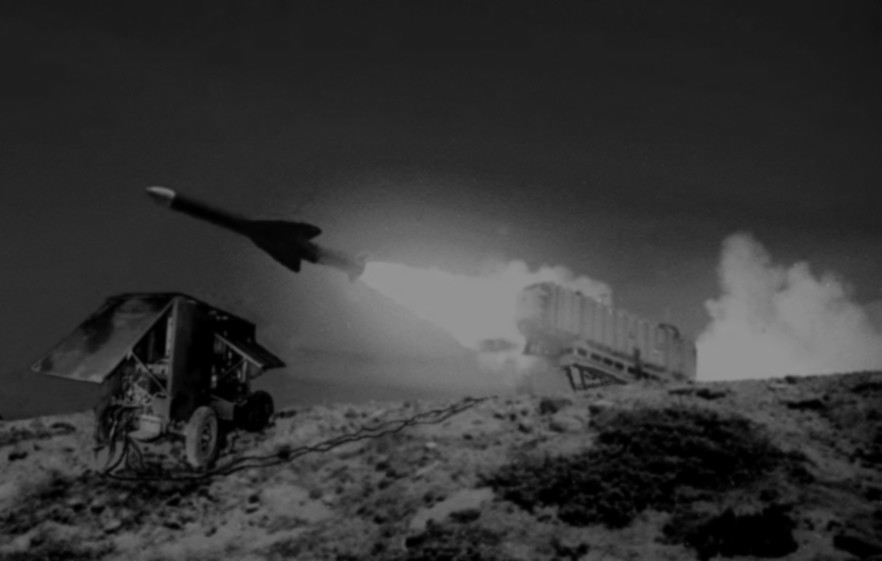
Pérez's invention: part of the Exocet MM-38 land-based missile battery on a street in Port Stanley. (Terence Laheney)


More about the ITB (Berreta Shooting Installation). In Argentina, "berreta" would be a term used to describe a "poor quality" or "very improvised" design.

https://www.lanacion.com.ar/lifesty...tes-argentinos-que-dejo-fuera-de-nid12062024/
https://radiografica.org.ar/2022/04...toso-sistema-itb-instalacion-de-tiro-berreta/
http://www.aposmalvinas.com.ar/crqitbrc.htm
tiro-berreta.jpg
 

Attachments

  • 503571916_10162528670114496_6725615697466577660_n.jpg
    503571916_10162528670114496_6725615697466577660_n.jpg
    112.6 KB · Views: 17
  • 504862172_10162528670399496_8566152128252931347_n.jpg
    504862172_10162528670399496_8566152128252931347_n.jpg
    148.9 KB · Views: 11
  • 504284998_10162528670504496_1762894291393799187_n.jpg
    504284998_10162528670504496_1762894291393799187_n.jpg
    160.7 KB · Views: 9
  • 503905661_10162528670034496_8490161269384684551_n.jpg
    503905661_10162528670034496_8490161269384684551_n.jpg
    97.8 KB · Views: 11
  • 503416774_10162528670499496_2729710396698947331_n.jpg
    503416774_10162528670499496_2729710396698947331_n.jpg
    142.5 KB · Views: 11
  • 503371666_10162528670239496_2615150338217960274_n.jpg
    503371666_10162528670239496_2615150338217960274_n.jpg
    146.4 KB · Views: 9
  • 503370183_10162528670714496_8323644772318754123_n.jpg
    503370183_10162528670714496_8323644772318754123_n.jpg
    174.4 KB · Views: 12
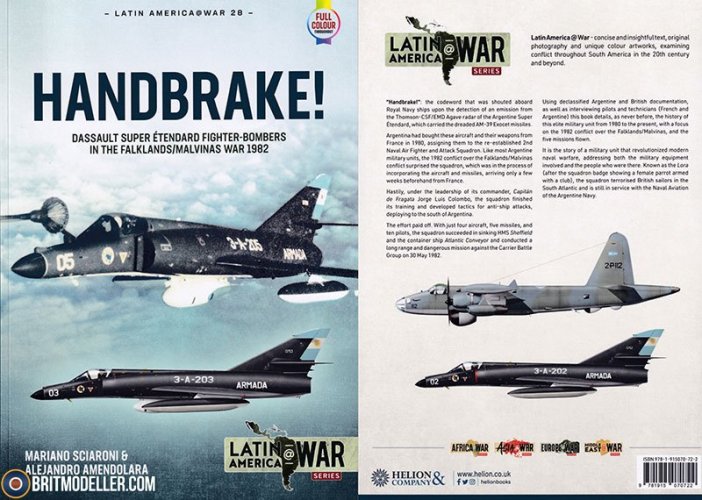
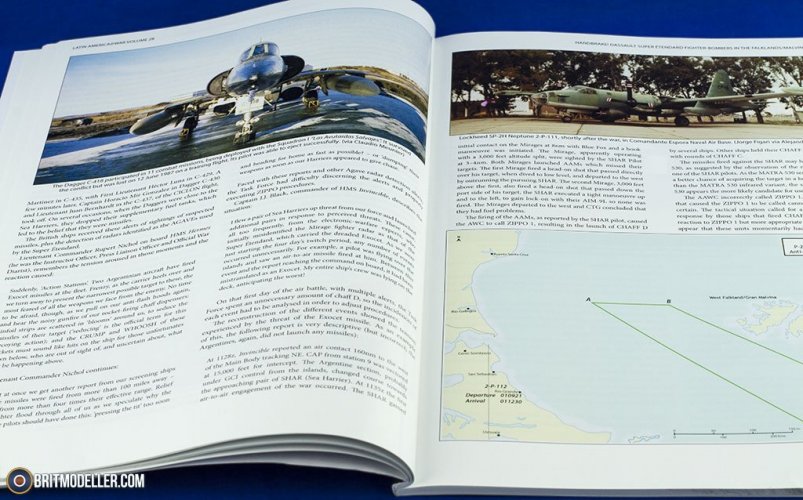
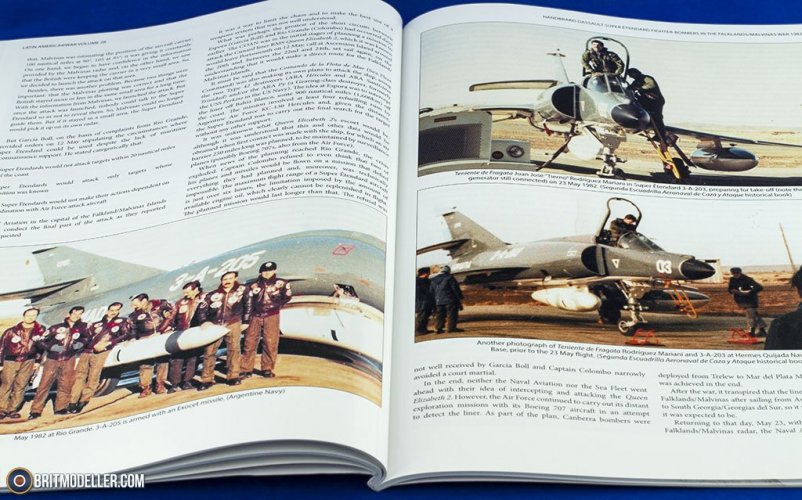
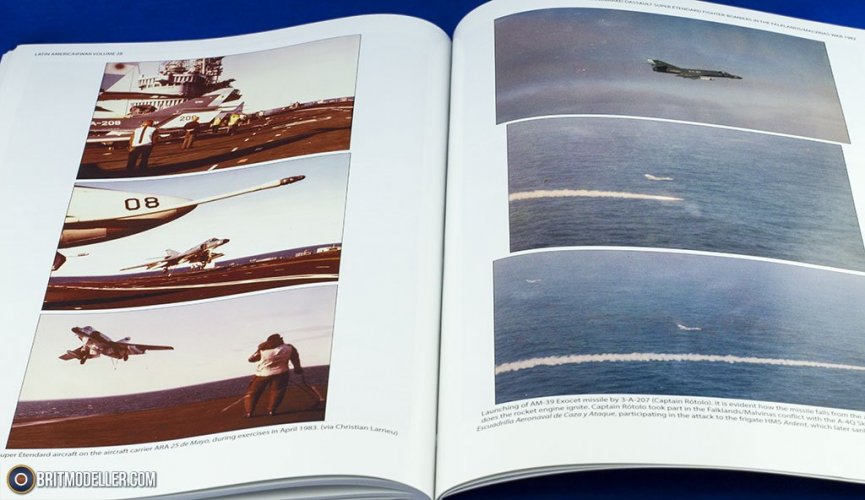
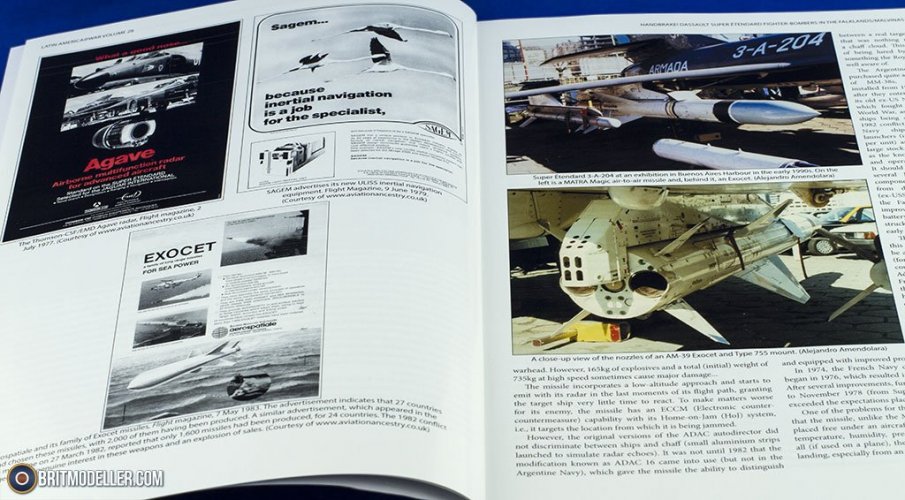
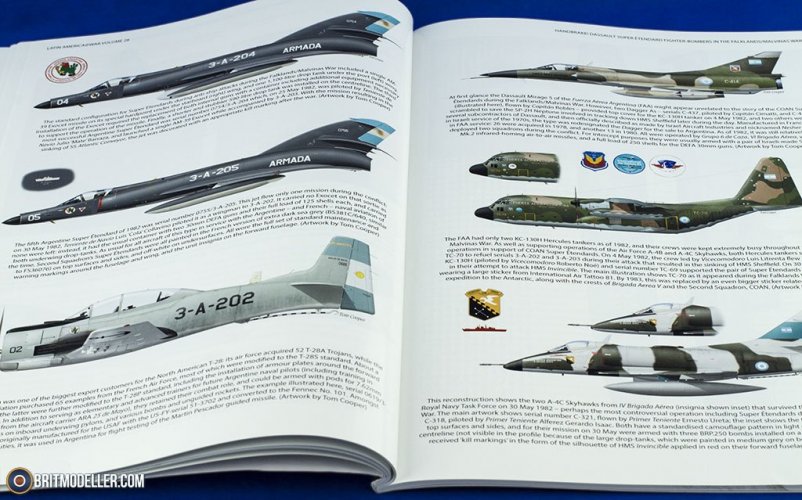
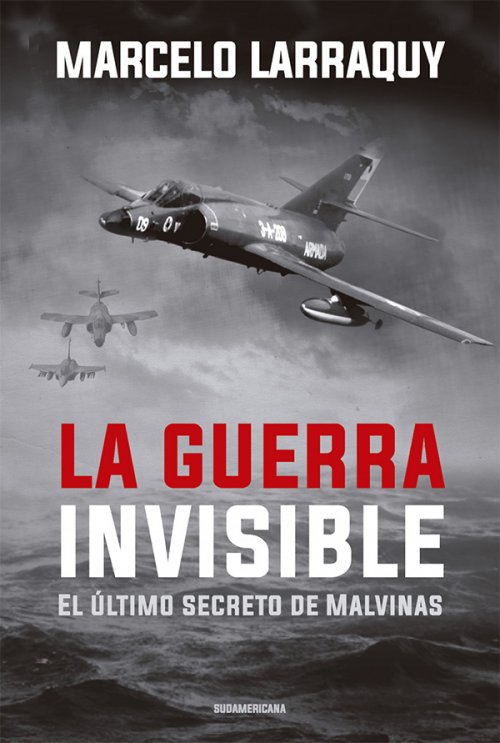
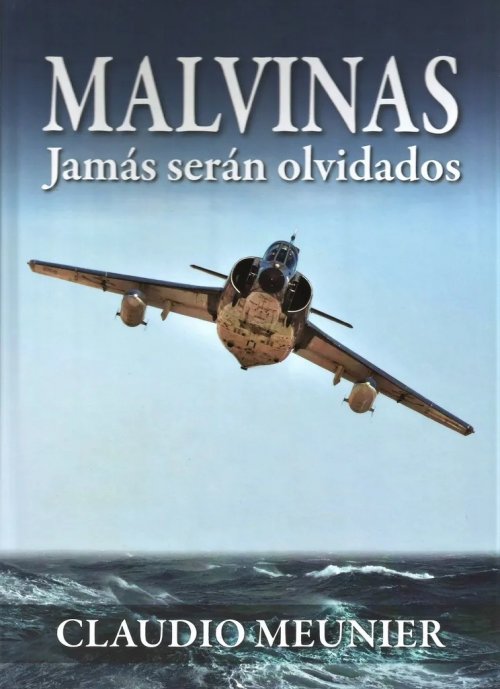
These two books also cover the Super Étendard-Exocet combination and their combat use by the Argentine Naval Aviation Command (COAN).

The first deals with the actions of the entire Argentine naval aviation during the Falklands War, examining the actions of each squadron separately.

It is very interesting because it meticulously describes how the Argentine Navy's technical personnel managed to get the Exocet operational in conjunction with the Super Étendard, working against the clock without French assistance. There was even a very scandalous case of Argentine personnel secretly photocopying all the manuals while in France. This was discovered because they inadvertently left the manual for the use of nuclear weapons in the copy shop, clearly marked as a state secret on the cover. As a result, the copy shop operator called the police.
 

Attachments

  • SUE EXOCET.jpg
    SUE EXOCET.jpg
    173 KB · Views: 10
  • aviador naval.jpg
    aviador naval.jpg
    67.4 KB · Views: 11
  • EXOCET.jpg
    EXOCET.jpg
    818.6 KB · Views: 13
IIRC the Argentinians used up all of their Exocet stocks during the Falklands war and if it had've lasted much longer they wouldn't have been able to target anymore RN ships.
 
IIRC the Argentinians used up all of their Exocet stocks during the Falklands war and if it had've lasted much longer they wouldn't have been able to target anymore RN ships.
Argentina had only 5 of the 14 Exocet missiles ordered before the war; the rest were received some time after the war ended.

Two missiles were launched on May 4th, when HMS Sheffield was sunk.

Two more missiles were launched on May 25th, when the Atlantic Conveyor was sunk.

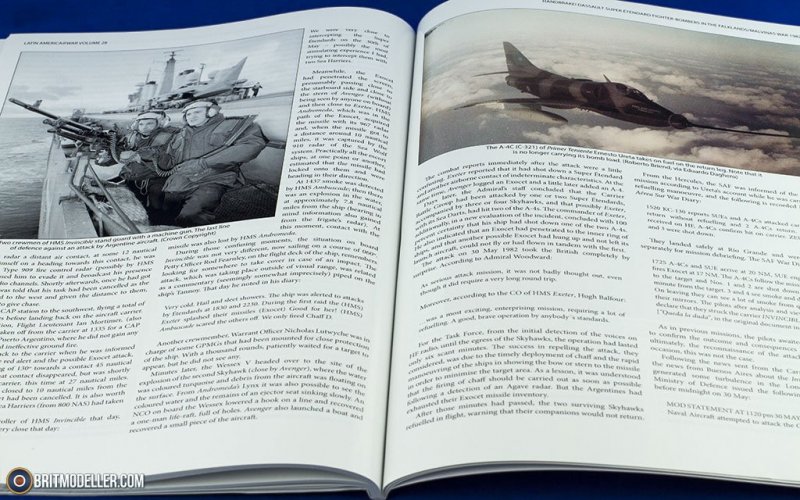
The fifth was launched on May 30th in a joint attack with Argentine Air Force A-4Cs against HMS Invincible.

There were strenuous attempts to obtain more Exocets through various means; there is extensive literature on the subject.
Pilots began training for night attacks... but ultimately, the missiles never arrived.
 
There were strenuous attempts to obtain more Exocets through various means; there is extensive literature on the subject.

HM's government worked overtime with the French government to interdict any attempts by the Argentinians from acquiring further blackmarket Exocets.
 
Argentina only had available five air launched Exocet during the war.

However, it had many more ship-launched Exocet on destroyers/corvettes. Some of these were taken off and jerry-rigged into the towed launcher used against HMS Glamorgan as described earlier in this thread.
 
In Spanish, you'll find numerous journalistic articles about the actions of the Super Étendard-Exocet missile system in the Falkland Islands.

The author of these two articles published a book on the subject a few years ago.

The Exocet missiles: the weapon most feared by the British in the Falklands War, and the disgruntled Frenchman who made them operational at the last minute.

The book "The Invisible War" reveals the espionage operations carried out by Argentine Navy intelligence agents and their British counterparts at MI6 regarding the missiles. It details the embargo against Argentina and the dealings on the black market for weapons, the dual role played by France, and the fortuitous appearance of a man who provided the missing "coefficient table" needed to use them.

https://www.infobae.com/sociedad/20...hado-que-los-hizo-funcionar-a-ultimo-momento/


The Last Exocet and 12 Bombs: The Argentine Pilots' Attack on the Invincible That Great Britain Never Acknowledged


It was May 30, 1982, a joint mission of the Argentine Naval Aviation and Air Force. Two Super Étendards and four A-4C Skyhawks attacked the British aircraft carrier. They all knew they might not return. The Exocet that hit its target, the black smoke seen by the pilots, and those who fell in combat. The enigma of an attack the British always denied.

https://www.infobae.com/sociedad/20...-invencible-que-gran-bretana-jamas-reconocio/

MarceloLarraquy_Laguerrainvisible.jpg
 
The deadly attack on the Sheffield: the pilots' courage, the fearsome Exocet missiles, and a meticulously planned operation

On May 4, 1982, two Royal Navy aircraft fatally wounded the British destroyer HMS Sheffield, which sank days later. The attack had a profound emotional impact on the British, who reconsidered how to continue the war in the Falklands.

https://www.infobae.com/sociedad/20...s-exocet-y-una-operacion-planeada-al-detalle/


Video: Argentine Pilots, Exocet Missiles, and the Greatest Logistical Loss for the British in the Falklands War

On May 25, 1982, the Argentine Navy's Second Naval Fighter and Attack Squadron sank the Atlantic Conveyor, a ship carrying essential cargo for British logistics during the conflict. A recollection from Roberto Curilovic, one of the pilots who participated in the mission.

https://www.infobae.com/def/2023/09...e-para-los-ingleses-en-la-guerra-de-malvinas/


Video: The Exocet's Impact and the Difficult Mission of Returning: What Happened After Attacking the Aircraft Carrier Invincible?

Following a meticulously planned operation between the Argentine Navy and Air Force, a missile struck a key British aircraft carrier. The second installment of a DEF special on an attack never acknowledged by the British.

https://www.infobae.com/def/2022/06...o-luego-de-atacar-al-portaaviones-invencible/
 
IIRC if the Falklands war had continued on much longer the RN had plans to conduct a naval raid against Argentina.
 
In Spanish, you'll find numerous journalistic articles about the actions of the Super Étendard-Exocet missile system in the Falkland Islands.

And as long as they continue to repeat the falsehood that Invincible was successfully attacked in that final Exocet mission, it will be very hard to take any other part of their stories seriously.

There is no way that the RN could have concealed damage to Invincible after the war, nor could they have covered up an attack that would have injured or killed at least some RN sailors.
 
IIRC if the Falklands war had continued on much longer the RN had plans to conduct a naval raid against Argentina.

Not that I've ever heard. There was a plan for an SAS raid on Rio Grande (Op Mikado) but not a naval raid. That got called off for being a fairly obvious suicide mission.

We do know Invincible launched the Sea King that later crashed in Chile, as part of Op Plum Duff, the insertion of an SAS observation team at Rio Grande, but that was the end of the naval involvement.
 
IIRC if the Falklands war had continued on much longer the RN had plans to conduct a naval raid against Argentina.
Argentine fighter-bombers reached the islands at the limit of their range, sometimes only thanks to in-flight refueling.

The Harrier and Sea Harrier were not known for their range.

It would have been suicidal to bring the aircraft carriers close to the mainland to launch Harrier attacks against the various air bases, and the Mirage III and 5 would be fighting on their own territory with sufficient fuel.
 
And as long as they continue to repeat the falsehood that Invincible was successfully attacked in that final Exocet mission, it will be very hard to take any other part of their stories seriously.

There is no way that the RN could have concealed damage to Invincible after the war, nor could they have covered up an attack that would have injured or killed at least some RN sailors.

Personally, I believe that, given their direction of attack, the Royal Navy was caught completely by surprise. However, the Exocet missile either failed or was jammed and didn't hit any ships, and the surviving A-4Cs attacked some vessels, but their bombs missed their targets. It is clear, though, that they managed to reach almost the core of the fleet.

There is a very interesting study by Mariano Sciaroni that compares Argentine and British documents to describe the attack and the position of the fleet reached by the Argentine Air Force A-4Cs.

The work is titled "El ataque a la Task Force del 30 de Mayo de 1982. Una visión exclusivamente británica de los acontecimientos" ("The Attack on the Task Force of May 30, 1982: An Exclusively British Perspective on the Events") and was presented at the III International Congress of Argentine Military Aeronautical History, organized by the Argentine Air Force. At the time, it was published in PDF format on the websites of both the congress and the Argentine Air Force.
 
And as long as they continue to repeat the falsehood that Invincible was successfully attacked in that final Exocet mission, it will be very hard to take any other part of their stories seriously.

There is no way that the RN could have concealed damage to Invincible after the war, nor could they have covered up an attack that would have injured or killed at least some RN sailors.

And you didn't even read the conspiracy theory about the sinking of HMS Invincible, its replacement by the Illustrois, and the secret construction of a fourth ship of the class.

It was developed by the son of a naval officer who founded the naval rocket and missile workshop... He did all his research from home, browsing the internet and "analyzing" photos...

When someone pointed out something wrong with the last photo that confirmed his theory, he'd look for a new one... I don't remember the name or the website, but it was all very bizarre, and he'd argue with anyone who tried to show him how wrong and outlandish his theory was.
 
Personally, I believe that, given their direction of attack, the Royal Navy was caught completely by surprise. However, the Exocet missile either failed or was jammed and didn't hit any ships, and the surviving A-4Cs attacked some vessels, but their bombs missed their targets. It is clear, though, that they managed to reach almost the core of the fleet.
This I somewhat agree with. They almost certainly attacked (and missed) Avenger, but she was not near the core of the fleet. She was actually on detached duty and steaming back toward the fleet. The Argentine strike encountered her and parts of the outer air defense screen of the British Task Force. This is defense in depth working as intended.
 
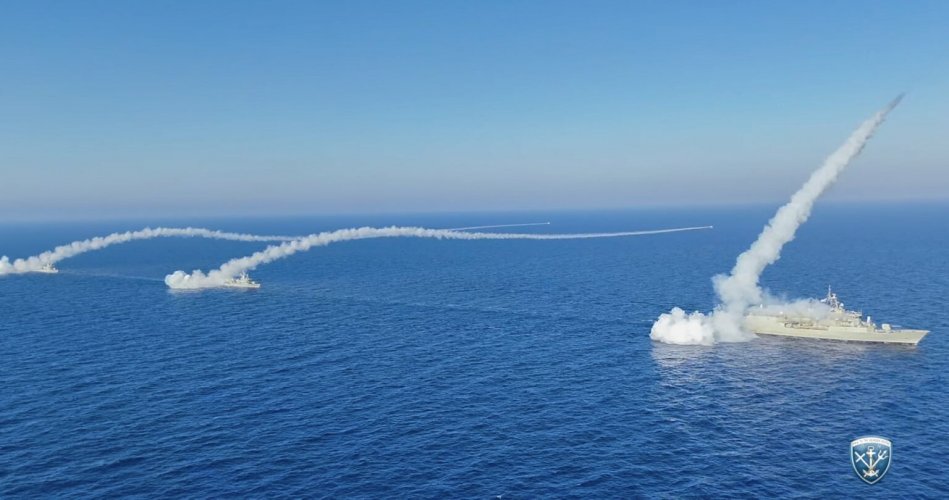
Interesting picture of Exocet vs Harpoon launches taken during a Greek Sinkex.

You can see Exocet's much flatter trajectory which keeps it under the radar horizon and avoids giving away the ship's position or giving enemy ships early warning of a missile launch. Not sure I'd want to be that ship firing Harpoon in combat!


Attachments

  • Exocet vs Harpoon.jpeg
    Exocet vs Harpoon.jpeg
    152.8 KB · Views: 8
Last edited:

Similar threads

Back
Top Bottom