
You are using an out of date browser. It may not display this or other websites correctly.
You should upgrade or use an alternative browser.
You should upgrade or use an alternative browser.
Electric vehicle discussion
- Thread starter edwest4
- Start date
Scott Kenny
ACCESS: USAP
- Joined
- 15 May 2023
- Messages
- 19,533
- Reaction score
- 27,979
Exactly my point.A Lexus LFA will do less. Niche products.
The people buying a Mirai (or LFA) don't care how far it goes on one tank of gas.
They're buying a Mirai because it's the first fuel cell car in the world. All the other bits don't matter, they only want the bragging rights of owning a fuel cell car.
But as a practical vehicle, the Mirai falls short. You have to fill it up every week, because otherwise the tank will empty itself. Not sure about Japan, but the hydrogen infrastructure in the US is nightmarish. If you're lucky, the hydrogen station 1) has fuel, 2) has working pumps, and 3) isn't out of business. If you're not, well, good luck making it to a station that is still in business, has working pumps, and has fuel. It's apparently even worse than driving an early Tesla, since you can at least still charge a Tesla, slowly, on 120v household power.

- Joined
- 6 November 2010
- Messages
- 6,351
- Reaction score
- 8,226
I think the main argument against masses of hydrogen fuel cell vehicles is the conversion losses incurred by producing hydrogen using electrolysis. I think batteries are a better prospect for EVs than hydrogen fuel cells. There are circumstances where fuel cells will probably be appropriate. But I don't expect to be looking for a Mirai (or an LFA, for that matter) - ever.
- Joined
- 5 May 2007
- Messages
- 2,016
- Reaction score
- 4,277
One of the arguments in favour of ammonia is that it isn't actually all that different from LNG in handling terms, and most of the same safety precautions apply.In terms of which hazard I'd rather deal with, I'd rather deal with "wear an air pack around a crashed ammonia-fueled car" than "you need a thermal imager to see if the car is on fire"
It's generally a pain to manufacture and handle: in most cases batteries or some kind of biofuel are likely to be preferable.A passenger bus is probably the only place where hydrogen works.
The 'hydrogen ladder' is quite a good way of visualising where it's an appropriate option, and city buses are very low on that ranking.

One of the real niches is steel production. Most current steelmaking uses coal for its carbon content, not just for heat, so the CO2 emissions are locked in by the process design. The leading alternative for 'green' steelmaking uses hydrogen as a reducing agent instead.

Forest Green
ACCESS: USAP
- Joined
- 11 June 2019
- Messages
- 14,513
- Reaction score
- 31,560
What about the transportation of hydrogen?
Hydrolysing their water instead would certainly solve that right?Indigenous Communities Face Water Crisis Amid Lithium Mining Boom
https://globalwater.osu.edu/news/indigenous-communities-face-water-crisis-amid-lithium-mining-boom
View attachment 758541
Scott Kenny
ACCESS: USAP
- Joined
- 15 May 2023
- Messages
- 19,533
- Reaction score
- 27,979
Exactly.One of the arguments in favour of ammonia is that it isn't actually all that different from LNG in handling terms, and most of the same safety precautions apply.
Sorry, that graphic seems to be implying that hydrogen-fueled aircraft are a good idea.The 'hydrogen ladder' is quite a good way of visualising where it's an appropriate option, and city buses are very low on that ranking.
Pretty sure it's been demonstrated for the last 60 years that they ARE NOT.
So where do you get the required carbon to add to the iron, then?One of the real niches is steel production. Most current steelmaking uses coal for its carbon content, not just for heat, so the CO2 emissions are locked in by the process design. The leading alternative for 'green' steelmaking uses hydrogen as a reducing agent instead.
Scott Kenny
ACCESS: USAP
- Joined
- 15 May 2023
- Messages
- 19,533
- Reaction score
- 27,979
But you now have a carbon and your fuel cells don't like that at all.What is needed is a methane fuel cell. The infrastructure is already in place and is well known to handle methane and you get 4 hydrogen atoms per molecule vs ammonia with only 3.
Nitrogen is much less reactive, it'll preferentially grab a second Nitrogen atom to make N2 rather than getting soot in your fuel cell and gumming up the works. Even then, I think most fuel cell systems that run off ammonia actually catalytically crack the ammonia outside the fuel cell proper and then send the hydrogen into the fuel cell.

F-14ATomcat
ACCESS: Top Secret
- Joined
- 26 May 2024
- Messages
- 785
- Reaction score
- 1,694
Featured ImageA passenger bus is probably the only place where hydrogen works.
1) relatively small load. 53 passengers as a city bus is all of 5500kg/12,000lbs "cargo" weight at full load, and a bus probably only travels at an average of 3/4 full.
2) large volume under the floor or on the roof available for hydrogen tankage.
Marcopolo has a robust plan to resume business abroad and an important pillar of this strategy is the offer of vehicles that have some type of alternative propulsion to combustion. In addition to the offer of diesel, biodiesel and plug-in electric vehicles, the company also expects to sell buses with chassis equipped with hydrogen cells.
According to Andre Armaganijan, director of foreign markets and future CEO of the company, electrified vehicles represent a good opportunity to prospect new business abroad, especially in countries that are signatories to some type of CO2 emissions reduction target.
Marcopolo has entered into a partnership for hydrogen
One of these is Australia, where Marcopolo has entered into a partnership with the company Wrightbus to develop an electric bus with hydrogen energy generation. The coachbuilder expects to produce this type of fuel cell vehicle in that country starting in 2023.
“We will not be a manufacturer of electric chassis in the future. Our business model is based on partnerships with other traditional suppliers that can help us meet customer demands in terms of decarbonization,” said Armaganijan.
Although the company is considering offering an electric model that is still under development for the Brazilian market, its main focus in terms of electrification is on neighboring markets in Latin America, especially Colombia and Chile. According to the company's calculations, it is possible that 400 electric buses will be in circulation on the continent by the end of the year.
Results
In the first quarter, Marcopolo exported 369 vehicles assembled in Brazil and produced 371 buses in other factories maintained abroad. The volume represented 27% of the company's total production in the period. In terms of revenue, exports injected R$370 million into the cash flow, approximately 39% of total revenue in January-March.
https://www.automotivebusiness.com....enta-hidrogenio-a-sua-oferta-global-de-onibus
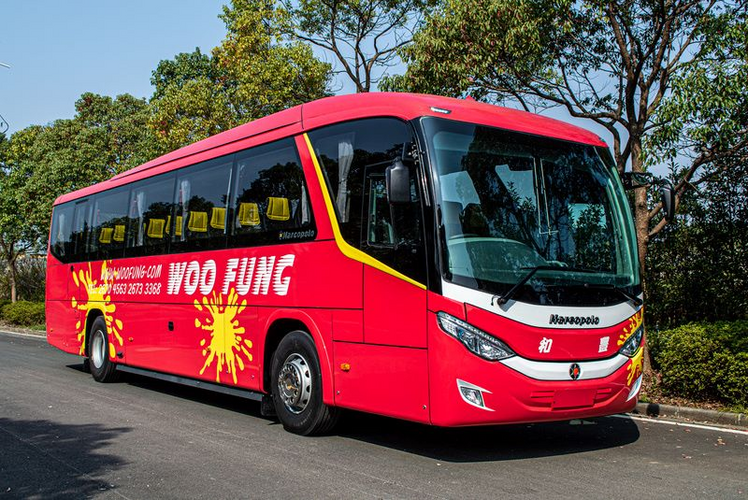
The company is based in Caxias, but has factories in several countries, including China, where it has already delivered 60 buses to Hong Kong alone in 2024. Since 2012, Marcopolo has been supplying vehicles to the Chinese market, selling almost 700 units in that period.
"The factory in China is ready for the mass production of several solutions developed by Marcopolo, and this is possible thanks to the continuous investments we make in innovation and technology, both in the country and in the company's other operations," says José Luis Moraes Goes, the company's director of international operations and foreign market sales.
Among the recent innovations developed by Marcopolo at the Chinese plant is the Audace Fuel Cell, a hydrogen fuel cell-powered bus, considered a case study in innovation and sustainability.
China is a market that invests in technologies of this nature and has a fleet of more than 20,000 commercial vehicles in operation, which demonstrates the vast field of opportunities ahead. In addition to the Audace Fuel Cell, Marcopolo is investing in other electric and hybrid propulsion solutions, aligned with the global challenges of decarbonization and its impacts.
https://www.silvanatoazza.com.br/no...acao-na-china-e-aposta-em-onibus-sustentaveis
F-14ATomcat
ACCESS: Top Secret
- Joined
- 26 May 2024
- Messages
- 785
- Reaction score
- 1,694
SpecificationsWhat about the transportation of hydrogen?
Hydrolysing their water instead would certainly solve that right?
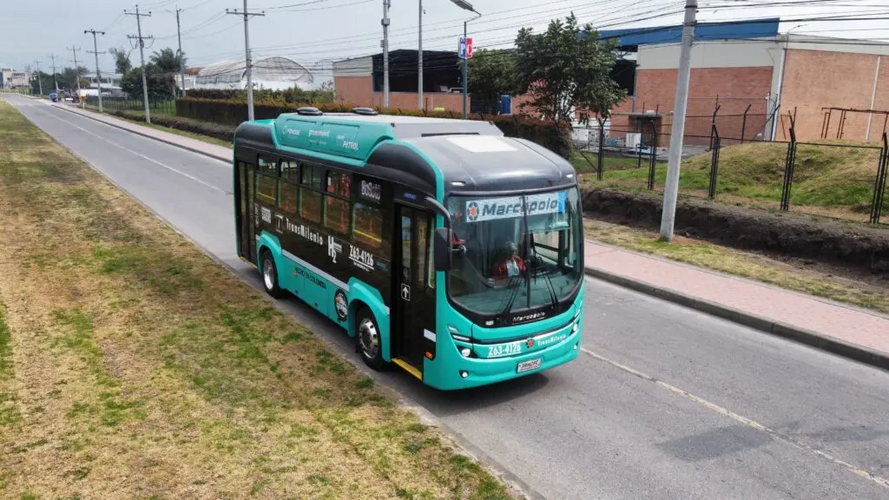
The bus is powered by hydrogen and operates with a fuel cell and an electric battery, so its only waste is water and, like electric vehicles, it does not generate noise pollution. The low-emission hydrogen comes from a PEM technology electrolyzer with 165 kW of installed power that can produce 23 tons per year and is powered by a system of 2,000 1MW photovoltaic panels installed at the Green Móvil Logistics Center in Bogotá. Additionally, there is a backup alternative from the National Interconnected System (SIN) with REC certificates, guaranteeing that its origin is exclusively from renewable sources. The hydrogen station can charge the bus in less than 10 minutes and since the vehicle has a storage capacity of 30 kg of hydrogen, it has a range of more than 450 km with a single daily recharge, reaching a maximum speed of 90 km/h.
.
https://h2lac.org/noticias/colombia...-su-primer-bus-impulsado-por-hidrogeno-verde/
With this project, which to date has had an investment of more than 2.5 billion, Marcopolo Superpolo reaffirms its commitment to mobility, technological progress and innovation in the country. Additionally, the company expects to invest 1.5 billion dollars for the adaptation of the plant, thus confirming that this investment in infrastructure and technology represents a significant step towards the creation of a more sustainable and resilient transportation ecosystem in Colombia.
This commitment is also due to the latent tendency of the Colombian market to move sustainably, contributing to the environment, which is reflected in the significant growth in Colombia for acquiring vehicles with this technology. According to data provided by Andemos, the category of hybrid and electric vehicles in the country registered an increase of 13.1% in 2023 compared to the previous year, reaching a total of 31,500 vehicles sold, demonstrating a boom in the awareness of Colombians about the importance of environmental sustainability in the transportation sector.
It is estimated that, with the implementation of hydrogen-powered buses in Bogotá, a reduction of 1,083 tons of CO2 emissions per hydrogen bus (zero emissions) will be achieved for eight years. This is equivalent to planting 73,000 trees.
https://www.motorhublatam.com/marcopolo-presenta-buses-electricos-e-hidrogenoo/

- Joined
- 5 May 2007
- Messages
- 2,016
- Reaction score
- 4,277
It's saying you use the hydrogen to make synthetic liquid fuels, because there's not really a credible alternative to hydrocarbons for long haul aircraft fuel. It's the same pathway they've identified for vintage cars.Sorry, that graphic seems to be implying that hydrogen-fueled aircraft are a good idea.
You still need some, but you don't need nearly as much since it's only being used as an alloying material rather than a reducing agent. It's the use as a reducing agent that creates most of the carbon dioxide emissions.So where do you get the required carbon to add to the iron, then?
All of which assumes you can produce 'green' hydrogen on a large scale, of course.
Forest Green
ACCESS: USAP
- Joined
- 11 June 2019
- Messages
- 14,513
- Reaction score
- 31,560
How does the hydrogen get to each station, or do you need an electrolyser at every one? What happens in places that are less sunny?Specifications
The bus is powered by hydrogen and operates with a fuel cell and an electric battery, so its only waste is water and, like electric vehicles, it does not generate noise pollution. The low-emission hydrogen comes from a PEM technology electrolyzer with 165 kW of installed power that can produce 23 tons per year and is powered by a system of 2,000 1MW photovoltaic panels installed at the Green Móvil Logistics Center in Bogotá. Additionally, there is a backup alternative from the National Interconnected System (SIN) with REC certificates, guaranteeing that its origin is exclusively from renewable sources. The hydrogen station can charge the bus in less than 10 minutes and since the vehicle has a storage capacity of 30 kg of hydrogen, it has a range of more than 450 km with a single daily recharge, reaching a maximum speed of 90 km/h.
.
View attachment 758587
https://h2lac.org/noticias/colombia...-su-primer-bus-impulsado-por-hidrogeno-verde/
With this project, which to date has had an investment of more than 2.5 billion, Marcopolo Superpolo reaffirms its commitment to mobility, technological progress and innovation in the country. Additionally, the company expects to invest 1.5 billion dollars for the adaptation of the plant, thus confirming that this investment in infrastructure and technology represents a significant step towards the creation of a more sustainable and resilient transportation ecosystem in Colombia.
This commitment is also due to the latent tendency of the Colombian market to move sustainably, contributing to the environment, which is reflected in the significant growth in Colombia for acquiring vehicles with this technology. According to data provided by Andemos, the category of hybrid and electric vehicles in the country registered an increase of 13.1% in 2023 compared to the previous year, reaching a total of 31,500 vehicles sold, demonstrating a boom in the awareness of Colombians about the importance of environmental sustainability in the transportation sector.
It is estimated that, with the implementation of hydrogen-powered buses in Bogotá, a reduction of 1,083 tons of CO2 emissions per hydrogen bus (zero emissions) will be achieved for eight years. This is equivalent to planting 73,000 trees.
https://www.motorhublatam.com/marcopolo-presenta-buses-electricos-e-hidrogenoo/View attachment 758588
Last edited:
F-14ATomcat
ACCESS: Top Secret
- Joined
- 26 May 2024
- Messages
- 785
- Reaction score
- 1,694
I do not know I would need to read about it, I will do it later and if I find something I let you know Regards.How does the hydrogen get to each station, or do you need an electrolyser at every one? What happens in places that are less sunny?
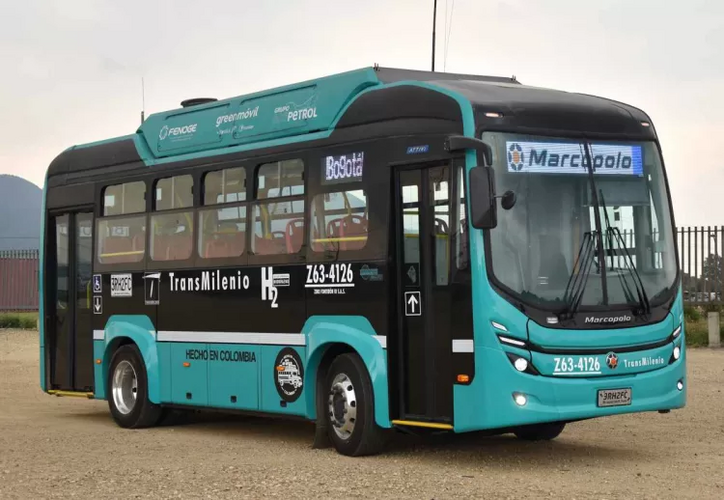
The bus operates like an electric vehicle, but instead of charging the batteries through an external connector, it uses a fuel cell that processes hydrogen in a gaseous state. This hydrogen, stored in high-pressure tanks, is combined with oxygen to produce water vapor and electric current through a process called "reverse electrolysis." The bus's electric motor is powered by the energy produced by the fuel cell and also by a battery bank located at the bottom of the vehicle, which stores energy regenerated by the braking system.The article also explains that hydrogen is the first element on the periodic table and is used as an energy vector. In this case, the green hydrogen used for the project is produced by an electrolyzer that uses water and solar energy to separate hydrogen and oxygen molecules.
https://www.busworldlatinamerica.or...en-colombia-que-se-moviliza-base-de-hidrogeno
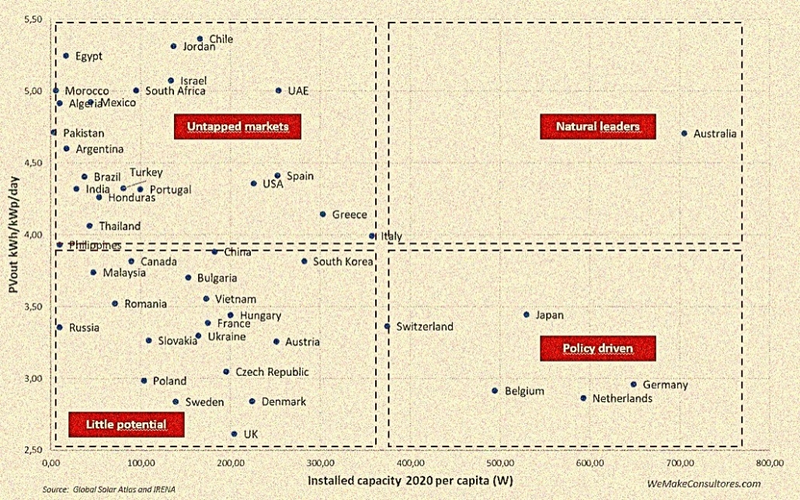
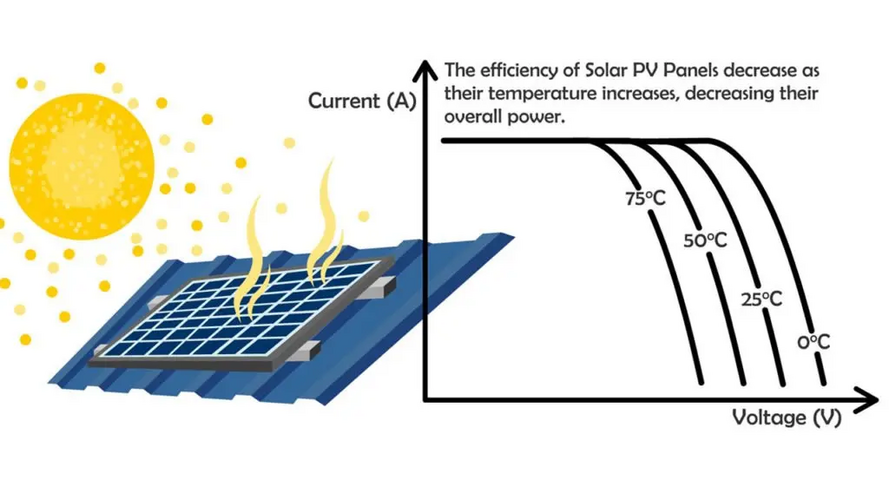
Although solar panels absorb energy from the sun, hotter temperatures actually make them less efficient.
Photovoltaic solar panels work by absorbing light energy and using the energy to 'excite', or energise, electrons.
An electrical field is then created across the layers of silicon in the cell, allowing the electrons to flow as electricity.
The greater the intensity of the light, the greater the flow of electricity.
But the hotter the panel is, the greater the number of electrons that are already in the excited state before the photon hits, reducing its efficiency.
Higher temperatures also increase the electrical resistance of the circuits that convert the charge into electricity.
Modern hybrid solar panels are designed to suffer less from the heat, but they can still lose 10 per cent of their rated efficiency on hot days.
This is part of the reason why Cornwall is the best county for solar energy in the country, home to over 8,000 solar sites.
It has over 15,000 hours of sunshine annually, but typically stays fairly cool allowing for the solar panels to work efficiently.
https://www.dailymail.co.uk/science...mperatures-expert-warns-amid-UK-heatwave.html
Last edited:
Scott Kenny
ACCESS: USAP
- Joined
- 15 May 2023
- Messages
- 19,533
- Reaction score
- 27,979
Ah, okay. Now that makes sense.It's saying you use the hydrogen to make synthetic liquid fuels, because there's not really a credible alternative to hydrocarbons for long haul aircraft fuel. It's the same pathway they've identified for vintage cars.
Nuclear powered hydrolysis.You still need some, but you don't need nearly as much since it's only being used as an alloying material rather than a reducing agent. It's the use as a reducing agent that creates most of the carbon dioxide emissions.
All of which assumes you can produce 'green' hydrogen on a large scale, of course.

Forest Green
ACCESS: USAP
- Joined
- 11 June 2019
- Messages
- 14,513
- Reaction score
- 31,560
They can last a very long time just with slightly degraded performance.
https://insideevs.com/news/726910/tesla-taxi-battery-still-good/
https://insideevs.com/news/726910/tesla-taxi-battery-still-good/
F-14ATomcat
ACCESS: Top Secret
- Joined
- 26 May 2024
- Messages
- 785
- Reaction score
- 1,694
The Motorized Scooter Boom That Hit a Century Before Dockless Scooters
Launched in 1915, the Autoped had wide appeal, with everyone from suffragettes to postmen giving it a tryJackie Ma
 nsky
nskyApril 18, 2019
https://www.smithsonianmag.com/hist...boom-hit-century-dockless-scooters-180971989/
Forest Green
ACCESS: USAP
- Joined
- 11 June 2019
- Messages
- 14,513
- Reaction score
- 31,560
The electric car actually dates back to much earlier.
https://www.caranddriver.com/features/g43480930/history-of-electric-cars/
https://www.caranddriver.com/features/g43480930/history-of-electric-cars/

Brett Davidson
ACCESS: Top Secret
- Joined
- 26 September 2006
- Messages
- 4,441
- Reaction score
- 12,826
Harry Metcalfe looks at the confusion in the market:
View: https://www.youtube.com/watch?v=Vhi7zldGjBo&ab_channel=Harry%27sgarage

- Joined
- 18 June 2009
- Messages
- 1,591
- Reaction score
- 2,930
F-14ATomcat
ACCESS: Top Secret
- Joined
- 26 May 2024
- Messages
- 785
- Reaction score
- 1,694
Leaders of the Olinia project visited the High-Level Human Resources Specialization Center of the Technological University of Puebla (CERHAN-UTP) with the aim of promoting technological innovation and the training of specialized talent.
During the meeting they also took a tour where they learned about the mechatronics, tool mechanics, robotics, electromobility, bodywork and painting laboratories. The technical work meeting was attended by the cabinet coordinator, José Luis García Parra and the rector of the Technological University of Puebla (UTP), Jesús Morales Rodríguez, and on behalf of the Olinia project, Roberto Capuano and Rafael Garayoa attended.
The rector Jesús Morales underlined the commitment of CERHAN-UTP to the training of highly qualified human resources for the automotive sector and its role as a strategic ally in the country's development policies.
It was in January 2025 when the Mexican electric vehicle assembly plant Olinia was officially presented, units that will be designed by Mexican engineering. The main objective is the production of electric vehicles based on a multipurpose platform: personal mobility, neighborhood mobility and last mile deliveries.
It was reported that by the end of 2030 the goal is to launch the three models under a company with public and private investment, which is economically viable and has long-term prospects.
https://mexicoindustry.com/noticia/olinia-impulsa-innovacion-tecnologica-en-puebla
OLINIA, Roberto Capuano Trip and Rafael Garayona Guajardo, responsible for developing an innovative range of Mexican electric mini vehicles.
This visit took place within the framework of an intense work day led by the Governor of Puebla, Alejandro Armenta Mier, who highlighted the
extraordinary capacities that the state offers to host this project and contribute significantly to its success.
During the meeting, there was the opportunity to learn about some of the main characteristics of the OLINIA Project and confirm that it is a proposal with a vision for the future that seeks to introduce versatile and sustainable electric mini vehicles, designed to transform urban mobility in the country.
Therefore, it promises to mark a milestone on the road to new and smarter forms of urban mobility that offer viable solutions to transportation.
At Motores Limpios/Zacua, the importance of the federal government being aligned with public policies with global trends as transformative as electromobility was highlighted.
At Zacua, they celebrate this convergence with optimism, aware of the positive impact it will have on everyone's quality of life. But, more importantly, they recognize that this effort is charting a clear course toward a more sustainable and technologically advanced future.
“For our part, we reiterate our commitment to do our bit" to contribute to the success of the OLINIA Project, with the certainty that a positive transformation of the mobility landscape in Mexico is possible,” said Nazareth Black, CEO of Zacua.
https://mexicoindustry.com/noticia/zacua-apoyara-el-desarrollo-automotriz-de-olinia
During the meeting they also took a tour where they learned about the mechatronics, tool mechanics, robotics, electromobility, bodywork and painting laboratories. The technical work meeting was attended by the cabinet coordinator, José Luis García Parra and the rector of the Technological University of Puebla (UTP), Jesús Morales Rodríguez, and on behalf of the Olinia project, Roberto Capuano and Rafael Garayoa attended.
The rector Jesús Morales underlined the commitment of CERHAN-UTP to the training of highly qualified human resources for the automotive sector and its role as a strategic ally in the country's development policies.
It was in January 2025 when the Mexican electric vehicle assembly plant Olinia was officially presented, units that will be designed by Mexican engineering. The main objective is the production of electric vehicles based on a multipurpose platform: personal mobility, neighborhood mobility and last mile deliveries.
It was reported that by the end of 2030 the goal is to launch the three models under a company with public and private investment, which is economically viable and has long-term prospects.
https://mexicoindustry.com/noticia/olinia-impulsa-innovacion-tecnologica-en-puebla
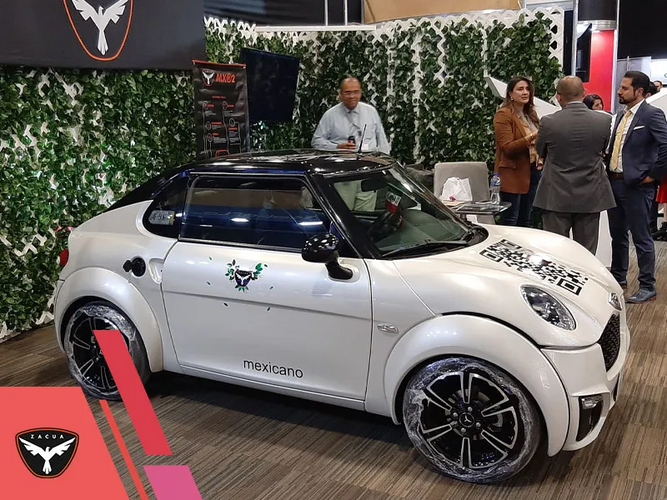
OLINIA, Roberto Capuano Trip and Rafael Garayona Guajardo, responsible for developing an innovative range of Mexican electric mini vehicles.
This visit took place within the framework of an intense work day led by the Governor of Puebla, Alejandro Armenta Mier, who highlighted the
extraordinary capacities that the state offers to host this project and contribute significantly to its success.
During the meeting, there was the opportunity to learn about some of the main characteristics of the OLINIA Project and confirm that it is a proposal with a vision for the future that seeks to introduce versatile and sustainable electric mini vehicles, designed to transform urban mobility in the country.
Therefore, it promises to mark a milestone on the road to new and smarter forms of urban mobility that offer viable solutions to transportation.
At Motores Limpios/Zacua, the importance of the federal government being aligned with public policies with global trends as transformative as electromobility was highlighted.
At Zacua, they celebrate this convergence with optimism, aware of the positive impact it will have on everyone's quality of life. But, more importantly, they recognize that this effort is charting a clear course toward a more sustainable and technologically advanced future.
“For our part, we reiterate our commitment to do our bit" to contribute to the success of the OLINIA Project, with the certainty that a positive transformation of the mobility landscape in Mexico is possible,” said Nazareth Black, CEO of Zacua.
https://mexicoindustry.com/noticia/zacua-apoyara-el-desarrollo-automotriz-de-olinia
F-14ATomcat
ACCESS: Top Secret
- Joined
- 26 May 2024
- Messages
- 785
- Reaction score
- 1,694
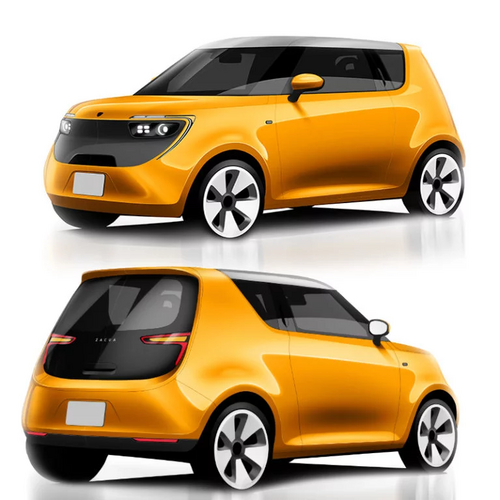
Concept Design
One One Lab design team has the task of designing a completely new and fresh identity for the Mexican company. The layout and chassis couldn’t be touched the automotive styling process had to respect the existing base. And here is where we see the importance of style above other factors.
Clean, young, simple and elegant where the words that ruled over this automotive design process. Removing unnecessary elements not only reduces costs of production but can actually enhance the design. Having hidden A pillars, a different color hatch, front end and roof opens up the field of personalization. The result is a small cheerful little car with a unique identity that embraces the concepts of, affordable, simple, small, electric, elegant and friendly
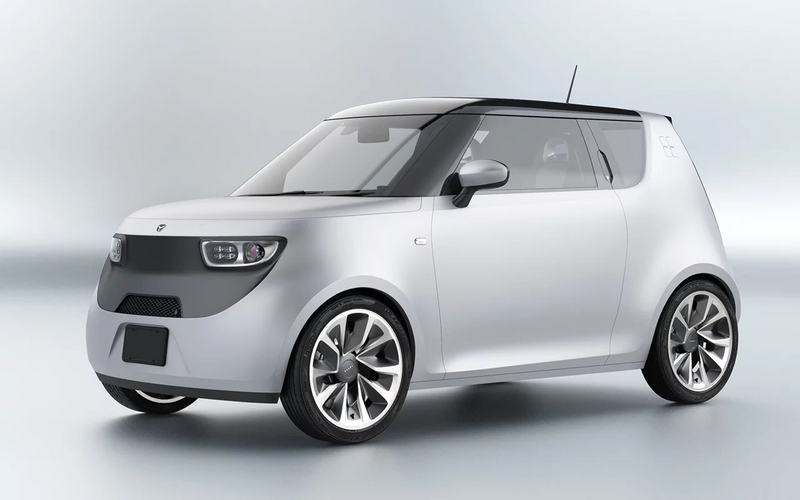
https://oneonelab.com/zacua/

Grey Havoc
ACCESS: USAP
- Joined
- 9 October 2009
- Messages
- 24,500
- Reaction score
- 18,175
Before Tesla, Suffragettes in rolling phone booths is what most people envisionedThe electric car actually dates back to much earlier.
https://www.caranddriver.com/features/g43480930/history-of-electric-cars/
Today's traffic
https://techxplore.com/news/2025-05-electric-buses-dont-cold.htmlhttps://techxplore.com/news/2025-05-emotional-responses-crucial-attitudes-cars.htmlhttps://techxplore.com/news/2025-05-ai-sources-driver-stress-paving.html
On route planning and policy
https://techxplore.com/news/2025-08-sustainable-mobility-ai-route-planner.htmlhttps://techxplore.com/news/2025-07-reveals-key-smarter-greener-ev.html
Last edited:
Forest Green
ACCESS: USAP
- Joined
- 11 June 2019
- Messages
- 14,513
- Reaction score
- 31,560
The first car phone.Before Tesla, Suffragettes in rolling phone booths is what most people envisioned
Grey Havoc
ACCESS: USAP
- Joined
- 9 October 2009
- Messages
- 24,500
- Reaction score
- 18,175
Grey Havoc
ACCESS: USAP
- Joined
- 9 October 2009
- Messages
- 24,500
- Reaction score
- 18,175
https://www.telegraph.co.uk/news/2025/04/07/britains-largest-on-street-electric-vehicle-charging/
A case of Fools and their money soon to be parted?
A case of Fools and their money soon to be parted?
Grey Havoc
ACCESS: USAP
- Joined
- 9 October 2009
- Messages
- 24,500
- Reaction score
- 18,175
https://www.telegraph.co.uk/business/2025/04/07/donald-trump-tariffs-market-reaction-live/8:09AM
Minister insists electric car targets not being watered down over tariff threat
A minister denied the Government was weakening its net-zero policy after announcing a relaxation of the rules around fines for manufacturers who do not sell enough electric vehicles.
Sir Keir Starmer has rushed through changes to electric car rules as the motoring industry faces turmoil from Donald Trump’s tariffs.
It was put to roads minister Lilian Greenwood on Times Radio that the changes watered down the original target.
She replied: “We’re not watering it down. We said in our manifesto tat we would commit to ending the sale of new pure petrol and diesel cars from 2030 and that’s exactly what we’re announcing today.
“What we are doing is clarifying for industry how we get to the total position where there will be no non-zero emission vehicles from 2035.
“What we want to do is make these clean electric vehicles affordable for absolutely everyone, and that everyone can make the switch, and that’s why we’re investing billions of pounds in supporting the car industry, in rolling out chargepoints.”
Forest Green
ACCESS: USAP
- Joined
- 11 June 2019
- Messages
- 14,513
- Reaction score
- 31,560
That was always well known and why coal-fired power stations will be banned in the EU after 2027.
Grey Havoc
ACCESS: USAP
- Joined
- 9 October 2009
- Messages
- 24,500
- Reaction score
- 18,175
That plan may well be in doubt, though.That was always well known and why coal-fired power stations will be banned in the EU after 2027.
In other news, via Slashdot (links to the MSN version of the story):
https://www.wsj.com/business/autos/...ning-evs-into-affordable-family-cars-836c565d

- Joined
- 3 January 2006
- Messages
- 1,405
- Reaction score
- 1,375
GM hires a Fred Armisen lookalike because another retirement aged engineer can turn around the EV division with a combination of dated electric car evangelism and condescension. The real problem is that GM has chronically underinvested in their moneymaking ICE car lines for an expensively over-engineered EV lineup. GM had an incredibly innovative battery form factor but it also was entirely inflexible for a market where hybrid and ICE sales are the immediate future. Stellantis will leverage the disastrous Charger Daytona and Wagoneer S launches with ICE powered variants in the coming year but GM is stuck with their BEVs. And sadly, even GM has to admit that their skateboard form factor is essentially dead for future products.That plan may well be in doubt, though.
In other news, via Slashdot (links to the MSN version of the story):
https://www.wsj.com/business/autos/...ning-evs-into-affordable-family-cars-836c565d
Grey Havoc
ACCESS: USAP
- Joined
- 9 October 2009
- Messages
- 24,500
- Reaction score
- 18,175
It's frustrating that people keep believing the myths but I surprise it isn't surprising given those constantly putting out disinformation and misinformation:
https://www.abc.net.au/news/2025-06...ormation-battery-ev-australia-study/105394232
https://www.abc.net.au/news/2025-06...ormation-battery-ev-australia-study/105394232
Grey Havoc
ACCESS: USAP
- Joined
- 9 October 2009
- Messages
- 24,500
- Reaction score
- 18,175

- Joined
- 16 December 2010
- Messages
- 5,893
- Reaction score
- 8,654

- Joined
- 3 January 2006
- Messages
- 1,405
- Reaction score
- 1,375
The manufacturer recalls for fire prone battery packs aren’t exercises in disinformation but outline the very real fire risks. If you own an electric car, you’re already paying much higher auto insurance premiums but expect higher homeowners premiums as well if you have an attached garage. I personally would charge a BEV or plug in hybrid in my own garage.It's frustrating that people keep believing the myths but I surprise it isn't surprising given those constantly putting out disinformation and misinformation:
https://www.abc.net.au/news/2025-06...ormation-battery-ev-australia-study/105394232
But there is a broader insurance concern. There is a general trend where EVs are being totaled out instead of repaired and not just because of issues such as employing large structural casting that crack instead of deforming like stampings. The sad truth is that increasing numbers of body shops won’t even touch EVs because of the fire and electrocution risks. Throw in the massive number of recent Tesla vandalisms, with something like 44% of Tesla owners reporting vandalism in a recent survey, and EVs are facing the same insurance issues as muscle cars in the early 1970s.
https://insideevs.com/news/754747/dodge-charger-daytona-wrecked/
https://www.iaai.com/VehicleDetail/42309667~US#carscoops.com
Last edited:
Grey Havoc
ACCESS: USAP
- Joined
- 9 October 2009
- Messages
- 24,500
- Reaction score
- 18,175
https://www.telegraph.co.uk/business/2025/06/18/chinas-electric-car-revolution-is-eating-itself/(Subscription or registration may be required)
Grey Havoc
ACCESS: USAP
- Joined
- 9 October 2009
- Messages
- 24,500
- Reaction score
- 18,175
https://www.telegraph.co.uk/news/2025/06/18/another-wheel-has-just-flown-off-the-ev-dream/
They will save the planet, they are quieter, they will rebuild local industries, and they even come with attractive tax breaks. Re-wind a couple of years, and there were plenty of reasons for buying a shiny new Tesla or Polestar electric vehicle instead of an old-fashioned, high-pollution, petrol or diesel car.
And yet, one by one, all those arguments have been punctured. They won’t help the environment as much as we think, they are mostly made in China, the tax breaks are gone, and now we learn that they are more likely to break down as well.
If you were not already worried enough about where the heck you might be able to recharge your electric car during a long drive over the summer, now there is something else to fret about as well.
You are more likely to break down than the other cars on the road. According to a poll of 30,000 drivers by WhatCar, EV’s suffer from a higher breakdown rate than petrol, diesel or hybrid vehicles, with 16.8 per cent of owners reporting some kind of fault, compared to 15.4 per cent for diesel, the second worst offender.
It gets worse. The faults on EV’s were less likely to be something that could be fixed on the side of the road by an emergency repair service, meaning that motorists were less likely to be able to complete their journey, and might have to pay for an expensive towing service as well.
And of course, if something does go wrong it will probably cost more to fix, with surveys suggesting that EVs cost 30 per cent to 50 per cent more to repair than petrol cars, while replacing the tyres if you get a puncture will be pricey as well, with each one, according to one survey, costing £77 more on average than traditional vehicles.
Perhaps not very surprising, the insurance is more expensive, given that the costs are higher if anything goes wrong, and that has to be recouped somehow or other. The costs start to add up very quickly. An EV is turning into a very expensive choice.
That is not what we were promised. One of the strong selling points for EVs over conventional vehicles was that because they had so few moving parts compared to internal combustion engines, they were far less likely to go wrong.
And overall, they were meant to be far cheaper to run than the vehicles they were replacing. One by one, all the arguments for owning an EV have been falling apart. It turns out that they cost more to run. The tax breaks are gradually being withdrawn; as of this year, they are no longer exempt from road tax, and from Christmas they will have to start paying the congestion charge in London, and probably very soon in other major cities as well.
On top of all that, they are handing the auto industry to China, destroying one of Europe’s major industries, and given the environmental impact of the manufacturing process, and all the minerals that go into them, they might not even be better for the environment either.
In reality, the drive to force us all to switch to EVs was top-down. I was state-planning at its very worst. It set arbitrary targets, lavished subsidies and tax breaks on an industry, only to withdraw them when they became too expensive. Perhaps worst of all, it backed an unproven technology that may well turn out to be an expensive flop. The wheels are coming off the EV dream – and once drivers are convinced that they are not the right choice, it will be very hard to persuade them to start buying EVs again.
Similar threads
-

-
 Sikorsky Long-Range Hybrid-Electric VTOL Demonstrator (HEX)
- Started by VTOLicious
- Replies: 5
-
Tesla to get new million-mile battery ready for production at CATL
- Started by edwest4
- Replies: 6
-
Electric and Hydrogen aeroplanes - feasibility and issues
- Started by Grey Havoc
- Replies: 619
-
 NA/R - Solar Electric Spacecraft for Asteroid Belt Exploration (1970)
- Started by Graham1973
- Replies: 3