To my dear Apophenia,

of course I know very well Ontwerp 155,156 & 157,and which I mentioned about
three variants are not related to them,and the definition projects was not from
me,but the site which put them separately.

To my dear Arjen,

that's from more than 10 years,I didn't record the title of the source to find it on Net
Archive,I will complete all I have,and I will ask about them in a Dutch forum to get
more answers or Infos and drawings if this is possible.
 
... of course I know very well Ontwerp 155,156 & 157,and which I mentioned about three variants are not related to them...

So your "three projects to Fokker D.XXIII" are "not related to" Ontwerp 155. How does that work?
 
Hi,

The Fokker F.XXM was a bomber project version of F.XX,1933,powered
by two engines,it was mentioned in Collection Fokker 2010.
 
Hesham ,

Can you give us the source of the F.XX two engined bomber variant in your files?
I did a lot of search work in books and mag's about but without result....
In the book about the "Fokker F.XX - Fokker's Fastest Trimotor" there is a drawing of the F.XX-2m and a colour profile.
 
Hi,

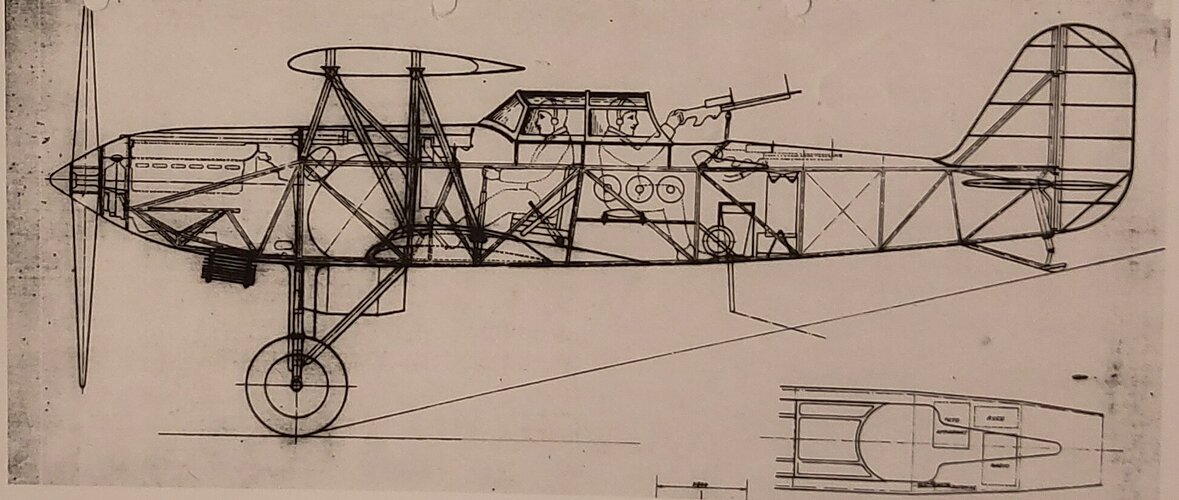
DC.II Early design was sesquiplane (not biplane),based on Fokker C.5,1933.
 

Attachments

  • 20.jpg
    20.jpg
    183.6 KB · Views: 392
DC.2 was a 1933 proposal by Fokker for a two-seat fighter/scout aircraft. Powered by Rolls-Royce Kestrel IIS or Hispano-Suiza X brs. The LVA (air division of the Dutch army) piling on more and more mission demands raised doubts about whether required performance would be achieved, eventually the LVA placed an order for 20 C.10 light bomber/scout aircraft, with another 13 C.10 aircraft order for the ML-KNIL (Dutch East Indies military aviation).
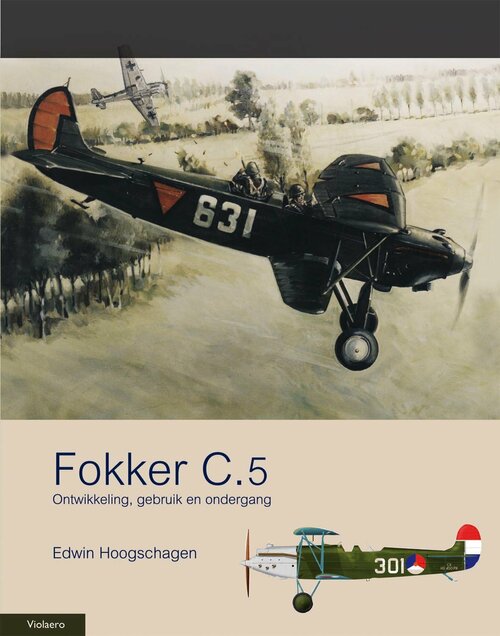
Image and data from Fokker C.5 Ontwikkeling, gebruik en ondergang by Edwin Hoogstraten, Lanasta/Violaero 2011. Pages 115-119.
 

Attachments

  • 1000010960.jpg
    1000010960.jpg
    355.7 KB · Views: 294
Last edited:
That's the one I am holding right now. Which page?

I cheked both , the Dutch and English versions
There is no sign of a so called 'T-XIII' bomber project...

Besides , this 'designation' never appeared in the many publication
about I saw and read over the years past...
 
I cheked both , the Dutch and English versions
There is no sign of a so called 'T-XIII' bomber project...

Besides , this 'designation' never appeared in the many publication
about I saw and read over the years past...

OK my dear Lark,and may the site was wrong and they meant
S.XIII instead off T.XIII.

The Fokker F.56 had a configuration from its variants as a Bomber Project,
mentione in Luchtvaartkennis 2000s ?!.
 
OK my dear Lark,and may the site was wrong and they meant S.XIII instead off T.XIII...

But this just further confuses matters. In reply #176, you said:

As I know,it was from 1970s,and its description is; T.XIII monoplane bomber, powered by twin engined,of course I know S.13 ?!.

I can't tell from that whether you were asserting that your lost reference dates from the 1970s or the project itself. However, you made quite clear that this 'monoplane bomber' was not related to the S.13 as mentioned by Arjen.

Now you are suggesting that "T.XIII" may have been a typo for "S.XIII". However, in 1949 when the sole S.13 first flew, that form of designation (ie: Roman numerals) was no longer in use by Fokker. So your "S.XIII" typo notion seems implausible at best.

We do know that a civil S.13 derivative was considered (designation unknown) and that an S.13 floatplane variant was drawn up. Had a bommenwerper variant also been looked at, it would surely have been assigned a similar designation. But that, of course, is pure speculation.
 
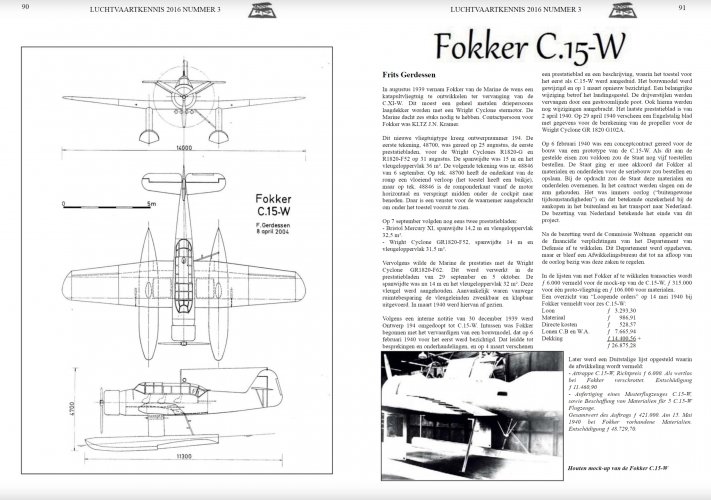
From the above I found a diagram of the Fokker C.15W.
Might anyone have any further details on this project?
Once upon a time there was a WWW.Dutch-Aviation.NL website, has it moved?
Lastly, is there a book as to all the Fokker designs and unrealized projects?
Thank you.
 
Here is a higher resolution pic of the previous shown diagram with some information. The C.15W is design number 194. I might have some scanned blueprints if interested. There is a PDF file containing all design numbers from the 30's all the way to the 90's from the archives in the Aviodrome museum.
 

Attachments

  • 201603 Luchtvaartkennis-20211224-010.jpg
    201603 Luchtvaartkennis-20211224-010.jpg
    1.9 MB · Views: 284
Here is a higher resolution pic of the previous shown diagram with some information. The C.15W is design number 194. I might have some scanned blueprints if interested. There is a PDF file containing all design numbers from the 30's all the way to the 90's from the archives in the Aviodrome museum.
Looks to me like Fokker was trying to compete with the Northrop N-3PB, with the Luchtvaartbrigade having bought the related Douglas 8A-5N, he would want a marinised competitor to ensure MLD and/or ML-KNIL didn't follow the Luchtvaartbrigade.
 
The C.15-W was designed as a successor to the C.11-W shipboard reconnaissance aircraft. Both designs were stressed for catapult launching, the C.11-W's only armament was a few small bombs and two 7.9 mm machine guns, one rearward-firing, one forward-firing. The C.15-W drawing shows one rearward-firing gun and four small bombs.

The N-3PB (Patrol Bomber) was designed against a Norwegian requirement for a coastal reconnaissance and torpedo bomber. As built, it carried a 2,000 lb bomb load, four forward-firing 0.5-in machine guns, two rearward-firing 0.3-in machine guns.

Different roles.
 
Last edited:
Here is a higher resolution pic of the previous shown diagram with some information. The C.15W is design number 194. I might have some scanned blueprints if interested. There is a PDF file containing all design numbers from the 30's all the way to the 90's from the archives in the Aviodrome museum.
Thank you!
 
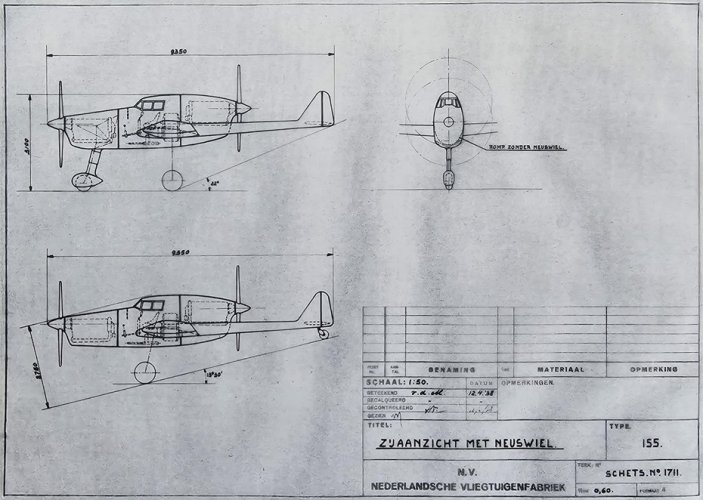
A drawing (Teek No. Schets. No. 1711) of ontwerp 155 variations entitled Zuaanzicht met neuswiel (Side view with nose wheel) showed up on War Thunder. I don't know the original source but I haven't seen the drawing posted in this thread.
 

Attachments

  • Fokker-ontwerp-155-uc-variations.jpg
    Fokker-ontwerp-155-uc-variations.jpg
    207.4 KB · Views: 221
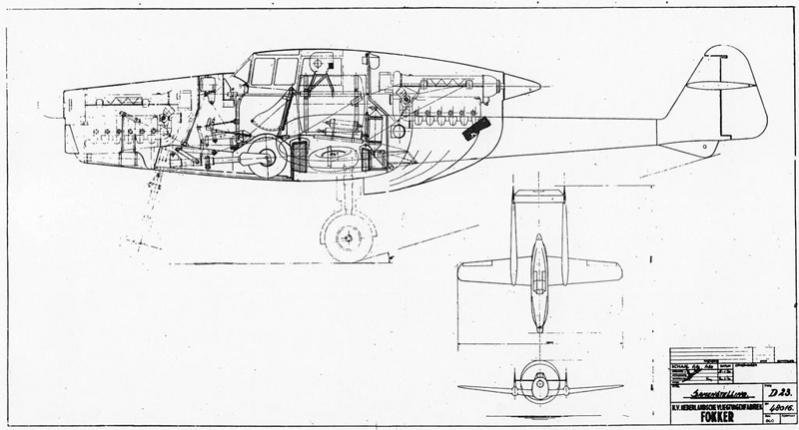
Fokker drawing 48016 -18 jan 1940 - all changes concerning engine cooling.

translated from : Fokker D-23 page 23 by Willem Vredeling . Geromy BV pubishing , The Netherlands.
 
Fokker drawing 48016 -18 jan 1940 - all changes concerning engine cooling.

translated from : Fokker D-23 page 23 by Willem Vredeling . Geromy BV pubishing , The Netherlands.

Many thanks to you my dear Lark,

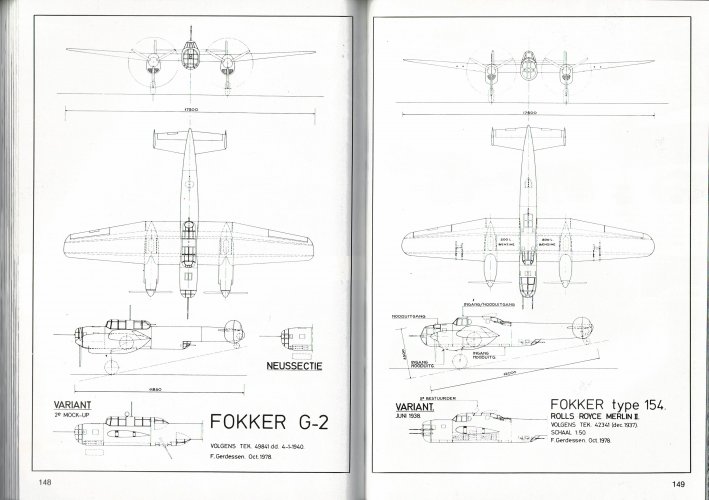
and can I ask you about Fokker G.II Ontwerp 154,as only a fighter
project version (not fighter-bomber) with less seat numbers ?.
 
Is this something you're looking for?

Many thanks to you Wosoman96,but as I think that,it had only two-seat as
a heavy fighter project ?,and the source maybe Luchtvaart or Nethlandse
Vliegtuig Encylopedia ?.
 
According this web site:
https://www.fokker-history.com/g-2
is G.2 a "Jachtkruiser" or Heavy Fighter
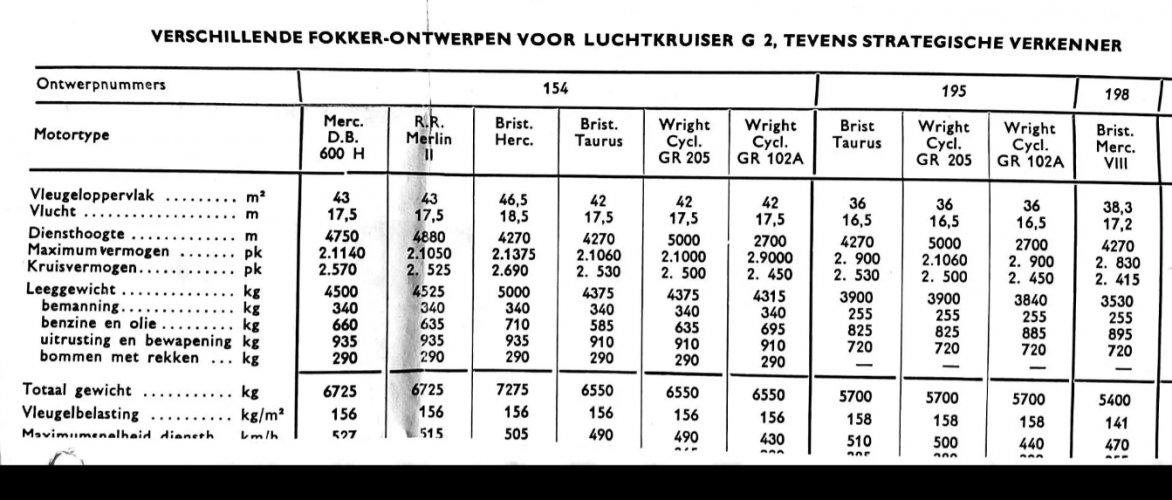
original planed with two Mercedes-Benz DB 600 !
they change it to Rolls-Royce Merlin II
later look for option Wright Cyclone GR-1820-G102 (available in Netherlands in 1939)

As Bomber version carry 500kg bombs and three M-36 FN machines guns 7.9 mm

As Heavy fighter
two 20 mm guns and four M-36 FN machines guns 7.9 mm

the Netherlands military order october 1939 for twenty G.2
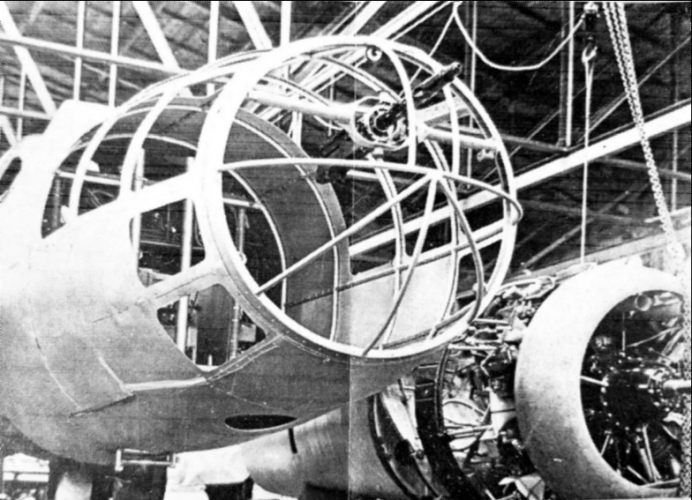
Fokker manage to build Mockup and began working on Prototype as Nazi invaded.
 
From this book,

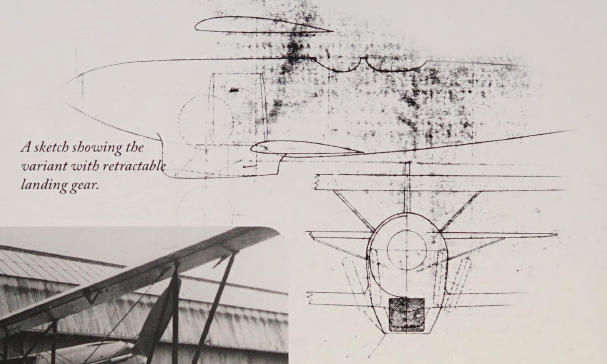
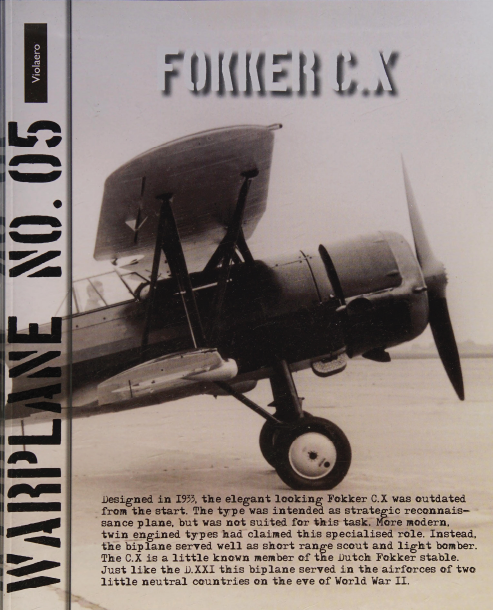
a project for Fokker C.X with retractable landing gear
 

Attachments

  • 4.png
    4.png
    271.8 KB · Views: 100
  • 5.png
    5.png
    581.4 KB · Views: 108
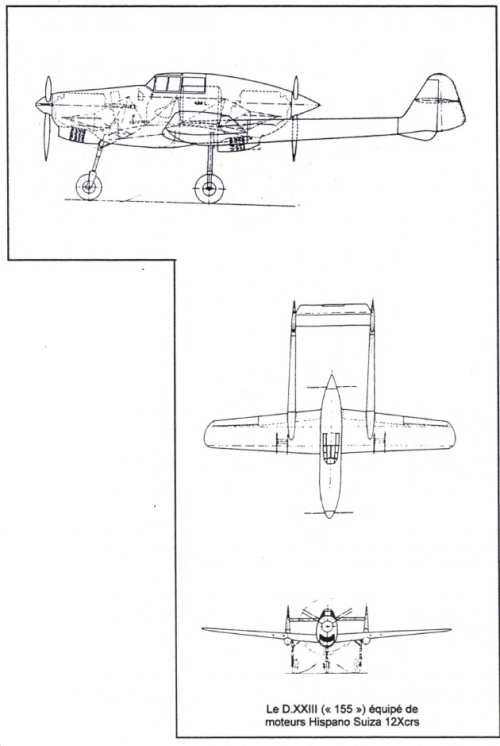
From TU 209,

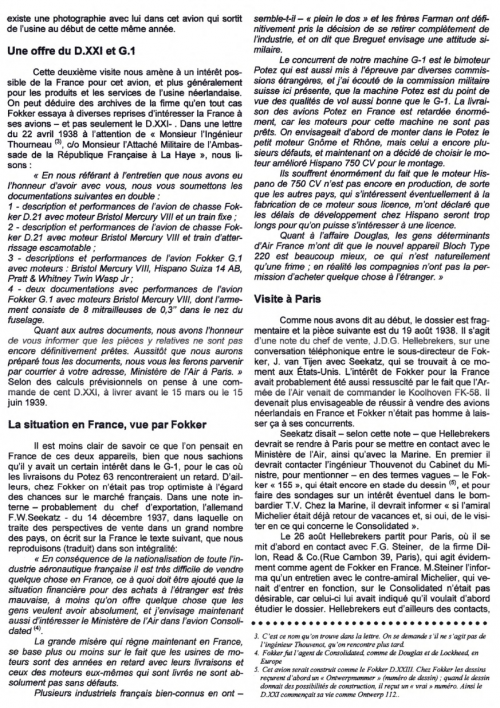
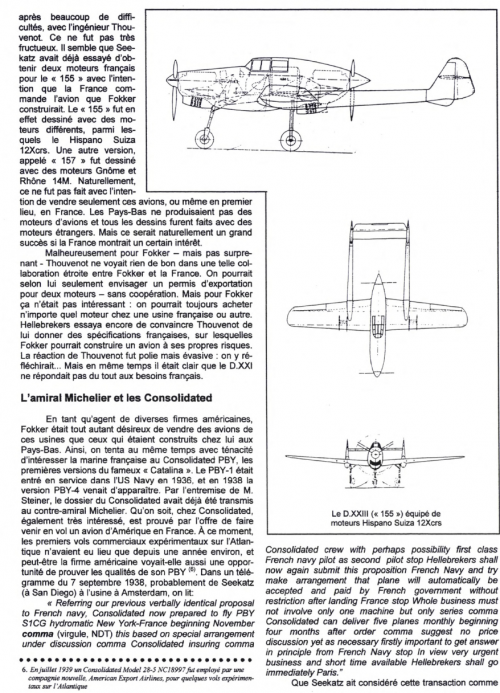
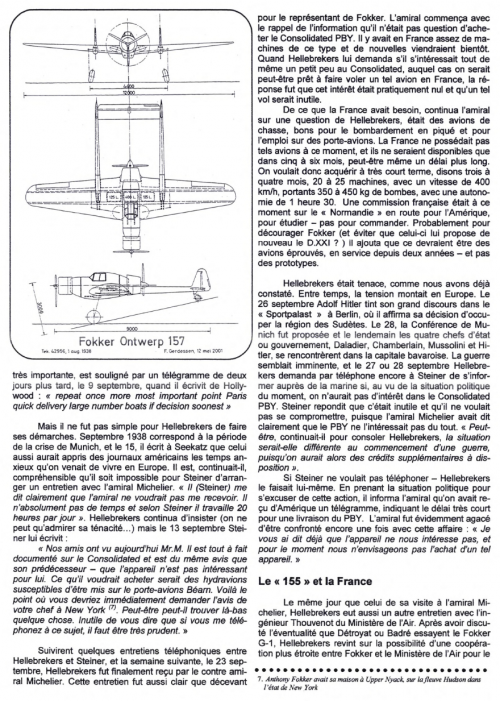
the Ontwerp 155 or D.XXIII.
 

Attachments

  • 1.png
    1.png
    226.9 KB · Views: 96
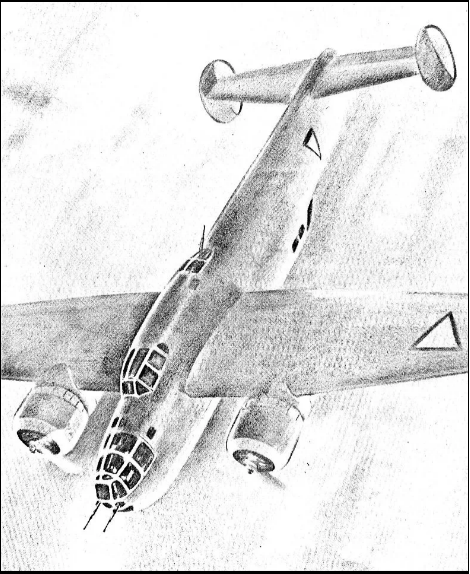
The G.2, or type 154, or CG.16 (all the same aircraft) was an aircaft which was to be powered by RR Merlin engines. It looked like a T.VIII with a redesigned nose and a faired over center cockpit covering. The proposal was made in 1937 and was not built.

For Ontwerp 154,there are two version,one based on or developed from T.V or T.IX,
and the second was a fighter bomber.
 
For Ontwerp 154,there are two version,one based on or developed from T.V or T.IX,
and the second was a fighter bomber.

Not a "fighter-bomber" but a multi-role type. The LVA originally designated the ontwerp 154 as G.2 in the jaktkruiser category in Sept 1939). But, because of the type's multi-role nature, its military designation was changed to C.16 and then, in April 1940, put into an entirely new category as CG.2.

Do you have a source for another ontwerp 154 as a bomber derivative?

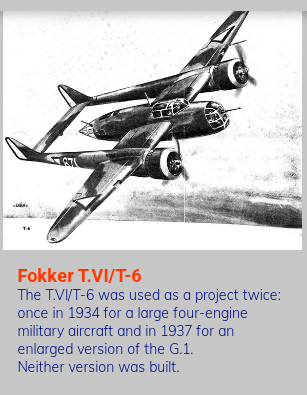
It sounds a bit like the contemporary (Oct 1937) ontwerp 152 - a twin-boomed T.V derivative powered by Bristol Hercules (like the T.VI proposal).
 
Also from the same source, Nederlandse Vliegtuig Encyclopedie but in 1979,
the Ontwerp 184 was developed as a bomber based on T.V or T.IX.
 
Also from the same source, Nederlandse Vliegtuig Encyclopedie but in 1979,
the Ontwerp 184 was developed as a bomber based on T.V or T.IX.

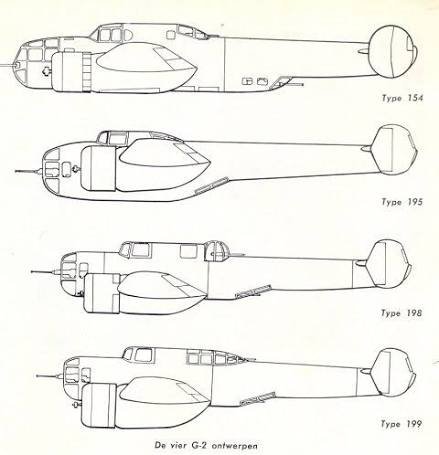
Again from the same source,the Ontwerp 187,195 & 198 were re-used as a
bomber projects.
 

Similar threads

Back
Top Bottom