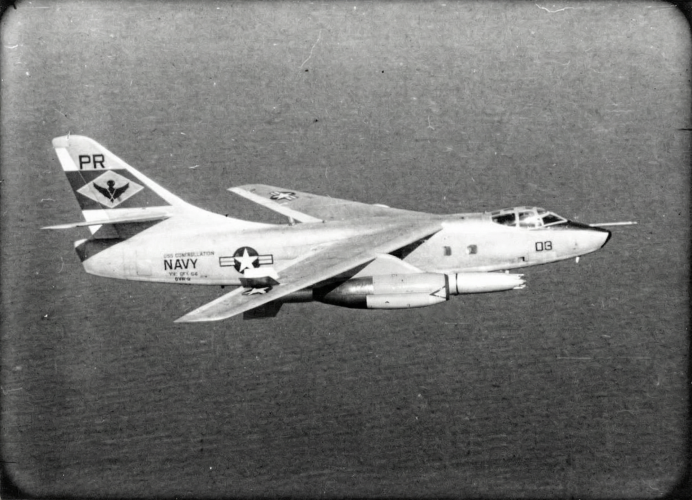
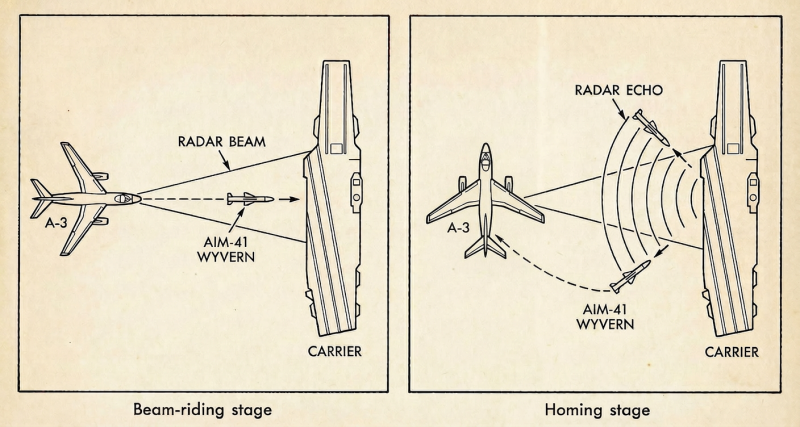
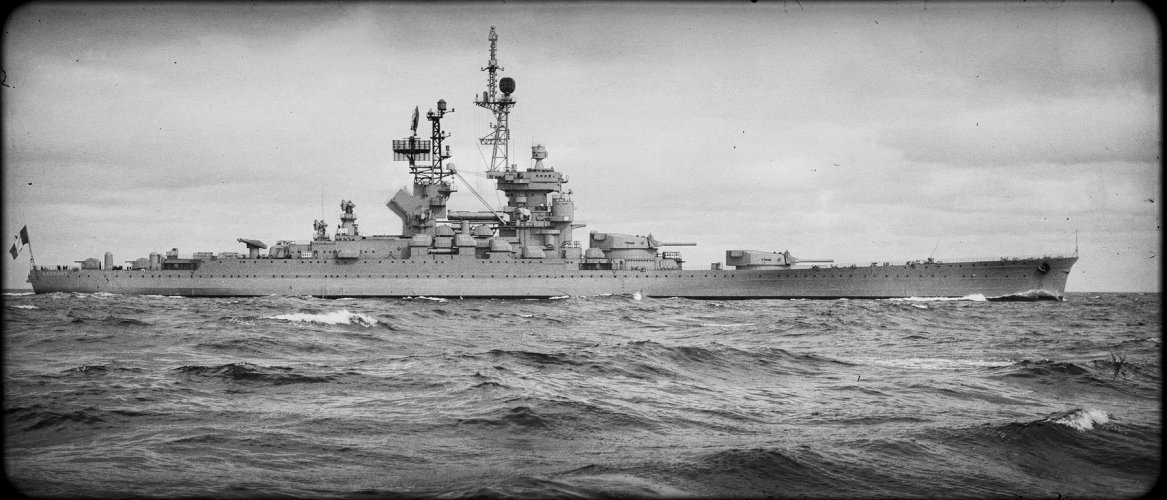
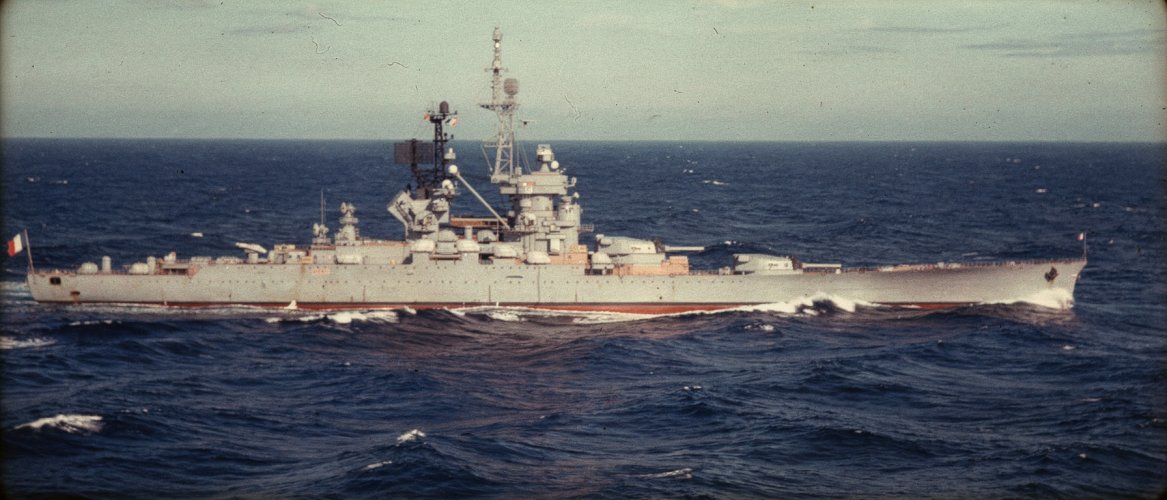
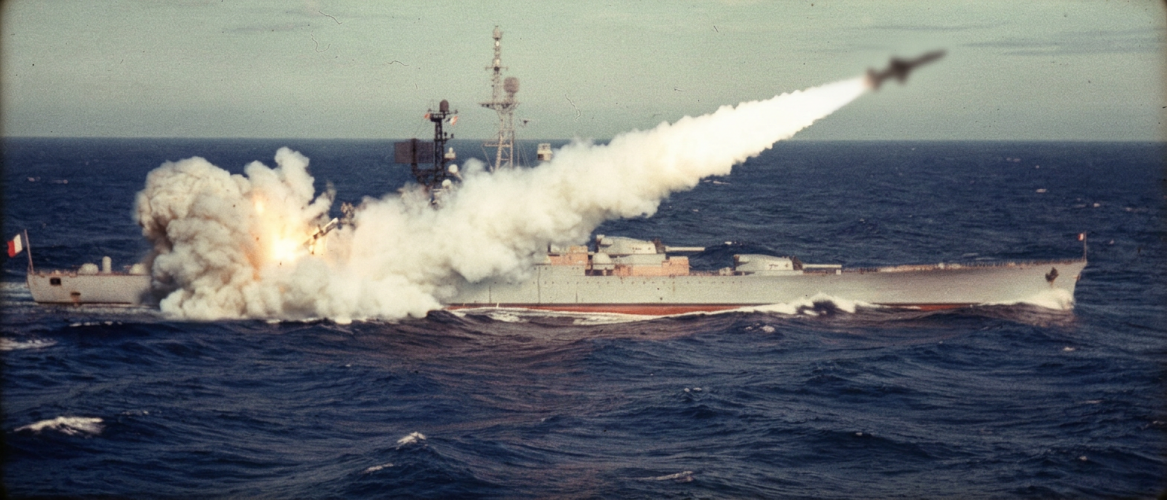
Used AI to illustrate my article about (fictional) AGM-41 Wyvern supersonic anti-ship missile (RIM-8 Talos derivative, redesigned to be air-launched from A-3 Skywarrior (the MA-3C missile carrier version)
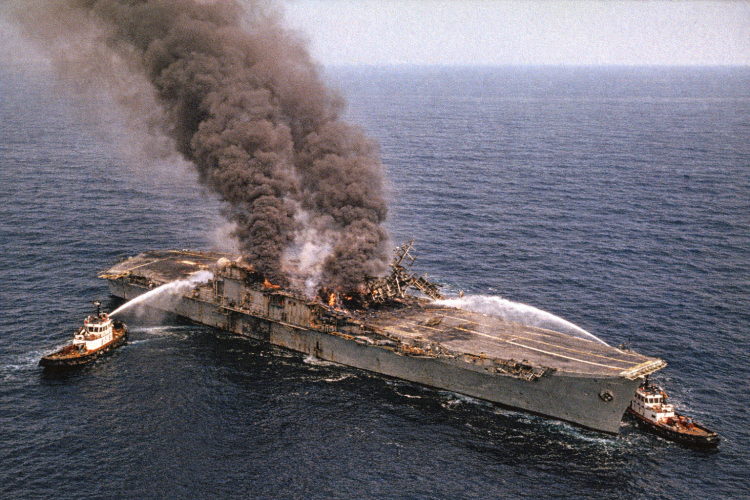
Iranian light carrier “Sarvar-e daryāhā” (SCS derivative, delivered shortly before Shah being exiled) burning, hit by Wyvern missiles from MA-3F bombers of VAM-119 "Thunderboys" squadron, 1988.
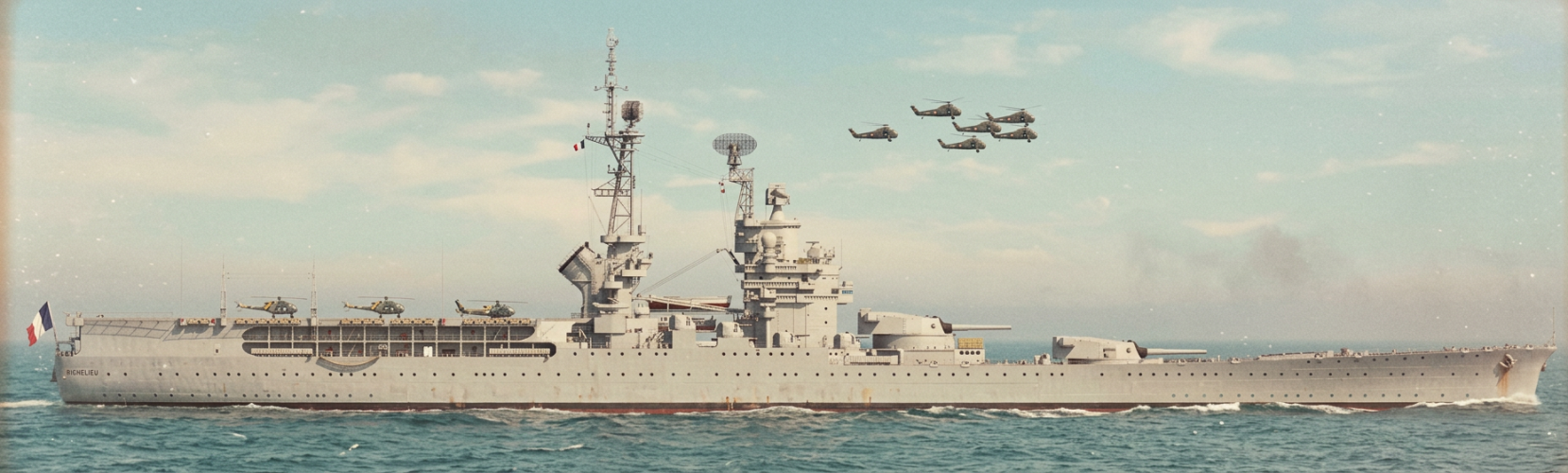
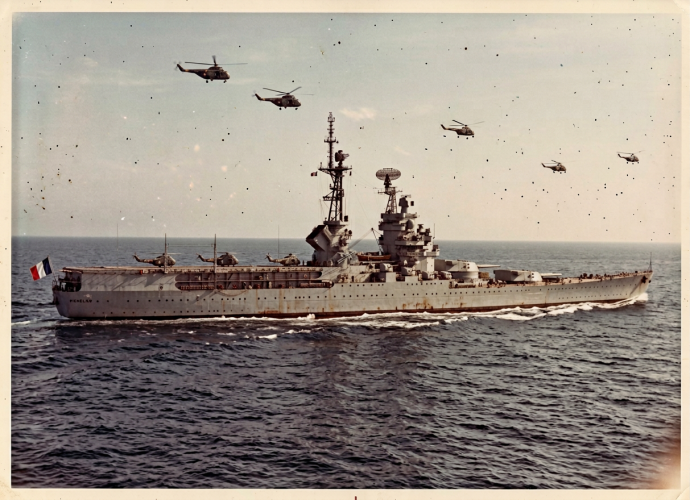
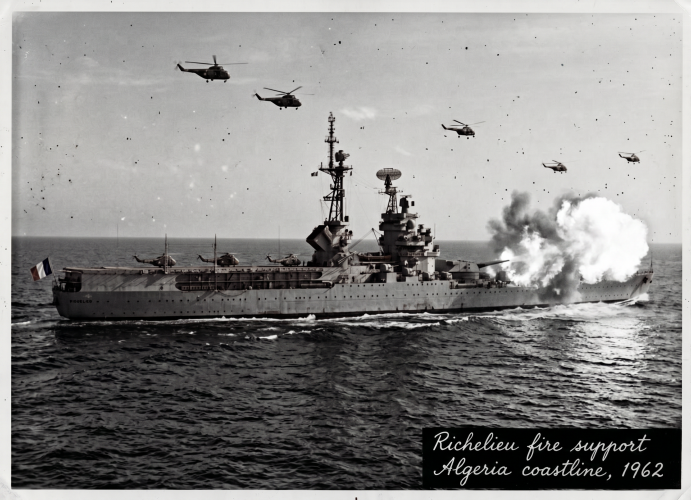
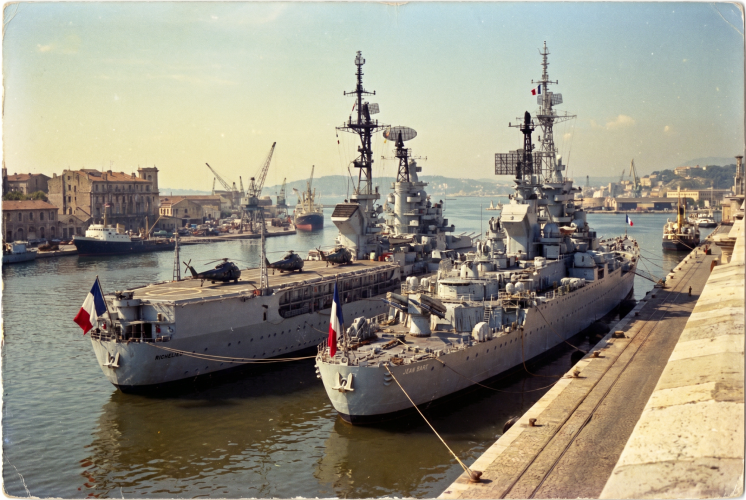
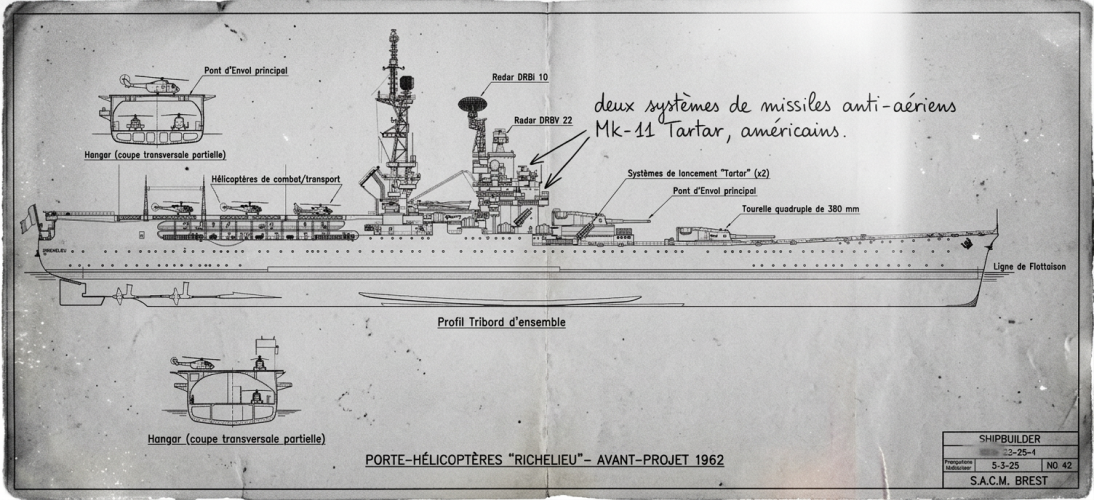
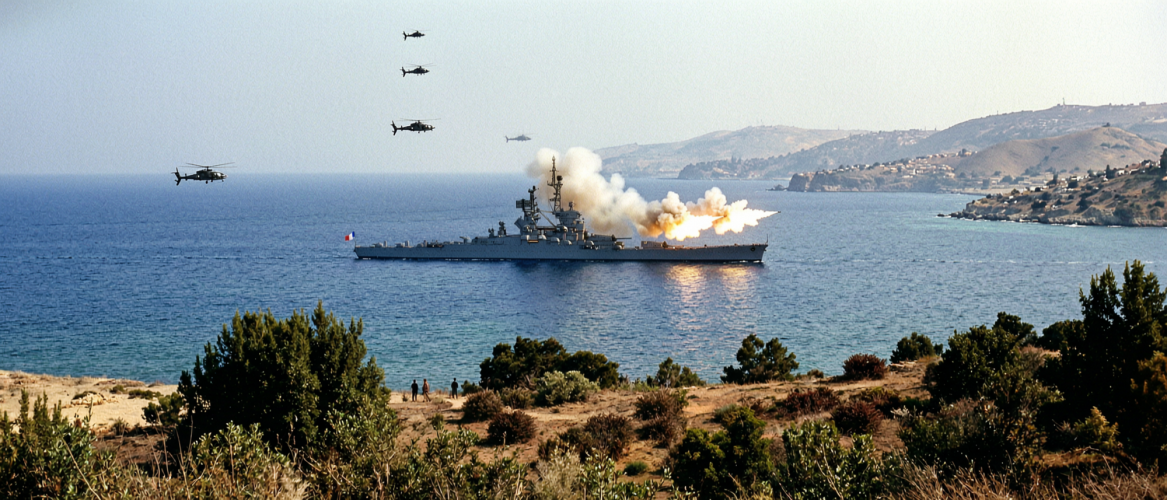
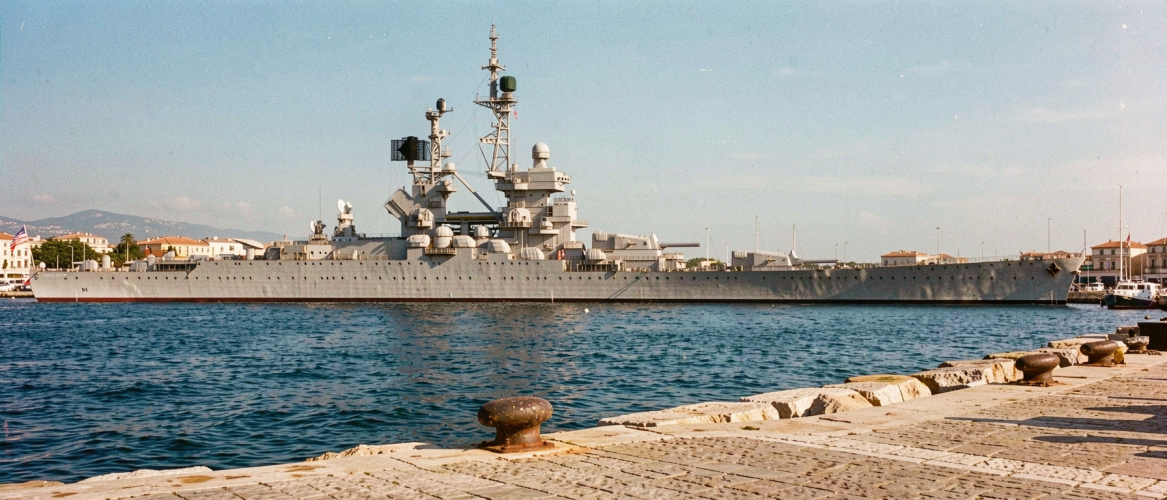
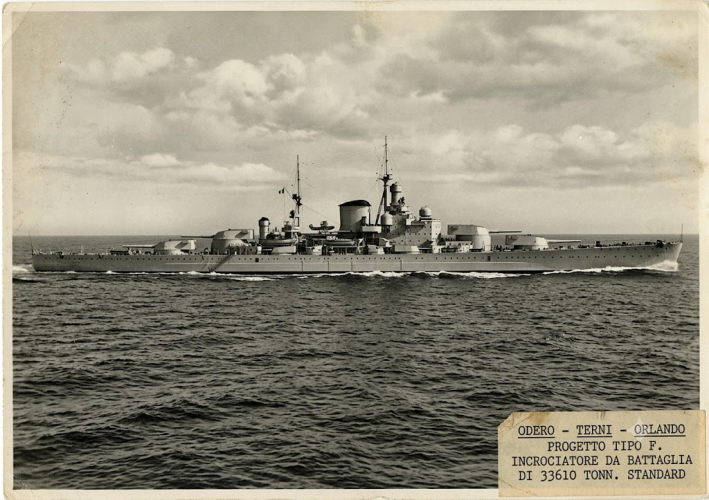
And "Richelieu"; as older and more worn-out, she didn't get the MASURCA refit, but instead was converted into helicopter carrier & amphibious support ship, capable of accomodating a battalion of airborne marines. Initially, she was supposed to get a 100-mm and 57-mm guns battery, but it was decided that gun-only AA armament is not viable in 1960s; so a pair of American-produced Mk-11 GMLS systems for RIM-24 Tartar missiles were brought and installed onboard.
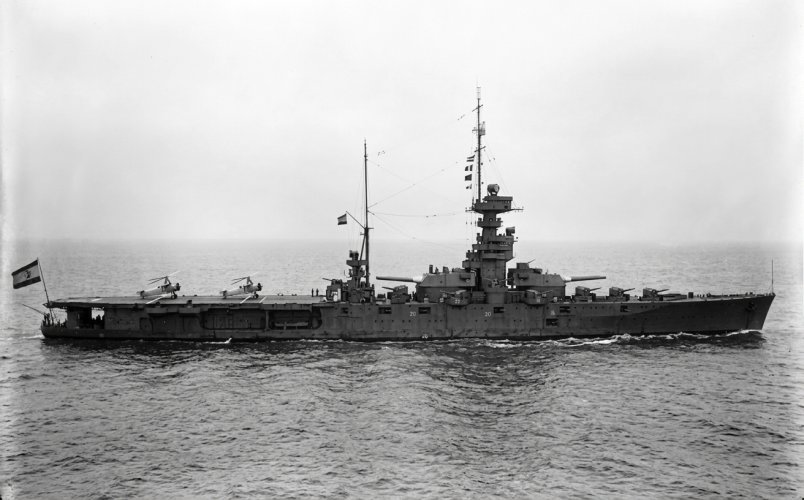
Neat thing with putting all the guns in two forward quad-turrets: the entire back of the ship is available for modifications. No need to ditch turrets and fill the holes with some ballast to re-equilibrate the hull.
Tartar plus helicopters plus 8 x 16 inch guns: hell of a ship, really. Is there a hangar for the helicopters ? how many of them can it carry ?
I wonder if such modifications could be covered by retiring De Grasse and not building Colbert around 1958. Also depends from the Jeanne d'Arc helicopter cruiser.
Neat thing with putting all the guns in two forward quad-turrets: the entire back of the ship is available for modifications. No need to ditch turrets and fill the holes with some ballast to re-equilibrate the hull.
Yep! You only need to remove rear 6-inch turrets, to have a lot of free space, and pretty far away from bow-mounted heavy guns (which is important for sensitive electronic)
15-inch guns; Richelieu-class were armed with 380-mm cannons.
About helicopters - yes, she have a hangar, with a stern-placed elevator. The length of "Richelieu" flight deck is roughly the same as of "Jeanne D'Arc", but battleship's hull is much wider. She is designed to carry up to 12 heavy helicopters (of Super Frelon range), and a number of smaller Alouette or Gazelle machines.
Shiiit you're right about guns. I hate imperial units. 381 mm, 406 mm. Whatever. Bigre, that's a lot of helicopters. And the Super Frelon was the biggest of the lot. Pumas were smaller so more of them would fit. And yeah, a ton of Gazelles, each one with plenty of firepower.
That ship would have came handily during GW1 in 1991, for Operation Daguet.
How about Harriers ? and this question brings me to another one: I presume this is inspired by the hybrid Iowas, with a rear mounted Harrier & helicopter flight deck ? and we are back to forward mounted quad turrets being a much better bargain...
Shiiit you're right about guns. I hate imperial units. 381 mm, 406 mm. Whatever. Bigre, that's a lot of helicopters. And the Super Frelon was the biggest of the lot. Pumas were smaller so more of them would fit. And yeah, a ton of Gazelles, each one with plenty of firepower.
Heh, she got a big hull to accomodate them) The flight deck is the same length as on Jeanne D'Arc, but about 50% wider - and being a battleship, she is much more stable as carrier platform.
How about Harriers ? and this question brings me to another one: I presume this is inspired by the hybrid Iowas, with a rear mounted Harrier & helicopter flight deck ? and we are back to forward mounted quad turrets being a much better bargain...
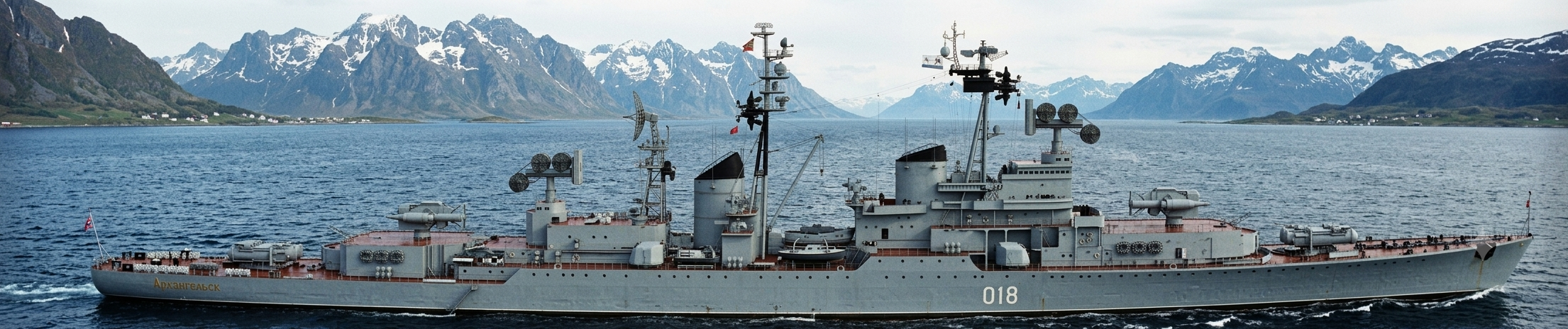
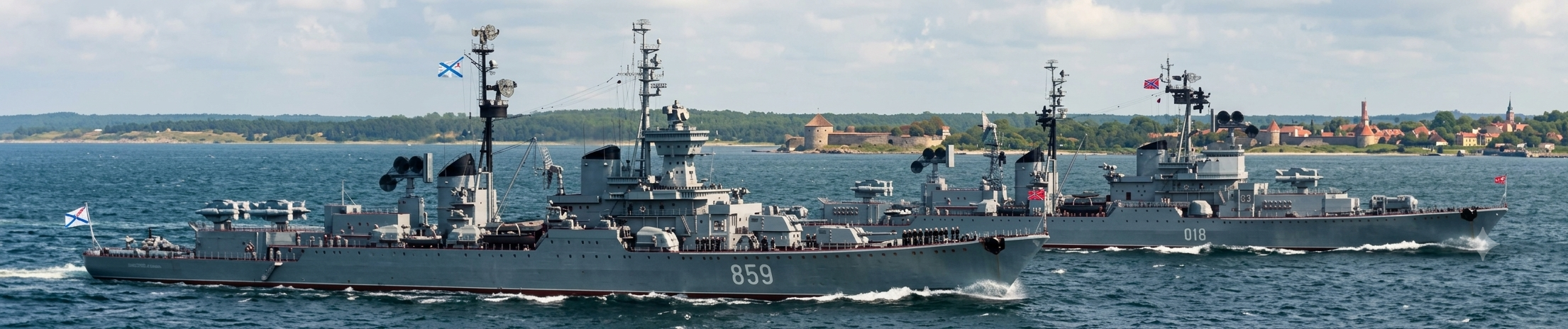
Another one of my long-standing ideas; a proper missile refit for incomplete Project 68bis/ZIF (Sverdlov-class) cruisers:
In this alternate history, Soviet attempts to navalize the S-75 "Volkhov"-M did not ended with "Dzerjinsky". Realizing that liquid-fuel B-753 missiles aren't suitable for shipborne deployment, Soviet Navy started to consider alternative missiles for the same system. The B-757 solid-fuel ramjet missile (developed since 1958 in an attempt to increase S-75 range) was considered as alternative. But solid-fuel ramjets were entirely new area of research & development. Their development was troublesome and could took a lot of time.
So to solve the problem, Soviet Navy make a decisive move - they ordered a ramjet-powered missile, but with kerosene-powered ramjet. The reasoning was, that kerosene-powered ramjets were well-know technology, Soviet engineers have good experience with them, and new missile could be developed very fast. And while kerosene wasn't as safe as solid fuel, it was nowhere as bad as nitrid-based rocket fuel.
The new missile got the B-580 index. It's main charactersitic were:
* It was powered by kerosene-fueled ramjet;
* It inherited basic design and aerodynamic from B-757 solid-fuel ramjet missile;
* It used the same booster engine as B-753 missile;
* It have folding wings on both body & booster, to simplify naval handling;
* It was fully compatible with M-2 "Volkhov-M" SAM fire control system, launcher and handling equipment;
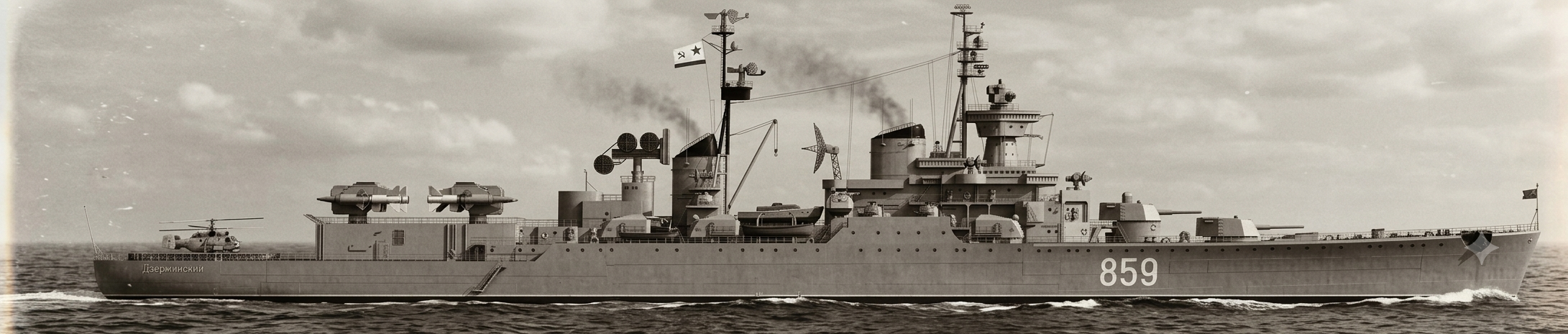
The first cruiser that received a new medium-range SAM was "Kronshtatd", moored incomplete (84,2% readiness) on Baltic shipyard facility. The cruiser was completed as single-end missile cruiser, with M-2 "Volkhov-M" naval SAM installed on stern. A single "Korvet" fire control station (adaptation of land-based SNR-75M) was installed on the place of former rear fire control tower. It could guide two missiles against single target.
In place of rear turrets, a boxy superstructure with two SM-64A launchers was erected. Each launcher was fed from two vertical drums, each contained six fueled and combat-ready missiles. The ready-to-use missile capacity was therefore 24; since it was considered not enough for 15.000-ton cruiser, an additional storage facility for eight more diassembled missiles were prepared. Total missile ammo was therefore brought up to 32.
(two launchers were installed mainly to increase the fire rate; missile wings requred un-folding during loading, which slowed down the operation)
The refit also included replacement of the old small-caliber AA guns with six new 45-mm ZIF-68 quads (a version of SM-20-ZIF for direct current power grid), controlled by "Fut-68b-bis" radar stations.
Three ships were modernized at Project 70-M1 (NATO "Kama"-class CLG):
* "Kronshtadt" on Baltic;
* "Admiral Nakhimov" on Black Sea (used as missile test ship, then refit started at Project 71, but stopped; eventually completed as Project 70-M1 cruiser);
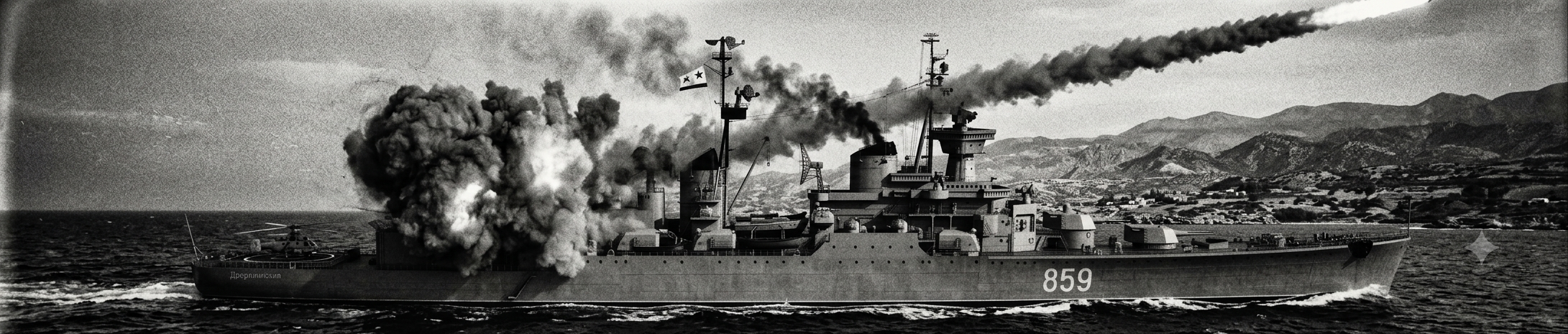
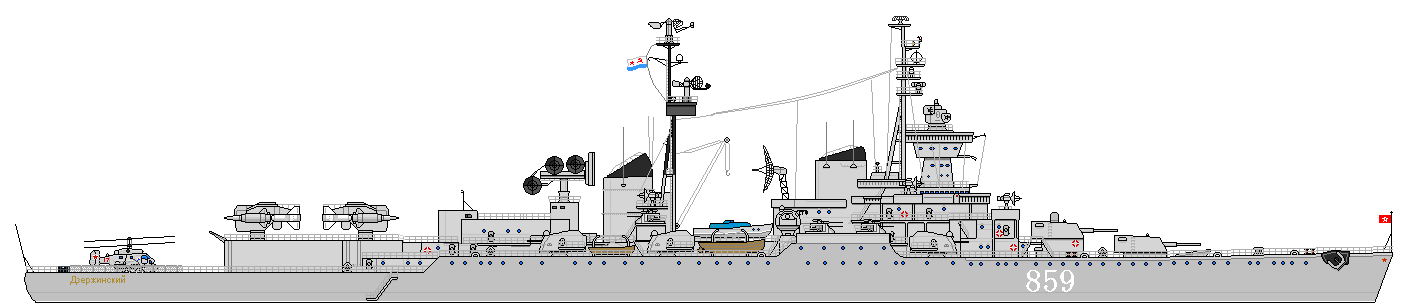
* "Dzerjinsky" on Black Sea (upgraded to 70-M1 standard);
Project 70-M1 wasn't the final alteration of "Sverdlov"-class cruisers. There were still Project 68-ZIF hulls available on shipyards; and growing number of Soviet Navy carriers in early 1960s required escorts, capable of area defense. Since the Project 68-ZIF ships were generally in lesser state of completion, the more comprehensive refit was possible:
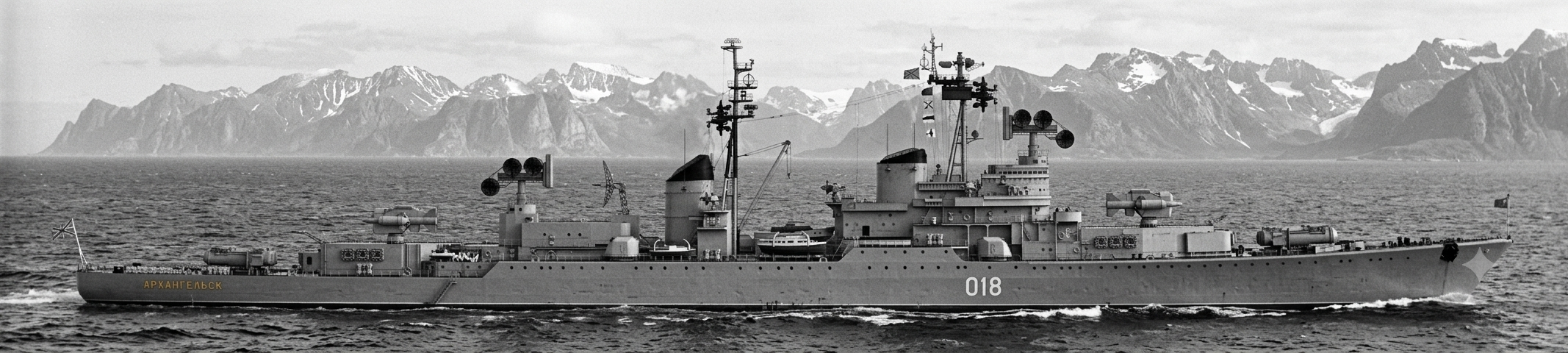
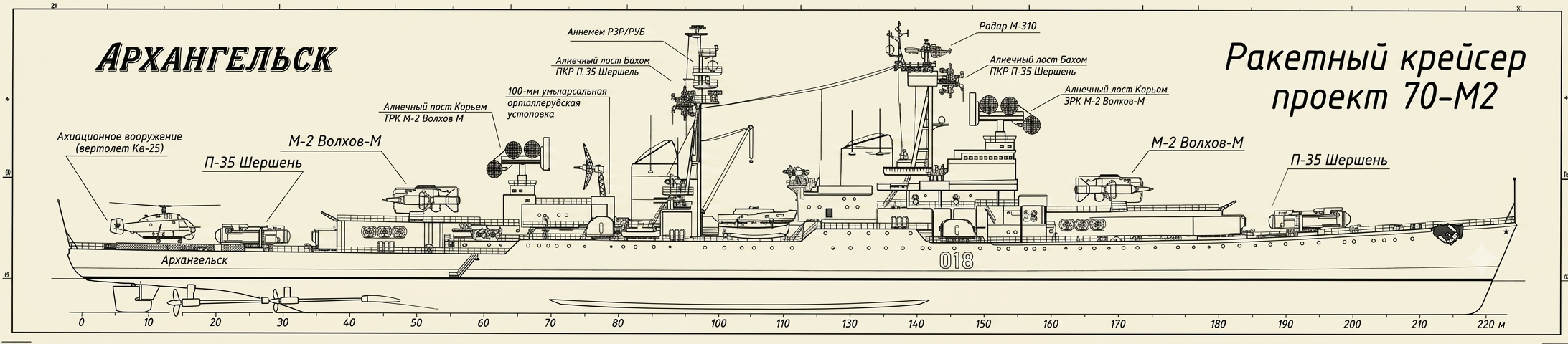
The Project 70-M2 modernization was a comprehensive, two-end missile refit, comparable in scale with United States "Albany"-class cruiser refti. All the cruisers former armament and superstructure was completely removed. A pair of M-2 "Volkhov-M" SAM systems were installed fore and aft - each with one "Korvet" fire control station and one SM-65B launcher.
A new missile systems were significantly impoved over the previous ones. Each SM-65B launcher sits in the center of the square formed by four drum magazines, each with 8 missiles (total ammo capacity per SAM - 32; per ship - 64). Instead of un-folding the missile wings during loading, a special loading compartments were installed between each pair of drums, port and starboard. The missiles were moved into loading compartment from drums, their wings were unfloded there, and missiles were prepared for loading. The fire rate improved considerably.
The "Korvet" fire control stations were also improved with "Bissertrisa" group fire control system. This system digitally extracted additional target data from the wide angle scans of "Korvet" azimuth scan and elevation scan antennas, and calculated additional fire solution for one of two missile control channels - thus allowing the system to fire at two close-flying targets, instead of one. Of course, only targets relatively close to each other could be attacked such way.
Finally, the B-781 nuclear-tipped SAM was integrated to dealt with target formations, and "Sarmatka" ranging radar (modification of land-based "Amazonka" ranging radar) was installed to provide detonation command for nuclear missiles (the nuclear missiles did not have proximity fuze).
The original project was a purely SAM cruiser, but during development it was decided to install the long-range anti-ship missiles too. The P-35 missile was chosen; two quad SM-70 launchers were installed fore and aft of SAM systems, with spare round magazines (each storing four missiles) placed at sides of SAM's magazines. The four P-500 "Utes" fire control radars were also fit to provide P-35 missiles with man-in-the-loop capability.
All secondary armament was removed, and four 76-mm dual AK-726 mounts were fit, two per broadside. Each was controlled by MR-105 "Turel" FCR.
Four ships were commissioned as Project 70-M2 (NATO "Kola"-class CG):
* "Sherbakov" on Baltic;
* "Tallin" on Baltic;
* "Admiral Kornilov" on Black Sea;
* "Arkhangelsk" on North Sea;
This site uses cookies to help personalise content, tailor your experience and to keep you logged in if you register.
By continuing to use this site, you are consenting to our use of cookies.