Cool Science

It has been amazing!!!! First total to me. A partial one is nice (2005) but that one has been pure beauty.
Spain is very lucky. There is another eclipse next year in the south: August 2, 2027. I'll be there, either in Malaga or Cadiz.

There is an annular eclipse in Spain on January 26, 2028, also in French Guyana.

Next total eclipses in Europe
- 2053, Spain but only Gibraltar tip
- 2081, September 3 in Paris... six months before my centenary so I'll be probably dead and buried.
 
Last edited:
A video by ExtictZoo about the apex predator from every single geological period:

 
And from ExtinctZoo the deadliest sea predators from a geological periods:


The oceans and seas of earth have long been home to some of the most nightmarish creatures, and when you include every aquatic animal ever, the list of thalassophobia inducing animals is pretty long, which made me wonder, what just was the deadliest sea animal from each of earth’s periods?​
0:00 The Thalassaphobia Rule
1:21 Cambrian
3:48 Ordovician
7:05 Silurian
10:37 Devonian
14:10 Carboniferous
17:05 Permian
20:25 Triassic
25:30 Jurassic
29:09 Cretaceous
33:00 Paleogene
36:24 Neogene
41:00 The Present
 
So cheap Titanium metal?
Hopefully if done.
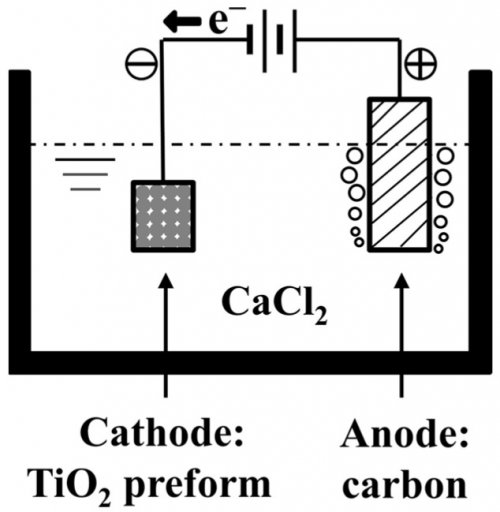
Traditiional Kroll process involves chambered vacuum heating, chemical disposition of chlorine and magnesium; both which dangerous or expensive.
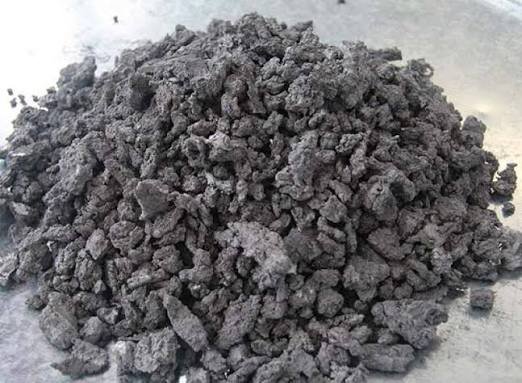
By contrast the reduction process uses calcium salt, common substances. Titanium scrap added to an anode embedded flux of calcium chloride, the TiO2 pellets placed bottom of the vat; and electric current is introduced to the flux, the titanium pulls away and attracts to the cathode, the oxygen becomes free oxygen (O2) or Calcium oxide and chlorine bubbles bubbles which are recyclable to make more CaCl.
Though Electrolytic reduction is energy intensive, Kroll process is more intensive and more time consuming. With electrolytic reduction any size is produceable.
1786664878530.png
 
A video from Dr. Polaris about the evolution of Dromaeosaurids:


Please enjoy this episode focusing on the Dromaeosaurids, a famous group of Paravian Theropods that were closely related to birds and developed into hypercarnivorous ambush predators.​
Thumbnail art by Fred Wierum
Sources used for this video:
Averianov, A. O.; Lopatin, A. V. (July 1, 2021). "A New Theropod Dinosaur (Theropoda, Dromaeosauridae) from the Late Cretaceous of Tajikistan". Doklady Earth Sciences. 499 (1): 570–574. Bibcode:2021DokES.499..570A. doi:10.1134/S1028334X21070047. S2CID 236478552.​
Brownstein, Chase Doran (2021). "Dromaeosaurid crania demonstrate the progressive loss of facial pneumaticity in coelurosaurian dinosaurs". Zoological Journal of the Linnean Society. 191: 87–112. doi:10.1093/zoolinnean/zlaa048.​
Cau, A. (2024). "A Unified Framework for Predatory Dinosaur Macroevolution" (PDF). Bollettino della Società Paleontologica Italiana. 63 (1). doi:10.4435/BSPI.2024.08 (inactive 12 July 2025).​
Currie, P. J.; Evans, D. C. (2019). "Cranial Anatomy of New Specimens of Saurornitholestes langstoni (Dinosauria, Theropoda, Dromaeosauridae) from the Dinosaur Park Formation (Campanian) of Alberta". The Anatomical Record. 303 (4): 691–715. doi:10.1002/ar.24241. PMID 31497925. S2CID 202002676.​
Currie, Philip J.; Varricchio, David J. (2004), "A new dromaeosaurid from the Horseshoe Canyon Formation (Upper Cretaceous) of Alberta, Canada" (PDF), in Currie, Philip J.; Koppelhus, Eva B.; Shugar, Martin A.; Wright, Joanna L. (eds.), Feathered Dragons, Indianapolis: Indiana University Press, pp. 112–132, ISBN 978-0-253-34373-4.​
Gianechini, Federico A.; Ercoli, Marcos D.; Díaz-Martínez, Ignacio (5 February 2020). "Differential locomotor and predatory strategies of Gondwanan and derived Laurasian dromaeosaurids (Dinosauria, Theropoda, Paraves): Inferences from morphometric and comparative anatomical studies". Journal of Anatomy. 236 (5): 772–797. doi:10.1111/joa.13153. PMC 7163733. PMID 32023660.​
Jasinski, Steven E.; Sullivan, Robert M.; Dodson, Peter (2020-03-26). "New Dromaeosaurid Dinosaur (Theropoda, Dromaeosauridae) from New Mexico and Biodiversity of Dromaeosaurids at the end of the Cretaceous". Scientific Reports. 10 (1): 5105. Bibcode:2020NatSR..10.5105J. doi:10.1038/s41598-020-61480-7. ISSN 2045-2322. PMC 7099077. PMID 32218481.​
Joeckel, R. M.; Ludvigson, G.; Moeller, A.; Hotton, C. L.; Suarez, M. B.; Suarez, C. A.; Sames, B.; Kirkland, J. I.; Hendrix, B. (2019). "Chronostratigraphy and Terrestrial Palaeoclimatology of Berriasian–Hauterivian Strata of the Cedar Mountain Formation, Utah, USA". Geological Society of London, Special Publications. 498: 75–100. doi:10.1144/SP498-2018-133. S2CID 210296827.​
Lü, Junchang; Brusatte, Stephen L. (16 July 2015). "A large, short-armed, winged dromaeosaurid (Dinosauria: Theropoda) from the Early Cretaceous of China and its implications for feather evolution". Scientific Reports. 5 (1) 11775. Bibcode:2015NatSR...511775L. doi:10.1038/srep11775. PMC 4504142. PMID 26181289.​
Motta, Matías J.; Agnolína, Federico L.; Eglia, Federico Brissón; Rozadillaa, Sebastián; Novas, Fernando E. (22 Aug 2025). "Phylogenetic relationships of Unenlagiidae among Paraves (Dinosauria)". Journal of Systematic Palaeontology. 23 (1). doi:10.1080/14772019.2025.2529608. Retrieved 22 August 2025.​
Napoli, J. G.; Ruebenstahl, A. A.; Bhullar, B.-A. S.; Turner, A. H.; Norell, M. A. (2021). "A New Dromaeosaurid (Dinosauria: Coelurosauria) from Khulsan, Central Mongolia" (PDF). American Museum Novitates (3982): 1–47. doi:10.1206/3982.1. hdl:2246/7286. ISSN 0003-0082. S2CID 243849373.​
Powers, M. A.; Sullivan, C.; Currie, P. J. (2020). "Re-examining ratio based premaxillary and maxillary characters in Eudromaeosauria (Dinosauria: Theropoda): Divergent trends in snout morphology between Asian and North American taxa". Palaeogeography, Palaeoclimatology, Palaeoecology. 547 (109704) 109704. Bibcode:2020PPP...54709704P. doi:10.1016/j.palaeo.2020.109704. S2CID 216499705.​
Turner, A. H.; Makovicky, P. J.; Norell, M. A. (21 September 2007). "Feather Quill Knobs in the Dinosaur Velociraptor". Science. 317 (5845): 1721. Bibcode:2007Sci...317.1721T. doi:10.1126/science.1145076. PMID 17885130.​
Wills, S.; Underwood, C. J.; Barrett, P. M. (2023). "Machine learning confirms new records of maniraptoran theropods in Middle Jurassic UK microvertebrate faunas". Papers in Palaeontology. 9 (2). e1487. Bibcode:2023PPal....9E1487W. doi:10.1002/spp2.1487.​
Zelenitsky, Darla K.; Therrien, François; Ridgely, Ryan C.; McGee, Amanda R.; Witmer, Lawrence M. (13 April 2011). "Evolution of olfaction in non-avian theropod dinosaurs and birds". Proceedings of the Royal Society B: Biological Sciences. 278 (1725): 3625–3634. doi:10.1098/rspb.2011.0238. PMC 3203493. PMID 21490022.​
 
It would appear that the Denisovans were bigger than previously thought, from Seven Days Of Science:


In the science news this week: we have a report that Denisovans might have been larger and taller people than previously realised, a new species of toad has been named based on fossils found at the La Brea tar pits, a revolutionary new kind of levitating magnetometer has been developed, and more!
https://www.youtube.com/redirect?ev...ps://www.tiktok.com/@bengthomas&v=M3y2pgMaGWI
Credits:
Presented by Ben G Thomas
Written by Ben Thomas and Douglas James
7 Days of Science is produced by Douglas James and Ben Thomas
7 Days of Science logo, graphics and more have been designed by Michael Buhler

Sources:
Massive Denisovan leg bones:
https://www.biorxiv.org/content/10.64...

New toad from La Brea tar pits:
https://www.tandfonline.com/doi/full/...https://www.youtube.com/redirect?ev...l/10.1080/02724634.2026.2689465&v=M3y2pgMaGWI
https://www.sci.news/paleontology/spe...https://www.youtube.com/redirect?ev...ntology/spea-labreae-14971.html&v=M3y2pgMaGWI

New ichthyosaur species Jabalisaurus tethyensis:
https://palaeo-electronica.org/conten...https://www.youtube.com/redirect?ev...assic-ichthyosaurs-from-germany&v=M3y2pgMaGWI

Glueball:
https://arxiv.org/abs/2607.20366
https://english.ihep.cas.cn/nw/han/y2...https://www.youtube.com/redirect?ev...6/202608/t20260804_1186878.html&v=M3y2pgMaGWI

Using levitating objects as magnetic sensors:
https://www.nature.com/articles/d4158...
https://www.science.org/doi/10.1126/s...https://www.youtube.com/redirect?ev...org/doi/10.1126/science.adx1707&v=M3y2pgMaGWI


Chapters:
0:00 - Intro
0:33 - Massive Denisovan leg bones
2:32 - [FROG NEWS] New toad from La Brea tar pits
3:42 - New ichthyosaur species
4:56 - Glueball
6:23 - Using levitating objects as magnetic sensors
7:42 - Outro
 
Scientists have made progress in discovering the true colours of non-avian Dinosaurs, from Dinosaur Discovery:


Think back to the first Jurassic Park film. While it's a cinematic marvel to behold, don't all the dinosaurs look a little bit... drab? Most of the animals in the movie are coated in dull shades of brown or grey; with only occasional splashes of colour making it through in the final cut. In fact, until very recently, the Jurassic World films were guilty of this too, adding only the occasional splash of green or black into the mix - but dinosaurs don't have to be dull!​
In reality, dinosaurs would have been adorned in all manner of vibrant hues - they are, after all, related to modern day birds, and look at the diversity amongst them. Scientists have actually been able to discern the colours of certain species of dinosaur by looking at tiny traces of pigment cells left behind in the fossils - and the results are often astounding.​
Join us today, as we take a look at some of the species whose colours we know for certain.
 
Gingko Traces has three videos where the viewer is a hypothetical time-travelling explorer visiting the Permian period:


0:00 Permian Part 1
1:04 Permian Wetlands
4:07 Dimetrodon
6:09 Eupelycosauria
8:45 Amniotes
9:30 Synapsids
11:54 Pangea
12:56 Amphibians
17:22 Sauropsids
18:50 Early Permian Oceans
20:36 Chondricthyans
23:54 Eurypterids
24:35 The Panthalassic Coast
26:08 Olson's Extinction
Prehistoric life in the early Permian is wild, and large synapsids like dimetrodon and edaphosaurus are everywhere! With your 4x4, it's time to explore the dry interior and coastal swamps of diverse Pangea, and take a dip in the wild oceans filled with helicoprion sharks!


The middle Permian was the time of the synapsids, temnospondyls, and sauropsids. On the hot, dry supercontinent of Pangea, discover more about the tough survival specialists that existed before the dinosaurs.
https://www.youtube.com/watch?v=qE7Ul-ZtdMM
0:00 The Permian Period
1:27 Qingtoushan Formation
3:10 Faunal Turnover
5:15 Therapsids
7:52 Temnospondyls
10:04 Reptiliomorphs
11:48 Permian Insects
14:08 Ginkgos
16:43 Tapinocephalus Assemblage Zone
21:18 Diversification
26:52 Late Paleozoic Ice Age
28:34 End-Capitanian Extinction

Permian extinctions
https://pmc.ncbi.nlm.nih.gov/articles...https://www.youtube.com/redirect?ev....gov/articles/PMC2596898/#bib27&v=qE7Ul-ZtdMM

Tapinocephalus assemblage zone
https://www.researchgate.net/publicat...https://www.youtube.com/redirect?ev...p_Karoo_Supergroup_South_Africa&v=qE7Ul-ZtdMM

Mayflies
https://www.researchgate.net/figure/M...

https://www.youtube.com/redirect?ev...PIN-no-3840-1707_fig1_257843212&v=qE7Ul-ZtdMM
 
Tyrannosaur imprint skin fossils indicate and disprove recently categorized belief in large feathered therapod.

1000043738.jpg

Feathers make zero sense in climate fir animal not needing heavy degree thermoregulation.
 
Ginko Traces has an interesting video out about the evolution of Trilobites:


You are swimming in the Cambrian period with trilobites, the most iconic of all the Paleozoic arthropods! From trilobite origins to their extinction, get ready to meet the 10 orders of amazing sea bugs, and all their spiky, bug-eyed, oversized variations.
 
Did life start twice on Earth, from Anton Petrov:


Hello and welcome! My name is Anton and in this video, we will talk about the origin of life, LUCA and how life on Earth started twice
Links:
https://www.science.org/doi/epdf/10.1...https://www.youtube.com/redirect?ev...doi/epdf/10.1126/sciadv.aef3128&v=zFk-8_0dXYo
https://www.nature.com/articles/s4155...https://www.youtube.com/redirect?ev...com/articles/s41559-024-02461-1&v=zFk-8_0dXYo
https://theconversation.com/rain-may-...https://www.youtube.com/redirect?ev...rting-life-as-we-know-it-238291&v=zFk-8_0dXYo
https://www.science.org/doi/10.1126/s...
https://www.youtube.com/redirect?ev....org/doi/10.1126/sciadv.aed8749&v=zFk-8_0dXYo

#originoflife #LUCA #biology
https://www.youtube.com/watch?v=zFk-8_0dXYo
0:00 Origin of life story...rewritten?
2:05 Study suggests life started twice - the LUCA story
5:40 Bacteria and archaea comparison and implications
6:55 Nitrogen and phosphorous and the influence of Jupiter
8:40 How did nitrogen become useful? The sun!
10:30 Phosphate problem resolved with a Canadian lake
13:40 So here's the summary of what we know
15:40 Conclusions
 
An interesting video about the complete evolution of cats from their origins to the domestic house cat:


Thirty million years ago, the first cat walked the Earth. It wasn't the fluffy thing sitting on your couch. It was a predator in a world full of predators, and it had to fight for every meal. What happened between that first ancient cat and the one currently ignoring you from across the room is one of the most remarkable stories in the history of life on Earth.
This is the complete story of cat evolution — every major branch, every extinction, every twist — from the very first cat-like creature all the way to the one species that somehow conquered the entire planet.
Sources:
— Johnson WE et al. (2006). The late Miocene radiation of modern Felidae. Science. https://doi.org/10.1126/science.1122277https://www.youtube.com/redirect?ev...doi.org/10.1126/science.1122277&v=2VbGOqIe0OM
— Driscoll CA et al. (2007). The Near Eastern origin of cat domestication. Science. https://doi.org/10.1126/science.1139518https://www.youtube.com/redirect?ev...doi.org/10.1126/science.1139518&v=2VbGOqIe0OM
— Werdelin L et al. (2010). Phylogeny and evolution of cats (Felidae). In: Biology and Conservation of Wild Felids. Oxford University Press.
— Antón M (2013). Sabertooth. Indiana University Press.
 
i am reminded of a 1977 quote from my childhood (i later used it as a header for a thermoregulation paper too) ... 'from the North came the furry tyrannosaurs'
 
What happens to water when you compress it to its' ultimate limit:


What would happen if you kept compressing water harder and harder—with no container strong enough to stop it? At extreme pressures, water stops behaving like the liquid we know and begins transforming into entirely different states of matter.

In this video, we explore what happens when water is compressed toward its physical limits. Discover how increasing pressure can force water into high-pressure forms of ice, including Ice VI and Ice VII, even at temperatures where ordinary ice would not be expected. Experiments have shown that liquid water can remain metastable far beyond the pressure range where high-pressure ice phases are thermodynamically favored, before rapidly transforming under extreme conditions. :contentReference[oaicite:0]{index=0}

We'll follow water through increasingly extreme pressures and examine how its molecular structure changes. At still higher pressures and temperatures, water can enter the extraordinary superionic state, where oxygen atoms form a solid-like lattice while hydrogen ions move through it almost like a liquid. Laboratory experiments have observed this behavior at hundreds of gigapascals and thousands of kelvin. :contentReference[oaicite:1]{index=1}

But does water have an actual "absolute limit" where it can no longer be compressed? The answer is more complicated. Water becomes progressively less compressible as pressure rises, while its molecular and atomic structure changes dramatically. At sufficiently extreme conditions, ordinary H₂O no longer resembles the familiar liquid we encounter on Earth.

Watch until the end to discover how far water can be pushed before it becomes something completely different—and what the most extreme experiments have revealed about matter under unimaginable pressure.​
https://www.youtube.com/hashtag/water
 
Another interesting and very detailed video concerning the Permo-Triassic extinction event:


Siberia is where the blame lands, and it has for decades. The Siberian Traps spread across around 1.5 million square kilometers at the end of the Permian. The trouble is the timing. Those eruptions carried on for hundreds of thousands of years before the extinction and hundreds of thousands of years after it, while the dying itself took about 60,000 years. A cause that slow cannot account for a window that narrow unless something inside it changed partway through.​

Sources & References
Burgess et al. (2014) — High-precision timeline for Earth's most severe extinction — PNAS — https://doi.org/10.1073/pnas.1317692111https://www.youtube.com/redirect?ev...doi.org/10.1073/pnas.1317692111&v=0CuISWZtToI
Burgess et al. (2017) — Initial pulse of Siberian Traps sills as the trigger — Nature Communications — https://doi.org/10.1038/s41467-017-00...https://www.youtube.com/redirect?ev....org/10.1038/s41467-017-00083-9&v=0CuISWZtToI
Clarkson et al. (2015) — Ocean acidification and the Permo-Triassic mass extinction — Science — https://doi.org/10.1126/science.aaa0193https://www.youtube.com/redirect?ev...doi.org/10.1126/science.aaa0193&v=0CuISWZtToI
Dai et al. (2023) — A Mesozoic fossil lagerstätte from 250.8 million years ago shows a modern-type marine ecosystem — Science — https://doi.org/10.1126/science.adf1622https://www.youtube.com/redirect?ev...doi.org/10.1126/science.adf1622&v=0CuISWZtToI
Marquez et al. (2026) — Differences in physiological tolerance to global warming caused the Permian–Triassic transition — PNAS — https://doi.org/10.1073/pnas.2533086123https://www.youtube.com/redirect?ev...doi.org/10.1073/pnas.2533086123&v=0CuISWZtToI
Nicholls et al. (2026) — The timing and nature of marine ecosystem recovery — npj Biodiversity — https://doi.org/10.1038/s44185-025-00...https://www.youtube.com/redirect?ev....org/10.1038/s44185-025-00117-2&v=0CuISWZtToI
Penn et al. (2018) — Temperature-dependent hypoxia explains biogeography and severity — Science — https://doi.org/10.1126/science.aat1327https://www.youtube.com/redirect?ev...doi.org/10.1126/science.aat1327&v=0CuISWZtToI
Raup (1979) — Size of the Permo-Triassic bottleneck — Science — https://doi.org/10.1126/science.206.4...https://www.youtube.com/redirect?ev...rg/10.1126/science.206.4415.217&v=0CuISWZtToI
Roberts et al. (2025) — Earliest oceanic tetrapod ecosystem reveals rapid complexification — Science — https://doi.org/10.1126/science.adx7390https://www.youtube.com/redirect?ev...doi.org/10.1126/science.adx7390&v=0CuISWZtToI
Rothman et al. (2014) — Methanogenic burst in the end-Permian carbon cycle — PNAS — https://doi.org/10.1073/pnas.1318106111https://www.youtube.com/redirect?ev...doi.org/10.1073/pnas.1318106111&v=0CuISWZtToI
Stanley (2016) — Estimates of the magnitudes of major marine mass extinctions — PNAS — https://doi.org/10.1073/pnas.1613094113https://www.youtube.com/redirect?ev...doi.org/10.1073/pnas.1613094113&v=0CuISWZtToI
Svensen et al. (2018) — Sills and gas generation in the Siberian Traps — Phil. Trans. R. Soc. A — https://doi.org/10.1098/rsta.2017.0080
IUGS Geoheritage — GSSPs of Meishan, China — https://iugs-geoheritage.org/geoherit...
 
Here's an excellent documentary series called "Prehistoric Disasters" concerning major geological events that effected the Earth starting with the formation of the Moon, it first aired in 2008 on the Discovery Channel back when it was still showing serious science programmes and not filled with reality-TV rubbish:​


30 million years after Earth's birth a cataclysmic collision almost destroyed the planet completely. Instead this chance collision formed the moon, triggering an extraordinary sequence of events that formed this unique planet teaming with life.
https://www.youtube.com/hashtag/geology
#geology #planets #Theia #Earth #moon


In the Australian outback a smooth gray stone stands out in the parched red earth. It is over 630 million years old and proves that Australia used to be buried under ice. Could this controversial theory be the key to the evolution of mankind on Earth?
https://www.youtube.com/hashtag/australia
#Australia #iceage #evolution #originoflife


250 Million years ago Earth's only continent, Pangea, was a lush oasis swarming with life. Then, a massive extinction wiped out 95% of life on earth. Now, scientists believe they have uncovered the event responsible for the largest extinction in history.
https://www.youtube.com/hashtag/permian
#Permian #extinction #siberiantraps #Siberia #evolution #paleontology #fossils #geology #documentary

 
How shit helped kick-start multicellular life, from Anton Petrov:


Hello and welcome! My name is Anton and in this video, we will talk about the evolution of complex life and the influence of poop
Links:
https://www.sciencedirect.com/science...https://www.youtube.com/redirect?ev.../S0169534726001564?dgcid=author&v=g5IAqSmjTXc

https://www.youtube.com/hashtag/biology
#biology #originoflife #earthhttps://www.youtube.com/hashtag/earth

0:00 Ancient poop mystery and the Cambrian explosion
2:40 Ediacaran period and how poop changed everything
5:00 Decoding shapes of animals via their tracks
7:20 Energy problem in the new era
8:00 Evolution of poop during Cambrian
9:30 Sudden explosion of animal life during the fecal evolution
10:40 How this mostly likely changed Earth
13:30 Additional evidence and discoveries
14:20 How this changes our views
 
Why we can't remember the first few years of our lives, from the Infographics Channel:


Your earliest memories aren't missing because you forgot them. They're missing because your brain erased them.

As babies, our brains are growing faster than at any other point in life, creating millions of new neural connections every second. But that rapid growth comes with a hidden cost. The same processes that help us learn language, recognize ourselves, and adapt to the world also overwrite and dismantle the memories formed during our earliest years. The baby in your family photos may look like you, but the mind that experienced those moments no longer exists in the way you imagine.

We'll explore the science behind infantile amnesia, neurogenesis, synaptic pruning, language development, and why even people with extraordinary memory can't remember being babies. Along the way, we'll uncover the unsettling truth about identity, memory, and what really happens to the person you once were.​


CHAPTERS:
00:30 - Chapter 1: The Stranger in the Album
02:24 - Chapter 2: The Hardware Illusion
04:43 - Chapter 3: The Hard Drive Format
07:08 - Chapter 4: The Synaptic Massacre
09:15 - Chapter 5: The Mirror and the Ghost
11:01 - Chapter 6: The Language Lock
12:43 - Chapter 7: The HSAM Paradox
14:01 - Chapter 8: The Stability-Plasticity Dilemma
15:22 - Chapter 9: The Ghost in the Machine
16:13 - Chapter 10: The New Tenant

Narrated by: Josh Risser
 
Which was the first Dinosaur:


The first dinosaurs were small, obscure, and surprisingly late to dominate, so which fossil comes closest to revealing where Dinosauria actually began?

This documentary explores the mysterious origin of dinosaurs and the fossil that may come closer than any other to revealing the world’s first dinosaur.

More than 230 million years ago, before T. rex, Triceratops, sauropods, or any recognizable dinosaur empire existed, small archosaurs on Pangaea crossed an evolutionary threshold that would transform life on land. But we don't have a clear beginning from the fossil record alone. By the time unmistakable dinosaurs appear, several distinct lineages already existed.

That mystery leads to Nyasasaurus parringtoni, a fragmentary animal discovered in Tanzania in rocks roughly 240 million years old, potentially 10–15 million years older than the oldest unquestionable dinosaurs. With dinosaur-like anatomy, rapid bone growth, and an incomplete skeleton, Nyasasaurus may be the oldest dinosaur ever discovered… or the closest known relative just outside Dinosauria.

We travel through Triassic Pangaea, the Ischigualasto Formation, early dinosaur anatomy, competing crocodile-line archosaurs, and the mass extinction that reshaped terrestrial ecosystems. We also examine new research suggesting the true birthplace of dinosaurs may lie in poorly sampled low-latitude regions of Gondwana.

The story of the first dinosaur isn’t really about one perfect fossil. It’s about an evolutionary boundary hidden in deep time, and how a small, unimpressive animal eventually gave rise to giant sauropods, armored herbivores, apex predators like T. rex and Spinosaurus, and the only dinosaurs still alive today: birds.​

WATCH NEXT

Explore more Enchiridion documentaries about dinosaurs, fossils, evolution, and prehistoric ecosystems:
https://www.youtube.com/playlist?list=PLDEVElt182Ew
• Enchiridion Videos
 
Scientists have been able to recreate what a Jurassic forest would've sounded like and other stories, from Seven Days of Science:


In the science news this week, palaeontologists have reconstructed the sounds of a Jurassic forest by recreating the noises prehistoric insects made! Also in the news: a new species of ankylosaur has been discovered in Japan, a Martian solar eclipse has been recorded, and more!

Sources:
Scientists reconstruct the sounds of Jurassic forests:
https://www.pnas.org/doi/10.1073/pnas...https://www.youtube.com/redirect?ev...org/doi/10.1073/pnas.2615107123&v=MkYAwe9JPxQ
https://www.sci.news/paleontology/jur...
https://www.youtube.com/redirect?ev...rassic-insect-sounds-15017.html&v=MkYAwe9JPxQ
New ankylosaur Nipponopelta yezoensis from Japan:
https://www.sciencedirect.com/science...https://www.youtube.com/redirect?ev...ticle/abs/pii/S0195667126001667&v=MkYAwe9JPxQ

New species of short-headed sauropterygian (Spatulidentatus breviceps) from China:
https://www.geojournals.cn/georev/geo...https://www.youtube.com/redirect?ev...ev/article/abstract/20267204017&v=MkYAwe9JPxQ
https://www.sci.news/paleontology/spa...https://www.youtube.com/redirect?ev...lidentatus-breviceps-15006.html&v=MkYAwe9JPxQ

The evolution of pet-keeping tendencies in primates:
https://link.springer.com/article/10....https://www.youtube.com/redirect?ev...icle/10.1007/s10329-026-01281-0&v=MkYAwe9JPxQ

Giant whales move to Greenland:
https://www.bbc.co.uk/news/articles/c...https://www.youtube.com/redirect?ev...o.uk/news/articles/cq6dn9gj7eno&v=MkYAwe9JPxQ
https://www.frontiersin.org/journals/...https://www.youtube.com/redirect?ev...10.3389/fmars.2026.1839547/full&v=MkYAwe9JPxQ
https://www.nature.com/articles/s4324...https://www.youtube.com/redirect?ev...com/articles/s43247-022-00498-3&v=MkYAwe9JPxQ

A Martian eclipse:
https://www.sci.news/space/nasas-pers...https://www.youtube.com/redirect?ev...nce-rover-phobos-sun-15013.html&v=MkYAwe9JPxQ
https://www.youtube.com/redirect?ev...nce-rover-phobos-sun-15013.html&v=MkYAwe9JPxQ
Chapters:
0:00 - Intro
0:31 - BoneHeads!
1:01 - Jurassic forest insect sounds
3:22 - New ankylosaur from Japan
4:43 - New species of Triassic marine reptile
5:47 - Pet-keeping tendencies in primates
7:34 - Giant whales move to Greenland
8:52 - A Martian eclipse
9:49 - Rocky planets in the early universe
11:01 - Outro
 
A recreation of Jurassic insect life sounds:


Fossil wings suggest Jurassic forests carried ultrasonic insect calls millions of years before bats appeared—but another pressure may have shaped them. Read more: https://sci.sx/706966915https://www.youtube.com/redirect?ev...Rkhh&q=https://sci.sx/706966915&v=t6iWoBHxBbk

In this video: Reconstructed katydid ancestor calls from the Jurassic, matching each species wing, used in the reconstruction, with the respective call obtained. Credit: Proceedings of the National Academy of Sciences (2026). DOI: 10.1073/pnas.2615107123​
https://www.youtube.com/hashtag/jurassic
#Jurassic #Paleontology #Bioacoustics
 
Why sails were widespread in the Permian amongst pelycosaurs, from PBS Eons:

Thanks for the link. I wasn't really expecting much from 'Eons' but I thought they would at least contrast between the different genera of sphenacodontid synapsids. Yes, there were other pelycosaur-class synapsids with sails - as well as completely unrelated genera. But, to try to understand function, surely it would be the range of sails (or lack thereof) within the Family Sphenacodontidae which should have been investigated.

While Dimetrodon has its famous tall sail, the closely-related Sphenacodon did not. The slightly earlier Ctenospondylus has a rather short sail (with spines of a very simplified form) while the long-jawed Secodontosaurus seems to have featured little post-cranial difference from Sphenacodon (that tall sail included).

The real groaner was the bit about synapsids being "functionally deaf". (Such simplistic notions were being challenged in the literature back in the early '90s!)

Ears and eardrums had not evolved yet, and those vertebrates are essentially
thought to have been functionally deaf to most frequencies of airborne sounds.
And that makes me wonder, like, what did the Permian world sound like? If no one on Earth could hear, what did Earth sound like?

Granted the Sphenacodontidae lacked tympana but Dimetrodon, at least, is now known to have had inner ear labyrinths (and perilymphatic ducts). But their stapes - the bone we most associate with hearing - was huge and still attached to the lower jaw bones. (So, it is highly unlikely that they would have any form of ear openings - a feature sometimes seen in artistic life-restorations due to tendencies to 'reptilise' synapsids.)

Nonetheless, the Sphenacodontidae could hear - through their jaws (just as snakes do today). Most of the same bones involved in mammal hearing were used (ie: hyoids transferring vibrations to stapes), these bones were just must bigger and remained components of the multi-part lower jaw bones. So, perhaps Dimetrodon missed some of the higher frequencies but it could certainly pick out all of the lower ones!

For anyone interested in the details, I suggest a glance at Neurosensory anatomy and function in Dimetrodon, the first terrestrial apex predator (2023) by Bazzana-Adams, Evans, and Reisz:

Previous estimates of the auditory abilities of Dimetrodon, based solely on the massive size of the stapes and the lack of a tympanic membrane, suggested sensitivity to only very low frequencies, below 1000 Hz. While the estimates given here for Dimetrodon are indeed very low relative to extant synapsids, they are slightly higher than the original estimate [...] and are similar to or higher than those of many extant sauropsids excluding birds.

-- https://pmc.ncbi.nlm.nih.gov/articles/PMC10122045/
 
An interesting video about the genomic analysis of domestic cats and comparing their genome to other extant cat species to determine their origin:


Your cat came from something. An actual wild species, still alive today. For centuries nobody could say which one, because most small wild cats look almost identical and guessing by appearance kept failing. So researchers tested the house cat's genetic code against every wild cat species on Earth and worked through them one by one.

Almost all of them failed, and most failed by millions of years. The lion and the tiger were never close. The leopard was not close. The European wildcat, which looks exactly like a grey tabby and even interbreeds with house cats, came back as a separate line. This video walks through the eliminations in order and then explains the one animal that came back as a match, why nobody suspected it, and why it never really became a house cat in the first place.​

Sources:
— Driscoll C.A. et al. (2007). The Near Eastern origin of cat domestication. Science, 317(5837), 519–523.
— Ottoni C. et al. (2017). The palaeogenetics of cat dispersal in the ancient world. Nature Ecology & Evolution, 1, 0139.
— Johnson W.E. et al. (2006). The Late Miocene radiation of modern Felidae: a genetic assessment. Science, 311(5757), 73–77.
— Vigne J.-D. et al. (2004). Early taming of the cat in Cyprus. Science, 304(5668), 259.
— Montague M.J. et al. (2014). Comparative analysis of the domestic cat genome reveals genetic signatures underlying feline biology and domestication. PNAS, 111(48), 17230–17235.
— Ottoni C. & Van Neer W. (2020). The dispersal of the domestic cat: paleogenetic and zooarcheological evidence. Near Eastern Archaeology, 83(1), 38–45.

 
The strange reason why some ancient brains don't decay, from Anton Petrov:


Hello and welcome! My name is Anton and in this video, we will talk about brains and why so many are preserved in the fossil record
Links:
https://pubs.acs.org/jprobs/article/2...https://www.youtube.com/redirect?ev...to-the-Paradox-of-Ancient-Brain&v=BTxUyJttwSk
https://www.ox.ac.uk/news/2024-03-20-...https://www.youtube.com/redirect?ev...le-archive-ancient-human-brains&v=BTxUyJttwSk
https://royalsocietypublishing.org/rs...https://www.youtube.com/redirect?ev...rve-in-diverse-environments-for&v=BTxUyJttwSk

#brain #fossil #archeology

0:00 Brains preserve surprisingly well compared to other tissues
2:02 Possible explanations: heat, cold and chemistry?
4:18 Experiment that explained everything
7:00 Importance for neuroscience
8:15 Even older preserved brains? 320M years old
10:05 Biggest record - 525M years old
12:28 Paleoneurology and other implications
 
The history of the Earth in ten minutes, from Gingko Traces:


This is the history of the Earth in 10 minutes, from its origins in the Hadean, the evolution of first life, formation of continents, the Cambrian Explosion, the Great Dying, reign of the dinosaurs, and the rise of mammals.
 
Back when amphibians gave crocodilians a run for their proverbial money ...

The coffee is getting cold after a quarter hour-long video on ancient amphibians. More than enough on Temnopondyls? Of course not!

If this only whets your appetite, slide on over to Temnospondyl Tuesdays! Bryan Gee hasn't been active on his blog for some time but there is still plenty of Temnospondyl-y goodness to be had:

-- https://bryangee.weebly.com/paleo-blog/category/temnospondyl-tuesday
 

Similar threads

Back
Top Bottom