Conflicts in SEA and Numbers

DWG

ACCESS: Top Secret
Senior Member
Joined
11 February 2007
Messages
3,823
Reaction score
8,088
Do any of the countries you mentioned represent a credible air threat to USN surface forces currently

The US isn't building F-47 and potentially F/A-XX to deal with the current threat, but the threat five years down the line, and 10, and 15, and 20 years. (And if F-22 is a model, 30 years).
 
200 F-47s is too few for the USN to rely on. If there's a Pacific spat they'll all be sucked in there, leaving the carrier groups to cover themselves in the Atlantic, Med and Indian Ocean.
Take the J-20s, J-36s, and J-50s, together. We need that many J-47s.
 
Nope (at most Tu-22M3s with AShMs in low level flight but that's kind iffy if we're honest). But the US uses their carrier groups as tools of power projection, they signify US presence and are utilized like that. US presence is where these carriers are and where these carriers are, are also their planes.

So I can definitely understand the argument of calling into question how 200 something (at the very max) F-47s tied up in the WESTPAC would have the Navy at ease with regards to their other remaining assets around the world.

Either way however, I think we all (DWG, you and me) should let this bit rest and come back to the actual topic.
Any idea how many USAF planes will flow into Japan, South Korea, and Australia (and anywhere else that will let us set up) if things heat up in Taiwan?
 
Any idea how many USAF planes will flow into Japan, South Korea, and Australia (and anywhere else that will let us set up) if things heat up in Taiwan?

South Korea is doubtful, for one because SK has actually rather deep economic ties with China, but also because China could easily leverage the DPRK. And that's a game Seoul has no interest in playing tbh. Stationing assets in Japan is serving them on a silver platter to the PLARF and PLAAF. Australia is valid though. But how many aircraft can the US spare? Given availability rates and the fact that at least skeleton forces have to be maintained in Europe and the Near East too.
 
South Korea is doubtful, for one because SK has actually rather deep economic ties with China, but also because China could easily leverage the DPRK. And that's a game Seoul has no interest in playing tbh. Stationing assets in Japan is serving them on a silver platter to the PLARF and PLAAF. Australia is valid though. But how many aircraft can the US spare? Given availability rates and the fact that at least skeleton forces have to be maintained in Europe and the Near East too.
It's almost as if you think the other guy won't shoot back.
 
It's almost as if you think the other guy won't shoot back.

Thing is, that China significantly outguns Japan and their defenses, while having the luxury to be able to use land based aviation and missile assets against their limited defenses. Meaning that Japan has little hope of fending off a Chinese missile and strike campaign again JSDF and US infrastructure and forces there.

While South Korea has the issue that their capital is in range of North Korean missiles, artillery and drones. So their most populated and arguably important city is basically threatened immediately. CONUS and Australia are pretty safe, if we exclude SSBNs really. Either way, I doubt a strike against mainland US targets would be in the cards unless the US strikes mainland China, which would be a serious escalation rather than just engaging Chinese naval and aviation forces over Taiwan and the Pacific Ocean.

So realistically Japan cannot seriously shoot back and it may be smarter if they didn't even try to shoot literally into the PRC. While South Korea would essentially face instantly an existential threat at their doorstep. And given the mutual defense agreement signed between the RF and DPRK, it would at the very least lead to a steady supply of Russian made drones (additional Geraniums, Lancets, etc.), missiles, shells and mines. These prospects are, together with ROK not having the worst relationship with the PRC, is why I doubt they'd enter into such a conflict.
 
Thing is, that China significantly outguns Japan and their defenses, while having the luxury to be able to use land based aviation and missile assets against their limited defenses. Meaning that Japan has little hope of fending off a Chinese missile and strike campaign again JSDF and US infrastructure and forces there.

While South Korea has the issue that their capital is in range of North Korean missiles, artillery and drones. So their most populated and arguably important city is basically threatened immediately. CONUS and Australia are pretty safe, if we exclude SSBNs really. Either way, I doubt a strike against mainland US targets would be in the cards unless the US strikes mainland China, which would be a serious escalation rather than just engaging Chinese naval and aviation forces over Taiwan and the Pacific Ocean.

So realistically Japan cannot seriously shoot back and it may be smarter if they didn't even try to shoot literally into the PRC. While South Korea would essentially face instantly an existential threat at their doorstep. And given the mutual defense agreement signed between the RF and DPRK, it would at the very least lead to a steady supply of Russian made drones (additional Geraniums, Lancets, etc.), missiles, shells and mines. These prospects are, together with ROK not having the worst relationship with the PRC, is why I doubt they'd enter into such a conflict.
Again, you think China can shoot into Japan or South Korea without getting shot back. And Russia hardly has the resources to be giving weapons to anyone. Ask Iran about that.
 
They can. Whether there is the will is another question entirely.

Can they? What other things would see their budget cut? Would the budget need to be increased, how is that going to be funded? Increasing taxes would be a very unpleasant thing for the American public, given the already rising cost of living across the US.

Perhaps it's possible in theory*, but in practice? The money has to come from somewhere and either other programs have to give up their allocated funding, or the money has to be raised in another way so that the overall budget can be increased.

*which I honestly doubt myself, the US will not in a hundred years match J-20, J-36 and J-50 production with the F-47, unless the F-47 gets exported and distributed with regards to suppliers like the F-35 so that the cost plummets. If that thing truly costs as much or more than the F-22, that's just not going to happen. The J-20 alone gets produced at what rate, like 100 a year? And the J-36 will undoubtedly leverage the same insane industrial basis. While J-50 will probably be limited due to a limited demand if it's truly meant for the PLAN carriers. In terms of manufacturing, the US alone, without any other countries contributing, is rather limited. Made in USA is expensive and takes comparatively long, especially these days. While the F-35 was the outlier as a multinational effort that utilizes a very broad selection of suppliers and subcontractors to get production up and cost down. But it's not a next gen, twin variable cycle engine, AI aided, CCA supported, long range, air superiority fighter.
 
Again, you think China can shoot into Japan or South Korea without getting shot back. And Russia hardly has the resources to be giving weapons to anyone. Ask Iran about that.

China can literally shoot dozens (let's not kid ourselves, hundreds) of drones, missiles and bombs into Japan and South Korea. Both have limited means to defend themselves against such an overwhelming threat and even less so the means to shoot back in any meaningful way, South Korea would prefer too keep their stuff in the backhand due to the DPRK and Japan just lacks serious offensive capabilities that are survivable against the numerical and technological advantage of the PLA.

As for Russia, they outproduce the entire rest of Europe with regards to shells, mines and drones.

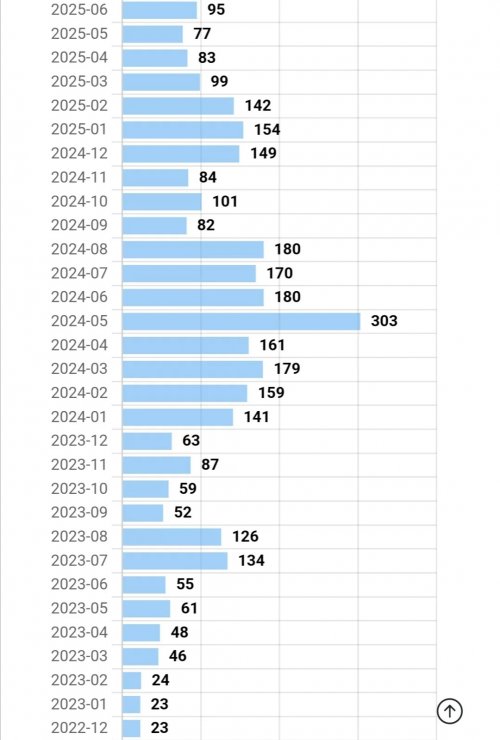
IMG_20250707_034048.jpg
(Lancet strikes according to Lost Armour)

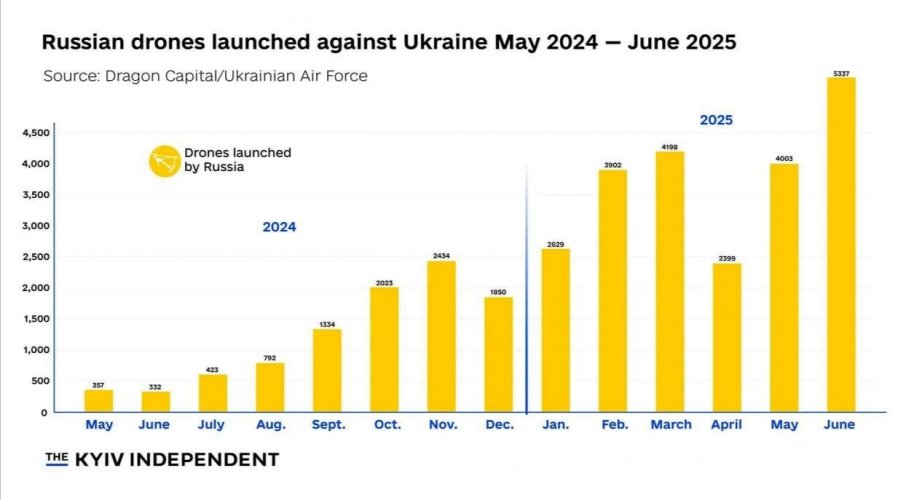
Russia used nearly 3000 Lancets alone since December 2022 according to Lostarmour. With production being certainly higher. Russia is on a quest to launch 1000 Geraniums per day, with recent raids having consisted of several hundred drones already, which also double as decoys for the likes of Iskander-M, of which they produce like 70 a month.

IMG_20250707_035955.jpg
(Geran launches according to Kyiv Independent)

This doesn't touch on stuff like MLRS munition or the amount of shells across all calibers produced. So given that a Sino-American War would either take place after the Russo-Ukrainian War is concluded (Alternatively it would at the very latest conclude then as US support for Ukraine would dry up completely with their attention being completely on the chinese), it means that Russia has all the facilities ready to supply the DPRK with such systems (referring mostly to drones and shells here). That isn't even me touching on the fact that China literally owns the FPV drone market, so they could unironically ship hundreds of thousands of these around, while producing millions themselves (obviously less useful in a naval war against the US though).

Also, why would I ask Iran? I'd rather ask Algeria, who got shiny new Su-35s and seemingly Su-34s as well delivered, allegedly having ordered the Su-57E too. If you actually place an order, it seems like you get what you bought. If you just buy Yak-130s, you get Yak-130s.

To conclude this, the overarching problem is that countries liked China, Russia and the DPRK have an incredibly robust industrial sector, with China being world leader. They can produce munitions and drones cheaply in large quantities. The US, Japan and South Korea/Australia are more so cozy service based economies, where goods are produced at higher prices and in lower quantities.

The US especially has forgotten to build cheap and plentiful, while having a habit of gold plating everything, I think it's something you can agree on. That used to be different, in the first half of 20th century the US was what China is now, industrially speaking.

 
Last edited:
China can literally shoot dozens (let's not kid ourselves, hundreds) of drones, missiles and bombs into Japan and South Korea. Both have limited means to defend themselves against such an overwhelming threat and even less so the means to shoot back in any meaningful way, South Korea would prefer too keep their stuff in the backhand due to the DPRK and Japan just lacks serious offensive capabilities that are survivable against the numerical and technological advantage of the PLA.

As for Russia, they outproduce the entire rest of Europe with regards to shells, mines and drones.

View attachment 777151
(Lancet strikes according to Lost Armour)

Russia used nearly 3000 Lancets alone since December 2022 according to Lostarmour. With production being certainly higher. Russia is on a quest to launch 1000 Geraniums per day, with recent raids having consisted of several hundred drones already, which also double as decoys for the likes of Iskander-M, of which they produce like 70 a month.

View attachment 777161
(Geran launches according to Kyiv Independent)

This doesn't touch on stuff like MLRS munition or the amount of shells across all calibers produced. So given that a Sino-American War would either take place after the Russo-Ukrainian War is concluded (Alternatively it would at the very latest conclude then as US support for Ukraine would dry up completely with their attention being completely on the chinese), it means that Russia has all the facilities ready to supply the DPRK with such systems (referring mostly to drones and shells here). That isn't even me touching on the fact that China literally owns the FPV drone market, so they could unironically ship hundreds of thousands of these around, while producing millions themselves (obviously less useful in a naval war against the US though).

Also, why would I ask Iran? I'd rather ask Algeria, who got shiny new Su-35s and seemingly Su-34s as well delivered, allegedly having ordered the Su-57E too. If you actually place an order, it seems like you get what you bought. If you just buy Yak-130s, you get Yak-130s.

To conclude this, the overarching problem is that countries liked China, Russia and the DPRK have an incredibly robust industrial sector, with China being world leader. They can produce munitions and drones cheaply in large quantities. The US, Japan and South Korea/Australia are more so cozy service based economies, where goods are produced at higher prices and in lower quantities.

The US especially has forgotten to build cheap and plentiful, while having a habit of gold plating everything, I think it's something you can agree on. That used to be different, in the first half of 20th century the US was what China is now, industrially speaking.
Uh...South Korea has tremendous industrial base to build quite a lot of hardware... Artillery shells, Missiles (10 ton warhead ballistic missile they are deploying), K2, K9, submarines (conventional SLBM)... nothing to sneer at. Combined US/Japan/S. Korea allied force would be quite potent.

 
China can literally shoot dozens (let's not kid ourselves, hundreds) of drones, missiles and bombs into Japan and South Korea.

You're completely missing the point. You shoot into China, or South Korea, you will get shot back.
 
South Korea is doubtful, for one because SK has actually rather deep economic ties with China, but also because China could easily leverage the DPRK. And that's a game Seoul has no interest in playing tbh. Stationing assets in Japan is serving them on a silver platter to the PLARF and PLAAF. Australia is valid though. But how many aircraft can the US spare? Given availability rates and the fact that at least skeleton forces have to be maintained in Europe and the Near East too.
I think we too often get lost in the weeds of on paper numbers and strategic analysis of things. I've seen people on other forums regardless of their quality just talk about a conflict with china like china is going to come out of the gates guns blazing and nailing every US base and their allies with missiles while invading TW. Despite what chinese commentstors and war gamers say, what is a strategically optimal plan is hardly a diplomatically and realistically viable plan.

First off, why complicate your invasion when theres so much doubt and dilemma for your enemy to even bother engaging in direct conflict? If you solve that problem for one of them (let alone all three), your invasion immediately becomes more complicated in ways that might not be.

Secondly, even if China were to just attack US bases first, you think Japan or SK would just sit by and allow munitions to over fly their airspace? or that the JSDF would let their shared facilities get nailed? They won't shoot back at you but they sure as hell are going to try and intercept them.

Sure, you can say that even if Japan and SK would try to do something to defend, they cant because of their on paper stats. But even if you just over fly their airspace that way, youve started generating the political will for enmity. Directly attacking there assets is a whole other story. The immediate gain out of hitting large bases in a country that had a lot easier time dispersing operations is that youve basically achieved nothing but maybe disabling a port that the navy can use.

Those two arent TW where people can be ambiguous about it. They are undisputedly sovereign nations and direct attacks on their military assets is giving reason for a coalition against you, which even if not terribly threatening, certainly makes your original purpose a lot harder. Even if north korea is the leverage that keeps south korea occupied, just the fact that bringing Japan into direct conflict opens up all of Japan for US assets to operate out of has now cost you a whole lot more of a headache than just containing the limited places Japan would allow US assets to station at.

Industrial capacity is one thing. How it gets used is another thing. Short of Japan and Korea providing targeting and actively attacking chinese military assets in a strategic manner, theres neither the political will nor the realistic ability for any China and NK vs Japan and SK to play out here even in the context of attacking US assets. China holds the ability to still land the first strike at any sign that the US, Japan or Korea wants to join the direct conflict anyway. Theres little reason to start by making enemies out of everyone that are best left as is - that is ambiguous, ambivalent and constrained.

If we are talking about industrial capacity, the polish certainly seems to think SK has enough of that. Both certainlynhave the shipbuilding ability too. Any circumstance in which either country needs to be dealing with mass drone and missile attacks that arent just targeting US assets is going to warrant a wartime economy anyway. Not to mention we arent just making exquisite weapons now. In fact Id argue we are increasingly leaning towards cheap and non-exquisite options to complement the more exquisite ones. Thats why on paper numbers from the past few years arent going to be terribly reflective of the next few years. Thats sort of par for course when re-arming.
 
Last edited:

Similar threads

Back
Top Bottom