Cessna Models 309 and 319 (BLC research aircraft)

Stargazer

ACCESS: USAP
Top Contributor
Senior Member
Joined
25 June 2009
Messages
15,515
Reaction score
9,447
Model 309/319--Cessna participated in Boundary Layer Control (BLC) research from 1951 to 1955 with the U.S. Navy and Wichita University using a stock 170A modified to house a small gas turbine in the fuselage which blew air over the wing (1951). The 309A, first flown in February 1952, used an engine-driven electric generator to operate large fans in the wings to generate the air; the 309B of 1953 and 309C in 1954 used dry chemicals that generated airflow across the wings and flaps.

Cessna 309 family tree:


309 (from 170A).png

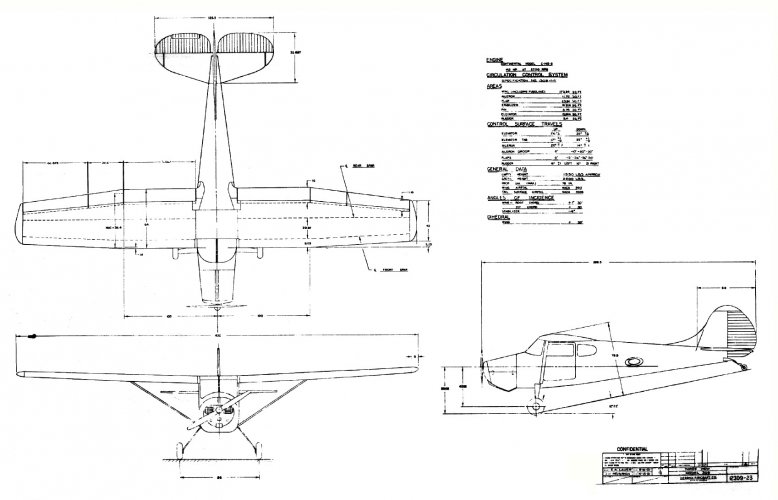
Cessna 309 company plan:

309 plan.jpg
Another follow-on, the 319-A of 1953, had larger, more powerful flaps. With 225 hp Continental engine and BLC, the airplane had a stall speed of 32 mph. It could take off in 190 ft, land in 160 ft and make it in over a 50-ft obstacle in just 450 ft. As a research vehicle, the 309/319 was a success, but its commercial application was questionable--or as a Cessna test pilot wrote on a report after his first flight, "All in all, a rather nasty little monster!"

Cessna 319A in US Naval Research guise:
319A (ms223_045_127).jpg

Technical depiction of Cessna 319A's BLC system:
319A cutaway.jpg

See the various source documents in the attachments below.
 

Attachments

  • 092459 (319A).pdf
    2.7 MB · Views: 14
  • 017200 (309A, 309C, 319A).pdf
    5.4 MB · Views: 17
  • 015187 (309A, 309C, 319A).pdf
    3.3 MB · Views: 12
  • 012310 (309A, 309C, 319A).pdf
    1.5 MB · Views: 12
  • 010761 (309A and 319).pdf
    482.6 KB · Views: 11
  • 010750 (309A and 319).pdf
    485.6 KB · Views: 14
  • 006974 (309).pdf
    14.2 MB · Views: 14
Models 309 and 319 from the Cessna book An Eye to the Sky (1962):

1749997372549.png
 
1722001927140.jpg

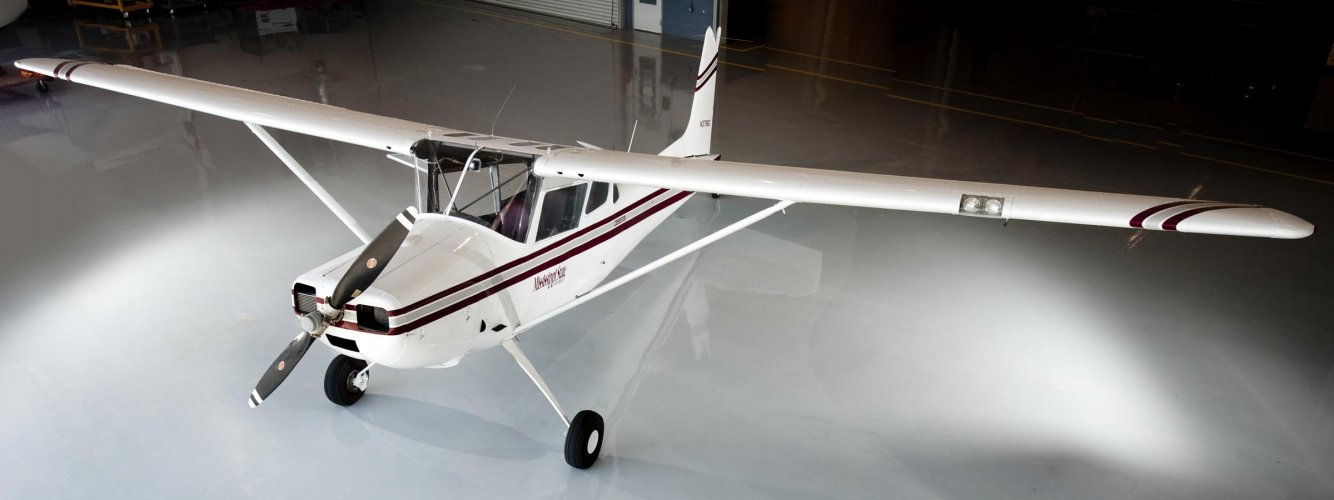
At least one Model 319 is still extant at the Mississippi State University's Raspet Flight Research Laboratory and is still in use after over 65 years!

The Cessna L319 is a unique experimental aircraft originally built by Cessna for the U.S. Marine Corps as a forward observer aircraft. This two-place, tandem aircraft was later built in 1957 for Wichita State University for short takeoff and landing (STOL) research. The L319 is powered by an O-470 225 horsepower engine. Since arriving at Raspet, the L319 has been used in a stall prevention study program with NASA and as an aerial photographic aircraft for MSU. Currently the L319 serves as the primary chase aircraft for numerous unmanned aircraft systems (UAS) research efforts.

Cessna-319_image2.JPG


Cessna 319 profile
Build & Performance Specifications


Length: 25 ft. 9 in.
Height: 7 ft. 3.5 in.
Wingspan: 36 ft.
Engine: Continental O-470 11 Flat Six Piston 225hp
Empty Weight: 1,614 lbs.
Max Gross Take Off Weight: 2,400 lbs.
Max Speed: 113 kts
Cruise Speed: 100 kts
Service Ceiling: 20,300 ft. AGL
Sources:
-
Raspet Flight Research Laboratory website ("Aircraft Assets")
- Raspet Flight Research Laboratory LinkedIn page


Why do they call it the "L319", though, I couldn't say!

Cessna-319_image1.jpg
 

Attachments

  • 1722001926852.jpg
    1722001926852.jpg
    301.2 KB · Views: 10

Similar threads

Back
Top Bottom