- Joined
- 1 April 2006
- Messages
- 12,289
- Reaction score
- 15,120
Unfortunately all the photos from the source are gone with ImageShack...
http://www.airlinepilotforums.com/hangar-talk/78300-interesting-hangar-mate.html#post1522432
http://www.airlinepilotforums.com/hangar-talk/78300-interesting-hangar-mate-2.html#post1523918
11-20-2013 05:34 AM by Cubdriver
Quote:
Originally Posted by UAL T38 Phlyer
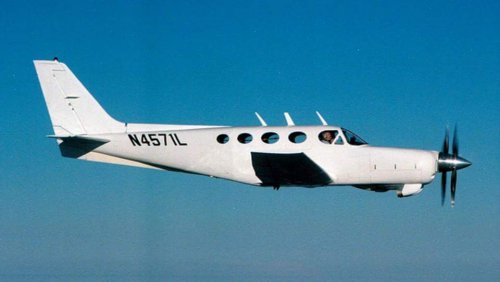
The one I was curious about was in the last two pics in part 7 (my mistake, above). Single-engine turboprop, contra-rotating prop. N4571L.
I've never seen that before.
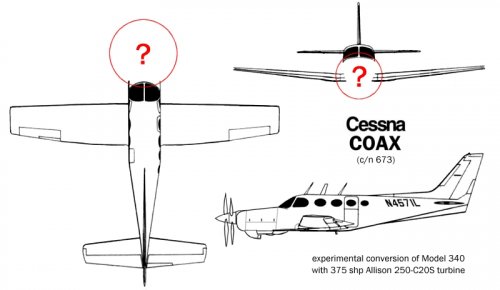
I dug this up about it.
Model: COAX
Date: 1986-1987
Specs: 335 / 340 prototype conversion
(2) Allison 250-C20S 375 shp
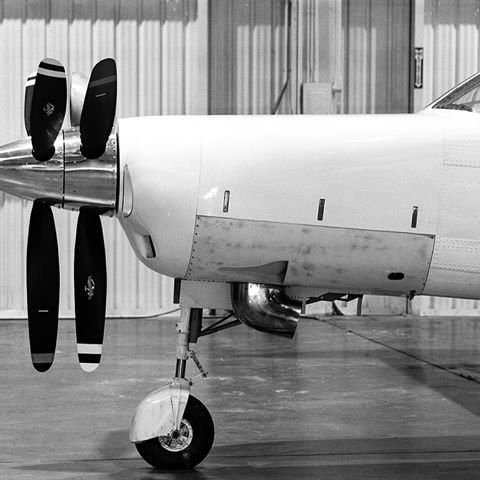
Engine-to-prop gear box with coaxial output shaft.
Forward and aft three bladed propellers driven in opposite directions.
Engine nacelles cleaned from wings.
In both multi and single engine climb, COAX beat 340A by
200fpm but there were some who thought the data was suspect.
There is one photo of it on thread 8 of the series too. With two turbines mounted in series it would have to be a pretty expensive airplane. This was a time when GA manufacturers were trying to get rid of low end prop models for liability reasons. Maybe the idea with this one was to make the customer pay for their own insurance policy rather than let the insurance company take away their choices with the other twins, which they did around that time. At any rate I wonder how smooth the setup ran because the second prop gets mostly dirty air.
http://www.airlinepilotforums.com/hangar-talk/78300-interesting-hangar-mate.html#post1522432
http://www.airlinepilotforums.com/hangar-talk/78300-interesting-hangar-mate-2.html#post1523918
11-20-2013 05:34 AM by Cubdriver
Quote:
Originally Posted by UAL T38 Phlyer
The one I was curious about was in the last two pics in part 7 (my mistake, above). Single-engine turboprop, contra-rotating prop. N4571L.
I've never seen that before.
I dug this up about it.
Model: COAX
Date: 1986-1987
Specs: 335 / 340 prototype conversion
(2) Allison 250-C20S 375 shp
Engine-to-prop gear box with coaxial output shaft.
Forward and aft three bladed propellers driven in opposite directions.
Engine nacelles cleaned from wings.
In both multi and single engine climb, COAX beat 340A by
200fpm but there were some who thought the data was suspect.
There is one photo of it on thread 8 of the series too. With two turbines mounted in series it would have to be a pretty expensive airplane. This was a time when GA manufacturers were trying to get rid of low end prop models for liability reasons. Maybe the idea with this one was to make the customer pay for their own insurance policy rather than let the insurance company take away their choices with the other twins, which they did around that time. At any rate I wonder how smooth the setup ran because the second prop gets mostly dirty air.