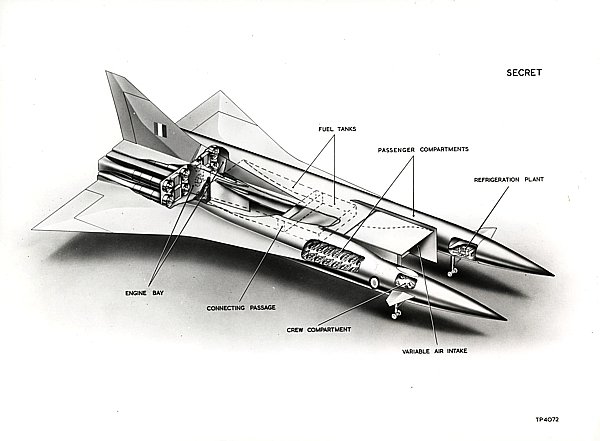
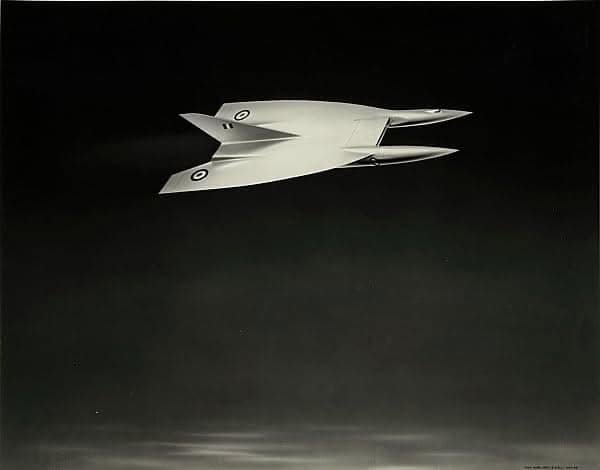
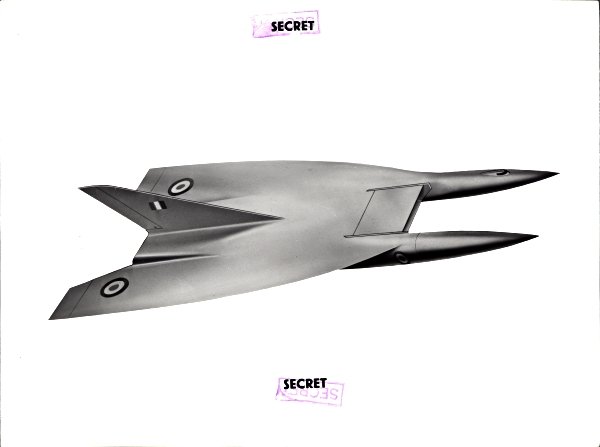
Bristol Ramjet Aircraft

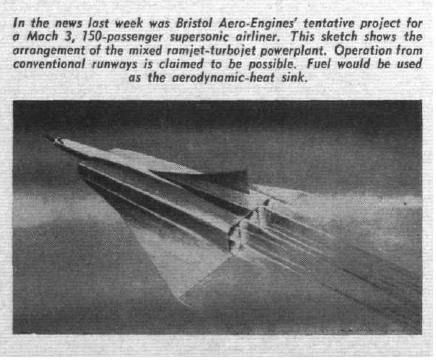
Bristol-Siddeley wasn't satisfied with just Mach 3 ! ;)
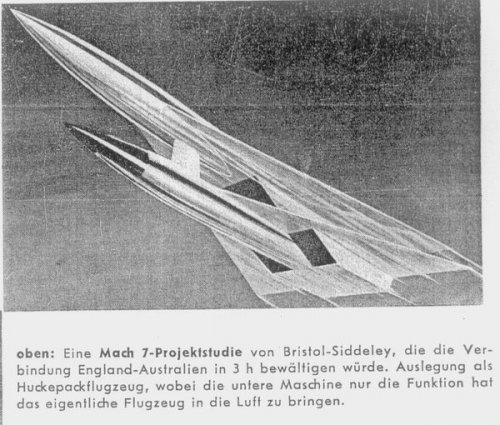
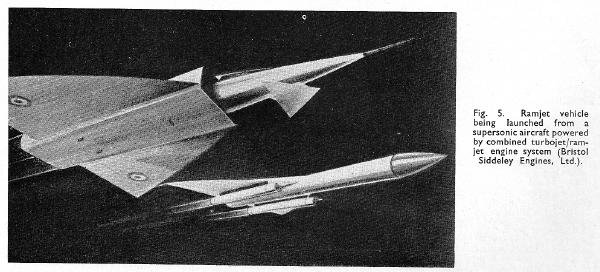
In AERO 10/1982 a concept for a Mach 7 Airliner was shown,
the lower aircraft is just used for launching the upper one, a modern
version of the Short Mayo Composite !
 

Attachments

  • BS_Mach-7.JPG
    BS_Mach-7.JPG
    74.9 KB · Views: 474
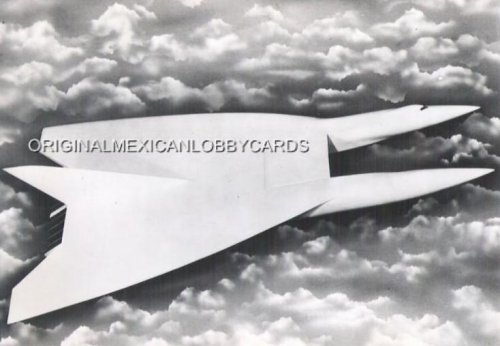
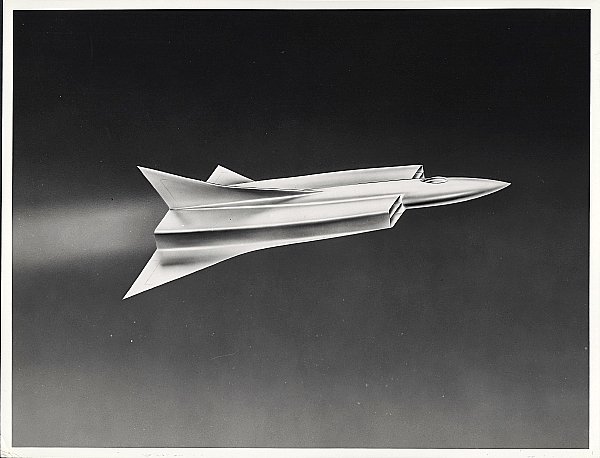
Bristol-Siddeley SST concept artwork photograph

URL: http://cgi.ebay.com/SUPERSONIC-GIANT-DELTA-WING-CRAFT-PHOTO-1959_W0QQitemZ380208475736QQcmdZViewItemQQptZLH_DefaultDomain_0?hash=item588630ee58

Attached to the back of the photograph of the concept artwork:

SUPERSONIC GIANT

NEW YORK: Capable of flying 130 passengers, from London to New York in 98 minutes, or from New York to Los Angeles in 70 minutes, this giant model airliner could be the plane of the future. Engineers at Bristol-Siddeley Engines, Ltd., the British aviation firm that conceived the plane, said the delta-wing craft could be produced with today's technical know-how. The plane would be powered by a combination of eight or more turbojet engines, such as used on conventional jet planes, and ramjets, now used to power missiles.

UPI PHOTO 6/15/59
 

Attachments

  • BristolSiddeleySST.JPG
    BristolSiddeleySST.JPG
    40.4 KB · Views: 801

Attachments

  • Bristol.png
    Bristol.png
    606.1 KB · Views: 273

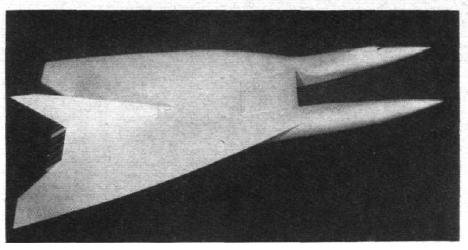
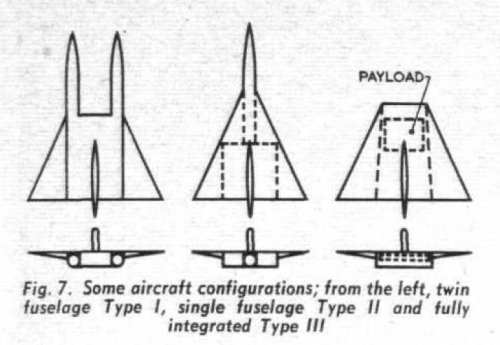
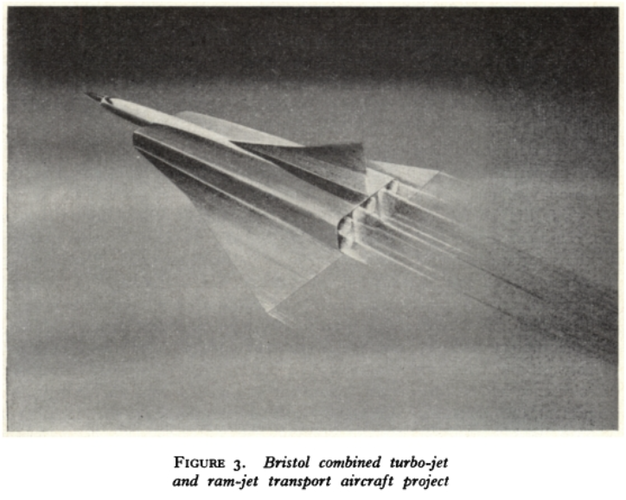
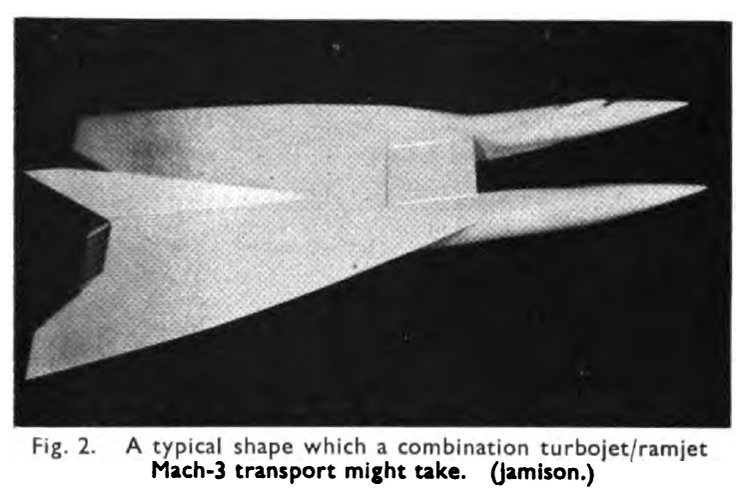
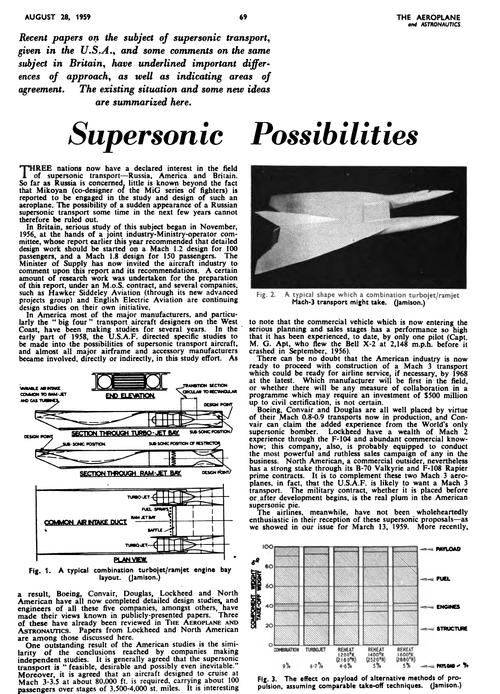
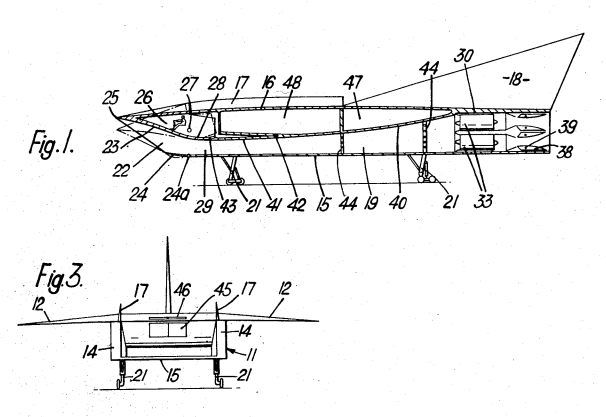
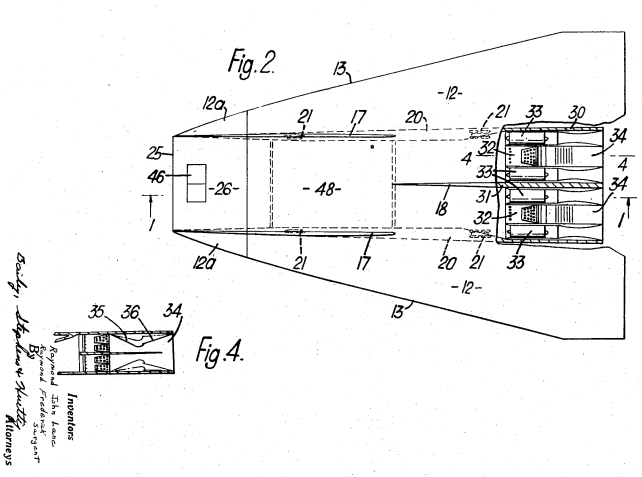
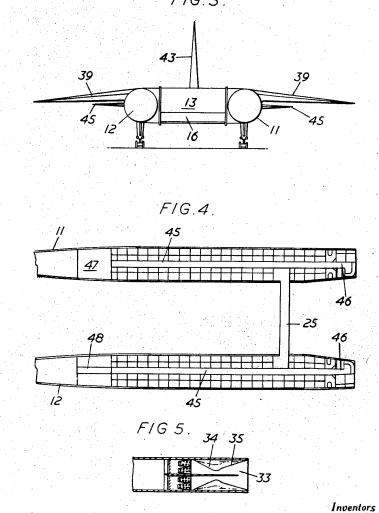
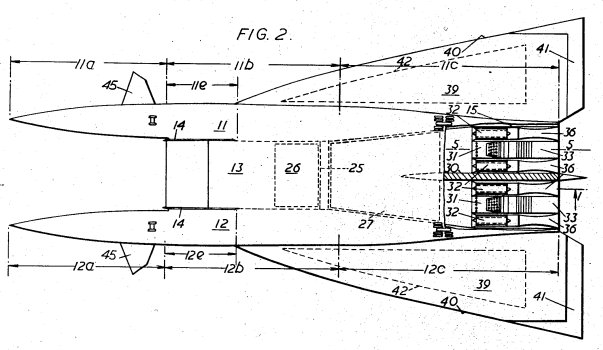
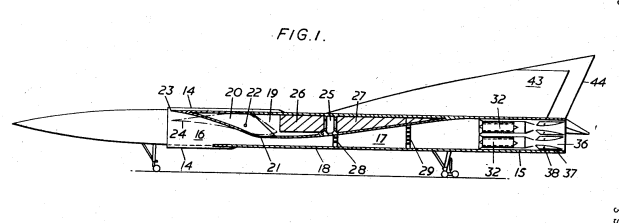
Bristol patented 2 out of 3 of these concepts, patents and key images attached. It is worth noting that these two patents were cited by the English Electric patent for a ramjet only vehicle I discussed here (link). The Bristol patents make me even more convinced that the English Electric concept was intended as a missile - note that the Bristol patents show an undercarriage and other practical considerations not present on the English Electric design.

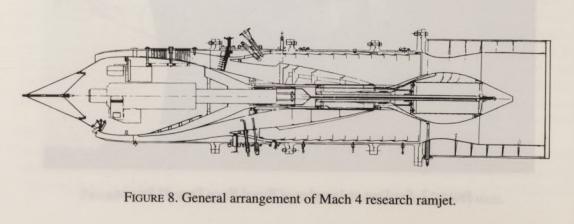
Potentially related, I have also included an image from the Robin Ralph Jamison Biography available here (Link). The relevant text is as follows:

One such demonstrator engine programme was the propulsion system for a long-range weapon with a wide variation in cruise requirements up to Mach 4. This demonstrator first ran in the High Altitude Test Plant at Bristol inJune 1963. Figure 8 shows a rig version of the Mach 4 engine with water-cooled, variable geometry exhaust nozzle. Phase 2 of this programme involved combining a variable intake with the variable nozzle to demonstrate high performance over the speed range Mach 2.5 to 4.2.

The reference to a weapon could of course be an allusion to a cruise missile but the basic technology would have been applicable, if not necessary, for the large aircraft considered in the concepts.

I have also attached some images from elsewhere on the forum that are artists impressions of these concepts or variations of them.
 

Attachments

  • Mach 4 ramjet GA.png
    Mach 4 ramjet GA.png
    159.8 KB · Views: 5
  • Bristol blended ramjet 1.png
    Bristol blended ramjet 1.png
    75.8 KB · Views: 6
  • Bristol blended ramjet 2.png
    Bristol blended ramjet 2.png
    86.1 KB · Views: 6
  • Bristol Twin-boom ramjet 3.png
    Bristol Twin-boom ramjet 3.png
    68.4 KB · Views: 6
  • Bristol Twin-boom ramjet 2.png
    Bristol Twin-boom ramjet 2.png
    87 KB · Views: 5
  • Bristol_Twin-Boom Ramjet 1.png
    Bristol_Twin-Boom Ramjet 1.png
    42.9 KB · Views: 6
  • US2944765.pdf
    366.4 KB · Views: 0
  • US2944764.pdf
    383.6 KB · Views: 0
  • scan0025 (2).jpg
    scan0025 (2).jpg
    38.5 KB · Views: 7
  • 1958 ramjet SST.jpg
    1958 ramjet SST.jpg
    179.2 KB · Views: 8
  • 1958 Twin boom SST.jpg
    1958 Twin boom SST.jpg
    120.7 KB · Views: 7
  • Bristol twin-boom ramjet artists impression.jpg
    Bristol twin-boom ramjet artists impression.jpg
    8.7 KB · Views: 5
  • 1950s Twin boom bomber.jpg
    1950s Twin boom bomber.jpg
    55.2 KB · Views: 8
Last edited:

Similar threads

Back
Top Bottom