Plus Dragon 2 is doing a perfect job.
Not to mention the Starliner's less than stellar mission performance to date.
Last edited:

Plus Dragon 2 is doing a perfect job.

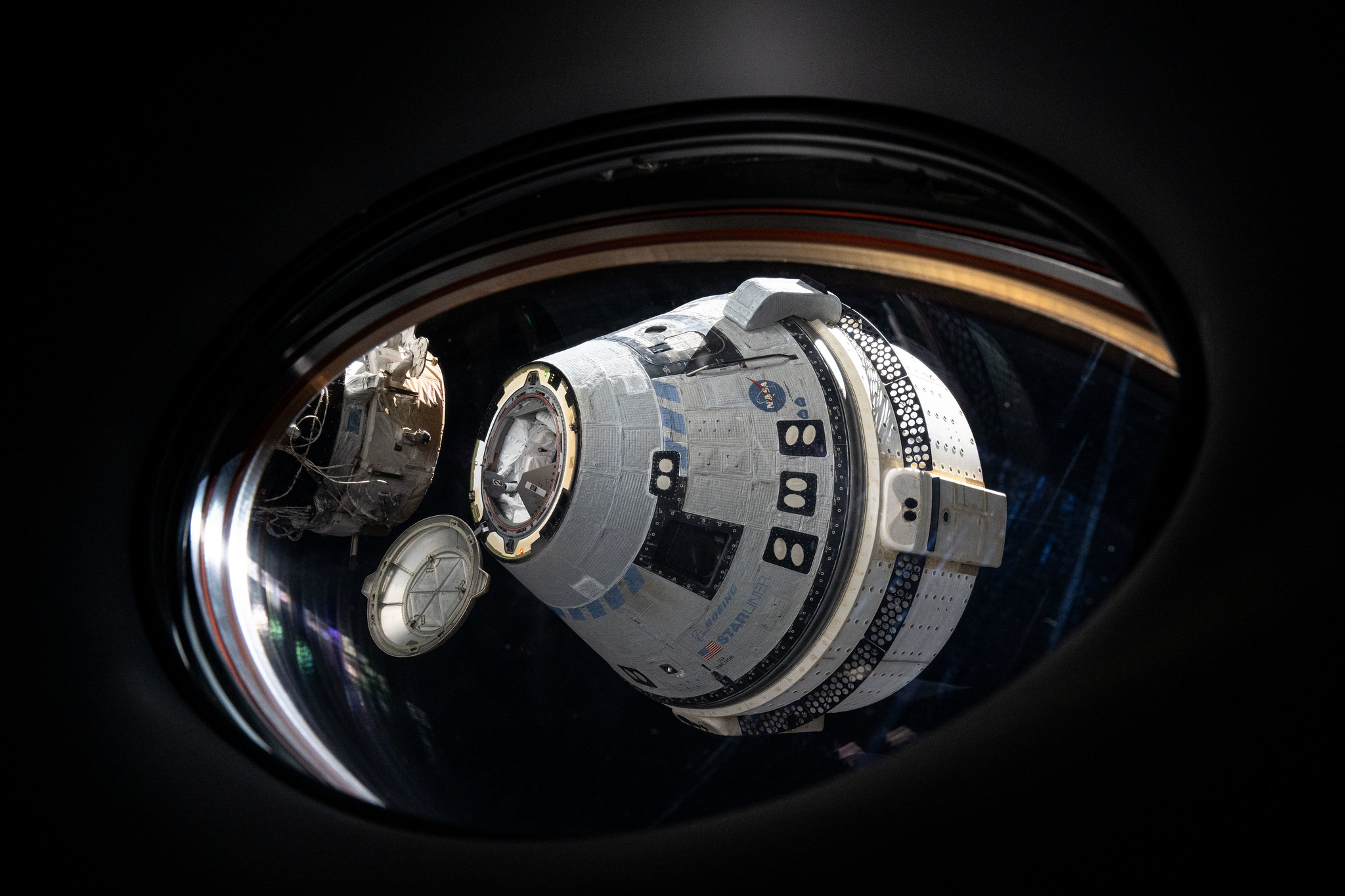
 spacenews.com

The agency labeled the mission a “Type A” mishap in a scathing report, expected to be released as soon as Thursday, that delves into what happened during the Boeing Co. Starliner’s first crewed flight. The fates of Barry “Butch” Wilmore and Sunita “Suni” Williams captured the world’s attention as NASA frantically tried to decide how to bring them back from the International Space Station.
The 300-plus page report is fiercely critical of both NASA’s bureaucracy and Boeing, laying blame on one of the corporate pioneers of US space missions, according to a copy seen by Bloomberg News. Faulty engineering, inadequate oversight and general mistrust between the parties helped turn a weeklong mission into a physical and mental ordeal for Wilmore and Williams that lasted much longer.
[...]
Investigators make 61 formal recommendations for what NASA and Boeing can do to prevent similar mistakes in the future. Congress will be briefed on the probe, which was conducted by agency employees and outside experts.
[...]
The mission “revealed critical vulnerabilities in the Starliner’s propulsion system, NASA’s oversight model, and the broader culture of commercial human spaceflight,” according to the report. Lessons from the mishap “must be institutionalized to ensure that safety is never compromised in pursuit of schedule or cost.”
NSF - NASASpaceflight.com
@NASASpaceflight
This is the leadership we all hoped for and are now receiving at NASA.
NSF - NASASpaceflight.com
@NASASpaceflight
·
5m
Over to Boeing to call it a day on Starliner?
Eric Berger
@SciGuySpace
·
2m
I don't know yet.
Max Evans
@_MaxQ_
·
1m
Type A mishap… good grief.
Grateful that Butch & Suni made it home safely, and for the transparency/ownership of the decision-making here from NASA.
The first step in solving any problem is recognizing there is one.
Lori Garver
@Lori_Garver
·
3m
Very impressed @NASAAdmin releasing results of the @BoeingSpace Starliner mishap investigation. His briefing is appropriately focused on facts vs spin. It isn't easy, but if previous Admins had done same, safety & public trust would be higher. Sunlight is the best disinfectant.
Ryan Caton
@dpoddolphinpro
·
56s
STARLINER: I asked if a @Boeing representative was invited to today's press conference, and if @NASA
's mishap classifications are appropriate for the modern day.
@NASAAdmin
Jared Isaacman: The mishap classification is standardized across agencies - the same standard applies to aircraft, ships, etc, across the government.
Isaacman also made multiple references to a Boeing statement - looking across their social media feeds & website, I can't find it.
The question on if a Boeing representative was invited was unanswered.
@NASA
Eric Berger
@SciGuySpace
·
4s
Isaacman is such a breath of fresh air at NASA. Far too often we have been served platitudes in news conferences. Space is hard. Teams are doing their best. Proud of everyone. Blah blah. Today we are getting accountability.

NASA has previously said this flight could take place as early as April 2026.
However, when asked about this timeline, Isaacman reiterated that a lot of work had to be done.
“We are committed to helping Boeing work through this problem, to remediate the technical challenges, to fully understand the risk associated with this vehicle, and to try and minimize it to the greatest extent possible,” he said. “And if we can implement a lot of the report recommendations, then we will fly again.”
[...]
A source recently told Ars that two NASA astronauts, Woody Hoburg and Jessica Wittner, have begun training for a potential “Starliner-1” mission that could take flight during the first half of next year, should the uncrewed test flight in 2026 go well. NASA has not confirmed that any astronauts have been assigned to Starliner-1.
NASA hadn’t said how much the Starliner CFT problems have cost the government until now. By designating this as a “Type A mishap,” that means the costs are more than $2 million and Isaacman said it exceeded that threshold “by a factor of 100,” or $200 million. During the news conference he was careful to clarify that in this case the Type A designation reflected the dollar number and the consequences if Starliner had not been able to dock, and was not meant to be comparable to the Space Shuttle Challenger or Space Shuttle Columbia tragedies, which also were Type A mishaps.
A NASA Type A mishap means a total direct cost of mission failure and property damage of $2 million or more, a crewed aircraft or spacecraft hull loss, or unexpected aircraft or spacecraft departure from controlled flight (with exceptions).
Eric Berger
@SciGuySpace
Remember: There were two seats for Boeing at a news conference following the successful landing of Starliner CFT. I was there at JSC and watched the NASA techs remove the two chairs just minutes before the start of the briefing. It was wild. Boeing didn't show up.
Jonathan McDowell
@planet4589
·
9h
Agree with this. The transparency in today's Starliner report is NASA at its best, and as NASA used to be decades ago. I've missed this NASA. Congrats to Jared for restoring it.
Scott Manley
@DJSnM
·
24m
If only the Starliner devs had some experience with thruster failures before CFT then they might have a better understanding of the system and not lost 6DOF control at a critical moment. /s
At a news conference on Thursday, NASA released a report of findings from the Program Investigation Team examining the Boeing CST-100 Starliner Crewed Flight Test as part of the agency’s Commercial Crew Program.
“The Boeing Starliner spacecraft has faced challenges throughout its uncrewed and most recent crewed missions. While Boeing built Starliner, NASA accepted it and launched two astronauts to space. The technical difficulties encountered during docking with the International Space Station were very apparent,” said NASA Administrator Jared Isaacman.
“To undertake missions that change the world, we must be transparent about both our successes and our shortcomings. We have to own our mistakes and ensure they never happen again. Beyond technical issues, it is clear that NASA permitted overarching programmatic objectives of having two providers capable of transporting astronauts to-and-from orbit, influence engineering and operational decisions, especially during and immediately after the mission. We are correcting those mistakes. Today, we are formally declaring a Type A mishap and ensuring leadership accountability so situations like this never reoccur. We look forward to working with Boeing as both organizations implement corrective actions and return Starliner to flight only when ready.”
Starliner launched June 5, 2024, on its first crewed test flight to the International Space Station. Originally planned as an eight-to-14-day mission, the flight was extended to 93 days after propulsion system anomalies were identified while the spacecraft was in orbit. After reviewing flight data and conducting ground test at White Sands Test Facility, NASA decided to return the spacecraft without NASA astronauts Butch Wilmore and Suni Williams. Starliner returned from the space station in September 2024, landing at White Sands Space Harbor in New Mexico. Wilmore and Williams later returned safely to Earth aboard the agency’s SpaceX’s Crew-9 mission in March 2025.
In February 2025, NASA chartered an independent Program Investigation Team to investigate the technical, organizational, and cultural contributors to the test flight issues.
This report was completed in November 2025. NASA and Boeing have been working together since Starliner returned 18 months ago to identify and address the challenges encountered during the mission, and the technical root cause work continues.
Investigators identified an interplay of combined hardware failures, qualification gaps, leadership missteps, and cultural breakdowns that created risk conditions inconsistent with NASA’s human spaceflight safety standards. NASA will accept this as the final report.
As a result, NASA is taking corrective actions to address the findings of the report, in an effort to ensure the lessons learned contribute to crew and mission safety of future Starliner flights and all NASA programs. Due to the loss of the spacecraft’s maneuverability as the crew approached the space station and the associated financial damages incurred, NASA has classified the test flight as a Type A mishap. While there were no injuries and the mission regained control prior to docking, this highest-level classification designation recognizes there was potential for a significant mishap.
NASA will continue to work closely with Boeing to fully understand and solve the technical challenges with the Starliner vehicle alongside incorporating the investigative recommendations before flying the next mission.
For the full report, which includes redactions in coordination with our commercial partner to protect proprietary and privacy-sensitive material is available online. A 508-compliant version of the report is forthcoming, and will be posted on this page. NASA will update with an editor’s note when complete.
-end-
Indicates that there’s cultural issues across the company that run from aviation to space at the very least.Ouch Boeing took a beating. But they deserve it. Three flights, three disasters, one of which endangered astronauts...
Indicates that there’s cultural issues across the company that run from aviation to space at the very least.


Yes. Boeing had a pretty good culture. The joke is that McDonnell bought Boeing with Boeing’s money. Then they pushed out thousands of engineers, tried outsourcing huge portions of their aircraft production, ran up costs on the 787, the list of bad decisions goes on. All of their space products are deeply suspect.My understanding this is the cultural legacy of the McDonnell Aircraft Corporation as a result of Boeing acquiring McDonnell-Douglas and ultimately turning into McBoeing.
Makes you wonder what the astronauts are feeling about for Artemis II riding on the SLS.Yes. Boeing had a pretty good culture. The joke is that McDonnell bought Boeing with Boeing’s money. Then they pushed out thousands of engineers, tried outsourcing huge portions of their aircraft production, ran up costs on the 787, the list of bad decisions goes on. All of their space products are deeply suspect.

The X-37 guys are good. They need leadership roles and shareholders powerless. Profit motive above all the problem. There is no one BoeingMy understanding this is the cultural legacy of the McDonnell Aircraft Corporation as a result of Boeing acquiring McDonnell-Douglas and ultimately turning into McBoeing.
 spacenews.com
Unrelated nonsense.Be it Vought, Limp's predecessor at Blue Origin, or OceanGate's Rush being too stingy to test to destruction.
Senator Jerry Moran
@JerryMoran
·
37m
I’ve spoken with @NASAAdminJared Isaacman regarding the investigation of NASA’s Boeing Starliner. I appreciate his efforts to handle the situation transparently and to prioritize the safety of NASA’s astronauts, but I am concerned by NASA’s failure to acknowledge the severity of these problems at the time they occurred.
The operational and technical issues detailed in this report must be immediately resolved to ensure we maintain redundant, safe U.S. crew transportation options to the International Space Station from our commercial partners. I appreciate Administrator Isaacman’s commitment to me that NASA will implement corrective actions and work closely with Boeing to make certain these failures are not repeated.
Moran is basically a Boeing shill. This tweet implicitly rejects the possibility that NASA should terminate the Starliner program. It also blames NASA, not Boeing, for Boeing's shortcomings. He also calls for NASA, not Boeing, to implement corrective actions, and for NASA to "work closely with Boeing", even though one of the major cultural problems was that Boeing declined to work closely with NASA.

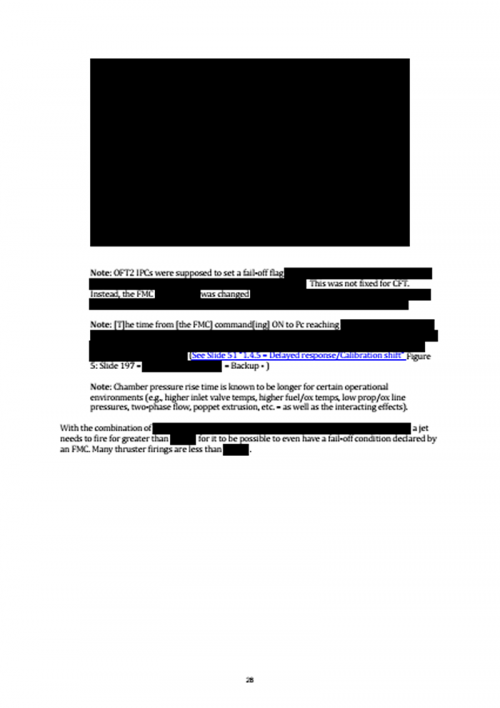
Here the Complete Report
300 page that read like more like death sentence for Starliner pro
I agree with Flyaway Starliner should be terminated now after Boeing tries to blame NASA for it's own problems, NASA was not the issue here it was Boeing's capsule.
That is not anymore feasible than transferring 737 Max to them.Terminated or perhaps the Starliner project transferred to Northrop-Grumman or Lockheed-Martin.
Actually, it should be transferred to the junk yard to improve the position of Boeing stockholders (me included) and redirect NASA assets to something far more productive (have no idea what that may be)..Terminated or perhaps the Starliner project transferred to Northrop-Grumman or Lockheed-Martin.
I took a couple of days to read NASA's Starliner Reportand figure out as much of the technical detail as possible, there are a lot of redactions that required me to put together the pieces to explain


