
Boeing Orca Extra-Large Unmanned Underwater Vehicle (XLUUV)

I personally would not want to mark my exact location with a breaching weapon. I’d be more interested in a mk48 with electric propulsion for reduced noise and extended range at slow speed settings.

But I think the future for USN undersea warfare is the SSN more as a remote sensor/effector delivery and management systems (both static bottom/moored and UUVs) with traditional torpedoes becoming more of a secondary weapon for ASW.
 
Broke: SUBROC.
Woke: swarms of supercavitating torps homing on a contact. Yes, it is a glaring sonar signal, but you cant evade it anyway.
Best: revive Sea Lance with Mk54.
Dunno about swarms of Shkvals, but yes. A supercavitating torpedo would be wicked.


I personally would not want to mark my exact location with a breaching weapon.
If you're far enough away that the broaching weapon is your best option for a fast shot, it's tolerable. But you still GTFO as soon as it launches.


I’d be more interested in a mk48 with electric propulsion for reduced noise and extended range at slow speed settings.
Mk48 already has pretty good range at its low speed setting. It's supposedly got a swim-out mode, too, but I'm not sure how well that works with as tight as they fit in the tube. The Ohio turbine impulse pump was pretty quiet.


But I think the future for USN undersea warfare is the SSN more as a remote sensor/effector delivery and management systems (both static bottom/moored and UUVs) with traditional torpedoes becoming more of a secondary weapon for ASW.
That still requires stealthy comms underwater, which isn't easy to do.
 
The alternative is noisy coms and just put them everywhere. If it is just a buoy, what can anyone do to destroy it? A torpedo isn’t going to work or be cost effective even if it did. Depth charges?
 
The alternative is noisy coms and just put them everywhere. If it is just a buoy, what can anyone do to destroy it? A torpedo isn’t going to work or be cost effective even if it did. Depth charges?
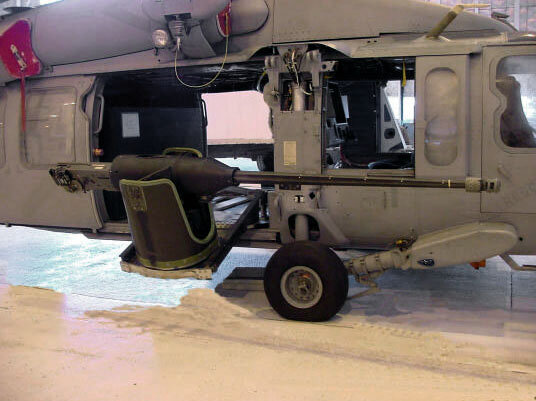
Muraena 30mm gun mast on the sub, door gun on helicopters, etc.
 
I suspect any sensors laid by the USN are full submerged. The only thing in the old SeaWeb experiments that was above water were the radio gateway buoys. All of the sensors and acoustic repeaters were moored or on the seabed. Communication is likely handled by UUVs, possibly gliders, offloading data at regular intervals. Or else SSNs directly connected to a node in the network.
 
Last edited:
Hope they can finally get that system working. It is years behind schedule. I wonder if Ghost Shark beats it to full operational status.
 
Not clear what UUV or ilUAV they could be talking about. IIRC payload is mass limited to 8000 lbs
 

I only get the first couple sentences for free, but the article seems to be the obvious/already stated combined with a lot of hyperbole. Mining has always been Orcas first priority mission, both because the mission is very underserviced and because it is a relatively easy application of UUV tech compared to missions that are more interactive.

The only hard information I’ve seen recently concerning the project is that the CDM explicitly is to be used, though that was always the obvious candidate. There basically is no other known mine in service outside mk80s and a handful of mk67s apparently still retained.
 
View: https://x.com/__CJohnston__/status/2088550665526088126?s=20

U.S. Navy Orca XLUUV Completes 1,000-Mile Pacific Transit​

https://www.navalnews.com/naval-new...ca-xluuv-completes-1000-mile-pacific-transit/
The XLUUV patrolled for over 1,000 nautical miles — a first in the program’s history as the Pentagon looks to rapidly ramp up uncrewed operations in the Pacific to supplement crewed aircraft, ships, missile launchers and submarines as major force multipliers.
 
One of the most important naval programs in the US currently ongoing and yet people devote more attention to fantasy frigates and CIWS calibers...

Orca is shaping up to be rather promising as a basis for future, more specialized, developments.
 
If Boeing can unfuck the program and get it on schedule, sure. I suspect it gets drowned in ghost sharks before then. But they are two separate capabilities that are both desperately needed.
 
One of the most important naval programs in the US currently ongoing and yet people devote more attention to fantasy frigates and CIWS calibers...

Orca is shaping up to be rather promising as a basis for future, more specialized, developments.
That along with anti-torpedoes/light-torpedoes. UUV and seabed (torpedo/missile) "mines" will be the larger threat.
The reason they aren't perceived as much yet is due to localization and slow speed. But like I've been saying about CCA they'll already be in place and in numbers at the start of conflict. Quiet ship hull, variable depth/floor sonar and towed sonar are must have for all manned ships.
 
The U.S. is explicitly discussing a concept of “seabed superiority “ and has myriad programs that involved semi persistent networked sensors going back over two decades to the SeaWeb program. It used bottom acoustic modems linked to Irridium satellite radio gateway buoys that could connect to external modem equipped sensors and SSNs as far back as the late 90s. There were also projects for free floating linear hydrophone arrays that could self determine their geometry, turbine tide powered bottom sensors, wave drive power buoys, and a host of reliable acoustic path vertical line array projects.

The USN has forgotten more about underwater engineering than anyonr except for the Russians have ever known. I suspect there is a vast number of sensors deployed or ready to be deployed all around the first island chain, on top of permanent hydrophones.
 

Liberator: Understanding the U.S. Navy’s New Seabed Carrier Killer​

https://www.navalnews.com/naval-new...ding-the-u-s-navys-covert-seabed-ship-killer/
Liberator has emerged from the U.S. Navy’s budget as a high-end standoff capability for uncrewed undersea vehicles (UUVs), enabling the deployment of heavyweight torpedoes on the seafloor.
In 2025, the U.S. Navy quietly unveiled its Liberator program as an effort focused on developing, testing, and fielding a containerized heavyweight torpedo for expeditionary and contested environments.
The system is intended to serve as an extension of the U.S. Navy’s Orca Extra Large Uncrewed Undersea Vehicle (XLUUV) submarine as a stealthy, covert insertion tool for further employment of the service’s Mark 48 Advanced Capability (ADCAP) heavyweight torpedo. The deployable system, with its containerized (and encapsulated) ADCAP, appears to be designed around the Orca’s 10-meter-long multi-purpose payload module based on an attached requirement for Hunter — a known Orca payload delivery system — which, according to the budget documents, depends on Liberator’s development and testing to be tested and fielded.
In operational environments, Liberator could covertly be deployed from Orcas or other platforms to the seafloor of contested or denied waters some time in advance to patiently await high-value adversary submarines and surface ships.
Orcas and other XLUUVs could drop dozens of Liberator payloads in maritime chokepoints or hostile waters — all wielding ship-killing heavyweight torpedoes that have long been used as the final death blow during SINKEX ship-sinking test events.
 
One of the most important naval programs in the US currently ongoing and yet people devote more attention to fantasy frigates and CIWS calibers...

Orca is shaping up to be rather promising as a basis for future, more specialized, developments.
1000nmi in the Pacific is the distance from Seattle to Juneau or Kodiak.

It's not a useful distance.
 
It is in the first island chain, but yes that would be a limitation.
 
Okay, so a combat radius of about 2500-3000nmi.

That’s a pretty reasonable range and endurance from even the second island chain.
Though in my mind, I wonder how does the USN plan to actually deploy all the USVs and UUVs it’s buying? Some of it will have to local, or else on ship’s somewhat dedicated to the purpose.

Honestly this a shame LASH ships don’t exist anymore; they could probably deploy several hundred USVs in a day after carrying them from the west coast.
 
That’s a pretty reasonable range and endurance from even the second island chain.
Though in my mind, I wonder how does the USN plan to actually deploy all the USVs and UUVs it’s buying? Some of it will have to local, or else on ship’s somewhat dedicated to the purpose.

Honestly this a shame LASH ships don’t exist anymore; they could probably deploy several hundred USVs in a day after carrying them from the west coast.
I'd guess LSDs and other ships with well decks, plus the various expeditionary "bases" that are more or less a heavy lift ship with a helo deck over the top.
 
The LHDs are goto USMC work and they are not giving them up for anything.

The two reserve landing platforms seem hard to quickly mobilize, though I agree they are excellent existing candidates for rapid deployment of a lot of free floating objects.
 
The LHDs are goto USMC work and they are not giving them up for anything.

The two reserve landing platforms seem hard to quickly mobilize, though I agree they are excellent existing candidates for rapid deployment of a lot of free floating objects.
One well-deck ship was supporting the Nasty-class patrol boats and the minesweepers during Vietnam.
 
One of the most important naval programs in the US currently ongoing and yet people devote more attention to fantasy frigates and CIWS calibers...

Orca is shaping up to be rather promising as a basis for future, more specialized, developments.
Probably because it’s being made by Boeing who at the moment would probably have difficulty organising a booze up in a brewery.
 

Similar threads

Back
Top Bottom