To my knowledge, the NAPTC altitude test cells in Trenton were decommissioned. Wikipedia says in the mid-1990s. As far as I know, Tullahoma Arnold AFB has the only functional altitude test cells in the US.

You are correct - the B-21 propulsion system has been kept very close, with the only information released is that the engines are produced by P&W. GE is just as capable of security, so it is possible they have developed an advanced F110 without any public disclosure.

The issue with the F-47 is that the USAF appears to have a 2028 first flight schedule, while the NGAP engine schedule is 2030-2031 for flight engines. On schedule for NGAP doesn’t support the first flight schedule, thus the speculation for an interim engine.

The USAF can make a down select between the XA102 and 103 at any time, but it looks like they are waiting until the first engines are built and completed at least initial test before entering EMD.
I apologize for the confusion caused by my unclear wording. What I intended to state was that NAPTC demolished test facilities 4W and 5W and relocated them to AEDC.

I am quite perplexed by the timeline adjustments for the NGAP program. Per the FY2025 budget documents, NGAP was slated for completion in Q4 FY2027. The FY2026 budget later delayed the project to FY2030, citing supply chain issues. Now the newly issued FY2027 budget has pushed the completion date further back to FY2031. This situation is truly baffling.

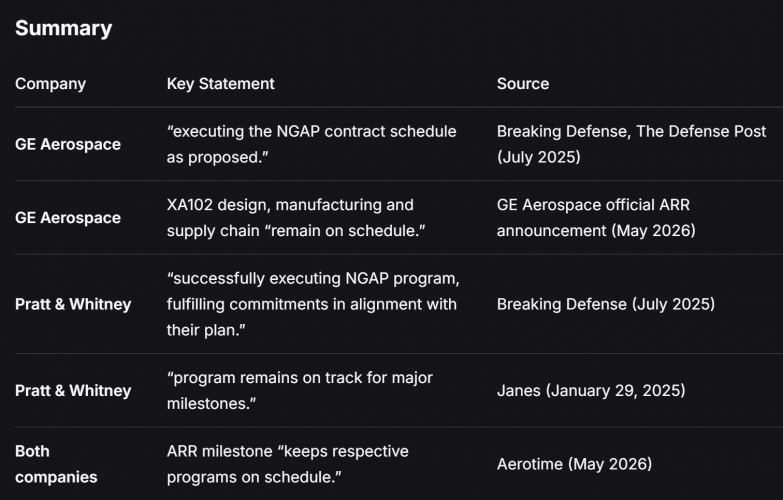
I’ve done some research: in 2025, both PW and GE stated they could meet the USAF’s schedule for NGAP (I’ve attached a summary). My understanding is that PW and GE have the capability to deliver on time. Also, there’s an interesting line in GE’s press release after announcing the completion of ARR: “The ARR validates that the XA102 engine design, manufacturing processes, and supply chain are progressing and on schedule to be awarded the next phase later this year.” Additionally, I’ve reviewed other historical engine programs, especially F119. I found that the typical interval from DDR completion to FETT is about one year. Yet for some reason, one year after NGAP completed its DDR, it has only finished ARR to date, and the next phase contract hasn’t been awarded. Maybe, the priority or original plan for NGAP has been adjusted.

PS: I had assumed that to enable the F-47’s first flight in 2028, NGAP would conduct FETT and select the winner in late 2025 or early 2026. For the NGAP EMD phase, I expected that DDR would be completed by late 2026 or early 2027, FETT would commence in late 2027, and IFR would be attained sometime in mid-2028.
 

Attachments

  • summary.png
    summary.png
    170.3 KB · Views: 191
Last edited:
Yet for some reason, one year after NGAP completed its DDR, it has only finished ARR to date, and the next phase contract hasn’t been awarded. Maybe, the priority or original plan for NGAP has been adjusted.
I mentioned this 6 months. My explanation is that the XA102 and XA103 engine were resized to suit the smaller Boeing F-47. I expect Lockheed Martin was the clear front runner to win the USAF NGAD contract up to the NGAD pause in July 2024.

The Lockheed design from the start was designed to use three stream adaptive engines. The Boeing design was to use existing F110 engines as the baseline option with three stream engines as a potential upgrade. The engine manufacturers with their three stream engines would have been preparing for a Lockheed win. Boeing winning the NGAD and the USAF then selecting the upgraded engine would totally explain that gap in time.
 
Last edited:
I mentioned this 6 months. My explanation is that the XA102 and XA103 engine were resized to suit the smaller Boeing F-47. I expect Lockheed Martin was the clear front runner to win the USAF NGAD contract up to the NGAD pause in July 2024.

The Lockheed design from the start was designed to use three stream adaptive engines. The Boeing design was to use existing F110 engines as the baseline option with three stream engines as a potential upgrade. The engine manufacturers with their three stream engines would have been preparing for a Lockheed win. Boeing winning the NGAD and the USAF then selecting the upgraded engine would totally explain that gap in time.
I have 2 points.

1. The X-plane and the EMD are completely different. Equipping the X-plane with existing engines is acceptable, as it only serves to demonstrate technical feasibility, especially aerodynamic design. If the USAF initially set adaptive engines as the EMD’s baseline propulsion system, formally submitted designs cannot use non-adaptive engines unless the USAF changes its requirements.

2. I think the idea that adaptive engines are inevitably larger than conventional ones needs further checking. GE confirms the XA100 fits the F-35A/C engine bays perfectly, so its size is roughly the same as the F135-PW-100.

Personal questions for discussion. Suppose B’s X-plane has completed flight tests powered by the F110 engine, indicating its design leans more toward the Navy’s F/A-XX program. Would the USAF accept an F-47 design derived from a carrier-based fighter? There is currently no information that a variable-cycle engine derived from the F110 is existing, let alone has obtained flight certification. Based on available information, the existing F110 engine cannot satisfy the F-47’s power and cooling demands. Even if the experimental F110-GE-129, which has undergone megawatt-class power extraction trials, is selected, it will still need full-envelope testing to obtain flight approval. Furthermore, the F110-GE-129 only delivers approximately 29,000 pounds of thrust.
 
I have 2 points.

1. The X-plane and the EMD are completely different. Equipping the X-plane with existing engines is acceptable, as it only serves to demonstrate technical feasibility, especially aerodynamic design.
The last two Boeing prototypes the T-7 and MQ-28 they looked 99% identical to the production versions. I expect the Boeing demostrator to be very close to the F-47. I expect it to be closer than the YF-22 and F-22 where its wing sweep was reduced from 48 to 42 degrees.

If the USAF initially set adaptive engines as the EMD’s baseline propulsion system, formally submitted designs cannot use non-adaptive engines unless the USAF changes its requirements.
The Boeing demonstrator was for the Navy so it can use non-adaptive engines. The USAF can easily estimate the performance of the demonstrator if it used adaptive engines.

2. I think the idea that adaptive engines are inevitably larger than conventional ones needs further checking. GE confirms the XA100 fits the F-35A/C engine bays perfectly, so its size is roughly the same as the F135-PW-100.
The F110 engine already has the highest bypass ratio of any western fighter engine. So it is already quite large for its level of thrust. A new adaptive engine should easily be able to produce 10-20% more thrust without increasing in size. The reason why the Boeing design might need smaller adaptive engines would be because it is overall smaller than the Lockheed design.

Personal questions for discussion. Suppose B’s X-plane has completed flight tests powered by the F110 engine, indicating its design leans more toward the Navy’s F/A-XX program. Would the USAF accept an F-47 design derived from a carrier-based fighter?
At the demonstrator stage I don't think it should be called a carrier-based design. I would instead use the word carrier compatible design. This means the overall dimensions and low speed handling characteristics are compatible with a carrier. This shouldn't have any negative effects on performance for the USAF. The Rafale family shows there can be very little performance lost between a carrier and land based design.

Based on available information, the existing F110 engine cannot satisfy the F-47’s power and cooling demands. Even if the experimental F110-GE-129, which has undergone megawatt-class power extraction trials, is selected, it will still need full-envelope testing to obtain flight approval. Furthermore, the F110-GE-129 only delivers approximately 29,000 pounds of thrust.
If all the fans and combustors are 100% identical I don't know why the engine would need full-envelope testing.

29,000lb of thrust is plenty if we assume the Boeing demonstrator was sized for the Navy.

The F-35C has a 34,581lb empty weight, 70,000lb MTOW weight and 43,000lb of thrust. The heaviest carrier aircraft in history is only 20% heavier than the F-35C. Yet two F110 engines give 35% more thrust than the F-35C.

The USAF can easily estimate the performance of a pair of sinilar sized but more powerful adaptive engines. In flight testing the F110 engines could be run in a low afterburner setting to match the thrust and exhaust velocity of the XA102/XA103 in high thrust dry supercruising mode. The USAF would then know exactly what they will be getting once they add cleansheet engines.
 
Last edited:
Would the USAF accept an F-47 design derived from a carrier-based fighter?

I don’t think this captures things especially well. Two demonstrators were flown - one for each service made by Boeing and LM. The services had likely partially overlapping goals for their programs, but apparently Boeing had the degrees of freedom to do what the USN wanted to see but also at least one thing the USAF was interested in. To say that Boeings winning F-47 proposal was adapted from a carrier based proposal may or may not be true, but as of now it may just be a convenient but speculative twisting of a more likely situation - that Boeings discreet proposals for F/A-XX and F-47 may have shared common approaches that typify Boeings philosophy to fighter design. They are a smart shop - they would be sensitive to the interservice history of shared aircraft design and would likely want to present very distinct solutions.

The questions of what the demonstrators, Increment 1 F-47, later F-47 and F/A-XX will fly with in terms of engines to me demonstrates that the tight integration of the different key ac systems to planform design underscore how much “F-47 is a derivative of their F/A-XX” simplifies an annoyingly complicated picture with a lot of unknowns (unless you’re @quellish )
 
That still leaves me with the question of what will Incr1 F-47 fly with?
What type of design changes will need to be done in order for the USAF to go with an interim engine? There are design differences between F-16s even though it can accept either F110 or F100 engines. The intakes are larger for the GE equipped F-16s, for example.

It will impact design, testing, as well as the cost to support. Will the interim engine just be needed for the test aircraft or the initial production lots.
 
What type of design changes will need to be done in order for the USAF to go with an interim engine? There are design differences between F-16s even though it can accept either F110 or F100 engines. The intakes are larger for the GE equipped F-16s, for example.
The XA102/XA103 engines won't necessarily give significantly more afterburning thrust than an uprated F110. The F110 with it's higher bypass ratio has excellent afterburning thrust due to that bypass air feeding the afterburner. The F110 has fairly low dry thrust but excellent cruise fuel burn. Max airflow would be similar so they could share a common air intake.

The primary advantage to XA102/XA103 engines are their ability to provide greater dry thrust with a higher exhaust velocity. This allows for improved supercruise performance. The XA102/XA103 engines would not reach the maximum airflow of the intake when in dry thrust.

Boeing would definitely design it with a common engine bay and intake.

The US Navy that was satisfied with improved F110 engines will now have an improved performance adaptive engine available that has been entirely funded by the USAF. The Navy would then have to decide if it's worth paying a little more for the engines to then have commonality with the USAF. The Navy would no doubt remember the F-14 and F-15 saga where they had different engines.

The Navy insisted they would never pay billions to development of a cleansheet engine. The extra performance was not critical to their mission. The Navy selected extra durability instead of extra performance when it came to the Super Hornet engines. However if someone else pays for a fancy engine the Navy could derate it for increased durability and it would be far superior to using F110s.
 
Last edited:
The last two Boeing prototypes the T-7 and MQ-28 they looked 99% identical to the production versions. I expect the Boeing demostrator to be very close to the F-47. I expect it to be closer than the YF-22 and F-22 where its wing sweep was reduced from 48 to 42 degrees.
Erm.. NO?

Please look up the meaning of "technology demonstrator". It is emphatically not the same as an prototype. Boeing's Bird of Prey was a technology demonstrator but you'll be hard pressed to find much trace of its shape in the Boeing JSF.
 
You won't get a supersonic cruising speed with a fourth-generation engine, but if that's not your goal, the F110 is a good choice
 
You won't get a supersonic cruising speed with a fourth-generation engine, but if that's not your goal, the F110 is a good choice
The Rafale and Eurofighter both supercruise with 4th generation engines.

The NASA X-59 demonstrator cruises at Mach 1.42 with a single 4th gen F414 engine.

Supercruise requires 3 features:
1) Good supersonic aerodynamics.
2) High thrust to weight ratio at dry thrust.
3) High exhaust velocity at dry thrust.

The F110 isn't that great in terms of point 3 but the aircraft design determines point 1 and 2.

If for example the fighter had an empty weight of 40,000lb with a highly swept wing and all weapons internal. Two uprated F110 engines should allow it to supercruise. The F110 engines will probably reach 20,000lb dry thrust each. Total thrust of 40,000lb matchs the empty weight.

The F-35A and F-16 for example has ~10% less dry thrust than it's empty weight. Plus the mid wing has higher transonic drag.
 
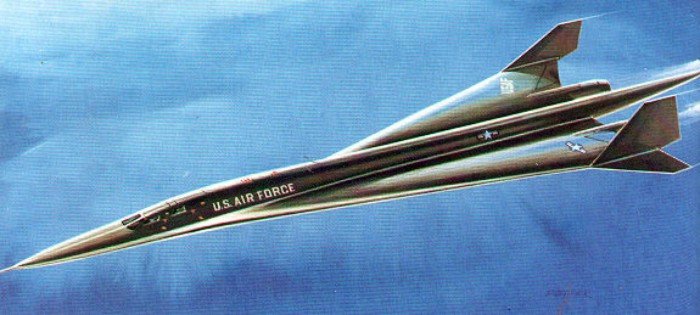
Fighters do not have a large fuselage elongation, so one of the factors affecting the achievement of cruising supersonic speed is the ratio of maximum thrust to the area of the midsection, or to the frontal area
F-22 - 2557 kgf/m2
F-23 - 2296 kgf/m2
Su-57 - 2471 kgf/m2
Su-35S - 1774 kgf/m2
Rafale - 1543 kgf/m2
Eurofighter - 1800 kgf/m2
Thus, for the last three fighters on the list, this is useless

If he looked like that, he might have reached cruising supersonic speed
 

Attachments

  • 8.jpg
    8.jpg
    63.1 KB · Views: 197
Last edited:
F110-GE-132:
Maximum thrust without afterburner: approximately 8.7 tons (8700 kgf).
Maximum thrust with afterburner: approximately 14.7 tons (14700 kgf).

8700 kgf * 2 = 17400 kgf : 2500 kgf/m2 = 6.96 m2

This is the frontal area of the F-18, Eurofighter, and KF-21 fighter jets.
 
The problem I've with these engines is that the metric fits the technology available 16 years ago or should I say people are working with data from that time.

There are a few key stats that have remained unchanged and true imho for desired engines.
1. The coming generation of "common" military engines are rated around 35 klb. We can see that with today's Russian and Chinese engines coming out. And apparently, India and South Korea are aiming for the same for the next-next engines.
2. Life cycle improvement from 4000 to 6000. This has been met with AETP program back in 2009. Back then the proportional tradeoff was 36klb for 4000 or 29klb for 6000.
3. SFC improvements
Now we are about 2 generations of improvement later, and have more matured approaches to rotating detonation engines, too.
So it seems to me we can have both 6000 life cycles along with higher thrust easily today. Either that or there's a shift toward 8000 life cycle for 30 klb. I doubt that.
Further, back then F110 growth was limited to 36klb; and F414 was limited to 28klb. And as I understand it these include all the changes discussed so far. With this it does look like they can fullfill the minimum threshold requirement but offer no growth beyond.

The talk & chinese speculation back then about the PW1000 and PW9000 relationship and future engine sounds a lot more promissing.
https://www.flightglobal.com/pratt-...n-pw9000-future-military-engine/92196.article
https://www.flightglobal.com/pandw-gears-up-for-next-generation-military-engine/100212.article
Also note Germany's MTU is involved in PW1000 production, and they have been sharing adaptive cycle engine research with Sweden. This is probably part of what's the news is about with the recent possible cooperation.
 
F110-class engines are fundamentally limited by their ability to maintain fan RPM at supersonic speeds due to elevated temperatures from flow compression.

As for the proposed 36,000 lbf thrust variants, I recall that those were pitched as potential JSF powerplants at one point and may require an enlarged fan.
 
2. I think the idea that adaptive engines are inevitably larger than conventional ones needs further checking. GE confirms the XA100 fits the F-35A/C engine bays perfectly, so its size is roughly the same as the F135-PW-100.
That "roughly" is doing a lot of lifting.

But my assumption has been roughly 1" greater radius/2" greater diameter to give the 3rd stream of air someplace to flow.


Furthermore, the F110-GE-129 only delivers approximately 29,000 pounds of thrust.
Good thing there's an F110-GE-132, making ~32klbs.


F110-class engines are fundamentally limited by their ability to maintain fan RPM at supersonic speeds due to elevated temperatures from flow compression.

As for the proposed 36,000 lbf thrust variants, I recall that those were pitched as potential JSF powerplants at one point and may require an enlarged fan.
I also remember those needing larger fans.
 
But my assumption has been roughly 1" greater radius/2" greater diameter to give the 3rd stream of air someplace to flow.
The third stream doesn't need a greater diameter.

An engines fan blade diameter becomes smaller with every stage. So by the second fan stage the overall engine diameter has reduced enough to allow for the third stream.

You have repeated this incorrect assumption multiple times. The three stream engines get extra thrust and the more fuel efficient third stream without an overall diameter increase.

The XA100/XA101 were built as a direct swap of the F135. They had the third stream and 15~% extra thrust with no diameter increase.

Likewise the XA102/XA103 can be a direct swap of the F110. The XA102/XA103 are reported to have the same ~15% thrust increase over the F110. So again there is no need to increase diameter.
 
Last edited:
I am glad that every forum has its resident schizo. Theres zero informational value to be had but the entertainment value is unparalleled.

Increasingly this thread reminds me of reading tweets from kanye.
No, I know the voices in my head aren't real.

But damn do they have some good ideas every once in a while! :D
 
...
 

Attachments

  • IMG_20260604_145810.jpg
    IMG_20260604_145810.jpg
    1.1 MB · Views: 136
  • 20260604_145634.jpg
    20260604_145634.jpg
    162 KB · Views: 134
Last edited by a moderator:
Of course it’s doctored. Even the latest USAF photo release of the B-21 completely removes exhaust duct and deck. (The one looking too down from the fueling boom).
 
What type of design changes will need to be done in order for the USAF to go with an interim engine?
Little late to this, but key items are subsystems routing (bleed air routing, fuel interfaces, secondary power/APU routing), Inlet and seal compatibility, engine mounts, and overall engine envelope.

Given the engines are clean sheet, the OEMs would work with B and LM (up until award at least) to try and find interfaces that suit both to reduce the magnitude of changes needed.

I doubt many changes, if any, would be allowed for inlet and seals since they are generally much more invasive. Especially for an LO inlet which requires a painful amount of extra verification and design. Subsystems are slightly more flexible, but you're still playing with fractions of an inch worth of flexibility, if that.

Envelope is probably the most important as you have to meet all the same clearance requirements to nearby components and structure as before. HXs, Condensers, valves, tubing, sensors, inlet ducting, etc. all can surround the engine, so you don't really have much wiggle room with envelopes.

TLDR; whatever NGAP ends up being will probably have a nearly identical footprint as whatever powerplant it uses. If anyone disagrees (not you specifically), argue with a wall.
 
Last edited:
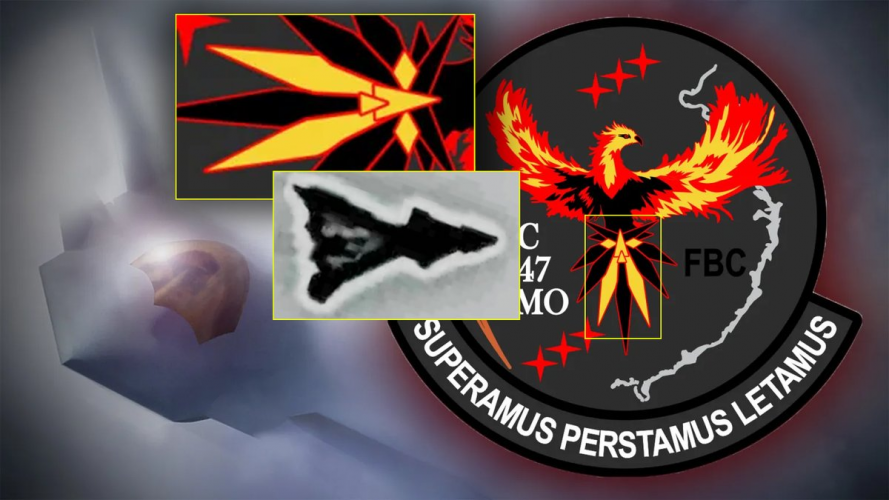
TWZ is litwrally just ripping off the comments found in the other threads. I at one point said that the patch could be interpreted to be a aircraft with high swept wings and canards.

My opinions are generally on the order of trying to fortune tell the future from the shape of someones head... as are the guesses of others here. But because TWZ does lazy reporting, they will write a verbose and generally uninformative article ththat is basically just fanboying.

Twz readers would be shocked to learn that one of the possible sources of TWZs reporting is an edgy schizo with cartman from south park as a pfp >.>
 
Yall think they’re still flying one or both of the demonstrators, maybe just for flight sciences purposes?
 
Yall think they’re still flying one or both of the demonstrators, maybe just for flight sciences purposes?
And for systems development. The question is, is it flying in support of the F-47, the upcoming down select for the F/A-XX, or both?
 
Had a thought driving earlier, do you guys think that AI driven software would have a play in adversary prediction and recommended action to counter a threat? More so to upload threat profiles into a FMS for the pilot thought and workload to be simply reduced to WRA? Would the F-47 "6th Generation Leap" be an extremely powerful AI enabled weapons suite? I won't delve into the X-62, but I think there are larger concepts at play into how it will be employed in the future.
 
Id assume that if ABMS is already coming up with action plans automatically (albiet with final human oversight) then the same decision process could to be used elsewhere - F-47 included.

For adversary prediction, Id also assume that if teaming and tactics developed by AI have been used to train collaborative behavior, that it would be used similarly to do adversary prediction. These "adversary prediction / sim" probably already exist to use adversarial AI to train existing models.

Edit: I should qualify those statements I think. There's a lot more connectivity and context an AI may need in order to actually work well. There's also a lot of legacy systems that new software must have interoperability with. That includes but isn't limited to weapon systems and their software. It's my impression that in the current time, mission tasking / planning is still a manual intensive task and I'm not sure how AI would actually take that over, because unlike in land based settings where you have the server space to run a model, there's cause to be conscious about how large a model you put on vehicles do to their power consumption.

So I would generally temper your expectations for how much AI is actually responsible for in the F-47 (or any 6th gen / CCA jet) currently. I think as long as the architecture is conducive to expanding AI responsibility, then thats a good enough starting point for the F-47 and the first generations of CCAs.
 
Last edited:
The goal is for F-47/FFA-XX to be able to manage, compose and generate a strike package on their own while in the field to adjust or take advantage of a predicted situation. In a sense it's supposed to be abe to do the work of a whole opertions HQ. Even within reasonable reach the compexity is enormous but computer advancement allowing them to have supercomputer like capacity should make this possible. Military software isn't bloated nor use bloated data like civil software do.
 
Ehhh..... ehhhhhhhhhhh it depends but its usually because of having to support legacy systems or having too much technical debt and not enough manpower / money to fix it all.
yes, the database tail is certainly large but information security drives limitation on function access to the data as much as possible. That's how they can operate on just a megabyte level of RAM.
 
Little late to this, but key items are subsystems routing (bleed air routing, fuel interfaces, secondary power/APU routing), Inlet and seal compatibility, engine mounts, and overall engine envelope.

Given the engines are clean sheet, the OEMs would work with B and LM (up until award at least) to try and find interfaces that suit both to reduce the magnitude of changes needed.

I doubt many changes, if any, would be allowed for inlet and seals since they are generally much more invasive. Especially for an LO inlet which requires a painful amount of extra verification and design. Subsystems are slightly more flexible, but you're still playing with fractions of an inch worth of flexibility, if that.

Envelope is probably the most important as you have to meet all the same clearance requirements to nearby components and structure as before. HXs, Condensers, valves, tubing, sensors, inlet ducting, etc. all can surround the engine, so you don't really have much wiggle room with envelopes.
agreed, the easiest way to swap engines is by having space for the manifolds etc to change between the interim and 3-stream.
 
not quite speculation, but I was informed by our commander that we are already preparing for the arrival of the F-47 and currently constructing the infrastructure for it. I know the solicitations for contractors are already public information right now, so its already open knowledge.
 

Similar threads

Back
Top Bottom