
You are using an out of date browser. It may not display this or other websites correctly.
You should upgrade or use an alternative browser.
You should upgrade or use an alternative browser.
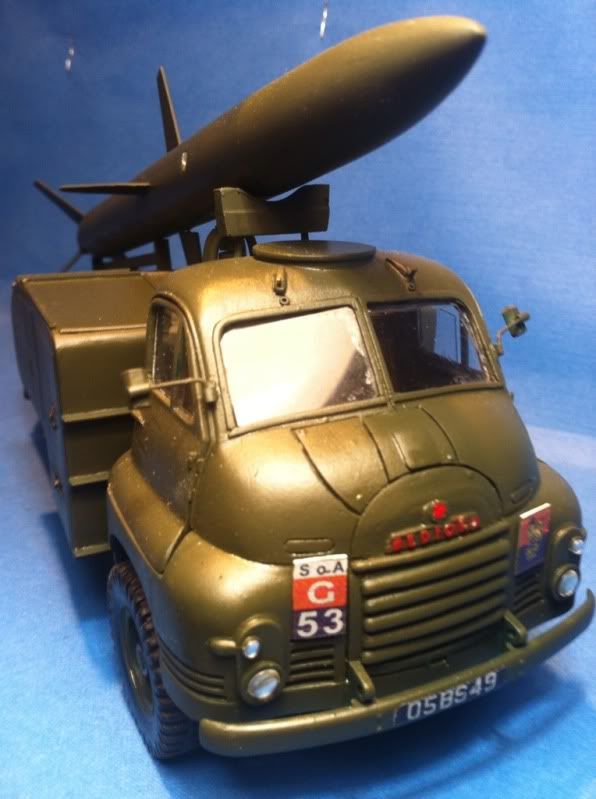
Blue Water 1/35th
- Thread starter mecanix
- Start date
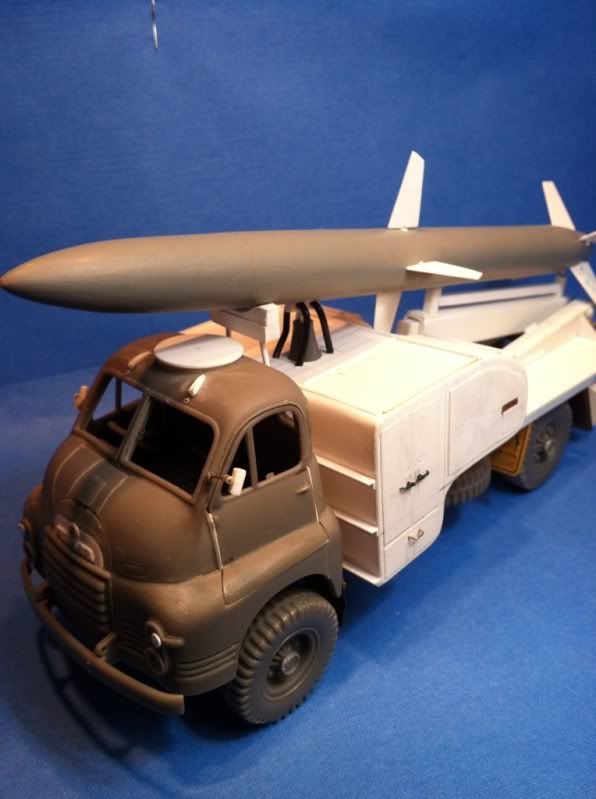
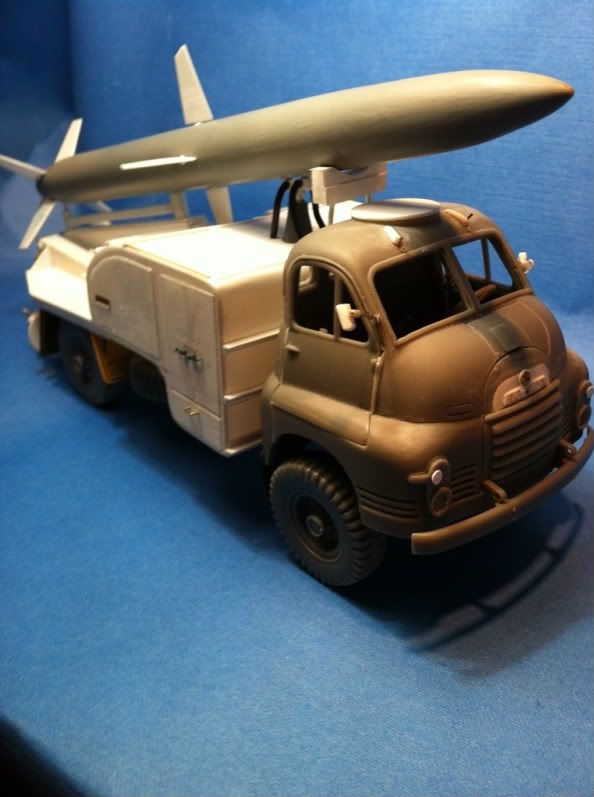
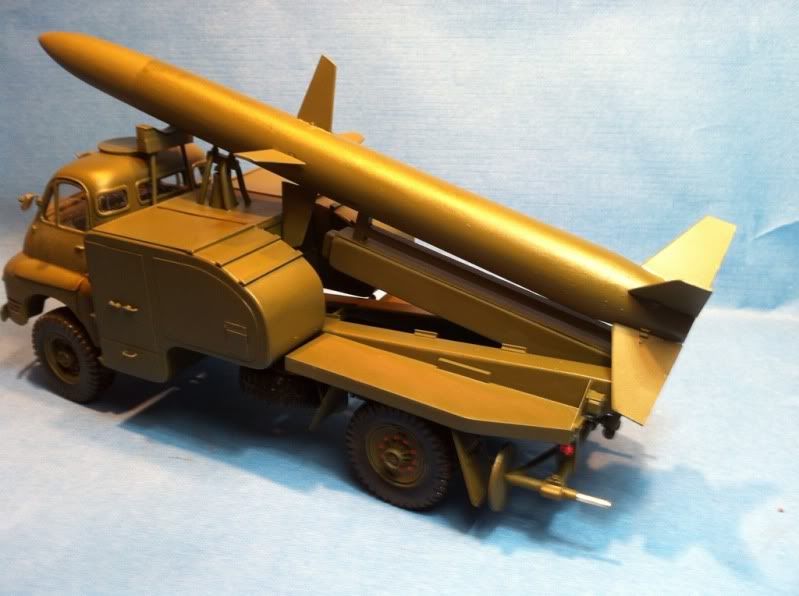
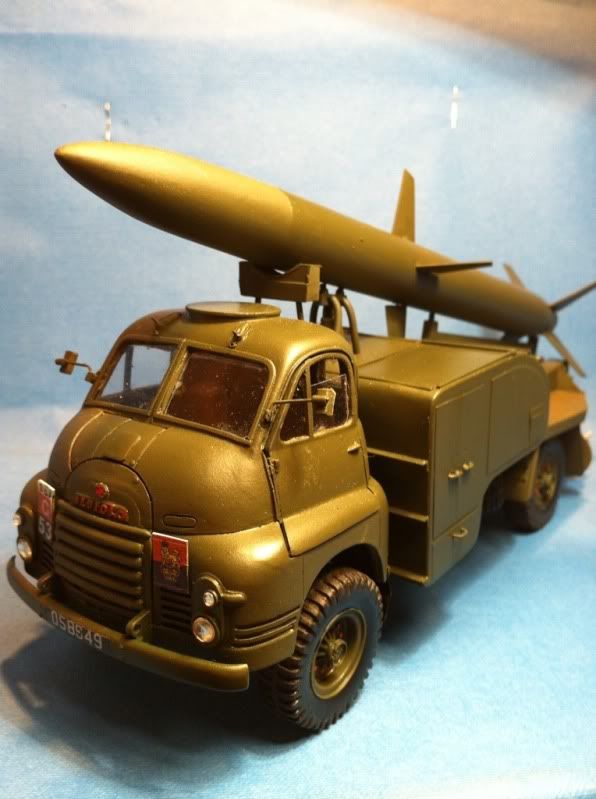
O
Overkiller
Guest
Very Nice! 
May I ask, how did you go about creating the Blue Water missile? The fins look like sanded plasticard, but I'm not sure about the body?
cheers
Duncan
May I ask, how did you go about creating the Blue Water missile? The fins look like sanded plasticard, but I'm not sure about the body?
cheers
Duncan

very nice modelling indeed B) the clean finish really suits it too, beautiful
are you planning to build the hardtop Land Rover control vehicle too (Italeri basis?)
cheers, Joe
are you planning to build the hardtop Land Rover control vehicle too (Italeri basis?)
cheers, Joe
Thank you all for your kind comments.
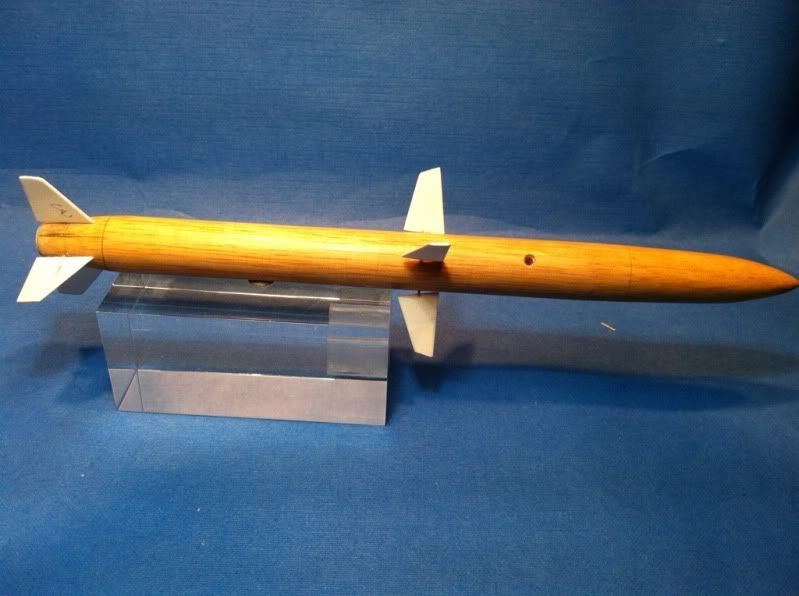
Duncan; the fins are indeed plasticard. The body is pine I think, it was scrap in the workshop.
I am in the process of building a 1/35th Thor IRBM TEL so I have to admit to practising for that on the lathe with Blue Water. This was the 4th or 5th attempt!
It was just covered in a wood filler a friend uses for his balsa kits, several Halfords primer coats and sanded smooth.
Robin: I used the drawings in Smith's British Army Equipment and BSP 4 enlarged to 1/35th and I have been collecting bits for over 30 years for this.
John Church was planning a set of drawings but never got around to it. He did lend me his copy of the EE Blue Water sales brochure circa 1960 but he had little else.
Joe; yes I have several Land Rover 1/35th kits and numberplate decals to bash together into the control vehicle but it will have to wait for 2 other projects further up the production line.
I was lucky that there appears to be only 2 built vehicles and although I believe that there were some small changes as it went along
it was a tidy, simple sales demonstator/proof of concept vehicle so then fairly straightforward to replicate.
I plan to bring it to Telford, if I get the time to attend.
regards
Duncan; the fins are indeed plasticard. The body is pine I think, it was scrap in the workshop.
I am in the process of building a 1/35th Thor IRBM TEL so I have to admit to practising for that on the lathe with Blue Water. This was the 4th or 5th attempt!
It was just covered in a wood filler a friend uses for his balsa kits, several Halfords primer coats and sanded smooth.
Robin: I used the drawings in Smith's British Army Equipment and BSP 4 enlarged to 1/35th and I have been collecting bits for over 30 years for this.
John Church was planning a set of drawings but never got around to it. He did lend me his copy of the EE Blue Water sales brochure circa 1960 but he had little else.
Joe; yes I have several Land Rover 1/35th kits and numberplate decals to bash together into the control vehicle but it will have to wait for 2 other projects further up the production line.
I was lucky that there appears to be only 2 built vehicles and although I believe that there were some small changes as it went along
it was a tidy, simple sales demonstator/proof of concept vehicle so then fairly straightforward to replicate.
I plan to bring it to Telford, if I get the time to attend.
regards

- Joined
- 1 May 2007
- Messages
- 2,745
- Reaction score
- 2,458
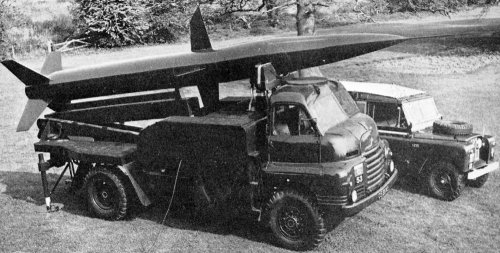
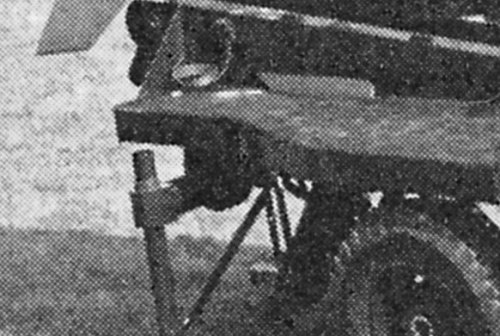
Thanks for that. I've been giving thought to building a Braille Scale Blue Water and launcher. There's a Bedford RL truck model available, and I have BSP4. It's the shape of the launch truck platform at the rear end that I'm having trouble deducing.
cheers,
Robin.
cheers,
Robin.
- Joined
- 1 May 2007
- Messages
- 2,745
- Reaction score
- 2,458
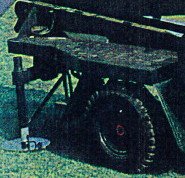
Thanks, Mecanix. I'm trying to work out the true shape of the rear of the truck bed, where it tapers in to the base of the launcher arm. Ideally, what I need is a top view of the vehicle...
cheers,
Robin.
cheers,
Robin.
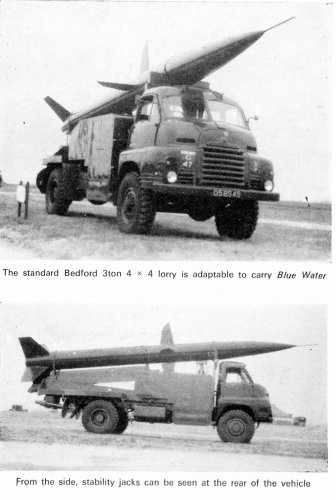
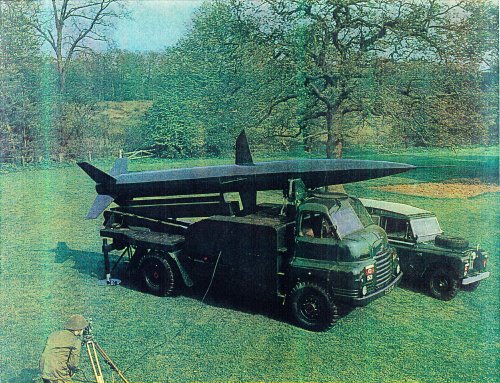
- Joined
- 26 January 2011
- Messages
- 2,227
- Reaction score
- 704
robunos said:Thanks for that. I've been giving thought to building a Braille Scale Blue Water and launcher. There's a Bedford RL truck model available, and I have BSP4. It's the shape of the launch truck platform at the rear end that I'm having trouble deducing.
cheers,
Robin.
I built two. One on a Bedford truck, the other on a Stalwart.
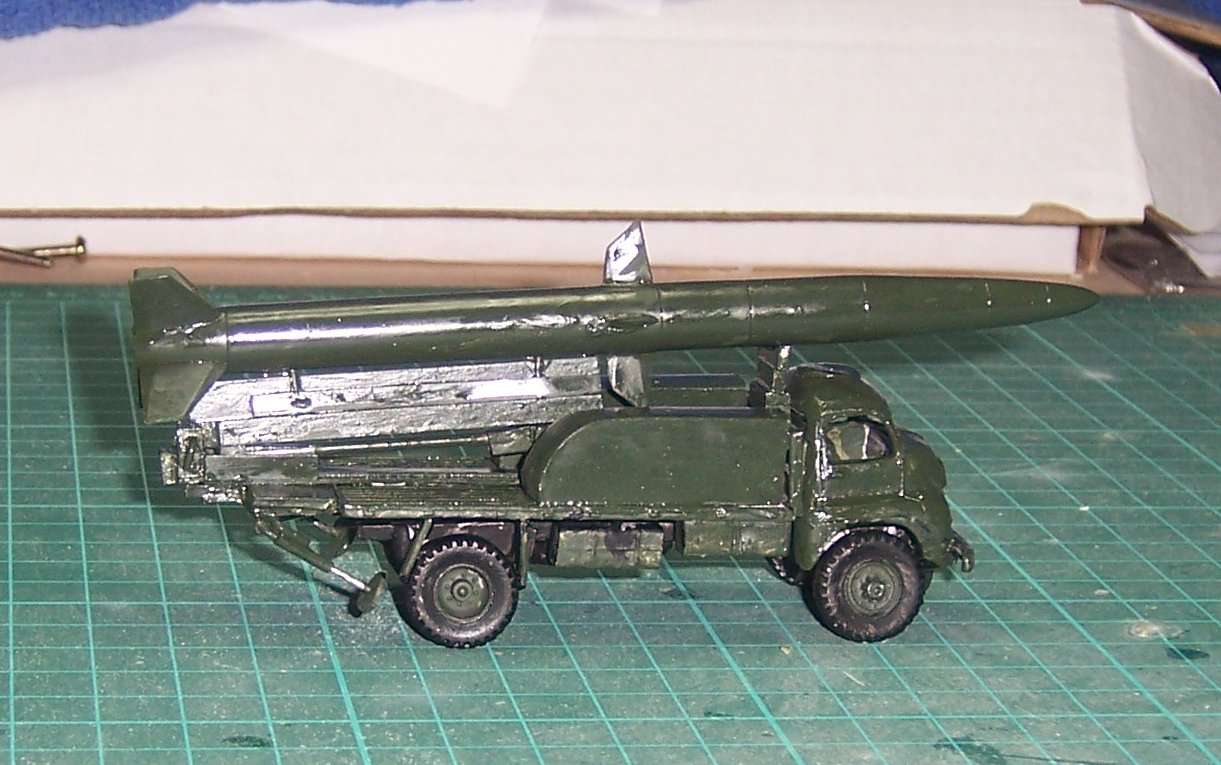
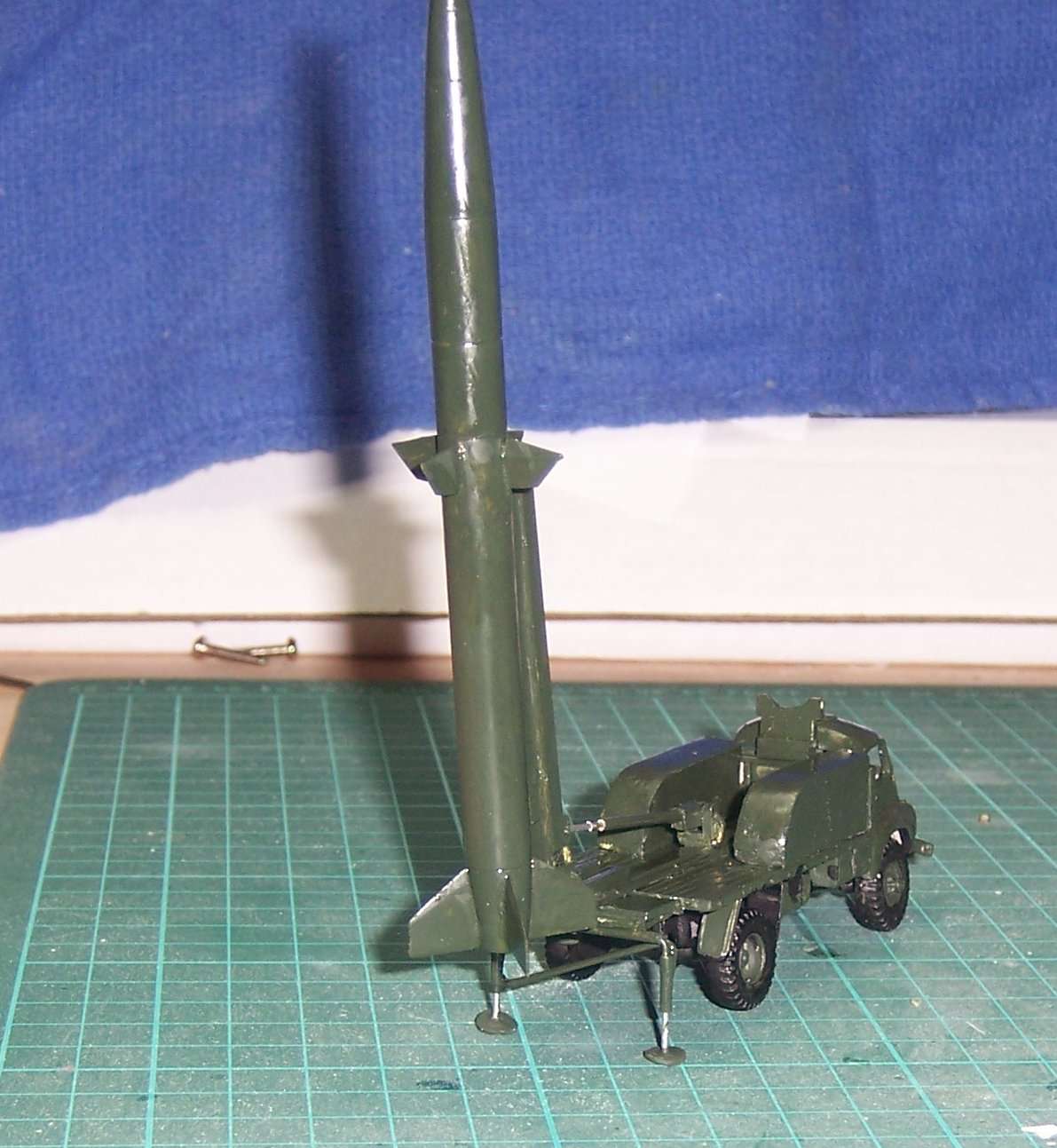
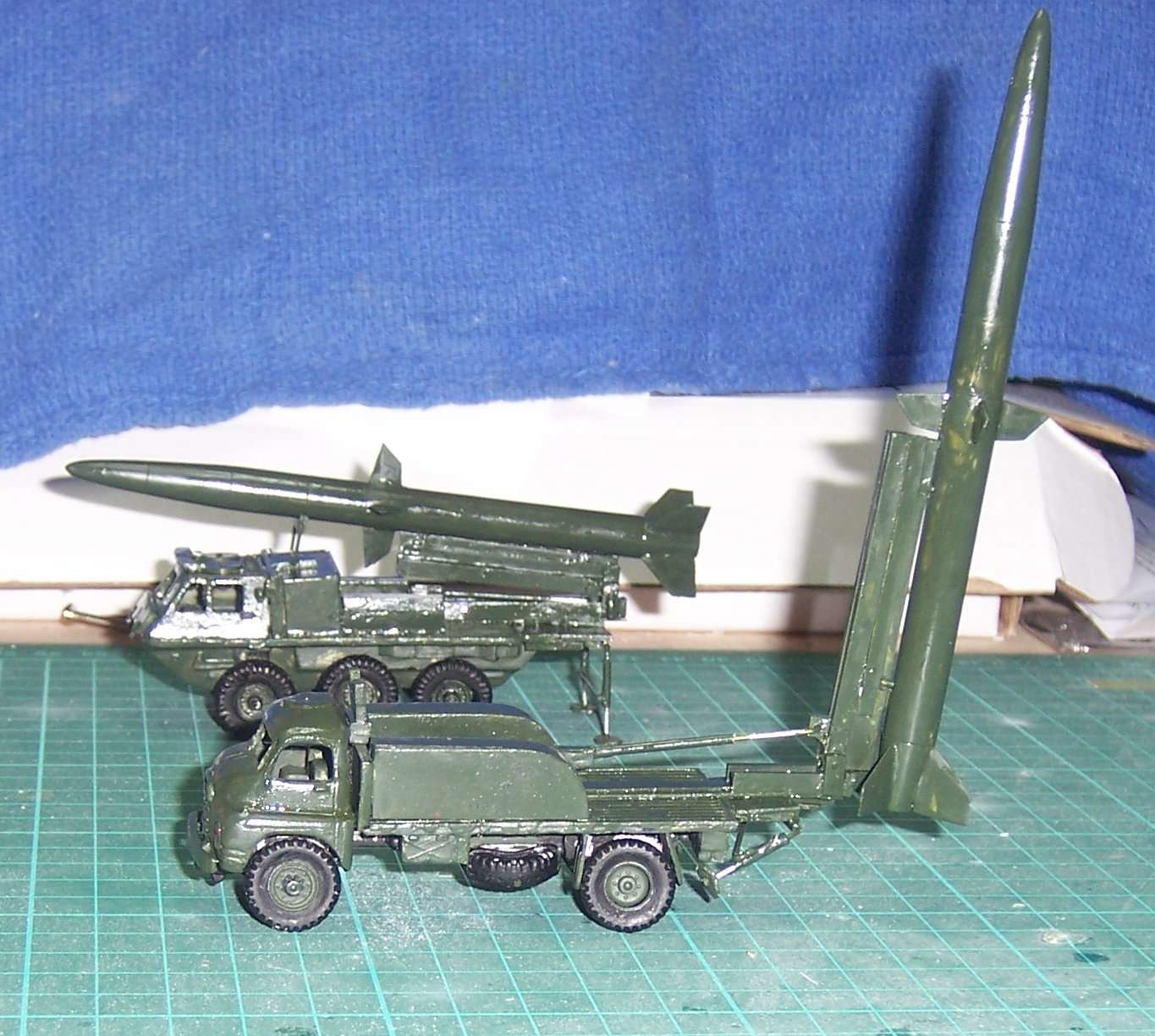
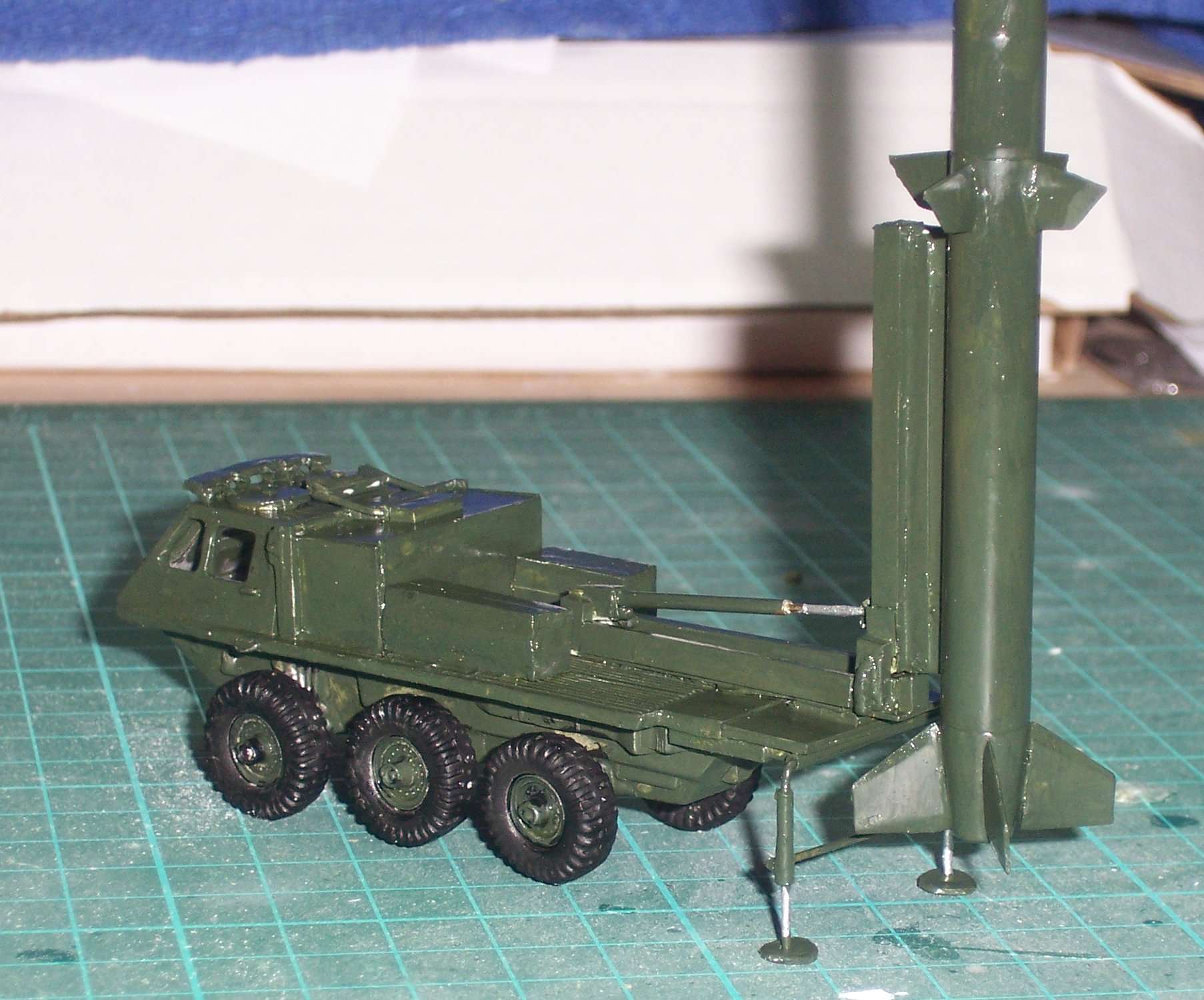
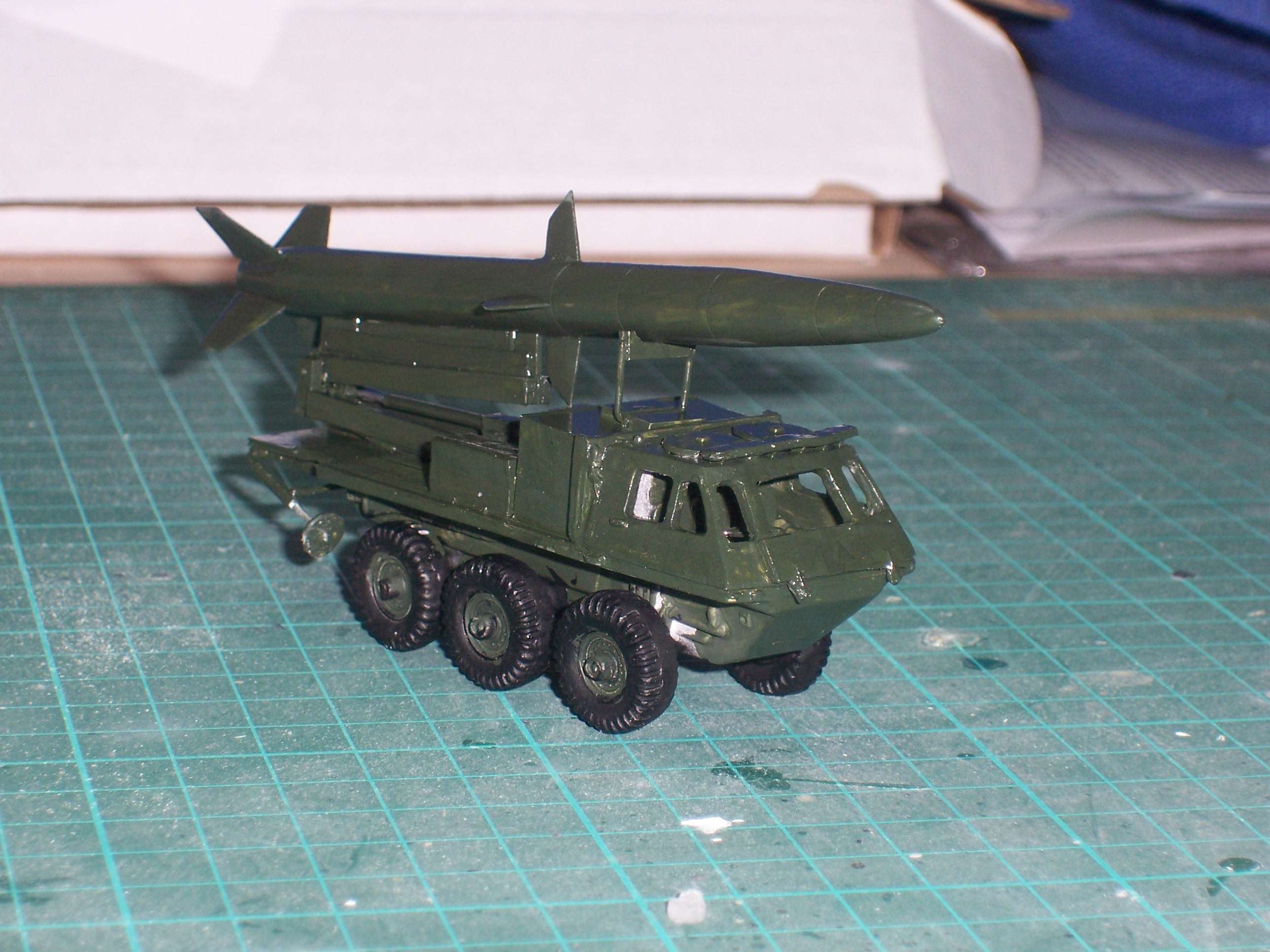
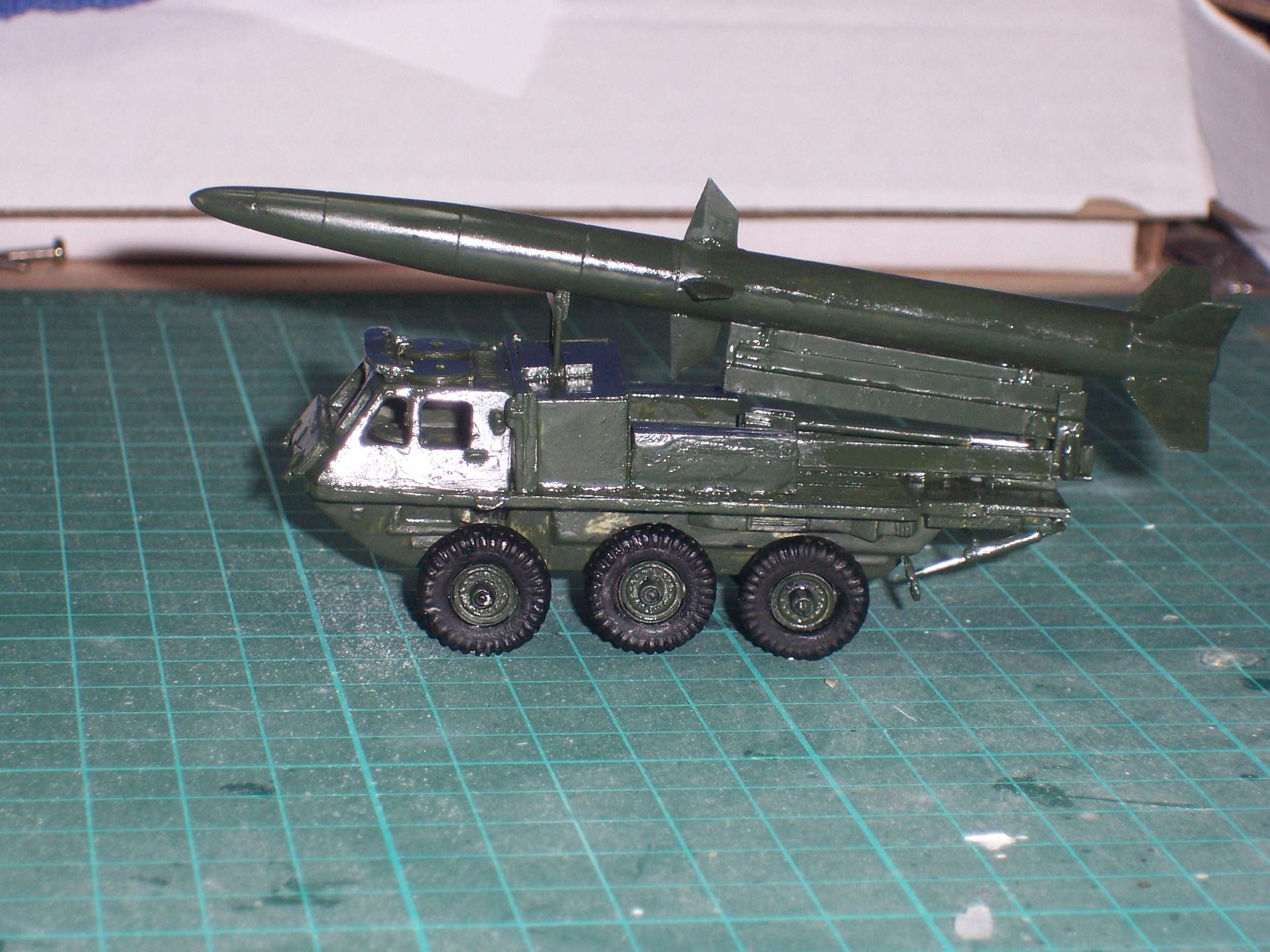

- Joined
- 27 September 2006
- Messages
- 6,555
- Reaction score
- 7,325
I love that Stalwart version. I have also seen reference to a launcher on the FV 432 chassis but no pictures are available. Had the Germans bought Blue Water as hoped they would have used their Man trucks (see pictures of German Sergeants)
- Joined
- 1 May 2007
- Messages
- 2,745
- Reaction score
- 2,458
Kadija_Man, nice builds, liking the Stolly version...(shame about the glossy finish, though... : )
Hmm, got one of those in my stash, the 8X8 version...
cheers,
Robin.
)their Man trucks
Hmm, got one of those in my stash, the 8X8 version...
cheers,
Robin.
- Joined
- 27 September 2006
- Messages
- 6,555
- Reaction score
- 7,325
Robunos
If one assumes that Blue Water would have entered service in the mid 60s and served until the end of the Cold War with the British Army of the Rhine and Federal German Army (Heer), and possibly as a NATO system with Belgium, Netherlands as well. a number of carrying options become possible
BAOR Most likely to have been deployed with the Bedford TK style cab and possibly later on the Foden chassis like the FH 70 system vehicles. Tracked and amphibious vehicles like those used to carry Pershing in US Army and W German Luftwaffe service fell out of favour early on and British Stalwarts were rarely used in their intended role. The MAN vehicles (now also used by the British) did not enter service with the Germans until the 70s so initial systems trucks would have been the Magirus Deutz (see the Roco Minitanks 1-87 range).
British Army used gloss green vehicles until the 70s when the matt green and black camo finish took over, though UK based vehicles took longer to go camo than those in BAOR.
If one assumes that Blue Water would have entered service in the mid 60s and served until the end of the Cold War with the British Army of the Rhine and Federal German Army (Heer), and possibly as a NATO system with Belgium, Netherlands as well. a number of carrying options become possible
BAOR Most likely to have been deployed with the Bedford TK style cab and possibly later on the Foden chassis like the FH 70 system vehicles. Tracked and amphibious vehicles like those used to carry Pershing in US Army and W German Luftwaffe service fell out of favour early on and British Stalwarts were rarely used in their intended role. The MAN vehicles (now also used by the British) did not enter service with the Germans until the 70s so initial systems trucks would have been the Magirus Deutz (see the Roco Minitanks 1-87 range).
British Army used gloss green vehicles until the 70s when the matt green and black camo finish took over, though UK based vehicles took longer to go camo than those in BAOR.
- Joined
- 1 May 2007
- Messages
- 2,745
- Reaction score
- 2,458
BAOR Most likely to have been deployed with the Bedford TK style cab
Apart from the cab, is it known whether the production vehicle have been the same as the RL based demonstrator?
Foden chassis like the FH 70 system vehicles
Is this the same chassis as used by the DROPS vehicle? As there is a kit of this available, too.
British Army used gloss green vehicles until the 70s
Ooops........... :-[
But had hostilities broken out, they wouldn't have deployed in this scheme, surely...
Also, had the Heer used the MAN trucks, which version? 4x4, 6x6, or 8x8?
cheers,
Robin.
- Joined
- 27 September 2006
- Messages
- 6,555
- Reaction score
- 7,325
I am afraid my comments are all guesswork. The only source for an alternative Blue Water launcher is the Alvis ad for the Stalwart. Reference is made to a version mounted on FV 432 but no image seen.
My comments on the German launcher are based purely on what they did with Sergeant.
At a guess the launcher on the MAN chassis would be 6X6 like that used for Roland.
My comments on the German launcher are based purely on what they did with Sergeant.
At a guess the launcher on the MAN chassis would be 6X6 like that used for Roland.
- Joined
- 26 January 2011
- Messages
- 2,227
- Reaction score
- 704
robunos said:British Army used gloss green vehicles until the 70s
Ooops........... :-[
But had hostilities broken out, they wouldn't have deployed in this scheme, surely...
Do you think they'd have repainted them in the four minutes? Would the colour have really mattered?
- Joined
- 1 May 2007
- Messages
- 2,745
- Reaction score
- 2,458
Do you think they'd have repainted them in the four minutes? Would the colour have really mattered?
Well obviously, if the first sign of war was the Four Minute Warning, then no, but there may have been a period of escalating tension, ala the Cuban Missile Crisis. This would have given time for the missiles to be dispersed from their peacetime bases, to forward operating locations.
I would have thought that commanders would have wanted to hide this movement from Soviet reconnaissance, so at the very least would have ordered a flatting down of the gloss finish, maybe also a coat of seasonal (e.g. winter whitewash) camoflage...
cheers,
Robin.
- Joined
- 26 January 2011
- Messages
- 2,227
- Reaction score
- 704
I rather think the long, cylinderical missile on top would have been more of a give away than the sheen of the gloss paint. The gloss paint would only have been important if you consider the period of tension or conflict to have been extended. Sure, if its longer than a few days , whack a load of mud on it. If it lasts a month, you might have time to get them repainted. Otherwise you're out on deployment, constantly moving.

Mark_Ellis
ACCESS: Restricted
Always intrigued to know as to what people think Stalwart's intended role actually was, @uk 75 ?...
... Tracked and amphibious vehicles like those used to carry Pershing in US Army and W German Luftwaffe service fell out of favour early on and British Stalwarts were rarely used in their intended role. ...
Original proposal by Alvis was to use FVRDE's FV600 hull as a 5 ton off road load carrier. FVRDE asked if it could ford, for beach landings - and Alvis made it swim
- Joined
- 27 September 2006
- Messages
- 6,555
- Reaction score
- 7,325
If I remember right every new vehicle for the British Army in the 60s was expected to get across rivers in some ways without using bridges,
By the 70s engineer equipment had improved to the extent that this was no longer needed and flotation screens were removed
from armoured vehicles but the Stalwarts retained their special drive and had to be treated accordingly.
By the 70s engineer equipment had improved to the extent that this was no longer needed and flotation screens were removed
from armoured vehicles but the Stalwarts retained their special drive and had to be treated accordingly.
Mark_Ellis
ACCESS: Restricted
I only ask, @uk 75 because some people wrongly think the Stalwart's "intended roll" was to float around in German rivers, and ferry people and stores across the rivers.If I remember right every new vehicle for the British Army in the 60s was expected to get across rivers in some ways without using bridges,
By the 70s engineer equipment had improved to the extent that this was no longer needed and flotation screens were removed
from armoured vehicles but the Stalwarts retained their special drive and had to be treated accordingly.
In reality, Stalwart was proposed by Alvis as an Off road truck that could carry 5 tons, using FVRDE's 6x6 punt hull. Fording never crossed Alvis' mind.
But FVRDE, aware of what issues were faced on D Day, and how to get vehicles from landing crafts to shore, and having witnessed Saracens trying to cross rivers (as in shallow streams) in Malaya, had started wading trials with Saracen.
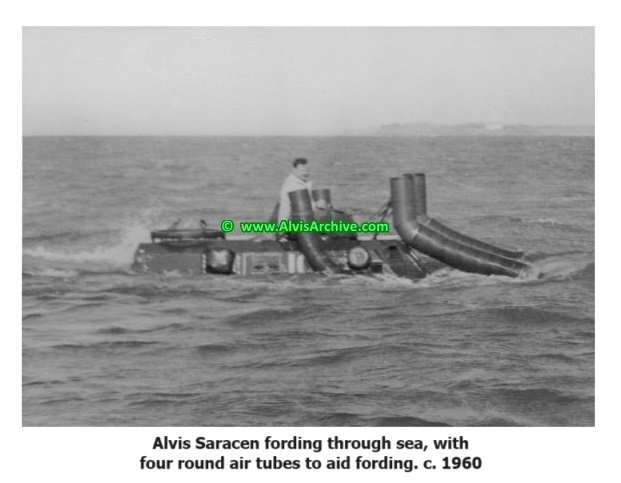
They asked Alvis if the new Load carrier could ford, and MEXE sent it to Instow, where REME waterproofed it and drove it along the beach of the River Seven
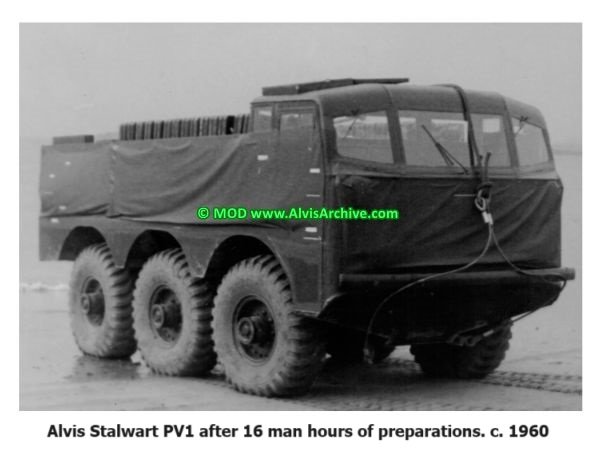
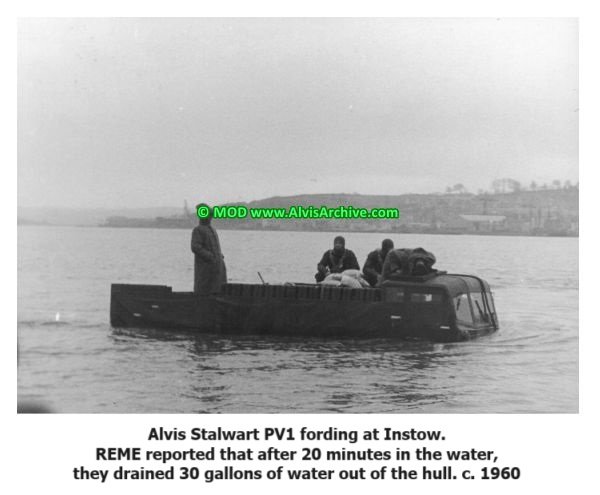
Alvis, being pioneering British Engineers, went a step beyond waterproofing, and installed marine propulsion. The Stalwart's first marine propulsion was the same Gill * propulsion system as used on the MEXE float and Heavy Ferry. (* designed by Major Gill RE)
A major issue of using rivers, is that you have to know what the shore or bank is made of. Is it too steep, is it too soft, is it too rocky.
See this MOD video for such issues https://www.youtube.com/watch?v=7FwTtuSnNkQ
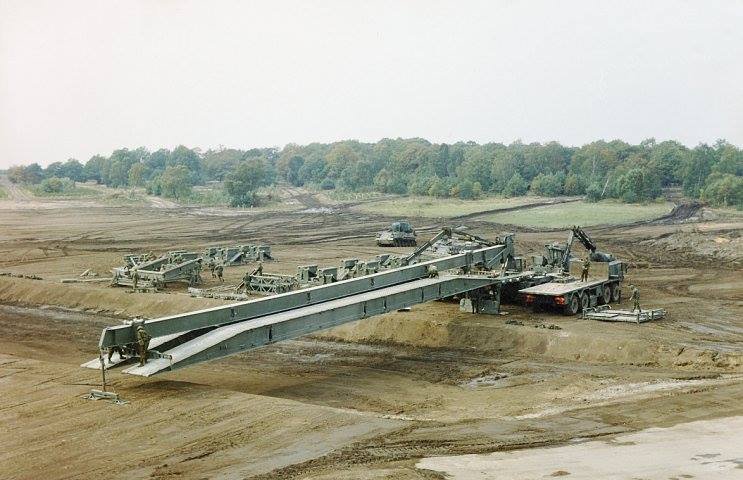
The Medium Girder Bridge came into service in the 1960s, and the BR90 was well underway before 1990.
This shows in the foreground a BR90 bridge across the gap, and just needs the kerbs and centre decking laid. On the left, the Field Squadron have finished constructing the Far bank ramp, and will still be some hours away before completion, and the bridge can be opened.
I know that the FV430 series had removed the splashboards at some time in the 1970s. The order to remove the Stalwart swim gear was authorised in 1982, and I cut the splashboard off one of my Stalwarts in spring of 1983. Due to the time taken to hacksaw the hinges of the splashboard, our LAD deemed that the work was too time consuming, and our regiment's swim gear stayed complete.
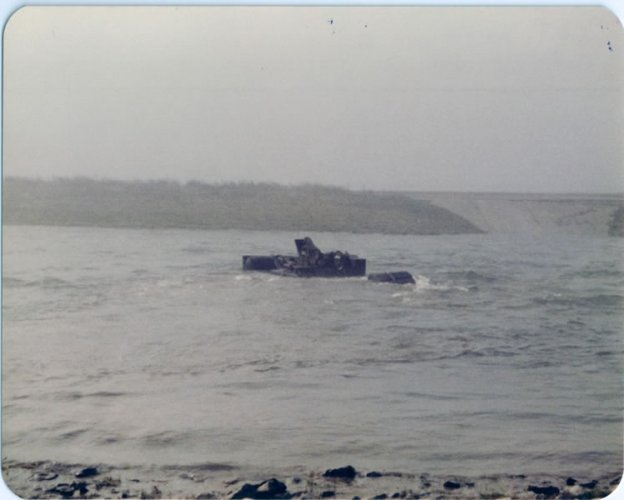
I know that Combat Engineer Tractors (CET) and CVR(T) remained amphibious after I left Germany at the end of 1983.
CET have the nickname of Frogs, because they swim very low in the water.
I hope that is of interest.

Similar threads
-

-
 Blue Water missile : an easy modelling option
- Started by uk 75
- Replies: 2
-
-

-