BlueAbyssal
ACCESS: Secret
- Joined
- 14 January 2024
- Messages
- 406
- Reaction score
- 762
Unfortunate, but not a permanent setback.



Melt. Extract. Fuel. Repeat.
To build an affordable, sustainable presence on the Moon, we must learn to live off the land. Air Pioneer is a scalable, modular system that creates purified oxygen to reduce dependency on supplies from Earth. Using Moon-extracted oxygen for propellant, fuel cells, and breathing reduces our lunar landers’ load by many metric tons of mass. Launching less mass from Earth lowers the cost of our Moon base, fueling a future cislunar economy.

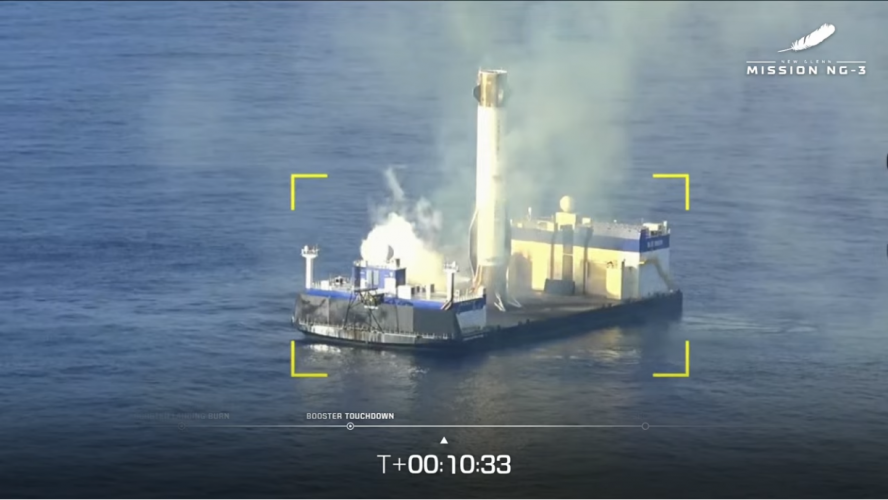
Why is it so orange 0:52 onwards? any fire ? or is that just the sunset ?


One thing I've noted is that now with two companies reusing boosters, there aren't many people still insisting booster reuse is pointless or no cheaper than expendables now.
 spacenews.com
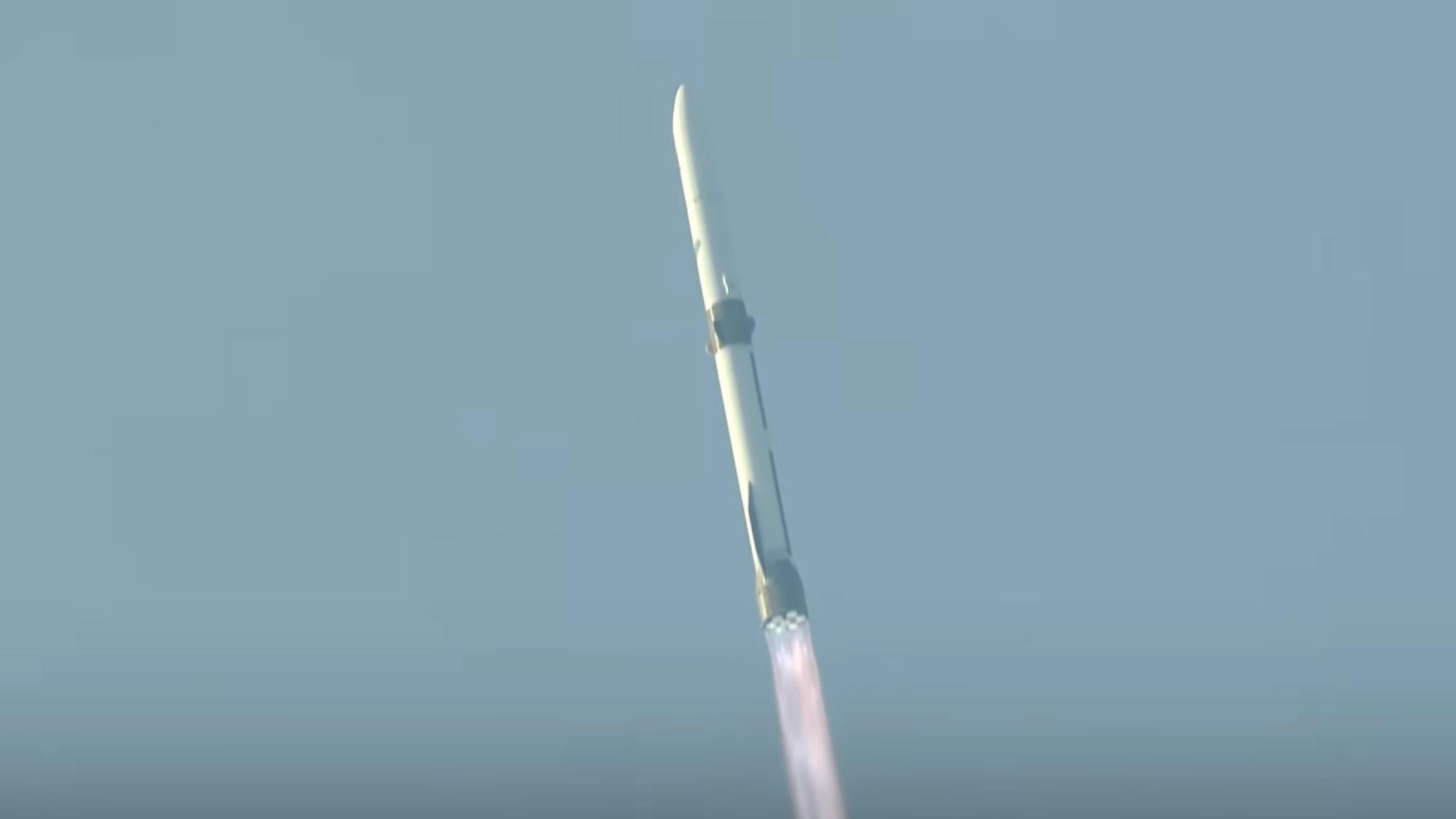
LAUNCH at 1125 UTC Apr 19 of New Glenn flight 3 with AST SpaceMobile-007 from Canaveral. Second stage underperformance and lower than planned final orbit, but still waiting for Space Force tracking data for details
View: https://twitter.com/planet4589/status/2045899160293961912Best estimate for the SECO-1 orbit given the slow observed decrease in altitude in the webcast is somewhere in the range of 164 x 380 km to 116 x 420km, depending on flight path angle at cutoff which was somewhere in the 0 to -1 degree range.
Still waiting for SECO-2 data.
launch has been tracked by Space Force as catalog 68765, 2026-85A, in a 154 x 494 km x 36.1 deg orbit. Epoch is 1138 UTC which is the time of SECO-1, so this may not be the final orbit. (If it is, then they are indeed toast).
View: https://twitter.com/planet4589/status/2045899160293961912The next TLE set for this object, hopefully later today, will be definitive (absent any clarifying statement from Blue or ASTS). At this point we can still hold out some hope for a new orbit set at a later epoch time with a higher orbit.
launch has been tracked by Space Force as catalog 68765, 2026-85A, in a 154 x 494 km x 36.1 deg orbit. Epoch is 1138 UTC which is the time of SECO-1, so this may not be the final orbit. (If it is, then they are indeed toast).
The next TLE set for this object, hopefully later today, will be definitive (absent any clarifying statement from Blue or ASTS). At this point we can still hold out some hope for a new orbit set at a later epoch time with a higher orbit.

Almost everybody who can is planning on doing it for their rockets now.One thing I've noted is that now with two companies reusing boosters, there aren't many people still insisting booster reuse is pointless or no cheaper than expendables now.

I wonder if they have some kind of ablative material on the deck, with that orange smoke.

During the New Glenn 3 mission, BlueBird 7 was placed into a lower than planned orbit by the upper stage of the launch vehicle. While the satellite separated from the launch vehicle and powered on, the altitude is too low to sustain operations with its on-board thruster technology and will de-orbited. The cost of the satellite is expected to be recovered under the company’s insurance policy.
Falcon 9 was the first one. Starship is designed for much quicker turnaround. Obviously they won't get there on the first flights but they'll knock down the bottlenecks and get there.I don't know bros, falcon is reaching the four digits launches and it still takes a month to refurbish and the cost is so-so, imagine how much time it will take to refurbish a much more complex and enormous GS1/Super Heavy. Imagine then a returning second stage from LEO let alone higher orbits, not saying they are worthless, but I believe 95% of the capacity would be achievable by making the cheapest and easiest to manufacture rocket possible
Well, with ULA it's the upper stage that actually bails them out.One thing I've noted is that now with two companies reusing boosters, there aren't many people still insisting booster reuse is pointless or no cheaper than expendables now.
Not really. SpaceX already has done that and they are reusable. SpaceX has 8 boosters that have 25-33 flights. Not going to be able to make a booster for 3-4% of the cost of a Falcon 9 booster. They have more than 25 boosters in their fleet so time between individual booster launches is not indicative of the actual refurbishment time.I don't know bros, falcon is reaching the four digits launches and it still takes a month to refurbish and the cost is so-so, imagine how much time it will take to refurbish a much more complex and enormous GS1/Super Heavy. Imagine then a returning second stage from LEO let alone higher orbits, not saying they are worthless, but I believe 95% of the capacity would be achievable by making the cheapest and easiest to manufacture rocket possible
Don’t mix cost and price, SpaceX’s internal costs aren’t remotely similar to what they charge other customers. That’s why they can afford to do so many Starlink launches. Should Blue Origin make a profit with TeraWave, they’ll be able to pursue a similar course.I don't know bros, falcon is reaching the four digits launches and it still takes a month to refurbish and the cost is so-so, imagine how much time it will take to refurbish a much more complex and enormous GS1/Super Heavy. Imagine then a returning second stage from LEO let alone higher orbits, not saying they are worthless, but I believe 95% of the capacity would be achievable by making the cheapest and easiest to manufacture rocket possible

A somewhat paradoxical rule of modern spaceflight: the re-used stages are more reliable than new ones, because the major risk came from undetected production defects during first flight. If stage survived first flight & returned safely, it is more reliable to re-use than a brand-new stage.the second stage had issues
it underperform during first burn and failed to reignite for Second burn
At least based on the data they were showing on the timeline during the launch the 2nd stage looked like it was barely moving for some time.the second stage had issues
it underperform during first burn and failed to reignite for Second burn