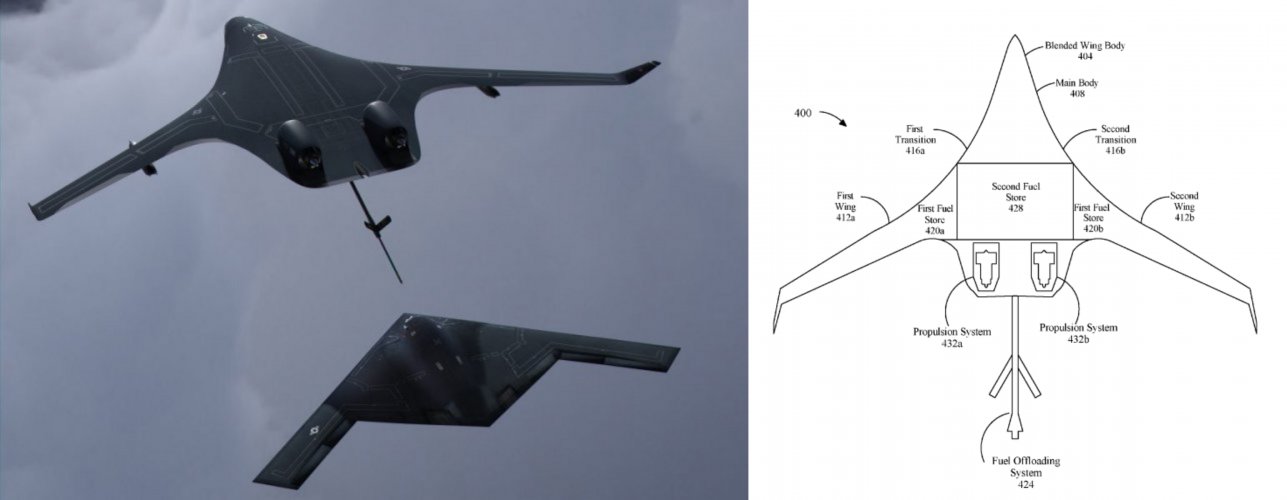
You mean 67% of the takeoff weight is fuel?
Correct

You mean 67% of the takeoff weight is fuel?
Why though? Most airliners are only 40% and even Concorde was only 50%Correct
It's a tanker aircraft, they'd like to carry as much fuel as they can. This is a benefit of the BWB construction, they claim.Why though? Most airliners are only 40% and even Concorde was only 50%

Also, that could refer to an empty aircraft carrying no freight or passengers.Why though? Most airliners are only 40% and even Concorde was only 50%
That explains itIt's a tanker aircraft, they'd like to carry as much fuel as they can. This is a benefit of the BWB construction, they claim.
I'm reminded of the Vought V-173 prototype for the XF5U. Close to 90% the size of the XF5U, but about 1/8 the gross weight.
BWBs are supposed to have something like 30% less drag than a Tube plane the same size. Using KC46 as 100 for thrust and drag, the BWB should therefore have a thrust of about 54 and a drag of about 70, so thrust to drag ratio is .77 compared to the KC46...
Yeah, this seems significantly underpowered. It might not need KC46 engines, but it needs something bigger than a PW1000. Or it needs a third PW1000!
As to the fuel load for transfer, the A330MRTT (which has about the same fuel capacity as the KC46), can transfer 143000lbs at 1000nmi with 2 hours on station. I couldn't find a similar stat for the KC46, but I'm going to assume that it's close enough to the same as to make no difference.
I just don't see something the size of an A320neo hauling that much fuel.
It must be an OML full size and significantly under weight prototype.
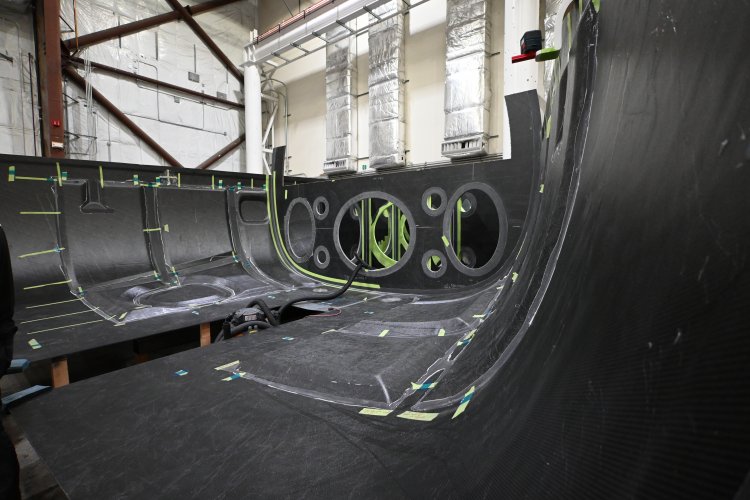
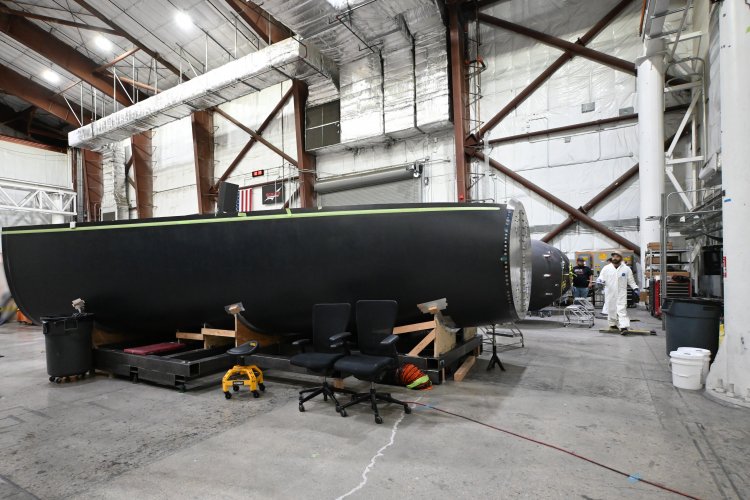
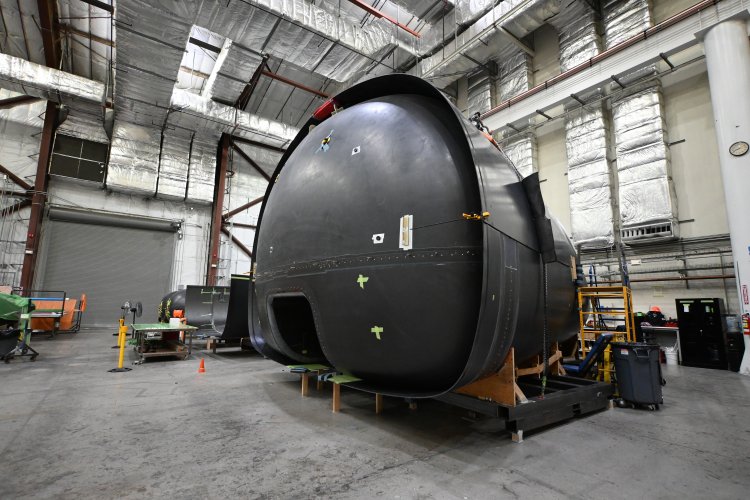

I want a 67% hypersonic weapon fractionCorrect


I won't even click on that horseshit anymore. It's clickbait full of AI slop and ignorance.State of the play, delving into engine choices, modularity etc. Usual clickbait nonsense headline, sigh. It's about the workarounds for problems.

JetZero has secured up to $100 million in financing to support the continued build of its blended wing body (BWB) demonstrator Jet1 and a future manufacturing campus in Greensboro, North Carolina.
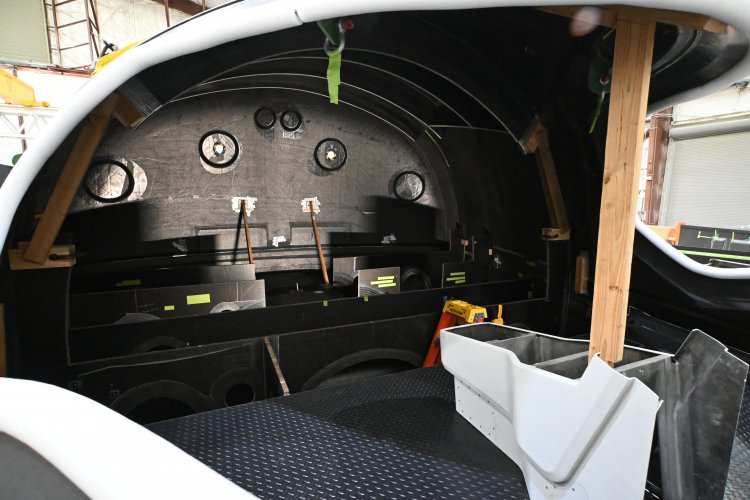
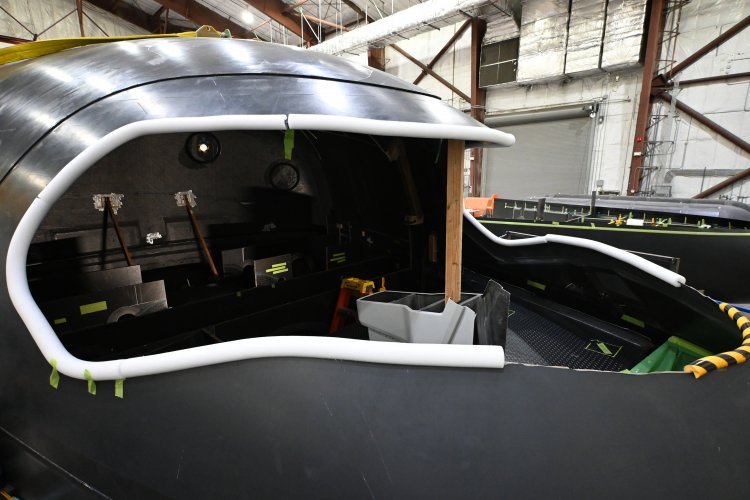
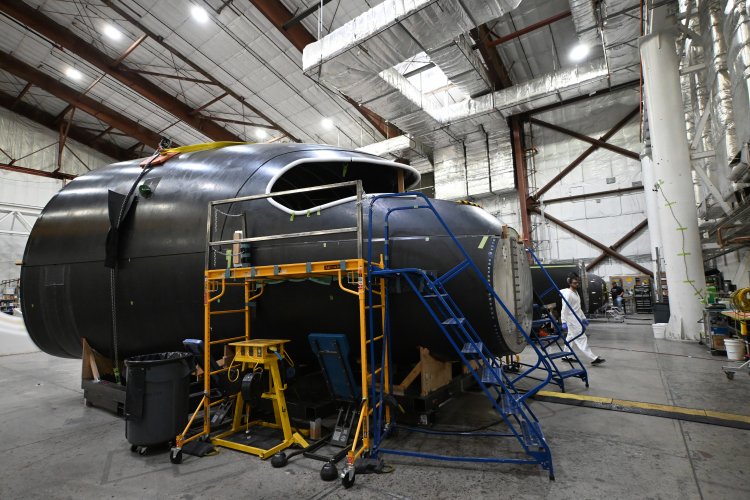
Proceeds from its senior secured term loan facility will also be used to accelerate technology maturation and support operations, the company said. It is targeting the first flight of Jet1 for the fourth quarter of 2027; the full-scale demonstrator was 40% complete, as of June 2026, at Northrop Grumman’s Scaled Composites in Mojave, California.
“This facility is targeted for pace,” JetZero CEO and Cofounder Tom O’Leary said on Aug. 31. “Through this facility, we will fund tooling and production facilities in North Carolina, advancing aerospace innovation and reindustrializing America.”
SYDNEY—Blended wing body (BWB) developer JetZero is starting upgrade work on the Pratt & Whitney PW2040 engines that will power its “Jet 1” demonstrator aircraft for flight tests beginning in late 2027.
Progress on engine preparation comes as airframe assembly reaches the halfway point at Northrop Grumman’s Scaled Composites facility in Mojave Air & Space Port, California, and as studies of potential propulsion systems for the company’s Z4 production version continue with engine-makers through the U.S. Air Force.
…Designed by Collins Aerospace, the nacelle installation includes the inlet, fan cowl and fan duct, fairings and engine support structure. Loads will be carried from the engine support box on top of the PW2040, down through the inner fixed structures of the bypass duct to a single lower pylon attached to the BWB’s upper fuselage. A diverter channel under the nacelle will prevent boundary layer ingestion.
…Prospective engines are thought to include refreshed versions of the GE CF6 and Pratt & Whitney PW4000, as well as—potentially—cropped fan derivatives of more modern higher-thrust engines such as the GEnx-1 and Rolls-Royce Trent 1000.