
You are using an out of date browser. It may not display this or other websites correctly.
You should upgrade or use an alternative browser.
You should upgrade or use an alternative browser.
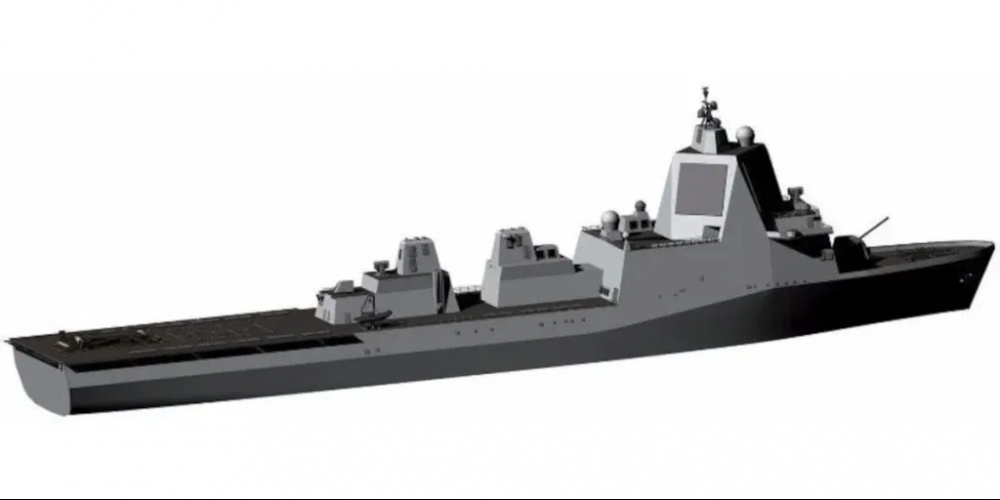
BBG(X) - US Next Generation Battleship
- Thread starter Forest Green
- Start date

Scott Kenny
ACCESS: USAP
- Joined
- 15 May 2023
- Messages
- 16,977
- Reaction score
- 24,097
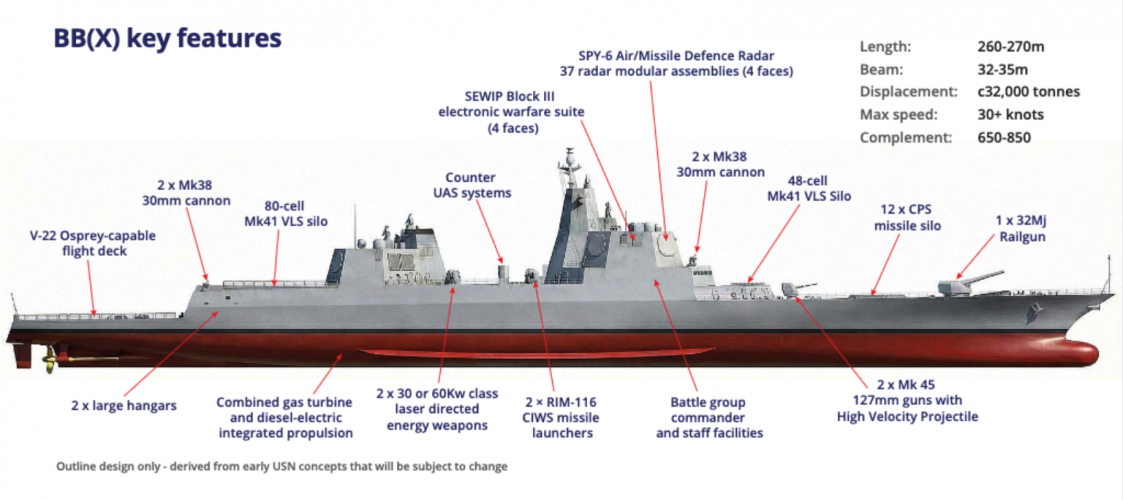
Nah, I'd expect 9x 20". Or maybe 12x.'PROPERLY' would be 10 x 19in naval rifles.
Chris
CastleBravo
ACCESS: Restricted
- Joined
- 21 January 2026
- Messages
- 35
- Reaction score
- 46
Given the fact that the railgun is specifically stated to use HVPs, the primary role is probably terminal ballistic missile defense. The 32 MJ railgun was a muzzle velocity of roughly 2.5 kps with a 40 lbs projectile, and the HVP weighs 44 lbs. The performance of the HVPs out of the railgun would probably give a protected area similar to PAC-3 or maybe PAC-3 MSE (20 - 30 mile footprint), if the HVPs can eventually work in that role. Even if a BMD HVP costs $1 million compared to a $100k anti-missile HVP, that's 1/4 the cost of a PAC-3 MSE and a ship this big could easily carry 1,000 HVPs without touching the VLS. This is the same thing that the AGS tried to do with the Zumwalts (store 500+ PGMs outside the VLS) and there was little technically wrong with the AGS once development was complete.
The 5" guns are probably also there primarily for defense against anti-ship missiles. The HVP has already demonstrated effectiveness against subsonic sea skimmers and supersonic sea skimming targets are probably within the realm of possibility for additional development. Given the ballistic range of HVPs out of the 5" gun, I would expect a useful range comparable to ESSMs, and the guns with HVPs would again be cheaper than missiles and would not take up VLS cells. In both cases, even if the HVPs are less accurate than missiles, salvo and magazine sizes could easily make up the difference unless there was an enormous performance gap.
40lbs at 2.5km/s would be about 57 MJ. Those performance figures are likely from the old development goal of a 64 MJ EM cannon.
PAC-3 is the premier terminal ballistic missile interceptor because the active MMW seeker and Attitude Control Motors give it hit to kill accuracy. HVP won't have either of those. As far as I can tell, HVP will be command guided. Maybe optical tracking could give the resolution needed to hit a ballistic missile with a command guided cannon round, but that seems unlikely to me. It should be great against cruise missiles and OWA drones though. It should also be extremely effective against surface targets.
I wonder what a resurrected Mk71 8"/55 could do with HVP though. That gun had something like 44 MJ muzzle energy. Imagine an 8" smoothbore cannon firing a ~60lb subcaliber HVP at the same 1.8km/s (Mach 5.2) velocity some tank guns shoot APFSDS at.

Brett Davidson
ACCESS: Top Secret
- Joined
- 26 September 2006
- Messages
- 4,041
- Reaction score
- 11,742
Maybe it'll be armed with tariffs.

AngrySquirrel
ACCESS: Restricted
- Joined
- 22 March 2025
- Messages
- 10
- Reaction score
- 11
Hmm all that flat space on top is free real estate for containers…
I’m all for, build 20, heck 40
I’m all for, build 20, heck 40
AngrySquirrel
ACCESS: Restricted
- Joined
- 22 March 2025
- Messages
- 10
- Reaction score
- 11
Missed opportunity, Mk71 8 inch with GA’s LRMP, or the Zumwalt’s AGS also with the LRMP.

Forest Green
ACCESS: USAP
- Joined
- 11 June 2019
- Messages
- 12,787
- Reaction score
- 27,516
IIRC the BAE SYSTEM railgun made 33MJ, and fired at M7.5, which amounts to a 10kg (22lb) projectile. The same energy would fire a 40kg projectile at M3.75. I think the 64MJ target existed when they were thinking about it being a predominantly surface attack weapon but they've since shelved that idea. However, it was resurrected for the purpose of BM/hypersonic defence IMO, where projectile size and range is less important than the muzzle velocity and the ability to forgo having to store cartridges or propellant charges in exchange for more rounds.40lbs at 2.5km/s would be about 57 MJ. Those performance figures are likely from the old development goal of a 64 MJ EM cannon.
PAC-3 is the premier terminal ballistic missile interceptor because the active MMW seeker and Attitude Control Motors give it hit to kill accuracy. HVP won't have either of those. As far as I can tell, HVP will be command guided. Maybe optical tracking could give the resolution needed to hit a ballistic missile with a command guided cannon round, but that seems unlikely to me. It should be great against cruise missiles and OWA drones though. It should also be extremely effective against surface targets.
I wonder what a resurrected Mk71 8"/55 could do with HVP though. That gun had something like 44 MJ muzzle energy. Imagine an 8" smoothbore cannon firing a ~60lb subcaliber HVP at the same 1.8km/s (Mach 5.2) velocity some tank guns shoot APFSDS at.
That said, it may also have surface attack as a secondary capability, which will be more intended as a deterrent in a close-range naval standoff situation (that may arise as a result of blockades etc.) rather than land target attack.
Last edited:
Brett Davidson
ACCESS: Top Secret
- Joined
- 26 September 2006
- Messages
- 4,041
- Reaction score
- 11,742
Or a ballroom.Hmm all that flat space on top is free real estate for containers…
I’m all for, build 20, heck 40
warspite
I really should change my personal text
- Joined
- 19 August 2012
- Messages
- 30
- Reaction score
- 69
Hmmmm ... interesting! Am seeing more of a hint of Richelieu, or maybe Jean Bart as completedSome wierd HMS Nelson and HMS Rodney vibes, with an AEGIS and Type 055 super structure slapped ontop.
AngrySquirrel
ACCESS: Restricted
- Joined
- 22 March 2025
- Messages
- 10
- Reaction score
- 11
Most nuanced take I’ve seen so far, most either mock the idea or outright dismiss it.I had the displeasure of watching the video upon release, minutes of my life I won't get back (so I would not recommend watching the whole thing, or do at 2x the Speed). His...guest went on a whole tangent about the history of battleships and carriers and acted like the intent was to put a naval gun fire support into the water, as was the case with the ill fated Zumwalt.
When reality is that the BBG(X)/Trump-Class whatever it's being called only shares it's terminology with battleships of old. It's a very large surface combatant with heavy emphasis on long range land attack and anti-ship missile armaments. IIRC he argued that you'd get 3 Burkes or something along the line for a single one of these. Well, for one, they don't compete but supplement each other. But that aside, these ships will be build from the ground up with modern AAW flag facilities designed into them, as far as I understood statements published so far it will take over the role of the lead surface combatant of a given strike group from the obsolete Ticonderoga Class ships. That's something the AB does not truly offer, even the Flight IIIs are more so interim solutions and fully maxed out. Anything short of a full redesign won't give you the ability to get this hull further along. The BBG(X) on the other hand will offer the opportunity for a clean sheet design and with this displacement and size, even after being scaled back a bit in the future (which I find likely), it will offer so much real estate that the growth margin will be significant.
In essence it's yet another attempt by the Navy after stuff like Cruiser Baseline or CG(X) to finally get a true Tico replacement into the water. A capable large surface combatant with the sensors and armaments necessary to effectively persist in naval warfare in the 21st century. That they had to slap a battleship designation on it and call it the Trump-Class was a very small price to pay.
That all of this has been fairly obvious so far, and that BBG means it's a guided missile battleship (CPS taking the role of the "big guns" in this day and age) went completely past this gentleman. Meaning he went on this entire tirade because it's only a battleships in name, in an age where the type of a warship is as arbitrary as it gets (Frigates, Destroyers, Cruisers, Battleships, all just ways to describe a large warship with guided missiles)
Scott Kenny
ACCESS: USAP
- Joined
- 15 May 2023
- Messages
- 16,977
- Reaction score
- 24,097
That was me copying the old 600-ship Navy from the 1980s, swapping BBGs for CGs in the carrier groups and BBGs for Iowas in the SAGs.Overall agreed, but my assumption at this point is that BBGs aren't meant to form SAGs with DDs. Burke is much of BBG capability minus offensive capability - which is the entire point), but little of its survivability. It honestly doesn't make too much sense to operate them together in harm's way.
Only BBG and USVs; same for new FFX, which are their own thing(lo in fleet structure, rather than Lo in HiLo to Burkes).
CPS/Dark Eagle plus SM6Blk1b would make a pretty solid threat to surface ships. Nothing on earth, not even an Aegis ship, will like a bunch of Mach 4+ high divers coming in at ~700+km. (It's not clear just how much farther the 21" SM6Blk1b would fly over the 13.5" SM6Blk1a, but the SM3Blk2A that shares the 21" boosters has approximately 1/3 more delta-vee so I'm guessing at about 1/3 more range versus surface targets) SM6 is admitted to hitting surface targets at 500km, and I think that was a 13.5" missile.
Think is, Navy was wanting to put CPS missiles onto the Carrier Bodyguard, likely because there's no other place to put them. There's only 3x Zumwalts, and at best they can take 8x APM tubes, each with 3x CPS missiles.Role: CVN Bodyguard - A CVN escort’s primary roles are AAW & ASW, since the CV’s air group can handle surface threats & strike at much longer range than Mk.41-sized systems. A CVN bodyguard needs Aegis CMS, a large SPY-6, a high-mounted surface search radar, an AAW command center, a lot of VLS, a VDS, a MFTA, a hangar, a flight deck, an ability to replenish underway, and systems for self protection (RAM, JQL, laser, SLQ-32 & decoys, a remote weapon like Mk.38 mod 4, probably a 5” gun, & maybe NSM). Probably a big ship, but something closer to a Zumwalt’s displacement could mount this gear a remain comparatively affordable for the number of escort warships 10x CVSGs and 10x ARGs are going to need.
Installing the APMs into DDGX meant that the ship had to give up the gun, and nobody was comfortable with that idea.
But if you get a big boss who likes big boats and he can not lie, you pitch an idea to make the new ship a BBG twice the size of your DDGX proposals, with all the missiles you need, CPS included, and guns.
If Mk41s can be reloaded at sea then SLCM-N can be.Role: Surface strike - Do strike-oriented surface warships need to mount all strike weapons in one design, or can systems be mounted on different ships to account for differing logistics requirements and mission characteristics?
Can CPS & SLCM-N be replenished underway? Unlikely due to missile weight and volume of propellant at-risk, right? So why aren’t we thinking about mounting these on a separate “Long-range Strike” warship that can fire missiles & return to port for reload, and avoid taking bodyguard capabilities away from the CVSG for most of a wartime deployment? Such a warship could economize by shedding a big radar or ASW gear (rely on multi-mission FFG [Constellation-successor] escorts?), and only mount self-protection gear (SPS-80/TRS-4D, modest number of VLS [or none at all if CPS cells can accommodate Mk.41 canisters], RAM, JQL, SLQ-32 & decoys, & Mk.38 mod 4), as it would be unlikely to enter the first island chain to launch CPS or SLCM-N missiles. It wouldn’t need a hangar & might only need a flat space for VertRep, versus a full Seahawk-capable flight deck. Depending on propulsion needs, this ship could be comparatively small, reducing cost, & increasing the number of ships eventually built. It would not regularly steam with a CVSG, given its port-based missile replenishment needs.
CPS is the size of the original Polaris missiles, which were reloaded off the sub tenders, but still in ports IIRC.
AGS has burned a lot of bridges politically, once Congress cut the ship buy and made it non-viable to build a production like for LRLAP. Hard, but not impossible to convince Congress to fun new ones. As long as you successfully beat it into Congress' heads that they need to buy at least 60 guns and enough ammunition to feed them all.Missed opportunity, Mk71 8 inch with GA’s LRMP, or the Zumwalt’s AGS also with the LRMP.
Mk71 8"/55 or /60 is 50ish year old technology, but could be developed. The US is apparently making 8" shells and can make 8" gun tubes.
What might be do-able would be Vertical guns. The predecessor to AGS, which IIUC fits into a pair of Mk57 slots as a single mount. A ship would have pairs, one per side. At the time vertical guns were discarded, trajectory shaping was not developed enough to allow for a single gun to fire at targets within 14nmi of the ship.
Which modularity concepts were they? A preconfigured hull insert has never been tried as far as i know. Yes trying to get USN to containerise endless wishlists will never work. But an insert that accommodates command staff or weapon systems shouldnt be so hard to transfer from design to reality. If the design can be agreed on and finalised!It doesn't make sense in reality though because these modularity concepts have always failed, led to issues, cost increase and ultimately couldn't deliver on the promise of flexibility
Last edited:
AngrySquirrel
ACCESS: Restricted
- Joined
- 22 March 2025
- Messages
- 10
- Reaction score
- 11
Cool, I didn’t know vertical firing guns was even a thing

- Joined
- 19 July 2016
- Messages
- 4,673
- Reaction score
- 4,090
You know, for what they have been spending, they could perfect the catapult. The winding mechanism would be a bit of a bear but considering the growth of suggestions for flywheels as space propulsion, why not?
Ainen
I really should change my personal text
- Joined
- 25 August 2011
- Messages
- 2,116
- Reaction score
- 3,603
Btw, not exactly BBG(X), but it came to me that in priiinciple, if railgun can serve ABM/AA/ASuW, you can throw out all missile batteries(fuel, large warheads) altogether.
Then in stage two build a hybrid propulsion with smaller dispersed generators(as to avoid any big single spaces, and overall distribute them evenly across the ship). Same also allows to avoid big and vulnerable shafts.
Net result may be very hard to sink with non-nuclear weapons, while retaining functional teeth - ship hull effectively turns in one big, thoroughly compartmentalized torpedo defense system without major critical spots, jeopardizing its safety...
Then in stage two build a hybrid propulsion with smaller dispersed generators(as to avoid any big single spaces, and overall distribute them evenly across the ship). Same also allows to avoid big and vulnerable shafts.
Net result may be very hard to sink with non-nuclear weapons, while retaining functional teeth - ship hull effectively turns in one big, thoroughly compartmentalized torpedo defense system without major critical spots, jeopardizing its safety...
I've seen conversations about BBG(X) being based on the San Antonio class. I would think something more inline with the old Iwo Jima class, converting some deck and hangar space for VLS and a proper bridge, makes more sense. Either way they need to be capable of 30+ knots by the time they deploy. Instead of aiming for a hanger of 25 helicopters, go for 6-10. F-35B should be able to launch and recover on what is left of the deck. It obviously needs to be more powerful than Zumwaly by the time you are done.

- Joined
- 16 April 2008
- Messages
- 10,318
- Reaction score
- 17,231
I've seen conversations about BBG(X) being based on the San Antonio class. I would think something more inline with the old Iwo Jima class, converting some deck and hangar space for VLS and a proper bridge, makes more sense. Either way they need to be capable of 30+ knots by the time they deploy. Instead of aiming for a hanger of 25 helicopters, go for 6-10. F-35B should be able to launch and recover on what is left of the deck. It obviously needs to be more powerful than Zumwaly by the time you are done.
Not with POTUS acting as the design styling consultant.

EmoBirb
E.S.T
- Joined
- 18 January 2025
- Messages
- 2,211
- Reaction score
- 5,628
I think the idea of a large surface combatant with a state of the art sensor suite and diverse missile load out should always be taken seriously.Most nuanced take I’ve seen so far, most either mock the idea or outright dismiss it.
People just get hung up on superficial stuff like the name, BBG designation and the rail gun. If it was designed in China, called Type 055A, and being labeled a CG the outrage would quite frankly not exist at all.
The Navy wants their Ticonderoga replacement, they wanted it for decades and this is just their newest shot at it, pulling every string they find to get the Trump administration to back the program. I don't see anything wrong with that. People just like to hop on the outrage train for the sake of it.
I don’t think it makes much sense to get rid go the missiles due to rate of fire issues. Each 32MJ gun would basically the same as having a single arm launcher. Expect you now have scary ~17 MW electrical requirements for each one to achieve 10 rounds/minute per gun.Btw, not exactly BBG(X), but it came to me that in priiinciple, if railgun can serve ABM/AA/ASuW, you can throw out all missile batteries(fuel, large warheads) altogether.
Then in stage two build a hybrid propulsion with smaller dispersed generators(as to avoid any big single spaces, and overall distribute them evenly across the ship). Same also allows to avoid big and vulnerable shafts.
Net result may be very hard to sink with non-nuclear weapons, while retaining functional teeth - ship hull effectively turns in one big, thoroughly compartmentalized torpedo defense system without major critical spots, jeopardizing its safety...
At best they are a supplement to reduce engagement costs and get more interceptors out quickly.
Regarding power requirements the Zumwalt with 78 MW of generation needs to slow down to at 30 knots to use all of its sensors. If you tack another 17MW of usage onto along with larger radars and more required propulsion power. You’ll likely want 120 MW of power. That should be well covered by 3 MT-40s (35MW output) and some diesels.
Or more ideally we go with a A1b nuke plant at 125 MW, and that would allow to it keep up with CVN during long transits without refueling. This would make allot of sense especially as it’s likely to serve as a CV protector as one of its main roles. But the production rate on reactors is likely quite limited.
Brett Davidson
ACCESS: Top Secret
- Joined
- 26 September 2006
- Messages
- 4,041
- Reaction score
- 11,742
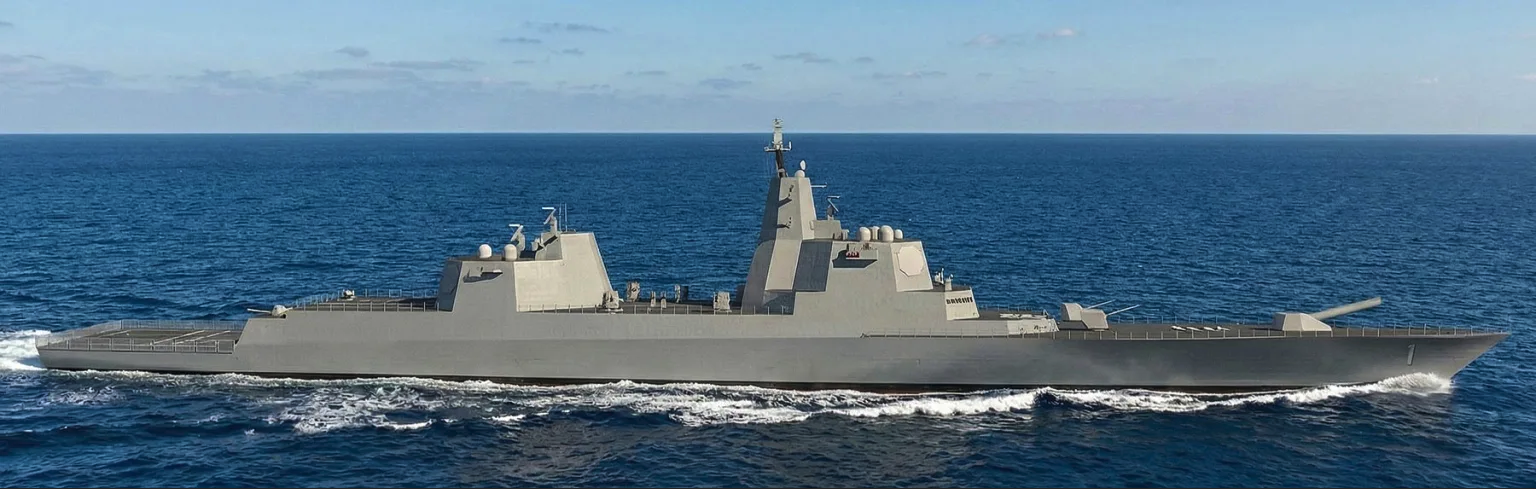
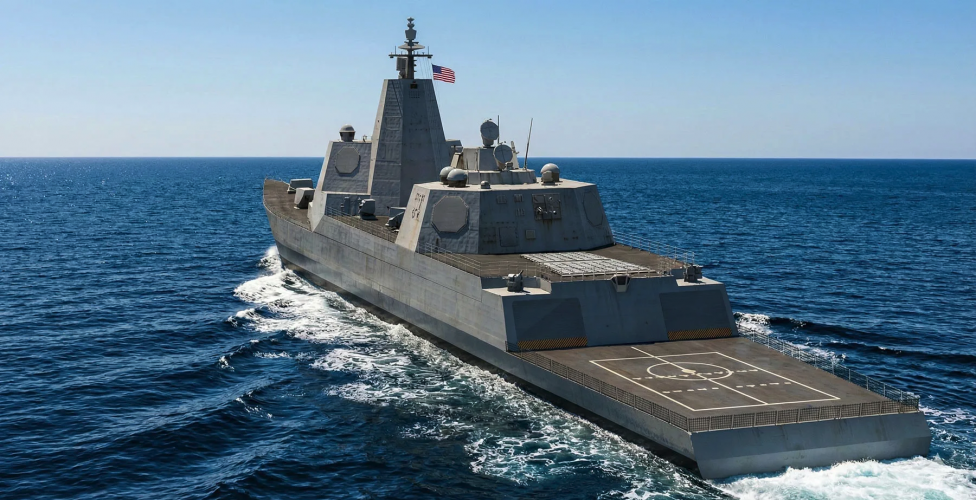
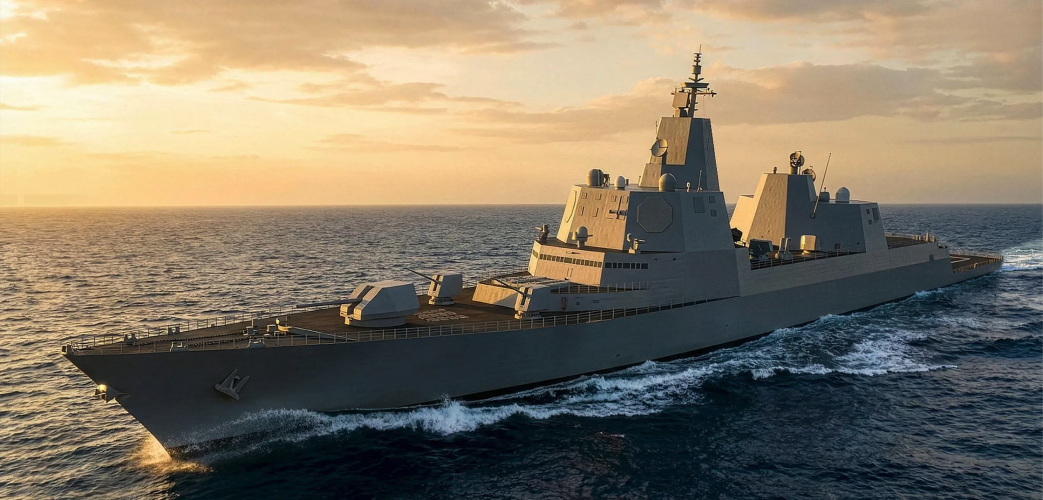
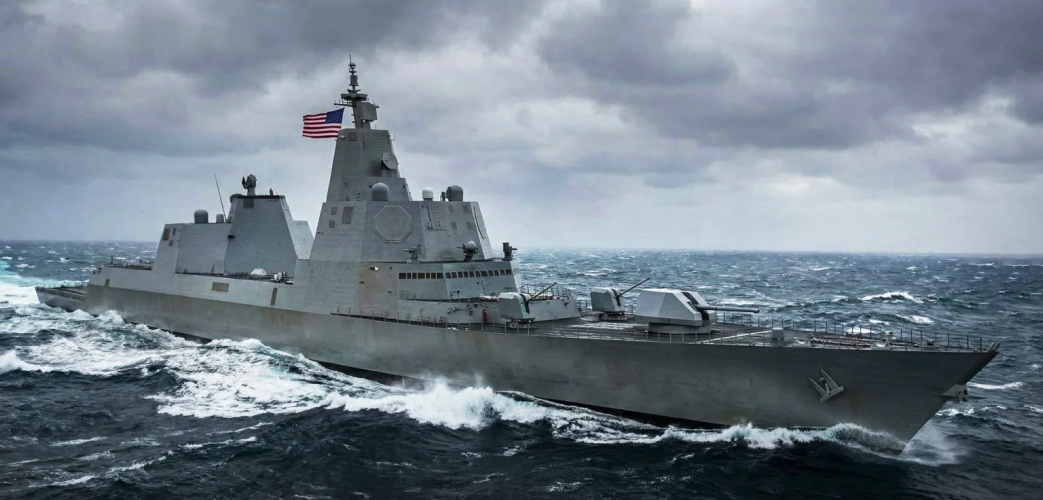
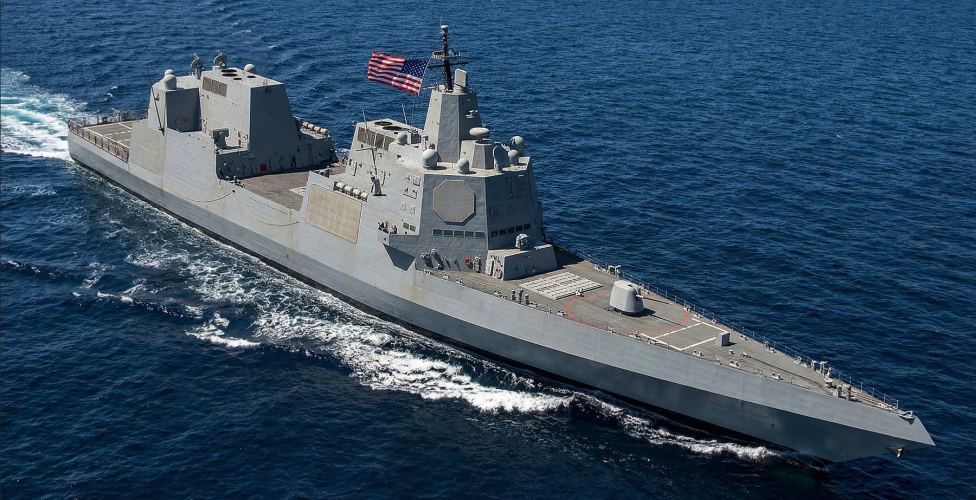
On the serious side, Navy Lookout has an analysis up. Bonus higher quality renders too, including one of the DDG(X).

 www.navylookout.com
Cut 'n paste:
The proposal to equip BB(X) with the Sea-Launched Cruise Missile-Nuclear (SLCM-N) would reintroduce tactical nuclear weapons to the surface fleet. At present, the USN is in the early stages of this programme, focused on a submarine-launched weapon with a low-yield nuclear warhead launched via the Virginia Payload Module (VPM). Whether the value of naval tactical nuclear capability justifies the expense and effort involved in developing a new generation of weapons is highly controversial.
The railgun featured prominently on BB(X) is best understood less as a mature weapon choice and more as a symbol of unresolved debates within the US Navy about firepower, magazine depth and cost exchange.
The strategic context for the ship is fundamentally different for the Russians, having no operational aircraft carrier capability, meaning Nakhimov is now their primary capital ship. BB(X), by contrast, will operate in a navy dominated by supercarriers. While the Nakhimov is a Cold War relic being dragged well into the 21st century to maintain the illusion of blue-water parity, the Defiant is a clean-sheet design intended to reassert dominance. Nevertheless, the Russian experience serves as a cautionary tale, the complex integration of modern weapons into massive hulls is fraught with delay, a lesson the US Navy may relearn painfully.
For the last decade, Western naval planning has increasingly been dominated by the concept of ‘distributed lethality’, the idea that sensors and shooters should be separated as widely as possible across many smaller, networked platforms, increasing fleet survivability.
Consequently, the move toward a massive surface combatant has some logic beyond mere prestige; it is an acknowledgement that the USN’s ‘Distributed Maritime Operations’ (DMO) concept has a flaw: you cannot distribute large hypersonic missiles or megawatt-class lasers onto frigates.
Rear Admiral Trinque, director of the surface warfare division and a BB(X) enthusiast, said last week: “in order to keep an adequate number of MK 41 [on DDG(X)] we were going to have to make a choice between a gun weapon system and Conventional Prompt Strike… I don’t want to put those kinds of limits on the fleet”. He then admitted that “when national leaders announced that they were interested in building a battleship, this was a great opportunity for us.”
There is a robust debate regarding the survivability of such a large vessel that echoes the concern about aircraft carriers. Second only to the CVN, the BB(X) would be a priority target for the adversary. In a conflict, the Defiant could be a ‘too big to lose’ asset, potentially forcing commanders to operate it conservatively, well back from the fight, thereby negating the range advantage of its weapons.
The central unstated assumption in Trump’s ‘Golden Fleet’ initiative is that the US maritime industrial base is capable of constructing such behemoths.
By committing to such a capital-intensive program, the Navy risks over-reach, devouring the budget for the basics or the more effective deterrent provided by SSN/SSGNs. It would be sensible for the USN to quietly keep DDG(X) development alive. If industrial realities don’t halt the BB(X) project early on, then it’s quite likely future administrations will cancel, and a contingency plan is needed.
The strategic logic and industrial peril of Trump’s battleship plan for the US Navy - Navy Lookout
The announcement of the Defiant-class battleship signals a sharp reorientation of US naval force structure, moving away from distributed lethality towards massed, concentrated firepower to address the widening magazine gap with China. However, the revival of such leviathans sits uneasily with a...
www.navylookout.com
Cut 'n paste:
The proposal to equip BB(X) with the Sea-Launched Cruise Missile-Nuclear (SLCM-N) would reintroduce tactical nuclear weapons to the surface fleet. At present, the USN is in the early stages of this programme, focused on a submarine-launched weapon with a low-yield nuclear warhead launched via the Virginia Payload Module (VPM). Whether the value of naval tactical nuclear capability justifies the expense and effort involved in developing a new generation of weapons is highly controversial.
The railgun featured prominently on BB(X) is best understood less as a mature weapon choice and more as a symbol of unresolved debates within the US Navy about firepower, magazine depth and cost exchange.
The strategic context for the ship is fundamentally different for the Russians, having no operational aircraft carrier capability, meaning Nakhimov is now their primary capital ship. BB(X), by contrast, will operate in a navy dominated by supercarriers. While the Nakhimov is a Cold War relic being dragged well into the 21st century to maintain the illusion of blue-water parity, the Defiant is a clean-sheet design intended to reassert dominance. Nevertheless, the Russian experience serves as a cautionary tale, the complex integration of modern weapons into massive hulls is fraught with delay, a lesson the US Navy may relearn painfully.
For the last decade, Western naval planning has increasingly been dominated by the concept of ‘distributed lethality’, the idea that sensors and shooters should be separated as widely as possible across many smaller, networked platforms, increasing fleet survivability.
Consequently, the move toward a massive surface combatant has some logic beyond mere prestige; it is an acknowledgement that the USN’s ‘Distributed Maritime Operations’ (DMO) concept has a flaw: you cannot distribute large hypersonic missiles or megawatt-class lasers onto frigates.
Rear Admiral Trinque, director of the surface warfare division and a BB(X) enthusiast, said last week: “in order to keep an adequate number of MK 41 [on DDG(X)] we were going to have to make a choice between a gun weapon system and Conventional Prompt Strike… I don’t want to put those kinds of limits on the fleet”. He then admitted that “when national leaders announced that they were interested in building a battleship, this was a great opportunity for us.”
There is a robust debate regarding the survivability of such a large vessel that echoes the concern about aircraft carriers. Second only to the CVN, the BB(X) would be a priority target for the adversary. In a conflict, the Defiant could be a ‘too big to lose’ asset, potentially forcing commanders to operate it conservatively, well back from the fight, thereby negating the range advantage of its weapons.
The central unstated assumption in Trump’s ‘Golden Fleet’ initiative is that the US maritime industrial base is capable of constructing such behemoths.
By committing to such a capital-intensive program, the Navy risks over-reach, devouring the budget for the basics or the more effective deterrent provided by SSN/SSGNs. It would be sensible for the USN to quietly keep DDG(X) development alive. If industrial realities don’t halt the BB(X) project early on, then it’s quite likely future administrations will cancel, and a contingency plan is needed.
Attachments
-
 Screenshot 2026-01-27 at 12.59.25 PM.png616.6 KB · Views: 112
 -
 Screenshot 2026-01-27 at 1.03.42 PM.png1 MB · Views: 108
 -
 Screenshot 2026-01-27 at 1.04.02 PM.png2.4 MB · Views: 92
 -
 Screenshot 2026-01-27 at 1.04.31 PM.png3.6 MB · Views: 97
 -
 Screenshot 2026-01-27 at 1.03.16 PM.png1.4 MB · Views: 95
 -
 Screenshot 2026-01-27 at 1.04.43 PM.png3.2 MB · Views: 96
Brett Davidson
ACCESS: Top Secret
- Joined
- 26 September 2006
- Messages
- 4,041
- Reaction score
- 11,742
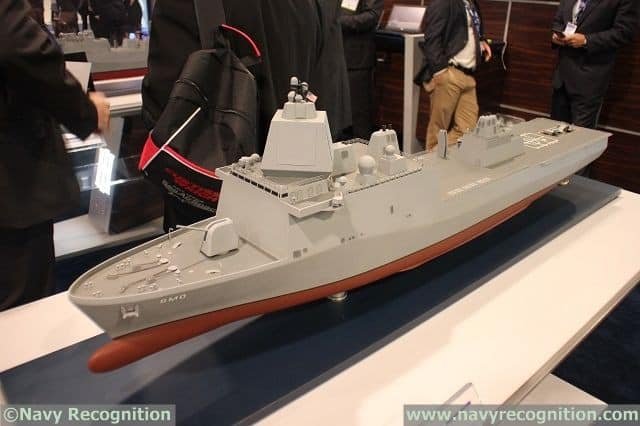
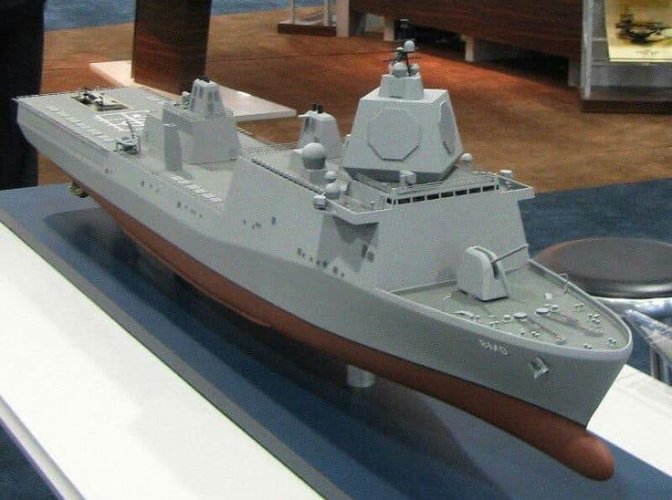
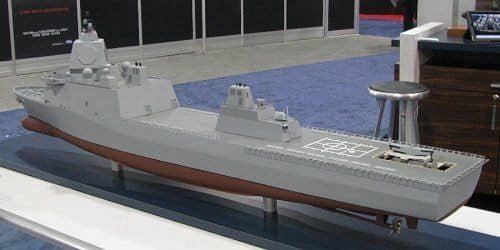
This? Not exactly a 'battleship' but Ballistic Missile Defence ship on a San Antonio hull.I've seen conversations about BBG(X) being based on the San Antonio class. I would think something more inline with the old Iwo Jima class, converting some deck and hangar space for VLS and a proper bridge, makes more sense. Either way they need to be capable of 30+ knots by the time they deploy. Instead of aiming for a hanger of 25 helicopters, go for 6-10. F-35B should be able to launch and recover on what is left of the deck. It obviously needs to be more powerful than Zumwaly by the time you are done.
AI overview, sorry. Can't be arsed retyping. From 2016.
The image is a model of a conceptual Ballistic Missile Defense (BMD) ship based on the U.S. Navy's San Antonio-class (LPD-17) amphibious transport dock hull.
- The concept was displayed by Huntington Ingalls Industries (HII) at the Sea-Air-Space Expo in 2013.
- It incorporates an Aegis-type phased array radar atop the superstructure.
- The design featured numerous Vertical Launch System (VLS) cells and a railgun.
- The intended role was to provide homeland or regional missile defense, freeing up destroyers for other missions.

LPD Based Ballistic Missile Defense Ship – USA
HII Shows Off New BMD Ship Concept at Sea-Air-Space An interesting ship model was unveiled April 8 by Huntington Ingalls Industries at the Navy League’s Sea-Air-Space gathering outside Washington: …
 thaimilitaryandasianregion.wordpress.com
https://www.reddit.com/r/WarshipPorn/comments/qmedh4/a_conceptual_model_from_2013_showing_huntington
View: https://www.reddit.com/r/WarshipPorn/comments/qmedh4/a_conceptual_model_from_2013_showing_huntington/(Compared with other sources, I think they have the 2013 date wrong.)
One comment: Honestly this is what I suspect is the basis for the “Defiant class”
From 2:10:
Attachments
Last edited:
Firefinder
ACCESS: Top Secret
- Joined
- 5 October 2019
- Messages
- 1,223
- Reaction score
- 2,300
The reactors builds are THE limiting factor of the CVNs, adding more will just increase that time.Or more ideally we go with a A1b nuke plant at 125 MW, and that would allow to it keep up with CVN during long transits without refueling. This would make allot of sense especially as it’s likely to serve as a CV protector as one of its main roles. But the production rate on reactors is likely quite limited
That before adding in the Major issues of.
Tripling the crews needs, going from 12 people in total to 50 minimun is nothing to snuff at.
Add in needing to add 2k tons just for the reactor compare to just that for 4 MT30s for having a third more power with enough fuel to out run the rest of the fleet?
Nukes just... Suck compire to modern GTEs and Diesel Gensets.
Scott Kenny
ACCESS: USAP
- Joined
- 15 May 2023
- Messages
- 16,977
- Reaction score
- 24,097
You're forgetting the whole "Orange Man Bad" reactions, too.I think the idea of a large surface combatant with a state of the art sensor suite and diverse missile load out should always be taken seriously.
People just get hung up on superficial stuff like the name, BBG designation and the rail gun. If it was designed in China, called Type 055A, and being labeled a CG the outrage would quite frankly not exist at all.
The Navy wants their Ticonderoga replacement, they wanted it for decades and this is just their newest shot at it, pulling every string they find to get the Trump administration to back the program. I don't see anything wrong with that. People just like to hop on the outrage train for the sake of it.
Not just production rate of reactors, build slips at the nuclear-rated shipyards, too.Or more ideally we go with a A1b nuke plant at 125 MW, and that would allow to it keep up with CVN during long transits without refueling. This would make allot of sense especially as it’s likely to serve as a CV protector as one of its main roles. But the production rate on reactors is likely quite limited.
johnpjones1775
ACCESS: Top Secret
- Joined
- 27 May 2023
- Messages
- 1,218
- Reaction score
- 658
The also want 96+ VLS for none hypersonics, but 16 mk41 isn’t going to cost you 10kn tons eitherOf course it's possible. Take a Zumwalt, put the two Mk110s back on the hangar, replace the FWD AGS with a Mk45 or railgun, replace the aft AGS with CPS and you're almost there. Yes, yes, we want drone countermeasures, and a few other things, but that's not going to cost you 10k more tons.
Still no funnels I see. The current layout known to the public is complete bogus. Such a poor preliminary CG to show off.The strategic logic and industrial peril of Trump’s battleship plan for the US Navy - Navy Lookout
The announcement of the Defiant-class battleship signals a sharp reorientation of US naval force structure, moving away from distributed lethality towards massed, concentrated firepower to address the widening magazine gap with China. However, the revival of such leviathans sits uneasily with a...
Scott Kenny
ACCESS: USAP
- Joined
- 15 May 2023
- Messages
- 16,977
- Reaction score
- 24,097
It will cost you the bow gun, though.The also want 96+ VLS for none hypersonics, but 16 mk41 isn’t going to cost you 10kn tons either
Not enough space for APMs, Mk57 PVLS, a block of Mk41s and a 5".
I believe were older Zumwalt proposals with 128 vls cells of MK57 and 2 guns. I believe the extra cells were after the super structure around the helopad. You should be able to remove one of the guns for APMs.It will cost you the bow gun, though.
Not enough space for APMs, Mk57 PVLS, a block of Mk41s and a 5".
However where would the lasers go, and they may want additional power generation for them + a larger radar. That could be done by swapping out the MT30s for uprated LM6000 (2x LM9000 is more than needed), but that might be a good bit of modification.
Last edited:
Nice quote from that article:Still no funnels I see. The current layout known to the public is complete bogus. Such a poor preliminary CG to show off.
The next naval war may be decided not by the ship that looks the most impressive, but by the side that can lose ships and keep fighting. A fleet dependent on a few ‘silver bullet’ capital ships is brittle
Scott Kenny
ACCESS: USAP
- Joined
- 15 May 2023
- Messages
- 16,977
- Reaction score
- 24,097
There's already a row of Mk57 on the port&starboard sides of the helo deck. 20 cells each side, I think, though it may only be 16 aft and 24 forward.I believe were older Zumwalt proposals with 128 vls cells of MK57 and 2 guns. I believe the extra cells were after the super structure around the helopad. You should be able to remove one of the guns for APMs.
Lasers would go in place of the 57mm guns.However where would the lasers go, and they may want additional power generation for them + a larger radar. That could be done by swapping out the MT30s for uprated LM6000 (2x LM9000 is more than needed), but that might be a good bit of modification.
johnpjones1775
ACCESS: Top Secret
- Joined
- 27 May 2023
- Messages
- 1,218
- Reaction score
- 658
TIt will cost you the bow gun, though.
Not enough space for APMs, Mk57 PVLS, a block of Mk41s and a 5".
The ships will be getting ready to decommission by the time lasers will be viable weapons.There's already a row of Mk57 on the port&starboard sides of the helo deck. 20 cells each side, I think, though it may only be 16 aft and 24 forward.
Lasers would go in place of the 57mm guns.
They are already viable CUAS weapons even with the current low powered versions. Especially the small UAS you were worried about for some reason in another threadT
The ships will be getting ready to decommission by the time lasers will be viable weapons.
Last edited:

Dilandu
I'm dissatisfied, which means, I exist.
Problem is, that its cleary not USA now. So maybe its time to really deviate from conventional logic & try for unconventional approach - i.e. ships that are less likely to be sunk?The next naval war may be decided not by the ship that looks the most impressive, but by the side that can lose ships and keep fighting. A fleet dependent on a few ‘silver bullet’ capital ships is
That was the old conventional battleship. To make that a more realistic scenario, put the CPS ona separate platform that can be tasked independently of the CBG escorts. Make the AAW escorts cheap enough for a cut down version to eventually become the ubiquitous replacement when Flt II and Flt IIA are due for retirement. A BBG cant be numerous or have 40 or 60 built, while a DDG(X) could have the hull plug left out after the first 20ish AAW Commander versions replace the CGs.Problem is, that its cleary not USA now. So maybe its time to really deviate from conventional logic & try for unconventional approach - i.e. ships that are less likely to be sunk?
There is no cut down AAW version possible. DDG(X) as it stood was the minimum viable product for today's threats. It wouldn't have worked well for things 10 years from now let alone at the end of its 30-40 year service life as there isn't much if any growth margin.That was the old conventional battleship. To make that a more realistic scenario, put the CPS ona separate platform that can be tasked independently of the CBG escorts. Make the AAW escorts cheap enough for a cut down version to eventually become the ubiquitous replacement when Flt II and Flt IIA are due for retirement. A BBG cant be numerous or have 40 or 60 built, while a DDG(X) could have the hull plug left out after the first 20ish AAW Commander versions replace the CGs.
A 20-25kt cut down more sensible BBG(X) still wouldn't provide the same relative leap in capability we had going from the Kidd's to the AB's. That's the level of capability improvement needed for a ship to serve for 40 years. This is also ignoring the fact that in those 40 years naval development stagnated to 10-15 years (1992- mid 2000s).
johnpjones1775
ACCESS: Top Secret
- Joined
- 27 May 2023
- Messages
- 1,218
- Reaction score
- 658
They’re not but whatever you sayThey are already viable CUAS weapons even with the current low powered versions. Especially the small UAS you were worried about for some reason in another thread
johnpjones1775
ACCESS: Top Secret
- Joined
- 27 May 2023
- Messages
- 1,218
- Reaction score
- 658
Doesnt much matter if the ship sinks or not if its a hard mission kill might as well have sunk.Problem is, that it’s cleary not USA now. So maybe it’s time to really deviate from conventional logic & try for unconventional approach - i.e. ships that are less likely to be sunk?
Naval development has not stagnated. There were leaps in technology that drove up prices. The lack of purchases is driven by woulda-coulda-shoulda numbskulls unable to pin down decisions. The US faces a total of maybe two dozen major warships on par to flight 2 Arleigh Burkes, but they plan the entire PLAN and Russian Navy out to be in the hundreds. It simply is not true. Stop goldplating all of the decisions.There is no cut down AAW version possible. DDG(X) as it stood was the minimum viable product for today's threats. It wouldn't have worked well for things 10 years from now let alone at the end of its 30-40 year service life as there isn't much if any growth margin.
A 20-25kt cut down more sensible BBG(X) still wouldn't provide the same relative leap in capability we had going from the Kidd's to the AB's. That's the level of capability improvement needed for a ship to serve for 40 years. This is also ignoring the fact that in those 40 years naval development stagnated to 10-15 years (1992- mid 2000s).
It seems people automatically assume every ship will be like tiny islands, operating alone. BBG(X) appears to be an attempt to put the BMD system into CBGs without installing the technology on every DDG(X) and CGN. I like the idea we aren't trying to field eight layers of warship sizes, and recognize Arleigh Burkes are the CCGs of 2026. There really is no destroyers being built, only light guided missile cruisers. The DDG(X) being proposed are again, CCGs not DDGs. FFG(X) proposals are truly DDGs. FF(X) proposals are literally FFGs. Corvettes ate being pushed into FF space. People forget DEs became FFs in the 1960s. The old DEs were pretty weak compared to DDs in that era, but highly potent rockets and missiles levelled the playing field. If we recalibrate the terms it puts everything into perspective. The reality is the Russia and Chinese fleets are in pretty poor organization themselves and their capabilities are way over sold.
Last edited:
Naval development definetly stagnated between 1992-mid 2000s. People just kept on building what was designed before that period or adopted what others built right before that period (AB type ships).Naval development has not stagnated. There were leaps in technology that drove up prices. The lack of purchases is driven by woulda-coulda-shoulda numbskulls unable to pin down decisions. The US faces a total of maybe two dozen major warships on par to flight 2 Arleigh Burkes, but they plan the entire PLAN and Russian Navy out to be in the hundreds. It simply is not true. Stop goldplating all of the decisions.
It seems people automatically assume every ship will be like tiny islands, operating alone. BBG(X) appears to be an attempt to put the BMD system into CBGs without installing the technology on every DDG(X) and CGN. I like the idea we aren't trying to field eight layers of warship sizes, and recognize Arleigh Burkes are the CCGs of 2026. There really is no destroyers being built, only light guided missile cruisers. The DDG(X) being proposed are again, CCGs not DDGs. FFG(X) proposals are truly DDGs. FF(X) proposals are literally FFGs. Corvettes ate being pushed into FF space. People forget DEs became FFs in the 1960s. The old DEs were pretty weak compared to DDs in that era, but highly potent rockets and missiles levelled the playing field. If we recalibrate the terms it puts everything into perspective. The reality is the Russia and Chinese fleets are in pretty poor organization themselves and their capabilities are way over sold.
The Russian navy in indeed not a signfincant threat but the Chinese is an entirely different story. They rate of ship building is atonishing and they are at parity with the USN in the Pacific and will exceed it in the few years. Carrier wise alone, they are planning 6 Nimitiz class carriers on top of their existing 3 giving 9 in the Pacific by 2035. This is to say nothing their surface combatants.
I disagree with your definition of ship sizing. It's clear that radar sizing will be the ship role differentiator, and the AB's don't meet was was desired for even a mid 2000's DD (DD(X)) let alone what was desired for a cruiser. Yes defensive capabilities have increased, however offensive capabilites have increased much more, espically as it only requires a single hit to mission kill a ship for the duration of a war.
You really have no data showing Chinese capabilities are overstated. They equipment worked quite well in the Indian/Pakistan air conflict, and that was their export models.
And the next generation of UAVs and USVs may be more challenging, with the objective being to force you to expend AA missiles and complicate defence against ASMs.They’re not but whatever you say
I understood the DDG(X) midships hull insert could deleted to give a more budget destroyer, which may be the design that replaces older Burkes.There is no cut down AAW version possible. DDG(X) as it stood was the minimum viable product for today's threats. It wouldn't have worked well for things 10 years from now let alone at the end of its 30-40 year service life as there isn't much if any growth margin.
A 20-25kt cut down more sensible BBG(X) still wouldn't provide the same relative leap in capability we had going from the Kidd's to the AB's. That's the level of capability improvement needed for a ship to serve for 40 years. This is also ignoring the fact that in those 40 years naval development stagnated to 10-15 years (1992- mid 2000s).