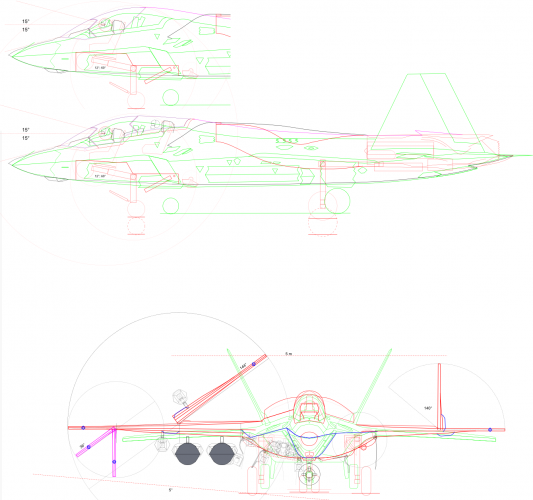
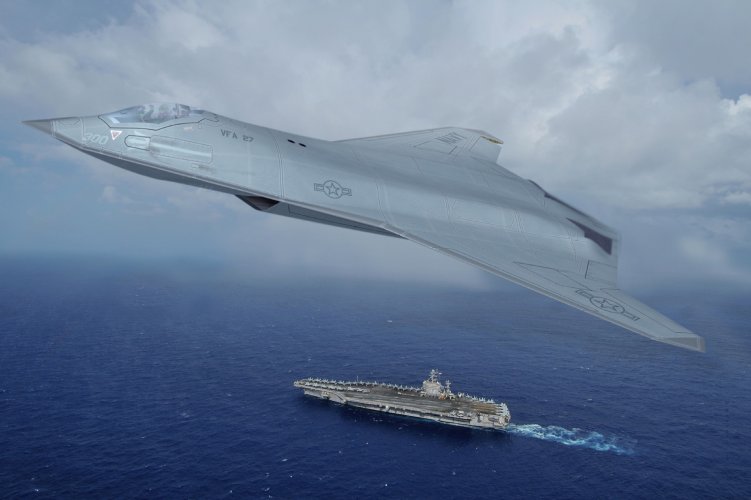
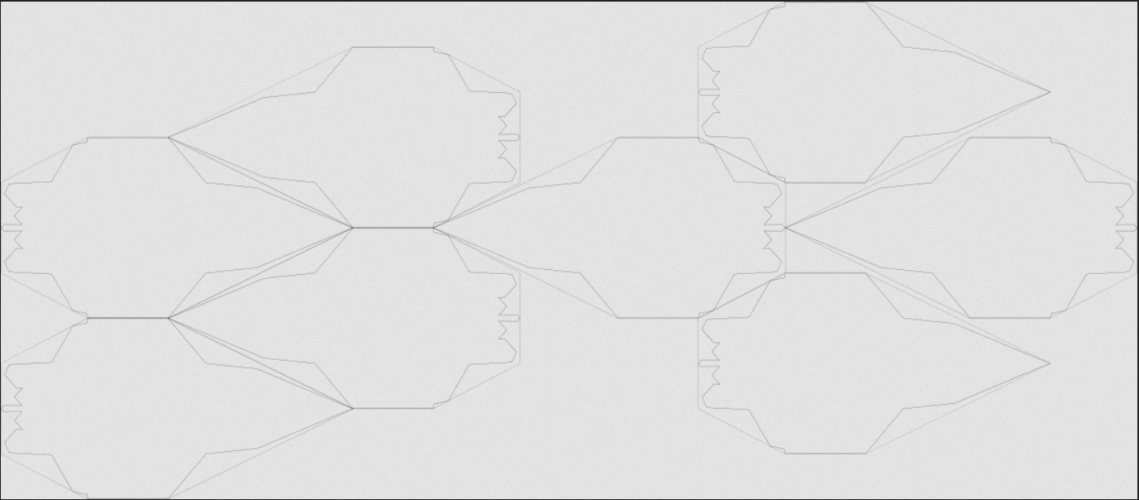
Artwork: possible configuration of the Northrop Grumman F/A-XX

Yeah, but the more interesting thing for me is it's at least about the same length as the F-105 Thunderchief's.
according to wikipedia
The bomb bay measured 15 feet 10 inches (4.83 m) by 32 in (0.81 m) by 32 in (0.81 m)
A size I've eyed long before all this; mainly wondering about the F22's bay size limitation.
 
mainly wondering about the F22's bay size limitation.
What about it? The issue is that the F-22 got infected with "not a pound for air to ground" so the weapons bay is not deep enough for 2000lb weapons. It is coincidentally deep enough for 1000lb weapons because they're as big around as the clipped AMRAAM fins are.

For sake of argument, let's give a hypothetical F/A-22 bulged weapons bays to hold a pair of 2000lb weapons. There's only enough space for 2x AMRAAMs in the main bay and then the two Sidewinders in the side bays. So an F-22 carrying 2000lb bombs is basically only armed as well as an F-35.
 
I don't think 1000 lb allocation was a coincidence because traditionally, cold war fighters had always been made with a nuke carry cababillity in mind should there be war. It's just politically no longer correct or official with all the nuke reduction treaties in effect. But the military would be incomepent not to account for the worse case regardless.

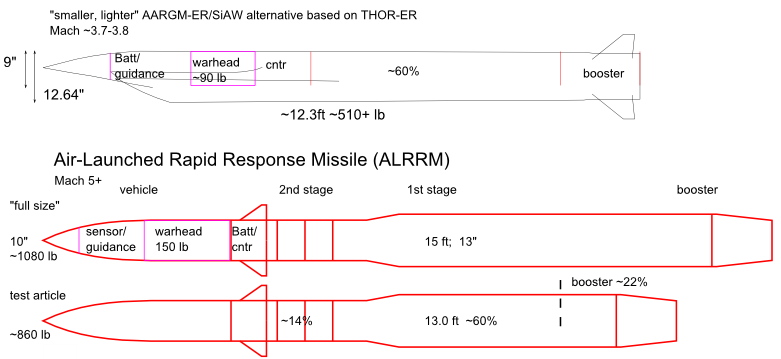
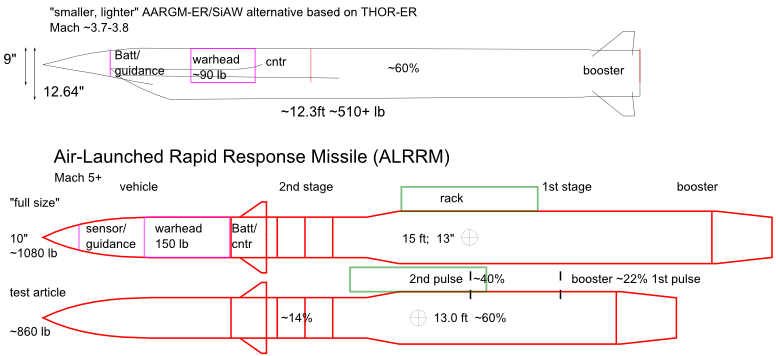
Anyhow, my quick and dirty sizing attempt and comparision with the newly revealed small Air-Launched Rapid Response Missile (ALRRM).
It looks reasonable but length feels a bit short.
 

Attachments

  • ALRRM-estimate.png
    ALRRM-estimate.png
    39.3 KB · Views: 387
I don't think 1000 lb allocation was a coincidence because traditionally, cold war fighters had always been made with a nuke carry cababillity in mind should there be war. It's just politically no longer correct or official with all the nuke reduction treaties in effect. But the military would be incomepent not to account for the worse case regardless.
Except that the B61 is the same diameter as a 2000lb weapon, despite weighing less than 1000lbs in most models.


Anyhow, my quick and dirty sizing attempt and comparision with the newly revealed small Air-Launched Rapid Response Missile (ALRRM).
It looks reasonable but length feels a bit short.
I'd stretch the warhead and rocket motor to ~14ft.
 
I'd stretch the warhead and rocket motor to ~14ft.
With a finess ratio of 5.5 the vehicle is a bit short of ideal but I don't think it's powered beyond maneuvering burst if ever so it won't matter.
Including the 2nd stage the finess ratio becomes 8 which would means it's for terminal burst to perhapst pull up for a more precise hit as well as avoid defenses. That's why I don't think lengthening them is necessary. In any case, the error margin to the real thing is only 0.77" or less than 0.1 for finess ratio. There's simply no room here for speculation.

As for the motor, it could be beneficial to be longer. With a finess ratio of 12 it's clearly meant to be a fast and "short" range. The main question I have is the ratio between the 1st and 2nd pulse's fuel fraction allocation. This determines sustain time.
Assuming flight time to be around 240 s and sustain ~70 s then each foot increase could add perhaps 16s for like 13 nm more.
 
What I mean is that even the F-22 has a 156" long main bay, IIRC, so it'd be viable to stretch that missile past "AMRAAM length"
 
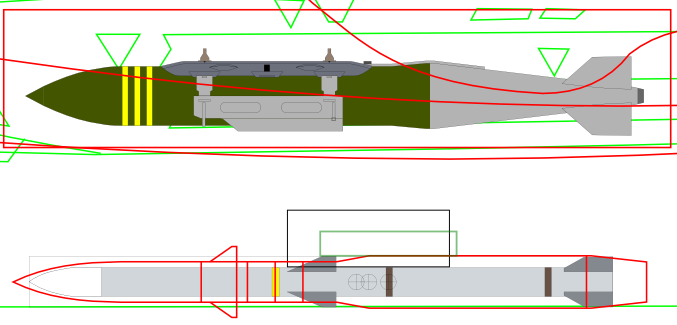
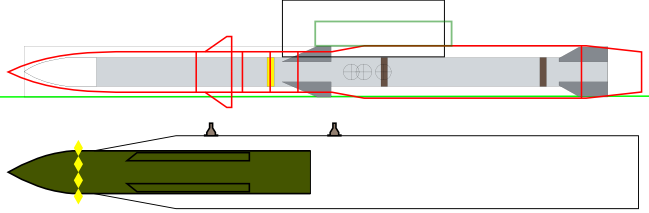
IC Well, to give a different perspective. When adding the rack placement to the picture and aligning such that both's CG point match the "full size" happens to fit best. On the other hand placing it into the F22's bay it appears there's not much room for negotiation.
Some changes are still possible but it won't be significant.

Let's move onto what's still missing from inventory.
Let's recap on the original plans:
AFRL-2015-Briefing-p026.png
The USAF always had wanted stand-off weapons for the next generation of weapons. A modular design to use GP bomb warheads with jet/rocket motors in a similar way as JDAM.
Due to range requirement for slow options we have now JDAM-LR that limited to 500 lb MK82, Barracuda-250 for 150 lb and other similar cheap options.
For fast strike we now have various ALRRM sizes (AGM-181, HyFly and this ALRRM)
So what's left is the penetrator version.
Considering F22/F35 bay length and similar body design as the GBU57's L/D=7.75 we get 20" for diameter. Needless to say this would require a motor that far exceeds bay size. But if I go for a finess ratio of 16 that is more ideal the diemater happens to become 9.75" and would fit the ALRRM's design.
That said I don't think this size is what the USAF want's and it may not give the depth penetration desired.
My guess would be a 13" penetrator combined with a 21" motor. The deciding factor, however, is the stand-off range of presumely 300-350 km.
Anybody got something to bid here?
 

Attachments

  • ALRRM-estimate1.png
    ALRRM-estimate1.png
    41.7 KB · Views: 84
  • ALRRM-estimate2.png
    ALRRM-estimate2.png
    27.1 KB · Views: 89
Continuing with my musing.

Apparently, AFRL had 2000 lb warhead with 3000 lb motor in mind:
https://www.defensemedianetwork.com...ng-weapon-addresses-“hard-target”-challenges/But this obviously would have become AGM183 size and wouldn't fit into a IWB.

Assuming "old" rocket motor was originally used for sizing, I'm applying the new heavy loaded grain that gives 1.5x improvement.
Hence, instead of the old 3000 lb motor the new motor only needs to be 2000 lb. The new mass ratio become 1:1.

I assume the F22 will only be used for escort and support behind the F47 I remove it from consideration as a carrier platform.
This leaves the F35's bay as the minimum size. Considering a conventional cylindric form I get about 2050 lb as the pure missile size limit. I think a hybrid rectangular form would be best but that's a bit too troublesome for a quick and dirty attempt.

That gives me ~1285 lb for warhead and motor respectively. Using the GBU72 as a base for scaling I get 0.662361x, hence, a diameter of 11.92" and a length of 74.62" for the penetrator.
That leaves 81" for the motor with a 18" diameter which gives me ~1045 lb.
The remaining 240 lb will go over the warhead for at least 33.2" without tapering.

It's almost only about 20% of the GBU72's destructive content which might not be sufficient for destroying much of a bunker.
Edit: Based on rule of thumb and based on the speed requirement given I assume minimum penetration depth to be ~130 ft=40m.
For 200 ft hypersonic velocity is necessary..
 

Attachments

  • High Speed Ordnance Penetrator-2570lb-sizing.png
    High Speed Ordnance Penetrator-2570lb-sizing.png
    11.7 KB · Views: 208
Last edited:
This leaves the F35's bay as the minimum size. Considering a conventional cylindric form I get about 2050 lb as the pure missile size limit. I think a hybrid rectangular form would be best but that's a bit too troublesome for a quick and dirty attempt.
I've gotten lazy and used the dimensions of the JSM. 19x20"
 
On a side note AFRL has been including Mk83/1000 lb warheads as part of desired future upgrades in the past.
But range requirement and resulting irl solutions clearly has put these back compared to the preferance or limitations to ~150 lb, 500 lb and 2000 lb warheads. I assume this is mainly due to the preference for IWB and or underwing carriage (for even longer ranges)

Since cluster ammunition have been used again I suppose we'll see more of them getting adopted likewise. And very likely with the same form factor I've used for the penetrator because of volume requirement.

Anyhow, since F/A-XX selection is coming soonish I suppose I'll have to post right beforehand.
 
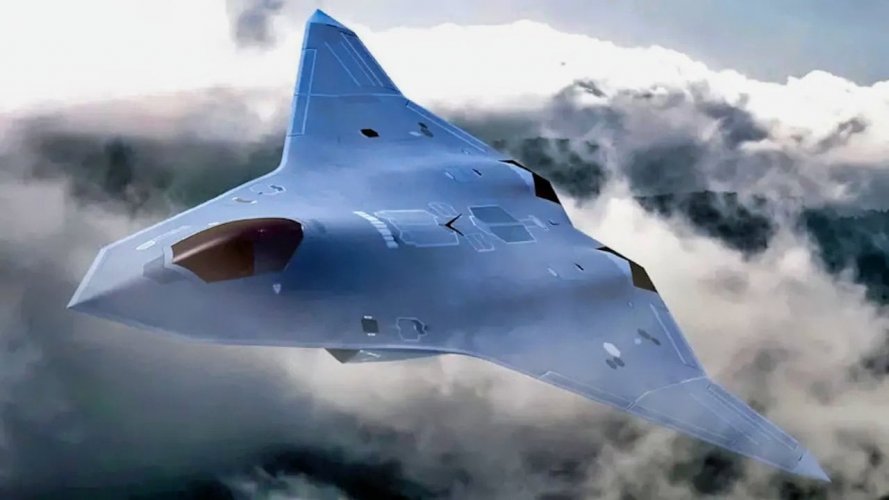
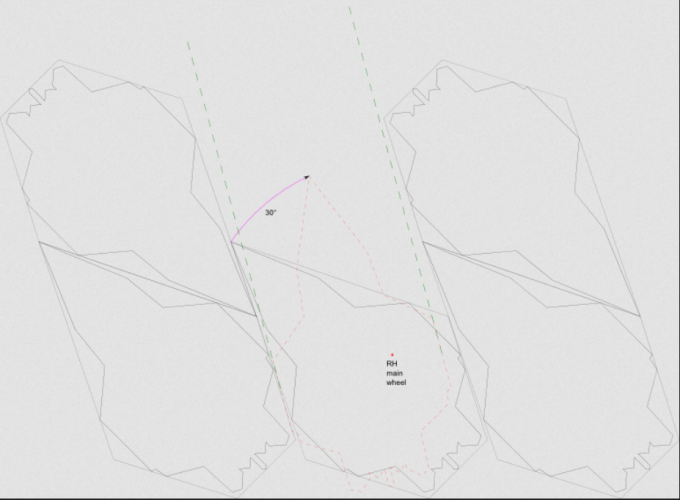
Since, NG has released another video with "better" look at their possible design I'm posting mine that I've withheld to prevent fan art from being used for obfuscation.
From the video it looks like my original posted planform fits best (right side) while my superior newer wing is too large (left side).
The conclusion is either it's much larger scaled or it is indeed "smaller" with less payload. I'm not surprised about payload being somewhat less since we pack it more than might be practical.
I expect the back to be pronounced but the model in video seems to be a lot flatter.
 

Attachments

  • FA-XX-v1s-cropped.png
    FA-XX-v1s-cropped.png
    243.1 KB · Views: 254
Since cluster ammunition have been used again I suppose we'll see more of them getting adopted likewise. And very likely with the same form factor I've used for the penetrator because of volume requirement.
For cluster munitions, just use AGM-154 JSOW. Though it's possible that we'd see the other CBU types show up in use, JSOW is the only one with a wing kit for standoff. Any other CBU is iirc a ~2000lb diameter weapon but shorter.
 
Since, NG has released another video with "better" look at their possible design I'm posting mine that I've withheld to prevent fan art from being used for obfuscation.
From the video it looks like my original posted planform fits best (right side) while my superior newer wing is too large (left side).
The conclusion is either it's much larger scaled or it is indeed "smaller" with less payload. I'm not surprised about payload being somewhat less since we pack it more than might be practical.
I expect the back to be pronounced but the model in video seems to be a lot flatter.

Everything superimposed in 1 diagram looks too much complicated, difficult to comprehend.
Showing 1 system at a time in a diagram makes it easy -
- general outline
- intakes, engines
- weapons

Micro features can be avoided in superimosed image like -
- SWB door
- APU inlet & exhaust door
- intake bleed air exhaust grill
- intake over-pressure relief doors
- ECS exhaust
- boundary layer spill grill
- SES exhaust
- all cockpit & canopy lines
- precise features supporting the landing gear

While showing a half-half comparison, all features can be shown.
 
It wasn't meant to be n this case.
The F/A-X & F47 system design despite some differences are still fundamentally the same. I've already addressed the subsystems in the F47 thread. At least the relevant size/volume and scope part not the schematics.
That said, many of the points listed are outdated and no longer relevant.
 
Everything superimposed in 1 diagram looks too much complicated, difficult to comprehend.
Showing 1 system at a time in a diagram makes it easy -
- general outline
- intakes, engines
- weapons
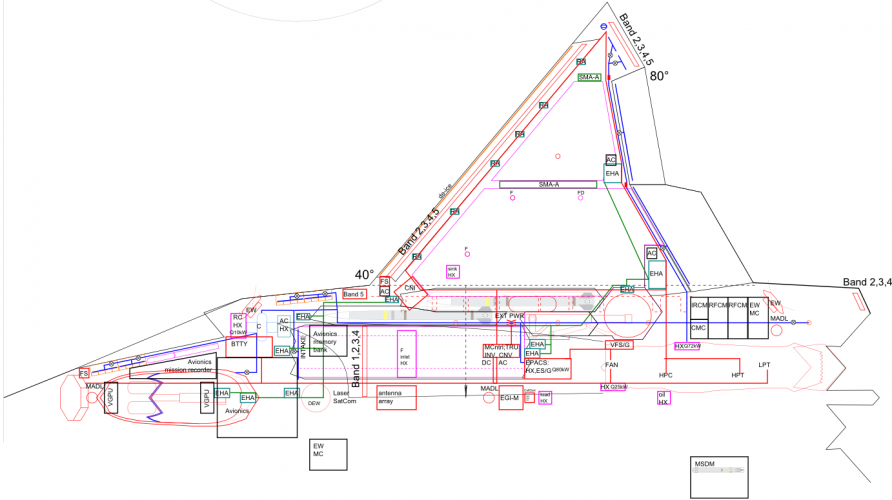
All right, here's the internall view of the most important stuff. A lot are still missing but who really does care here?
It's too much trouble to go beyond that so I won't go into the details.
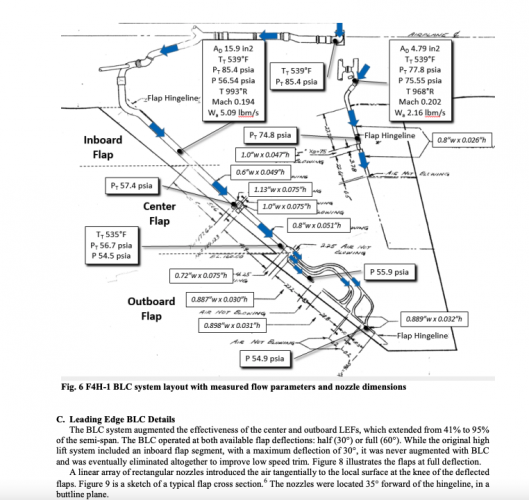
As you can see there's an active flow control network. Partly based on the Blackburn Buccaneer and MDD F-4 phantom II Boundary Layer Control (BLC) system but updated to the X-65 standard.

There's also a research paper on the X65 somewhere.
The system is at max triple redundant when counting auxiliary/emergency systems. And one more reason for dorsal intakes.
No air is being wasted through spilling but all are used for heat changers, enviromental control systems as well as the active flow control.

There's a lot of "redundancy" regarding EW and antenna's in general but the 6th gen need a lot of bandwidth and it does information domain warfare like tracking cellphones, ID-ing and targeting. The whole "Battlespace Master" managenment thing requires a lot of computation and back & forth communcations.

Originally, I had 4 missiles in mind for the wing bay & side bay (separately or combined). Although, there's no problem with clearances even if all use their own mechanics & required space but this leaves almost no space for other control panels needed. So practically I assume there's will be only 2 missiles here.
Through some arrangment tricks I was able to pack a more than possible in a conventional way within the main IWBs. But likewise and especially Naval clearance requirement & airframe flexing tolerance it will be less in practice.
Anyhow, so per IWB I was able to pack 14 SDB (includes door ones); 2 JASSM; 3 Mk83; 6 Mk82; 5 AIM120 etc.
I gave up on the 8 Mk82 because the centerline racks for the lower layer remained a clearrance issue for the upper layer.

I've added Minature Self Defense Munition (MSDM) bay; this time it's another design from before. I dunno how many there could be because it will require some complicated datalink connection and because the wing don't fold on any of the current designs. Not sure this will ever change. The datalink might end up being horrible space inefficient like how it's planned for APKWS. I assume at least 4 rounds should be possible. A side bay could be used, too, but firing aft has clearance issues with the wing ailerons.

 

Attachments

  • FA-XX-top_v1s_internals-cropped.png
    FA-XX-top_v1s_internals-cropped.png
    143.6 KB · Views: 175
  • mbtAa.png
    mbtAa.png
    743.8 KB · Views: 122
  • PvFe9.png
    PvFe9.png
    198.4 KB · Views: 119
Last edited by a moderator:
Something I wanted to point out, sure the Ad bird may be AI, but let's discuss what may be more real. If we revisit the superbowl "F/A-XX" you'll see that the B-21 is in the background flying outside while the rest of the aircraft in the hangar are actual representative models of their real world counterparts. So by my own deduction, it would be highly logical to think that what they shown here is most likely aligned with the real thing. Even the kinetic air defense plane holds a VERY similar geometry. Even more so, the one in the ad from the superbowl features a significant degree of wing twist which makes sense, look at the phantom ray and other delta type platforms. Why bother putting that kind of detail into a representative article? I think the older rendition may be on par.
 

Attachments

  • Boeing_Phantom_Ray.jpg
    Boeing_Phantom_Ray.jpg
    62.2 KB · Views: 114
  • 1767910910768.png
    1767910910768.png
    338.9 KB · Views: 109
  • U.S._Boosts_FA-XX_Carrier-Based_Fighter_Jet_Program_with_500_Million_for_Rapid_Development_Br...jpeg
    U.S._Boosts_FA-XX_Carrier-Based_Fighter_Jet_Program_with_500_Million_for_Rapid_Development_Br...jpeg
    136.8 KB · Views: 115
  • jjd14.jpg
    jjd14.jpg
    139.1 KB · Views: 131
...If we revisit the superbowl "F/A-XX" you'll see that the B-21 is in the background flying outside while the rest of the aircraft in the hangar are actual representative models of their real world counterparts. So by my own deduction, it would be highly logical to think that what they shown here is most likely aligned with the real thing. Even the kinetic air defense plane holds a VERY similar geometry...
You might be right, but the geometry of the airframe/air intake immediately makes me think "subsonic", which F/A-XX isn't (as far as I'm aware).
 
You might be right, but the geometry of the airframe/air intake immediately makes me think "subsonic", which F/A-XX isn't (as far as I'm aware).
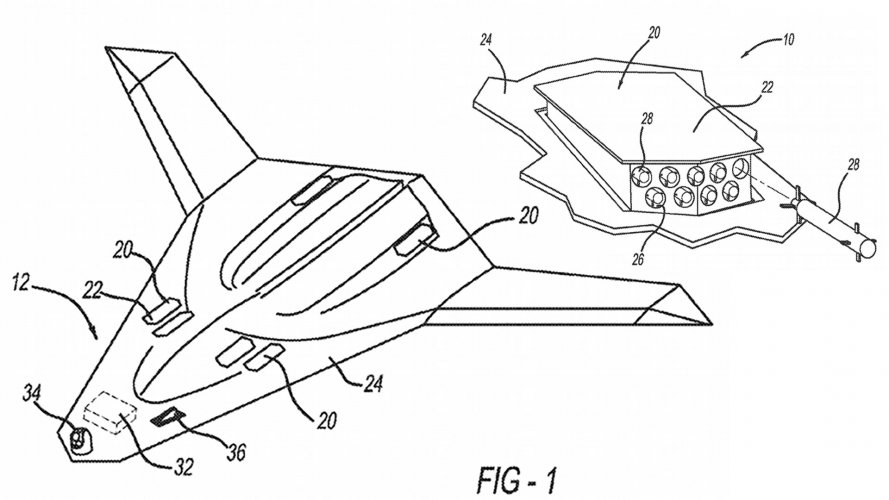
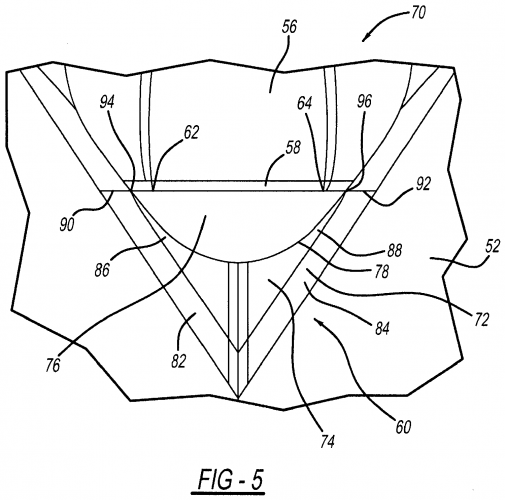
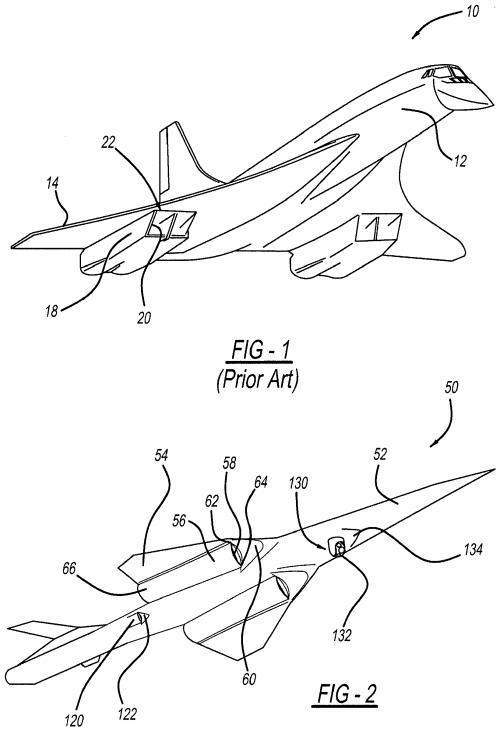
At first glance it appears that way, but they do have a patent for a gradient swept boundary layer system, this may be at play.
 

Attachments

  • imgf0003.png
    imgf0003.png
    26.5 KB · Views: 97
  • imgf0001.png
    imgf0001.png
    38.9 KB · Views: 72
You might be right, but the geometry of the airframe/air intake immediately makes me think "subsonic", which F/A-XX isn't (as far as I'm aware).
quellish said in the other thread that its still a supersonic capable design, but thats still not super specific..

Supersonic with AB M 1.2 to 1.8?
Or supersonic at mil power?

Those could be two different designs.
 
IF the Northrop design does include supercruise then I think that a max speed of Mach 2 will not be that impossible to achieve.
 
Something I wanted to point out, sure the Ad bird may be AI, but let's discuss what may be more real. If we revisit the superbowl "F/A-XX" you'll see that the B-21 is in the background flying outside while the rest of the aircraft in the hangar are actual representative models of their real world counterparts. So by my own deduction, it would be highly logical to think that what they shown here is most likely aligned with the real thing. Even the kinetic air defense plane holds a VERY similar geometry. Even more so, the one in the ad from the superbowl features a significant degree of wing twist which makes sense, look at the phantom ray and other delta type platforms. Why bother putting that kind of detail into a representative article? I think the older rendition may be on par.
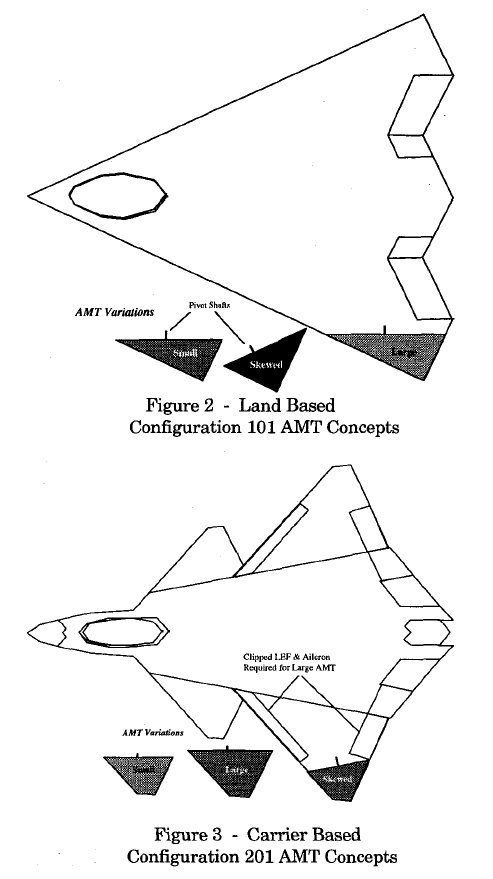
Those are all popular research forms that have been investigated by everyone. Any of them are viable for the USAF but not Navy.
Apparently, the chinese have a navalized version:

Aslo note the difference between the USAF and Navy ICE models:

Anyhow, I like this ICE-F117 mixed version:
You might be right, but the geometry of the airframe/air intake immediately makes me think "subsonic", which F/A-XX isn't (as far as I'm aware).
Those can go supersonic just unlikely to ever get past Mach ~1.3-1.5. I expect F/A-XX to go up to Mach 2.02
 

Attachments

  • Next-Gen-Air-Dominance-zoomed.png
    Next-Gen-Air-Dominance-zoomed.png
    32.8 KB · Views: 138
  • ICE-101&201.jpg
    ICE-101&201.jpg
    94.4 KB · Views: 131
  • RC UAV strange 1.jpg
    RC UAV strange 1.jpg
    546 KB · Views: 150
Also talking about less known facts on the F-4. It can fly into combat with wings folded, albeit A2A load.
From https://www.f4phantom.com/drupal/content/f-4-flying-wings-folded
F4FoldedWings_0.jpg

and View: https://www.reddit.com/r/WeirdWings/comments/a6ebc6/an_f4_phantom_flying_with_its_outboard_wings/


My more conventional leaning wings should be able to accomplish this feat, too. As for the higher sweep wings of USAF ICE plane and the like, it's gonna be coming in very fast on landing. I've my doubts it will go well for them.
Something only experienced by the F4:
 
I can understand supercruise. I can understand a dash speed around or even better than M1.5. I don’t understand why M2 is important for a stealthy strike fighter; I apologize if I’m missing something completely obvious…
 
It seems a high supercruise capability would probably be better, say M1.8+ than all out with the burners lit. I think a 6th gen fighter could possibly achieve that capability with the right propulsion. The YF-23 was pushing that with the YF-120 engines.
 
I can understand supercruise. I can understand a dash speed around or even better than M1.5. I don’t understand why M2 is important for a stealthy strike fighter; I apologize if I’m missing something completely obvious…
It seems a high supercruise capability would probably be better, say M1.8+ than all out with the burners lit. I think a 6th gen fighter could possibly achieve that capability with the right propulsion. The YF-23 was pushing that with the YF-120 engines.
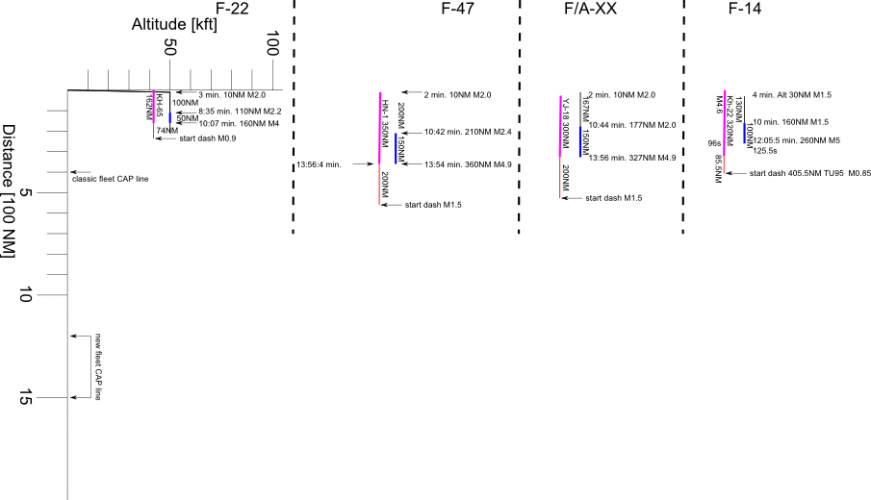
As I've outlined at the beginning of this thread Mach 2 won't be used often. But it's good advertisement to Congress and the public.
But the truth is it's about intercept, specifically Deck Launch Intercept (DLI). I'm pretty certain the Navy is adamant about this as much as about radar range. Here's my cheat sheet for my assesment for the F-47 Mach 2.4 and F/A-XX Mach 2 requirements.
 

Attachments

  • NGAD-intercept.png
    NGAD-intercept.png
    36.8 KB · Views: 175
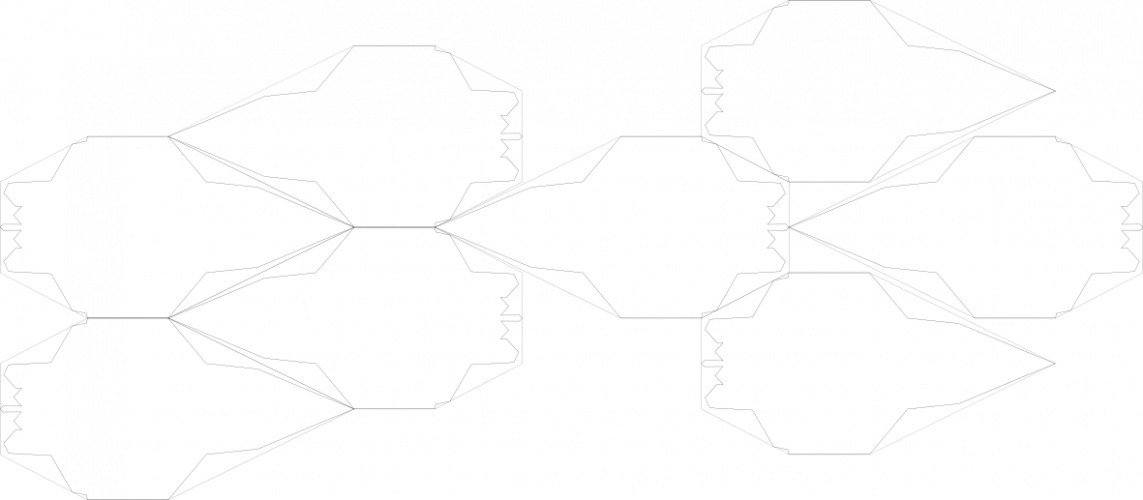
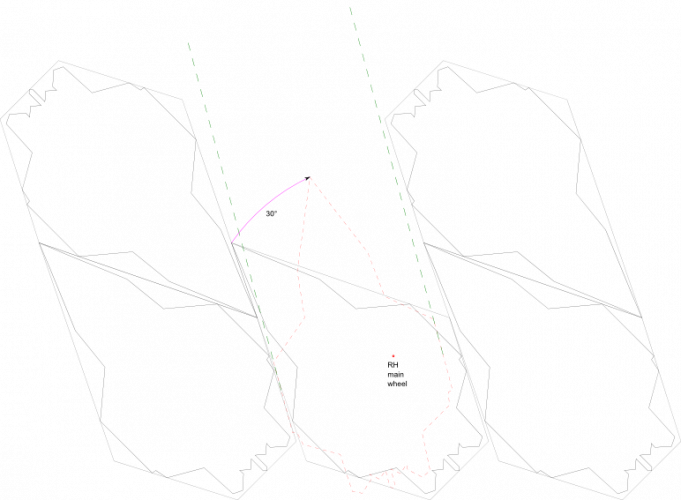
Regarding spotsize, it's 1.31 leaning toward 1.3 or even 1.29. The uncertainty lies with legacy F/A-18C measurement, like do the missiles on the folded wing tips count or the drooped tail elevators?
Anyhow, I drew a polygon around its planform to facilitate uniform packing. I got to say I'm a bit surprised by the almost perfect mirrored angles (1° difference).
 

Attachments

  • FA-XX-spotsize-parking.png
    FA-XX-spotsize-parking.png
    50.6 KB · Views: 130
  • FA-XX-spotsize-parking-45°.png
    FA-XX-spotsize-parking-45°.png
    46.2 KB · Views: 145
Regarding spotsize, it's 1.31 leaning toward 1.3 or even 1.29. The uncertainty lies with legacy F/A-18C measurement, like do the missiles on the folded wing tips count or the drooped tail elevators?
Anyhow, I drew a polygon around its planform to facilitate uniform packing. I got to say I'm a bit surprised by the almost perfect mirrored angles (1° difference).
Hey, those images are really hard to read.
 
NG, a group that brought us X-47B how many years ago now, developing a tailed F/A-XX doesn’t really compute with me, along with several other reasons.

Exactly. NG hasn't flown a new supersonic aircraft or even a demonstrator in 35 years. The last aircraft they helped develop was the YF-23 with McDonnell Douglas.

To think that NG can submit a paper plane and win F/A-XX doesn't really compute with me. No jet fighter contract has ever been won where the winner didn't have a prototype or demonstrator.

Lockheed has already withdrawn from F/A-XX.

People will say Boeing can't win F/A-XX because they couldn't possibly make two brand new unique 6th gen fighters. This is backwards thinking. Boeing is smart they would just submit the same design. The Navy submission using cheap F110 engines and the USAF submission using expensive adaptive engines.

Here's my cheat sheet for my assesment for the F-47 Mach 2.4 and F/A-XX Mach 2 requirements.
Your numbers are so close that the difference could be satisfied with different engines. It is nearly identical difference to when the F-14 went from old generation TF30 to the latest generation F110.

In the case of the 6th gen fighters the difference would be going from older generation F110 to newer XA102/103.
 
Your numbers are so close that the difference could be satisfied with different engines. It is nearly identical difference to when the F-14 went from old generation TF30 to the latest generation F110.

In the case of the 6th gen fighters the difference would be going from older generation F110 to newer XA102/103.
They are best case and aligned for both sides:
absolute detection on defending side and as fast & from as far as possible for best "surprise" on the other.
As for engine:
if same as F22
A2A T/W 1.25 16xAIM120 50% fuel at 65724.8 lb => 41078 lb engine required
if same as F35
MTOW T/W 0.652 at 98540 lb => 32140 lb engine required
 
if same as F22
A2A T/W 1.25 16xAIM120 50% fuel at 65724.8 lb => 41078 lb engine required
if same as F35
MTOW T/W 0.652 at 98540 lb => 32140 lb engine required
I could see the US Navy wanting a T/W closer to the F-35 while the USAF wanting T/W closer to the F-22. Assuming similar aerodynamics this would allow the USAF design to have slightly higher supercruise speed.

32,140lb of thrust lines up perfectly with the GE F110 engine family. The Navy wanted to use an existing engine. 41,078lb is only slightly above the estimated thrust of the XA102/103.

I think the F110 and XA102/XA103 are close to identical in physical size. I would expect a cleansheet adaptive engine to have 10-20% more thrust than a 30 year old engine design while maintaining the same physical size. The F110-GE-132 has 32,500lb of thrust and the XA102/XA103 are reported to have 35,000-40,000lb of thrust. This is a 7.7% to 23% increase over the F110. I would be shocked if the adaptive engines had to be bigger to achieve that increase.

So a shared design with common engine bay can be used with F110 engines for the Navy and adaptive engines for the USAF. All performance requirements line up perfectly. Very smart.
 
I do expect the Navy to limit IWB loading due to clearance requirement down to 2/3 of what I have here.
So engine thrust requirement could be set lower.

However, there's a need for a lot of electricity generation which means they must have sufficient power for allocation.
The legacy engines don't have that much default power and require not just core updates to the chamber but also drive train generator or have them eternally tied to the gearbox. At least 3-4x legacy power.

Then we need bleed air for the AFC system. Ideally, I would want it to have an ample bypass air pool as default to draw from and also able to divert as much as possible to the core for pure jet power when needed. For example for high AoA maneuver to compensate for loss of pressure. Since my design uses inlets for compressors as well as for supporting the intakes (see F47 discussion for my split intake discussions from the beginning) it's bleedless in theory and uses bleed air as secondary with emergency compressor/generator of the EPACS as tertiary. This reduces total power requirement. And should save 3-7%.

In any case, I do expect engines to be similar in size for either F47 and F/A-XX. It's why I kept them both pretty much the same. And lets not forget there's also the intention of having them be modular for future upgrades or iterations. Although, I think USAF and Navy airframes sections won't be mixed ever.
 
Back
Top Bottom