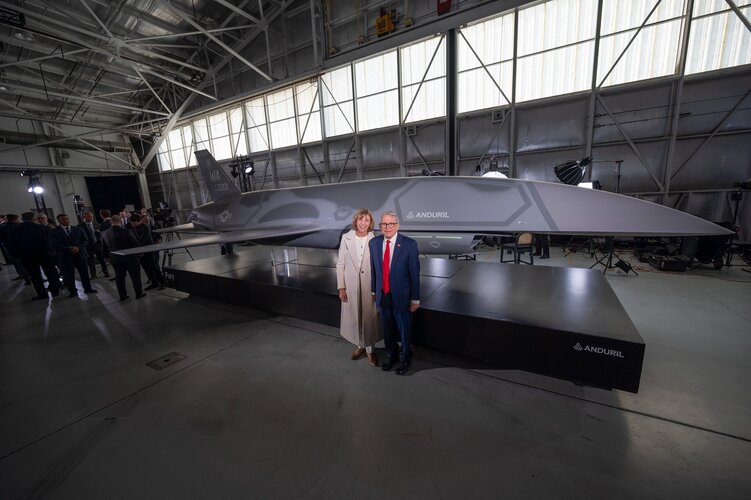
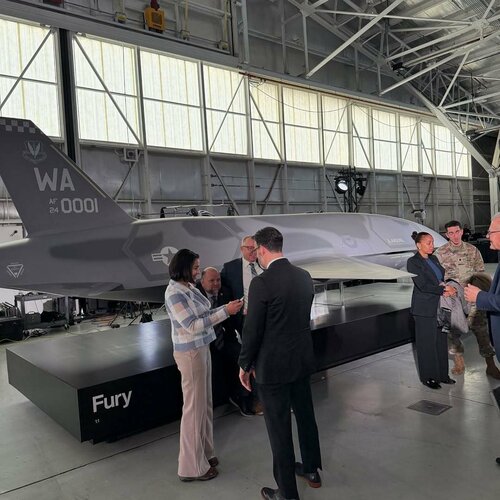
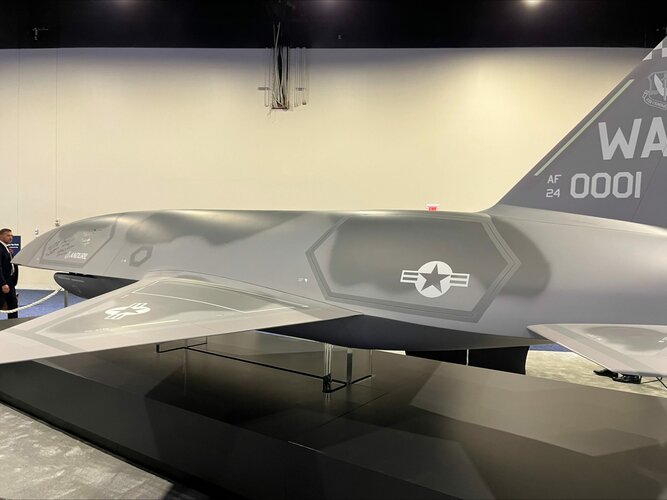
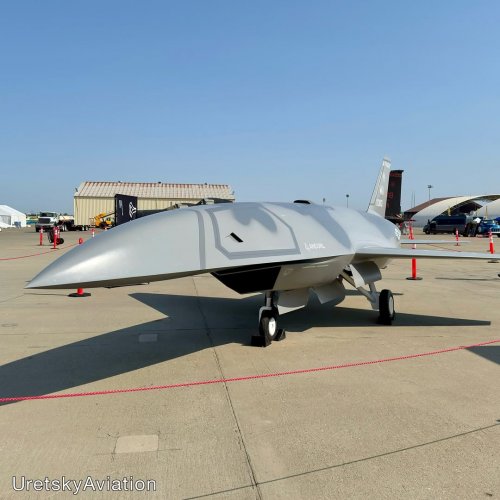
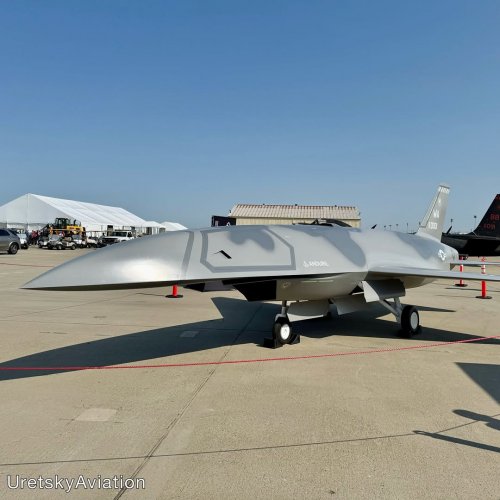
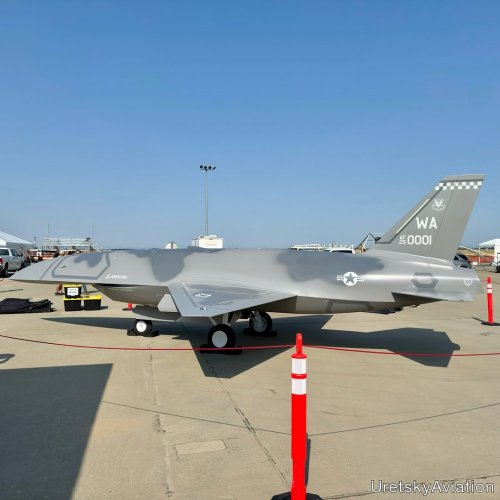
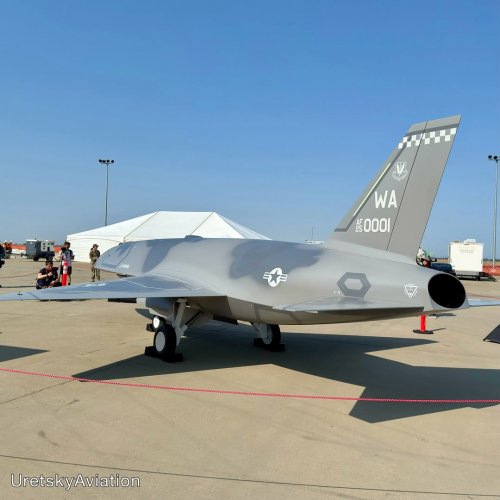
Quite a small drone for what I would have in mind when it comes to a "collaborative" aircraft.Feel like this deserves its own topic. I know very little right now.
View: https://x.com/ValerieInsinna/status/1835695152351891919
View: https://youtu.be/RpFFScTovII
https://www.anduril.com/fury/

You are using an out of date browser. It may not display this or other websites correctly.
You should upgrade or use an alternative browser.
You should upgrade or use an alternative browser.
Anduril Industries / Blue Force Technology CCA, FQ-44 Fury
- Thread starter TomcatViP
- Start date
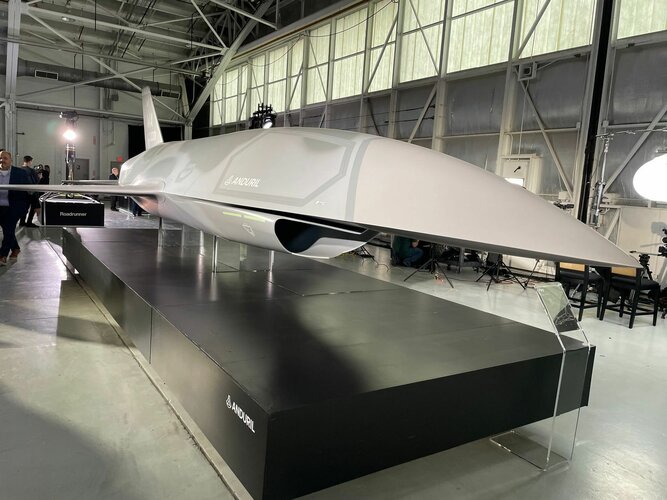
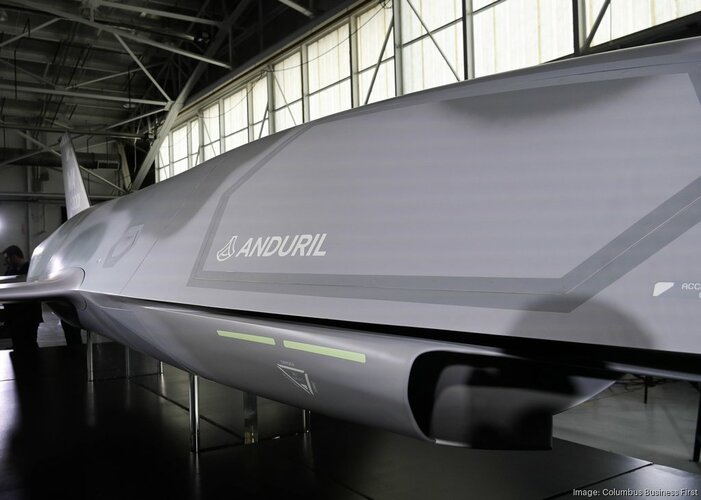
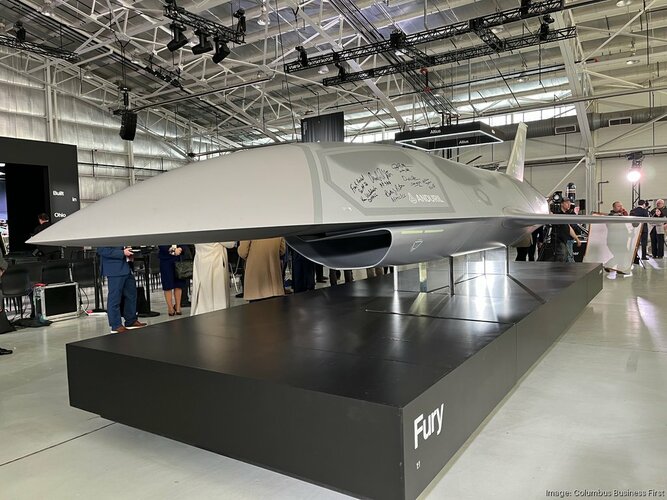
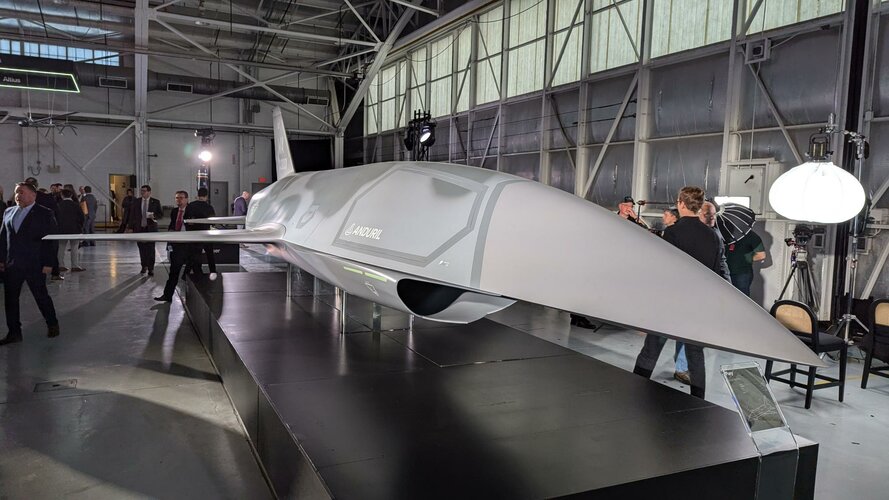

Forest Green
ACCESS: USAP
- Joined
- 11 June 2019
- Messages
- 14,499
- Reaction score
- 31,531
Attachments
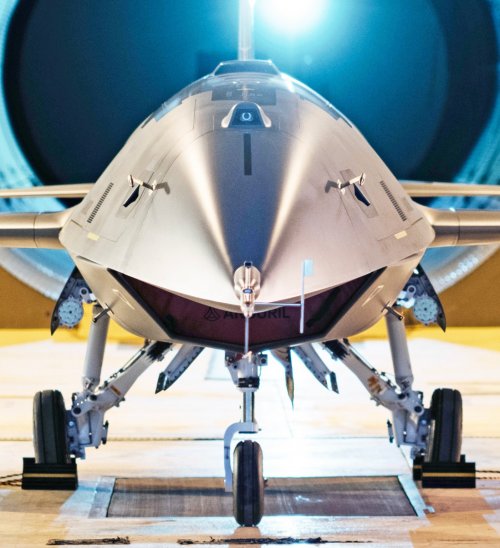
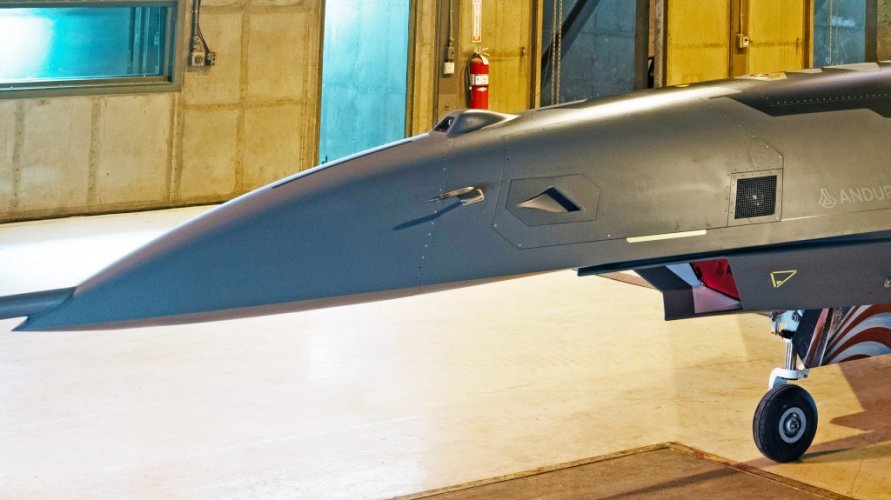
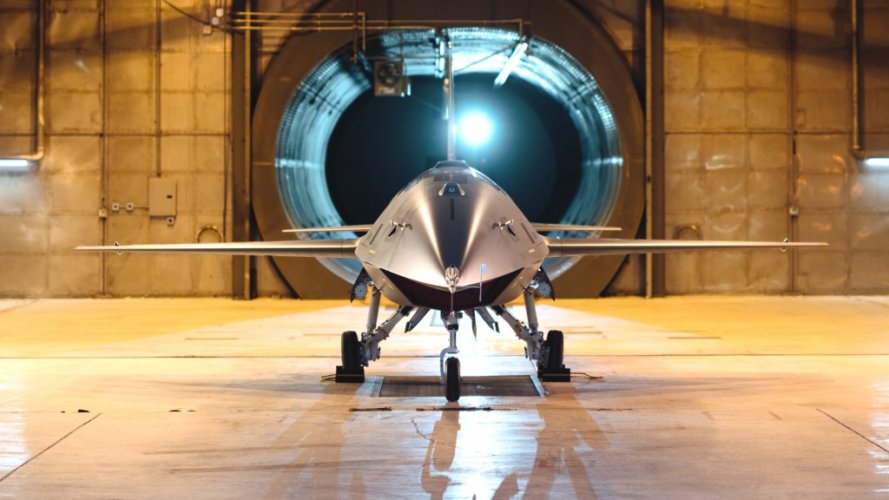
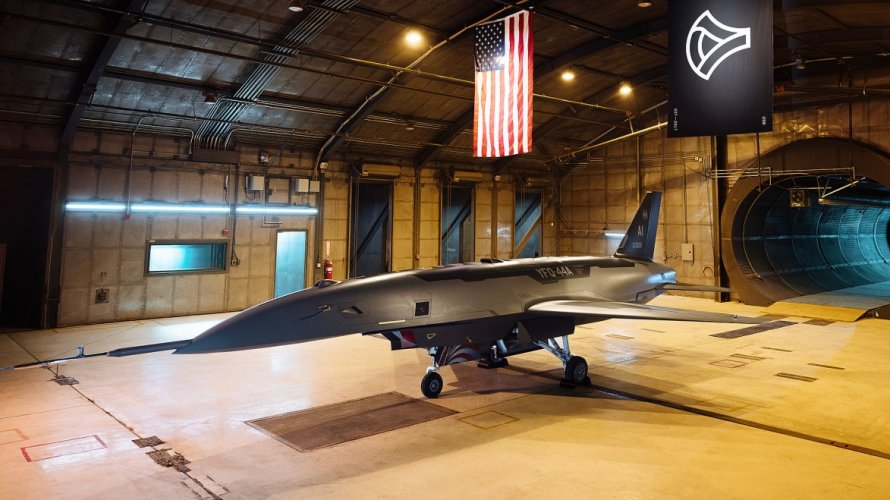
Forest Green
ACCESS: USAP
- Joined
- 11 June 2019
- Messages
- 14,499
- Reaction score
- 31,531
SlothmanAllen
ACCESS: Confidential
- Joined
- 3 January 2025
- Messages
- 80
- Reaction score
- 192
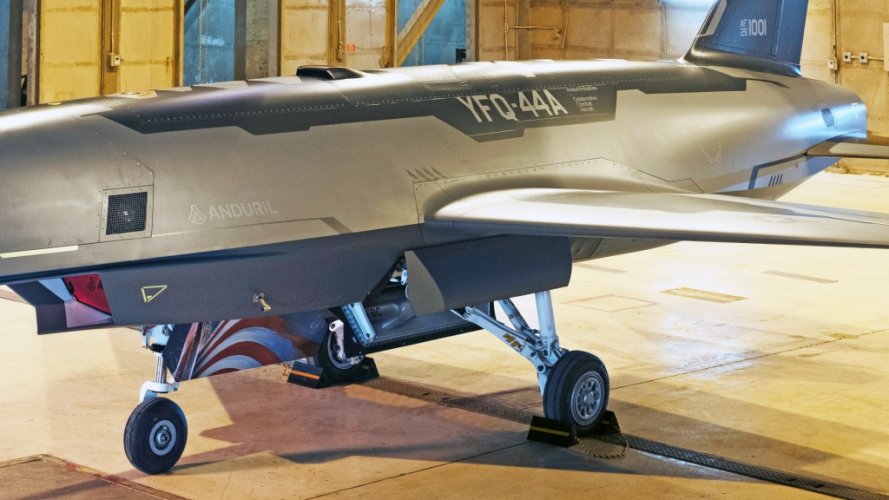
So will this aircraft just carry sensors? It doesn't look like it has any room to mount weapons on the wings or space internally.

EmoBirb
ACCESS: Top Secret
- Joined
- 18 January 2025
- Messages
- 2,693
- Reaction score
- 6,919
It could probably carry two missiles under the wings and one under the fuselage, at least in the final product. Maybe AIM-9s on wingtip mounts? Does General Atomics YFQ-42 have IWBs?So will this aircraft just carry sensors? It doesn't look like it has any room to mount weapons on the wings or space internally.

- Joined
- 6 August 2007
- Messages
- 4,530
- Reaction score
- 10,226
Attachments

Dilandu
I'm dissatisfied, which means, I exist.
It's just a prototype. YF-machines aren't usually fitted with hardpoints.So will this aircraft just carry sensors? It doesn't look like it has any room to mount weapons on the wings or space internally.
EmoBirb
ACCESS: Top Secret
- Joined
- 18 January 2025
- Messages
- 2,693
- Reaction score
- 6,919
That alone makes GAs offering more worthwhile in my opinion.I think the GA YFQ-42A has an internal weapons bay (similar to XQ-67 OBSS I assume). The Anduril YFQ-44 does use wing hard points.
- Joined
- 28 January 2008
- Messages
- 1,645
- Reaction score
- 4,210
The current YFQ-44A began life from the ARFL Fury-A Bandit program for adversarial air training then Anduril purchased Blue Force Technologies and the aircraft evolved into what you see today.
Forest Green
ACCESS: USAP
- Joined
- 11 June 2019
- Messages
- 14,499
- Reaction score
- 31,531
Forest Green
ACCESS: USAP
- Joined
- 11 June 2019
- Messages
- 14,499
- Reaction score
- 31,531
Forest Green
ACCESS: USAP
- Joined
- 11 June 2019
- Messages
- 14,499
- Reaction score
- 31,531
Air launched makes sense but only if you also have air recovery. If they are fire and forget will end up being either not capable enough to be effective or too costly to use and lose. The Gremlin work from a C-130 would be a good option but with a more capable CCA (that is compatible with internal C-130 carriage).
Last edited:
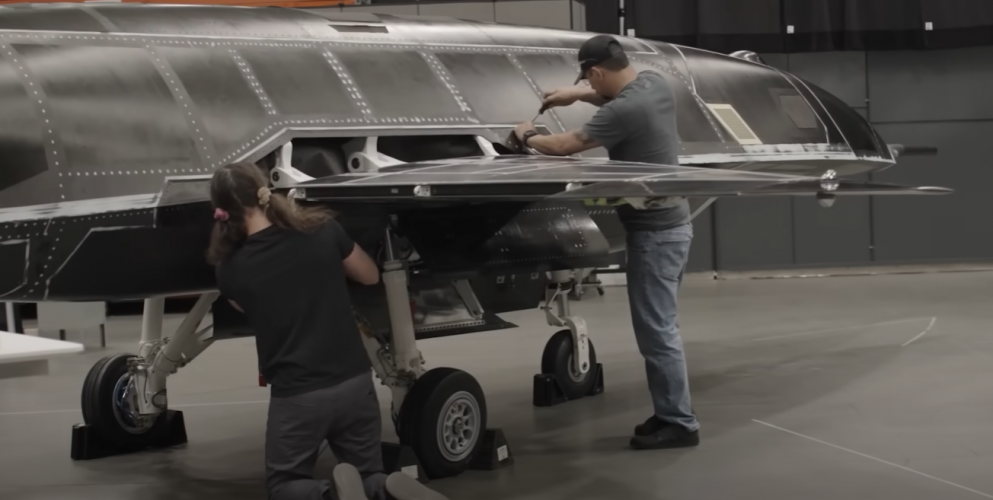
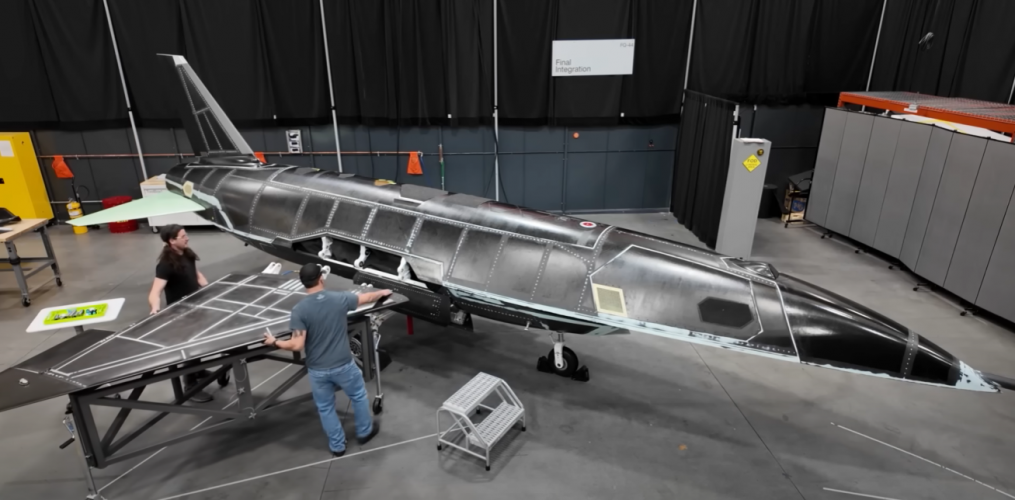
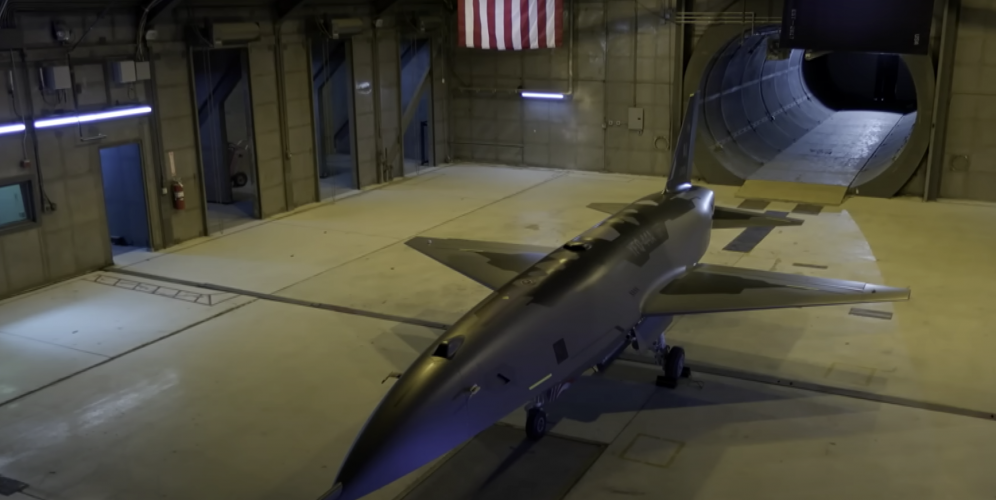
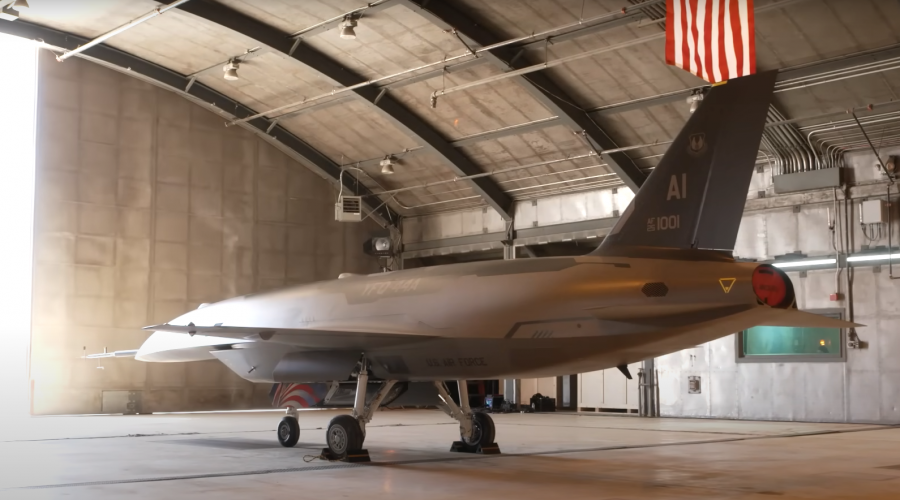
Here's a good video from 60 minutes showing some more shots and pictures of Anduril's Fury.
View: https://www.youtube.com/watch?v=f3EtEYE8QWE
Included are a few interesting stills:
Arrays and Antennae on the top of the aircraft are interesting. And plentiful. Maybe we'll see the Fury live tweeting its test flights with all of that connectivity


Included are a few interesting stills:
Arrays and Antennae on the top of the aircraft are interesting. And plentiful. Maybe we'll see the Fury live tweeting its test flights with all of that connectivity
Last edited:
Scott Kenny
ACCESS: USAP
- Joined
- 15 May 2023
- Messages
- 19,515
- Reaction score
- 27,960
Without internal weapons bays, it's going to suffer immensely in terms of RCS. It may be acceptable in terms of figuring out just how many CCAs escort each manned plane, though.
IMO the end-state CCAs should have the same size return as the F-47 or F/A-XX. If the F-47 has a 0.001m^2 frontal return, that's the same size the CCAs should have. This does mean that relatively speaking they have much less stealth tech than the manned planes, since the CCAs are roughly a quarter the size of the manned planes.
I'd also like them to have similar IR signatures, but that's a much harder ask than radar signature. Bigger engines burning lots more fuel mean lots more heat emitted.
IMO the end-state CCAs should have the same size return as the F-47 or F/A-XX. If the F-47 has a 0.001m^2 frontal return, that's the same size the CCAs should have. This does mean that relatively speaking they have much less stealth tech than the manned planes, since the CCAs are roughly a quarter the size of the manned planes.
I'd also like them to have similar IR signatures, but that's a much harder ask than radar signature. Bigger engines burning lots more fuel mean lots more heat emitted.

Halcyon66
ACCESS: Top Secret
- Joined
- 9 July 2022
- Messages
- 1,519
- Reaction score
- 3,257
I have trouble taking Anduril seriously - this super drone was originally created by Blue Force Technologies, and was developed as an inexpensive target drone. Anduril bought up the company, took the design added tacticool serrated stealth panels to it, and now is marketing it as the next big thing in military aviation.Without internal weapons bays, it's going to suffer immensely in terms of RCS. It may be acceptable in terms of figuring out just how many CCAs escort each manned plane, though.
IMO the end-state CCAs should have the same size return as the F-47 or F/A-XX. If the F-47 has a 0.001m^2 frontal return, that's the same size the CCAs should have. This does mean that relatively speaking they have much less stealth tech than the manned planes, since the CCAs are roughly a quarter the size of the manned planes.
I'd also like them to have similar IR signatures, but that's a much harder ask than radar signature. Bigger engines burning lots more fuel mean lots more heat emitted.
They're really good at making action-packed videos showcasing their products - reminiscent of a Call Of Duty campaign, but I doubt anything they make is that innovative or is going to work that well in practice.
I don't think anyone developing the next bleeding edge system for the military is allowed to make a peep about it - all procurement, development and evaluation happens behind closed curtains. The fact that they're doing it out in the open says to me they don't have serious government contracts.

- Joined
- 27 December 2005
- Messages
- 19,225
- Reaction score
- 35,635
Nope, not how it works. 4 x smaller airframe doesn't translate to 4 x easier to make stealthy.Without internal weapons bays, it's going to suffer immensely in terms of RCS. It may be acceptable in terms of figuring out just how many CCAs escort each manned plane, though.
IMO the end-state CCAs should have the same size return as the F-47 or F/A-XX. If the F-47 has a 0.001m^2 frontal return, that's the same size the CCAs should have. This does mean that relatively speaking they have much less stealth tech than the manned planes, since the CCAs are roughly a quarter the size of the manned planes.
Getting to 0.001m^2 is hard no matter the size.
Scott Kenny
ACCESS: USAP
- Joined
- 15 May 2023
- Messages
- 19,515
- Reaction score
- 27,960
Not the point I was trying to make.Nope, not how it works. 4 x smaller airframe doesn't translate to 4 x easier to make stealthy.
The smaller CCAs should have the same size return as the F-47, so that they cannot be distinguished easily. The CCAs can have a slightly larger return, so that they're detected before the F-47, but the RCS need to be in the same order of magnitude at the bare minimum.
Still easier on a smaller object than something the size of the B-2.Getting to 0.001m^2 is hard no matter the size.
I have trouble taking Anduril seriously - this super drone was originally created by Blue Force Technologies, and was developed as an inexpensive target drone. Anduril bought up the company, took the design added tacticool serrated stealth panels to it, and now is marketing it as the next big thing in military aviation.
They're really good at making action-packed videos showcasing their products - reminiscent of a Call Of Duty campaign, but I doubt anything they make is that innovative or is going to work that well in practice.
I don't think anyone developing the next bleeding edge system for the military is allowed to make a peep about it - all procurement, development and evaluation happens behind closed curtains. The fact that they're doing it out in the open says to me they don't have serious government contracts.
They do like to talk BIG game while offering some BS .
Furry has less than 200kg of payload carrying capacity and what they mean by payoad is internal systems .
Its not going to carry any useful weapons anytime soon.
As most aerial targets ,fury is designed with high windloading , low drag , tiny wings to get some more speed and preform in absolutely clean configuration .If it was redesigned to carry payload it would have much larger empenage and become slower to a degree where it could not keep up with fighters when bombed up
Last edited:
- Joined
- 6 August 2007
- Messages
- 4,530
- Reaction score
- 10,226
Still easier on a smaller object than something the size of the B-2.
Not true, and it’s much easier to make a large object stealthy across a broader range of frequencies than a small one.
Scott Kenny
ACCESS: USAP
- Joined
- 15 May 2023
- Messages
- 19,515
- Reaction score
- 27,960
And what if you're not caring about as wide a range of frequencies?Not true, and it’s much easier to make a large object stealthy across a broader range of frequencies than a small one.
- Joined
- 6 August 2007
- Messages
- 4,530
- Reaction score
- 10,226
And what if you're not caring about as wide a range of frequencies?
The gross features of the object need to be many times (more than 10x) the size of the wavelength of interest.
I think the GA YFQ-42A has an internal weapons bay (similar to XQ-67 OBSS I assume). The Anduril YFQ-44 does use wing hard points.
I have seen artwork to that effect but never seen it confirmed in print.

bring_it_on
I really should change my personal text
- Joined
- 4 July 2013
- Messages
- 4,203
- Reaction score
- 5,730
The CCAs can have a slightly larger return, so that they're detected before the F-47, but the RCS need to be in the same order of magnitude at the bare minimum.
What if CCA's are escorting tankers? There are probably a range of scenarios and missions where RCS can be set aside in the interest of cost, simplicity, and easy of other attributes. These things are not and will likely never be 'baby F-47's'..they are designed to be pretty cheap and cost, simplicity and schedule are areas of advantage
Air launched makes sense but only if you also have air recovery. If they are fire and forget will end up being either not capable enough to be effective or too costly to use and lose. The Gremlin work from a C-130 would be a good option but with a more capable CCA (that is compatible with internal C-130 carriage).
Parachute recovery is another, more likely option. The UTAP-22 with the FLIR like aperture hanging off the F-15 in that story nominally would have a recover chute when ground launched with a RATO bottle.
IMO the end-state CCAs should have the same size return as the F-47 or F/A-XX. If the F-47 has a 0.001m^2 frontal return, that's the same size the CCAs should have. This does mean that relatively speaking they have much less stealth tech than the manned planes, since the CCAs are roughly a quarter the size of the manned planes.
I'd also like them to have similar IR signatures, but that's a much harder ask than radar signature. Bigger engines burning lots more fuel mean lots more heat emitted.
I think my goal for signature (radar and IR), were I writing requirements, was small enough to get to within threatening AIM-120 range of a target with fighter level maneuverability and radar. III do not know what that exact range or cross section would be, but so long as the CCA can close to within envelope of its primary weapon (AIM-120s being by far the most plentiful), that’s good enough. I am easily willing to trade a CCA for a manned aircraft. If drone can get detected and engaged without being a significant threat to the opponent aircraft, then their usefulness as a reusable armed asset starts to fall off a cliff.
I have trouble taking Anduril seriously - this super drone was originally created by Blue Force Technologies, and was developed as an inexpensive target drone. Anduril bought up the company, took the design added tacticool serrated stealth panels to it, and now is marketing it as the next big thing in military aviation.
They're really good at making action-packed videos showcasing their products - reminiscent of a Call Of Duty campaign, but I doubt anything they make is that innovative or is going to work that well in practice.
I don't think anyone developing the next bleeding edge system for the military is allowed to make a peep about it - all procurement, development and evaluation happens behind closed curtains. The fact that they're doing it out in the open says to me they don't have serious government contracts.
They demonstrately have numerous government contracts, though currently more for software and non kinetic systems in most cases. But for instance the Army seems to have chosen their ALTIUS UAV as the platform for their launched efforts program. And obviously the USAF does not share your view since Anduril made it through the first down select.
Forest Green
ACCESS: USAP
- Joined
- 11 June 2019
- Messages
- 14,499
- Reaction score
- 31,531

Reddington777
ACCESS: Top Secret
- Joined
- 23 March 2025
- Messages
- 830
- Reaction score
- 2,746
I don't disagree, but I think that it may not be terribly problematic anyway.Without internal weapons bays, it's going to suffer immensely in terms of RCS.
There is one truth of CCAs (at least looking at the types people have come up with thus far) that is apparent to me:
A stealthy CCA isn't going to be amassable and amassable CCA isn't going to be exquisite or extremely stealthy. If CCAs aren't going to be extremely stealthy anyway and they are too small to be easily stealthy, being less stealthy isn't going to matter because we aren't in 1v1 a CCA joust here.
If we just think about CCAs like conventional fighters - sure better signature management and IWBs would obviously be great, but looking at it from an enemy's point of view and considering an air to air engagement as an example, in the broad scheme of things a CCA is the last thing you'd want to waste your limited weapons on unless you are being directly threatened by them (even if you are a J-36). You'd be able to detect them a lot further away than a manned platform and if you were the Chinese, sure you could plink them from way out of range, but would you want to waste your limited armaments in your IWB on unmanned assets when the real targets are the manned platforms behind them? If you choose to engage, you might well find yourself being shot at from multiple angles by both manned and unmanned platforms while you yourself have not guaranteed a kill on the CCAs let alone the unmanned aircraft behind them. On the other hand, when you evade, you'd have to be careful not to put yourself in range of another CCA.
On the flip side, having a flight or two of CCA's spread out across some 20 - 30 nm (or more?) area would present enemies with a lot of dilemmas even if you are less stealthy and obligated to smaller sensors. You might be able to rely on multi-static returns illuminated by other sensing platforms to present targeting solutions from a wide variety of angles over a wide area even if you yourself cannot detect the enemy yet with your own sensors. You might have EO systems that can be cued by a more powerful off-board sensor too that offer better range than radar against a stealthy target. You'd also be able to constantly degrade the EM spectrum via jamming from multiple sources. Because of all of this, its much harder and much less profitable for your enemy to attack you while it offers much more options for you to attack them. That's why I think having mass and high sensor integration is a lot more important than being low observable (not that the latter doesn't matter of course).
Even in situations where you are up against a peer force who might have no qualms wiping out your unmanned assets - they would have to have to rely on CCAs or land/naval IADS to get the magazine depth you and your CCAs have. They can't be too stealthy or too exquisite or you won't have the networked resilience, magazine depth and sensing nodes to present as much engagement dilemmas against your enemies. Just having a stealthy and cheap CCA with IWBs isn't going to ensure you can shoot and also escape either against an enemy that isn't that much more observable than you are. That's why I've seen very stealthy ISR UAVs that come in low numbers but the CCA UAVs from all over the world more or less take the same formulaic planforms and are much smaller in size. If stealth were as important for CCAs as we want to believe they are, we'd have to ask ourselves why so many flying dorito UAV's from the early to mid 2000's weren't considered for usage in this program. We'd have to ask ourselves why the Chinese, for all their manufacturing prowess, also passed up on making something like the GJ-11 by the thousands and instead also unveiled a very CCA looking CCA.
Again - being stealthy is important but not terribly so that something like the Fury may not be unfeasible - even with external stores. The fury would do fine especially as a sensor and EW CCA. Having said that - if I had to choose I'd still choose general atomics because affordable mass and gambit's flexibility is what I think really enables CCAs to shine.
Last edited:
Scott Kenny
ACCESS: USAP
- Joined
- 15 May 2023
- Messages
- 19,515
- Reaction score
- 27,960
Assuming that the CCAs are operating pretty much independently from the manned planes, yes.I think my goal for signature (radar and IR), were I writing requirements, was small enough to get to within threatening AIM-120 range of a target with fighter level maneuverability and radar. III do not know what that exact range or cross section would be, but so long as the CCA can close to within envelope of its primary weapon (AIM-120s being by far the most plentiful), that’s good enough.
But if they're operating closer to manned planes, say, as an actual wingman (or filling out the rest of the flight), then they need to have comparable RCS size to the plane they're intended to wingman for.
Oh, absolutely!I am easily willing to trade a CCA for a manned aircraft.
Or trading a CCA for a SAM site.
Exactly what I'm getting at.If drone can get detected and engaged without being a significant threat to the opponent aircraft, then their usefulness as a reusable armed asset starts to fall off a cliff.
Sandboxx has a video out talking about the US's new YFQ-42A and YFQ-44A AI controlled drone prototypes:
His Incognito spiel is from 0:40 to 2:50 in the video if one wants to avoid it.
Well, it’s no longer science fiction — the U.S. Air Force has now officially unveiled both of the world’s first-ever artificial intelligence-piloted fighter jets: The Anduril YFQ-44A and the General Atomics YFQ-42A.
Let's run them down.
His Incognito spiel is from 0:40 to 2:50 in the video if one wants to avoid it.
Assuming that the CCAs are operating pretty much independently from the manned planes, yes.
But if they're operating closer to manned planes, say, as an actual wingman (or filling out the rest of the flight), then they need to have comparable RCS size to the plane they're intended
I do not think they will be operating anywhere close to the manned aircraft. I think the term “wingman” for a CCA is misleading, perhaps deliberately so. From what little I can tell, even F-22/35 wingmen do not operate inside the typical distance associated with that word.
Scott Kenny
ACCESS: USAP
- Joined
- 15 May 2023
- Messages
- 19,515
- Reaction score
- 27,960
That seems surprising to me, I'd expect that they'd still train BFM in pairs per side.I do not think they will be operating anywhere close to the manned aircraft. I think the term “wingman” for a CCA is misleading, perhaps deliberately so. From what little I can tell, even F-22/35 wingmen do not operate inside the typical distance associated with that word.
Attachments

While interesting, the general use of images in that report is atrocious.Here's a good video from 60 minutes showing some more shots and pictures of Anduril's Fury.
View: https://www.youtube.com/watch?v=f3EtEYE8QWE
Included are a few interesting stills:
Arrays and Antennae on the top of the aircraft are interesting. And plentiful. Maybe we'll see the Fury live tweeting its test flights with all of that connectivity
View attachment 770571
View attachment 770570
View attachment 770569
View attachment 770568
Similar threads
-
Potential Low-Cost Distributed Air Defense Solution Using Anduril Technologies
- Started by SrsTwist
- Replies: 2
-
'Neuron 2.0' - New Dassault UCAS launched at Saint-Dizier, 8 October 2024
- Started by Jackonicko
- Replies: 20
-
 DARPA/USAF/USN Aerospace Innovation Initiative Experimental (AII-X) Demonstrator Program [NEWS ONLY]
- Started by quellish
- Replies: 4
-

-
Boeing NT-43A Radar Test Bed, 73-1155 aka 'Bill Clinton Airplane'
- Started by flateric
- Replies: 72