
You are using an out of date browser. It may not display this or other websites correctly.
You should upgrade or use an alternative browser.
You should upgrade or use an alternative browser.
Anduril Industries / Blue Force Technology CCA, FQ-44 Fury
- Thread starter TomcatViP
- Start date
- Joined
- 28 January 2008
- Messages
- 1,645
- Reaction score
- 4,210
The original purpose of the ARFL Blue Force Bandit was not a target drone, it was for counter-air/adversary training with no intentions of shooting any of them down at the time.Some people expect too much from what's essentially a repurposed target drone (I imagine this will be referenced plenty of times upon it's deployment) developed by a start up which was in turn bought by a techbro company.

bring_it_on
I really should change my personal text
- Joined
- 4 July 2013
- Messages
- 4,203
- Reaction score
- 5,730
Right. ADAIR was the effort and is the DNA behind the current Fury. The target program was a separate and unrelated effort run by DOT&E and I believe called 5GAT.The original purpose of the ARFL Blue Force Bandit was not a target drone, it was for counter-air/adversary training with no intentions of shooting any of them down at the time.
- Joined
- 28 January 2008
- Messages
- 1,645
- Reaction score
- 4,210
You are correct, I was involved with both programs.Right. ADAIR was the effort and is the DNA behind the current Fury. The target program was a separate and unrelated effort run by DOT&E and I believe called 5GAT.

Reddington777
ACCESS: Top Secret
- Joined
- 23 March 2025
- Messages
- 830
- Reaction score
- 2,746
I think the focus on capability is valid to a certain extent, but the purpose of a CCA or even increment 2 CCAs that are less capable than increment 1s still have a strong purpose.
At the end of the day, the only question surrounding CCA utility is whether or not the U.S has struck the correct trade between capability and mass. The force you field cannot have so little capability that a somewhat smaller force can easily overcome it by simply being more sophisticated. If this can be called a doctrine, I see this as a valid way of fighting anywhere where the enemy cannot generate enough capable combat mass to overcome this mix (and where the enemy can do that, then obviously those instances require a different solution).
Whether or not that mix can be overcome - traditionally - boils down to whoever that can bring the most numerous and capable missiles an sensors wins. Having cheap and expendable CCAs generally throws that out the window.
With regards to low capability CCAs, I'm reminded of a Nelson quote: "No captain can do very wrong if he places his ship alongside the enemy". If you fly a CCA towards the enemy, there are simply two courses of action that can be taken - shoot or run.
No sensor no matter how powerful can figure exactly what payload a CCA carries in it's bays - or if it's carrying anything at all. You could be staring at it using the Mk1 eyeball and be none the wiser about what's inside. But if the enemy is fighting at a location where weapons bay depth is at a premium and sortie rates simply cannot support an engagement force that qualitatively renders the enemy's high - low mix irrelevant, then every missile shot taken is another one that cannot be used against a more valuable asset. Not engaging necessarily means you must leave the air space. Sure - you can rely on AI infused whatever RWR / EM signals processing to try and figure out what to do, but are you going to take that chance?
Anotherwords, it is just wasting missiles on decoys. It sounds un-enticing but presents an extremely problematic tax on the enemy anywhere where magazine depth is an issue. Most countries can scarcely get enough planes into the sky to have enough magazine depth to face a formation or two. Even against a near peer power not in their own back yard - the math still holds up. Only in a war against China and in their own backyard would the math fail to add up. Given the YFQ-44's derivation from a target drone (which probably isn't a coincidence), you don't need a whole lot to impose the missile tax in a tactical engagement. You probably don't even need to be LO for that to happen. I'd even argue that depending ont he purpose of a formation, you'd want to have elements that are less LO.
Tangentially, this is why halfraams and smaller air to air missiles also make sense - you simply don't need to deal with figuring who should be shot at and who shouldn't when you have the magazine depth.
At the end of the day, the only question surrounding CCA utility is whether or not the U.S has struck the correct trade between capability and mass. The force you field cannot have so little capability that a somewhat smaller force can easily overcome it by simply being more sophisticated. If this can be called a doctrine, I see this as a valid way of fighting anywhere where the enemy cannot generate enough capable combat mass to overcome this mix (and where the enemy can do that, then obviously those instances require a different solution).
Whether or not that mix can be overcome - traditionally - boils down to whoever that can bring the most numerous and capable missiles an sensors wins. Having cheap and expendable CCAs generally throws that out the window.
With regards to low capability CCAs, I'm reminded of a Nelson quote: "No captain can do very wrong if he places his ship alongside the enemy". If you fly a CCA towards the enemy, there are simply two courses of action that can be taken - shoot or run.
No sensor no matter how powerful can figure exactly what payload a CCA carries in it's bays - or if it's carrying anything at all. You could be staring at it using the Mk1 eyeball and be none the wiser about what's inside. But if the enemy is fighting at a location where weapons bay depth is at a premium and sortie rates simply cannot support an engagement force that qualitatively renders the enemy's high - low mix irrelevant, then every missile shot taken is another one that cannot be used against a more valuable asset. Not engaging necessarily means you must leave the air space. Sure - you can rely on AI infused whatever RWR / EM signals processing to try and figure out what to do, but are you going to take that chance?
Anotherwords, it is just wasting missiles on decoys. It sounds un-enticing but presents an extremely problematic tax on the enemy anywhere where magazine depth is an issue. Most countries can scarcely get enough planes into the sky to have enough magazine depth to face a formation or two. Even against a near peer power not in their own back yard - the math still holds up. Only in a war against China and in their own backyard would the math fail to add up. Given the YFQ-44's derivation from a target drone (which probably isn't a coincidence), you don't need a whole lot to impose the missile tax in a tactical engagement. You probably don't even need to be LO for that to happen. I'd even argue that depending ont he purpose of a formation, you'd want to have elements that are less LO.
Tangentially, this is why halfraams and smaller air to air missiles also make sense - you simply don't need to deal with figuring who should be shot at and who shouldn't when you have the magazine depth.
I still think any hardware changes that change the flight dynamics of existing designs are likely to be very limited. The performance improvements are probably limited compared to the cost of altering the design and having to retest changes. As I said above, where hardware changes will impact is sensors. Fly the aircraft with a different nose that has a radar but also put ballast in if required to the IRST or the jammer nose so that the aircraft remains as consistent to the tested flight configuration as possible. What the program is seeking is repeatable consistency.The AFRL ACP path envisions quick and rapid hardware changes as autonomy matures and the design teams show evidence of achieving low cost per unit and sustainment. Specifically on the hardware side, you would get higher performance with larger, higher thrust engines, and more internal volume for sensors and other hardware. This could well also extend to IWB and changes there to accommodate a broader range of air to air and air to surface munitions.
The inference from the USAF is higher thrust engines are for new designs, not transplanted into existing platforms.
https://defensescoop.com/2026/07/30/air-force-cca-drone-program-increment-2-downselect/The Air Force is, however, taking a new approach when it comes to the engine for CCA Increment 2. For its first batch, the service leveraged an existing propulsion system so that the drones could be fielded as quickly as possible. But different requirements for Increment 2 are pushing the Air Force to look at clean-sheet engine designs, according to John Sneden, portfolio acquisition executive for propulsion.
“The reason we’re not taking something off the shelf is because we think that the requirements and the needs are going to be greater for CCA Increment 2, and we need to have propulsion systems ready for that,” he said.
I think we agree here but perhaps are coming from a different perspective. Yes additional flight hardware, ie new designs, will come along that might include improved LO signature management but that is a cost exercise as much as a hardware change. Increment 2 is still going through concept refinement and will do so for almost the next year. What arrives out of that could look very similar to Increment 1 or could be more exquisite and focused on VLO or it could even be lower cost and less capable but provide significantly more mass.While 'autonomy' is where the magic happens at the program level, autonomy cannot transform the aircraft into a low observable system capable of performing at levels that either or neither of the initial inc 1 offerings are capable of.
Increment 2 requirements are still being validated so I wouldn't jump on the Vectis train just yet. The impression I received from the Mitchell Institute podcast with the EOU, https://www.mitchellaerospacepower.org/podcast/inside-the-eou/ is they care far more about the software. The hardware has to be simple and common enough that any airmen can work on the system and return it to flight. Future war gaming may alter that view but I suspect the cost equation will continue to favour less exquisite designs that can be mass produced and are more easily maintained/turned around in the field. I also don't think the USAF knows what it wants yet, hence the concept refinement being as long as it is,We're already seeing this in a way. Contrast the evolution from the initial 2015 AFRL LCAAT designs with the Skunk Works Vectis which is expected to fly in the next year and change and is one candidate for a future post-increment 1 / next incremet adoption. That evolutionary path for this effort would be about 10 years +/- from LCAAT original concept to Vectis first flight and the Vectis isn't even pushing the boundries on size, engine thrust etc. I think designs that do will probably show up on the ACP side of the effort by the end of the decade.
Helfrich told reporters that the Air Force isn’t viewing the drones as attritable, but rather “optionally attritable” in order to provide more options to commanders using them.
“That really depends on what the commander on the ground needs to be able to execute the mission,” he said. “CCA will have a very long service life if they need to, or they could be attritable.”
Increment 2 requirements are still being validated so I wouldn't jump on the Vectis train just yet.
I’ll also add that it wouldn’t surprised me one bit if increment 2 turns out to have requirements for 2-3 different kinds of aircrafts instead of just one. I can see requirement being drawn up for an exquisite ones that focus on penetration, ISR, and EW; a baseline one that is a straight evolution of FQ-42/44/48 but attritble; an expendable one like X-68 LongShot. As 2 winners on Increment 1 and breaking out the CCA into multiple increments has shown us, they are doing some out of the box thinking on how to procure CCAs.
I assume there are a number of NGAD related platforms outside of the CCA being produced concurrently and that CCA is simply the most public of the platforms. There are probably dedicated sensor platforms like OBSS/XQ-67, low end EW/IR platforms in the UTAP-22 size range, and custom expendable decoys along the lines of ADM-160 but with more connectivity. Probably some other stuff as well.
As for Incr2, I think it will still be driven by what industry can readily produce and scale at low cost, which probably keeps it at roughly the same performance level as incr1. Supersonic is not on the table yet; very low observable *might* be, but I doubt it. That is probably only a trait of high end sensor platforms.
As for Incr2, I think it will still be driven by what industry can readily produce and scale at low cost, which probably keeps it at roughly the same performance level as incr1. Supersonic is not on the table yet; very low observable *might* be, but I doubt it. That is probably only a trait of high end sensor platforms.
Reddington777
ACCESS: Top Secret
- Joined
- 23 March 2025
- Messages
- 830
- Reaction score
- 2,746
To add to this:The inference from the USAF is higher thrust engines are for new designs, not transplanted into existing platforms.
Incr 2 likely will see some larger and smaller CCAs compared to current ones, but we did already see how relatively quickly MQ-28 get enlarged and have IWBs added. It might not happen quickly, but it really does seem like it isnt as hard as before to male planform changes to aircraft.John Sneden, portfolio acquisition executive for propulsion, said for Increment 1, the Air Force quickly iterated on an existing engine to field those platforms faster. But for Increment 2, the service needs to start building tomorrow’s systems today, he said at the conference.
The service is undertaking two concurrent development efforts for Increment 2 propulsion systems, he said. The first is a small engine capable of 1,400 to 1,600 pounds of thrust, which is currently going through preliminary designs.
The second is a medium-class engine capable of 5,000 to 6,000 pounds of thrust. That effort will either involve a clean-sheet design or a modified commercial off-the-shelf system, Sneden said.
Attachments
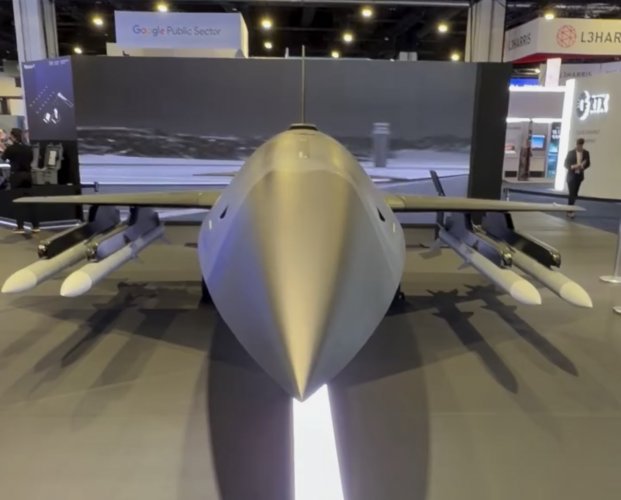
The question will be whether there will be the space to dual rack future low cost and smaller size AAMs? Could conceivably get to 6 or even 8 AAMs albeit with potentially reduced engagement range.Four AMRAAMs?
Scott Kenny
ACCESS: USAP
- Joined
- 15 May 2023
- Messages
- 19,515
- Reaction score
- 27,963
I'd expect so. 4x HalfRAAMs and 2x AMRAAMs/JATMs (6), or 8x HalfRAAMs.The question will be whether there will be the space to dual rack future low cost and smaller size AAMs? Could conceivably get to 6 or even 8 AAMs albeit with potentially reduced engagement range.
What do you think is the average missile engagement, missiles per target. At least in the sims, it's been two missiles per kill.I think four is pretty much the end of useful AAM expansion.
Attachments
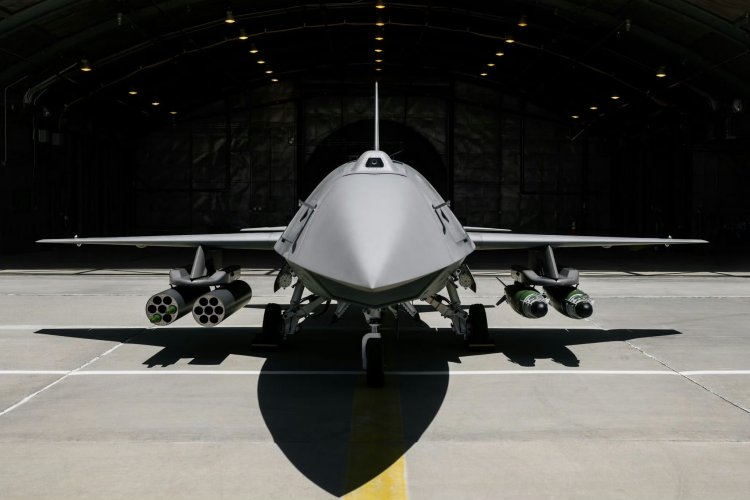
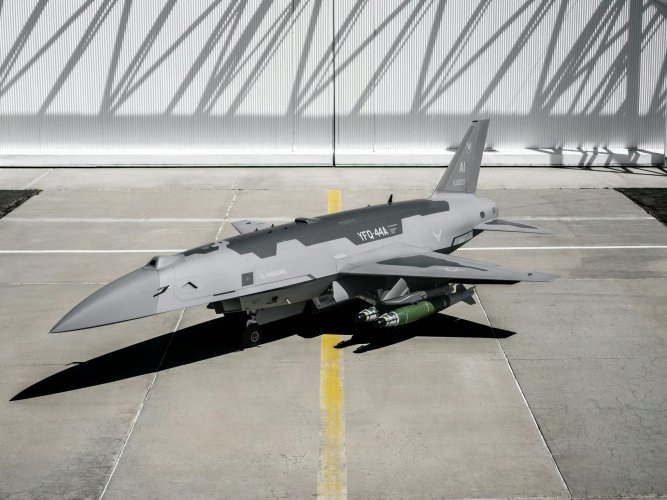
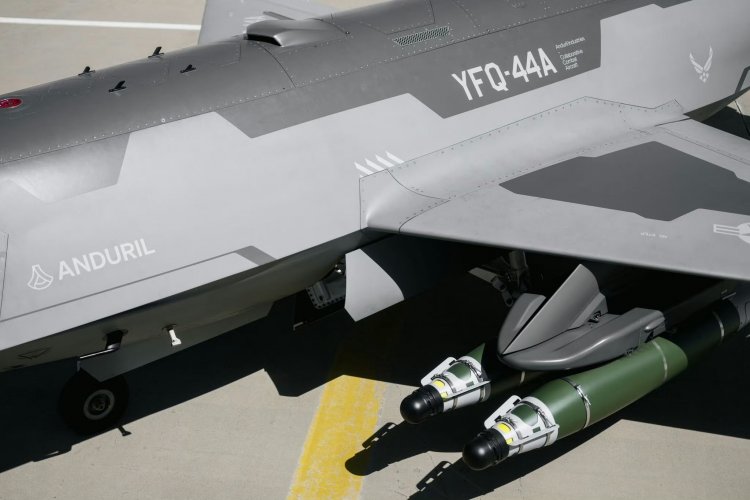
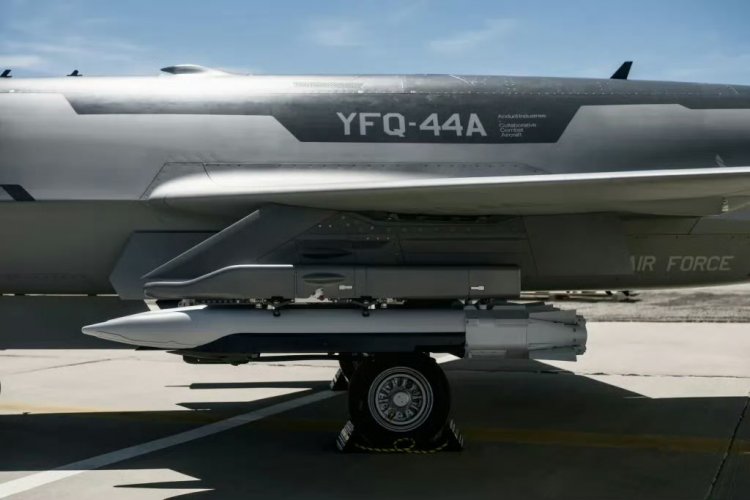
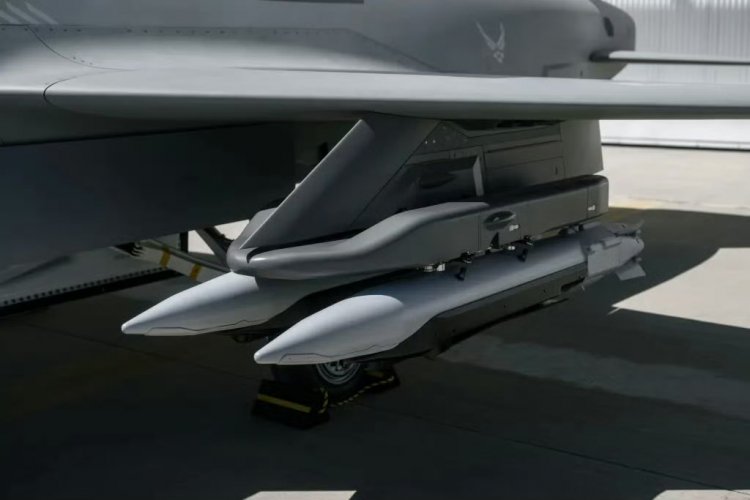
Feels about right noting there might be performance or range issues with the heavier load.I'd expect so. 4x HalfRAAMs and 2x AMRAAMs/JATMs (6), or 8x HalfRAAMs.
The 8 AAM load presents some interesting options for unmanned autonomous orbits around high value assets or choke points for defence against cruise missiles.
Similar threads
-
Potential Low-Cost Distributed Air Defense Solution Using Anduril Technologies
- Started by SrsTwist
- Replies: 2
-
'Neuron 2.0' - New Dassault UCAS launched at Saint-Dizier, 8 October 2024
- Started by Jackonicko
- Replies: 20
-
 DARPA/USAF/USN Aerospace Innovation Initiative Experimental (AII-X) Demonstrator Program [NEWS ONLY]
- Started by quellish
- Replies: 4
-

-
Boeing NT-43A Radar Test Bed, 73-1155 aka 'Bill Clinton Airplane'
- Started by flateric
- Replies: 72