
You are using an out of date browser. It may not display this or other websites correctly.
You should upgrade or use an alternative browser.
You should upgrade or use an alternative browser.
Anduril Industries / Blue Force Technology CCA, FQ-44 Fury
- Thread starter TomcatViP
- Start date

Forest Green
ACCESS: USAP
- Joined
- 11 June 2019
- Messages
- 14,499
- Reaction score
- 31,531
A video from Defense Updates concerning the latest test-flight:
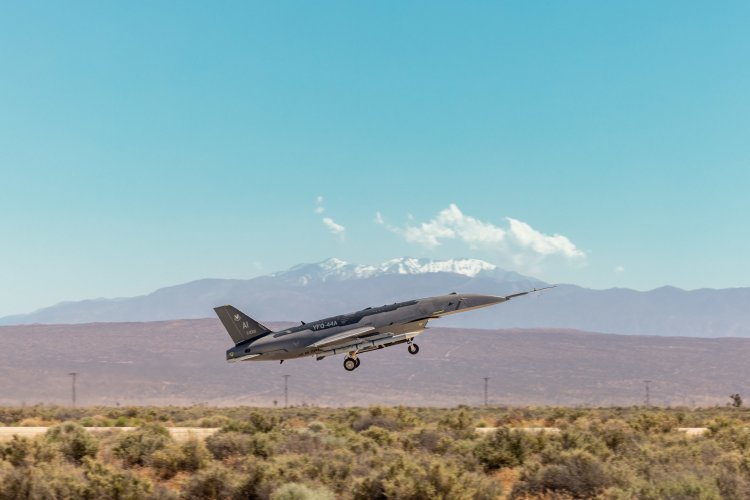
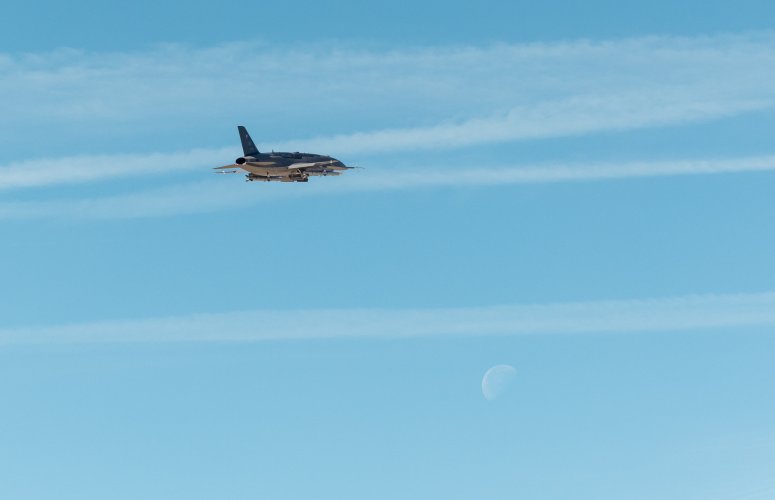
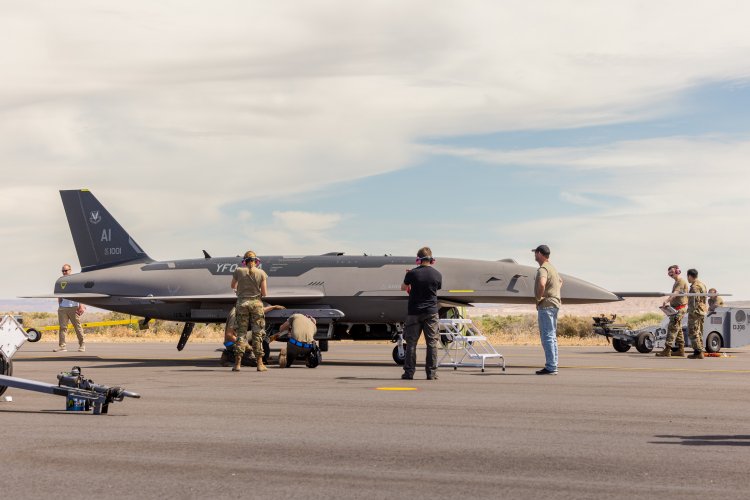
The U.S. Air Force has completed what it characterizes as a “critical exercise” involving Anduril YFQ-44A Fury, conducted from Edwards Air Force Base—the service’s premier flight test hub. The exercise brought together the Air Force’s Experimental Operations Unit to evaluate the deployment and sustainment of Collaborative Combat Aircraft (CCA) in a contested operational environment. As part of the demonstration, the YFQ-44A executed a sortie from Edwards to Anduril Industries’ Southern California test facility.
In addition to the Experimental Operations Unit (EOU), which operates under Air Combat Command, the exercise included personnel from Air Force Materiel Command’s 412th Test Wing. Headquartered at Edwards Air Force Base, the 412th Test Wing oversees squadrons responsible for the developmental flight testing of nearly all aircraft within the Air Force inventory, underscoring the exercise’s significance within the broader test and evaluation enterprise.
Lt. Col. Matthew Jensen, EOU commander noted, “This experimental operations event was executed by EOU members from start to finish. Every sortie generated and flown was done with a warfighter, not an engineer or test pilot, kicking the tires and controlling the prototypes. We are learning by doing, at a speed and risk tolerance accepted by the USAF’s most senior leaders, to ensure CCA is ready to operate and win in the most demanding combat environments.”
In this video, Defense Updates analyzes how Anduril YFQ-44A flight test marks pivotal milestone in U.S. Air Force CCA Program?
#defenseupdates #AndurilYFQ44A #usmilitary
Forest Green
ACCESS: USAP
- Joined
- 11 June 2019
- Messages
- 14,499
- Reaction score
- 31,531
GE, Rolls-Royce Get Contracts to Advance Autonomous Drone Engine Designs
https://www.airandspaceforces.com/ge-rolls-royce-contracts-autonomous-drone-engine-designs/Air Force awards GE, Rolls-Royce for ‘medium thrust’ drone engines
https://breakingdefense.com/2026/06/air-force-awards-ge-rolls-royce-for-medium-thrust-drone-engines/
Last edited:

Sandboxx has put out a short video about the production order for both drone fighters:
It’s official, the world’s first two operational drone fighters will be American, and there will be two different kinds of them.
Last Wednesday afternoon, the U.S. Air Force announced that it would not be deciding between the two AI-piloted drone fighters they have in testing, and instead, they’ll be putting both of these advanced jets into operational service.
Attachments
Attachments
Last edited:
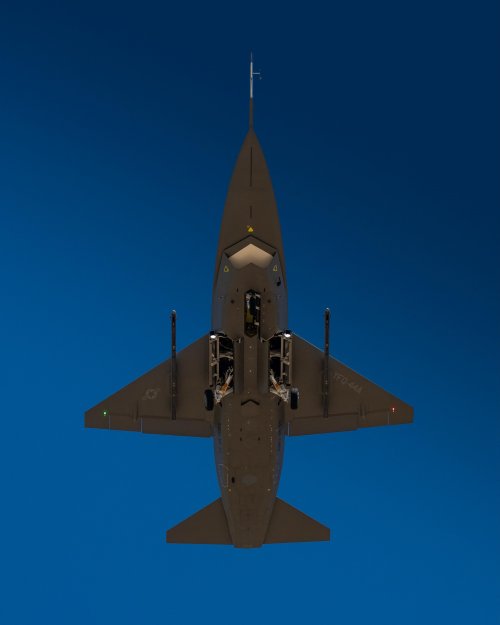
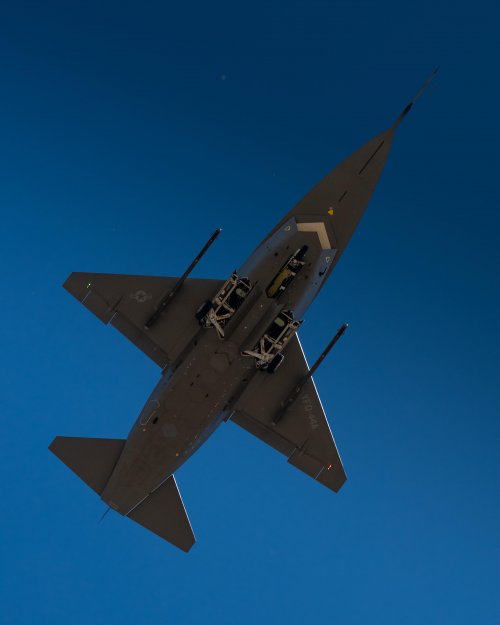
any plans for this to have a IWB?
It seems unlikely, given the position of the landing gear and size of the airframe.
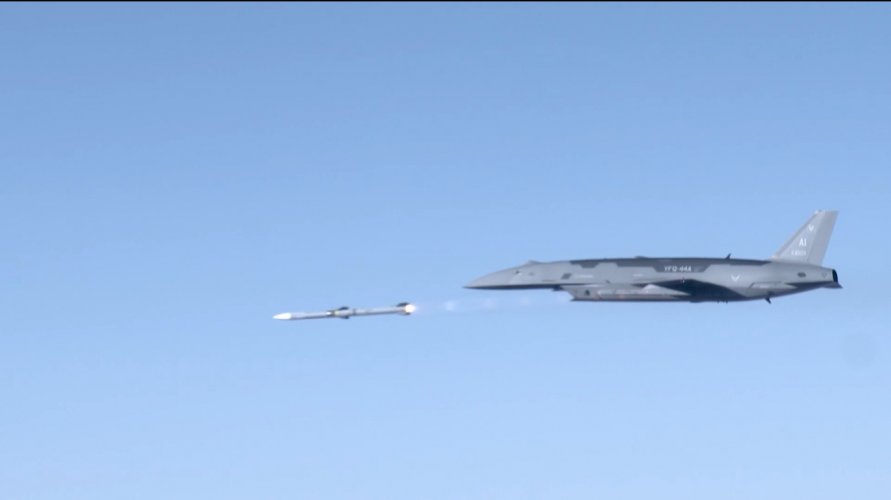
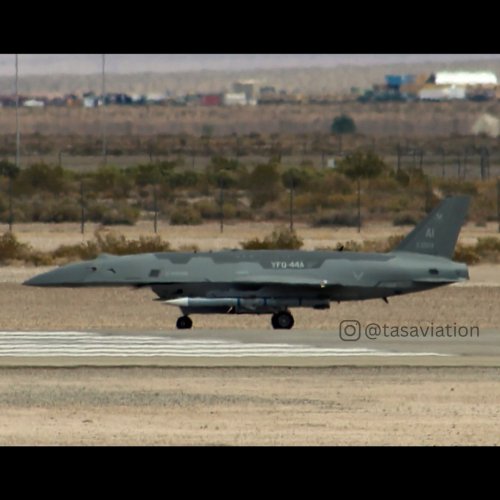
I've never seen an aircraft make an AIM-120 look big, it must be absolutely tiny lol
It is. Wiki thinks it’s 20’ x 17’, where as I believe YF-42 has a length in excess of 30 feet.

- Joined
- 29 November 2010
- Messages
- 2,275
- Reaction score
- 5,186
No, but its rival, the GA FQ-42 has one.any plans for this to have a IWB?
As does YFQ-48
CORRECTION: One AIM-120 or two GBU-53 per station with two internal stations.
Last edited:

EmoBirb
ACCESS: Top Secret
- Joined
- 18 January 2025
- Messages
- 2,693
- Reaction score
- 6,919
So it's dimensions are more akin to a cruise missile like the LRSO than other jet powered UCAVs?It is. Wiki thinks it’s 20’ x 17’, where as I believe YF-42 has a length in excess of 30 feet.
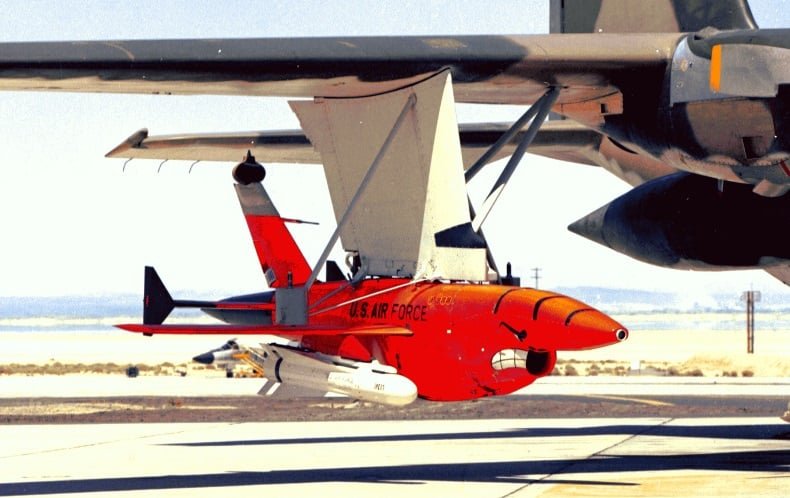
Just wait until you see an AIM-120 next to a X-68A Longshot. It’s basically a CCA that hangs off an F-15 pylon.I've never seen an aircraft make an AIM-120 look big, it must be absolutely tiny lol
Forest Green
ACCESS: USAP
- Joined
- 11 June 2019
- Messages
- 14,499
- Reaction score
- 31,531
Anduril YFQ-44 Fires Live Air-to-Air Missile in Landmark CCA Test
https://www.airandspaceforces.com/anduril-yfq-44-fires-live-missile-landmark-cca-test/The Air Force said in a July 15 statement that an Anduril YFQ-44A drone fired an AIM-120 AMRAAM, or Advanced Medium-Range Air-to-Air Missile, at a digital target over the Mojave Desert in California. In its own social media post, Anduril said the drone was flying from Edwards Air Force Base, Calif.
“This was more than a simple weapons release test,” Shushnar said in the company’s own statement. “It demonstrated an end-to-end, beyond-line-of-sight strike against a simulated target.”

- Joined
- 30 May 2023
- Messages
- 664
- Reaction score
- 1,436
Table stakes
Sandboxx has put out a short video concerning this ground-breaking missile test:
For the first time ever, one of America’s new AI-piloted drone fighters just launched a live air-to-air missile at a beyond-visual-range target, successfully demonstrating the platform’s ability to fly and fight, and the AI’s ability to identify and track targets.
This test saw Anduril’s prototype YFQ-44 Fury launch an AIM-120 AMRAAM, or advanced medium-range air-to-air missile, at a simulated beyond-line-of-sight target.
Let's talk about what this means.
martinbayer
ACCESS: Above Top Secret
- Joined
- 6 January 2009
- Messages
- 5,062
- Reaction score
- 6,967
Thankfully, due to general advances in aerospace engineering, these days, you don't have to have a *big* airplane to carry a potent load...I've never seen an aircraft make an AIM-120 look big, it must be absolutely tiny lol
Last edited:


- Joined
- 3 June 2011
- Messages
- 20,895
- Reaction score
- 19,084
Will be looking like this.Just wait until you see an AIM-120 next to a X-68A Longshot. It’s basically a CCA that hangs off an F-15 pylon.
Attachments
Last edited by a moderator:
Attachments
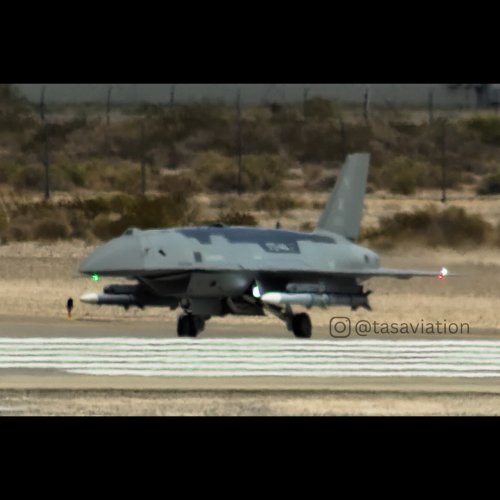
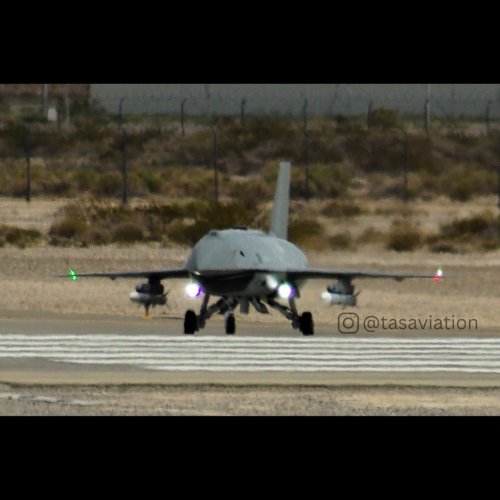
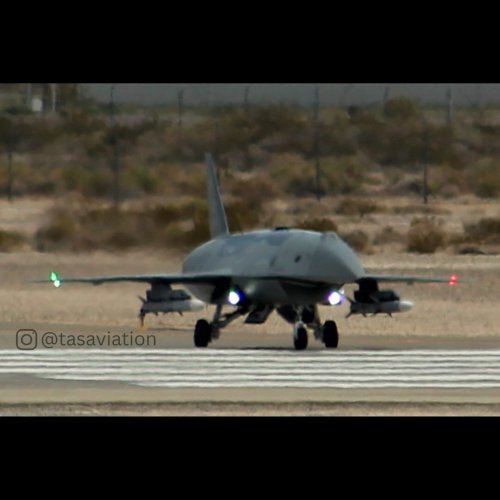
Forest Green
ACCESS: USAP
- Joined
- 11 June 2019
- Messages
- 14,499
- Reaction score
- 31,531
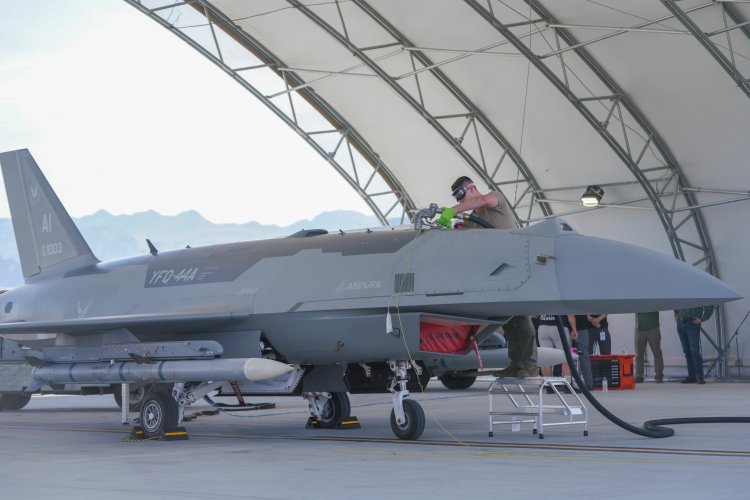
Fury Loyal Wingman Arrives At Creech AFB For Agile Combat Deployment Trials
https://www.twz.com/air/fury-loyal-wingman-arrives-at-creech-afb-for-agile-combat-deployment-trialsBoth of the USAF's CCAs, the YFQ-44 Fury and YFQ-42 Dark Merlin, are to be put through their paces at Creech AFB in Southern Nevada.

Reddington777
ACCESS: Top Secret
- Joined
- 23 March 2025
- Messages
- 830
- Reaction score
- 2,746
An update to that first test at creech:
https://defence-blog.com/u-s-air-force-tests-its-unmanned-fighter-jets-in-a-real-exercise/?amp
https://defence-blog.com/u-s-air-force-tests-its-unmanned-fighter-jets-in-a-real-exercise/?amp
As talked about in the MQ-28 thread, potential new versions of CCAs are being informed by operational testing.The Creech exercise specifically tested the Experimental Operations Unit, the Air Force’s designated organization for developing how CCA aircraft will actually be employed in combat, a distinct mission from the flight testing and weapons integration work happening elsewhere in the program. Throughout the multi-day event, the unit generated multiple sorties intended to demonstrate the aircraft’s reliability and extended range, integrated CCA flights with manned aircraft operating in the same local airspace to simulate projecting power across a distributed battlefield, and ran through scenarios designed to inform requirements the Air Force will eventually build into future versions of the aircraft.
Attachments

bring_it_on
I really should change my personal text
- Joined
- 4 July 2013
- Messages
- 4,203
- Reaction score
- 5,730
I've always envisioned success in the CCA program as being highly tailored designs optimized for a narrow set of requirements emphasizing low cost to build, buy, own and operate with designs quickly discarded as new requirements emerge at a much quicker rate relative to manned platforms (every five or so yearsvs 30+ years for more expensive fighters). It might just be better to move on to newer designs more optimized for future increments rather than look to evolve baseline increment 1 systems which are surely to be results of very early and purposefully cautious approach to framing CCA requirements.
Last edited:
- Joined
- 28 January 2008
- Messages
- 1,645
- Reaction score
- 4,210
I am wondering if there may be a larger FQ-44B in the works. I was involved from the beginning with Blue Force Fury (subsystem development) and partially with Anduril Fury. Seems the FQ-44 needs to be large enough with an internal weapons bay plus have external hard points.
Scaled the FQ-44 up though would probably still require additional changes to where landing gear and intake etc are to gain a weapons bay large enough to be worth it. At that point might as well start on something more optimized for the mission requirement than a simple scale.I am wondering if there may be a larger FQ-44B in the works. I was involved from the beginning with Blue Force Fury (subsystem development) and partially with Anduril Fury. Seems the FQ-44 needs to be large enough with an internal weapons bay plus have external hard points.
I'd considered it from the opposite perspective. The flight hardware doesn't really have to change too much but the autonomy software is where the magic happens and that is capable of evolution literally from mission to mission. Yes hardware such as sensors can change rapidly, and platforms like the MQ-28 with its ability to change noses is a reasonable pathway forward to achieve multiple missions from a single hardware platform.I've always envisioned success in the CCA program as being highly tailored designs optimized for a narrow set of requirements emphasizing low cost to build, buy, own and operate with designs quickly discarded as new requirements emerge at a much quicker rate relative to manned platforms (every five or so yearsvs 30+ years for more expensive fighters). It might just be better to move on to newer designs more optimized for future increments rather than look to evolve baseline increment 1 systems which are surely to be results of very early and purposefully cautious approach to framing CCA requirements.
Yes there will be some missions, long persistent ISR, would be better served on separate hardware but broadly a single platform should be capable of most other missions. Even with CCa a reduced sustainment tail will be valuable.
Let´s not forget that a Startup, or more appropriately, an emerging supplier, has produced for the first time a flight worthy military high speed jet* capable of field service. This is a feat by itself that should not been looked down.
The more important thing here (and the one that would bring the more cash for Anduril in the future), is that both the service and Anduril learn how to play each others in that big league field. This is not quadcopters anymore with their relaxed SOP and irrelevant CPFH.
In that sense, the USAF has already achieved their goal of enlarging their supplier base (at a modest cost).
*has the 44 been over Mach 1?
The more important thing here (and the one that would bring the more cash for Anduril in the future), is that both the service and Anduril learn how to play each others in that big league field. This is not quadcopters anymore with their relaxed SOP and irrelevant CPFH.
In that sense, the USAF has already achieved their goal of enlarging their supplier base (at a modest cost).
*has the 44 been over Mach 1?
Last edited:
When it was a blue force product, there was some language to the effect that it could potentially exceed Mach 1 in a dive, but the exhaust speed of an unaugmented turbofan is always going to be limiting. The thrust ratio is probably quite high compared to the other CCAs - it uses FJ-44 but is the smallest, and probably lightest, of the CCA contenders. But supersonic performance in a CCA is probably going to require engines designed for the role.
EmoBirb
ACCESS: Top Secret
- Joined
- 18 January 2025
- Messages
- 2,693
- Reaction score
- 6,919
Some people expect too much from what's essentially a repurposed target drone (I imagine this will be referenced plenty of times upon it's deployment) developed by a start up which was in turn bought by a techbro company.I doubt FQ-44 can get a weapons bay. The craft is tiny compared to even the other CCA options. I think the RCS requirement was probably pretty low for CCA Incr1.
bring_it_on
I really should change my personal text
- Joined
- 4 July 2013
- Messages
- 4,203
- Reaction score
- 5,730
I'd considered it from the opposite perspective. The flight hardware doesn't really have to change too much but the autonomy software is where the magic happens and that is capable of evolution literally from mission to mission. Yes hardware such as sensors can change rapidly, and platforms like the MQ-28 with its ability to change noses is a reasonable pathway forward to achieve multiple missions from a single hardware platform.
Yes there will be some missions, long persistent ISR, would be better served on separate hardware but broadly a single platform should be capable of most other missions. Even with CCa a reduced sustainment tail will be valuable.
The AFRL ACP path envisions quick and rapid hardware changes as autonomy matures and the design teams show evidence of achieving low cost per unit and sustainment. Specifically on the hardware side, you would get higher performance with larger, higher thrust engines, and more internal volume for sensors and other hardware. This could well also extend to IWB and changes there to accommodate a broader range of air to air and air to surface munitions. While 'autonomy' is where the magic happens at the program level, autonomy cannot transform the aircraft into a low observable system capable of performing at levels that either or neither of the initial inc 1 offerings are capable of. We're already seeing this in a way. Contrast the evolution from the initial 2015 AFRL LCAAT designs with the Skunk Works Vectis which is expected to fly in the next year and change and is one candidate for a future post-increment 1 / next incremet adoption. That evolutionary path for this effort would be about 10 years +/- from LCAAT original concept to Vectis first flight and the Vectis isn't even pushing the boundries on size, engine thrust etc. I think designs that do will probably show up on the ACP side of the effort by the end of the decade.
I agree with @bring_it_on ; the software is the weapon system. There is nothing preventing the U.S. from making full sized manned fighter drones if it turns out that is the most efficient way to deploy forces. It could probably even take old F-16s and slap control software onto them if that was needed for some reason. But the automation software is how you take any platform from dumb to dangerous. And the USAF actually came at this from a surprising efficient viewpoint and created a basic flight control layer agent that it owns while contracting multiple providers to create competing higher level control systems that ride on top of that, which it has literally already swapped in flight - that is, they changed from one AI control agent to another, written by different companies, while an aircraft was mid air, because again the basic flight control software exists at a lower level that can run with various agents above it.
The entire thing seems uncharacteristically well thought out for the USAF or DoD in general.
They can build any hardware they want around the conops once they get the automation working. If purely subsonic lacks sufficient performance to be competitive, it is not hard to design something super sonic. They are currently betting on subsonic, because it is cheaper and allows for greater numbers, but if exercises and experience determines this is inefficient compared to more capable and lethal platforms, that is an easy change once you get the automation down. They are very intentionally (and intelligently) planning the software to be platform agnostic.
The entire thing seems uncharacteristically well thought out for the USAF or DoD in general.
They can build any hardware they want around the conops once they get the automation working. If purely subsonic lacks sufficient performance to be competitive, it is not hard to design something super sonic. They are currently betting on subsonic, because it is cheaper and allows for greater numbers, but if exercises and experience determines this is inefficient compared to more capable and lethal platforms, that is an easy change once you get the automation down. They are very intentionally (and intelligently) planning the software to be platform agnostic.
bring_it_on
I really should change my personal text
- Joined
- 4 July 2013
- Messages
- 4,203
- Reaction score
- 5,730
As I understand it, the CCA effort has to pass three gates broadly speaking. 1) Autonomy has to mature and keep maturing to take on additional roles and missions and the semi-autonomous capability has to be integrated with current and future tactical aircraft. 2) Performers have to show they can build something at low cost at low to medium volumes. That 'something' has to be practically useful to pull in and operationalize. There will never be a single OEM tasked to build a 1,000 of these at a time. Or a multi-decade multi thousand production run like the JSF / F-16 etc. Heterogeneity will continue to define the USAF CCA effort. 3) As 1) and 2) are demonstrated / gates cleared, CCA has to continue to take on additional roles, responsibilities, and tasks thus demanding performance that may not be inherent in initial increments.
I agree @Josh_TN the USAF is taking a practical crawl-walk-run approach and banking on early and 'at scale' operator touchpoints with both autonomy, and actual CCA hardware resulting ult in better program decisions and future capabilities. Build, test, operationalize and rinse and repeat every 5 or so years. No air show models, or concepts revealed every few years but in production systems mated with an autonomy test and integration engine that is working hard at getting mature autonomy models cleared for frontline use. Eglin is adding nearly half a dozen modified F-16's to its two XQ-58's to begin putting those advanced algorithms to test and towards eventual fleet release. As performers on Increment 1 are entering production and scaling testing, design contracts for increment 2 are already being executed by nearly half a dozen teams. I think fruits of that design effort will be on the ramp in the 2030 timeframe and could perhaps look very different from current increment 1 designs.
I agree @Josh_TN the USAF is taking a practical crawl-walk-run approach and banking on early and 'at scale' operator touchpoints with both autonomy, and actual CCA hardware resulting ult in better program decisions and future capabilities. Build, test, operationalize and rinse and repeat every 5 or so years. No air show models, or concepts revealed every few years but in production systems mated with an autonomy test and integration engine that is working hard at getting mature autonomy models cleared for frontline use. Eglin is adding nearly half a dozen modified F-16's to its two XQ-58's to begin putting those advanced algorithms to test and towards eventual fleet release. As performers on Increment 1 are entering production and scaling testing, design contracts for increment 2 are already being executed by nearly half a dozen teams. I think fruits of that design effort will be on the ramp in the 2030 timeframe and could perhaps look very different from current increment 1 designs.
Last edited:
Similar threads
-
Potential Low-Cost Distributed Air Defense Solution Using Anduril Technologies
- Started by SrsTwist
- Replies: 2
-
'Neuron 2.0' - New Dassault UCAS launched at Saint-Dizier, 8 October 2024
- Started by Jackonicko
- Replies: 20
-
 DARPA/USAF/USN Aerospace Innovation Initiative Experimental (AII-X) Demonstrator Program [NEWS ONLY]
- Started by quellish
- Replies: 4
-

-
Boeing NT-43A Radar Test Bed, 73-1155 aka 'Bill Clinton Airplane'
- Started by flateric
- Replies: 72