
You are using an out of date browser. It may not display this or other websites correctly.
You should upgrade or use an alternative browser.
You should upgrade or use an alternative browser.
Alternative new rifle cartridges
- Thread starter CastleBravo
- Start date
Just stuff more powder in the 5.56 case and don't be a coward.Take a .308 case necked down to 5.56 with a 90 gr bullet.(Or there are some 89gr tungsten powder sintered that are the same size as a 69gr Match King apparently.)
Scott Kenny
ACCESS: USAP
- Joined
- 15 May 2023
- Messages
- 19,629
- Reaction score
- 28,106
There was an argument in "we need to defeat Russian/Chinese Dreadnought armor", I think. A better argument than "every rifleman needs to be able to hit at 800-1000m (because we keep letting politicians write ROEs that get our troops killed)", anyways.6.8x51 is brain damaged but I digress. I've been over that previously in this thread.
I think the better argument to defeat dreadnought armor was 7.62 SLAP, personally. Which has existed since the 1970s or 80s. Needs a little more work, or at least different-than-M14-standard rifling to properly stabilize, though. Civilian shooters reported the Remington Accelerator rounds to only be accurate to around 300m.
Still think the answer is small caliber for the basic grunt, best shot in the squad gets a DMR as standard, and a couple of belt-fed guns per squad (one per fire team). And DMR still takes a bayonet so on those bad days when everything has gone wrong DMR is still in the scrum.
The rifle cartridge/small arms choice I cannot figure out is if 25-30mm HV grenades will replace the 40mm, or supplement it? Korea went with "supplement", with a couple of K11 OICW per squad and a couple of M203s per squad. IIRC when the US Army was combat testing it in Afghanistan, the tests were "either XM25 or M203".

Colonial-Marine
UAVs are now friend, drones are the real enemy.
- Joined
- 5 October 2009
- Messages
- 1,718
- Reaction score
- 1,831
Even if you manage to get brass cases not constantly blowing apart at 80k PSI I don't know if that is something you would have a comfortable margin of safety with. 6.8x51mm at 80k PSI had to use that two-piece case design because regular brass didn't cut it. Otherwise, you use some special alloy.
LSAT style cased-telescoped ammo shouldn't be forgotten about as an avenue for future development either.
LSAT style cased-telescoped ammo shouldn't be forgotten about as an avenue for future development either.
Scott Kenny
ACCESS: USAP
- Joined
- 15 May 2023
- Messages
- 19,629
- Reaction score
- 28,106
Specifically for HICAR, they're using steel cases to hold the pressure.Even if you manage to get brass cases not constantly blowing apart at 80k PSI I don't know if that is something you would have a comfortable margin of safety with. 6.8x51mm at 80k PSI had to use that two-piece case design because regular brass didn't cut it. Otherwise, you use some special alloy.
Agreed, but the caseless type LSAT ammo was still kinda fragile. More fragile than a brass case, anyways. Though a plastic case does save a bunch of weight in ammunition and are sturdy enough for hunting.LSAT style cased-telescoped ammo shouldn't be forgotten about as an avenue for future development either.
It wasn't case-telescoped, but I had jokingly considered scaling the 5.7x28 P90 magazine up to 10mm cases, for the easier packaging of lots of rounds.
All -Take a .308 case necked down to 5.56 with a 90 gr bullet.
Howdy !
Wouldn’t this case as described, be in-essence… a “ .22-243 Rayhill Rocket “ ?
Such a case is burdened by retention of the same shallow shoulder angle of the original .308 Winchester case, which in a high pressure .224” cal cartridge configuration would
contribute to fast/faster throat erosion.
With regards,
357Mag

- Joined
- 3 June 2011
- Messages
- 20,962
- Reaction score
- 19,206
I don't know but I figure somebody somewhere had done it.All -
Howdy !
Wouldn’t this case as described, be in-essence… a “ .22-243 Rayhill Rocket “ ?
Such a case is burdened by retention of the same shallow shoulder angle of the original .308 Winchester case, which in a high pressure .224” cal cartridge configuration would
contribute to fast/faster throat erosion.
With regards,
357Mag
Ah, here we go.
https://en.wikipedia.org/wiki/.22_CHeetah
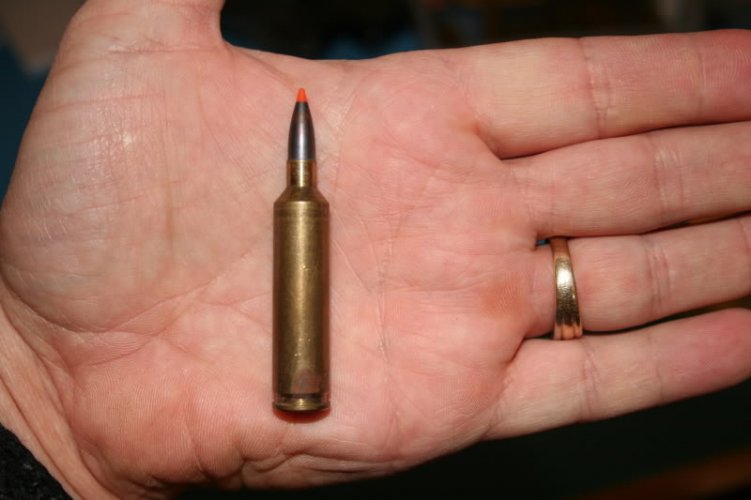
Whatismoo #
Howdy !
From what I’ve read, the Q
Howdy !
The cartridge shown is the “ . 22 Cheetah Mk II “, which has a 45* shoulder angle;
on case of 1.960” overall length.
The notional .308 Winchester-based .224” cal case you originally described above, would be the “ .22 Cheetah Mk 1 “, which features a 28* shallower .28* shoulder angle
Howdy !
From what I’ve read, the Q
Sferrin -I don't know but I figure somebody somewhere had done it.
Ah, here we go.
https://en.wikipedia.org/wiki/.22_CHeetah
View attachment 820262
Howdy !
The cartridge shown is the “ . 22 Cheetah Mk II “, which has a 45* shoulder angle;
on case of 1.960” overall length.
The notional .308 Winchester-based .224” cal case you originally described above, would be the “ .22 Cheetah Mk 1 “, which features a 28* shallower .28* shoulder angle
I don't know but I figure somebody somewhere had done it.
Ah, here we go.
https://en.wikipedia.org/wiki/.22_CHeetah
View attachment 820262Sferrin -
Howdy, again ! I hit transmitt button in-error on the previous response.
Meant to say:
The .308 Winchester-based case you originally described above is basically the
“ .22 Rayhill Rocket “ wildcat. This wildcat has 2.055” case aol, a 20* shoulder angle:
and a case capacity rated as 52.53gr H2O.
The picture you most recently included, depicts a “ .22 Cheetah Mk II “ wildcat.
This case has 2.0094” oal, a 45* shoulder angle; and case capacity listed as
63.31gr H2O.
The original “. 22 Cheetah Mk 1 “ features a case 1.986” long, w/ a 28* shoulder angle; and is said to have 50.74 gr H2O case capacity.
Some other, similar .308 Winchester-based .224” cal “ wildcats:
- “. 22 Creedmoor “ w/ 1.920” case oal, 30* shoulder angle; and 50.28gr H2O capacity.
- “ .22-243 Middlestead “ = 2.045” case oal, 30” shoulder angle; and 54.5gr capacity.
- “ .22-243 Winchester Ackley Improved “ = 2.045” lg case; 40*shoulder; 55gr capacity.
All of these .224” caliber wildcats would be too large in case diam to allow the elevated amount of ammo “ load out “ that is ultimately desired. ( IMHO )
With regards,
357Mag
Scott Kenny
ACCESS: USAP
- Joined
- 15 May 2023
- Messages
- 19,629
- Reaction score
- 28,106
Yep. they're all full size, 12mm case head diameter with a pinhead bullet.All of these .224” caliber wildcats would be too large in case diam to allow the elevated amount of ammo “ load out “ that is ultimately desired.
Something more like the 6.8SPC (necked down to .224) or .220 Russian would be a lot better. Still heavier brass than 5.56, but much lighter than the 7.62NATO-sized cases since it's a 10 or 11mm diameter case head and about 2/3rds the length. Lighter still if you use steel or polymer cases.

SuperShark
ACCESS: Confidential
- Joined
- 28 July 2019
- Messages
- 109
- Reaction score
- 159
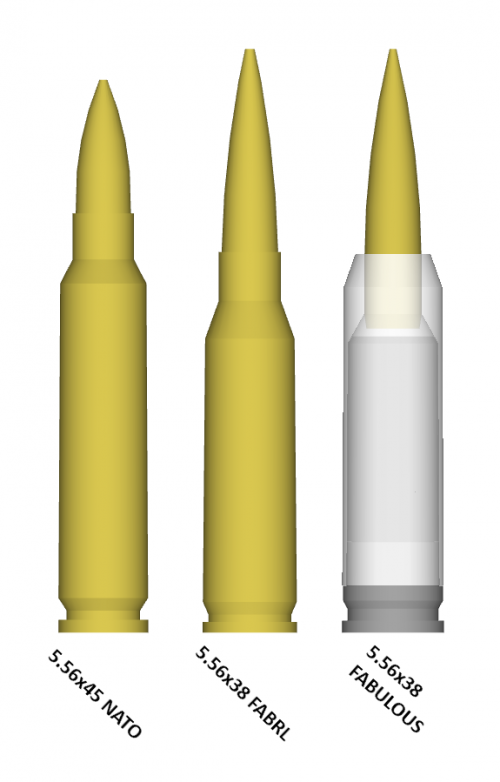
I propose an ultralight neckless cartridge with a polymer body and aluminium case head, firing an ultra-low-drag bullet.
Forces with excess funds will use tungsten core bullets and everybody will be happy.
Forces with excess funds will use tungsten core bullets and everybody will be happy.
Attachments
Last edited by a moderator:
All -The peak of silly small arms will always be the caseless bulk liquid monopropellant rifle, which I wish there was more info on.
If you are talking about “ hypegolic “ ignition, either an oxidizer or metal catalyst bed will be required in-addition to the “ fuel “ ( propellant ). If a non-metallic oxider were utilized, the notional rifle application would need to store 2 hazardous substances at the same time, no matter whether the propellant were Hydrazine, Monomethyl Hydrazine; or unsymmetrical Dimethylhydrazine.
As a minimum, I’m not sure use of a metal catalyst along w/ the ‘hydrazine would be capable of producing the amount of gas required to generate the amounts of chamber pressure necessary. Same goes, for a hydrazine-related hypergolic reaction to an oxidizer.
With regards,
357Mag
SuperShark
ACCESS: Confidential
- Joined
- 28 July 2019
- Messages
- 109
- Reaction score
- 159
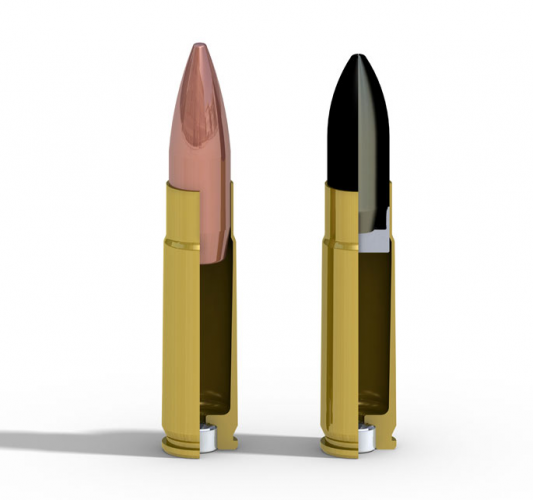
Somewhat unsurprisingly, I have never had any luck getting ceramic plate penetration data from companies that develop bullets specifically for piercing armour. I would love to know how CBJ thinks their .300BO would perform.
Attachments
Last edited by a moderator:
- Joined
- 3 June 2011
- Messages
- 20,962
- Reaction score
- 19,206
A .220 Swift will go splat on a piece of hardened steel an M995 will easily penetrate, despite being ~800 fps faster. Sectional density and hardness are at least as important. (Nobody cares that V is squared and the other factors are not in the equation. You need the whole package.))Penetration is more about velocity than diameter.
If the lead bullet went splat it did not have the whole package. it also at that point would have been moving at almost no velocity, in the direction of the target at least.A .220 Swift will go splat on a piece of hardened steel an M995 will easily penetrate, despite being ~800 fps faster. Sectional density and hardness are at least as important. (Nobody cares that V is squared and the other factors are not in the equation. You need the whole package.))
Sferrin -A .220 Swift will go splat on a piece of hardened steel an M995 will easily penetrate, despite being ~800 fps faster. Sectional density and hardness are at least as important. (Nobody cares that V is squared and the other factors are not in the equation. You need the whole package.))
Howdy !
Could you please share:
- What thickness was the hardened steel plate you mentioned above ?
- What bullet type, weight; and construction was being used in the .220 Swift ?
- How much muzzle velocity did the bullet propelled by the .220 Swift have ?
- What was the range of the plate to the test rifles ?
Put the M995 bullet into a suitably prepped .220 Swift cartridge, shoot it in a .224” caliber barrel of correct twist rate and one being at least as-long as the barrel on 5.56 rifle…. repeat the test…. and see what results you get.
With regards,
357Mag
Sferrin -Was a hypothetical. There's no doubt that if you took a bullet that penetrated the hardened steel, and made it faster, it would still penetrate the plate.
Howdy !
Thanx for the update. I was just curious.
I once read a brief article about a .222 rifle was able to put a bullet through a steel plate.
Looked it up today on the net, and ( for one test ) the target plate was mild 1/4” steel, but bullet wt and distance to target were not disclosed.
With regards,
357Mag
- Joined
- 3 June 2011
- Messages
- 20,962
- Reaction score
- 19,206
In that video they put a 995 through a 3/4" mild steel plate and a 3/8" AR500 plate. The M855A1 steel core pretty much just splashed off it. Here's another video with just the M193, M109, M855, and M855A1.Sferrin -
Howdy !
Thanx for the update. I was just curious.
I once read a brief article about a .222 rifle was able to put a bullet through a steel plate.
Looked it up today on the net, and ( for one test ) the target plate was mild 1/4” steel, but bullet wt and distance to target were not disclosed.
With regards,
357Mag
Sferrin -In that video they put a 995 through a 3/4" mild steel plate and a 3/8" AR500 plate. The M855A1 steel core pretty much just splashed off it. Here's another video with just the M193, M109, M855, and M855A1.
Thanx for the update on that specific test .
With regards,
357Mag
Last edited by a moderator:
Banana Ballistics has a rather annoying voice, but he puts out interesting content. You can do worse than follow his channel.Sferrin -
Thanx for the update on that specific test .
With regards,
357Mag
Defeat armor with HE-FRAG or EPR to non-armored areas, tbh.There was an argument in "we need to defeat Russian/Chinese Dreadnought armor", I think. A better argument than "every rifleman needs to be able to hit at 800-1000m (because we keep letting politicians write ROEs that get our troops killed)", anyways.
I think the better argument to defeat dreadnought armor was 7.62 SLAP, personally. Which has existed since the 1970s or 80s. Needs a little more work, or at least different-than-M14-standard rifling to properly stabilize, though. Civilian shooters reported the Remington Accelerator rounds to only be accurate to around 300m.
Still think the answer is small caliber for the basic grunt, best shot in the squad gets a DMR as standard, and a couple of belt-fed guns per squad (one per fire team). And DMR still takes a bayonet so on those bad days when everything has gone wrong DMR is still in the scrum.
The rifle cartridge/small arms choice I cannot figure out is if 25-30mm HV grenades will replace the 40mm, or supplement it? Korea went with "supplement", with a couple of K11 OICW per squad and a couple of M203s per squad. IIRC when the US Army was combat testing it in Afghanistan, the tests were "either XM25 or M203".
I'm a huge fan of not having to buy new rifles, since they're a small part of casualty production. The Federal Peak Alloy and Shell Shock NAS3 also look much easier to produce than the Sig cases which have issues.Even if you manage to get brass cases not constantly blowing apart at 80k PSI I don't know if that is something you would have a comfortable margin of safety with. 6.8x51mm at 80k PSI had to use that two-piece case design because regular brass didn't cut it. Otherwise, you use some special alloy.
LSAT style cased-telescoped ammo shouldn't be forgotten about as an avenue for future development either.
I think, as I've said MANY times in this thread, that there is a lot of low cost decent potential reward development room left in 5.56x45mm.Yep. they're all full size, 12mm case head diameter with a pinhead bullet.
Something more like the 6.8SPC (necked down to .224) or .220 Russian would be a lot better. Still heavier brass than 5.56, but much lighter than the 7.62NATO-sized cases since it's a 10 or 11mm diameter case head and about 2/3rds the length. Lighter still if you use steel or polymer cases.
7.92x107mm DS literally used lead core bulletsA .220 Swift will go splat on a piece of hardened steel an M995 will easily penetrate, despite being ~800 fps faster. Sectional density and hardness are at least as important. (Nobody cares that V is squared and the other factors are not in the equation. You need the whole package.))
Last edited:
- Joined
- 3 June 2011
- Messages
- 20,962
- Reaction score
- 19,206
Sure. Fire a cotton ball fast enough and it will blast through a foot of armor. We're talking about the 5.56mm cartridge though.7.92x107mm DS literally used lead core bulletsand penned more than .55 boys iirc.I'm going to walk that back. I checked my copy of Kazimierz Satora's Karabin Przeciwpancerny UR in Wojskowy Przeglad Historyczny Vol. 41 No.2 (1996) which quotes 15mm @ 300m, which is somewhat less than the Boys .55 cal, however it also notes the kb ppanc wz. 35 blew a surprisingly large hole in the armor (20mm diameter) and sent that 20mm steel plug flying backwards (into what would have been the fighting compartment) with enough force to penetrate through a 4-cm thick board. Now, it took ~1270 m/s muzzle velocity to achieve this, but you can use velocity to offset a loss in SD or hardness.
Sure and you can defeat personal armor steel at ±3300 iirc.Sure. Fire a cotton ball fast enough and it will blast through a foot of armor. We're talking about the 5.56mm cartridge though.
- Joined
- 3 June 2011
- Messages
- 20,962
- Reaction score
- 19,206
Which 5.56mm NATO does that out of a 16 inch barrel?Sure and you can defeat personal armor steel at ±3300 iirc.
Uhhhh 80ksi 62gr should. Maybe 82. Depends on powder.Which 5.56mm NATO does that out of a 16 inch barrel?
Scott Kenny
ACCESS: USAP
- Joined
- 15 May 2023
- Messages
- 19,629
- Reaction score
- 28,106
They do eventually wear out and need to be replaced.I'm a huge fan of not having to buy new rifles, since they're a small part of casualty production.
If we can get away with an upper swap like the old Mk12 SPR before they got dedicated lowers, that'd be cheaper. But we're still talking bulk-prices of about 1k per soldier for whole new rifles. Even less if we can get the Army to buy monolithic polymer lowers like the KP15. Secondary advantage for the KP15 is that it brings the weight of the non-grunt rifle down to about 6lbs or less.
- Joined
- 3 June 2011
- Messages
- 20,962
- Reaction score
- 19,206
Which round does that? Be specific.Uhhhh 80ksi 62gr should. Maybe 82. Depends on powder.
I'm working up a load for a work project, so i can't be specific.Which round does that? Be specific.
- Joined
- 3 June 2011
- Messages
- 20,962
- Reaction score
- 19,206
That's fine and dandy but nothing exists NOW that can do it with a lead projectile out of a 5.56x45.I'm working up a load for a work project, so i can't be specific.
Scott Kenny
ACCESS: USAP
- Joined
- 15 May 2023
- Messages
- 19,629
- Reaction score
- 28,106
You do know that FMJ means "copper jacket over lead core" right? And yes, occasionally steel in there as well.If talking 5.56 mm then maybe discuss fmj and not plumbum.
The Wz.35 reference was an illustrative point. EPR construction is the path forwards for small arms rounds.That's fine and dandy but nothing exists NOW that can do it with a lead projectile out of a 5.56x45.
Well, if it's 1935. There's a reason that M2AP, M59 ball, M43, M855A1, M80A1, the new UK 5.56, etc etc etc all avoid lead (at industrial scales steel is so much cheaper and more pelntiful that it makes a difference. It's why I'm also a fan of peak alloy / NAS3).You do know that FMJ means "copper jacket over lead core" right? And yes, occasionally steel in there as well.
Similar threads
-
-
-
Divergence on the Runway: An Alternate History of Military Aviation (1956-1982)
- Started by kpuscas
- Replies: 6
-
Design Study: MBTP-170 "MAUS-II LEVIATÃ" - Modern Heavy Tank Concept (2026)
- Started by Bulle
- Replies: 6
-
Roter Rhein , Krasnyy Reyn - What If The Axis Members Called It Quits In Early 1943?
- Started by TheRejectionist
- Replies: 36