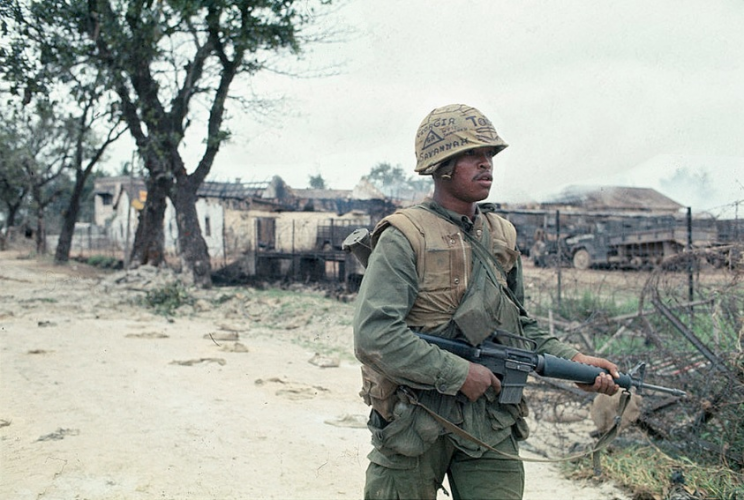
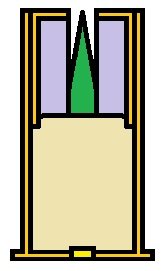
You know what is cool about hypervelocity .177 caliber? The ability to resist the kick while moving while having immense penetration power. 5.56 mm was precise when braced on bipods and tripods, but not so much without Getting more rounds on target is driving the push for smaller higher velocity rounds than what is currently the mainstream rounds. A standing infantry can keep his barrel down in full automatic at 5.56 mm, but once you get up to 7.62 mm the barrel wants to rise. The infantry has to deploy the tripod and immobilize to lay effective precision fire. 5.56 mm was fine for suppression fire while moving, but not for precision while moving. If we can give moving infantry precision fire while moving that is a leap in capability. I believe you need more than a smaller caliber, which is why the computer is a must. But the secondary .510 caliber would come in handy when the .177 is not enough power to drop a target. In some cases the .177 might pass through targets without imparting much energy into what it hits. So when you do not see any effect you want Plan B.
I used to shoot large caliber muskets for fun. The 50s could poke through and in some cases actually split railroad ties. There is very little kick but the mass of the bullet obliterates what it hits. You may not penetrate a guy with heavy body armor. That guy hit by something over .50 caliber is going to be out of action for obvious reasons. They might even lose a whole limb.
I used to shoot large caliber muskets for fun. The 50s could poke through and in some cases actually split railroad ties. There is very little kick but the mass of the bullet obliterates what it hits. You may not penetrate a guy with heavy body armor. That guy hit by something over .50 caliber is going to be out of action for obvious reasons. They might even lose a whole limb.