MiG-21MF/bis vs Sea Harriers ?

  • Sea Harriers would have complete air superiority.

  • Sea Harriers would have had some losses.

  • Sea Harriers would have been blasted out of the sky.

  • None of the two aircraft would have gained air superiority.


Results are only viewable after voting.
The MB-339 did not operate because, besides being in very poor condition and extremely limited in number, the entire air force focus based on the islands was on the Pucará.

Analyzing the numbers, we see that the MB-339 only logged 20 flight hours.

The Pucará, on the other hand, logged between 180 and 200 flight hours... that's at least 180 sorties compared to 4 for the MB-339...

If Argentina, in this alternative reality, had invested in the MB-339 or MB-326 as its workhorse (Brazil produced and operated more than 130 MB-326s at the same time, which operated alongside F-5Es and Mirage IIIEs), then it would have had an aircraft capable of these functions, which, in the worst-case scenario, would have added up to those 200 hours of service time.

In reality, they would have logged a higher number of flight hours because we know that 100% of the flight hours were spent supporting ground troops, regardless of losses, because:

1) Since the MB-339/326 possessed some naval attack capability, the aircraft carriers would be at a greater distance, hindering the Harriers' limited CAP coverage hours. 1) Remember that although the Harrier was always victorious wherever it was present, the fact is that numerous attacks bypassed them...they simply weren't where they needed to be...more than that, remember that in some situations, aircraft carriers only came within 70 km...or even frigates that came within less than 15 km for naval gunfire support...

2) The radar picket mounted by the Sheffield and other frigates on the mainland side would be severely hampered, as the island aircraft could attack them from behind...the picket had a logic...aircraft coming from the mainland, due to range requirements, needed to come from very high altitudes, but if an aircraft coming from the islands came close to the sea (sea skiming)...this presented a high risk...

3) Air superiority is not obtained exclusively through air-to-air combat, but also through the availability of hours in the air...the Argentinians realized the mistake and, despite the attacks from SAS operations, saw that it was not worth replacing the Pucaras after each loss, in case... If the aircraft were MB-326/339, it would be very worthwhile to replace each one regardless of the loss, as it would be a war of attrition... and the number of Harriers was limited, the number of CAP hours was limited, and if the aircraft carriers, in addition to the greater distance now being hit by the MB-339/326 directly or even "through windows of opportunity" that they could open for Continental aviation with Daggers, A-4s, etc.
 
Last edited:
For me it's whether the airport expansion is a medium-long term vs short term project for the Argentines.

While they may have a medium-long term plan to expand the airport the question is does the military plan including landing airport expansion gear in the first day? Or does their directive mean they wait and see if the invasion is accepted as fiat accompli?
Fairly obviously, I'm of the "airport expansion happens immediately" persuasion.

To make sure it's ready enough in case the Brits do want to make it an issue instead of fait accompli.
 
Fairly obviously, I'm of the "airport expansion happens immediately" persuasion.

To make sure it's ready enough in case the Brits do want to make it an issue instead of fait accompli.

There's probably only a week difference, assuming the planning and preparation has occurred. Although an extra week is about 25% of the available time, so its a lot.
 
There's probably only a week difference, assuming the planning and preparation has occurred. Although an extra week is about 25% of the available time, so its a lot.
Plus, I strongly suspect that the regular UNITAS exchange missions would feature the US being more than happy showing how to rapidly build or repair an airfield, with Seabees teaching the Argentine combat engineers.
 
Plus, I strongly suspect that the regular UNITAS exchange missions would feature the US being more than happy showing how to rapidly build or repair an airfield, with Seabees teaching the Argentine combat engineers.

I think it's entirely possible that at some point in a year-long planning cycle some suitable engineers get sent to the US for example to brush up on the latest airfield expansion techniques. In fact, I think this could be done across the board in all sorts of areas without generating any sort of suspicion as there wouldn't need to be any identifiable theme.
 
...Since the MB-339/326 possessed some naval attack capability, the aircraft carriers would be at a greater distance, hindering the Harriers' limited CAP coverage hours. 1) Remember that although the Harrier was always victorious wherever it was present, the fact is that numerous attacks bypassed them...they simply weren't where they needed to be...more than that, remember that in some situations, aircraft carriers only came within 70 km...or even frigates that came within less than 15 km for naval gunfire support...

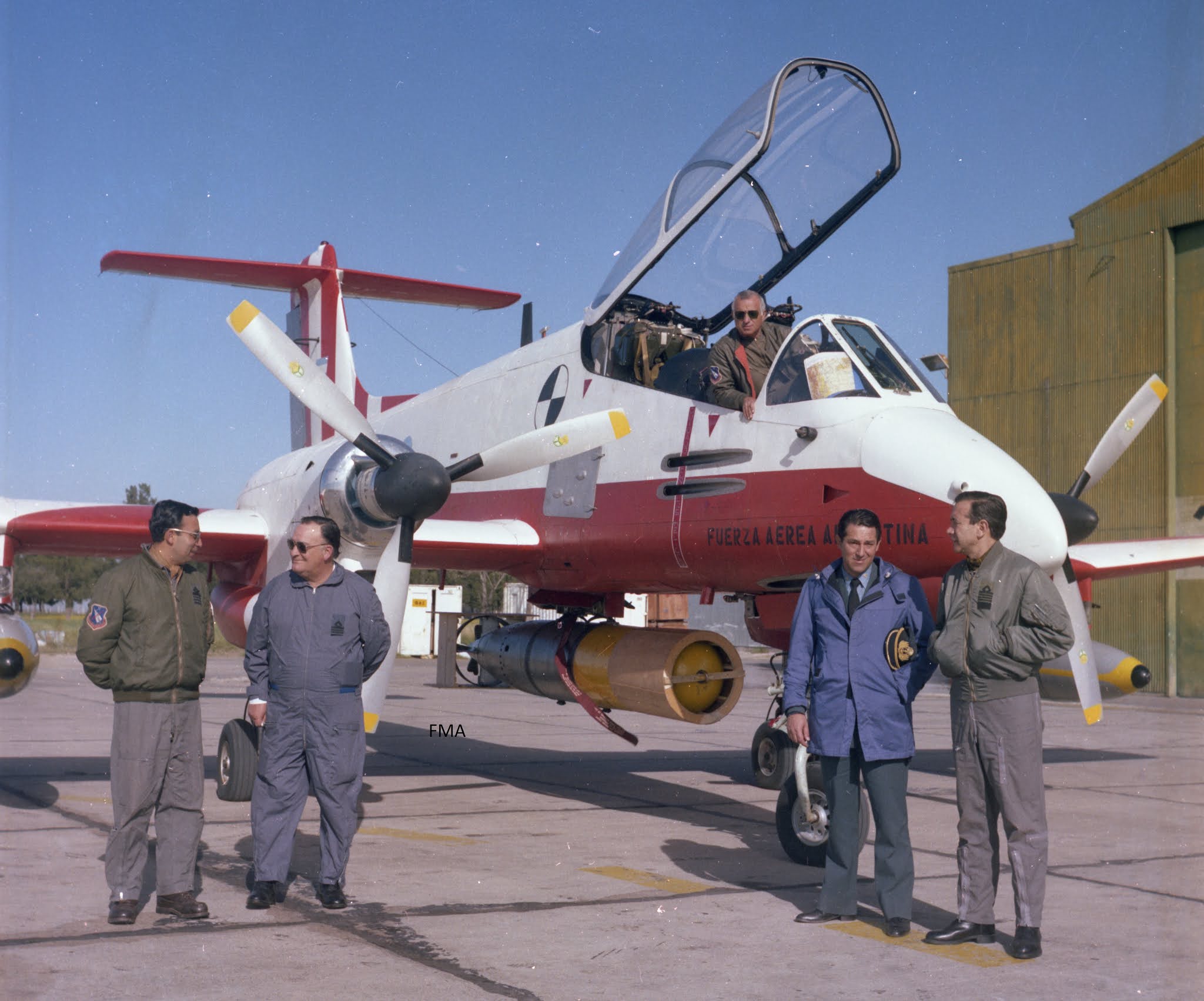
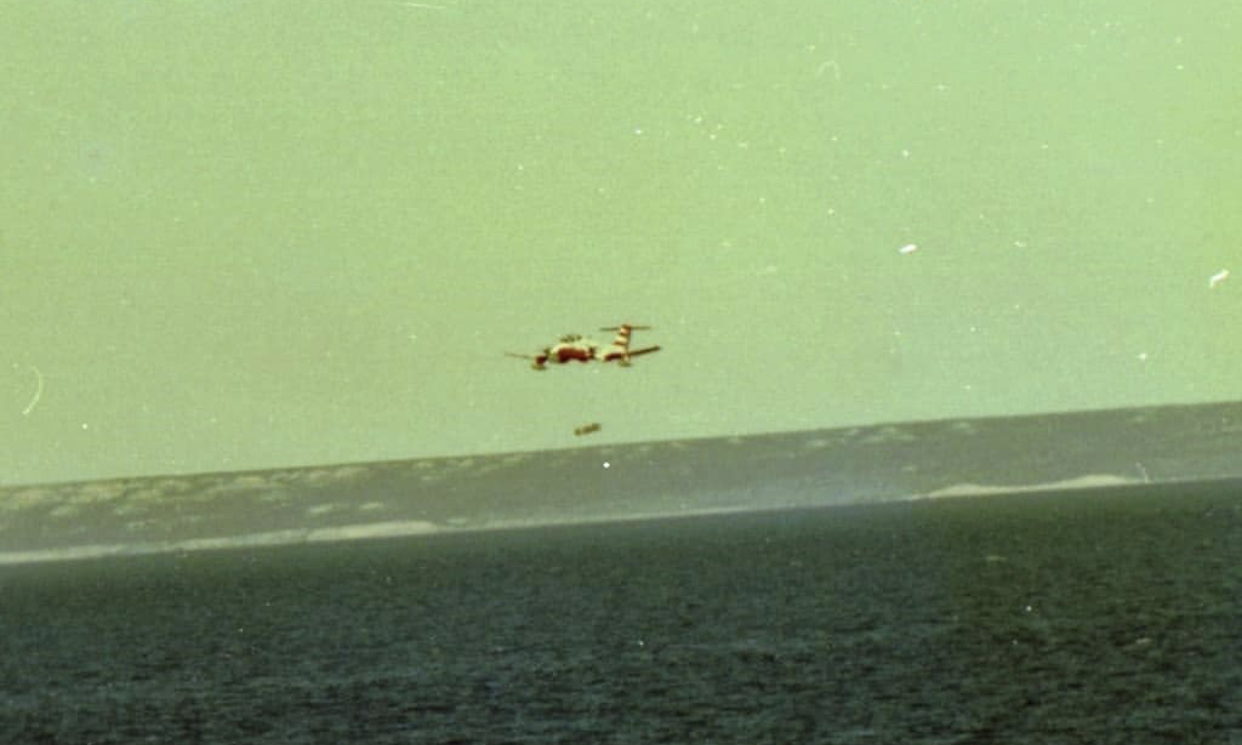
Thanks, Carvalho2008. Reading my purchased copy of Santiago Rivas's fine book Wings of Argentina: Argentina's Aircraft Industry Since 1927 (Crecy Publishing, 2025), I found on pages 212-13 there was a hurried Argentine Air Force plan to drop old Mark 13 torpedoes from IA-58 Pucarás against British Task Force ships during the 1982 war, and that test drops from Pucarás happened. A flight of Pucará torpedo bombers from Stanley airfield might have wreaked havoc (as you said, the Sea Harrier combat air patrol could not be everywhere), but the war ended before the plan could be put into practice. I subsequently noticed that a thread here on Secret Projects Forum discussed this matter; see < https://www.secretprojects.co.uk/th...bomber-development-of-the-20th-century.12750/ >.
 
Thanks, Carvalho2008. Reading my purchased copy of Santiago Rivas's fine book Wings of Argentina: Argentina's Aircraft Industry Since 1927 (Crecy Publishing, 2025), I found on pages 212-13 there was a hurried Argentine Air Force plan to drop old Mark 13 torpedoes from IA-58 Pucarás against British Task Force ships during the 1982 war, and that test drops from Pucarás happened. A flight of Pucará torpedo bombers from Stanley airfield might have wreaked havoc (as you said, the Sea Harrier combat air patrol could not be everywhere), but the war ended before the plan could be put into practice. I subsequently noticed that a thread here on Secret Projects Forum discussed this matter; see < https://www.secretprojects.co.uk/th...bomber-development-of-the-20th-century.12750/ >.
It is unforgivable for a military person or organization to spend days, months, or years not rehearsing hypotheses, tactics, and developing doctrines or resources...the famous "what if...?"...because when war breaks out, it is utter chaos where nothing rehearsed happens as planned...

The case of the Pucaras Torpedo Boats is the greatest example of this!! There in the channels of the islands and in the San Carlos Strait, they would have been formidable weapons...the distance was very short from the slopes where the planes appeared, and the torpedoes would have been deadly in that strait with no room for maneuver...a Pearl Harbor could have happened there....but they didn't train, they didn't formulate hypotheses, they didn't foresee...it's lamentable to have material in storage and not know what to do with it...
ia-58-181h-pucara.jpg

img_e6699-pucara.jpg


It took them a month to recover the operating mode of the torpedoes used by the PBY Catalinas, which were still stored in the inventory and would be adapted to the Pucarás... when they arrived at the successful tests, the war was already over.
 
It is unforgivable for a military person or organization to spend days, months, or years not rehearsing hypotheses, tactics, and developing doctrines or resources...the famous "what if...?"...because when war breaks out, it is utter chaos where nothing rehearsed happens as planned...

The case of the Pucaras Torpedo Boats is the greatest example of this!! There in the channels of the islands and in the San Carlos Strait, they would have been formidable weapons...the distance was very short from the slopes where the planes appeared, and the torpedoes would have been deadly in that strait with no room for maneuver...a Pearl Harbor could have happened there....but they didn't train, they didn't formulate hypotheses, they didn't foresee...it's lamentable to have material in storage and not know what to do with it...

You've nailed the crux of the problem!

Argentina didn't have a plan to invade the Falklands, and a plan to defend them once they were taken, sitting in a filing cabinet somewhere and pulled out from time to update it as the military structure and equipment changed. Indeed its the sort of thing that could be an assessment exercise on officers promotion and/or staff courses.

Instead they had to start from scratch after Galtieri seized power, with (I think) only 3-5 officers. They were given a year to complete this task, which is indicative of its size and complexity, and directed not to make plans for the active defence of the Islands. In the event this tiny planning cell's task was cut short and they had to enact what they had after only 4 months.

That said, even fixing this planning problem, and reaping all the benefits likely would't change the ultimate outcome of the war. Britain still was a Great Power (not Super Power) with significant options on how to prosecute a war like the Falklands and win it.
 
You've nailed the crux of the problem!

Argentina didn't have a plan to invade the Falklands, and a plan to defend them once they were taken, sitting in a filing cabinet somewhere and pulled out from time to update it as the military structure and equipment changed. Indeed its the sort of thing that could be an assessment exercise on officers promotion and/or staff courses.
Agreed.

Failure to plan is planning to fail.


That said, even fixing this planning problem, and reaping all the benefits likely would't change the ultimate outcome of the war. Britain still was a Great Power (not Super Power) with significant options on how to prosecute a war like the Falklands and win it.
But having a real plan would have greatly raised the costs of retaking the islands, possibly to greater than the UK was willing to spend.

At least if the Iron Lady wasn't in charge.
 
As you might know, when on 8 December 1914 Admiral von Spee's Ostasiengeschwader (rashly, in hindsight) approached the Falkland Islands to bombard Port Stanley, aging predreadnought HMS Canopus, aground there in the mudflats, opened fire on the Germans with her four 12-inch guns and turned them away—and perhaps saved the coaling battlecruiser flotilla while its ships were in a compromised state for the next hour.

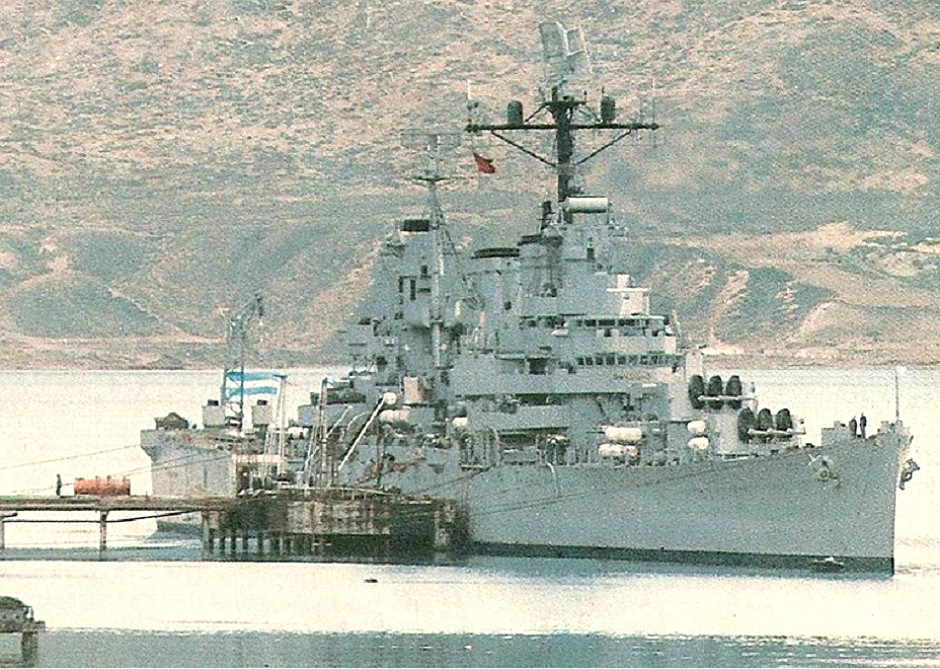
Recently reading Hugh Bicheno's 2006 book Razor's Edge: The Unofficial History of the Falklands War, I see the author noted (pp109-110) that repeated shelling of the Stanley airfield peninsula by encroaching Royal Navy frigates might never have happened "if the Argentines had proceeded with an early proposal to repeat the sensible use of Canopus in 1914 and bring the cruiser General Belgrano into Stanley Harbour. As Diagram 4 [map centered on Stanley with arcs of gun and Exocet max ranges] illustrates, this was probably the single act that could have tipped the scales against the British. The defence of Stanley would have been immeasurably strengthened by her 6-inch and 5-inch guns (plus two twin radar-directed 40mm AA guns and two Seacat missile batteries). As shown in the next chapter, despite heroic [British] efforts Stanley airfield was never disabled, and Belgrano was not only a much smaller target but also, of course, mobile. In the absence of any other explanation it is to be assumed the Argentine Army did not wish to give the Argentine Navy such a prominent role."

In real life, General Belgrano was torpedoed and sunk in deep water by a Royal Navy nuclear submarine. I had never heard of this alternate proposal, but it's very interesting, and might indeed have changed history. I don't know whether Belgrano's magazines retained ex-USN 'super heavy' Mark 35 AP shells, but even with ordinary shells her fifteen 152mm guns could outmatch a British frigate with one 114mm gun, and hold off advancing British Army columns. This proposal was just the sort of outside-the-box thinking which might have won the Falklands War for Argentina—and which would be a prerequisite for a future second invasion on a shoestring to have a chance of success.
 
It is unforgivable for a military person or organization to spend days, months, or years not rehearsing hypotheses, tactics, and developing doctrines or resources...the famous "what if...?"...because when war breaks out, it is utter chaos where nothing rehearsed happens as planned... The case of the Pucaras Torpedo Boats is the greatest example of this!! There in the channels of the islands and in the San Carlos Strait, they would have been formidable weapons...the distance was very short from the slopes where the planes appeared, and the torpedoes would have been deadly in that strait with no room for maneuver...a Pearl Harbor could have happened there....but they didn't train, they didn't formulate hypotheses, they didn't foresee...it's lamentable to have material in storage and not know what to do with it... It took them a month to recover the operating mode of the torpedoes used by the PBY Catalinas, which were still stored in the inventory and would be adapted to the Pucarás... when they arrived at the successful tests, the war was already over.

Thanks very much, Carvalho2008, for clarifying that Argentina's supply of US-made air-dropped torpedoes came from stocks for its long-serving PBY Catalina flying boats: I had wondered. This interesting 2021 article recommended to me today < https://www.laahs.com/pucara-torpedo-bomber/ > states the same. The article details that the Argentine Air Force had trouble with Pucará test drops until they recreated US naval aviation's change late in WW2 of adding a breakaway wooden 'pickle-barrel' attachment to the Mark 13 torpedo's snout. As you said (which Rule of cool and Scott Kenny seconded): something that would have been better planned and prepared before the invasion.

As mentioned in post #950 above, Argentina's 34 light airplanes stationed in the Falklands achieved relatively little. But an unexpected massed torpedo-plane attack, if avoiding the two-Sea-Harrier CAP (which like you said couldn't be everywhere), and if pressed in close (as Argentine pilots proved they were motivated enough to fly), might have been devastating. 1982 would have been the right time to spring that surprise. Famously, the Royal Navy scrambled to add 20mm Phalanx and 30mm Goalkeeper gatling guns to all its major surface combatants after the war, in response to their warships' demonstrated vulnerability to wave-top air attacks. And battle-damaged RN vessels were unusually far from the nearest friendly port, in notably rough seas. A ship with Exocet or bomb damage above her waterline might be towed the long miles (as was attempted with HMS Sheffield)—but torpedo damaged?
 
But having a real plan would have greatly raised the costs of retaking the islands, possibly to greater than the UK was willing to spend.

At least if the Iron Lady wasn't in charge.

The politics is the problem, but in practical terms the British had or could build the tools within a few months to retake the Falklands against a better prepared Argentina before the end of 1982.
 
The politics is the problem, but in practical terms the British had or could build the tools within a few months to retake the Falklands against a better prepared Argentina before the end of 1982.
So what you're saying here Rule of cool, is that Britain had the indigenous military industry to replace her losses. Whereas the Argentinians didn't?

Regards
Pioneer
 
So what you're saying here Rule of cool, is that Britain had the indigenous military industry to replace her losses. Whereas the Argentinians didn't?

Regards
Pioneer

Not just replace losses, but to drastically increase her ability to fight that particular unexpected war within weeks and months not years.

Britain could quickly retake South Georgia to conduct a blockade, recce and harassment campaign during the winter while bringing into service a large amount of new kit both large and small. Then from October the British could go on the offensive with 3 carriers and the best ships in the RN.
 
I'm looking forward to reading the forthcoming history of the versatile Harrier by @Mike Pryce, Jump Jet. Even with Argentine planes avoiding air-to-air combat, ten Sea Harriers/Harriers were lost during the hard-fought South Atlantic campaign. It therefore seems plausible that with different orders from Buenos Aires, a determined effort by all Argentina's pilots, instead of hit-and-run strikes against ships and troops, to aggressively attack Sea Harriers/Harriers on sight could have resulted in every Harrier being splashed. With no more fighter cover, the British Task Force would have been compelled to withdraw to Ascension or Gibraltar. RN nuclear submarines prowling nearby, however formidable, would be powerless to stop surviving Argentine warplanes from turning their attentions to any marooned British units.

In his book Sea Harrier Over the Falklands: A Maverick at War, the late Nigel 'Sharkey' Ward, who was a squadron leader aboard carrier HMS Invincible at the time, wrote with ten years of reflection (pp215-216): "If I had been running the [Argentine Air Force], and in spite of early losses on day one, the policy would have been 'get the SHar [Sea Harrier] at all costs—then mop up the operation on land and sea'. They would have lost a lot of jets in [air-to-air] combat, but eventually the weight of numbers would have told and the Task Force would have been finished; no air defence meant no operation. It later became open knowledge that the Argentine pilots had indeed been instructed to avoid the Sea Harrier at all costs. It was a fatal staff error and prevented Argentine aspirations of holding on to the islands from coming to fruition."
 
Two Sea Harriers collided in bad weather, and one crashed after take-off and one fell off the Invincible into the sea while one GR3 was damaged beyond repair in a hard landing at Sid's Strip from partial engine failure. The other 5 losses, 1 Sea Harrier and 4 GR3s, were to SAMs and AA guns. Some 28 Sea Harriers and 14 GR3s served in the war, 5 combat losses is pretty good.

The Argentine aircraft lacked the fuel to tangle with the Sea Harriers in the air, which is why so many pages of this thread have focused on the Port Stanley airfield.

When it's all said and done the only real risk the British took was sending the Task Force immediately in order to retake the Falklands before the Southern winter. All the close shaves were a result of this decision.
 
As you might know, when on 8 December 1914 Admiral von Spee's Ostasiengeschwader (rashly, in hindsight) approached the Falkland Islands to bombard Port Stanley, aging predreadnought HMS Canopus, aground there in the mudflats, opened fire on the Germans with her four 12-inch guns and turned them away—and perhaps saved the coaling battlecruiser flotilla while its ships were in a compromised state for the next hour.

Recently reading Hugh Bicheno's 2006 book Razor's Edge: The Unofficial History of the Falklands War, I see the author noted (pp109-110) that repeated shelling of the Stanley airfield peninsula by encroaching Royal Navy frigates might never have happened "if the Argentines had proceeded with an early proposal to repeat the sensible use of Canopus in 1914 and bring the cruiser General Belgrano into Stanley Harbour. As Diagram 4 [map centered on Stanley with arcs of gun and Exocet max ranges] illustrates, this was probably the single act that could have tipped the scales against the British. The defence of Stanley would have been immeasurably strengthened by her 6-inch and 5-inch guns (plus two twin radar-directed 40mm AA guns and two Seacat missile batteries). As shown in the next chapter, despite heroic [British] efforts Stanley airfield was never disabled, and Belgrano was not only a much smaller target but also, of course, mobile. In the absence of any other explanation it is to be assumed the Argentine Army did not wish to give the Argentine Navy such a prominent role."

In real life, General Belgrano was torpedoed and sunk in deep water by a Royal Navy nuclear submarine. I had never heard of this alternate proposal, but it's very interesting, and might indeed have changed history. I don't know whether Belgrano's magazines retained ex-USN 'super heavy' Mark 35 AP shells, but even with ordinary shells her fifteen 152mm guns could outmatch a British frigate with one 114mm gun, and hold off advancing British Army columns. This proposal was just the sort of outside-the-box thinking which might have won the Falklands War for Argentina—and which would be a prerequisite for a future second invasion on a shoestring to have a chance of success.
Belgrano_side.jpg

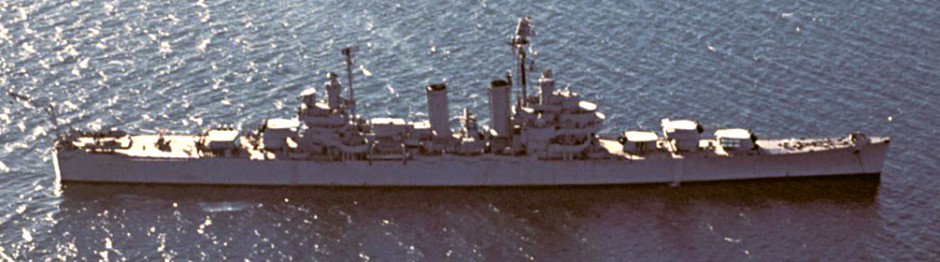
Indeed, the cruiser Belgrano was one of the last true representatives of genuine littoral combat ships. Its arsenal was obsolete for anti-ship warfare in the open ocean, but deadly when applied to coastal warfare and hand-to-hand combat. If it had been anchored in the channel, no English ship could have approached. Even if a landing had occurred, they would have been easy victims of its artillery.
Belgrano_April82.jpg


Armament: 15 × 6”/47 cal (152 mm) guns, 2 x Sea Cat air defense missile systems, 8 × 5”/25 cal (127 mm) dual-purpose guns, 40 mm and 20 mm anti-aircraft autocannons
 
Indeed, the cruiser Belgrano was one of the last true representatives of genuine littoral combat ships. Its arsenal was obsolete for anti-ship warfare in the open ocean, but deadly when applied to coastal warfare and hand-to-hand combat. If it had been anchored in the channel, no English ship could have approached. Even if a landing had occurred, they would have been easy victims of its artillery.
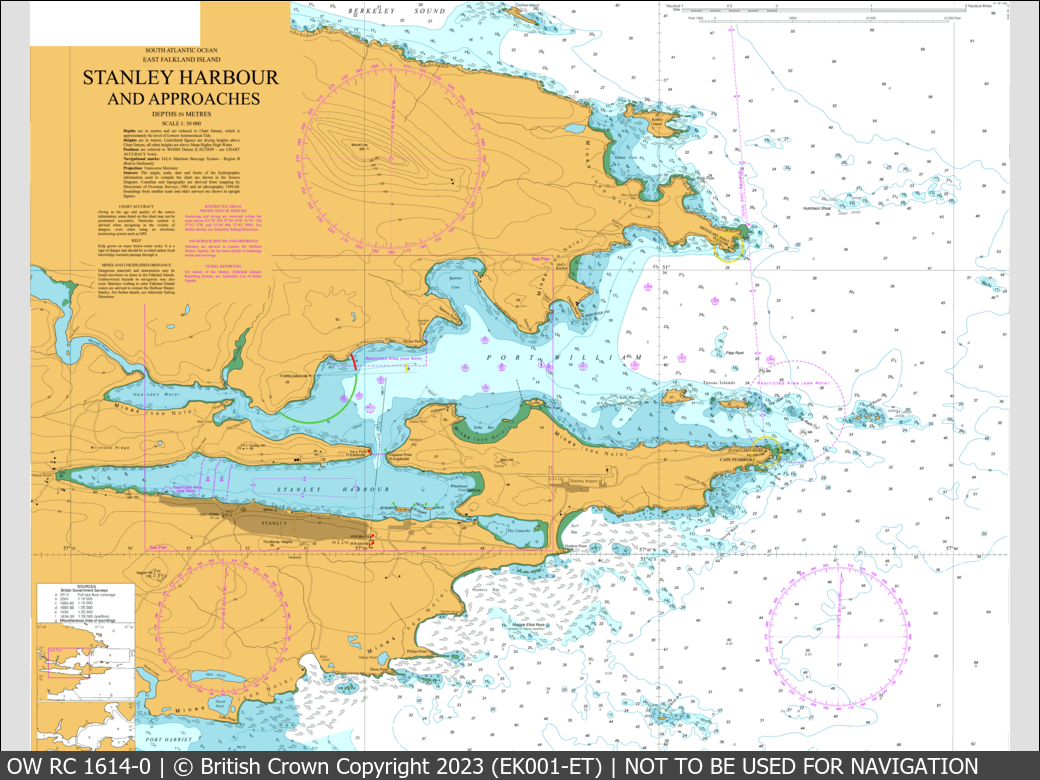
Belgrano would have to be moored in Stanley Harbour to be safe from submarine attack. Anywhere in the Port William channel it would be vulnerable to torpedo attack by a submarine standing off the coast in deeper water (white areas of the chart).

Of course being immobile it could be attacked by combat divers, but some kind of diver protection measures might be possible... nets etc. Certainly anything would be better than being caught like a sitting duck in open water by HMS Conqueror. And stopping naval shelling of Port Stanley airfield + added AAA coverage would strengthen the case for shuttling in a few fighters to fly CAP missions from Port Stanley.

However I doubt that Belgrano would be able to sail from Port Stanley Harbour to intercept the invasion fleet in Falkland Sound, as it would most likely be spotted on the way around East Falkland and then targeted by SSNs or RN frigates with MM38 Exocets.

ow_rc_1614-0.webp
 
Belgrano would have to be moored in Stanley Harbour to be safe from submarine attack. Anywhere in the Port William channel it would be vulnerable to torpedo attack by a submarine standing off the coast in deeper water (white areas of the chart).

Of course being immobile it could be attacked by combat divers, but some kind of diver protection measures might be possible... nets etc. Certainly anything would be better than being caught like a sitting duck in open water by HMS Conqueror. And stopping naval shelling of Port Stanley airfield + added AAA coverage would strengthen the case for shuttling in a few fighters to fly CAP missions from Port Stanley.

However I doubt that Belgrano would be able to sail from Port Stanley Harbour to intercept the invasion fleet in Falkland Sound, as it would most likely be spotted on the way around East Falkland and then targeted by SSNs or RN frigates with MM38 Exocets.

ow_rc_1614-0.webp
Nuclear submarines wouldn't be able to operate in the San Carlos Strait...it's too shallow there...they would be extremely exposed and in some sections would have to surface...it's unfeasible...

The correct premise is that once the Falklands were taken by the Argentinians, the Belgrano and its two escorts would be stationed there, inside the island channels. See, if it's there in the straits, which vary from 2km to 15km in maximum width, all the British electronic and missile advantages cease to exist. Only the Harrier becomes the only weapon capable of reaching it, but in an extremely risky scenario. Argentinians could mount an unprecedented land escort for the ship, using MANPADS and portable weapons. I don't see how a landing would be possible without first neutralizing the cruiser Belgrano and, even if success were achieved at some point, the British cost would likely be high. Harriers could be compromised, frigates, etc... only SAS commandos would be viable... another important aspect is the time cost of all this... how many days would this take and what would that represent? Every day, more and more Argentine material would arrive on the islands... the calculation becomes unsustainable... in short, considering all the observations already made in this topic, it's not a question of whether the British would still possess much more equipment and still win the war... look, the Americans had much more in Vietnam and didn't take it... because it wasn't worth it... British material and effort were necessary in Europe, fulfilling their role in the Cold War....
 
Nuclear submarines wouldn't be able to operate in the San Carlos Strait...it's too shallow there.

The correct premise is that once the Falklands were taken by the Argentinians, the Belgrano and its two escorts would be stationed there, inside the island channels.
Belgrano couldn’t cover Port Stanley and San Carlos at the same time, and there was no particular way of knowing for sure the landing would occur at San Carlos.

So the only logical place for Belgrano in the first few weeks would be moored in Port Stanley Harbour. Otherwise it would be useless. It would then require perfect hindsight (or blind luck) to move it to Falkland Sound in time for the invasion. Once the invasion started it’s doubtful that Belgrano would be able to make it all the way around East Falkland island to hit the invasion ships without being sunk in open water.
 
Belgrano would have to be moored in Stanley Harbour to be safe from submarine attack. Anywhere in the Port William channel it would be vulnerable to torpedo attack by a submarine standing off the coast in deeper water (white areas of the chart).

Of course being immobile it could be attacked by combat divers, but some kind of diver protection measures might be possible... nets etc. Certainly anything would be better than being caught like a sitting duck in open water by HMS Conqueror. And stopping naval shelling of Port Stanley airfield + added AAA coverage would strengthen the case for shuttling in a few fighters to fly CAP missions from Port Stanley.
What sonars were available to the escort group? Any high power active sonars?

I don't think the Bel Grano had an active sonar installed.

But step 1 of "divers in the water" is to full-power ping your active sonar. A diver next to the hull would turn into a fluid-filled skin bag.

Nevermind being deafened on the approach if the escorts are active pinging.
 
What sonars were available to the escort group? Any high power active sonars?

I don't think the Bel Grano had an active sonar installed.

But step 1 of "divers in the water" is to full-power ping your active sonar. A diver next to the hull would turn into a fluid-filled skin bag.

Nevermind being deafened on the approach if the escorts are active pinging.
Without a doubt, Port Stanley is the best place for cover, provided there are no risks. However, part of the tactical analysis involves assessing the risks in order to provide the best deterrent. Initially, the ship would most likely remain in Port Stanley for the first few hours, but from the moment it becomes known that the British have mounted a vastly superior war effort, the chess piece moves, retreating the capital ship to the safety of the channel and offering the inconvenience of its ability to move and prevent the use of areas protected by the enemy. This would force the British to assess that the entire territory of the protected channels is much riskier than it was, forcing them to identify more open and unprotected areas for landing...

When we analyze a "what if" scenario, it can never be implemented alone without the unfolding of other related subsidy and support measures... what we are actually discussing is whether Argentina was truly willing to occupy and maintain the islands, and in this respect, deploying the Belgrano there from the beginning would make a lot of sense, since it was unsuitable for open sea warfare but deadly in coastal combat. Not only would MANPADS or portable anti-aircraft guns follow as escorts or ambush points for attackers, but it would also require a willingness, for example, for some Trackers to start operating on the islands as patrols; this would be a related action... we have seen that more than once British nuclear submarines had to evade the Argentinians because the Trackers were very efficient at that time, and exposing the submarines so close and shallow was extremely dangerous; the sounds become very apparent and the bottom wasn't even mapped. It's one thing to land hidden by the cliffs... it's another thing to land openly and frontally in the style of Normandy... let's think of a system of actions, never a single action. With light jets like the M339/MB326, Belgrano+Escorts, and 2 to 4 Trackers... a lot would change... The British would always have the advantage of total equipment, without a doubt. The question is whether they would risk all of this, forgetting their priorities in Europe during the Cold War. The attrition was immense and almost irreparable, as it was, with terrible decisions by the Argentinians... but it would be extremely worse and unbearable with the right decisions, as we have exemplified in numerous hypotheses that, added together, could indeed cause a stalemate of months or years... probably, the British would impose a continental blockade on Argentina's trade using their submarines and successfully occupy South Georgia. I would maintain harsh negotiations and pressure on the Argentinians for months so that both sides would allow themselves an honorable position...

Everything I'm presenting are hypotheses that don't alter in any way the eventual positive impacts of the Argentinian effort that actually occurred when projected across the Argentinian mainland with their A-4s, Daggers, Mirages... I maintain the same number of hits and losses for them, but note that we add to these the risks of further losses for the British, which could become unsustainable and require other political-military strategies from the British.


Frotas-nas-Malvinas-2-1024x1044.jpg
 
Last edited:
This picture is silly if not misleading; no surprise Anaya ARA got less losses than the RN: they went hidding to their ports after Belgrano was sunk.
In fact when planning the war that asshole Anaya did not listened the air force and army and rushed it, but once Belgrano was sunk he retired his ships and let soldiers and aviators fighting and dying.

My research (I will post it later) show that from December 1981 the South Georgia and Falklands operations were planned separately, with a major caveat Anaya did not took into account.

The caveat: starting with the South Georgia ops as it happened in March 1982 inevitably raised british attention to the south Atlantic and inevitably - to the Falklands nearby.

If only because of the 1977 precedent with Callaghan swift actions that defused the crisis in favor of the british. The british were no fools, Thulé in 1976 then the 1977 crisis, plus South Georgia = Argentina was agitating over islands, and the Falklands could only be the main target, sooner rather than later.

Main difference between South Georgia and Falklands operations: the former could be military occupied after a coup de main; the other needed the U.N and a fait accompli.
And it was not to happen in March or April 1982 but either in May or July, at a time when a) John Nott would have finished the RN by dumping Invincible and amphibious b) better weather, austral summer and c) the full compliment of Super Etendard and Exocet would have been delivered. March was too early, May was reasonable but July to September would be the right moment. It was hoped the atrocious austral winter weather would complicate a british invasion force.

Anaya (and the others) 12/1981 plan was for a token occupation force seizing the Falklands on a coup de main and putting the british against a fait accompli, with the hope the U.N would decide in favor of Argentina. But this means South Georgia had to come AFTER, otherwise the british would be alerted... as they were in March 1982.
This also means that the Falklands forces were a token, because diplomacy was the big part of the plan, coming ahead of military.

But Anaya ruined the whole thing. He let the South Georgia ops planning run its own course, not synchronized at all with the Faklands plans.
 
Last edited:
This picture is silly if not misleading; no surprise Anaya ARA got less losses than the RN: they went hidding to their ports after Belgrano was sunk.
In fact when planning the war that asshole Anaya did not listened the air force and army and rushed it, but once Belgrano was sunk he retired his ships and let soldiers and aviators fighting and dying.

My research show that from December 1981 the South Georgia and Falklands operations were planned separately, with a major caveat Anaya did not took into account.
The caveat: starting with the South Georgia ops as it happened in March 1982 inevitably raised british attention to the south Atlantic and inevitably - to the Falklands nearby, if only because of the 1977 precedent with Callaghan swift actions that defused the crisis in favor of the british.
The british were no fools, Thulé in 1976 then the 1977 crisis, plus South Georgia = Argentina was agitating over islands, and the Falklands were the main target.

Main difference between South Georgia and Falklands operations: the former could be military occupied after a coup de main; the other needed the U.N and a fait accompli.
Anaya plan
Yes, the Argentine navy was cowardly and withdrew from the war.

But the photo isn't meant to illustrate that Argentine ships were less affected than British ones!!

It was presented as a fact, regarding the number of British ships lost or out of combat, considering all Argentine mistakes...

The thesis is... okay! The Belgrano was lost!! But what if it had been in the island channels with its two escorts from the beginning of the Argentine invasion?? How many more ships and resources, including time, would the British have consumed than they actually did??? Undoubtedly it would have ended up being sunk at some point, but what could it have taken with it from the British??
Frotas-nas-Malvinas-2-1024x1044.jpg
 
Without a doubt, Port Stanley is the best place for cover, provided there are no risks. However, part of the tactical analysis involves assessing the risks in order to provide the best deterrent. Initially, the ship would most likely remain in Port Stanley for the first few hours, but from the moment it becomes known that the British have mounted a vastly superior war effort, the chess piece moves, retreating the capital ship to the safety of the channel and offering the inconvenience of its ability to move and prevent the use of areas protected by the enemy. This would force the British to assess that the entire territory of the protected channels is much riskier than it was, forcing them to identify more open and unprotected areas for landing...
As soon as the Bel Grano steps out of Stanley Harbour it's an open target by subs.

It would be trivial to park a submarine at the mouth of Port William Sound (? I think that's the right name for the water).
 
Indeed, the cruiser Belgrano was one of the last true representatives of genuine littoral combat ships. Its arsenal was obsolete for anti-ship warfare in the open ocean, but deadly when applied to coastal warfare and hand-to-hand combat. If it had been anchored in the channel, no English ship could have approached. Even if a landing had occurred, they would have been easy victims of its artillery.
Belgrano would have to be moored in Stanley Harbour to be safe from submarine attack. Anywhere in the Port William channel it would be vulnerable to torpedo attack by a submarine standing off the coast in deeper water (white areas of the chart). Of course being immobile it could be attacked by combat divers, but some kind of diver protection measures might be possible... nets etc. Certainly anything would be better than being caught like a sitting duck in open water by HMS Conqueror. And stopping naval shelling of Port Stanley airfield + added AAA coverage would strengthen the case for shuttling in a few fighters to fly CAP missions from Port Stanley. However I doubt that Belgrano would be able to sail from Port Stanley Harbour to intercept the invasion fleet in Falkland Sound, as it would most likely be spotted on the way around East Falkland and then targeted by SSNs or RN frigates with MM38 Exocets.
Belgrano couldn’t cover Port Stanley and San Carlos at the same time, and there was no particular way of knowing for sure the landing would occur at San Carlos. So the only logical place for Belgrano in the first few weeks would be moored in Port Stanley Harbour. Otherwise it would be useless. It would then require perfect hindsight (or blind luck) to move it to Falkland Sound in time for the invasion. Once the invasion started it’s doubtful that Belgrano would be able to make it all the way around East Falkland island to hit the invasion ships without being sunk in open water.
As soon as the Bel Grano steps out of Stanley Harbour it's an open target by subs. It would be trivial to park a submarine at the mouth of Port William Sound (? I think that's the right name for the water).

I don't read Spanish, and I hadn't heard of the Argentine Navy's "early proposal" to station cruiser General Belgrano before reading this in Hugh Bicheno's 2006 book, so I don't know the proposal's details. The mention caught my eye, especially because I'm familiar with the brief but possibly crucial role of battleship HMS Canopus during 1914's Battle of the Falkland Islands. I think H_K's worry about the cruiser not being able to cover San Carlos Water is misplaced. That "early proposal" correctly identified the Port Stanley region as the Center of Gravity (Schwerpunkt) of the whole South Atlantic campaign. Wherever they first landed on the islands, the British would inevitably be coming to Stanley. So let the cruiser stay put for the duration.

For London to order a nuclear submarine to close to the 30m-depth isobath (the white in H_K's chart is 20m!!) in the Port William inlet approaches, within sight of the captured Stanley runway, and fire torpedoes toward a sheltering Belgrano sounds too risky to be contemplated. The very maximum range of the WW2-era Mark 8 torpedo was 7000 yards (when set to slower speed). And the cruiser could avoid any direct shot from out to sea by lurking in Yorke Bay or Stanley Harbour, switching between the two at night.

In real life Her Majesty's Submarine Conqueror shot three Mark 8s at Belgrano from 1400 yards away in deep water, hitting with two. Famously, Captain Wreford-Brown didn't bother with his stock of Mark 24 Tigerfish guided torpedoes, deeming those so unreliable as to be worthless. If you recall your history, London feared Conqueror could not safely pursue Belgrano and her two escorts if they passed over Burdwood Bank (200m deep). So an SSN in enemy waters of 30m depth seems fantastical to me.
 
As soon as the Bel Grano steps out of Stanley Harbour it's an open target by subs.

It would be trivial to park a submarine at the mouth of Port William Sound (? I think that's the right name for the water).
But it would also be trivial for the S-2 Tracker to hunt a nuclear submarine in such a restricted area...it's not easy. The problem remains that the channel is closed, in addition to the risk of the Belgrano being able to circulate close to the beach. Does the risk exist? Of course it does!!! But let's look at it...even so, it's a less risky operation than it was in the open ocean and at a distance. The difference is that the British would need to risk one or two nuclear submarines there...the price is high, even if some of them aren't hit, you've already drained and subtracted 1 or 2 British submarine units from the war effort. I seriously doubt that this wouldn't already be enough, or even remember the risk of the blind Argentine submarine that operated nearby. I certainly don't want to suggest the risk of the ARA San Luis achieving a torpedo hit, as it wasn't capable of doing so due to the aforementioned flaws, but the British didn't know this...it's very complicated to bring one or two nuclear submarines to such a coastal region, unsuitable for them, where they would have to fight not only a cruiser, but also its escorts, and the potential anti-submarine aircraft attached to the ARA San Luis...I remind you once again that the S-2 trackers tracked British submarines with some success...it's a very risky situation, although indeed possible...but the question remains...yes, it could! For how many days or weeks would this take? Are the results certain? War often shows that many certainties crumble...and that war was the one that broke the manuals the most....
 
P.S. And the British were aware the Argentines laid minefields across the approaches to Stanley. No, had that alternate plan been chosen, cruiser General Belgrano stationed in Port Stanley would have been immune to submarine attack.
 
P.S. And the British were aware the Argentines laid minefields across the approaches to Stanley. No, had that alternate plan been chosen, cruiser General Belgrano stationed in Port Stanley would have been immune to submarine attack.
Blanco_Bay.png
 
I had thought that a conventional submarine could counter the Belgrano operating inshore. However the HMS Onyx left the UK on 26 April, days before the TF arrived in the TEZ and BB1 occurred, and didn't arrive until 31 May, a week after the San Carlos landings. An Oberon would have to leave with with the Task Force in order to get to the islands early enough to counter the Belgrano prior to the landings.
 
from December 1981 the South Georgia and Falklands operations were planned separately,

I didn't known that! Seriously, could Argentina's planning be any worse?

starting with the South Georgia ops as it happened in March 1982 inevitably raised british attention to the south Atlantic and inevitably - to the Falklands nearby.

If only because of the 1977 precedent with Callaghan swift actions that defused the crisis in favor of the british. The british were no fools, Thulé in 1976 then the 1977 crisis, plus South Georgia = Argentina was agitating over islands, and the Falklands could only be the main target, sooner rather than later.

Main difference between South Georgia and Falklands operations: the former could be military occupied after a coup de main; the other needed the U.N and a fait accompli.
And it was not to happen in March or April 1982 but either in May or July, at a time when a) John Nott would have finished the RN by dumping Invincible and amphibious b) better weather, austral summer and c) the full compliment of Super Etendard and Exocet would have been delivered. March was too early, May was reasonable but July to September would be the right moment. It was hoped the atrocious austral winter weather would complicate a british invasion force.

Anaya (and the others) 12/1981 plan was for a token occupation force seizing the Falklands on a coup de main and putting the british against a fait accompli, with the hope the U.N would decide in favor of Argentina. But this means South Georgia had to come AFTER, otherwise the british would be alerted... as they were in March 1982.
This also means that the Falklands forces were a token, because diplomacy was the big part of the plan, coming ahead of military.

But Anaya ruined the whole thing. He let the South Georgia ops planning run its own course, not synchronized at all with the Faklands plans.

This all makes sense. Again, could Argentina's planning be any worse?
 
we have seen that more than once British nuclear submarines had to evade the Argentinians because the Trackers were very efficient at that time

The Wiki page for HMS Onyx says COAN Tracker S-2 twice detected sub-surface and electronic traces and a magnetic anomaly detector contact on 5–6 May. Since Onyx didn't arrive for another 25 days if this is accurate than it can only be an SSN, but were there any SSNs in the Tracker's search area that day? IIUC at some point Belgrano's sinking they moved from patrolling the TEZ/open ocean to being stationed off the mainland coast near air bases and using their ELINT gear to listen for radio chatter as aircraft took off and formed up for attacks, to give warning to the TF. However, that would require these SSNs to transmit to the TF, which would give their locations away.
 
The Wiki page for HMS Onyx says COAN Tracker S-2 twice detected sub-surface and electronic traces and a magnetic anomaly detector contact on 5–6 May. Since Onyx didn't arrive for another 25 days if this is accurate than it can only be an SSN, but were there any SSNs in the Tracker's search area that day? IIUC at some point Belgrano's sinking they moved from patrolling the TEZ/open ocean to being stationed off the mainland coast near air bases and using their ELINT gear to listen for radio chatter as aircraft took off and formed up for attacks, to give warning to the TF. However, that would require these SSNs to transmit to the TF, which would give their locations away.
If they had a MAD contact, I'm surprised that the Argentines didn't drop torpedoes or depth charges on it.
 
If they had a MAD contact, I'm surprised that the Argentines didn't drop torpedoes or depth charges on it.

Apparently this occurred in deep water about 120km north of the islands, so its possible that there was an SSN in the vicinity. However, I am dubious that a 50s ASW aircraft could readily detect a 70s SSN in open, deep water.
 
"A Carrier at Risk" by Mariano Sciaroni, charted the movements of the 25th De Mayo as it retired to Argentinian waters on 3rd May and then ran north. He noted

"In all anti-submarine operations carried out by the Trackers, the sonobuoy was the main sensor used for sub-aquatic searches. These were placed with consideration to their range of effective detection, and other factors such as time, place, and meteorological conditions.

The SSN Splendid's first contact with the Argentinian TF was its ESM detection of a Tracker's radar emissions in the early hours of 4th May while it was near the surface communicating with London. As the signal closed she dived. But the Argentinians detected nothing from their sonobuoy pattern. This they put down to the Tracker not being able to monitor all the sonobuoys laid simultaneously.

Splendid then detected a target on its sonar initially classified as a warship, but when it got close enough for a periscope inspection it turned out to be a merchantman.

At 0743 5th May 0743 a Tracker visually spotted then confirmed by radar a sub snorkel (complete with exhaust trail) and launched a Mk.44 torpedo and passive sonobuoy. No explosion. 25th De Mayo then launched a Sea King around 0805 and another at 0847 both armed with 2 x Mk.44 and then another Tracker. Sonar used in passive mode by first and proved U/S in second. Sea King detected a faint signal classified as a possible sub. On that occasion the Tracker used its MAD gear. Altogether some 12 passes with smoke bombs dropped on what seemed to be a moving target but which could not be confirmed. As the search continued a further probable sub contact was prosecuted and another Mk.44 dropped.

Meanwhile Splendid had detected a sub contact to its NNE! That evening Splendid was forced to withdraw due to mechanical problems. It was the only British sub in the area.

So on 5th May both sides detected an unknown sub, and the Argentinians attacked it with no result.

As 25th De Mayo moved north in Argentine territorial waters over coming days, the Trackers continued searching, gaining further contacts and making attacks on 6th & 7th May (last using depth charges). No British sub was in the vicinity of these attacks.

As for Onyx, she was detected by an Argentinian Boeing 707 Reece aircraft while en route Ascension to the Falklands on 21st May (about 1,200 miles from Beunos Aires). She suffered bow damage after she ran aground during a special forces mission on 5th June.
 
So on 5th May both sides detected an unknown sub, and the Argentinians attacked it with no result.

As 25th De Mayo moved north in Argentine territorial waters over coming days, the Trackers continued searching, gaining further contacts and making attacks on 6th & 7th May (last using depth charges). No British sub was in the vicinity of these attacks.

Wow!

So after the Belgrano was sunk on the 2nd of May the 25 de Mayo went back into Argentine waters, went north for a few days while still operating her aircraft? When and where did she enter port, and did she emerge again at all?
 
Last edited:
Apparently this occurred in deep water about 120km north of the islands, so its possible that there was an SSN in the vicinity. However, I am dubious that a 50s ASW aircraft could readily detect a 70s SSN in open, deep water.
Depends on sonobuoys and crew.

But a MAD contact is something big and metallic, and usually close to the surface.
 
Depends on sonobuoys and crew.

But a MAD contact is something big and metallic, and usually close to the surface.

The COAN had the S2E in 1982, which had the Julie-Jezebel semi-active (explosive) sonobuoy system from the late 50s. While I'm sure this was fine for the submarines of the late 50s the US converted it's Trackers to S2Gs from 1972 which had much better sonobouys with active pingers. These were the same sonobouys used on the S3 Vikings and would have been far more appropriate to detect the RN's S class SSNs of the 70s.

In any case, how good in global terms would the COAN sonobouy operators be? I can't imagine they were in the top tier.
 
So on 5th May both sides detected an unknown sub, and the Argentinians attacked it with no result.
Wasn't there a rumour there was a Soviet SSN down south? Though I suspect Splendid's crew would have had little problem identifying its signature had it been a Victor.
I suspect had it been a Brazilian or Chilean Oberon then some diplomatic ire might have resulted (or they might have had the sense to get the hell out of there).
It's possible it was just a biologic.

ASW is a tricky business, especially with the technology back then and as already pointed out, some of that kit was aging even then.
 
Back
Top Bottom