Alternate Canadian Armed Forces procurement 1970s

I was actually leaning more towards FAMAS than towards SA80 in this case.
I would have thought and preferenced the Steyr AUG, over that of the FAMAS. Appreciating Canada's winter conditions/environment. Its generally acknowledged that the AUG is considered more reliable and rugged compared to the FAMAS, particularly in adverse conditions.
I can not emphasise enough the modular design of the AUG, which allows for quick configuration changes, enhancing its versatility over its lifetime.
Add to this the AUG's built in sight 1.5 × telescopic sight, built-in emergency battle sights....
The option of bolt arrangement for left-handers....
Quick detachable barrels, available in different lengths including a:
- 382 mm (15 in) compact length,
- 417 mm (16.4 in) carbine length, and
- 508 mm (20 in) standard rifle length.

Perhaps, if the AUG was adopted by the Canadian government/military, the could work in with the Australian government/military to develop and field the later EF88!

Regards
Pioneer
 
Since both DND and the CAF had/have a habit of skewing towards US-made equipment, a good starting point is looking at what the West Germans had in 1970 but which the Yanks lacked.
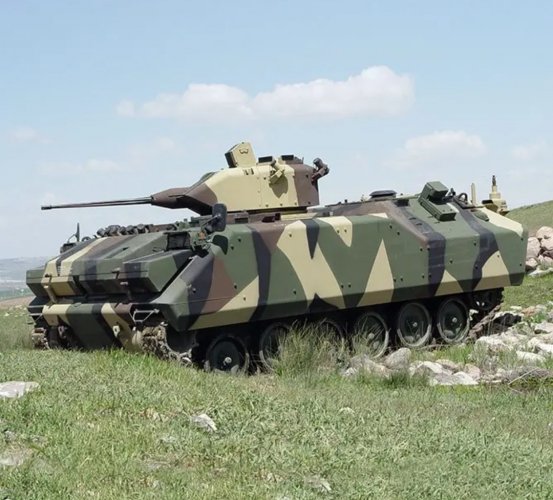
My suggestion is to follow the RW pattern but, instead of Leopard 1A3, substitute Marder 1. So, borrow a few Marder 1s from the Bundeswehr for CAF familiarisation purposes. Then place orders for production model C3 Marten MICVs [1] to come off the line after the last production SPz Marder 1 for the West Germans. As a result, Hanomag production of Marder extends beyond 1975 ... which should earn Ottawa a few trade points with Bonn.

As part of the agreement, Hanomag production of CAF C3 Martens would end in 1980. At that point, Hanomag tooling would be transferred to Cape Breton, NS, to facilitate continued, Canadian production of the vehicle. I am imagining a NS-built C3 Marten with thicker built-in armour (with equivalent blast and ballistic protection to Marder 1A3s with add-on plate). With domestic production in place, Canada could decide on potential expanded future roles (perhaps akin to Argentinian TAM variants).

Perhaps with the American-German turret below as the basis for a SPAAG version?
tmp-cam-80991698-jpg.615360

tmp-cam-1418371130-jpg.615361

 
Because French engineers copy no one, and no one copies the French?

:p

It does, but 4CMBG was supposed to be a reserve unit, which means going to where they are needed in a hurry.

And helicopters are a lot faster than whatever trucks or APCs at hand.

Agreed. But money spent on choppers goes a lot faster than APCs too. Realistically, the CAF can have an apple or an orange in its lunch bag ... but not both.

... 35rd magazines are a little bigger than STANAG 30rd. So having ALICE style pouches made to fit Galil magazines won't be an issue, as the smaller STANAG magazines will fit in just fine.

Thinking more on the mag issue, it occurs that 4CMBG might have wanted magazine compatibility with VII Corps' M16 20-rd boxes to start with. Odds of access to those US mags in combat might be low ... but why start out with a non-compatible mag when you don't have to?
 
...Perhaps, if the AUG was adopted by the Canadian government/military, the could work in with the Australian government/military to develop and field the later EF88!
...

Much as I would love to have seen more CA-AU co-ordination and co-operation back in the day, a CAF AUG wasn't going to happen. For our ATL SARP-75, the AUG was also a smidge late - with StG 77 service entry in 1978.

I note that none of AUG's RW users face actual Arctic conditions. We've been heavily focused on 4CMBG here ... but any CAF service weapon must also function in the High Arctic (hence the suggestion that Valmet needed to consulted on the Galil). The AUG's big, open trigger guard might be a bonus when wearing Arctic gloves ... that progressive trigger pull, not so much.

Another potential issue is AUG not being ambidextrous when STANAG 4179 mags are used.


That would be nice! But any SPAAG turret would need to be in-service and proven (at least by Cold War standards).

Like much of NATO, the RCA was convinced that SPAAGs had no place on the modern battlefield. That was because of minuscule reaction times against fast jets flying low. It took an unreasonably long time before enemy attack helicopters were considered.

I'm inclined towards giving the RCA the SAMs that they wanted (Rapier?). At a tactical level, the need for SPAAGs to counter helicopters would be most obvious to MechInf. Perhaps try to combine the DFS role with chopper-potting? Artillery would probably still howl (even if they don't want the role) but if the role is pitched as DFS that just happens to have high elevation and AA sights ...
 
Agreed. But money spent on choppers goes a lot faster than APCs too. Realistically, the CAF can have an apple or an orange in its lunch bag ... but not both.
Have I mentioned how much I hate the size of the Canadian economy? Nevermind HMTreasury penny-pinching [expletives deleted]


Thinking more on the mag issue, it occurs that 4CMBG might have wanted magazine compatibility with VII Corps' M16 20-rd boxes to start with. Odds of access to those US mags in combat might be low ... but why start out with a non-compatible mag when you don't have to?
The US went to 30s pretty quickly in Vietnam (Point of fact, the Armalite folks showed it off to LeMay etc with a 30rd box), but that's a valid point of possible commonality. Which would make a Galil ACE happen sooner, IMO.


That would be nice! But any SPAAG turret would need to be in-service and proven (at least by Cold War standards).

Like much of NATO, the RCA was convinced that SPAAGs had no place on the modern battlefield. That was because of minuscule reaction times against fast jets flying low. It took an unreasonably long time before enemy attack helicopters were considered.
I mean, Hinds with their AT-6 missiles weren't really a thing until the mid 1970s, so I wouldn't expect "a weapon to shoot down enemy attack helicopters" to make its way through the procurement process until the mid 1980s at the earliest even for the US.


I'm inclined towards giving the RCA the SAMs that they wanted (Rapier?). At a tactical level, the need for SPAAGs to counter helicopters would be most obvious to MechInf. Perhaps try to combine the DFS role with chopper-potting? Artillery would probably still howl (even if they don't want the role) but if the role is pitched as DFS that just happens to have high elevation and AA sights ...
DFS? Direct Fire Support? That role description implies something with pretty good armor to me.
 
Have I mentioned how much I hate the size of the Canadian economy? Nevermind HMTreasury penny-pinching [expletives deleted]

Facts o' life up here. Still, it keeps surprising folks that any big budget blow-outs results in everyone else being sent to bed early without their din-dins. Case in point was the CC-177 purchase.

Initial procurement cost CAD 1.946B (2015 or = 2.58B 2026) with another CAD 2.036B (2.7B 2026) for 20 years ISS and CAD 1.8B (2.38B 2026) for mtx and ops. So, long story short, beans-on-toast for any other DND procurements for quite a while.

When this phenomenon is raised, invariably the response is about how good the C-17A is. No argument there. But, if the CAF was looking for other sparkly things under the Xmas tree, they'd be disappointed for a while. With our history, it seemed a bit willful of DND not to recognise the pattern.

The US went to 30s pretty quickly in Vietnam...

Was not aware! Was that just an in-theatre thing? It seemed like, until the '80s, US Army troops on exercise were still using the 20-rd mags. (Course, memory doesn't memory like it used to!)

I mean, Hinds with their AT-6 missiles weren't really a thing until the mid 1970s, so I wouldn't expect "a weapon to shoot down enemy attack helicopters" to make its way through the procurement process until the mid 1980s at the earliest even for the US.

For sure. I was thinking more about anticipating the enemy copying concepts like the Bell AH-1. Of course, with hindsight, we know that would have been preparing for a phantom. Somehow, that anticipated 'skinny' Hoplite never did appear (probably because the Kremlin couldn't cope with Poles having control over their production!).

DFS? Direct Fire Support? That role description implies something with pretty good armor to me.

Yeah, and experiences in Ukraine prove you right. But, back in the day, some mid-calibre tubes were mounted on some pretty thinly-armoured LAVs. The RW AVGP Cougar had protection levels best-suited for a hail storm ... but the CAF gave them a direct-fire support role anyway.
 
Was not aware! Was that just an in-theatre thing? It seemed like, until the '80s, US Army troops on exercise were still using the 20-rd mags. (Course, memory doesn't memory like it used to!)
It may have been an in-theater thing. It certainly started with LRRPs etc buying factory 30rd and getting those sent to them. And once the line grunts see LRRPS and Air Cav Blues with 30rd magazines...


Yeah, and experiences in Ukraine prove you right. But, back in the day, some mid-calibre tubes were mounted on some pretty thinly-armoured LAVs. The RW AVGP Cougar had protection levels best-suited for a hail storm ... but the CAF gave them a direct-fire support role anyway.
Ouch.

One would hope that whatever was chosen for chopper-potting would be put on whatever chassis the tank is and gets almost as much armor.
 
You have to understand that the Cougar was never supposed to be used as an operational vehicle ever. It was designed built and issued as a purely training only vehicle
In fact the Armour conference ir was introduced at the Corps Commandant of the Armour Corps got up and stated outright that it was never going to be used as other than a training vehicle. Gave his word that it would never be used in and operational thertre.
Years later more than one senior officer would publicly apologize to the troops.
 
Last edited:
Somehow, that anticipated 'skinny' Hoplite never did appear (probably because the Kremlin couldn't cope with Poles having control over their production!).
Though both the PPA and the NVA did employ a fair number of the dedicated armed variants of the standard Hoplite. Including the Mi-2URP anti-tank variant in the case of the former.
 
You have to understand that the Cougar was never supposed to be used as an operational vehicle ever. It was designed built and issued as a purely training only vehicle
In fact the Armour conference ir was introduced at the Corps Commandant of the Armour Corps got up and stated outright that it was never going to be used as other than a training vehicle. Gave his word that it would never be used in and operational thertre.
The way you are speaking makes it sound like it was deployed in combat anyways, because the Government of Canada never bothered to buy the (or enough) actual combat-rated things.
 
That would be nice! But any SPAAG turret would need to be in-service and proven (at least by Cold War standards).

Like much of NATO, the RCA was convinced that SPAAGs had no place on the modern battlefield. That was because of minuscule reaction times against fast jets flying low. It took an unreasonably long time before enemy attack helicopters were considered.
Yeah, I have to agree, regarding an in-service and proven turret. May I suggest the Krauss-Maffei Wildcat 30 V5 twin 30mm turret, encompassing an all-weather-fire-control & auto tracking.

For cost consideration, I would encourage a Wheeled chassis. But failing that, if the Canadian Army could obtain the money, perhaps mounting it on the Marder chassis for commonality - as per earlier suggestion....
The Wildcat system is more capable than the French TA20 20mm turret and less expensive and lighter than the Gepard 35mm turret (and it's 35mm ammunition).

Only downside is I'm sure the Krauss-Maffei started the Wildcat 30 turret system late 1970's/early 1980's

Regards
Pioneer
 
...
One would hope that whatever was chosen for chopper-potting would be put on whatever chassis the tank is and gets almost as much armor.

That would be an option. A decision would need to be made as to whether the priority for reinforcement troops should be to emphasise speed/mobility or protection.
 
The way you are speaking makes it sound like it was deployed in combat anyways, because the Government of Canada never bothered to buy the (or enough) actual combat-rated things.

As always, it was more complicated than that. As @GK. Dundas said, none of the AVGPs were ever supposed to be deployed overseas into combat. But peacekeeping ('peacemaking'?) missions changed that. (Although, a decade on, the Bison would be pitched as Primary Reserve only ... just as the AVGPs had been.)

I may be confusing matters by sliding back and forth like an abacus bead on the 1970s timescale. I put forward faster-moving wheeled vehicles as a potential solution to firming up that breakthrough containment mission for light infantry. I gauged the AVGPs to be birds-in-hand. But other wheeled vehicles far better suited to combat might have been sought.

Alternatively, it is possible that Dallaire et al were right later on in pushing for all M113s to avoid getting all LAVs. That would be a refutation of the premises of Heeresstruktur III and, thus, we could safely ignore the idea of expanding light infantry (leading to the RW development of light infantry battalions transitioning into more MechInf). In a sense, perhaps that represents a closer alignment of 4CMBG with VII Corps than with II. Korps?
 
...Only downside is I'm sure the Krauss-Maffei started the Wildcat 30 turret system late 1970's...

I'm not clear of the exact Wildcat development schedule but, yeah, part of a different era.

[Edit: Krauss Maffei didn't begin 30 mm Wildcat development until 1979 with the first prototype turret completed in May 1980. A second turret was built in 1986 (and mounted on a Mowag Shark hull). A third, updated turret was built in 1998. Production of the Wildcat gun turret was to commence in 2003 but no orders for the system were ever received.]

RW, the missile version of Wildcat was offered to Canada but DND chose ADATS instead to better align with the US Army (which, in turn, cancelled its own ADATS order just about the time production started in Canada).
 
Last edited:
That would be an option. A decision would need to be made as to whether the priority for reinforcement troops should be to emphasise speed/mobility or protection.
A convoy only moves at the speed of its slowest member, so if the tank chosen is a Leo1 you drop your AA turret on that. If the tank chosen is refurbed Centurions you drop the AA turret on that.
 
To be honest I have always felt the canadian division in Germany never made much sense, it seems to me that it would have been better for both Canada and nato for Canada's army commitment to be in Norway, sense Canada is the only nato other country (besides Norway) to have a focus on artic warfare and were an extra burgade could actually be decisive compared to Germany.
 
I'm not clear of the exact Wildcat development schedule but, yeah, part of a different era.
:(, well worth a crack.....
RW, the missile version of Wildcat was offered to Canada but DND chose ADATS instead to better align with the US Army (which, in turn, cancelled its own ADATS order just about the time production started in Canada).
And how many times does Canada have to get burnt by U.S. schizophrenia, shitfuckery and indecisiveness, in terms of 'joint weapons/equipment projects......
One would hope in this Alternate Canadian Armed Forces procurement 1970s, if anything, Canada/Canadian military grows up and focuses on sovereignty and independence.
Ok, in which case, for reasons of budgetary, minimum risk and effectiveness, the Canadian Army and Air Force utilise the Hispano Suiza TA-25 twin 25mm cannon turret system on which ever chassis it deems - be it wheeled or tracked.
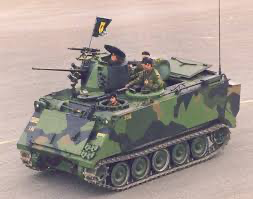
Whilst speaking of tracked, given the irrufutable exception service the FMC M113 gave the Canadian Army, why not seriously consider the Canadian government/Army licence-building its own derivative of the named FMC Armoured Infabtry Fighting Vehicle (AIFV) - the YPR-765, in partnership with the Dutch government/Army - sharing/saving R&D in the process. Granted, the AIFV/YPR-765 isn't as sexy as tge West German Marder 1 MICV. But it's a hell of a lot lighter and cheaper, whilst still offering an organic 25mm cannon, fighting with armour capability, and importantly air cranspirtable by C-130. Also, in adopting AIFV/YPR-765, commonality and cost effectiveness in a common chassis for armoured command vehicle, armoured medical evacuation vehicle (AMEV), armoured mortar vehicle, armoured cargo vehicle, armoured tank destroyer (with ATGM's), SPAAG (TA-25 twin 25mm cannon turret system), armoured recovery vehicle (ARV), etc, could be achieved far more cost effective than either adapting Marder 1 MICV or various other vehicles to achieve the same requirements.

[So as to emphasise possible timeline, I've included the Dutch history of its AIFV/YPR-765:
-In 1974, the Royal Netherlands Army started to show interest in the improved M113, later named Armoured Infabtry Fighting Vehicle (AIFV);
-After performing tests with the vehicle in that same year and making several adjustments to the design to meet the Royal Netherlands Army requirements, the Dutch Ministry of Defence placed an order in 1975 for 889 YPR-765s at a cost of around 700 million Dutch guilders. The order included twelve different variants of the vehicle.]

Perhaps, in its wisdom, the Canadian government uses its initiative and specifies a stretched YPR-765 chassis, six road wheel derivative from the getgo. Which it sells under licence to the Australian government/Army to meet its Project Waler requirements.....

Regards
Pioneer
-

 

Attachments

  • Screenshot_20260404_223946_Gallery.jpg
    Screenshot_20260404_223946_Gallery.jpg
    291.8 KB · Views: 7
Last edited:
Canada begins to look beyond the Central European plain, a pure ASW navy and peacekeeping.
Bonaventure is kept on but now she's to be used as LPH /Commando Carrier. With several improved Ouragan class .
They will be used as a cross between a LSD and the old American APD concept.
Do we purchase or build a new larger carrier along with the Brits and Australians?
Tanks , aircraft still working on that but I'm considering rebuilding the Centurions possibly a small purchase of of F4Es.
Well have fun !
Does the catastrophic collapse of Canadian defence expenditure from 5.1% of GNP in 1962 to 1.8% in 1971 still happen?
 
A convoy only moves at the speed of its slowest member, so if the tank chosen is a Leo1 you drop your AA turret on that. If the tank chosen is refurbed Centurions you drop the AA turret on that.

Apologies, I worded that poorly. I realise that all of 4CMBG are "reinforcement troops" but my garbled phrasing was intended to refer specifically to light infantry units being used to contain breakthrough elements.
 
... how many times does Canada have to get burnt by U.S.

To quote Wag the Dog: "He didn't mean."

Until recently, Canada usually got "burnt" as an unintended side effect of the elephant/mouse scale issues. DND may consider 100 things in any given procurement while glossing over that the US military may be facing 10,000. I suspect that the DOD was completely oblivious to Canadian production when the US cancelled ADATS.

... why not seriously consider the Canadian government/Army licence-building its own derivative of the named FMC Armoured Infabtry Fighting Vehicle (AIFV) - the YPR-765, in partnership with the Dutch government/Army - sharing/saving R&D in the process...

Because the essential consideration for the GoC was whether a procurement would improve Canada's trade relations with the BRD - the largest economy in western Europe. partner.

As @GK. Dundas has noted, the GoG could have approved cheaper Centurion rebuilds. Instead, Treasury Board agreed to fund brand new Leopard C1s ... mainly to gain favour with Bonn. In this scenario, Marder substitutes for that RW Leopard purchase.

On the YPR-765, not a fan, myself. The AIFV was just tacked some of the least useful features of an MICV onto the M113 and the US Army was right to reject it. Timing is another issue. YPR-765 production didn't start until 1977 ... and, even then, all but those 25 mm turrets were built by FMC. [1]

As for air-transportability, I've been arguing that the CAF doesn't and shouldn't require it for NATO reinforcement. The rationale is that prepositioning heavy equipment was the only survivable option. And the only economical way to accomplish that was local-sourcing (eg: Marders) or delivery by contracted Ro/Ro ships.

_________________________________________

[1] AFAIK, the first licensed production of AIFVs didn't start until over 20 years later (with Belgian-built hulls for the Turks). That said, I do like those DAF 25 mm turrets!
 
Apologies, I worded that poorly. I realise that all of 4CMBG are "reinforcement troops" but my garbled phrasing was intended to refer specifically to light infantry units being used to contain breakthrough elements.
In which case helicopter transport would be even more important, to place the light infantry where the breakout was happening!
 
If we're looking for something even more budget conscious than the AIFV/YPR-765, the Swiss Schützenpanzer 63/73 modification of the M113 offering a 20mm turret is another option. I believe it's the same 20mm turret from the PBV 302?
The Norwegians also carried out a very similar modernization as the NM135.

Like the Swiss modernization, any existing M113 in Canadian inventory could be upgraded. No need to acquire an entirely new platform like the Marder or YPR route. Whatever money is saved by a Centurion + M113 modernization program may be spent elsewhere....

1775342091474.png
 
Canada begins to look beyond the Central European plain, a pure ASW navy and peacekeeping.
Bonaventure is kept on but now she's to be used as LPH /Commando Carrier. With several improved Ouragan class.
They will be used as a cross between a LSD and the old American APD concept.
Do we purchase or build a new larger carrier along with the Brits and Australians?
Tanks, aircraft still working on that but I'm considering rebuilding the Centurions possibly a small purchase of of F4Es.
Well have fun!
Does the catastrophic collapse of Canadian defence expenditure from 5.1% of GNP in 1962 to 1.8% in 1971 still happen?
How much more money do we have to spend? If any? From 1971 to 1990 Canada spent an average of 2.0% of GNP on defence.

In the early 1960s, total regular personnel was about 120,000 of which 49,000 Army, 21,000 Navy and 50,000 RCAF, with IIRC the intention to increase it to 135,000 of which 60,000 would be in the Army.

The average regular personnel for 1971-79 was 81,000 of which 31,000 was former Army, 14,000 was former RCN and 36,000 was former RCAF. So they all had about a third less people.
 
Back
Top Bottom