Alternate Australian Defence Force 1970s Procurements?

One thing I've never understood, is why the Australian Army never utilised Multiple Launch Rocket (MLR) systems...
Ok, granted, it undoubtedly followed it's principle allies (UK & U.S.) lead of trends, which in itself systematically eliminated MLR's from their Army's ORBATS.....
Now I know and appreciate the arguments of tube artillery and MLR's.
But for the cost, weight and logistics of tube artillery, especially when the Australian Army seemed to have an aversion to the notion of SPH/G's, until very recently. I've always believed that a basic MLR system, something as simple as the the South African Valkiri 127mm/West German LARS-1 110mm system mounted on a Unimog 4x4 or International Mk5 6x6 based system would have brought a lot of firepower at a reasonable cost and mobility.


Regards
Pioneer

I'd put MLRS into the same category as SPAAG, a nice to have once everything else is sorted but not drastically needed given the threat. What would an MLRS do in Vietnam for example?
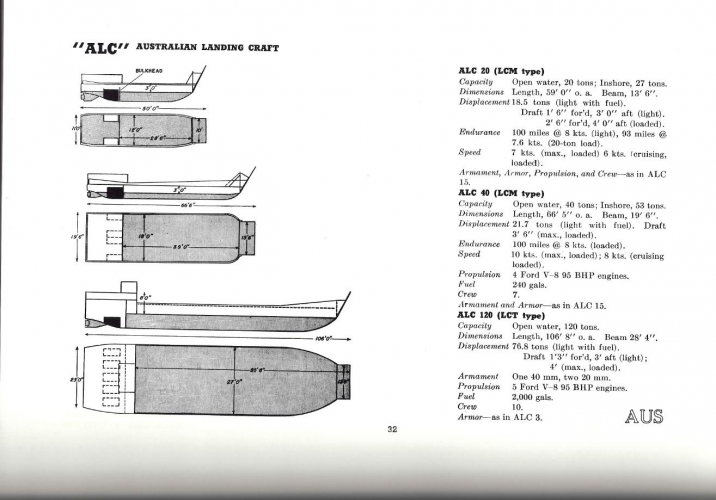
 
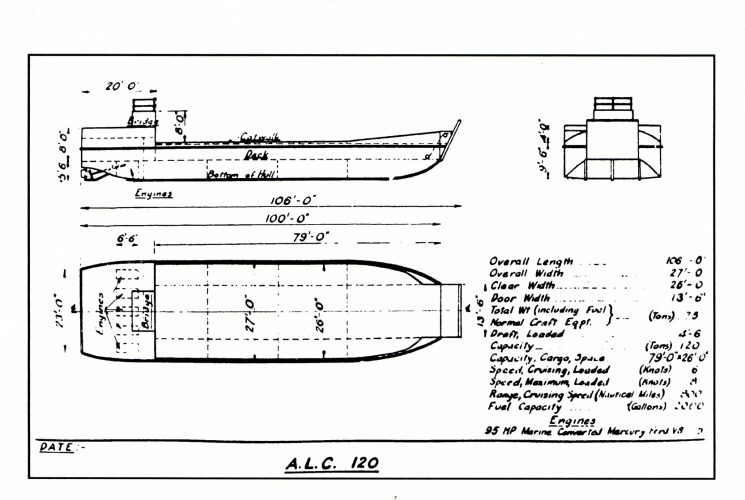
Digging up the amphibious craft again, I came across these little gems of info. Some 416 Army Landing Craft (ALC) were built in Australia during WW2, many right here in Geelong at the Ford factory, the numbers denote their cargo capacity. Of particular interest to me are the 55 ALC40s and 5 ALC 120s delivered late in the war, and some 19 ALC 40 and 1 ALC 120 did a 1600km ocean voyage from Cairns to New Britain late in WW2. One of the ALC120s was running beef cattle around Cape York in 1955 and one of the ALC40s was still seaworthy and in Darwin in 1960, which is a testament to their design and construction.

This suggests to me a couple of things. Firstly, there's no excuse for the design faults of the late 50s ALC50s, although apparently the defects found on the delivery voyage were fixed and the ALC50s served well for a decade, certainly one went 550 miles up the Sepik River in 1970. Secondly, there was a larger landing craft type on the books (ALC50-80', ALC120-106', LSM 1-203') that the Army might have ordered an updated version of in the 50s; throw a couple of these into the earliest Army amphibious fleet and you're getting somewhere.

1763152421482.png

1763152444120.png
 
Last edited:
Digging up the amphibious craft again, I came across these little gems of info. Some 416 Army Landing Craft (ALC) were built in Australia during WW2, many right here in Geelong at the Ford factory, the numbers denote their cargo capacity. Of particular interest to me are the 55 ALC40s and 5 ALC 120s delivered late in the war, and some 19 ALC 40 and 1 ALC 120 did a 1600km ocean voyage from Cairns to New Britain late in WW2.

This suggests to me a couple of things. Firstly, there's no excuse for the design faults of the late 50s ALC50s, although apparently the defects found on the delivery voyage were fixed and the ALC50s served well for a decade, certainly one went 550 miles up the Sepik River in 1970. Secondly, there was a larger landing craft type on the books (ALC50-80', ALC120-106', LSM 1-203') that the Army might have ordered an updated version of in the 50s; throw a couple of these into the earliest Army amphibious fleet and you're getting somewhere.
Again this would be amazing for the army and local shipbuilding if they did that. Say the built some updated versions of the ALC-50, ALC120 and LSM1 than the US LSM wouldn't get brought then?
I wonder how this effects the amphibious fleet in the future?
 
I'd put MLRS into the same category as SPAAG, a nice to have once everything else is sorted but not drastically needed given the threat. What would an MLRS do in Vietnam for example?
Ok, Rule of Cool, well have to agree to disagree.

As far as VietNam, MLR systems in the Australian ORBAT would bring instant and independent suppressive firepower to the Australian Task Force, which we had to rely on the U.S. to supply with their 155mm or ground attack aircraft.
As emphasised by the Battle of Coral and Long Tan, the organic artillery of both Australian and New Zealand's 105mm howitzers reached critical statis when rapid fire of these tubed howitzers exceeded their parameters.
As was the case in the Battle of Long Tan, the NVA & Viet Cong elements were able to disengage from the battle unhindered. When massive saturation bombardment by MLR could have either acted as a cut-off and or interdicted the enemy in both their attack and withdrawal. Leaving the 105mm howitzers to concentrate on danger close call for fire where their accuracy was more critical.

On top of this, in terms of cost, number of crews, tactical and strategic deployment, the MLR holds some advantage. Especially if ones government/military is focused on a percieved numerically larger adversary like Indonesia.

Regards
Pioneer
 
Last edited:
I'm inclined to agree that there was a deficiency in Australian artillery in Vietnam, but it appears to me the easiest way to mitigate that would be to deploy a battery of 5.5" howitzers.
 
I'm inclined to agree that there was a deficiency in Australian artillery in Vietnam, but it appears to me the easiest way to mitigate that would be to deploy a battery of 5.5" howitzers.
Can I say Rule of Cool, my experience in the Green Machine has always been the notion that the Australian government, shrewdly, is always looking for ways and means to mitigate $ expense $. And as a consequence try's to ensure our grand ally, where ever and whenever picks up the bill for our participation....Hence the deployment by the Australian Army of its then 5.5" howitzers would have required the Australian government to spend a lot of money on 5.5" rounds, as 5.5" wasn't in the U.S. inventory. Where as mysteriously enough, the U.S. always had an abundance of 105mm rounds and charges we willingly utilised:rolleyes:.....


Regards
Pioneer
 
Last edited:
Can I say Rule of Cool, my experience in the Green Machine has always been the notion that the Australian government, shrewdly, is always looking for ways and means to mitigate $ expense $. And as a consequence try's to ensure our grand ally, where ever and whenever picks up the bill for our participation....Hence the deployment by the Australian Army of its then 5.5" howitzers would have required the Australian government to spend a lot of money on 5.5" rounds, as 5.5" wasn't in the U.S. inventory. Where as mysteriously enough, the U.S. always had an abundance of 105mm rounds and charges we willingly utilised:rolleyes:.....


Regards
Pioneer

Sure, but using the existing 5.5" guns and ammo would be cheaper than introducing an MLRS. Presumably such a deployment would use Australian ammo production and British ammo due to expire could be procured at a reasonable price.
 
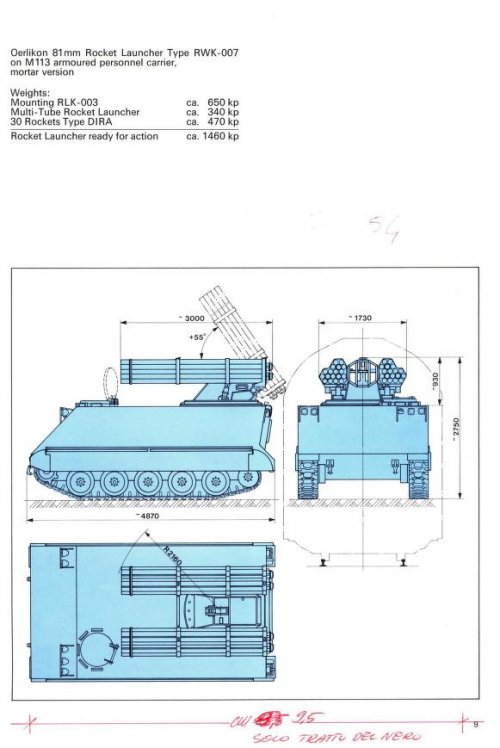
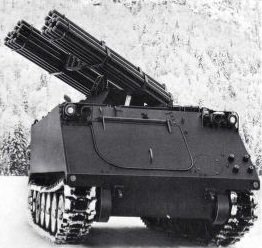
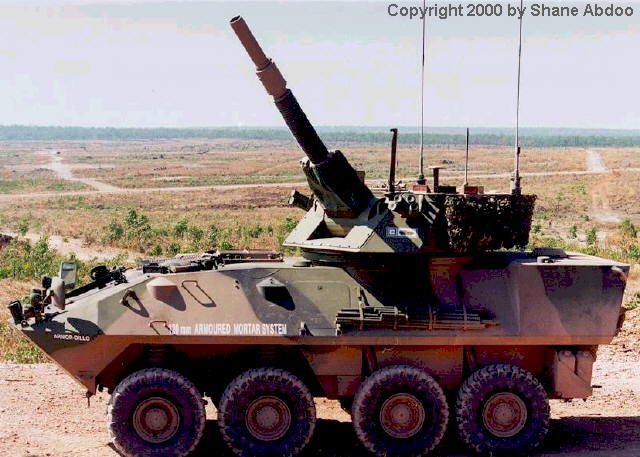
Something like this:

Oerlikon 81mm MLR RWK-007 system, would slip into the existing Australian Army's M113 mortar carrier variant very nicely!

Regards
Pioneer
 

Attachments

  • Oerlikon 81 mm MRL__.jpg
    Oerlikon 81 mm MRL__.jpg
    60.7 KB · Views: 29
  • Oerlikon_81mm_System_0004.jpg
    Oerlikon_81mm_System_0004.jpg
    31.6 KB · Views: 37
That looks cool, but I'd suspect it would be something for the 70s or 80s once the Regular Army has matured and grown rather than something for the Vietnam era.
 
Sure, but using the existing 5.5" guns and ammo would be cheaper than introducing an MLRS. Presumably such a deployment would use Australian ammo production and British ammo due to expire could be procured at a reasonable price.
Or you could purchase M114 155 mm Howitzers either from the US or Canadian or British stocks.
 
Or you could purchase M114 155 mm Howitzers either from the US or Canadian or British stocks.

That's a waste of money, time and expertise when Australia already has sufficient 5.5" weapons, stocks of ammunition, spares, training and support infrastructure. All Australia would have to buy if 5.5" were deployed is the ammunition, and that would be available enough to be reasonably cheap.
 
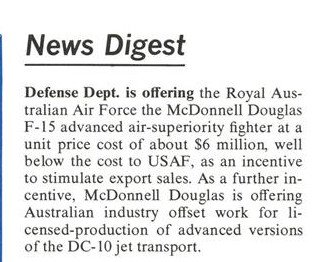
Came across this researching something else, DoD offered Australia F-15s at $6 million apiece in 1973 - cheaper than the USAF was paying.

For comparison an F-14A cost the US Navy about $16 million apiece at that time.

It would be crazy to have ignored such an offer, right?
 

Attachments

  • Aus_F-15_AvWeek_19730723_013.JPEG
    Aus_F-15_AvWeek_19730723_013.JPEG
    73.4 KB · Views: 38
Came across this researching something else, DoD offered Australia F-15s at $6 million apiece in 1973 - cheaper than the USAF was paying.

For comparison an F-14A cost the US Navy about $16 million apiece at that time.

It would be crazy to have ignored such an offer, right?
As much as I woukd have loved to see the F-15 in the ADF ORBAT. I think you might be overlooking the factual maintenance/reliability issues with the legacy F-15A/B, as well as the P&W F100 turbofan. Then there was the actual notorious running costs of the F-15.

Truth is, if the mighty USAF were struggling keeping the F-15 combat ready, I think the RAAF explicitly appreciated this.

Regards
Pioneer
 
As much as I woukd have loved to see the F-15 in the ADF ORBAT. I think you might be overlooking the factual maintenance/reliability issues with the legacy F-15A/B, as well as the P&W F100 turbofan. Then there was the actual notorious running costs of the F-15.

Truth is, if the mighty USAF were struggling keeping the F-15 combat ready, I think the RAAF explicitly appreciated this.

Regards
Pioneer
Plus there was not a pound for air to ground in the F-15A/B which the RAAF would want to have aswell
 
Plus there was not a pound for air to ground in the F-15A/B which the RAAF would want to have aswell
The F-15A/B was baselined with the same air to ground capability as the F-4E as delivered. It had a maximum 16000lb bomb load, they couldn't target their own LGBs but could carry them and deploy them in conjunction with ground targeting, or another aircraft wired for and equipped with a pod.
 
As much as I woukd have loved to see the F-15 in the ADF ORBAT. I think you might be overlooking the factual maintenance/reliability issues with the legacy F-15A/B, as well as the P&W F100 turbofan. Then there was the actual notorious running costs of the F-15.

Truth is, if the mighty USAF were struggling keeping the F-15 combat ready, I think the RAAF explicitly appreciated this.

Regards
Pioneer

An RAAF contingent had been in the USA two months before that offer, reviewing the F-15 and P-530, so it wasn't without foundation.

By August 1973 the Australians were reported to be 'extremely interested' in the F-15. The maintenance man hours per flight hour were already 35% lower than the F-4. It was proposed that Australian industry would be able to compete for F-15 parts contracts in the future.

Unfortunately by 1976 the USAF flyaway cost of an F-15 had increased to $12.5 million and in December 1976 McD was offering the F-15 to Japan at $22 million apiece. The Aussies had truly missed their chance for cheap Eagles by the time they asked industry for proposals in January 1977.

By June 1979 the F-15 was cut from the field partly due to cost but also "because we need certainty of whether the aircraft will be in production for a long time", per Air Commodore Collinson - six years after the Aussies first looked at the F-15.
 
Last edited:
A key facet of US Security Cooperation is that it comes at no cost to the US taxpayer, there is no Congressional Appropriation for it and foreign participants have to pay in advance for any work the US DoD expects to do. Combined with other regulations this can cause problems, like when when still in USN custody a RAAF P3B caught fire and was destroyed in 1968 there was no method by which the USN could compensate the RAAF.

As such I'd be very curious to know who was going to pay the price difference so the RAAF get could F15s cheaper than the DoD?
 
A key facet of US Security Cooperation is that it comes at no cost to the US taxpayer, there is no Congressional Appropriation for it and foreign participants have to pay in advance for any work the US DoD expects to do. Combined with other regulations this can cause problems, like when when still in USN custody a RAAF P3B caught fire and was destroyed in 1968 there was no method by which the USN could compensate the RAAF.

As such I'd be very curious to know who was going to pay the price difference so the RAAF get could F15s cheaper than the DoD?
Yes, as you allude (if I'm correct), purchasing U.S. weapons systems might be percieved as exciting, but it often comes as loaded deal, in more ways than one.

Regards
Pioneer
 
Yes, as you allude (if I'm correct), purchasing U.S. weapons systems might be percieved as exciting, but it often comes as loaded deal, in more ways than one.

Regards
Pioneer

It's a system with its own foibles, pros and cons. It tends to be cheap. I was once told that Airbus charged $1m for a meeting, although I suspect this would be a pretty hefty meeting.
 
The F-15A/B was baselined with the same air to ground capability as the F-4E as delivered. It had a maximum 16000lb bomb load, they couldn't target their own LGBs but could carry them and deploy them in conjunction with ground targeting, or another aircraft wired for and equipped with a pod.
Maybe McDonnell Douglas to expand the Strike capability of the F-15 for the RAAF. I would say if the Indonesia threat had continued the F-15 would be the fighter chosen to replace the Mirage III
 
Maybe McDonnell Douglas to expand the Strike capability of the F-15 for the RAAF. I would say if the Indonesia threat had continued the F-15 would be the fighter chosen to replace the Mirage III
They did, the F-15E demonstrator was already flying in the early 80s and the CFTs and associated tangential stores configuration were also in development.

It is ironic that one of the reasons given for the F-15 not being selected for the RAAF was the assumption it would not be in production by the late 80s.
 
I've just head that for decades the Army has wanted a Self Propelled mortar to support its Mechanised infantry. Does anyone know anything about this? Presumably it would mean something more impressive than an M113 with an 81mm mortar, or even a 107mm motor.
 
I've just head that for decades the Army has wanted a Self Propelled mortar to support its Mechanised infantry. Does anyone know anything about this? Presumably it would mean something more impressive than an M113 with an 81mm mortar, or even a 107mm motor.
I've heard the same. i would expect it being a 120mm mortar in my mind. In modern context i would love to see a 120mm in the bushmaster, though in a 70s/80s context i would see a 120mm mortar variant of a project waler IFV, anything else im not sure
 
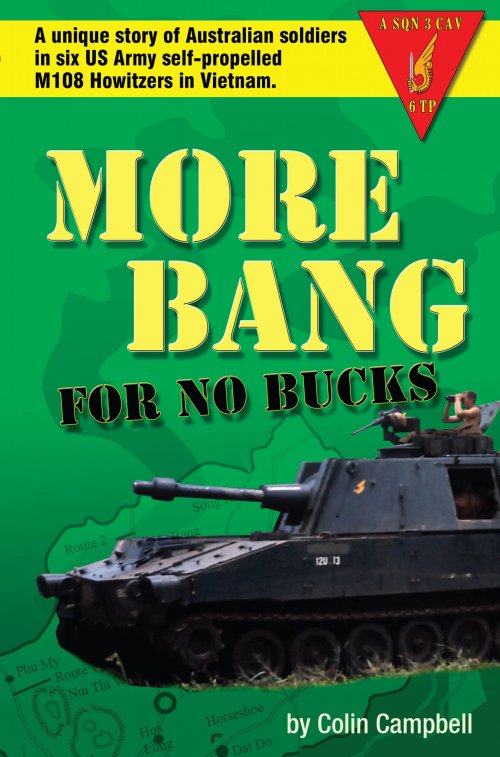
Has anyone heard of 6 Troop, A Squadron, 3rd Cavalry Regiment borrowing six M108 SP Howitzers in 1967? They were used mainly in the direct fire role for base defence at Nui Dat and were returned when the Centurions arrived.

Another niche capability we had for a short time and never kept!

View attachment 788381
Not a bad read,
 

Attachments

  • morebang6TP3CAV-scaled.jpg
    morebang6TP3CAV-scaled.jpg
    359.3 KB · Views: 19
Not a bad read,

I've never read he book, but have read some good precis.

FWIW the M108 shares the same hull and turret as the M109 155mm SP howitzer, and IIUC the US converted 105mm M108s to 155mm M109s. Presumably if Australia had picked up some M108s during Vietnam they could be converted to 155mm M108s as part of the towed 5.5" replacement in the early 80s when the Army got M198 155mm towed howitzers.
 
Last edited:
I haven't seen anything though I suspect it was probably due to a combination of funding and no official requirement.

Do you know when the Army first expressed a desire for the SP mortar? Did it compete with the desire for a SP Howitzer?

What's the story with the M113 mortar carriers? Were they upgraded with the AS4 programme?
 
Do you know when the Army first expressed a desire for the SP mortar? Did it compete with the desire for a SP Howitzer?

What's the story with the M113 mortar carriers? Were they upgraded with the AS4 programme?
Yeah according to wiki 21 where upgraded to M125AS3 AM Standard
I haven't seen anything though I suspect it was probably due to a combination of funding and no official requirement.
Not surprising there then really
 
In 1963, with the LSM-1s in service and Sydney as a fast troop transport the COSC began talking about a logistics ship. A big, fast 14,000dwt Mariner class was suggested, but a newer ship (presumably as big as the Mariner) with a smaller crew was suggested instead but also rejected as too big, then two smaller ships were suggested. An Attack Cargo Ship (ie carrying its own LCMs etc) was rejected because it would require a crew of over 400.

In the end the Army bought the John Monash 1,400dwt and chartered/commissioned the Jeparit 8,400dwt for $10m and Boonaroo 6,400dwt for several million. All 3 of these ships have on-board crane for loading-offloading cargo. Apparently, the cost of a logistic ship would have been covered by the cost of the Jeparit and Boonaroo.

What if the idea hadn't fizzled out and the Army had bought a logistic ship (or two), and perhaps fitted it with some landing craft as deck cargo once in service, like the Sydney's 1968 refit? This could have been instead of John Monash. It could be a great compliment to the LSM-2 with their rear loading ramp and help unload any other ships that might support an amphibious operation.
 
In 1963, with the LSM-1s in service and Sydney as a fast troop transport the COSC began talking about a logistics ship. A big, fast 14,000dwt Mariner class was suggested, but a newer ship (presumably as big as the Mariner) with a smaller crew was suggested instead but also rejected as too big, then two smaller ships were suggested. An Attack Cargo Ship (ie carrying its own LCMs etc) was rejected because it would require a crew of over 400.

In the end the Army bought the John Monash 1,400dwt and chartered/commissioned the Jeparit 8,400dwt for $10m and Boonaroo 6,400dwt for several million. All 3 of these ships have on-board crane for loading-offloading cargo. Apparently, the cost of a logistic ship would have been covered by the cost of the Jeparit and Boonaroo.

What if the idea hadn't fizzled out and the Army had bought a logistic ship (or two), and perhaps fitted it with some landing craft as deck cargo once in service, like the Sydney's 1968 refit? This could have been instead of John Monash. It could be a great compliment to the LSM-2 with their rear loading ramp and help unload any other ships that might support an amphibious operation.
A new build Mariner would have been quite handy and useful for the army, It could have been built in australia too, cause we did have the shipyards in the 60s to do it. I agree it would have complimented the LSM-2s quite nicely. In this scenario where the Army has 1 or 2 Mariner type vessels, 4 LSM-2s and heap of LCM's what would the RAN do with Sydney?
Would they replace her with a Tobruk type vessel?
 
A new build Mariner would have been quite handy and useful for the army, It could have been built in australia too, cause we did have the shipyards in the 60s to do it. I agree it would have complimented the LSM-2s quite nicely. In this scenario where the Army has 1 or 2 Mariner type vessels, 4 LSM-2s and heap of LCM's what would the RAN do with Sydney?
Would they replace her with a Tobruk type vessel?

My primary interest was from wondering how the Army LCM-8s got to Vietnam. While the LSM-1 could self deploy such a long journey is well beyond the initial 11 LCM-8, so they would have to have been transported to the theatre, offloaded somewhere and and then gone to Vung Tau. Sydney had to wait for a 1968 refit to get 6 x LCM-6s and thereafter could unload and reload the Battalions in a single night, but it wasn't until Tobruk entered service in 1981 that a pair of LCM-8s would have been available to a landing force in the 'first wave'.

The cargo ship talks in 1963-64 was about the only capability discussion I know of that could morph into something that could carry landing craft that could be rapidly self deployed. An LCM-8 weight about 55 tons empty and an LCM-6 weighs 30 tons empty, which is an indication of deck strength and crane lift capacity required.

Jervis Bay might be another opportunity, although it was primarily a training ship and didn't get a helipad for 10 years. A bit more vigour might have seen some LCM-6s slung off to the side and there was a proposal for it to carry 6 helicopters.
 
The cargo ship talks in 1963-64 was about the only capability discussion I know of that could morph into something that could carry landing craft that could be rapidly self deployed. An LCM-8 weight about 55 tons empty and an LCM-6 weighs 30 tons empty, which is an indication of deck strength and crane lift capacity required.
Wiki says over 61 tonnes for the LCM-8, and 60 tonnes of cargo. So you'd need 125-150 tonne crane(s, total lift) for that. Either one monster or a pair of smaller cranes per side. LCM-6s were ~65 tonnes fully loaded.

Huh. Sounds like the best way to lay out the ship is some multiple of 4x 75tonne cranes (multiple of 2x per side) and enough hull length for either two LCM-6s (56ft long ea) or one LCM-8 (~75ft long) between the cranes.
 
Wiki says over 61 tonnes for the LCM-8, and 60 tonnes of cargo. So you'd need 125-150 tonne crane(s, total lift) for that. Either one monster or a pair of smaller cranes per side. LCM-6s were ~65 tonnes fully loaded.

Huh. Sounds like the best way to lay out the ship is some multiple of 4x 75tonne cranes (multiple of 2x per side) and enough hull length for either two LCM-6s (56ft long ea) or one LCM-8 (~75ft long) between the cranes.

I think that Wiki number is a bit of a stretch, but I won't die in a ditch over it because we have built/bought the LCM-2000 and LCM-1E in order to finesse a few tons from the basic design. In any case, LCMs are transported empty.

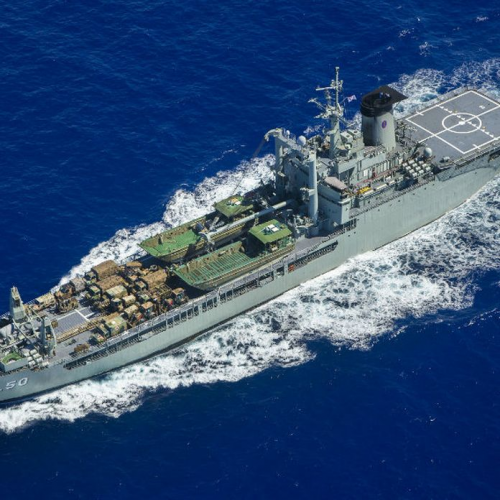
1764098238392.png

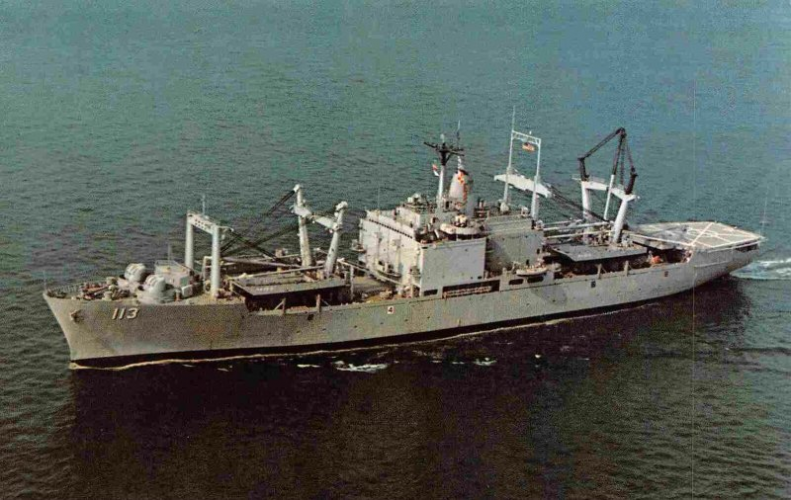
Here's a proper USN LKA Amphibous Caro ship of the type that was rejected as it would require 400+ crew.

1764098329191.png

I'd think something less than this, a cargo ship with a couple of LCM-6s would do for starters. After all HMAS Choules only has 1 LCM-8 and a pair of LCVPs and it's a proper well-dock landing ship.
 
Back
Top Bottom