Alternate Australian Defence Force 1970s Procurements?

The Victor B2 could carry 35 x 1,000lb bombs internally, 5 x standard V-bomber 7-bomb clips to the Vulcan's 3. However the Victor's clips were staggered, 2 higher in the bomb bay and 3 beneath them. There's a photo of Victor dropping 35 bombs that shows this pattern leaving the bomb bay.
Going off this you could get around 12+ harpoons (Again depending on the depth of the bomb bay) So 8+ for the Vulcan & 12+ for the Victor, it just depends which one can carry more on the wings?
 
Okay, only 7 LGBs, with the folding tail fins developed for F-117.

Only 3 LGBs without those folding tail fins.
You should be able to get 6x 1000 or 2000 LGBs in the vulcan bomb bay. The bomb bay is 8.84m long (1000lb = 3.7m and 2000lb = 4.39m). I cant find how much wider the Paveway kits make the bombs, so possible you could fit more.
 
The Vulcan paper is interesting in its reference to the advent of the Democratic Labor Party and its impact on Australian politics, specifically weakening the opposition and taking pressure of the Government in terms of maintaining defence spending. There was also mention of the 1954 election, which was close and saw increased attention towards defence, then the landslide in 56, which took the pressure off and was followed by significant defence cuts.

This fits with the pressure from a revitalised opposition in the early 60s when they were pushing the bomber gap, which resulted in the announcement of the F-111 selection.

This made me recall a book I read some time ago on the Voyager Disaster, written by a retired RN admiral. He referred to Robert Menzies not particularly liking, let alone respecting, the Military. Basically, it painted him as having a bit of an ego and having no tolerance for anyone else being perceived as a leader. Given the choice, he would shrink defence and spend money on things he saw as more important. There have been other mentions of his dislike of industrialisation and technological advancement. He was in a difficult position where Australia was growing and becoming a more modern, more advanced nation, with or without him, while he would have preferred a more agrarian society that knew its place within Empire.

You have to wonder where we would have been if there had been a Labor term or two in the 50s, which got the Liberal Party out from under Menzies and allowed them to revitalise.
 
All the talk about Harpoons and LGBs in V bombers makes it seem as if they won't be replaced by the F111 in he 70s and last as bombers well int the 80s. If RAAF V bombers survive beyond the early 70s it will be like they did in the RAF, as tankers and strategic recce aircraft.

Perhaps if the RAAF had V bombers they could convert to tankers the F111s might have received the F111K refuelling probe. After all, if they were replacing V-bombers the historical argument about them having plenty of range wouldn't apply as they'd have much less range than the Vulcan. In fact Australia could get involved in Britain's F111 program, they did have a fair bit in common.
 
Last edited:
The Falklands LGB set up was a rush job, I suspect with time a proper project could come up with a neat solution that could carry quite a few LGBs. However the Vulcan likely isn't the best carrier for them, mainly due to its low level speed being limited to 350kts to keep buffeting below 2g. It's no big deal to loiter around at medium level dropping LGBs at leisure, but if a toss attack from low level is required or other attack tactics due to resistance over the target a bomb bay full of LGBs isn't the best thing since sliced bread.
In all honesty, a toss bombing is one of the worst ways to employ any LGB.


That said, a Vulcan is an intriguing plane full of possibilities. It has heaps of internal room to pack with cool electronics and the bomb bay and pylons could make all sort of fancy weapons combo possible, the Falklands lash-ups show what might be possible.
Yes, the Vulcan is my favorite V-bomber as well.
 
All the talk about Harpoons and LGBs in V bombers makes it seem as if they won't be replaced by the F111 in he 70s and last as bombers well int the 80s. If RAAF V bombers survive beyond the early 70s it will be like they did in the RAF, as tankers and strategic recce aircraft.

Perhaps if the RAAF had V bombers they could convert to tankers the F111s might have received the F111K refuelling probe. After all, if they were replacing V-bombers the historical argument about them having plenty of range wouldn't apply as they'd have much less range than the Vulcan. In fact Australia could get involved in Britain's F111 program, they did have a fair bit in common.
Quite possibly that is what would end up happening.
Though if the money and reasoning is around i would have liked to see the Vulcan and F-111 in RAAF service. The F-111 as the penetrator taking out air defences and air field infrastructure, Than once the air space is secured the Vulcan come in as a bomb track with its massice payload of LGB's. Or the Vulcan as a big missile carrying machine with harpoons and ALCM. Though in do think this is fantasy especially if the UK retires its Vulcans
 
The thread has the bomb layout in the bomb-bay for the Victor. it appears that the V-bomber racks had multiple configurations: Standard Vulcan 7-bomb rack, also used in the 3 of the 5 Victor bomb-bay points 4 top & 3 bottom, the 7-bomb rack on the other 2 Victor bomb-bay points 3 top & 4 bottom and the 10-bomb rack 3 top, 4 middle & 3 bottom.

The thread also shows the proposed wing bomb racks for the Victor, encased in the fairing that later became fuel tanks.

That said, the RAAF rejected the V-bomber proposal for good reason, not least because they were aware of B58 Hustler development and thought (correctly) that supersonic aircraft were the future and by the time V-bombers were delivered they'd be verging on obsolescence.
 
In all honesty, a toss bombing is one of the worst ways to employ any LGB.

It was how RAF Harrier GR3s delivered their LGBs in the Falklands. It might be the only way to deliver these weapons in certain circumstances, especially when non-USAF users lack the USAFs to dominate IADS so using cover is the best option.
 
Wow, I've never seen that 10 bomb rack before, a picture IS worth 1,000 words!

30,000lbs would be a LOT in hot Australian weather, that might be an RAF in winter thing.
I mean it's only 9000lbs more. Might mean slightly less fuel depending on the situation
 
That said, the RAAF rejected the V-bomber proposal for good reason, not least because they were aware of B58 Hustler development and thought (correctly) that supersonic aircraft were the future and by the time V-bombers were delivered they'd be verging on obsolescence.
The v bombers only became obsolete is because Britain failed to developed/merge american standoff PGMs to the V Bombers. If the Vulcan or Victor become missile trucks for the RAF and RAAF they would be very useful in long range stand off attacks and saturation attacks (depending on how many missiles they could carry). I mean they could off still be in service in this role like the B52 with the USAF
 
I mean it's only 9000lbs more. Might mean slightly less fuel depending on the situation

A Vulcan B2 was 100,000lbs empty, 210,000lbs take off with ordnance. Maximum fuel weight was 74,000lbs, 2/3 of the difference between empty and AUW with ordnance, 21,000lb bombload brings that total up to 95,000lbs with the rest for things like crew, lubricants etc etc etc. Adding 9,000lb to the bombload will mean fuel drops to 65,000lbs, or 12%.

The v bombers only became obsolete is because Britain failed to developed/merge american standoff PGMs to the V Bombers. If the Vulcan or Victor become missile trucks for the RAF and RAAF they would be very useful in long range stand off attacks and saturation attacks (depending on how many missiles they could carry). I mean they could off still be in service in this role like the B52 with the USAF

True, but that is 2 (or more) tactical cycles away from a RAAF decision in 1957 or so; High-Level - Stand-off nukes and/or Low-level nukes & conventional - stand-off/PGM conventional.

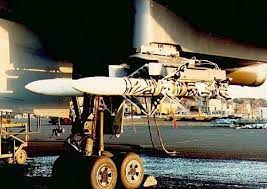
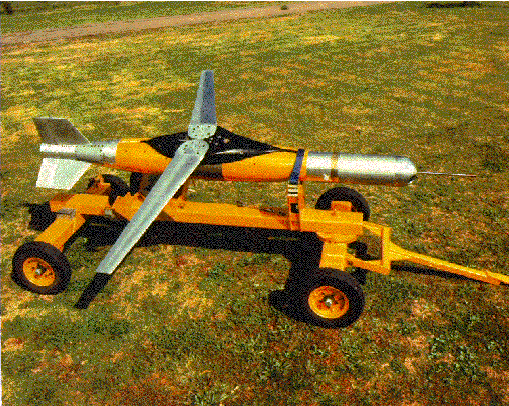
That said, I'm an unrealistic dreamer who goes down rabbit holes faster than Alice in Wonderland, so obviously I've given this some thought. The first PGM should be the Skrike ARM from 1966 or so, I think the Bullpup and AS30 are too limited, while the Shrike can supress defences so the target can eat the bomb bay ordnance. The next family I'd get would be Standard ARMs, and the 3,000lb versions of EO HOBOS and Paveway LGBs by 1970-72, indeed a single Vulcan could carry a Standard on each wing and 2 or 3 of these huge, guided weapons internally. That way a single aircraft could perform its own sophisticated SEAD and deliver destructive hits against big, tough targets resulting in less time over the target.

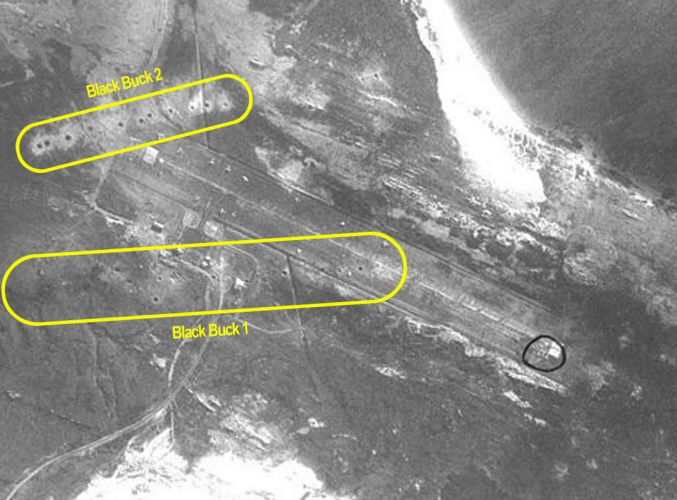
I've also superimposed a line representing the ~3,100' string of craters dropped from Black Buck 1 from 10,000' at 350kts onto other military airfields like Darwin, Butterworth and Guam and they'd certainly get multiple hits on stuff. Black Buck 2 dropped from 16,000' and it's string of craters seems to be closer together, so they were likely dropped at shorter intervals.

1763000717600.png

That said, the RAAF Vulcans do need to be replaced by F111s which means deliver no later than 1976.

 
Last edited:
That said, I'm an unrealistic dreamer who goes down rabbit holes faster than Alice in Wonderland, so obviously I've given this some thought. The first PGM should be the Skrike ARM from 1966 or so, I think the Bullpup and AS30 are too limited, while the Shrike can supress defences so the target can eat the bomb bay ordnance. The next family I'd get would be Standard ARMs, and the 3,000lb versions of EO HOBOS and Paveway LGBs by 1970-72, indeed a single Vulcan could carry a Standard on each wing and 2 or 3 of these huge, guided weapons internally. That way a single aircraft could perform its own sophisticated SEAD and deliver destructive hits against big, tough targets resulting in less time over the target
Same here and I like what you propose here. You also have the spare payload capacity for more than 2 standard ARMs if required
That said, the RAAF Vulcans do need to be replaced by F111s which means deliver no later than 1976.
If we say the RAAF got vulcans and did your proposal. I would say some surviving airframes with the least number of flight hours might be kept in one big sqn with f111 replacing the rest. We kept our f111s 14yrs after USAF had retured there's. I wouldn't bee surprised if the same happend with the vulcans especially with if they got upgraded with PGMS and stand off muntions
 
Last edited:
You also have the spare payload capacity for more than 2 standard ARMs if required

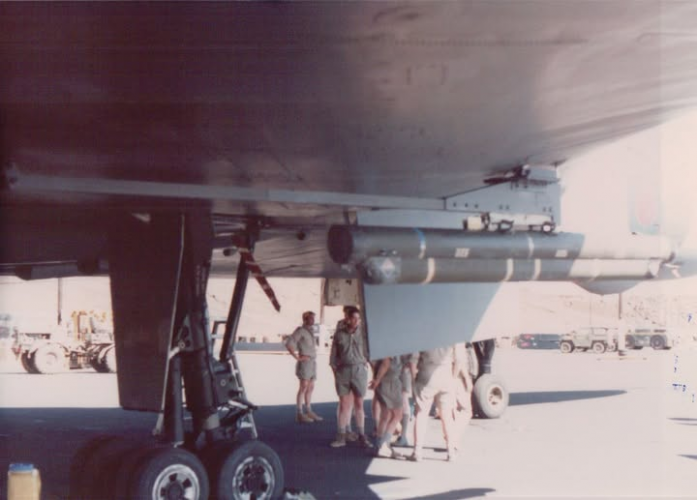
There are only 2 external pylons to play with, and the Standard ARM is a big beast. The Black Buck Wild Weasel missions carried 4 Shrikes, some tuned for the Search radars and other tuned for the fire control radars, but the Shrike is pretty short range and it would be nice to launch ARMs at 90km rather than 40km.

If we say the RAAF got vulcans and did your proposal. I would say some surviving airframes with the least number of flight hours might be kept in one big sqn with f111 replacing the rest. We kept our f111s 14yrs after USAF had retured there's. I wouldn't bee surprised if the same happend with the vulcans especially with if they got upgraded with PGMS and stand off muntions

2sqn kept flying Canberras until 1981, 11 years after 1 & 6 sqns converted to Phantoms. I could imagine a small number of Vulcans being kept on, supported by cannibalising the rest, for a few years making good use of their great range.

The F111 fleet was kept flying for so long after the USAF because the RAAF bought 15 F111Gs and the engines from the F111D fleet and fitted them to the F111Cs & Gs as well as developing a bespoke industry to keep them flying. Apparently in 2008 they were the most maintenance intensive aircraft in the world. FWIW I went to Amberley in 2009 while they were still flying, which was very cool.

The C model was a modified A model for the RAAF

That's because we got the current production model in 1968, if we got the current production model in 1974-76 it would be based on the F111F.
 
There are only 2 external pylons to play with, and the Standard ARM is a big beast. The Black Buck Wild Weasel missions carried 4 Shrikes, some tuned for the Search radars and other tuned for the fire control radars, but the Shrike is pretty short range and it would be nice to launch ARMs at 90km rather than 40km.
Could be able to mount two together side by side? The hardpoints should be able to take the weight seeing as though 2 Standard ARM weighs less than the Skybolt.
2sqn kept flying Canberras until 1981, 11 years after 1 & 6 sqns converted to Phantoms. I could imagine a small number of Vulcans being kept on, supported by cannibalising the rest, for a few years making good use of their great range.

The F111 fleet was kept flying for so long after the USAF because the RAAF bought 15 F111Gs and the engines from the F111D fleet and fitted them to the F111Cs & Gs as well as developing a bespoke industry to keep them flying. Apparently in 2008 they were the most maintenance intensive aircraft in the world. FWIW I went to Amberley in 2009 while they were still flying, which was very cool.
Indeed they would be quite handy to keep a few around.
Lucky you i was too young to ever see the F-111s in service
 
Could be able to mount two together side by side? The hardpoints should be able to take the weight seeing as though 2 Standard ARM weighs less than the Skybolt.

The Standard ARM was extremely expensive and produced in small numbers so likely wouldn't be produced in large numbers to carry 4 on a Vulcan. They'd likely be used alongside the earlier Shrikes, which were used in pairs on each pylon of the Vulcan. Indeed adding some Standards would allow Shikes to be doubled up and be used to prolifically.
 
The Standard ARM was extremely expensive and produced in small numbers so likely wouldn't be produced in large numbers to carry 4 on a Vulcan. They'd likely be used alongside the earlier Shrikes, which were used in pairs on each pylon of the Vulcan. Indeed adding some Standards would allow Shikes to be doubled up and be used to prolifically.
So like on Vulcan would have 2 Standards and another would have 4x Shrikes if working in pairs. Or 2x Standards and 4x Shrikes on one plane?
How much further could the Vulcans ECM be upgraded?
 
So like on Vulcan would have 2 Standards and another would have 4x Shrikes if working in pairs.

I'd think so.

Or 2x Standards and 4x Shrikes on one plane?

2 Shrikes takes up enough room, no room for a Standard there. In any case I'd imagine the Standard and Shrike would have different roles, with the Standards being used to open up blind spots in search radar coverage from long range and Shrikes being used in conjunction with ECM to supress local radars close to the target.

1763061106092.png

How much further could the Vulcans ECM be upgraded?

As much as the budget allows and the threat requires, the electronics to do so are ubiquitous. In the Falklands Vulcans on Black Buck 1 & 2 carried ALQ101s taken from Buccaneers on the pylons and apparently jammed the Argentine radar in Stanley. The Tornado's Sky Shadow pod components were crammed into the Aden gun pod carried by Harriers and called Blue Eric, which shows what can be done in a hurry if needed.

1763063758700.png
 
2 Shrikes takes up enough room, no room for a Standard there. In any case I'd imagine the Standard and Shrike would have different roles, with the Standards being used to open up blind spots in search radar coverage from long range and Shrikes being used in conjunction with ECM to supress local radars close to the target
Sounds good. I wonder how hard it would be to add more external hard points to the Vulcan?
This makes me think the Vulcan could have become the B52 for the British and potentially Australia if the money and will was there
 
Sounds good. I wonder how hard it would be to add more external hard points to the Vulcan?

Too much for Australia to do. A rule of thumb is that you're stuck with what you buy, fancy things like engine swaps or extra pylons added to in-service aircraft are vanishingly rare.

Bear in mind too that even as late as the 1991 PGW 90% of the bombs dropped were dumb bombs. Guided weapons in the 70s and 80s are 'silver bullets', to be used sparingly for special purposes. In RAAF service, much like RAF service, Vulcans would primarily be dropping its 21 x 1,000lb bombs and the PGW would likely be used to make this task easier or to do the few things these bombs can't.

This makes me think the Vulcan could have become the B52 for the British and potentially Australia if the money and will was there

It could be in technical terms, the basic design gives you a huge payload, range and room for upgrades.
 
I wonder how hard it would be to add more external hard points to the Vulcan?
Full engineering evaluation about the stresses and potentially a redesign of parts of the wings. Then ripping the wings apart to install everything. Then flight testing to make sure ordnance does separate cleanly and safely.

Doable but very time-consuming and expletives deleted expensive.
 
Full engineering evaluation about the stresses and potentially a redesign of parts of the wings. Then ripping the wings apart to install everything. Then flight testing to make sure ordnance does separate cleanly and safely.

Doable but very time-consuming and expletives deleted expensive.
So not impossible but unlikely, in other words to have more harpoons on the Vulcan the B.3 variant would have needed to be built
 
Bear in mind too that even as late as the 1991 PGW 90% of the bombs dropped were dumb bombs. Guided weapons in the 70s and 80s are 'silver bullets', to be used sparingly for special purposes. In RAAF service, much like RAF service, Vulcans would primarily be dropping its 21 x 1,000lb bombs and the PGW would likely be used to make this task easier or to do the few things these bombs can't.
I feel like Australia should have been an earlier adoptor of PGMs for its bomber fleet to allow a greater effect on target with the smaller numbers of aircraft we would operate unlike the mass the USAF can produce. Thats why im so keen on getting PGMs onto the Vulcan and F111
 
I feel like Australia should have been an earlier adoptor of PGMs for its bomber fleet to allow a greater effect on target with the smaller numbers of aircraft we would operate unlike the mass the USAF can produce. Thats why im so keen on getting PGMs onto the Vulcan and F111
For the late 1970s/1980s, possibly see the GTV/Kerkanya project enter service?

agw1.gif
 
I feel like Australia should have been an earlier adoptor of PGMs for its bomber fleet to allow a greater effect on target with the smaller numbers of aircraft we would operate unlike the mass the USAF can produce. Thats why im so keen on getting PGMs onto the Vulcan and F111

The issue is by the time PGMs become available for widespread export the threat environment in Australia's region was drastically reduced. Indonesia was gifted ex-RAAF Sabres for example, while the Domino Theory was proven false in practice when the Communist threats to Malaysia, Thailand etc petered out. It would be tough to get things ordered after 1972 for a number of years at least.
 
True, but that is 2 (or more) tactical cycles away from a RAAF decision in 1957 or so; High-Level - Stand-off nukes and/or Low-level nukes & conventional - stand-off/PGM conventional.

That said, I'm an unrealistic dreamer who goes down rabbit holes faster than Alice in Wonderland, so obviously I've given this some thought. The first PGM should be the Skrike ARM from 1966 or so, I think the Bullpup and AS30 are too limited, while the Shrike can supress defences so the target can eat the bomb bay ordnance. The next family I'd get would be Standard ARMs, and the 3,000lb versions of EO HOBOS and Paveway LGBs by 1970-72, indeed a single Vulcan could carry a Standard on each wing and 2 or 3 of these huge, guided weapons internally. That way a single aircraft could perform its own sophisticated SEAD and deliver destructive hits against big, tough targets resulting in less time over the target.

I've also superimposed a line representing the ~3,100' string of craters dropped from Black Buck 1 from 10,000' at 350kts onto other military airfields like Darwin, Butterworth and Guam and they'd certainly get multiple hits on stuff. Black Buck 2 dropped from 16,000' and it's string of craters seems to be closer together, so they were likely dropped at shorter intervals.

View attachment 791295

That said, the RAAF Vulcans do need to be replaced by F111s which means deliver no later than 1976.
Delivery of the Vulcan B.2 to RAF started in July 1960.
I guess at the end of the day, if the 'Indonesian threat' had dissipated, as it did, the Vulcan's strategic attributes would really be needed. If the threat continued, yes by all means, it's range and weapons load should justify it's continues modernisation and service. But the obvious truth is, the Vulcan, was and would remain an extremely expensive platform to maintain and operate.
So, I agree, the Vulcan replacement for the Vulcan B.2 needs to be 1976, as this was when General Dynamics was finish up F-111 manufacturing, with the F-111F. At minimum, Australia might consider the purchase of RF-111F's for their long-range penatration capabilities.
I very much doubt that Australia would be able to afford a Squadron of Vulcan B.2's in the stand-off anti-ship role.....

As for their possible employment as aerial tankers, how much transferable fuel did the Vulcan K.2 actually carry?
Again, as much as they might be owned and paid for by the RAAF, I would think the maintance and operational cost of keeping Vulcan's as aerial tanks would be costly, compared to the likes of a KC-135 or KB-707....

P.S. The RAAF evaluated the Bullpup ASM and quickly ascertain it was a dog of a missile design.

Regards
Pioneer
 
One thing I've never understood, is why the Australian Army never utilised Multiple Launch Rocket (MLR) systems...
Ok, granted, it undoubtedly followed it's principle allies (UK & U.S.) lead of trends, which in itself systematically eliminated MLR's from their Army's ORBATS.....
Now I know and appreciate the arguments of tube artillery and MLR's.
But for the cost, weight and logistics of tube artillery, especially when the Australian Army seemed to have an aversion to the notion of SPH/G's, until very recently. I've always believed that a basic MLR system, something as simple as the the South African Valkiri 127mm/West German LARS-1 110mm system mounted on a Unimog 4x4 or International Mk5 6x6 based system would have brought a lot of firepower at a reasonable cost and mobility.


Regards
Pioneer
 
I very much doubt that Australia would be able to afford a Squadron of Vulcan B.2's in the stand-off anti-ship role.....

The only AShM available during the Vulcan's realistic RAAF service life would be the Martel. Personally, I don't mind the Martel for the hypothetical RAAF Vulcan, the TV and ARM versions by themselves could give a RAAF Vulcan fleet a good suite of stand-off weapons without buying anything else.

As for their possible employment as aerial tankers, how much transferable fuel did the Vulcan K.2 actually carry?
Again, as much as they might be owned and paid for by the RAAF, I would think the maintance and operational cost of keeping Vulcan's as aerial tanks would be costly, compared to the likes of a KC-135 or KB-707....

A Vulcan with bomb-bay fuel tanks had about 90,000lb of total fuel, and could presumably offload half of that at a reasonable distance from base which would equate to servicing 4 x F111s with 11,000lb of fuel which equates to about 1/3 of their fuel capacity. I think that would be a useful thing to have to bridge a capability gap until airline derived tankers entered service in the 80s.

P.S. The RAAF evaluated the Bullpup ASM and quickly ascertain it was a dog of a missile design.

Yes, a dog with fleas and the AS30 was similar.
 
I very much doubt that Australia would be able to afford a Squadron of Vulcan B.2's in the stand-off anti-ship role
The vulcans kept wouldn't just be used for the anti ship role. Using the vulcans payload and range it would be able to carry lots of ARMs, LGBs, TVGBs, AShMs, Slide bombs ect while the F111 can really only carry 2 LGBs if you are using external tanks. So the Vulcans would be quite useful in a bomb truck role for the RAAF
 
I have always assumed the RAAF. F-111C purchase was primarily for sea lane interdiction (as was the RAF. intended role for the F-111K and subsequent Buccaneer S.2)

In actual timelines, the Canberra served the RAAF. well in the tactical bomber role until its natural replacement with F-111.

All sorts of 'strike' aircraft were looked at by Australia or pitched upon by others, some such as the RAF. 'V-Bombers' and TSR.2 (the RAF. offered 'spare' Valiants as interim) would have been 'nice to have' types, but political, fiscal and procurement realities ensured never to be. Others such as the B-58 Hustler and A-5 Vigilante were pitches pre TFX. (the US. offering B-47 then F-4 Phantom as interim) the F-111C being the type wanted by the RAAF. (as was the F-111K by the RAF.) the timeliness for anything different from actual decisions would need other factors to change too
eg. the 'threat' from Indonesia was pretty much over by 1965 (just in time for the build up to Vietnam)

Personally i am not a fan of unbased 'alternative fiction / future speculation' as there are so much actual governmental and company archive files extant yet to be brought into the light, especially in relation to never were procurement decisions and pitches.(indeed the only reason i glimpse over at this section on the forum is in case any actual snippets post through) These primary source materials provide so much more than just their content as oft provide a contemporary glimpse into the socio-economic realities of their time or the wishful thinking of potential sales
 
Last edited:
I have always assumed the RAAF. F-111C purchase was primarily for sea lane interdiction (as was the RAF. intended role for the F-111K and subsequent Buccaneer S.2)
Maritime interdiction was one of the roles for the F-111C but it didn't become a main one until HMAS Melbourne was retired with no replacement.
All sorts of 'strike' aircraft were looked at by Australia, some such as the RAF. 'V-Bombers' and TSR.2 (the RAF. offered 'spare' Valiants as interim) would have been 'nice to have' types, but political, fiscal and procurement realities ensured never to be. Others such as the B-58 Hustler and A-5 Vigilante were pitches pre TFX. (the US. offering B-47 then F-4 Phantom as interim) the F-111C being the type wanted by the RAAF. (as was the F-111K by the RAF.) the timeliness for anything different from actual decisions would need other factors to change too
The other strike aircraft looked out wouldn't take too much change in political or geopolitical factors to have been brought
 
The vulcans kept wouldn't just be used for the anti ship role. Using the vulcans payload and range it would be able to carry lots of ARMs, LGBs, TVGBs, AShMs, Slide bombs ect while the F111 can really only carry 2 LGBs if you are using external tanks. So the Vulcans would be quite useful in a bomb truck role for the RAAF
Yeah, I appreciate that mate. But when the notion of Harpoon's came up, ....... ;)

Regards
Pioneer
 
Last edited:
Back
Top Bottom