Alternate Australian Defence Force 1970s Procurements?

Presumably yes.


Perhaps, but the ADF chose the Apache.

Don't get me wrong I like the AH1Z, but it's a development of a type introduced in 1971 that itself was a development of a type introduced in 1967 which itself is a variant of a type introduced in 1959. The Apache is a fundamentally more modern design, which I suspect is a major reason why it has been exported to 18 countries as opposed to 3 for the Viper.
That is true but a good design is a good design there's a reason there is a reason its still.in service after all these years.
The main reason I prefer the AH1Z is the marinisation of the AH1Z for operations off the LHDs. Though the Apache does have the longbow radar
 
With the RAAF keeping the F4s would this mean we wpuld buy enough hornets to maintain 4sqns and 1ocu. If so i can't see the 4th sqn being based at Butterworth. Where would the 4th sqn be based at. Tindal? Perth? Amberley? Williamtown?
 
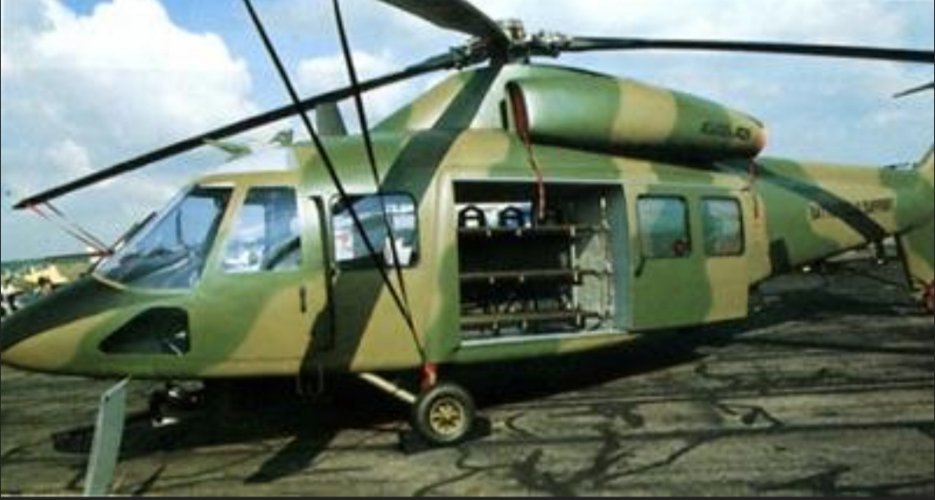
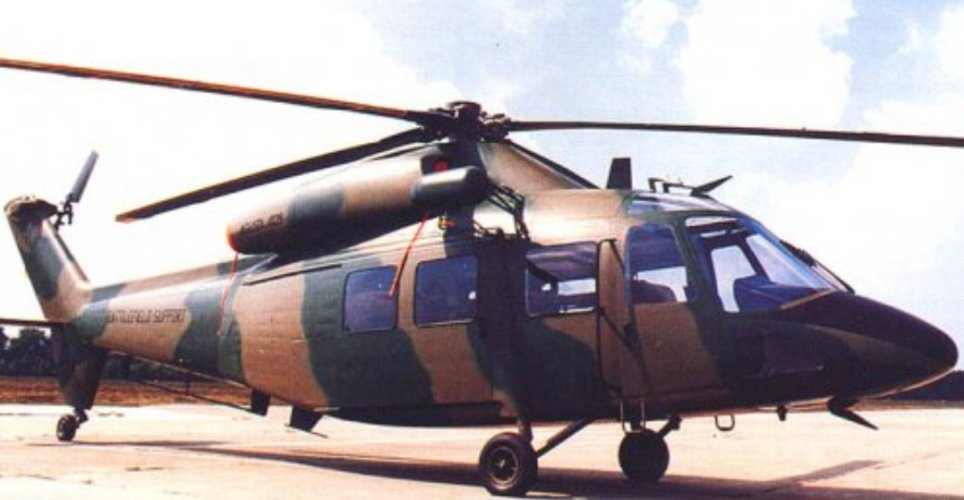
Australia gains the commercial rights from Augusta to licence-manufacture their A129 International and A129 [designated A139 by Agusta] LBH as both a Bell AH-1T and UH-1H/N replacement, instead of the Tiger and UH-60 Blackhawk.
Both the A129 and A129 [A139] LBH would be cheaper in both terns of purchasing and operating, due to their commonality.
When exactly? The UH-1Hs started getting replaced by the S-70A Blackhawks in 1988 which is over a decade before the A139 even flew.

It is also telling that only the Italians ever operated the A129 despite it being around since the early 1980s.
 
The A129 is what should have been selected over the Tiger

Agree 119% mate!!

Regards
Pioneer
The A129 was in the running for AIR87 but wasn't selected and arguably for good reasons.
And it's those couple of successful active deployments which Australia should have seriously considered, as opposed to Australia's expensive habitual habit of purchasing off the drawing board or non mature designs - such as the Tiger was.

Regards
Pioneer
In the case of the Tiger selection it was made with the expectation that we would not be the leading 'bleeding edge' customer and indeed would be following on from the French, Spanish and Germans. Alas things didn't work out as planned.

The Tiger was also seen as the best choice against the actual AIR87 spec which was for an Armed Reconnaissance Helicopter (ARH - funny that it's in the name...), in other words a replacement for the Kiowas and Bushrangers with focus primarily on the recon role first and foremost with secondary armed escort/fire support role, not a dedicated tank buster as many seemed to think.
 
So you rebuild the older birds to -N models. Replace the T53 engine with the twinpack and the new doghouse cowlings.

Is that even possible? Does it include lengthening the Bs and Cs fuselage to H/N spec? How much would it cost? What would have to be cut to spend that money?

Given the RAAF crash rate, are those things worth it to pick up 130hp continuous and an engine-out emergency capability?

I'd note that even the US Army, once it selected the single engine UH1s didn't switch to twin engine when they became available. The US service that did adopt the Twin Huey bought their own versions of the single engine type, which they kept in service for the airframe's full life of type, indeed the USMC fitted 1400hp engines to their UH1E and didn't convert these aircraft to twin engine. They then bought the twin engine UH1N/AH1J by the hundreds (rather than a dozen like it has been suggested Australia do) and operated them alongside the hundreds of earlier single engine models until those ran out of life.

This is why I bang on about procurement policy and being so careful, because even a reasonably small but wealthy power like Australia only gets one shot at a capability procurement. If we get it wrong, we're stuck with the consequences for decades.
 
The problem with the Tiger is that we got ours before Germany and France got theirs so we, as an export customer on the other side of the world, had to deal with the teething problems that France and Germany should have been dealing with in close cooperation with the manufacturer. If we got ours delivered even 4 or 5 years later, when France and Germany already had a few sqns in service, the Tiger would have been far less troublesome for us.
The plan originally was to be following on from the Europeans but the world changed...
 
The A129 was in the running for AIR87 but wasn't selected and arguably for good reasons.

In the case of the Tiger selection it was made with the expectation that we would not be the leading 'bleeding edge' customer and indeed would be following on from the French, Spanish and Germans. Alas things didn't work out as planned.

The Tiger was also seen as the best choice against the actual AIR87 spec which was for an Armed Reconnaissance Helicopter (ARH - funny that it's in the name...), in other words a replacement for the Kiowas and Bushrangers with focus primarily on the recon role first and foremost with secondary armed escort/fire support role, not a dedicated tank buster as many seemed to think.
Your also forgetting Turkey which produces the modified T129 and its export customers

I dont know how right this is, but i have heard that one reason why the tiger was selected cause Thales Australia wasnt going to keep Lithgow small arms factory open if it didnt have more work in the country, so the tiger and NH60 were selected
 
Your also forgetting Turkey which produces the modified T129 and its export customers
No I am not. The A129 was only ordered and operated by the Italians. The T129 is arguably a different platform albeit one derived from the A129. It is a bigger, heavier platform with different engines and systems.
I dont know how right this is, but i have heard that one reason why the tiger was selected cause Thales Australia wasnt going to keep Lithgow small arms factory open if it didnt have more work in the country, so the tiger and NH60 were selected
First I have heard of this and I was involved to a limited degree in the program. From what I understand, Thales was contracted to provide technical, logistics and supply support services for the range of Thales equipment installed on ARH Tiger helicopters which included avionics, communications, electrical components and rocket subsystem, as well as the integrated TopOwl helmet-mounted sight and display system. Hardly a case for what you saying.
 
I dont know how right this is, but i have heard that one reason why the tiger was selected cause Thales Australia wasnt going to keep Lithgow small arms factory open if it didnt have more work in the country, so the tiger and NH60 were selected

I've heard that story too.
 
Presumably yes.


Perhaps, but the ADF chose the Apache.

Don't get me wrong I like the AH1Z, but it's a development of a type introduced in 1971 that itself was a development of a type introduced in 1967 which itself is a variant of a type introduced in 1959. The Apache is a fundamentally more modern design, which I suspect is a major reason why it has been exported to 18 countries as opposed to 3 for the Viper.
On that line the Tiger is fundamentally a more modern design.
 
It certainly is, but not mature when we got it.
This does raise another point of interest with the Tiger Procurement over the Apache and Cobra back when the selection was made. Both the losing platforms were viewed at the time as having less development potential. Remember the following:

AH-1 First Flight: 1965
AH-64 First Flight: 1975
Tiger First Flight: 1991

Now you can argue about specific sub variants and the like and also the benefit of hindsight, but at the time, it was seen by the ADF that the Tiger was at the start of its life whereas the other contenders were older platforms without as much development potential.
We want to be an early adopter, but not the development guinea pig.
Which was never the intent. The fact is that the other foreign programs got delayed. What was Australia supposed to do? Pause their procurement while we waited for them to get in front again?
 
This does raise another point of interest with the Tiger Procurement over the Apache and Cobra back when the selection was made. Both the losing platforms were viewed at the time as having less development potential. Remember the following:

AH-1 First Flight: 1965
AH-64 First Flight: 1975
Tiger First Flight: 1991

Now you can argue about specific sub variants and the like and also the benefit of hindsight, but at the time, it was seen by the ADF that the Tiger was at the start of its life whereas the other contenders were older platforms without as much development potential.

Which was never the intent. The fact is that the other foreign programs got delayed. What was Australia supposed to do? Pause their procurement while we waited for them to get in front again?
Good point.

When you look at some of our most successful projects, we went in with our eyes open, accepted that it was developmental, factored that into the schedule and actually took the lead in some areas, i.e. Mk-48 ADCAP evolutions. Turnkey projects often aren't, and even FMS has issues.

Most procurements from the late 90s, early 2000s were assumed to be off the shelf and weren't. This coincided with a drawdown on organic technical ability within defence, i.e. the outsourcing good idea fairies.

The projects were hobbled by poor scoping, poor requirements, inadequate resourcing, and poor project management on the part of government.
 
@GTX and @Volkodav I don't disagree with any of that, we're at the mercy of our suppliers and that even applies to FMS procurements such as the C27J.

Ideally large procurements are a strategic opportunity to do more than just get new kit that hopefully works and suits our needs. If they can give domestic Defence support industry a boost that's better than some other piece of kit that doesn't.
 
A concept often overlooked is accepting higher individual unit prices, potentially resulting in small fleet sizes, in exchange for increased capacity in design and manufacture.

Japan does this with their high-end warships. They order batches of two, evolve the design and build another two, etc. Switch to another large ship project, build two, evolve, build another two, switch again.

Not as efficient of smashing out a class of six, eight or twelve basically identical ships, but it also doesn't result in boom and bust cycles either. It also means if the strategic situation deteriorates, you have active and capable design and production capabilities inplace that can be expanded more easily than built up from nothing.
 
When exactly? The UH-1Hs started getting replaced by the S-70A Blackhawks in 1988 which is over a decade before the A139 even flew.

It is also telling that only the Italians ever operated the A129 despite it being around since the early 1980s.
Mate, you're refering to the wrong A139. You're meaning the latest A139, while I'm referring to the orginal 1970/80's Agusta designation for the utility/transport Light Battlefield Helicopter (LBH) studied and marketed derivative of the A129.
See attachments

Regards
Pioneer
 

Attachments

  • Screenshot_20251024_140707_DuckDuckGo.jpg
    Screenshot_20251024_140707_DuckDuckGo.jpg
    145 KB · Views: 7
  • Screenshot_20251024_140651_DuckDuckGo.jpg
    Screenshot_20251024_140651_DuckDuckGo.jpg
    126 KB · Views: 8
When exactly? The UH-1Hs started getting replaced by the S-70A Blackhawks in 1988 which is over a decade before the A139 even flew.

It is also telling that only the Italians ever operated the A129 despite it being around since the early 1980s.
The Mangusta, in particular the original Gem-engined version, would have been a good match with an Army Lynx buy. A US style Cavalry Helo force, with a mix of three gunships and two scout/utility helos per Platoon/troop or nine gunships and six scout/utility per company/sqn would have been good.

Not perfect, but simpler and less of a leap from Kiowa than Tiger was. Maybe even keep them dispersed, with one Sqn per brigade.

This would have been even better had the Cobra buy gone ahead, perhaps with an earlier transfer to Army. Cobra and Kiowa in Cav Sqns supporting each brigade, UH-1 concentrated in a Regiment, maybe supported by a fourth Cav Sqn.
 
Is that even possible? Does it include lengthening the Bs and Cs fuselage to H/N spec? How much would it cost? What would have to be cut to spend that money?

Given the RAAF crash rate, are those things worth it to pick up 130hp continuous and an engine-out emergency capability?

I'd note that even the US Army, once it selected the single engine UH1s didn't switch to twin engine when they became available. The US service that did adopt the Twin Huey bought their own versions of the single engine type, which they kept in service for the airframe's full life of type, indeed the USMC fitted 1400hp engines to their UH1E and didn't convert these aircraft to twin engine. They then bought the twin engine UH1N/AH1J by the hundreds (rather than a dozen like it has been suggested Australia do) and operated them alongside the hundreds of earlier single engine models until those ran out of life.

This is why I bang on about procurement policy and being so careful, because even a reasonably small but wealthy power like Australia only gets one shot at a capability procurement. If we get it wrong, we're stuck with the consequences for decades.
Use the B/Cs as scouts. Up-engine to what the Hotels use.
 
Use the B/Cs as scouts. Up-engine to what the Hotels use.

That's what the USMC did with their UH1Es, but the RAAFs UH1Bs were used for training and SAR rather than Army support in combat zones.

I'd love to know what the plan was for the 42 UH1Hs ordered in 1971. With that many surely a 2nd front line Army cooperation sqn was to be stood up.
 
That's what the USMC did with their UH1Es, but the RAAFs UH1Bs were used for training and SAR rather than Army support in combat zones.

I'd love to know what the plan was for the 42 UH1Hs ordered in 1971. With that many surely a 2nd front line Army cooperation sqn was to be stood up.
There would have to be a 2nd sqn stood up cause in 1975 with the 42x UH-1H buy there would be 66x UH-1D/H in RAAF service. So say all the UH-1Ds are brought up to UH-1H standard, you could have

5sqn, UH-1B training and SAR at Canberra
7sqn, UH-1H at Townsville (2nd Army cooperation swn)
8sqn, AH-1G at Townsville
9sqn UH-1H at Amberley
12sqn CH-47C at Amberley
 
That's what the USMC did with their UH1Es, but the RAAFs UH1Bs were used for training and SAR rather than Army support in combat zones.
Fair enough, might not have to do the engine swap in that case. I was mostly assuming that there's never enough horsepower in hot conditions and if you were converting Hotels to Novembers anyways you'd have those spare Hotel engines lying around.


I'd love to know what the plan was for the 42 UH1Hs ordered in 1971. With that many surely a 2nd front line Army cooperation sqn was to be stood up.
Now, I'd rebuild all the Hotels to Novembers plus buying that dozen or so new UH-1Ns. And rebuild the Golf Cobras to Juliets or Tangos to match.
 
The A129 was in the running for AIR87 but wasn't selected and arguably for good reasons.
Could you possibly elaborate further those reasons please Greg?

The Tiger was also seen as the best choice against the actual AIR87 spec which was for an Armed Reconnaissance Helicopter (ARH - funny that it's in the name...), in other words a replacement for the Kiowas and Bushrangers with focus primarily on the recon role first and foremost with secondary armed escort/fire support role, not a dedicated tank buster as many seemed to think.
Yes, it's a point often, and dare I say, conviently overlooked, that the Army very quickly and unchecked, purposefully introduced mission creep. Which if my memory serves me correctly, was part of Bell's challenge to their submission being rejected......Because, if the Australian Army openly denoted it wanted a world-class tank buster helicopter, it would have selected the AH-64.
Yet again, nobody was held to account for this.


Regards
Pioneer
 
Last edited:
Given the RAAF crash rate, are those things worth it to pick up 130hp continuous and an engine-out emergency capability?
Personally, after the combat experience of ten years in VietNam, I would have affirmatively pushed for the Australian Army taken up the transport/assault helicopter into it's ORBAT, simply on the basis of ground troops in contact with the enemy on FEBA on far too many occasions required previous time gaining permission to use RAAF UH-1's via RAAF liaisons. It was not lost on Australian soldiers of all ranks, the instant and superior reliability of US Army aviation, which responded to Australian troops in contact with the enemy. - aka Tactical Transport Group, to manage RAAF units responsible for tactical airlift to be hanede over to the Army, immediately following Australia's involvement in VietNam [instead of on June 1, 1988].
This transition from Air Force to Army allowed the Army to take full operational control of its helicopter capabilities, enhancing its aviation support for ground operations.
As such, the explicit combat lessons of helicopter combat operations in VietNam - specify to the vulnerability of the ubiquitous single-engine Bell UH-1H Iroquois assault transport helicopter is implemented to mitigate their vulnerability in the form of two-engine redundancy over the battlefield. Something which shouldn't be hard for a responsible government to both justify and implement to increase the survivability of it's troops......

The UH-1N design offered much more than
130hp continuous and an engine-out emergency capability.
'- The UH-1N had upgraded avionics, including improved navigation and communication systems, making it more effective in various missions;

- The UH-1N has structural enhancements that improve its overall durability and performance in challenging environments;

- The design allows for a greater payload
[2,268 kg (5,000 lb) vs UH-1H's 1815kg (4,000 Ib)], making it suitable for transporting more personnel or equipment;

- A high level of redundancy is present across the UH-1N's key systems; these include duplicate hydraulic, electrical, and fuel systems. Fire suppression systems were also installed.


These benefits make the UH-1N a more capable and versatile helicopter compared to the UH-1H.
Again, the UH-1N's performance would be greatly appreciated in the likes of PNG, as well as operating as assault transport helicopters from Amphibious Assault ships.

Regards
Pioneer

 
Last edited:
Mate, you're refering to the wrong A139. You're meaning the latest A139, while I'm referring to the orginal 1970/80's Agusta designation for the utility/transport Light Battlefield Helicopter (LBH) studied and marketed derivative of the A129.
See attachments

Regards
Pioneer
Ok fair point. I still doubt the ADF would go for it over the S-70A though.
 
AFAIK, the ADF only had ENTAC ATGMs until the mid 80s when a few MILAN 1s were delivered (at a time when MILAN 2 was coming).

With an adequate budget the MILAN 1 could be fielded in the 70s with a further buy of MILAN 2s in the 80s, and possibly TOW/HOT if the extra range or heliborne AT capabilities are worthwhile.
 
Personally, after the combat experience of ten years in VietNam, I would have affirmatively pushed for the Australian Army taken up the transport/assault helicopter into it's ORBAT, simply on the basis of ground troops in contact with the enemy on FEBA on far too many occasions required previous time gaining permission to use RAAF UH-1's via RAAF liaisons. It was not lost on Australian soldiers of all ranks, the instant and superior reliability of US Army aviation, which responded to Australian troops in contact with the enemy. - aka Tactical Transport Group, to manage RAAF units responsible for tactical airlift to be hanede over to the Army, immediately following Australia's involvement in VietNam [instead of on June 1, 1988].
This transition from Air Force to Army allowed the Army to take full operational control of its helicopter capabilities, enhancing its aviation support for ground operations.

There's a fair bit of myth around this view. While it's certainly true that initially that the RAAF had trouble transitioning from peace to war flying, shown most notably during Long Tan, as the war progressed 9 Sqn became highly responsive and integrated and in particular was very close to the SAS. While the Army likes to criticise the RAAF their own performance left a lot to be desired in those early months, for example at Long Tan D coy 6 RAR carried 60 rifle rounds per man and 140 rounds per machine gun which was manifestly unsuited to Vietnam conditions where 200 and 6-800 rounds became the norm.

Then of course is that fact that the US recognised that 9 sqn RAAF was the best UH1 unit in the entire Vietnam theatre.

Another thing is while Army units exercised irregularly 9 sqn support was requested for every Army exercise, so it was getting flogged in peacetime while Army units got pushback to their requests for exercise support from the RAAF.

Any problems with RAAF-Army coordination can be sorted out without giving helicopters to Army Aviation which only gained it's first postwar aviation unit in 1960, crashed it's Bell 47s like it was going out of style and when it got tactical helicopters in the late 80s had so many troubles it was a national scandal.

These benefits make the UH-1N a more capable and versatile helicopter compared to the UH-1H.
Again, the UH-1N's performance would be greatly appreciated in the likes of PNG, as well as operating as assault transport helicopters from Amphibious Assault ships.

I don't deny that, my issue is with the great cost and effort of switching with almost new UH1Hs to UH1Ns, compared to what else the ADF could do with those funds and efforts. The UH1H is a capable and proven aircraft which has an entire support system embedded in the RAAF, replacing it early in order to get a few little gains is wasteful in the extreme.
 
AFAIK, the ADF only had ENTAC ATGMs until the mid 80s when a few MILAN 1s were delivered (at a time when MILAN 2 was coming).

With an adequate budget the MILAN 1 could be fielded in the 70s with a further buy of MILAN 2s in the 80s, and possibly TOW/HOT if the extra range or heliborne AT capabilities are worthwhile.
If we brough AH-1G in the 70s and upgraded them would we buy MILAN 1 why not just a larger order of TOW missiles
 
We haven't talked about submarines.

The RAN bought the British Oberon, good subs that served us well for decades but in essence they were the last gasp of the WW2 German Type XXI concept.

The US' last diesel sub was the Barbel class, using the new concept 'Albacore' hull shape which gave it better underwater performance than the older hull shape.

What if the RAN bought the Barbel class instead of the Oberons?
 
We haven't talked about submarines.

The RAN bought the British Oberon, good subs that served us well for decades but in essence they were the last gasp of the WW2 German Type XXI concept.

The US' last diesel sub was the Barbel class, using the new concept 'Albacore' hull shape which gave it better underwater performance than the older hull shape.

What if the RAN bought the Barbel class instead of the Oberons?
They are the better shaped submarine but i cant see the RAN changing to an all american fleet procurment in one decade with Charles F. Adams class then the Barbel that might just be a bridge to far for the RAN High Command.
The only other thing that could change is the 2nd Batch of Oberons are instead the Proposed 5 nuclear subs with the 4 Oberons being training subs, but i also think thats a bridge to far without say indonesia getting nuclear subs from the soviets.
I think getting 8 Oberons would be important and then getting 10 Collins Class subs as there relacement
 
If we brough AH-1G in the 70s and upgraded them would we buy MILAN 1 why not just a larger order of TOW missiles
I would think because the Milan ATGM was far more man-portable than the bigger, heavier and more expensive TOW.
Was there a threat within the region which required something as big/heavy as TOW?

Regards
Pioneer
 
I would think because the Milan ATGM was far more man-portable than the bigger, heavier and more expensive TOW.
Was there a threat within the region which required something as big/heavy as TOW?

Regards
Pioneer
Probably not but i was thinking you can get more TOW Missiles if you do a combine buy between the Army & RAAF than a MILAN Buy for the Army & a TOW Buy for the RAAF with the budget is my thoughts
 
I would think because the Milan ATGM was far more man-portable than the bigger, heavier and more expensive TOW.
Was there a threat within the region which required something as big/heavy as TOW?

Regards
Pioneer

Given the almost complete lack of tanks in the region in the 80s, I'd think the Milan would be sufficient for the region. Its also nice and portable and won't take up much space on the meagre transport that the ADF has.
 
Given the almost complete lack of tanks in the region in the 80s, I'd think the Milan would be sufficient for the region. Its also nice and portable and won't take up much space on the meagre transport that the ADF has.
Mate, from someone who man-packed the bloody thing more times than I care to remember, I'm happy we didn't need the TOW.
It was also an effective anti-bunker weapon, not that the headshed really wanted us to expend such expensive missiles on dirt, logs and sandbags...... ;)

Regards
Pioneer
 
Mate, from someone who man-packed the bloody thing more times than I care to remember, I'm happy we didn't need the TOW.
It was also an effective anti-bunker weapon, not that the headshed really wanted us to expend such expensive missiles on dirt, logs and sandbags...... ;)

Regards
Pioneer
Well it saves trying to assault the bunker yourself
 
They are the better shaped submarine but i cant see the RAN changing to an all american fleet procurment in one decade with Charles F. Adams class then the Barbel that might just be a bridge to far for the RAN High Command.
The only other thing that could change is the 2nd Batch of Oberons are instead the Proposed 5 nuclear subs with the 4 Oberons being training subs, but i also think thats a bridge to far without say indonesia getting nuclear subs from the soviets.
I think getting 8 Oberons would be important and then getting 10 Collins Class subs as there relacement

I think they'd be a fundamentally better submarine, but I do think you're right about jumping too hard into bed with the US too early, DDG, F111, Herc, Huey, M113 etc is quite enough to be going on with.

Getting the 7th and 8th subs are crucial. One of the resons I'm rabid about getting the carrier right from 1959 is that it could de-conflict any FAA top-up buy with the 2nd batch of subs.

A sub tender, or even something else that could be used as a tender in an emergency, would be a nice touch too given the scarcity of good sub bases in Australia even with Fleet Base West being operational earlier.
 
Back
Top Bottom