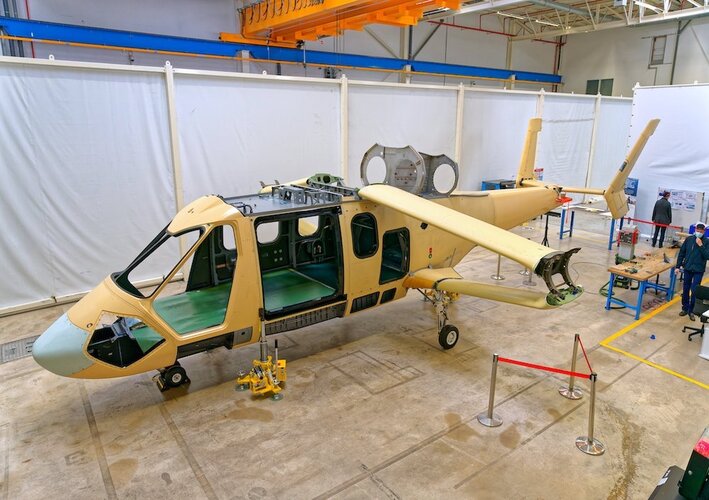
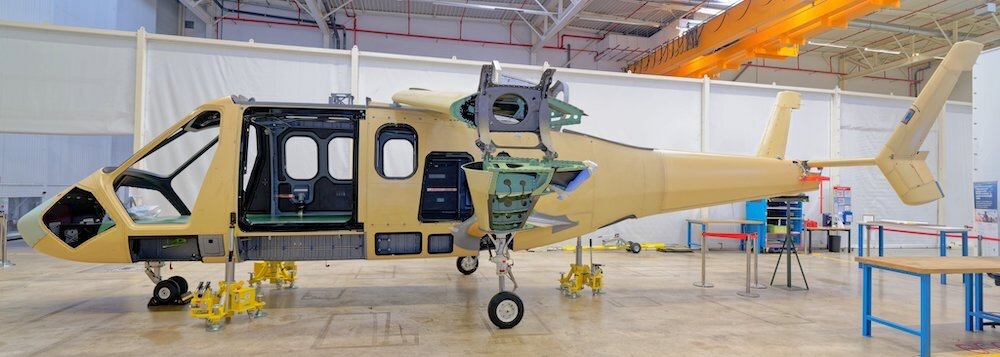
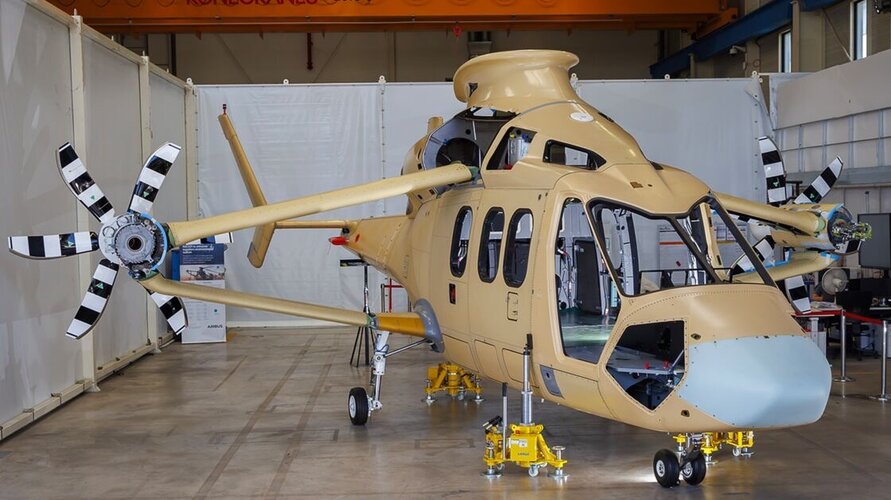
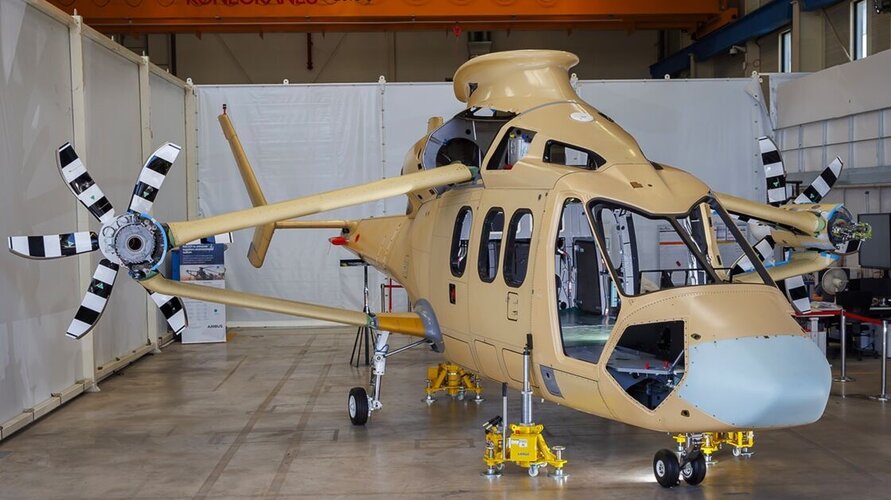
New pics showing the Racer fuselage mostly complete.Latest assembly progress:
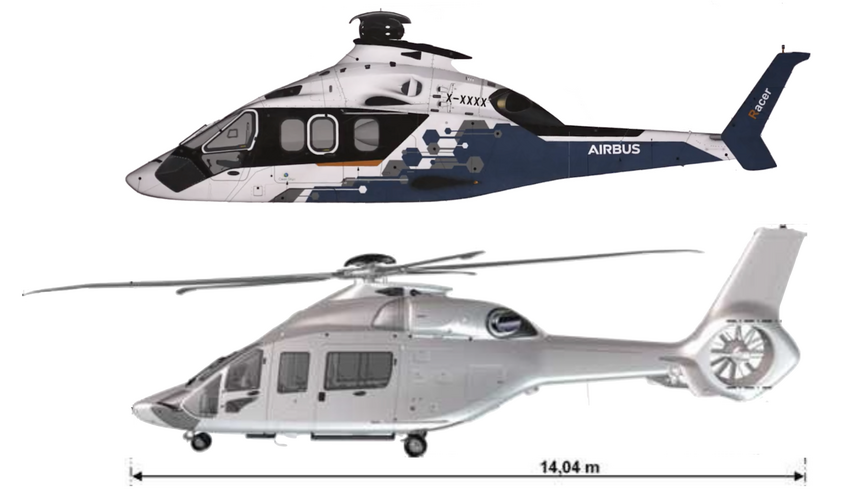
The article also confirms what was obvious… that the cabin is H145 size.
https://aerobuzz.de/helikopter/der-highspeed-helikopter-racer-soll-noch-in-diesem-jahr-fliegen/

New pics showing the Racer fuselage mostly complete.Latest assembly progress:

@VTOLicious My read of those statements is that customers are skeptical... why should they bother buying an aircraft twice the size of an H145 just to gain 25-50% speed? (Not that they don't want more speed, but the extra cost & complexity scares them).
And so Airbus are hoping that a real life demonstrator will change their mind and "create demand" where none exists today.
Not exactly very promising for the future (unfortunately).
Oh i don't know, maybe not a huge market, but an important one.@VTOLicious My read of those statements is that customers are skeptical... why should they bother buying an aircraft twice the size of an H145 just to gain 25-50% speed? (Not that they don't want more speed, but the extra cost & complexity scares them).
And so Airbus are hoping that a real life demonstrator will change their mind and "create demand" where none exists today.
Not exactly very promising for the future (unfortunately).


Airbus Helicopters is preparing its most ambitious project, a helicopter 50% faster than conventional ones, thanks in part to the rear fuselage manufactured in the Albacete factory and designed by a team led by Juan Manuel Jiménez.
When was this project launched?
The project was launched in 2014 and has a duration of 10 years, therefore it is expected to finish in 2024.
How many nations participate in the Racer?
It is a small tower of Babel that participates in the development of this small technological demonstrator, because 13 nations and up to 40 different entities participate, including large companies, small and medium-sized companies and technology centers.
What countries are they and what parts has each one done?
The Czech Republic and Poland have participated in the Cowlings or engine chaining. Avionics systems; that is to say, all the computers that allow the pilot to visualize all the information of the device have been made in Belgium. The nose structure and part of the intermediate structures between the central fuselage and the rear fuselage are made in Germany. The door theme has been developed by other companies, German and Austrian. The dynamic systems, the rotors and all the elements that involve movement, have been made in France. A French, Dutch and Italian consortium has been tasked with developing the fuel tank. The main box (which would be the equivalent of a car gearbox) has been made in Italy. The wings have been developed in England. The central fuselage or main body of the demonstrator has been made in Romania. Finally, the rear fuselage, which is so innovative and disruptive, has been made in Spain, in Albacete. In Spain we (Airbus Helicopters) have led the activity, together with a consortium led by Airnova (also based in Castilla-La Mancha, in addition to other companies and technology centers, which belonged to Madrid, Seville and the Basque Country.
The rear fuselage of the helicopter has been manufactured in Albacete. What is innovative about it?
In Albacete the rear fuselage has been designed, manufactured and assembled. The rear fuselage is so innovative, because it is the first time that such a fuselage has been developed and manufactured without a tail rotor.
Regarding the innovations, the so-called tail cigar is innovative, because it is the first time that a patent belonging to Airbus Helicopters becomes a reality, this patent is based on the fact that the cross section is not symmetrical, as is the case in all our products. , here the left side is completely different from the right. We want this fuselage when the helicopter is in hover, stopped in the air, the rear fuselage works like a wing, with respect to the air current that comes down from the rotor and only because of that design it lifts it more than a helicopter conventional, which makes us save more than seven percent of fuel consumption, in that phase of flight, only because of that geometry that is very complex to carry out and it has been the first time that we have had the means to be able to develop it.
The rest of the tail also looks innovative, right?
If we talk about the set of rear wings, the vertical and horizontal stabilizers, there, apart from the geometry, which is totally disruptive again and it is the first time we have implemented it, because it is an ax, with a double angle, to improve the stability of movement of the ship, because there, we have two cornerstones of our development. The internal skeleton of the horizontal wing has been developed by Airbus Helicopters Spain, together with the Autcom consortium, at RTM, in fact it is going to be the largest piece at RTM that has ever flown on our products. This technology has been used to make three meters from a single piece, which if we did it with current technologies, would be eight pieces, plus gluing and joining processes. Also in the part of the vertical stabilizer, It is the first time that a part manufactured with a 3D printer, made of titanium, has been put into flight as the primary structure, which is again the skeleton. Manufacturing, design and, above all, convincing the authorities that we can fly with this technology has been a challenge. We want to be as innovative as possible, to be efficient.
What is RTM (Resin Transfer Moulding)?
It is a process focused on manufacturing pieces of composite material, but it does not require the autoclave oven that is normally needed to bake the pieces. Normally they are carbon fabrics that are impregnated with a resin and that are put together and put into that oven and the piece comes out. In this case, it is a more environmentally friendly manufacturing process, because that autoclave oven needs a lot of energy, to have a high temperature and generate a lot of pressure and with the RTM you put those same textile fabrics without resin, place them between two molds and inject the resin, which allows you to control with great precision the amount of resin you use. With less temperature and pressure, you get the same element.
How is it possible that such a fast helicopter uses less fuel and pollutes less?
Due to the efficiency of the design, aerodynamically it is our best product, with the design solutions that we have included we save 20% on fuel. With the rear fuselage design we saved seven to 10% of fuel consumption. We have the aerodynamic design and the Eco Mode, this hybridization system that allows us to unplug one of the engines, making the machine fly at its maximum cruising speed, consuming 15% less and moving 50% faster than a conventional helicopter.
This machine is very efficient and allows the operating cost of this vehicle per nautical mile to be reduced by 25%, not to mention the efficiency with respect to the environment, which we can reduce emissions up to 30% or 20%.
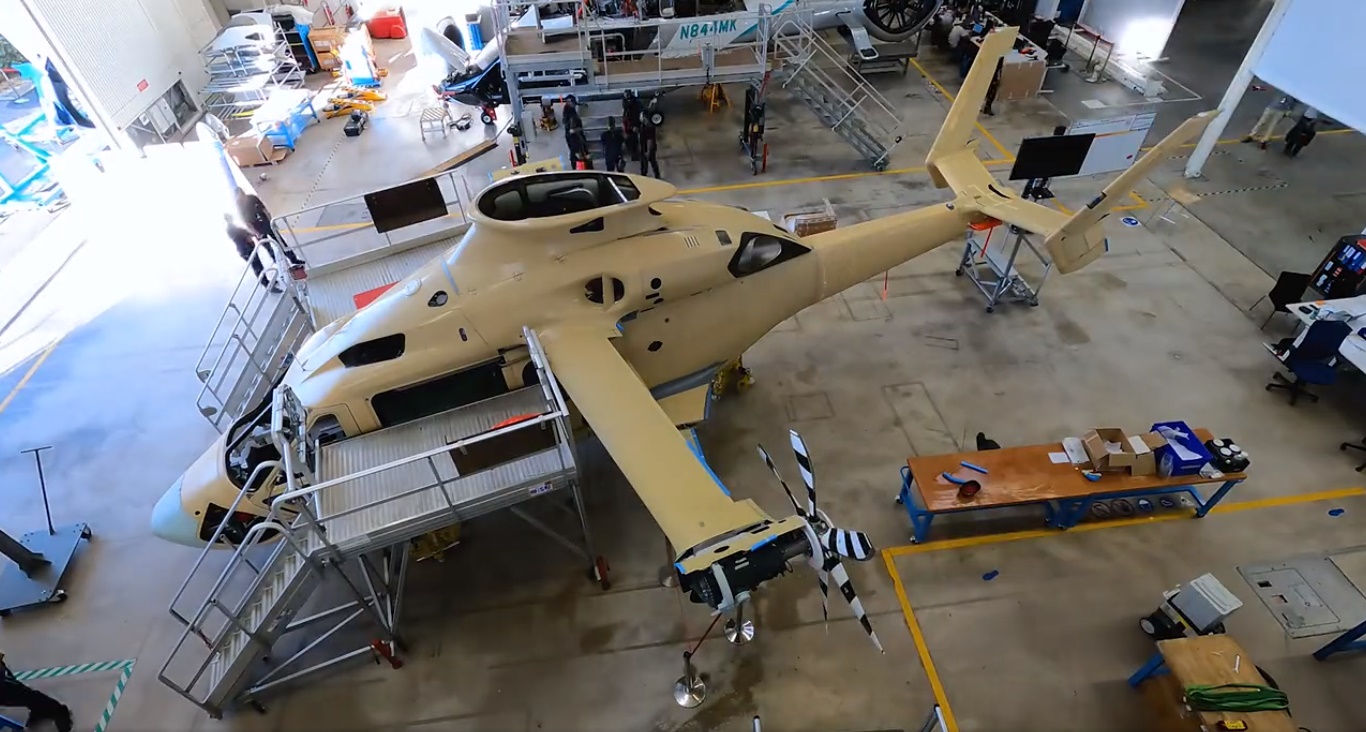
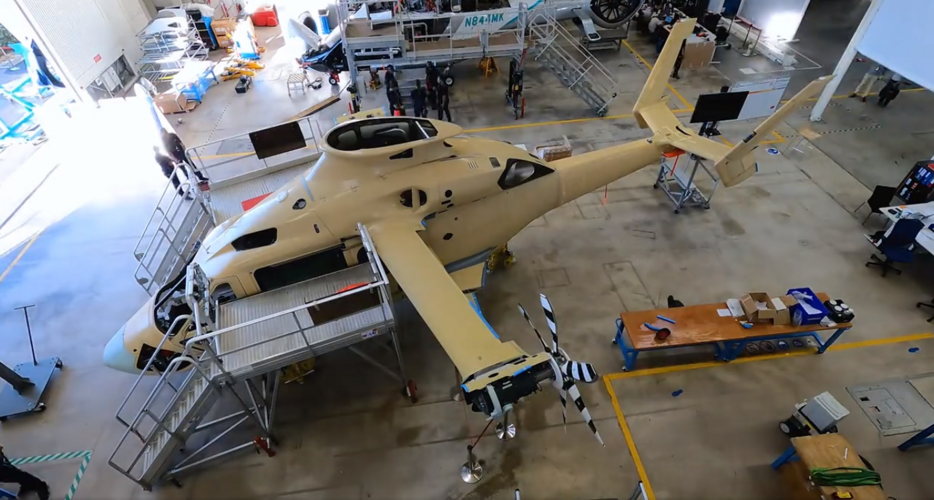
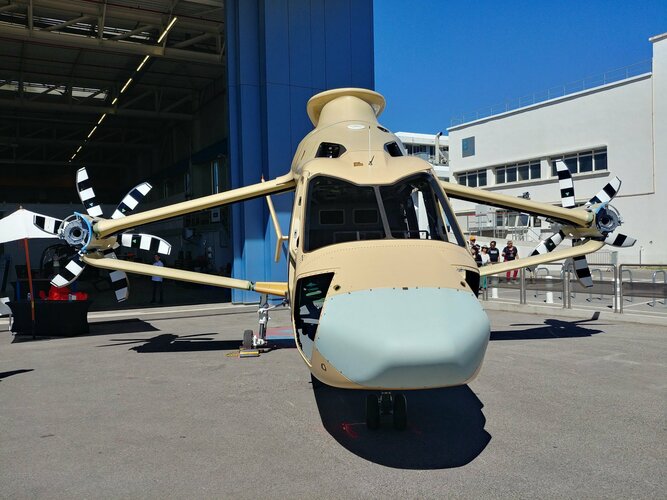
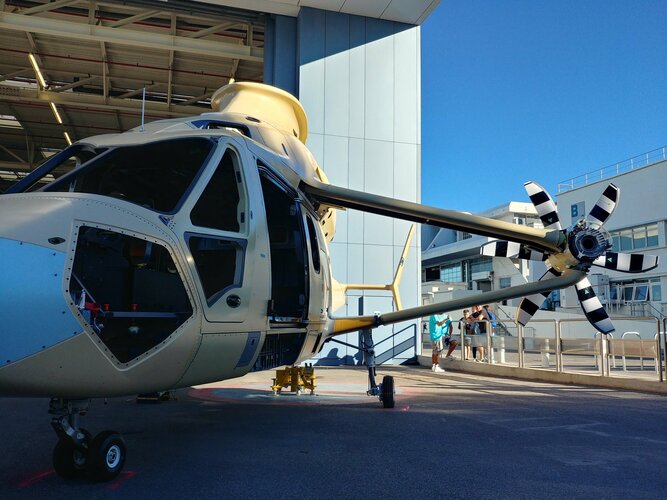
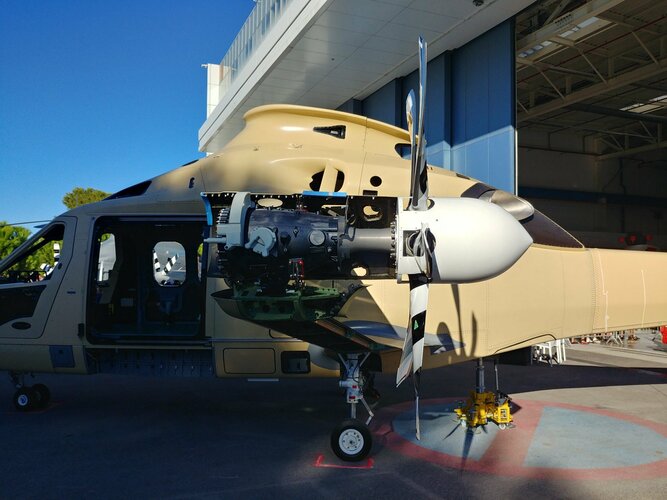
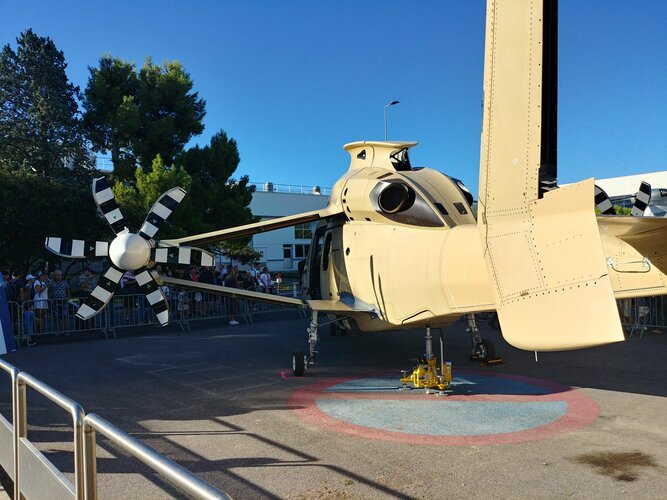


Not entirely sure, but it appears the props are spaced further apart and are slightly smaller than on X³.Latest progress update on Racer. Final assembly to be completed soon (this summer), followed by ground tests and first flight before the end of the year.
The pic shows some small visible progress from 6-9 months ago… some panels have been closed. Missing engines, probably the gearbox (which was the cause of delays) and windows.
https://www.capital.fr/entreprises-...-la-technologie-start-stop-en-vol-1470040?amp
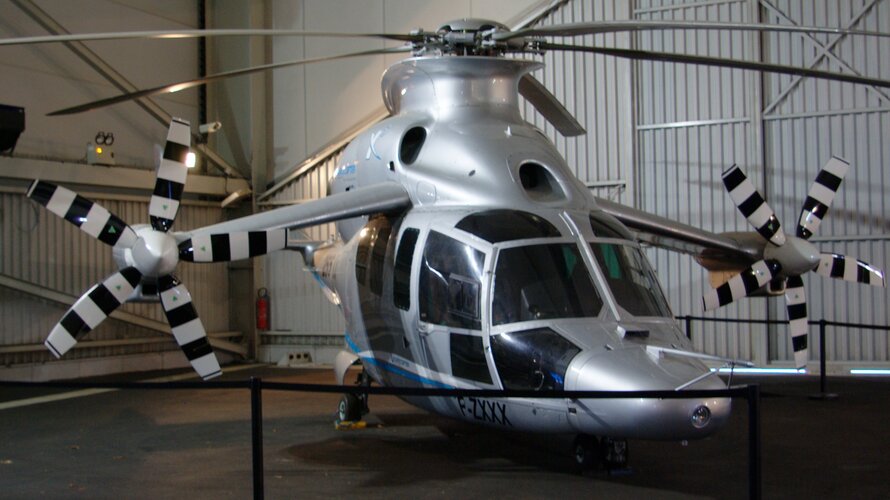

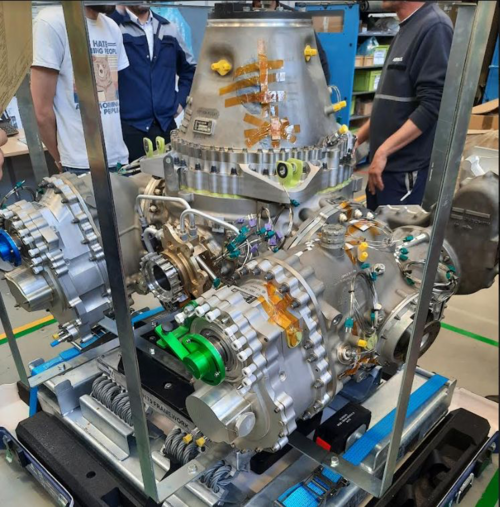
Likely due to having two (vice one) drive shaft and the potential that they might have to operate at varied torque values or speeds.Here’s the Racer’s MGB, supplied by Avio. Not sure what I’m looking at, beyond it looks quite complicated!
Apparently this was the main cause of delays…
https://www.linkedin.com/posts/gloria-illas-80248b1a9_racer-activity-7055192620716675073-IQ2Y
LifeRCraft = Low Impact, Fast & Efficient RotorCraft
The next step after X³
Refer to page 332 (8.7 Compound Rotorcraft Demonstration (LifeRCraft)) for further information:
http://ec.europa.eu/research/partic...l/jti/h2020-guide-techprog-cleansky-ju_en.pdf
Info about Clean Sky: http://www.cleansky.eu/fast-rotorcraft
BR Michael
...H160 derivative? :
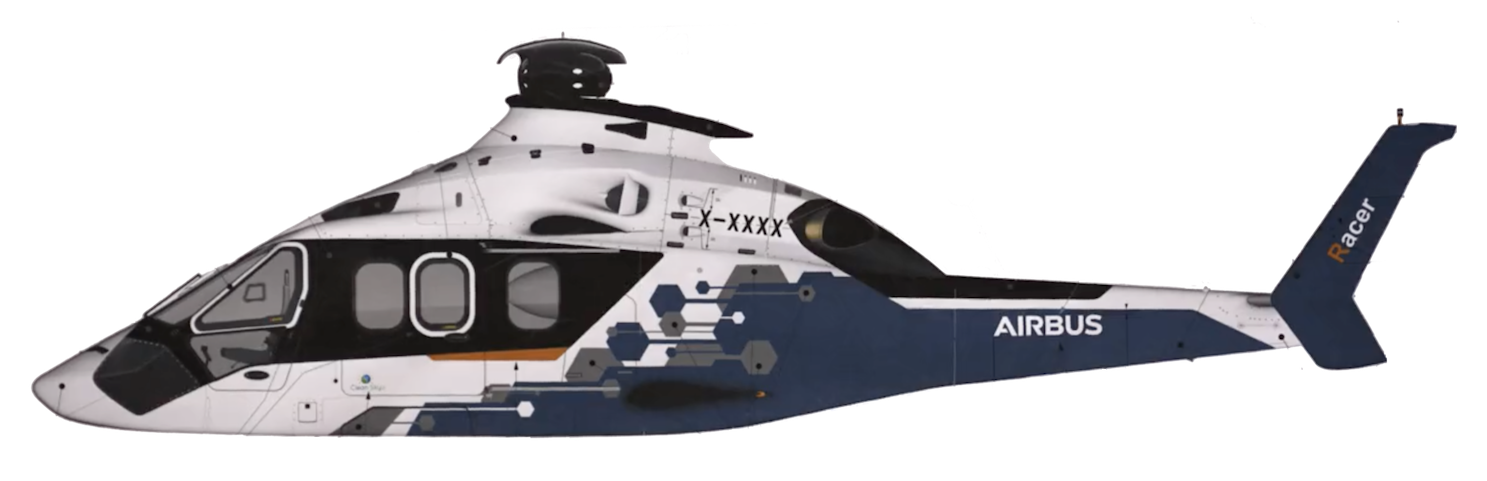
update Twitter from Airbus and color scheme
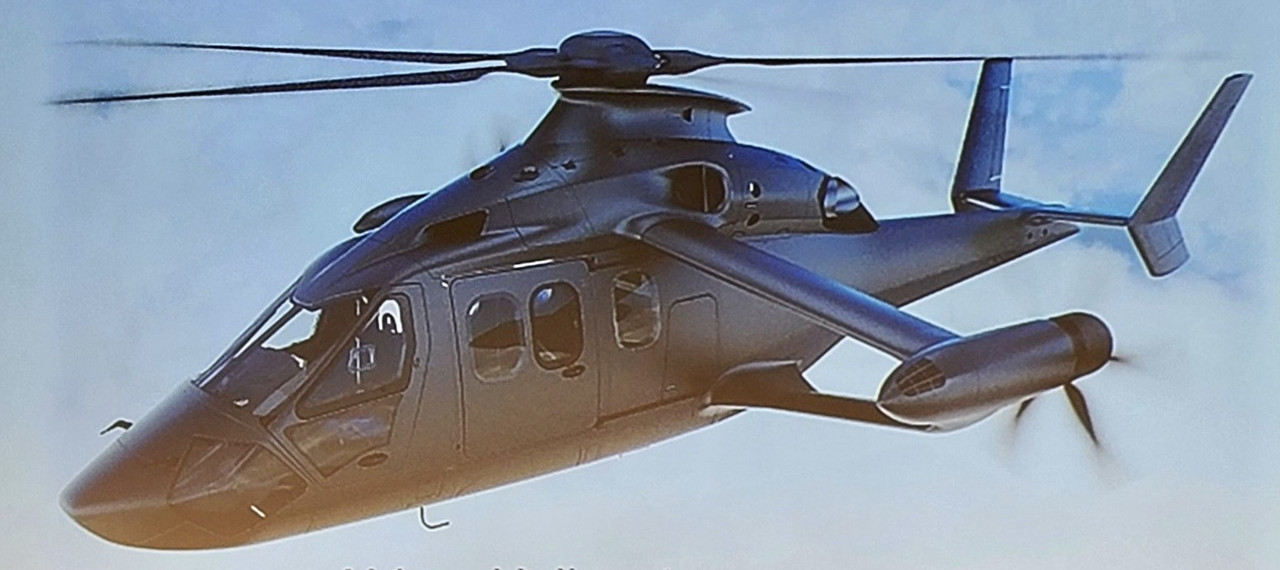
OK here's the Racer vs H160 size comparison. The 2 are very similar in size, but the Racer looks slightly more "substantial" with more space under the cabin floor (for fuel) and a larger engine fairing and rotor hub (not surprising given the need for more power).Next I need to add an H160 and AW169 for comparison.
Well, it's better than the Sikorsky ABCs, but I'm not sure that the Racer would do anything besides set some records. Nobody is going to want props spinning around where people are loading.They missed the year-end goal, but first flight is imminent… watch this space.
The super-fast Airbus Racer helicopter will take off in February
“In recent days, the transmission has undergone final tests. We have completed gearbox fatigue testing and oil loss testing. We have already completed all the tests and are preparing Racer for flight," said Tomasz Krysiński, vice president for innovation, research and development at Airbus Helicopters.
https://portalobronny.se.pl/przemys...aszynie-pracuja-polacy-aa-ikL5-vagx-bdaC.html
Discussed earlier...Nobody is going to want props spinning around where people are loading.

Maybe if they put the forward thrust props into ducts for ground crew protection.I am looking forward to seeing this fly, I think it will be the template for Small-Medium lift helicopters going forward.
![main-qimg-a89c3740f924d1d228c0ab18e669b6cd-pjlq[1].jpg](https://www.secretprojects.co.uk/data/attachments/255/255665-e8afc4e163796d93ed196b5eaf4e27d9.jpg "main-qimg-a89c3740f924d1d228c0ab18e669b6cd-pjlq[1].jpg")