
You are using an out of date browser. It may not display this or other websites correctly.
You should upgrade or use an alternative browser.
You should upgrade or use an alternative browser.
Air Material Command MCD-387-A FSW Tailless Fighter
- Thread starter hesham
- Start date

- Joined
- 25 July 2007
- Messages
- 4,916
- Reaction score
- 5,538
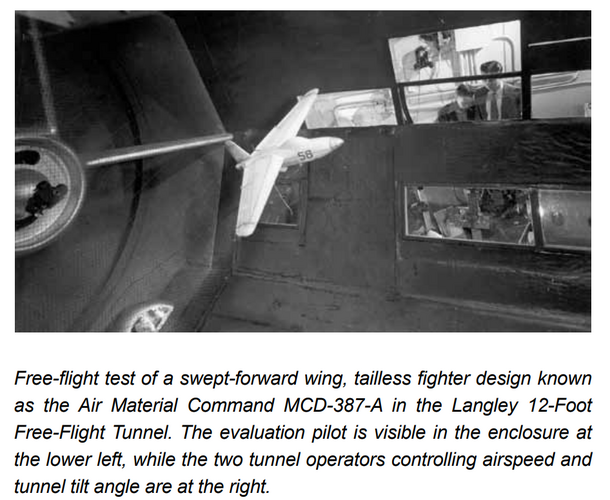
From Nasa report; Modelling Flight...
Source: Modeling Flight: The Role of Dynamically Scaled Free-Flight Models in Support of NASA's Aerospace Programs, Joseph R. Chambers, NASA (NASA/SP 2009-575), 2010, page 24
-- https://www.nasa.gov/wp-content/uploads/2015/01/601262main_ModelingFlight-ebook.pdf
Attachments

- Joined
- 26 May 2006
- Messages
- 38,288
- Reaction score
- 20,425

- Joined
- 26 May 2006
- Messages
- 38,288
- Reaction score
- 20,425
OK my dear Justo,
but why open new topic,and we have this already ?,
https://www.secretprojects.co.uk/threads/air-material-command-mcd-387-a-fsw-tailless-fighter.44798/
Merged !
but why open new topic,and we have this already ?,
https://www.secretprojects.co.uk/threads/air-material-command-mcd-387-a-fsw-tailless-fighter.44798/
Merged !
Last edited by a moderator:
My dear HeshamOK my dear Justo,
but why open new topic,and we have this already ?,
https://www.secretprojects.co.uk/threads/air-material-command-mcd-387-a-fsw-tailless-fighter.44798/
Merged !
I admit that my drawings were posted outside the correct thread, but I would have preferred them to remain a couple of days in the hit parade before they were archived at the end of an already closed thread.
- Joined
- 26 May 2006
- Messages
- 38,288
- Reaction score
- 20,425
My dear Hesham
I admit that my drawings were posted outside the correct thread, but I would have preferred them to remain a couple of days in the hit parade before they were archived at the end of an already closed thread.
Never mind my dear Justo,all of us here are in the same team.

- Joined
- 19 July 2016
- Messages
- 4,817
- Reaction score
- 4,276
Pardon me for taking this a step forwards but, looks like a couple of steps too far. Chop a P-51 almost in half and hope it works.
Stability to me is marginal and endurance is what? Similar to the emergency lightweight fighter (He-162 et al) program?
Sorry if I am being a nuisance.
Stability to me is marginal and endurance is what? Similar to the emergency lightweight fighter (He-162 et al) program?
Sorry if I am being a nuisance.
Until the mid-1930s, the interest of designers in forward swept wings consisted in their ability to delay stall at low speed and high angles of attack. Low speed controllability assured full aileron control until total loss of lift, and the wingtips remained unstalled to high angles of attack.Pardon me for taking this a step forwards but, looks like a couple of steps too far. Chop a P-51 almost in half and hope it works.
Stability to me is marginal and endurance is what? Similar to the emergency lightweight fighter (He-162 et al) program?
Sorry if I am being a nuisance.
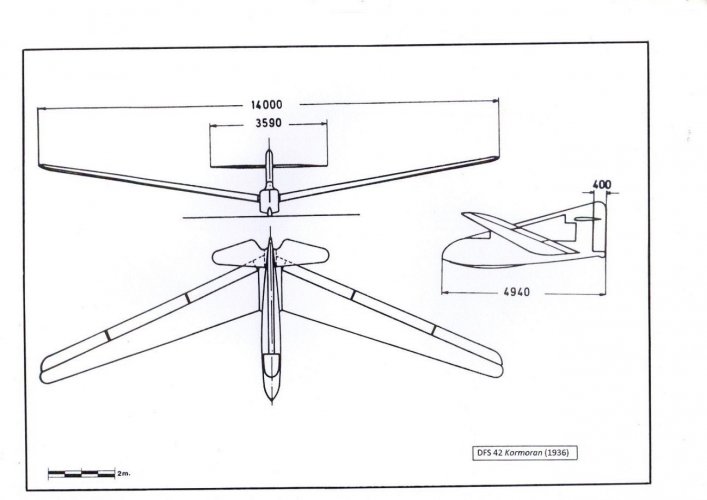
In 1921, Willy Messerschmitt built the S.9 glider to study the behaviour of this type of wings and in 1936 Alexander Lippisch used the DFS 42 Kormoran for the same purpose.
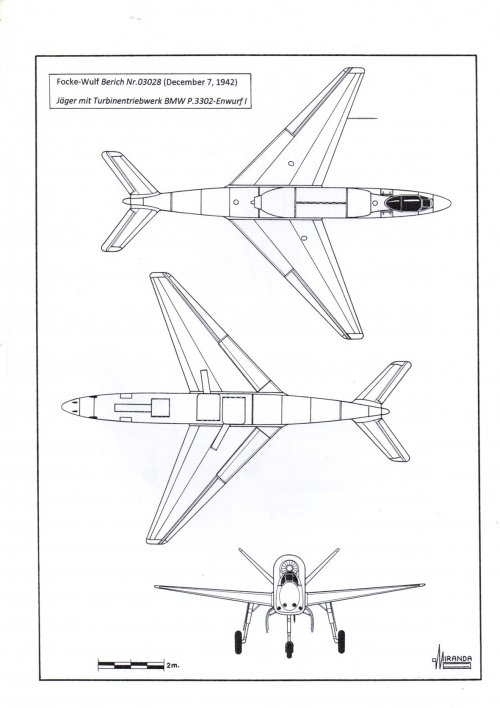
The appearance of turbojets during the 40s allowed the design of airplanes capable of flying at Mach 0.7, although only Germany had carried out theoretical studies on the behaviour of swept wings at high speeds. In 1942, the Dipl.-Ing. Hans Wocke, who carried out aerodynamic studies for the firm Junkers, concluded that the forward-swept wings generated less negative pressure on their upper surface and helped delay shock-wave formation to higher subsonic Mach numbers. In this type of wings, the airflow drift towards the wing root and does not affect wingtips making the use of leading-edge slots unnecessary.
Unfortunately for the Germans, the wind tunnel tests carried out in 1942 with scale models did not reveal the existence of two dangerous defects that would prevent their use in high-speed fighters. Aircrafts with forward-swept wings suffered a pronounced tendency to Dutch roll during a turn with heavy g's loads. But much more serious was the appearance of aeroelastic divergence phenomena. When the dynamic pressure is greater than the structural elastic restoring forces, a change in lift caused by the wing deformation exceeds the structural limits and the wing fails.
Above a certain speed and degrees of forward sweep, the wing bent and twisted its leading-edge up. Increased forward sweep angle requires higher strength to resist the twisting and to delay the divergence phenomena. The wing needs to be extremely stiff, but the technology of the time and the available materials were inadequate to build such a wing.
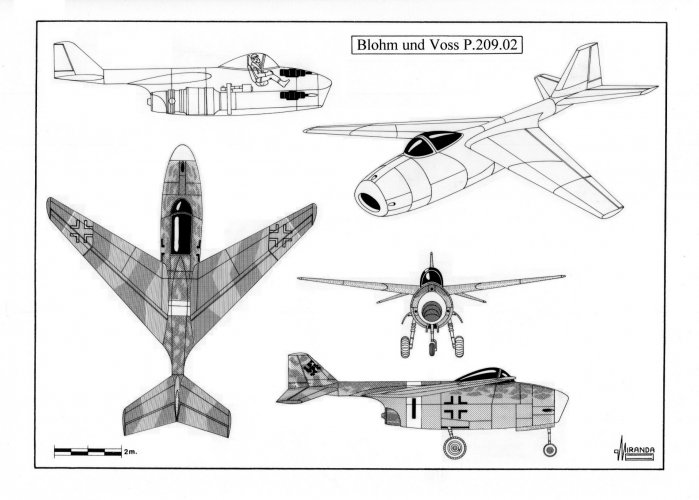
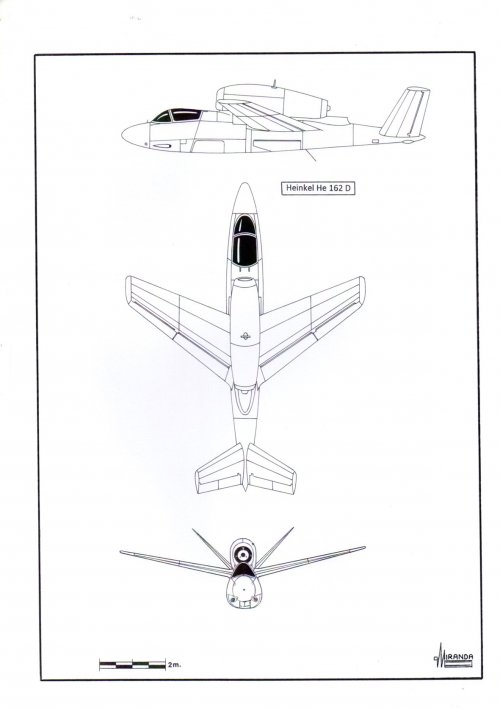
After knowing the results of vibration tests carried out with the wing of a Ju 287 in July 1944 and the flight behaviour of the prototype Ju 287 V1, the OKL ordered the cancellation of two projects with forward-swept wings: Blohm und Voss P. 209-02 and Heinkel He 162 D, as well as the construction of the prototypes Ju 287 V3 and Ju 287 V4.
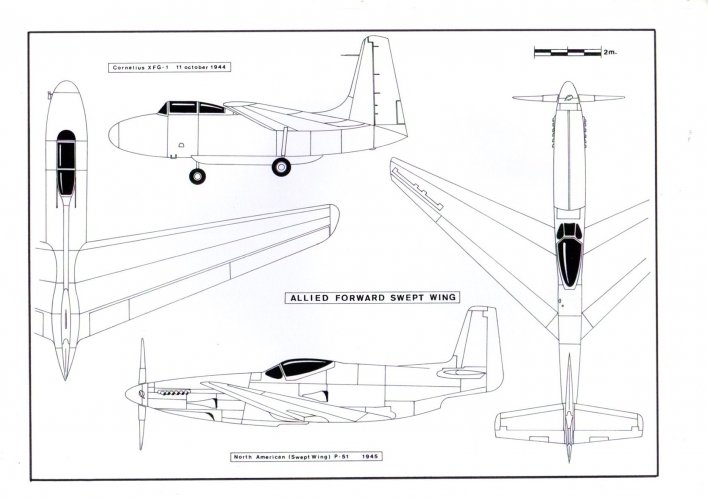
In 1942, the Spartan Aircraft Company built the Cornelius Mallard experimental tailless aircraft with 15-degrees forward swept wings.
Flight tests carried out in August 1943 with the NX 34212 prototype showed that the new configuration was stall and spin proof.
In January 1943, USAAF issued the Specification 102, calling for a high-speed glider that could be towed by a B-29 bomber at a cruise speed of 400 km/h (250 mph)
because the available gliders could only fly at a top speed of 200 km/h (125 mph).
Cornelius Aircraft Corporation proposed its MX-416 project, an enlarged version of the Mallard capable of carrying 677 US gal (2,560 lt.) of fuel, to increase the range of B-29s operating from Chinese airfields.
On October 4, 1943, USAAF ordered one wind tunnel model, one static test airframe and two piloted prototypes (44-28059 and 44-28060) under the denomination XFG-1 and XFG-1-CR.
Flight tests began in October 1944, but the project was cancelled in early 1945,
when the first prototype was lost to a spin, killing the pilot.
One of the advantages of the forward swept configuration was the possibility of eliminating 30 per cent of the structural weight by eliminating tail surfaces.
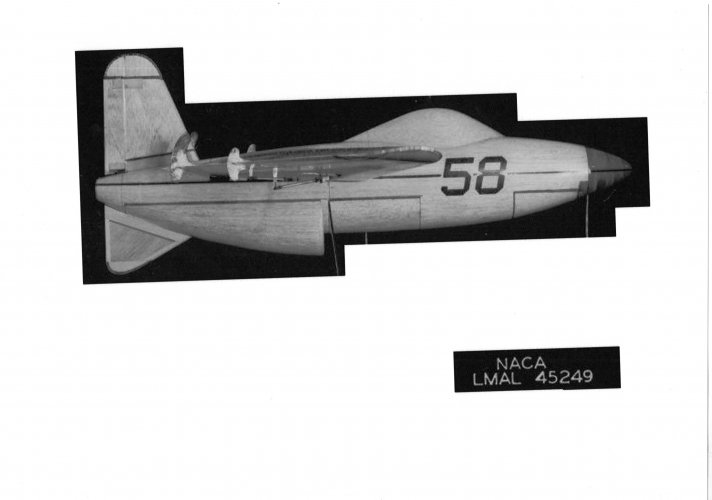
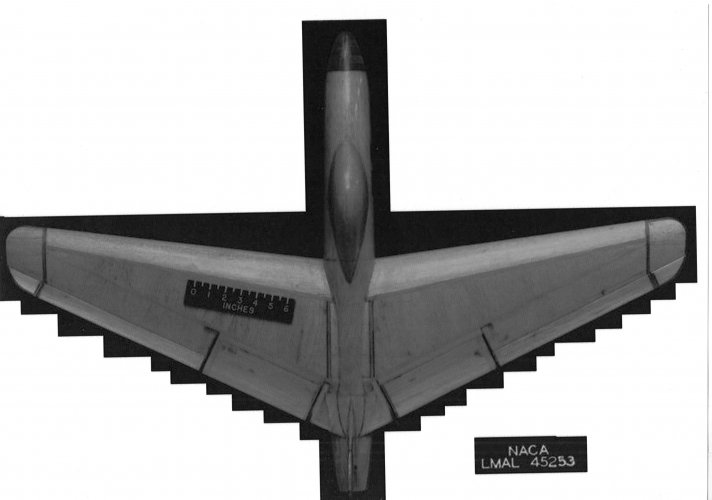
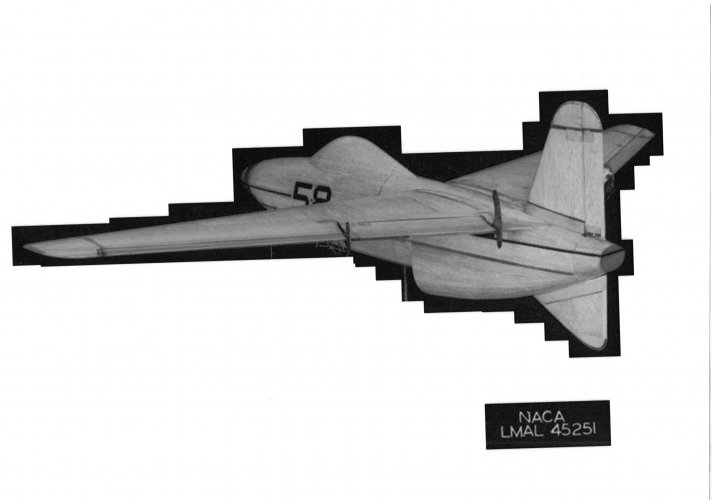
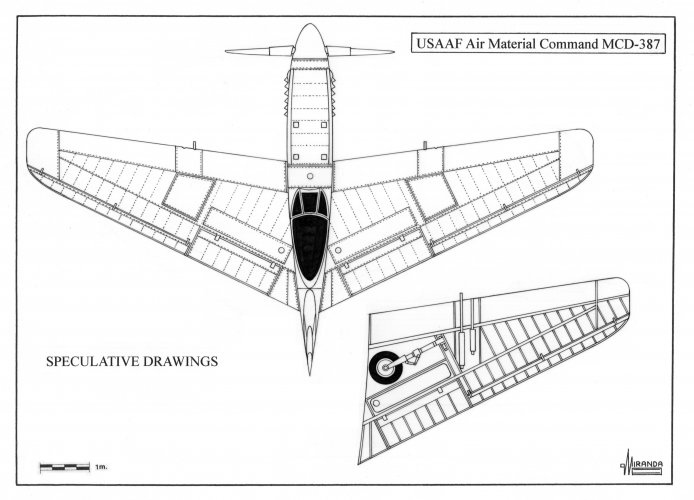
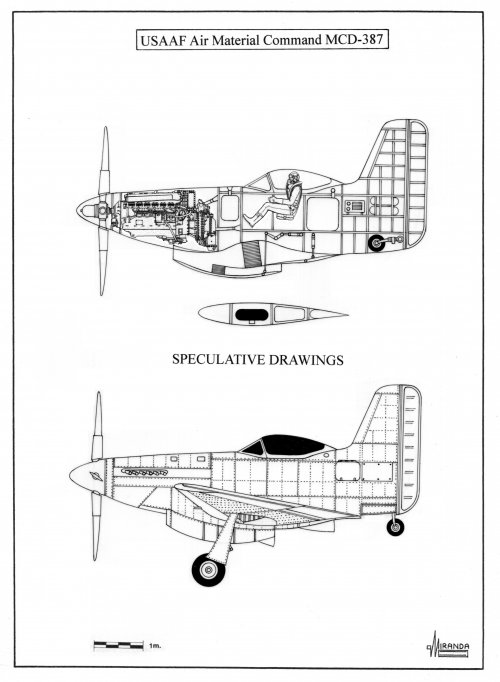
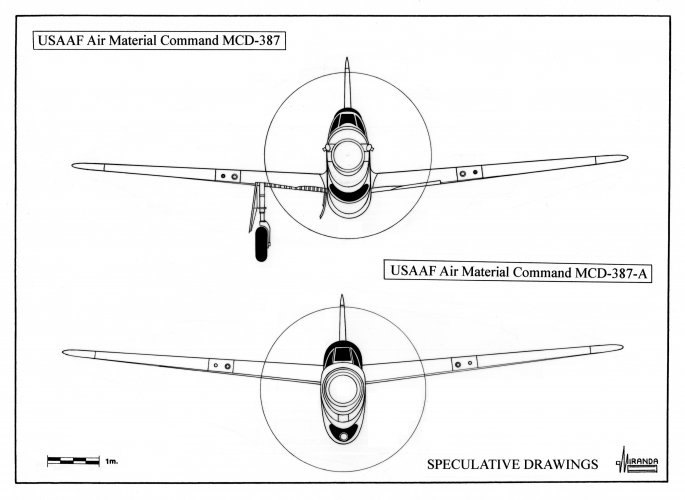
Acting in parallel with Project XFG, the USAAF Material Command decided to experiment with the new configuration by developing concept design No. 387, a heavily modified version of the Mustang with 10-degrees forward swept wing.
Preliminary tests in the Langley wind tunnel showed that the position of the Packard V-1650-3 engine adversely affected longitudinal stability.
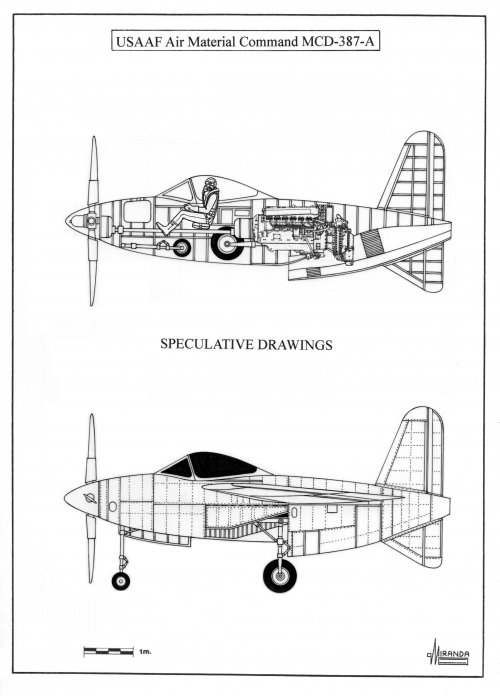
In the next version No. 387-A, the engine was installed behind the pilot in Airacobra configuration, it was also necessary to install the wings in the dorsal position and modify the landing gear so that it retracted into the fuselage.
The new version proved to be much more stable at any angle of attack and speed, but the weight of the modifications was considered excessive, and the design exercise did not prosper beyond the tests with models.
The divergence phenomenon has limited the use of forward-swept configuration to angles less than 15-degrees in the construction of the prototype Ju 287 bomber in Germany, the Cornelius XFG-1 glider in the USA and the Romeo Ro.57 heavy fighter in Italy. None of these aircraft exceeded 550 km/h (342 mph), but a high-performance fighter requires a much greater degree of forward swept.
All-metal wings are effectively limited to 15-degrees, but a high-performance fighter requires a much greater degree of forward swept.
The Germans were working on fighter projects with between 30 and 45 degrees forward swept.
Attachments
- Joined
- 19 July 2016
- Messages
- 4,817
- Reaction score
- 4,276
I thank you, Sir.Until the mid-1930s, the interest of designers in forward swept wings consisted in their ability to delay stall at low speed and high angles of attack. Low speed controllability assured full aileron control until total loss of lift, and the wingtips remained unstalled to high angles of attack.
In 1921, Willy Messerschmitt built the S.9 glider to study the behaviour of this type of wings and in 1936 Alexander Lippisch used the DFS 42 Kormoran for the same purpose.
The Germans were working on fighter projects with between 30 and 45 degrees forward swept.
Similar threads
-
 Tremulis FSW Rocket-Powered Fighter of 1944
- Started by hesham
- Replies: 4
-
-
AAF Materiel Command Design MCD 391 (MX-423)
- Started by Clioman
- Replies: 18
-
Vultee "Palmer Airplane" (observation type with geodetic construction)
- Started by hesham
- Replies: 10
-