Advanced Maritime Nuclear Propulsion Engines

chimeric oncogene

ACCESS: Secret
Joined
23 May 2019
Messages
456
Reaction score
718
While virtually all maritime nuclear reactors (save the Soviet Alfas and Papas, which ran on lead-cooled fast reactors with a steam secondary circuit) were light water PWRs, other reactor designs have been prototyped which may be of use for maritime nuclear propulsion.

Concepts include direct power generation from the primary circuit, such as in supercritical water reactors, direct cycle gas-cooled reactors (AKA direct cycle nuclear gas turbines, as proposed for nuclear aircraft), and closed loop gas-cooled reactors.

Power generation can be obtained from the secondary circuit, such as in liquid-metal cooled reactors with a gas (direct or closed) or steam secondary cycle, as well as conventional PWRs (AFAIK).

I suspect that in any case, seawater is the best option for a tertiary circuit. One could consider using air (as in a direct cycle nuclear gas turbine), but that seems silly given the much better properties of water as a coolant; you might as well close the primary circuit loop and make environmentalists happy.

Given the higher power density of some of these proposals, particularly nuclear gas turbines, which were developed for aircraft, such reactors may be more compact than traditional PWRs, and more amenable for use in smaller surface combatants e.g. destroyers, frigates, corvettes, hydrofoil missile boats (as conventionally powered gas turbines are today, while PWRs are not). They thus appear to the interested amateur highly attractive for maritime nuclear propulsion from a technical standpoint.

PWR-based maritime nuclear propulsion, at present, has not been adopted because it is neither cost-effective nor necessary nor politically/environmentally palatable. It is apparent that such advanced reactors would likely be more troublesome than PWRs, and might even require more frequent refueling due to higher power density. However, these difficulties do not appear insurmountable under circumstances of a different economic and technological base, such as in a nuclear economy. I am curious to learn more about the relevant feasibilities, technical and operational concerns, benefits (if any), and tradeoffs of such advanced reactors.

Such reactors have been discussed in brief as part of other threads, but I have found no dedicated thread for this discussion.
https://www.secretprojects.co.uk/threads/the-royal-navy-hovership-that-never-was.13156/#post-142038https://atomic-skies.blogspot.com/2012/09/apex-910-part-1.htmlhttp://www.atomicengines.com/Documents/WestinghousMaritime.pdf
 
Last edited:
Tullibee & GPL with turbo-electric

Seawolf with liquid sodium cooled reactor

And Narwhal with a "natural circulation reactor"

Thank you for your reply. I forgot the first Seawolf used a liquid metal cooled fast reactor. Turboelectric as used in French SSBNs and the Columbias (methinks?) and the cited USN subs is PWR with useful extra steps. Passive reactor cooling and turboelectric has benefits for stealth (operation with pumps/reactor off)- but does it still work when the sub pitches down when it dives?.

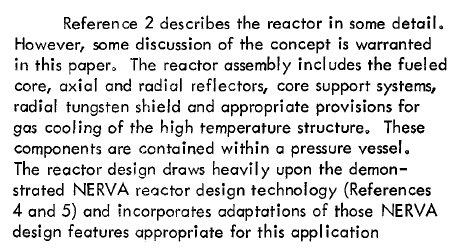
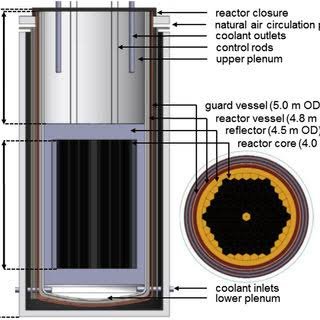
The Westinghouse paper claims that closed cycle gas cooled NERVA derived TRISO fuel bead reactors offer nearly plug-and-play nuclearization of the Spruances, Ticos, Perrys, and Arleigh Burkes (maybe SES and ) with nuclear jet engines which can fit in the footprint of a LM2500. (I know it won't be actually be plug-and-play, but a design of similar size would be easier than if a PWR had to be accommodated - which is part of why the Virginias were so much bigger than the Kidds, despite very similar capabilities).
They claim 10,000 hours - 400 days - at full power. If the reactor is designed for easy refueling, this should not be a problem (right?).
The whole thing is a 300-tonne 20MW nuclear gas turbine about 8m by 3m by 3m.
http://www.atomicengines.com/Documents/WestinghousMaritime.pdf

I'm also thinking about battle damage resistance and damage control. A helium leak would probably kill the reactor (damage sufficient to cause a leak might kill an LM2500 too, so that might not be important). With a supercritical water reactor, the possibility exists that enough distilled water could be made available for the reactor to be repaired and restarted under combat conditions.

Also: Atomic Gas Turbine trains, here we come!
 
Last edited:
Thank you for your reply. I forgot the first Seawolf used a liquid metal cooled fast reactor.
Didn't last long, it was extremely difficult to keep the molten sodium out of the water side of the steam generators.

Turboelectric as used in French SSBNs and the Columbias (methinks?) and the cited USN subs is PWR with useful extra steps.
Early version, the Tullibee was horribly underpowered. It's still a PWR, but allows you to skip the steam turbines connected to reduction gears which is a major noise source.

Passive reactor cooling and turboelectric has benefits for stealth (operation with pumps/reactor off)- but does it still work when the sub pitches down when it dives?.
On the Ohios, which use natural circulation at low to medium power settings, it was never a problem to take angles. Remember that a sub rarely takes an angle of more than 10deg up or down, so there's not a lot of engineering to worry about in terms of angles and dangles messing up the circulation paths.

The Westinghouse paper claims that closed cycle gas cooled NERVA derived TRISO fuel bead reactors offer nearly plug-and-play nuclearization of the Spruances, Ticos, Perrys, and Arleigh Burkes (maybe SES and ) with nuclear jet engines which can fit in the footprint of a LM2500. (I know it won't be actually be plug-and-play, but a design of similar size would be easier than if a PWR had to be accommodated - which is part of why the Virginias were so much bigger than the Kidds, despite very similar capabilities).
They claim 10,000 hours - 400 days - at full power. If the reactor is designed for easy refueling, this should not be a problem (right?).
The whole thing is a 300-tonne 20MW nuclear gas turbine about 8m by 3m by 3m.
http://www.atomicengines.com/Documents/WestinghousMaritime.pdf

I'm also thinking about battle damage resistance and damage control. A helium leak would probably kill the reactor (damage sufficient to cause a leak might kill an LM2500 too, so that might not be important). With a supercritical water reactor, the possibility exists that enough distilled water could be made available for the reactor to be repaired and restarted under combat conditions.
I can only assume that they also intended for any engineers to be kept well away from the reactors. Because having a large quantity of water go from pressurized to unpressurized is a great way to kill everyone in the connected compartments.

There was a coal-fired powerplant that had a major Steam Line Rupture. 50,000lbs of water flashed into steam instantly. The 3ft thick reinforced concrete walls of the power building had 6ft tall waves in them from all the energy released. No one in the building survived. Most PWRs have about that much water in each loop.
 
Last edited:
I can only assume that they also intended for any engineers to be kept well away from the reactors. Because having a large quantity of water go from pressurized to unpressurized is a great way to kill everyone in the connected compartments.
No water, helium cooled graphite core reactor based off nuclear rocket engine tech (basically NERVA attached to a gas turbine). I think the engines are not user serviceable and are expected to be removed as a unit dockside.
 
No water, helium cooled graphite core reactor based off nuclear rocket engine tech (basically NERVA attached to a gas turbine). I think the engines are not user serviceable and are expected to be removed as a unit dockside.
I don't think having hot, highly pressurized helium suddenly depressurize would be good for anyone in the space, either.
 
It's not necessarily much different to gas turbine exhaust being vented into the same space as can occur with an LM2500
Depends on just how high pressure that helium is. Gas turbine exhaust is maybe 450psi (30:1 overall pressure ratio), reactors can run a lot higher pressure.
 
On a gas turbine, it is the main combustor pressure that is at the elevated OPR value (450 psi in your 30:1 example), not the exhaust. Still makes a hell of a mess if the combustor outer case ruptures.
 
@chimeric oncogene : Are you shure about the connection to Nerva? I guess it is a pebble bed reactor with triso fuel particles, something the Chinese actually commisioned on land last year. The idea is nothing new and was quite popular in Germany for a while as well (it was invented in the US). The German reactor in Jülich wasnt really a sucsess, lets hope the problems are solved...
 
On a gas turbine, it is the main combustor pressure that is at the elevated OPR value (450 psi in your 30:1 example), not the exhaust. Still makes a hell of a mess if the combustor outer case ruptures.
I was going for worst case there.
 
Tangential, I remember when the over-pressure relief plate of our sprawling site's steam system failed.

Our labs were almost half a mile from the steam plant, but the blow-off was so loud that we literally could not hear it, or anything else. Such as each other, alarms, the PA system or whatever...

IIRC, disk-failure cause was later established as local corrosion due sea-bird droppings...
 
A closed-cycle gas turbine may use helium (it has very good heat transfer properties), but it may also use a helium-xenon mix (this permits much more compact turbomachinery, i.e., fewer stages to achieve some compression ratio). The pressure ratio may be fairly low (four or five), but the turbine is likely to have a regenerator or a recuperator (the main difference is that recuperators move) and possibly an intercooler. To keep the size of the machinery small, the minimum operating pressure is likely to be quite high (30 bar or so). The turbine and compressor housings may be designed to contain a disk burst, so they're going to be quite thick. A nuclear closed-cycle gas turbine would also likely use a graphite moderated reactor (there would be little point in using water as a moderator), so there is quite a lot of thermal mass, making rapid power transients challenging.
 
A closed-cycle gas turbine may use helium (it has very good heat transfer properties), but it may also use a helium-xenon mix (this permits much more compact turbomachinery, i.e., fewer stages to achieve some compression ratio). The pressure ratio may be fairly low (four or five), but the turbine is likely to have a regenerator or a recuperator (the main difference is that recuperators move) and possibly an intercooler. To keep the size of the machinery small, the minimum operating pressure is likely to be quite high (30 bar or so). The turbine and compressor housings may be designed to contain a disk burst, so they're going to be quite thick. A nuclear closed-cycle gas turbine would also likely use a graphite moderated reactor (there would be little point in using water as a moderator), so there is quite a lot of thermal mass, making rapid power transients challenging.
On a ship I can see the desire for more compact machinery. I would be very surprised if the compressor or turbine housings were NOT designed to contain a disk bursting, but even if it contains the blade it will likely not keep the working fluid inside.

As SSN671 USS Narwhal found out when the main engine spit a turbine blade through the casing and dumped obscene pressure steam into the engineroom.
 
A nuclear closed-cycle gas turbine would also likely use a graphite moderated reactor (there would be little point in using water as a moderator), so there is quite a lot of thermal mass, making rapid power transients challenging.
I would also really NOT want a graphite-moderated reactor for any reason. Don't want to use water? understandable. But you do not get to use a flammable material for reactor moderator, either. Or a reactor with a positive heating coefficient. I want a reactor that forces you to pull the rods out further to make more power.
 
@chimeric oncogene : Are you shure about the connection to Nerva? I guess it is a pebble bed reactor with triso fuel particles, something the Chinese actually commisioned on land last year. The idea is nothing new and was quite popular in Germany for a while as well (it was invented in the US). The German reactor in Jülich wasnt really a sucsess, lets hope the problems are solved...
1691399894038.png

That's what it says in the report, yes. NERVA helped develop a lot of high temperature reactor stuff, because it was a high temperature reactor using TRISO particles in a solid matrix. Same family of technologies.
 

Attachments

  • WestinghousMaritime.pdf
    948.3 KB · Views: 27
"I would also really NOT want a graphite-moderated reactor for any reason." ( Thread post #15)

Concur, Scott.
Windscale 1957: If Terence Price had not convinced Sir John Cockcroft that things could go very badly wrong, prompting him to add those chimney-top filters, a lot of NW UK would still be a 'Chernobyl Exclusion Zone'...
{ Shudder... }
 
"I would also really NOT want a graphite-moderated reactor for any reason." ( Thread post #15)

Concur, Scott.
Windscale 1957: If Terence Price had not convinced Sir John Cockcroft that things could go very badly wrong, prompting him to add those chimney-top filters, a lot of NW UK would still be a 'Chernobyl Exclusion Zone'...
{ Shudder... }
*wikidive* https://en.wikipedia.org/wiki/Windscale_fire

ho-lee fook!!! :eek::eek::eek::eek::eek:

Yeah. That's why you don't make graphite moderated reactors in general. Chernobyl is why you don't make boiling-water graphite moderated reactors in the specific.
 
The (fictional) submarine in Frank Herbert's Under Pressure had the reactor up front. And interestingly, an external motor driving the shaft due to the extreme depths those subs could make (some 7500-9000ft down). For the same reason, the torpedoes were all mounted externally. I believe that there was only one hull penetration, the crew access.
 
Heat Pipe reactor is wave of the future.
1000041278.jpg

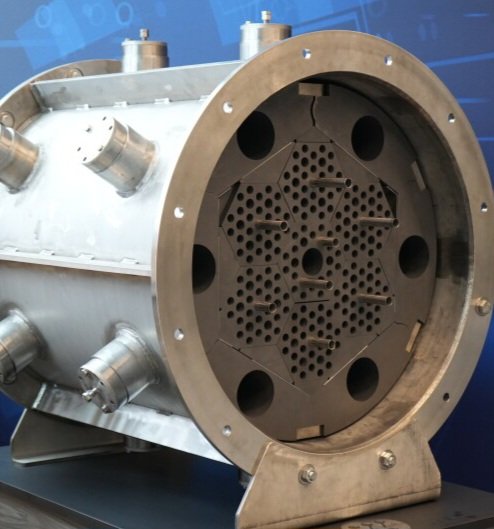
Unlike conventional designs there is No pumped fluids, no water, no sodium, no salt, no liquid metal in core. Instead graphite matrix in prismatic blocks which houses fuel elements. As they heat up they convey it away using alloy heat pipes. Its the same tech in your computer.
1000041280.jpg


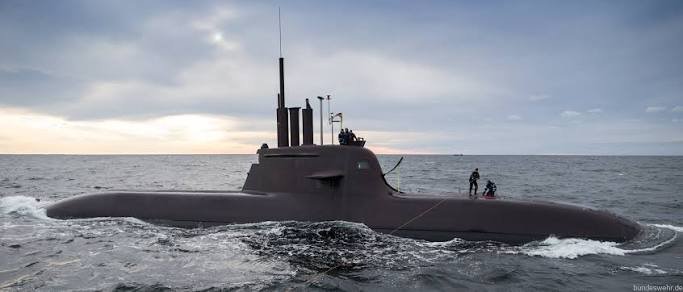
Thermal energy is disposed of passively. No pumps, no need emergency coolant setup as all dispoed of radiatively when reactor Scrams. Metal has High thermal conductivity, it cools down as rapidly as it heats up, a phenomena you observe taking out a baking sheet, despite being in oven for hour after few minutes cool to touch. Even seawater heat exchanger work without need pumps. Because heat pipes use conduction and light convection gravity is not hindrance to thermal disposal. Thus orientation or shaping heat pipes for unique layouts. They may be ideal for miniature submarines such type 212/214, Gotland subs.
1000041286.jpg

With coolant outlet temp 550-650° Celsius or greater, a brayton cycle gas turbine using helium/Nitrogen. The gas never enters the reactor thus reactor does not require pressurization. Or can be backwards compatible to steam turbine. All of the components of PWR are eliminated. No pressurizer, no hot or cold leggings, no steam generator.
 
Last edited:
Heat Pipe reactor is wave of the future.
View attachment 818313

Unlike conventional designs there is No pumped fluids, no water, no sodium, no salt, no liquid metal in core. Instead graphite matrix in prismatic blocks which houses fuel elements. As they heat up they convey it away using alloy heat pipes. Its the same tech in your computer.
No heating carbon/graphite to anywhere near its autoignition temperature! (graphite dust can autoignite as low as 600degC in fine dust, bulk solid won't ignite till over 1000degC, but there's ALWAYS graphite dust present)

Not without using an inert gas for primary coolant.

Also, how does this reactor behave at low power settings? Any weird reactivity excursions?
 
No heating carbon/graphite to anywhere near its autoignition temperature! (graphite dust can autoignite as low as 600degC in fine dust, bulk solid won't ignite till over 1000degC, but there's ALWAYS graphite dust present)

Not without using an inert gas for primary coolant.

Also, how does this reactor behave at low power settings? Any weird reactivity excursions?
Nuclear grade graphite from 30-40 years ago maybe, has an autoignition temp 700° C. But improved synthetic graphites whose manufacturing techniques have demonstrated temperature resistance over 850°, and because of it relatively high thermal conductivity, the heat pipes carry it away faster than the matrix can heat up. High-temperature gas reactors and molten salt reactors also use graphite.

The reactor can be filled small pressure inert gas to achieve ambient pressure.

And the reactor has No severe reactivity concerns because associated issues in history occurred in contact with open loop air (Windscale) or water/steam (Chernobyl), none which present in this reactor. Power transients do not effect the efficacy of the heat pipes. Design focus uses control drums, the fuel volume is fairly poor, but subsequently higher enriched, normally graphite moderators use natural uranium but because small volume of fuel involved it can be disipated fairly quickly. 1000041287.jpg
 
Didn't last long, it was extremely difficult to keep the molten sodium out of the water side of the steam generators.


Early version, the Tullibee was horribly underpowered. It's still a PWR, but allows you to skip the steam turbines connected to reduction gears which is a major noise source.


On the Ohios, which use natural circulation at low to medium power settings, it was never a problem to take angles. Remember that a sub rarely takes an angle of more than 10deg up or down, so there's not a lot of engineering to worry about in terms of angles and dangles messing up the circulation paths.


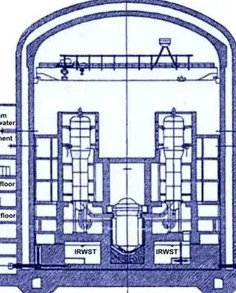
I can only assume that they also intended for any engineers to be kept well away from the reactors. Because having a large quantity of water go from pressurized to unpressurized is a great way to kill everyone in the connected compartments.

There was a coal-fired powerplant that had a major Steam Line Rupture. 50,000lbs of water flashed into steam instantly. The 3ft thick reinforced concrete walls of the power building had 6ft tall waves in them from all the energy released. No one in the building survived. Most PWRs have about that much water in each loop.
General rule of thumb is supercritical steam at sea level pressure will expand 1000x it's volume; So Containment is larger than volume of the cores liquid volume. For a Reactor for a ship isn't much.
Screenshot_8-8-2026_154457_www.bing.com.jpeg
Gas high temp reactor, gas volume is same but flow rate faster because thermal properties are inferior.
Sodium, issue was superheater. FLiBe? Higher melting point so more difficult material to work with, UPSIDE FLiBe in liquid state is transparent and operates basic level pressure so observation of coolant/parts inside possible.
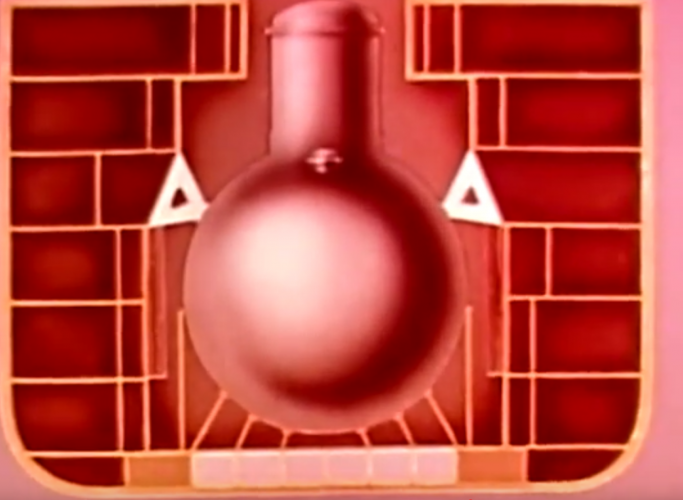
Ships like Savannah used water/lead/steel shield
1786218607405.png

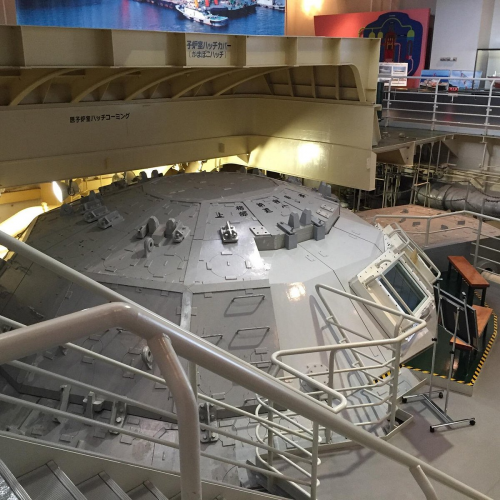
Japan's RV Mirai, formerly nuclear ship Mutsu used lead blanket shield
1786218689509.png
 

Similar threads

Back
Top Bottom