Apparently the area I see it going is a dead zone that due to how the modules are install so will not need to increase the size of the farm.
Exactly. Might need to add some more access doors to the outer periphery, but IIRC there's a passageway that loops around the outside of the Mk41 farm.
 
Plus not talking bout every weapon in its own box.
I understood, that you are talking about modules, not individual cells. Still, putting each module into its own "tub" would require some major compromises.

Nope, not for the Mk41, there's enough space in the farm itself that there's Corridors between the modules so that sailors can hook up the missiles to the ships.
Yes, and you would basically need to make those corridors twice as wide - because now they would be divided by armored bulkheads between the modules.
 
No say to basically split the farm into fourths with basically a cross of metal in it. Apparently the area I see it going is a dead zone that due to how the modules are install so will not need to increase the size of the farm.
Could oou please draw a scheme? I'm not sure I understood your proposal correctly.
 
I understood, that you are talking about modules, not individual cells. Still, putting each module into its own "tub" would require some major compromises.

Could oou please draw a scheme? I'm not sure I understood your proposal correctly.
these two together are funny.

A 64 count mk41 VLS is a square of 8 modules in a 4x4 set up.

I am saying putting a .5 inch bulkhead straight down the center both lengthwise and across the farm. That area is dead space due to constuction needs so you will not be eating into anything needed like the corridors.

Basically look at a MK41 farm and split it into fourths.

So if one is hit, only two modules get blown out. The other 6 be still operational. May need to change up the wiring and properally will add like 200 tons in total to the ship for two set ups combine but will keep you if not in the fight, then limits the damage done keeping you alive.
 
I am saying putting a .5 inch bulkhead straight down the center both lengthwise and across the farm. That area is dead space due to constuction needs so you will not be eating into anything needed like the corridors.
I think I'd bump that up to a full inch thick plus as much kevlar as can fit on both sides of the armor panels, plus at least 1" thick steel on the bottom of the farm. Trying to direct any blast out the top while catching as much frag as possible. And yes, it'd utterly wreck everything in that quadrant of the farm, you lose all 16 cells and whatever was inside them.

It will add weight, but on the Ticos or any other ship with 2x64 cell farms (or equal-sized larger farms) it'll be evenly balanced fore and aft.

On something like the proposed BBGX with 3x64 the amidships farm will add a bunch of topweight, probably have to leave that one with half inch armor between quadrants instead of the full inch. Or you get somewhat smarter and replace the amidships Mk41 with the APTs for CPS and/or Tomahawks. Those are all cold-launch, so the launchers themselves should be lighter to allow you to have more armor between the APTs.

Unless the APTs are literally VPTs-on-surface-ships with the thick steel that implies? Then you don't worry about any extra armoring, because the outer loop of the APT is submarine hull thick and made from HY80+! Those would be terrible for topweight, though, you'd likely be better off sticking the APTs in one end of the ship below the weather deck and putting Mk41s amidships in the superstructure. And now you're back to putting a half inch armor bulkhead between all 4 quadrants of the Mk41. [expletives deleted]
 
Though paywalled. Even Naval institute research exemplifies need armor.
Modern composite armor can provide up to several times as much protection as steel armor for a given weight or thickness. In so far saying that composite armor would be too "heavy" is questionable. Composite armor matrices even few inches are high on resilience scale and do the job. Abrams armor 660-700mm thick. Does the job of what normally would be 2 feet of steel.
 
Though paywalled. Even Naval institute research exemplifies need armor.
> Talks about how armor is needed
> Both examples cited are about structural strength, not armor.
> Also talks about adding kevlar that ships already have

I'm tired, boss.

Yeah, same old tired arguments. Also, that's not Naval Institute research, that's one lieutenant commander's opinion piece.

Modern composite armor can provide up to several times as much protection as steel armor for a given weight or thickness. In so far saying that composite armor would be too "heavy" is questionable. Composite armor matrices even few inches are high on resilience scale and do the job. Abrams armor 660-700mm thick. Does the job of what normally would be 2 feet of steel.
Tanks face far lesser penetrative threats than ships do.
 
Modern composite armor can provide up to several times as much protection as steel armor for a given weight or thickness. In so far saying that composite armor would be too "heavy" is questionable. Composite armor matrices even few inches are high on resilience scale and do the job. Abrams armor 660-700mm thick. Does the job of what normally would be 2 feet of steel.
My dude, you are aware of the average size of shaped charge facing a modern warship, right?

How much composite armor is it going to take to stop a 500kg shaped charge?
 
My dude, you are aware of the average size of shaped charge facing a modern warship, right?

How much composite armor is it going to take to stop a 500kg shaped charge?
*Ambassador Mar 1000043659.jpg k III with armored weapons recess.


The Tin Can mentality originated after WWII and was a result of the development of Nuclear Weapons.
Then War Planners at the time would assume any future large conflict would involve massive use of Nukes, and as such armor would be of little concern.
Strangely ignored in all of this were the Bikini Atoll nuclear tests which demonstrated that armored warships (and especially battleships) were in fact extremely resilient to nuclear weapons.
It is not just armor on hull, segments, hallways, machine rooms, reactor housing. All incorporate some level segmented protection. Absolute protection probably not, withstanding damage, surely. Navy surely learning lessons after Fitgerald, McCain. Incorporating HY100+ steel to hull construction for Flight III+

1000043660.jpg
 
Strangely ignored in all of this were the Bikini Atoll nuclear tests which demonstrated that armored warships (and especially battleships) were in fact extremely resilient to nuclear weapons.
It was not ignored; it was realized that there is little point to have hull resilient to nuclear weapon, if the enemy could just drop nuke closer.
 
I think people underestimate the Zumwalt design. If we are going to build cruisers then modernize its weapons and stick with the basic hull and power. The only real deviation from the original powerplant is to explore if the base power could come from a nuclear reactor. Of course the most important weapon system upgrade it needs is to steer missiles with the Spy-6. CPS is warranted, but they should have kept a working gun on the beast.
 
Then War Planners at the time would assume any future large conflict would involve massive use of Nukes, and as such armor would be of little concern.
Strangely ignored in all of this were the Bikini Atoll nuclear tests which demonstrated that armored warships (and especially battleships) were in fact extremely resilient to nuclear weapons.
It is not just armor on hull, segments, hallways, machine rooms, reactor housing. All incorporate some level segmented protection. Absolute protection probably not, withstanding damage, surely. Navy surely learning lessons after Fitgerald, McCain. Incorporating HY100+ steel to hull construction for Flight III+
The crew would be dead from radiation flux released during the explosion or blast pressure. There's no armor thick enough or covering allaround either.

I think people underestimate the Zumwalt design. If we are going to build cruisers then modernize its weapons and stick with the basic hull and power. The only real deviation from the original powerplant is to explore if the base power could come from a nuclear reactor. Of course the most important weapon system upgrade it needs is to steer missiles with the Spy-6. CPS is warranted, but they should have kept a working gun on the beast.
The hull would be a good starting point but apparently the Navy has other ideas. Either way it needs to be longer to accomodate more VLS. That might have been undesired due to cost?
 
The crew would be dead from radiation flux released during the explosion or blast pressure. There's no armor thick enough or covering allaround either.
There's some radiation-proofing that could be done to the ship. It's also relatively light, borated HDPE plastic. Might be a couple inches thick, but that also helps stop splinters IIRC better than kevlar.


The [Zumwalt] hull would be a good starting point but apparently the Navy has other ideas. Either way it needs to be longer to accomodate more VLS. That might have been undesired due to cost?
IIRC the CG-21/CG(X) was intended as a stretched Zumwalt. And IIRC dropping Mk41s where the Z has the AGS turrets.
 
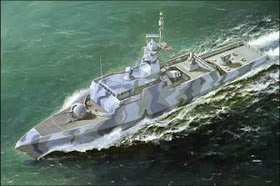
Though the New DDGX art looks like its basically the Zumwalt Hull with a Burke like superstructure.
 
Though the New DDGX art looks like its basically the Zumwalt Hull with a Burke like superstructure.
IIRC the Z's composite deckhouse/superstructure is too expensive, and the steel version fitted to ship 3 is a nightmare to maintain due to limited access.
 
There's some radiation-proofing that could be done to the ship. It's also relatively light, borated HDPE plastic. Might be a couple inches thick, but that also helps stop splinters IIRC better than kevlar.
US radiation worker lifetime dose:
before: 5-15rem/a => 15*35a=525rem => 0.525 Sv
today: age*1 rem/a (Navy: starting @18 with 35 work years => 2332 rem = 23.32 Sv)
US natural: 0.00624 Sv/a => lifespann 84a => 0.52416 Sv lifetime dose

using https://nuclearweaponsedproj.mit.edu/nuclear-weapons-blast-effects-calculator/radiation-2/
23kt ASROC
neutron @1000yrd=914.4m 6900 rads = 6900 rem = 69 Sv we ignore neutron
air-secondary gamma @1000yrd=914.4m 3450 rads = 3450 rem = 34.5 Sv
=> 69x lifetime dose or ~65 mm of lead or 265 mm polyethylene for 1x

typical soviet nuke 350kt
neutron @1000yrd=914.4m 105000 rads = 105000 rem = 1050 Sv
air-secondary gamma @1000yrd=914.4m 52500 rads = 52500 rem = 525 Sv
=> 1050x lifetime dose or 104 mm of lead or 474 mm polyethylene for 1x
 
Thank you!

=> 69x lifetime dose or ~65 mm of lead or 265 mm polyethylene for 1x


=> 1050x lifetime dose or 104 mm of lead or 474 mm polyethylene for 1x
And those numbers are pretty well below the actually dangerous levels. By about an order of magnitude. US working levels are painfully conservative. Plus, there's a difference between single-event and multiple-spaced-event exposure, but if planning for a nuclear exchange it's likely better to count all the nukes thrown at you as a single event for calculating dose.

So it wouldn't take but about 1/4 of the thickness you've calculated, for crew safety during a nuclear exchange. So call it ~143mm poly on the thick side, ~66mm poly on the thinner side.

[expletives deleted] RADCON math:
Q: What does 2+2 equal?
A: What do you want it to equal?
 
And those numbers are pretty well below the actually dangerous levels. By about an order of magnitude. US working levels are painfully conservative.
The Germans have the toughest regs afaik. Everyone else are more or less aligned.
Anyhow, this was just a simple & specific calculation. No calculation can match reality and are always lower. The nature of radiation in general (same with radar) is it finds ways to get in.
Better estimates need to include a larger spectrums of energies for neutrons and photons. Frankly, such detailed information isn't public, only a portion is.
The neutrons are the most dangerous and difficult to shield. They require layered materials. Again lack of information prevents me from making an estimtation.
there's a difference between single-event and multiple-spaced-event exposure, but if planning for a nuclear exchange it's likely better to count all the nukes thrown at you as a single event for calculating dose.
I asume luck runs out with conseccutive events. Afterall: chance^(# of events)
 
I asume luck runs out with conseccutive events. Afterall: chance^(# of events)
Yes but no. Get enough cumulative dose and your cancer rates measurably increase in a way that correlates with dose received.

But there's a threshold below which there's no measurable/attributable effect (even over lifetime exposure), and all the exposure models in regulation do NOT recognize that. Regulations follow the Linear exposure with no threshold assumptions/model.

So for events with multiple exposures over less than a day it's more accurate to calculate them as a single exposure event. Your body hasn't had a chance to repair the damage yet.

But multiple exposures over multiple weeks is pretty close to the effects of each one being a single event. I wasn't an ELT, so I didn't learn the details of RADCON math, so I can't say just how much of a difference there is.
Internet searches say that long-term minimum exposure before you start seeing measurably increased cancer risks is ~50-100 mSv, while for acute exposures it's ~5-10 mSv.

Also, is your US natural dose number including medical imaging? Because medical imaging more or less doubles your dose from background.
 
But there's a threshold below which there's no measurable/attributable effect (even over lifetime exposure), and all the exposure models in regulation do NOT recognize that. Regulations follow the Linear exposure with no threshold assumptions/model.

So for events with multiple exposures over less than a day it's more accurate to calculate them as a single exposure event. Your body hasn't had a chance to repair the damage yet.
Natural recovery? Well, that would work for younger people but material gathered in thyroid gland remains a problem.
But multiple exposures over multiple weeks is pretty close to the effects of each one being a single event. I wasn't an ELT, so I didn't learn the details of RADCON math, so I can't say just how much of a difference there is.
Internet searches say that long-term minimum exposure before you start seeing measurably increased cancer risks is ~50-100 mSv, while for acute exposures it's ~5-10 mSv.
It's often given as probability to get cancer within a certain time. This is most talked in relation to space travel to mars.
from my old notes:
ICRP model
fatal cancer risk [%] = time period[a]*radiation level[Sv/a]*dose[Sv/a]*effective dose[%]

Also, is your US natural dose number including medical imaging? Because medical imaging more or less doubles your dose from background.
Yes, see breakdown https://en.wikipedia.org/wiki/Background_radiation
 
Natural recovery? Well, that would work for younger people but material gathered in thyroid gland remains a problem.
They make iodine tablets for that. And IIRC every warship has stocks onboard for the crew to each have the week or two supply for a single event.

I'd assume one of the high priority events after a nuclear strike would be restocking the iodine tablets.


It's often given as probability to get cancer within a certain time. This is most talked in relation to space travel to mars.
from my old notes:
ICRP model
fatal cancer risk [%] = time period[a]*radiation level[Sv/a]*dose[Sv/a]*effective dose[%]
Yeah, highly elevated "background" versus what we evolved with is bad.

But for multiple acute events it's different.
 
There's some radiation-proofing that could be done to the ship. It's also relatively light, borated HDPE plastic. Might be a couple inches thick, but that also helps stop splinters IIRC better than kevlar.


IIRC the CG-21/CG(X) was intended as a stretched Zumwalt. And IIRC dropping Mk41s where the Z has the AGS turrets.
I remember there was this one version of the CG(X) that was supposed to carry KEI anti-ballistic missiles. It would've had like twenty or so VLS cells with diameters over 40 inches. And, beyond just launching sea-based interceptors, those big tubes would've been perfect for hypersonic weapons, like Dark Eagle missiles.
 
Tube count is easy, coming up with a good measure for sensor quality is the challenge.

I still stand by my count for missiles, a cruiser needing more than 100 "tactical-length" missile cells and another 30+ "strike-length" Mk41 or PVLS plus 6x APMs or MLS (24x birds) for hypersonics. (Note that I support the continued use of PVLS as a way to sneak another 50+ft of usable missile cell area on each side of the Helo deck.)
I might be a bittoo obsessed with the Zumwalt-class, but the PVLS strikes me as a really promising design—a single 28-inch cell could hold either 4 PAC-3 or 2 Standard missiles.

The latter would probably need quite a few modifications, like smaller fins and a TVC booster with a smaller diameter, but I don't see any obvious technical hurdles there—after all, the PVLS is deeper than the Mk41 Tactical.

Either way, I think the idea is somewhat attractive: it would let the Zumwalt-class carry 160 Standard missiles.
 
Not every ship needs to be built around stealth, which is why FF(X) moved away from the idea. But high value units that carry large missile loads need to de difficult to mark as targets. You may not hide from satellites but you can hide in background clutter. Zumwalt isn't just about hiding from radar. It's quiet. It's fast. And it's now heavily armed. But successors need to be built around the most modern weapon suite whereas Zumwalt 1.0 was hamstrung by its suite of sensors and missiles. Someone even cut out Mark 110s as its lighter guns. Just seemed like someone was trying to squeeze cash out of the program by claiming high cost and delivering low ball equipment. There was no technical hurdles that justified their extreme prices. But rumor is quite a few people got cushy post-service jobs off the program. When I hear the price of Trump class it makes me think 60% of the price is grift. Until the Navy gets away from this grift culture it is going to struggle with costs. This is my only reservation that a new cruiser will ever be fielded.
 

Similar threads

Back
Top Bottom