Oil tankers are expected to avoid the Strait of Hormuz despite the US and Iran striking a deal to reopen the crucial Gulf shipping route.
Experts said vessel owners were not likely to send tankers back to the strait because of fears the ships could become stranded if a two-week ceasefire announced on Tuesday failed to hold.
It means vital oil and gas supplies from the Middle East will continue to be disrupted.
A fifth of the world’s energy exports normally passes through the crucial waterway, but supplies have been trapped in the Gulf since the war broke out.
This squeeze on oil and gas has already led to an energy crisis around the world, with soaring crude prices triggering higher pump prices for motorists.
Analysts fear that fuel costs will remain elevated if tankers continue to avoid the trade route, while the RAC has already warned that
petrol and diesel prices were unlikely to fall without an uptick in oil shipments.
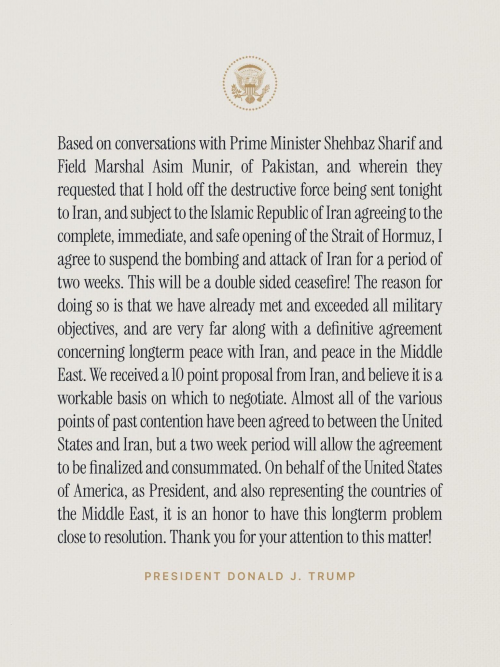
Oil prices plunged below $100 per barrel after Donald Trump announced a last-ditch ceasefire on Tuesday night on the condition that Iran would reopen the choke point.
However, tracking data revealed almost no new tanker movement through the strait on Wednesday.
Lars Jensen, a shipping analyst with Vespucci Maritime, said: “Technically speaking they could pull anchor and start moving now, but that is not what is likely to happen.
“I expect that what we will see in the next few days, if the ceasefire holds, is a lot of vessels exit the Persian Gulf but not very many vessels enter into the Persian Gulf.
“Shipping lines would be hesitant in trusting the longevity of the ceasefire at this point and therefore [would] try to get vessels out, so they can use them, but not risk putting new vessels into the Gulf that might then be trapped if the ceasefire breaks down.”
Mr Jensen said most ship owners would want to see details of the ceasefire and receive reassurances about the terms for passing through the Strait before committing. Any
Iranian demands for payments are also likely to prove problematic.
He told BBC Radio 4: “The Iranians have said yes, you can pass through freely, but you need to coordinate with the Iranian military forces, and it’s unclear exactly what that means.
“The challenge would be if you pay a toll for going through you might actually be in violation of some of the US sanctions on Iran, which would have other repercussions.”
Peter Sand, a container shipping analyst at logistics specialist Xeneta, said the focus would be on getting all trapped vessels – including 130 container carriers – out of the Gulf, shipping as much oil and gas for export as possible, and sending supplies to cities such as Dubai, which have been largely starved of goods since the start of the war.
However, he said owners would want to be sure that any inbound ships could be extricated if the ceasefire broke down. That would limit sailings to vessels close enough to get into the Gulf, unload and get out again during the two weeks. That would mean ships already in Pakistan, India and ports such as Dar es Salaam, in Tanzania.
Even then, Mr Sand said most ships were likely to go no further than DP World’s Jebel Ali facility on the outskirts of Dubai – a container facility rather than an oil terminal – so that they can perform a quick turnaround if need be.
‘It’s still a war’
He said: “Everybody is assessing the risk according to their own guidance but as the ceasefire is specifically stating two weeks, nobody is planning a full return.
“It’s a positive development but one that will not see an immediate surge in ships. It is still a war. There’s a ceasefire, but the uncertainty is just as great.”
Maersk, the world’s second-largest container line, said on Wednesday that the halt in the conflict did not provide enough certainty over security for normal operations to resume.
“At this point, we take a cautious approach, and we are not making any changes to specific services,” the Danish group said in a statement.
“The ceasefire may create transit opportunities, but it does not yet provide full maritime certainty and we need to understand all potential conditions attached.”
Neil Roberts, the head of marine and aviation at Lloyd’s Market Association (LMA), said: “It can be expected that the ships previously unable to leave will now try to do so as soon as the owners and master deem it is safe to do so.”
However, he added: “It is highly unlikely that trade into the Gulf will simply resume. The region remains at heightened risk with none of the underlying tensions resolved.”



 Each barrel of oil will cost $1, payable in cryptocurrency;
