Ah, okay - yes that makes sense regards the S75 - I've actually fired the main gun of the Mk.2 at a range target. I have a few photos, that include some of the inside gunner's sights, unfortunately I cannot share them.

It would be good to get the S75 brochure from somewhere.

I had some very good contacts at the School of Armour in Bloem (that explains the above) - not anymore though, pity I could have got all of that info for us (nothing secret of course). I may know Dewald personally, however I would need to see a photo of him to know - It's actually been many years since I moved in the 'right' circles..

Do you perhaps know where the 35mm SPAAG is today - Youngsfield or School of Armour?
That's cool about the Mk.2, very jealous.

I have tried looking for a S75 broqure and have found nothing across the internet. Wish I was around on the internet earlier like the 2000s to get all the information I could.

I have asked and been asked where it was on the War Thunder forums not long ago, and I haven't got a clue tbh. I might ask Dewald where he might think it is and maybe contact some guys to ask about it. I might also ask for the location of the Rooikat ZA-HVM as well. If they both still exist, I want to go and take a shit tonne of photos and maybe get inside and take some more inside both.

Seeing that both anti-air Rooikats, even the one G6 AA, were South African military projects, it is possible that they were all scrapped except for the hulls (so turrets were scrapped) but I really need to check. I should also ask so I can maybe stop by at Kimberley when I go do Fish River Canyon in July.
 
On a down note:
https://defenceweb.co.za/sa-defence-sa-defence/defence-budget-disappointment/
In spite of Presidential assurances and some ad hoc allocations, South Africa’s defence budget will shrink by R2 billion next year.

This is according to the 2026 Estimates of National Expenditure (ENEs) published by National Treasury on Wednesday alongside Finance Minister Enoch Godongwana’s Budget Speech.

The 2025/26 defence budget (Vote 23) stands at R59 billion, up from R57.9 billion the year before, but will drop down to R57.6 billion in 2026/27 before increasing slightly to R59.8 billion in 2027/28, and R61.7 billion in 2028/29. This represents a 1.5% average growth rate, which is well below inflation and represents a decrease in real terms.

EDIT: A couple of earlier articles on the funding situation;
https://defenceweb.co.za/sa-defence-sa-defence/the-defunding-of-the-sandf-a-deep-financial-dive/
https://defenceweb.co.za/sa-defence-sa-defence/the-defunding-of-the-sandf-a-deep-head-count-dive/
 
Last edited:
I would like move the topic for this forum to the sighting systems from the 90s and 2000s if that's fine.
The name designation is also a simple yet complex thing, the G in GS-XX means it's the gunner's primary sight and C in CS-XX means it's the commander's primary sight

1. First is S60 series of sights, pretty basic but decent the CS60 has a few variants but with only small differences between them.

2. Next we have the S65 sights, just like the S60, good sights but higher levels of zoom

3. Following we have the S72 sights, also called the TIGER sights, these were meant to be mounted in a upgraded T-72M1

4. The S75 series, I don't know if these exist. I was on a call last night with Dewald Venter and he mentioned the GS75/CS75 but he might have been thinking of the S72 sights.

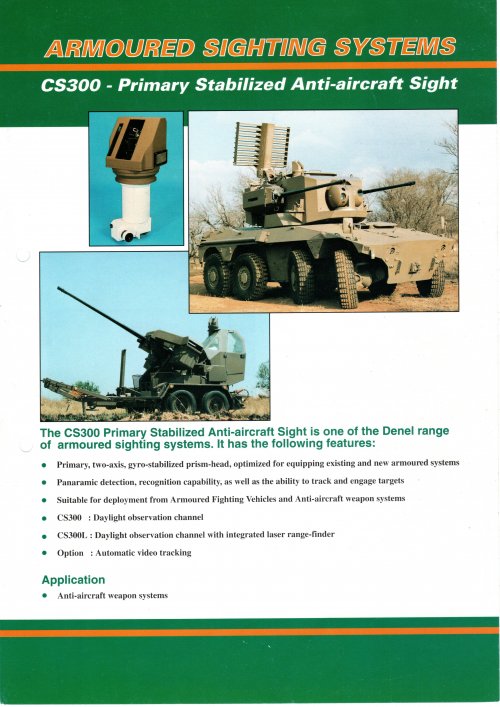
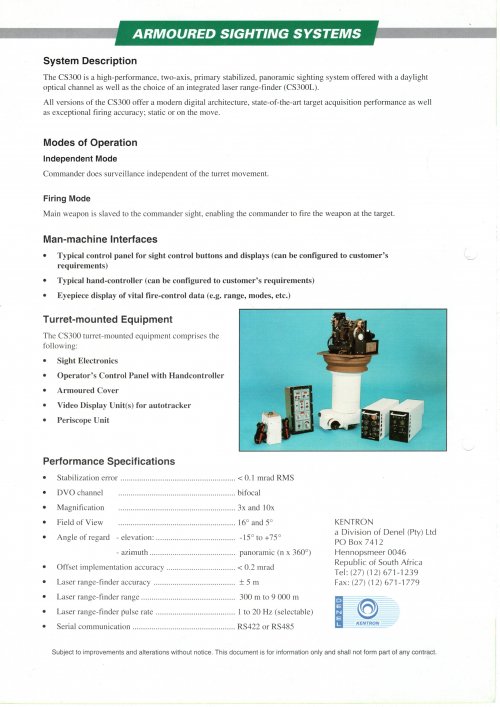
5. Now for a commander anti air sight, used by the Rooikat ZA-35 and Rooikat ZA-HVM prototypes, the AA-CS-300D panoramic day sight, it could elevate to +70 degrees to look into the sky!

6. The gunner sight for the Rooikat ZA-35 and what was first installed on the Rooikat ZA-HVM, you guessed it, the AA-EOT. It had image and FLIR tracking and also had thermal imaging for better searching.

7. Now is the best anti air sight of the 90s (in SA), the ETS 2400 Catchy, specifications are very similar to AA-EOT on ZA-35, due to using the same systems, but with addition of a radar.

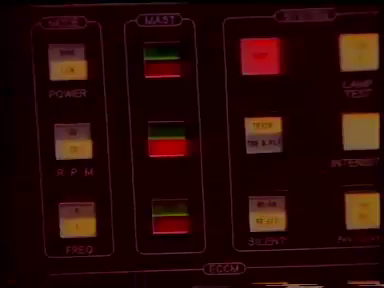
Pictures of the sights:
Had to go digging in the archives for the ZA-35 SPAAG (also shown fitted to the eGLAS) brochure
 

Attachments

  • CS300_1.jpg
    CS300_1.jpg
    3.1 MB · Views: 256
  • CS300_2.jpg
    CS300_2.jpg
    1.4 MB · Views: 170
Sprinkaan is a very interesting concept. It is a great pity that we don't know where it was built and who designed it. If I remember correctly, it used Magirus Jupiter axles but they were mounted on coil srpings, with longitudinal and transverse locating links, and a custom made yoke locating the second axle. The steering for the front two axles was also a custom made setup, and it was powered by a GM 6V-71, two-stroke diesel. The point is, it wasn't just some pampoen tiffie with a hammer and a welding torch who cobbled it together; quite a bit of thought and design went into it and we'll probably never know by whom, and where. All the vehicles evaluated during the development of the Ratel are discussed in the two-volume "Ratel, the making of a legend" books, yet there is nary a mantion of the Sprinkaan.

In the video, it is dragged off somewhere. Where is it currently housed?
The Springkaan was the TSC (Technical Service Corps) effort to design an ICV in response to the Ratel requirement. In those days the Tiffies employed a number of engineers and they were responsible for the Springkaan. It was built at 61 BWS in Lyttleton or maybe at TSC School. The brainchild was Wessie van der Westhuizen, who later left the Army and became the CEO of Reumech in the late nineties. I was told that the Magirus was parked in the workshop and they draw a line on the floor with chalk where the chassis should be cut and the 2nd steered axle should be placed.
 
Very much like the experimental 8x8 gun tractor that was built , but from what I can see the 8x8 gun tractor had the extra axle in front of the existing front axle , unlike your idea. The space between the 2nd and 3rd axle on the experimental truck is therefore much longer than your proposed Samil 100 8x8 , and would have affected the turning circle radius negatively.
That is not a SAMIL 100, but a MAN 8x8 that was evaluated as a gun tractor.
 
....and some more
 

Attachments

  • 19882280_img66392_jpeg3565741e3bfc955c080407d217706530.jpeg
    19882280_img66392_jpeg3565741e3bfc955c080407d217706530.jpeg
    194 KB · Views: 83
  • 19882282_1000147805_jpegacb51bffc26577aae86a9c3dee1ab3ba.jpeg
    19882282_1000147805_jpegacb51bffc26577aae86a9c3dee1ab3ba.jpeg
    205 KB · Views: 72
  • 19882300_1000147815_jpeg3b801adf7a12d4346802b4e14251f157.jpeg
    19882300_1000147815_jpeg3b801adf7a12d4346802b4e14251f157.jpeg
    171.9 KB · Views: 100
Some new photos have surfaced on Facebook of the large 8x8 Skorpioen vehicle.
 

Attachments

  • FB_IMG_1776781920407.jpg
    FB_IMG_1776781920407.jpg
    36.1 KB · Views: 93
  • FB_IMG_1776781929875.jpg
    FB_IMG_1776781929875.jpg
    25.3 KB · Views: 87
  • FB_IMG_1776781942554.jpg
    FB_IMG_1776781942554.jpg
    42.8 KB · Views: 83
  • FB_IMG_1776781957992.jpg
    FB_IMG_1776781957992.jpg
    23.1 KB · Views: 82
  • FB_IMG_1776781951537.jpg
    FB_IMG_1776781951537.jpg
    36.4 KB · Views: 90
The Saracen story is interesting.
There was a programme to update the Saracen in South Africa during the 1980's. (EDIT: 1979 apparently)
There were a large amount of vehicles (280 were on hand originally) available after their replacement by the Ratel, so there was an attempt to make use of these in such roles as Internal security.
I recall that the electrics were overhauled, amongst many other things.
I wonder what the link between Saracen 88 and the South African ones were.

I don't think they found much use for them as they were obsolete in concept and quite cramped anyway compared to the what the local industry was pumping out, so the programme petered out.
All this from memory, so I would have to brush up on that again.
The Saracen looks great but it wasn't such a great design. It was a smallish, wheeled APC, with excellent mobility for a wheeled, fifties era armoured veihicle, but very complex, very expensive for what it is, and demanding a lot of maintenance. It was mainly designed for the British Army of the Rhine, where daily travel distances would be short and copious maintenance facilities would be available. It did not do well in hot climates. The engine did not over-heat, apparently, but the engine compartment got so hot that the fuel (petrol) in the fuel lines evaporated, resulting in the vehicles coming to a standstill because of vapor lock. The hot air from the engine compartment exited from the hatches at the top and was then drawn into the vehicle through the open driver's hatch. The Saracens could only be driven with the rear doors open and the little turret reversed and open, to serve as an ersatz air scoop. Because of the drive-line, it also did not drive well, and suffered from excessive wear and tear, when driven on hard surfaces (macadam roads, for instance), due to transmission wind-up. Etc., etc. The British Army attempted to improve the hot climate problems by fitting the cars with so-called reverse flow cooling systems. These can be recocgnised by the "beehive" structures on top of the engine compartments. The Saracen never did well in South Africa.

The other problem is that the vehicle was not readily modifyable. Everything in the drive-line and suspension was proprietary: the gearbox, transfer case (incorporating reverse gear), the central differential (not lockable!), the bevel gear cases at every wheel station, torsion bar suspension system, again etc., etc. The Brits did fit some with Perkins diesel engines during the 1980's but the rest of the drive line remained standard, resulting in a top speed of only 40 km/hour, because the diesels ran at much lower revs than the Rolls Royce B, petrol engines. The low speed was probably a blessing in disguise as the brakes were also poor!

Although SA did upgrade the vehicles during the eighties, the basic design, and shortcomings, remained the same. The vehicles simply were not suitable for the long range type of operations the army performed in the Southern African area of operations.
 
Fortuitously, this rather excellent interview has just been released.

It is with Brigadier General Tony Savides, who was involved with the Ratel ICV development from early on. It clears up some oft repeated errors on Ratels development.
Interview starts at 8:15.

He discusses various vehicles looked at, and how the Ratel came into being from earlier concept prototypes.

He mentions at 21:50 that Mercedes Benz wanted to offer a 6x6 vehicle, but they didn't meet the cut-off time.
Any ideas what this vehicle was?

He also corrects the Ratel lineage from 25:50 onwards.
The Springfield Bussing Buffel was a South African built vehicle that was inspired by a vehicle by MAN in West Germany in 1971 called the Studing Objekt. (?) This spelling is probably incorrect as it is me purely trying to spell it off his vocal interview.
Anybody know anything about this vehicle?

He further explains that although the Springfield Bussing Buffel was the design selected among the contenders, it had to be redesigned as it wasn't suitable for what the Army wanted.

Edit: 100 Ratel Log 8x8 vehicles were also ordered, but were not produced in the end, leaving only the 2 prototypes seen earlier in this thread.

View: https://youtu.be/99zSZyPxuW0?si=Iff0YVuma9hoCON5
Mercedes wished to offer the Transportpanzer 1 (Fuchs). This started being delivered to the German Army in December 1979. The initial order by the German army was for 996 vehicles. The Fuchs proved to be a highly successful design and modified and updated versions are in service to this day. Small numbers were even in service with US forces.
 
Mercedes wished to offer the Transportpanzer 1 (Fuchs). This started being delivered to the German Army in December 1979. The initial order by the German army was for 996 vehicles. The Fuchs proved to be a highly successful design and modified and updated versions are in service to this day. Small numbers were even in service with US forces.
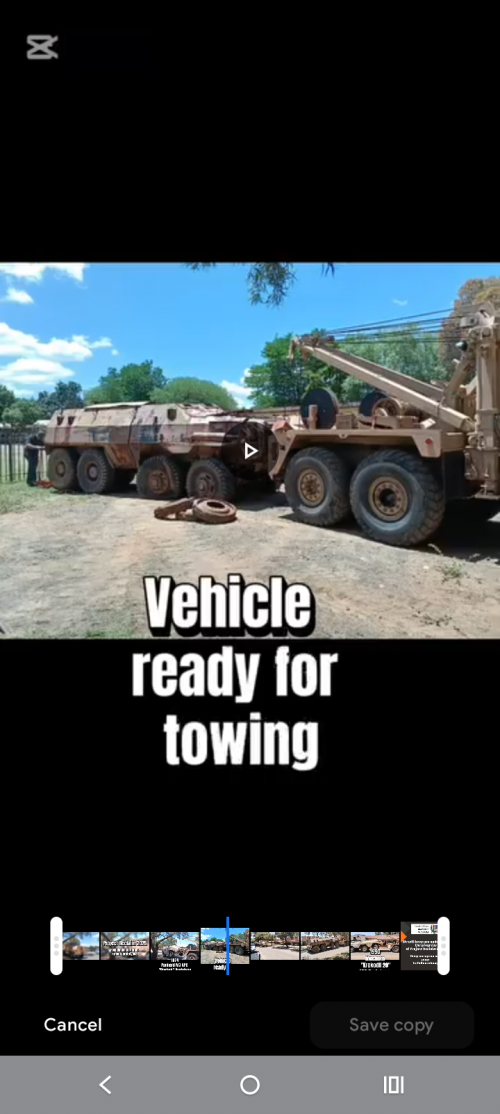
Herman, you will be pleased to note that on Facebook, the SA Armour Museum had started Operation Reclaim, which involves towing some of the rarer prototypes into one location in preparation for restoration.

The video on the website shows the Springkaan 8x8 prototype is amongst them.
So hopefully we will see it restored and with a proper information plaque detailing it's history.
 
Yes. The Sprinkaan is the mystery amongst these vehicles. I had a look at it some years ago, while it was still parked, derelict, outside the armour museum. It was supposedly built by the army tiffies, somewhere. It is a very interesting vehicle, with Magirus axles, probably off a gun tractor, modified with coil springs instead of the original leaf springs, and with a Detroit Diesel, two-stroke engine. What was obvious though, was that this thing wasn't put together by a bunch of tiffies with welding torches and hammers. Quite a bit of automotive design went into it, yet, we apparently don't know where or by whom it was actually put together, and, as far as I know, little or no photographic material exists about the vehicle being tested.

About the Büffel: The vehicle was designed by Büssing, who also built the 8x8 German armoured cars during WW2, in the late sixties. For the Büffel, they used MAN axles and coils spring suspension, an American Allison transmission, and their own engines. In the early to mid- seventies, Büssing was taken over by MAN. The original Buffel which appeared in SA was built in Germany, and I believe the first few prototypes were all built in Germany. Büssing in SA was a bus manufacturer. They did not have the technology to build an armoured vehicle, like the Buffel prototype. The Ratel was developd from the original Büssing prototypes and used the Büssing engine throughout its production.

In the mid-seventies, the Belgian company SIBMAS offered a vehicle which was clearly also derived from the Büssing Büffel, but it also featured elements from the Ratel, notably the steering compartment/windscreen. The other notable differences from the Ratel was the use of a MAN engine and a ZF gearbox. The MAN engine was used because Büssing had by that time been taken over by MAN. The transmission was the ZF HP 500 unit. This transmission was very widely used in wheeled vehicles after the mid-seventies. At the time of the development of the original Büssing and of the Ratel, it was not yet available. The original Ratel prototypes were therefore fitted with the Allison box. Because of political considerations, the Allison gearbox was replaced by a German Renk transmission. As far as I know, the Renk unit was actually developed for use in tracked vehicles but was adapted for wheeled vehicle use at the request of South Africa. It was, by all accounts, an excellent gearbox, which was actually capable of handling much more power than the 320 hp the Büssing engine could deliver. I have not been able to find any other wheeled armoured vehicles that used the Renk box. It was apparently also substantially more expensive than the ZF HP 500 unit.
 
I just noticed an earlier comment on my musings about the origin of the Sprinkaan, is which much is explained.
 

Attachments

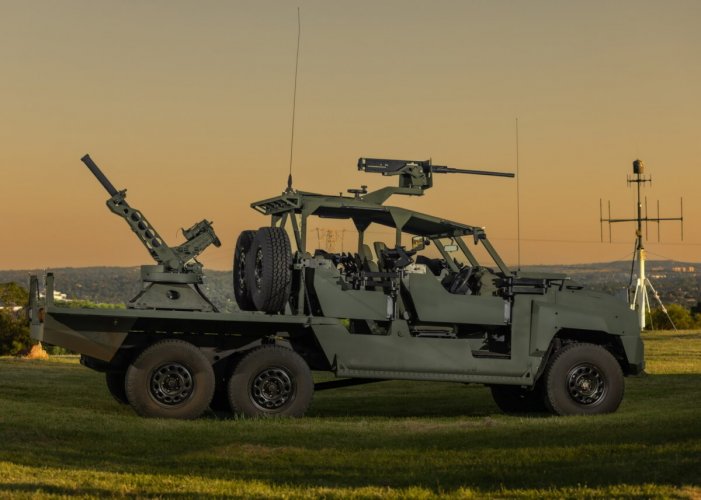
  • SVI_MAX_Recon_Scorpion_mortar_SVI.jpg
    SVI_MAX_Recon_Scorpion_mortar_SVI.jpg
    186.9 KB · Views: 67
  • SVI_MAX_Recon_side_doors_SVI.jpg
    SVI_MAX_Recon_side_doors_SVI.jpg
    150.6 KB · Views: 63
  • SVI_MAX_Recon_SVI-1200x857.jpg
    SVI_MAX_Recon_SVI-1200x857.jpg
    132.9 KB · Views: 59
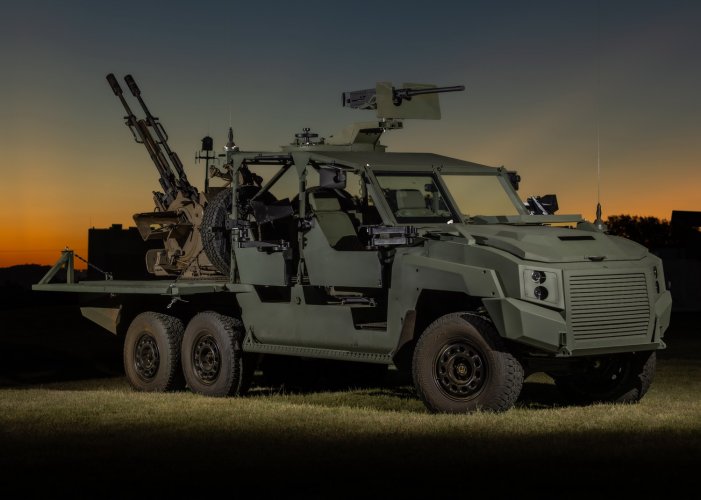
  • SVI_MAX_Recon_ZU-23-2_SVI.jpg
    SVI_MAX_Recon_ZU-23-2_SVI.jpg
    265.9 KB · Views: 73
A big thx to Wiedzmin
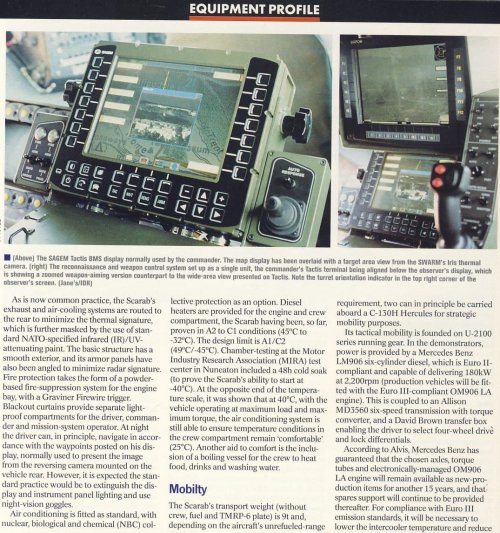
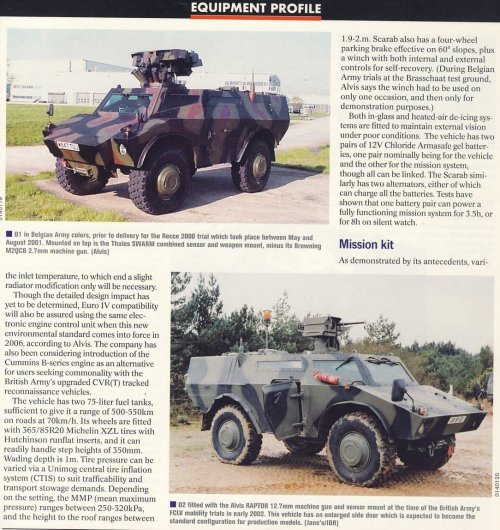
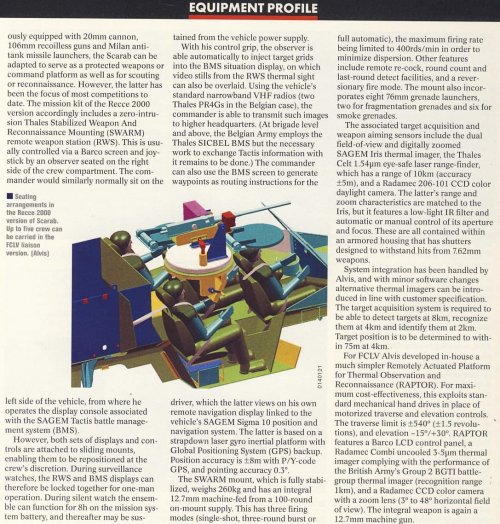
Alvis Scarab2.png

don't know if the others are also related to South African vehicles....never the less
 

Attachments

  • 696685654_122126342457205347_132902858944279708_n.png
    696685654_122126342457205347_132902858944279708_n.png
    4.2 MB · Views: 81
  • 692983392_122126495247205347_4184699886731333616_n.png
    692983392_122126495247205347_4184699886731333616_n.png
    4.3 MB · Views: 78
  • Alvis Scarab.png
    Alvis Scarab.png
    859.3 KB · Views: 85
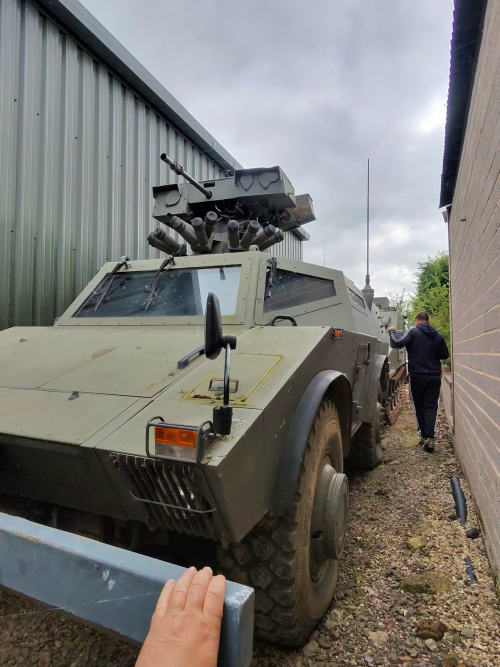
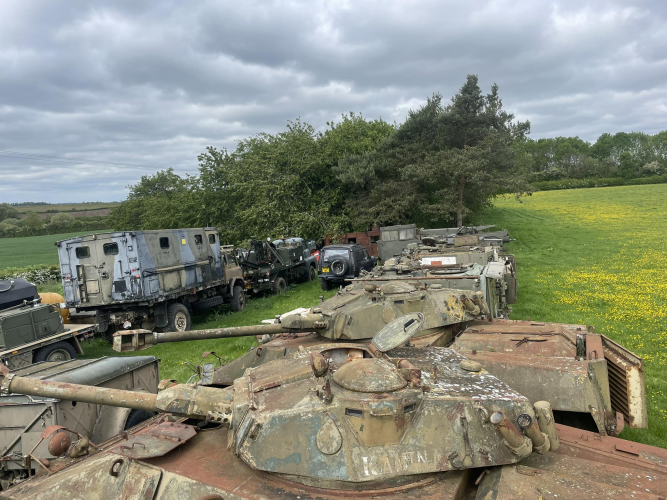
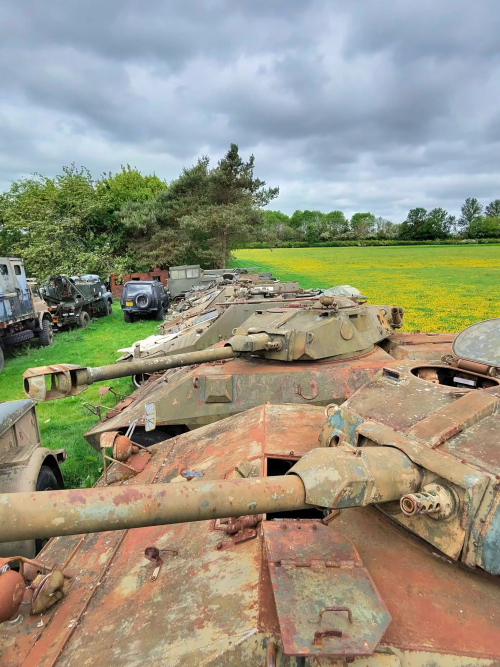
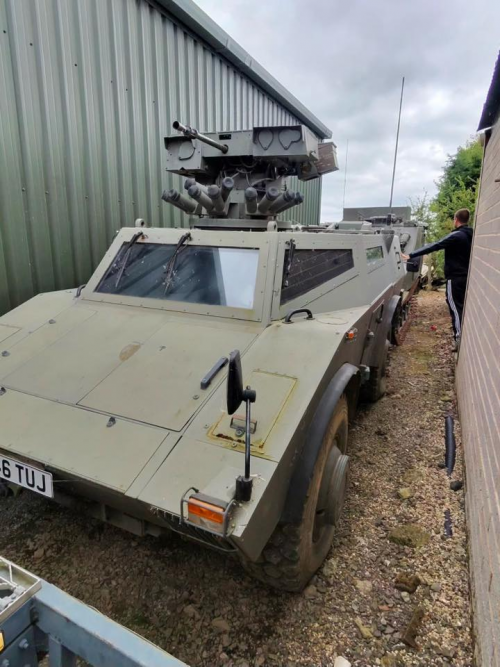
The hell are those last 2 images, they look like AML 90 turrets (maybe early Eland) but on the chasis of vehicles that look like the ratel prototype that came after Büssing Büffel. There is a landy but I don't recognise that format of number plate
 
That numberplate on the Landrover is British.

The vehicles in the foreground are EE-9 Cascavels, a 12 ton 6x6 armoured car produced by Engesa from the mid 1970's. There was a variant fitted with the AML-90 turret.

Looking at the topography and amount and type of weathering and rust, the location is in the UK.
 
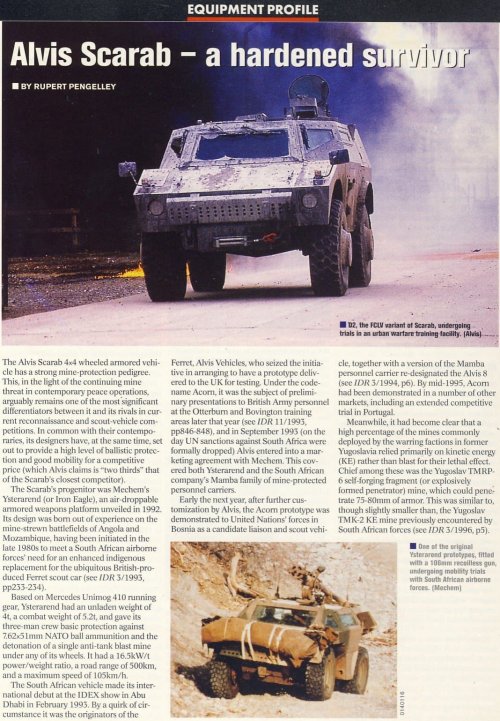
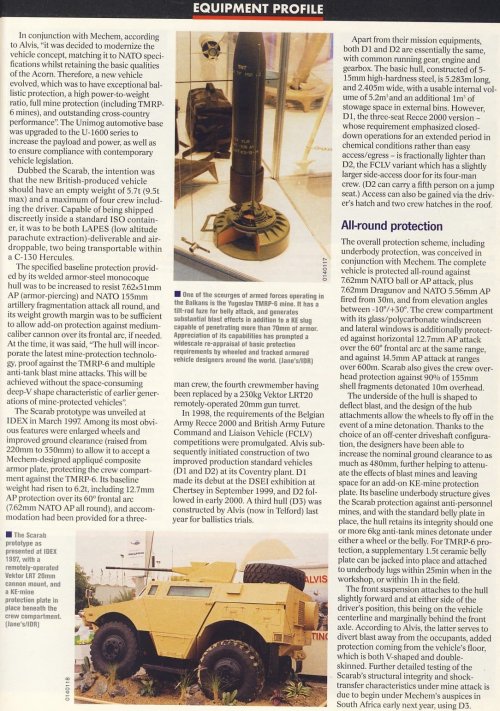
The vehicle in the first pics is the Alvis Scarab.

This was based on the Mechem Yster Arend (Eagle).
 

Attachments

  • 4f89ec5b09c36e6d8b82f57910ff3ca66d711bd2.jpeg
    4f89ec5b09c36e6d8b82f57910ff3ca66d711bd2.jpeg
    257.1 KB · Views: 79
  • 0faa18bacf1a914d7744f8ee86fd4ab91533b9bb.jpeg
    0faa18bacf1a914d7744f8ee86fd4ab91533b9bb.jpeg
    337.5 KB · Views: 58
  • e50348c06a7051043be1835f6930b4226eee9e08.jpeg
    e50348c06a7051043be1835f6930b4226eee9e08.jpeg
    232.5 KB · Views: 71
  • b8e14016620f1a313e806181f47f2afb0549d3e4.jpeg
    b8e14016620f1a313e806181f47f2afb0549d3e4.jpeg
    205 KB · Views: 77
  • 5895427b02d984829112f14f0eed6a580bcec90d.jpeg
    5895427b02d984829112f14f0eed6a580bcec90d.jpeg
    247 KB · Views: 100
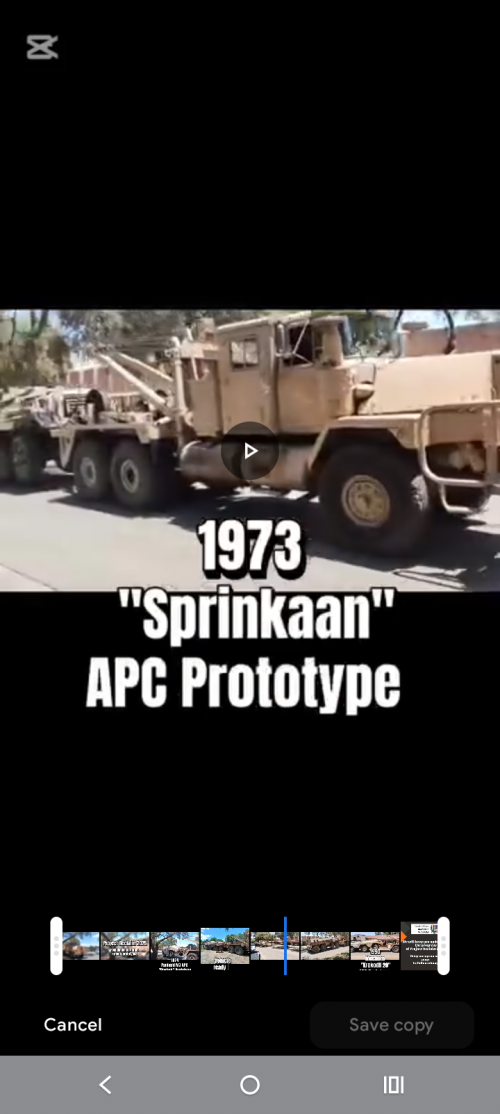
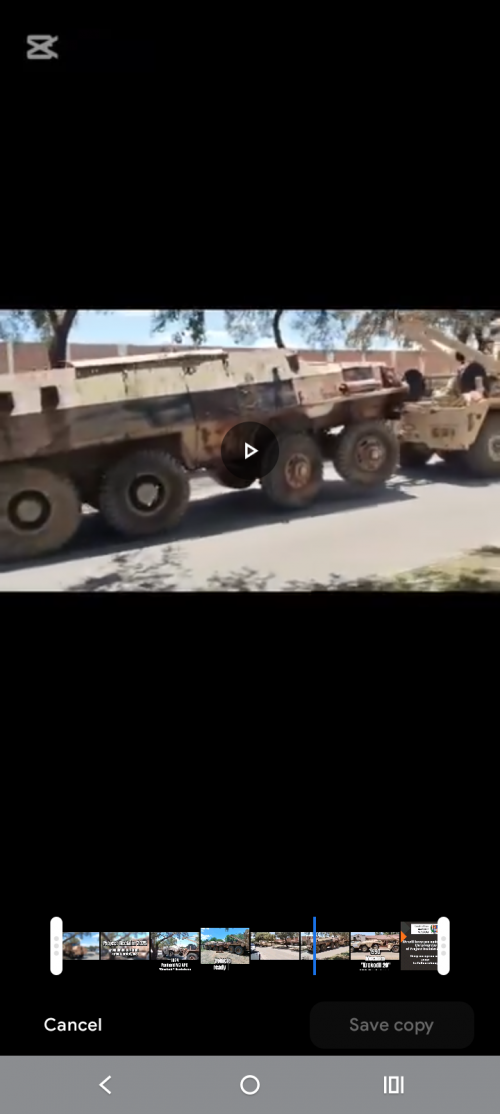
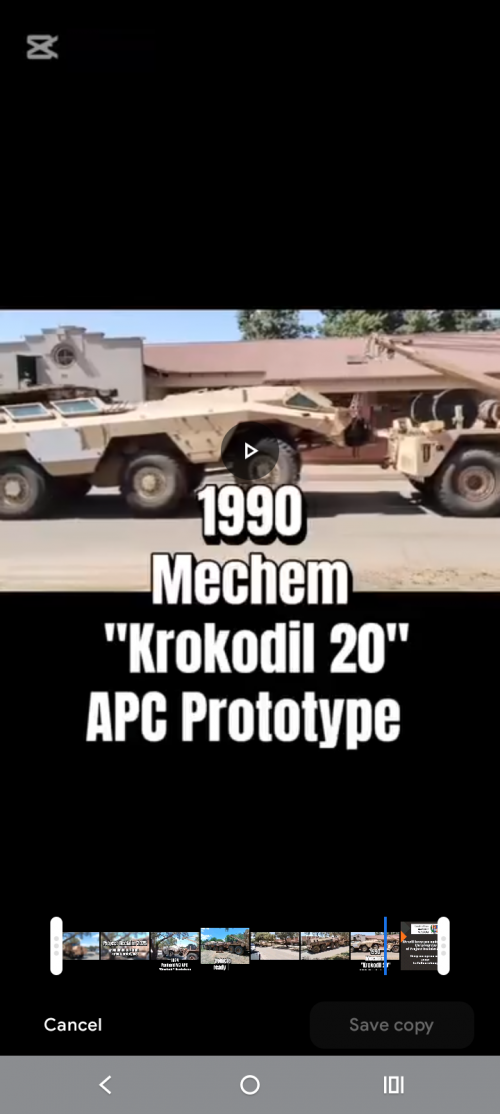
Some stills from the Facebook video of Operation Reclaim 2026.
Prototypes being towed for preservation/restoration.
Amongst them the Springkaan (1973) and Krokodil-20 (1990).

Herman will be happy the Springkaan will finally get some love.
But I do echo his desire to get a fuller history of the background history of this vehicle.

Edit: It's an MP4 video which I cannot post here. Screenshot_20260513-202323.png Screenshot_20260513-202348.png Screenshot_20260513-202336.png Screenshot_20260513-202355.png
 
Last edited:
Hi,
Do you know when was TRT-R30 tested on the RG35?
 

Attachments

  • (ZAF)-RG35_TRT-R30_(3).jpeg
    (ZAF)-RG35_TRT-R30_(3).jpeg
    91.2 KB · Views: 107
  • (ZAF)-RG35_TRT-R30_(2).jpeg
    (ZAF)-RG35_TRT-R30_(2).jpeg
    99.4 KB · Views: 94
  • (ZAF)-RG35_TRT-R30_(1).jpeg
    (ZAF)-RG35_TRT-R30_(1).jpeg
    585.7 KB · Views: 97
  • (ZAF)-TRT-R30_brochure.pdf
    650.5 KB · Views: 11
  • (ZAF)-RG35_6x6_brochure.pdf
    1.7 MB · Views: 13
I'm curious if anyone has any operating manuals or technical or maintenance manuals for really any SANDF vehicles. SARCs, Ratels, G6s, Elands, Olifants, Rooikats, or pieces of those, or really anything else. I am on the hunt for every scrap I can get of actual technical manuals for service SANDF vehicles.
 
I'm curious if anyone has any operating manuals or technical or maintenance manuals for really any SANDF vehicles. SARCs, Ratels, G6s, Elands, Olifants, Rooikats, or pieces of those, or really anything else. I am on the hunt for every scrap I can get of actual technical manuals for service SANDF vehicles.
Good question. I'm sure why they are not that well known in public. I'll keep an eye out at Classic Arms auctions.
 
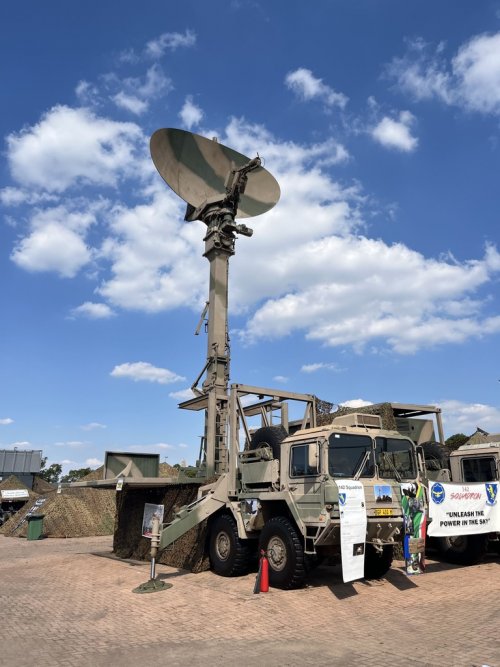
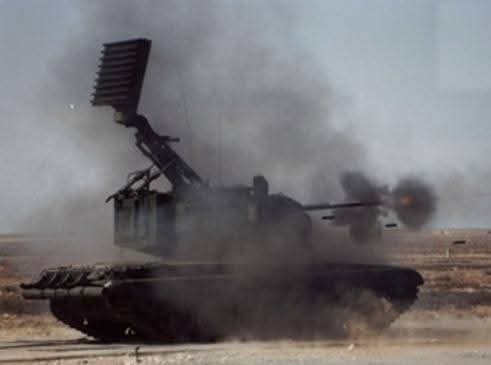
Another picture of the ZA-35 SPAAG turret as fitted to a T-72 chassis in firing mode.

I think the chassis is one of the two T-72 tanks secretly aquired from Poland near the end of the Cold War for testing purposes.

Does anyone know the whereabouts of the ZA-35 SPAAG and SPAAM turrets these days?
 

Attachments

  • FB_IMG_1780018951770.jpg
    FB_IMG_1780018951770.jpg
    9.5 KB · Views: 94
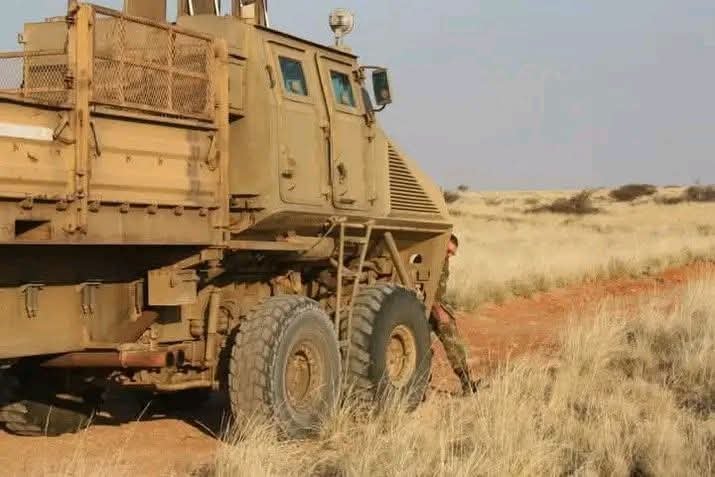
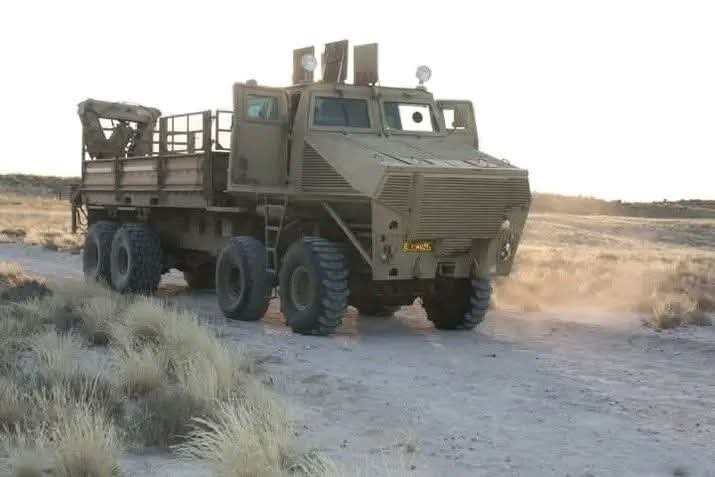
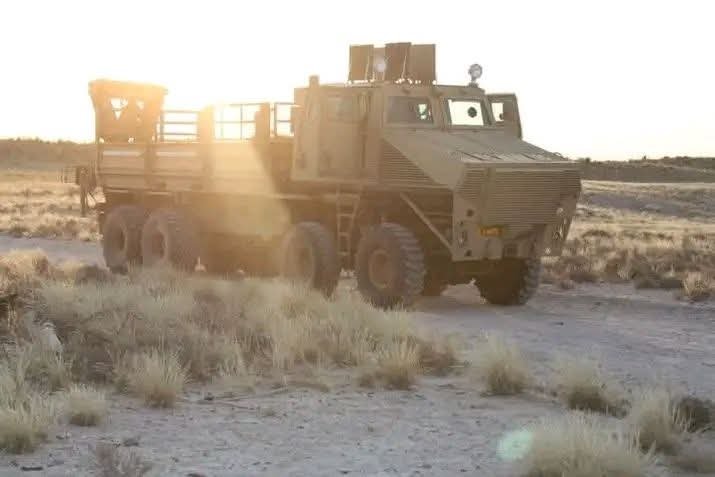
Sandstone was tasked with recovering 2 of the Macks for their own display, and 2 for the Armour museum, consisting of both Armoured Bulperd and softskin config.
The recovery was effected from 4 VRP (Vehicle Reserve Park) north of Pretoria.

I've no idea how many were used in service, but we know now that at least 2 of the armoured Bulperds are in existence.

Whilst browsing pics of the recovery, in the first pic, one can make out two or three interesting vehicles in the backround. I think they may either be the AC200 prototype vehicles as discussed earlier, or perhaps Ingwe vehicles.

I wonder if one can have a look around the place?

A set of pics at this link.

http://www.sandstone-estates.com/in...museum-and-sht-goes-from-strength-to-strength
Fun bit of information.
We are currently busy restoring that Bulperd and using the Mack recovery as a parts donor.
 
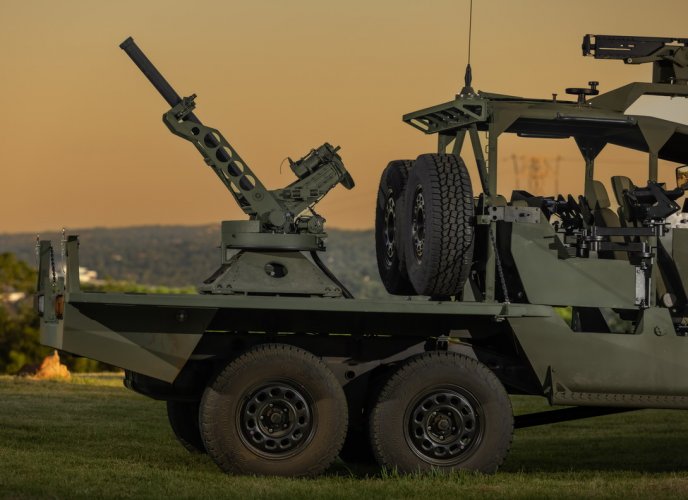
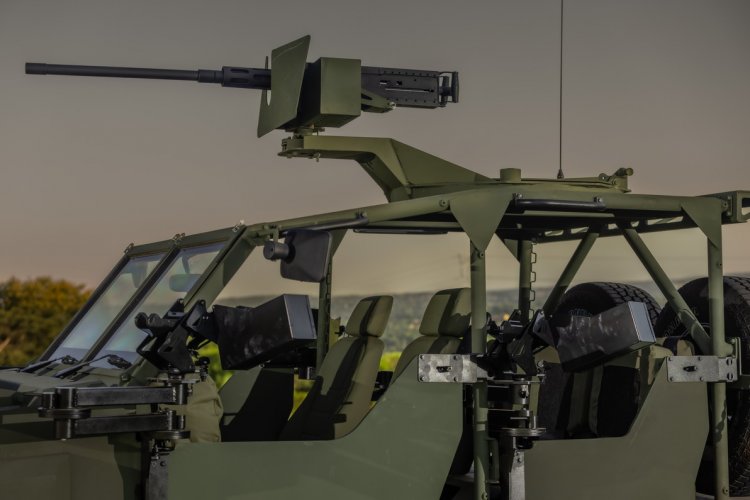
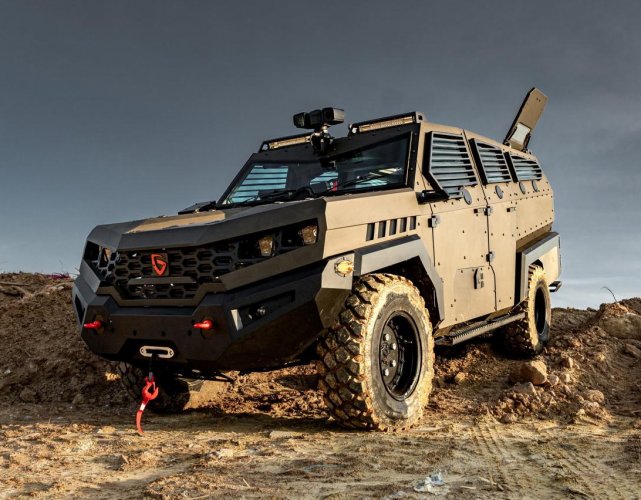
I have read that there is a an option to mount a 12.7 mm heavy machine gun or 40 mm grenade launcher on the gecko paratrooper vehicle specifically in the cargo bay or troop section of the vehicle does anyone have any pictures of it in use?
 

Similar threads

Back
Top Bottom