I'm confident Bayern-Chemie was part of HYDIS.
Yes but HYDIS had multiple contending concepts:
One interceptor concept has proven its relevance and has been selected by the Participating States (France, Germany, Italy, The Netherlands), over the two concepts from the Initial Concept Review
As sutch bayern-chemie could have been primary engine provider for a concept with a ramjet
 
As sutch bayern-chemie could have been primary engine provider for a concept with a ramjet
Oh yes definitly, i worded it badly, it's mainly technical choice !
btw i believe HYDEF is also going for 100% SRB
 
So the HYDIS/Aquila missile is supposed to be 3 stage Booster-Cruiser-KV … but i wonder how they will modulate the thrust of the cruise stage if it's a solid rocket motor ?
What are some examples of Throttleable Solid Rocket Motors ?

https://www.mbda-systems.com/products/area-protection/aquila
Thrust modulation for a flexible cruise phase to recover predicted impact point variations

https://www.mbda-systems.com/hydis-...stone-towards-definition-european-interceptor
The technical activities encompassed the design studies to refine the solid rocket motor-based concepts to match our customer requirements.
 
So the HYDIS/Aquila missile is supposed to be 3 stage Booster-Cruiser-KV … but i wonder how they will modulate the thrust of the cruise stage if it's a solid rocket motor ?
What are some examples of Throttleable Solid Rocket Motors ?
Hybrids or ducted rockets. (solid fuel ramjet)
 
View: https://x.com/SierraSpaceCo/status/2076782498227576911?s=20


Sierra Space Awarded $798 Million Missile Defense Contract in Support of Golden Dome for America​

https://www.sierraspace.com/press-r...ntract-in-support-of-golden-dome-for-america/
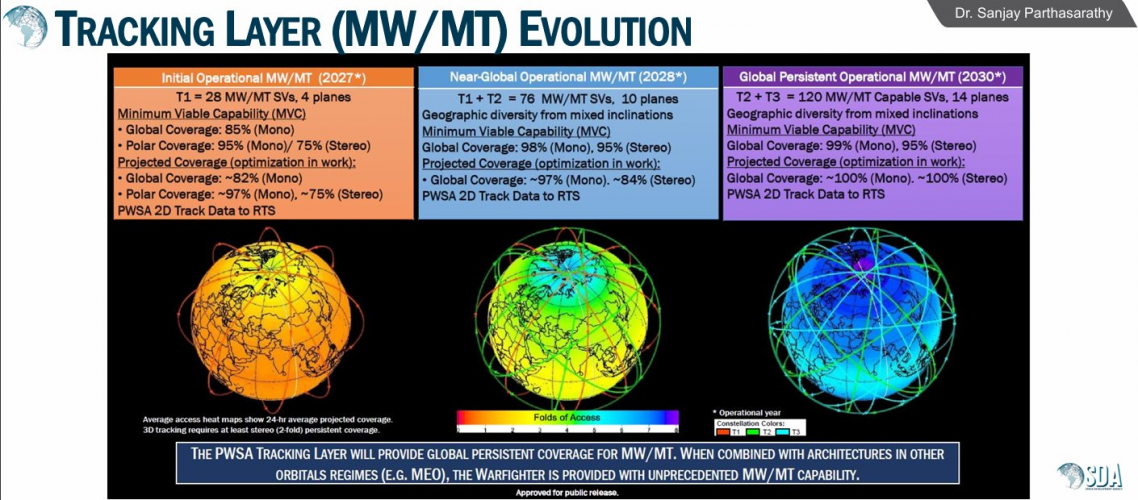
Sierra Space contracted to deliver an additional 18 satellites for the tracking layer, strengthening the Proliferated Warfighter Space Architecture
The 18 AMDT3 satellites will be based on the Horizon spacecraft, one of three satellites in the Sierra Space Eclipse™ Satellite Family, the same proven platform used for the company’s successful Tranche 2 Tracking Layer program. Sierra Space has completed all 18 space vehicle structure builds of the T2 program and is preparing for qualification testing of the nine-satellite launch configuration this summer, followed by system verification testing later this year.

The AMDT3 award supports Golden Dome for America’s space-based capabilities.

View: https://x.com/ASForcesMag/status/2076798700504928629?s=20


SDA Awards Contracts for 36 Golden Dome Missile Tracking Satellites​

https://www.airandspaceforces.com/s...r-36-golden-dome-missile-tracking-satellites/
The satellites will be part of Tranche 3 of SDA’s missile defense, warning, and tracking layer, a constellation of satellites in low-Earth orbit. L3Harris and Sierra Space both received contracts to build 18 satellites each and deliver them in time for a potential launch in late 2028.
The Space Force awarded initial contracts for Tranche 3 last December to Lockheed Martin, Rocket Lab, Northrop Grumman, and L3Harris for a total of 72 satellites. This additional batch of 32—which SDA calls Accelerated Missile Defense Tranche 3, or AMDT3—brings the total tranche to 104 spacecraft.
“The new contract builds on the successful on-orbit demonstration of an L3Harris Hypersonic and Ballistic Tracking Space Sensor (HBTSS) satellite and infrared sensor payload the company developed for the Missile Defense Agency,” L3Harris CEO Chris Kubasik said in a statement, adding that the company has more than 70 missile tracking and defense satellites on order.
 
Last edited:
New european development called Bliksem EXO:
European companies Thales, Airbus Defence and Space, Destinus, MBDA Deutschland, and Safran Electronics & Defense aim to develop Europe’s first sovereign exo-atmospheric interceptor program, designed for full interoperability with NATO IAMD (Integrated Air and Missile Defence) and the European Sky Shield Initiative (ESSI). According to a statement from the companies, the Memorandum of Understanding to establish the Bliksem EXO consortium—a multinational European industrial partnership for the development, qualification, serial production, and support of Bliksem EXO—was signed today in Paris during the inaugural meeting of the Ballistic Missile Defence Coalition, in the presence of Dutch Minister Rob Jetten. According to the statement, Bliksem EXO is an independent European exo-atmospheric intercept system designed to counter medium-range ballistic missiles (MRBMs) and intermediate-range ballistic missiles (IRBMs)—including Oreshnik-class systems featuring separable and maneuverable reentry vehicles.

Maybe even ICBM im the future? Atleast its seems to play around Arrow 3s area and possibly beyond.
It is designed for the upper tier of missile defense: detecting, tracking, and intercepting MRBM and IRBM threats during the mid-course phase outside the atmosphere using a direct kinetic "hit-to-kill" mechanism, without a warhead. This design complements existing and planned European capabilities for the lower intercept layers, the statement adds. Within the consortium, the Netherlands-based company Destinus acts as consortium leader and prime contractor, responsible for system integration and the exoatmospheric "Kill Vehicle" (EKV); MBDA Germany is responsible for the interceptor booster, launcher, and canisters; Safran Electronics & Defense for the seeker head as well as the EKV’s guidance, navigation, and control; Airbus Defence and Space for command and control and battle management (BMC4I); and Thales for the radar and sensor chain, ranging from early warning to fire control.
Seems like a good splitt but interresting that Destinus is the lead tought i guess its because they could be a "neutral" player
The parties intend to conclude a binding consortium agreement within three months of signing the letter of intent. Joint development work within the consortium is scheduled to begin in August 2026, and the consortium plans to conduct an EKV test in space in 2027.
Thats a very tight timeline tbh
 
Last edited:
Maybe even ICBM im the future? Atleast its seems to play around Arrow 3s area and possibly beyond.
TBH, the longest range IRBMs have a re-entry speed of ~M20 and the very fastest ICBMs are M25, so there's not much difference. As regards the mention of manoeuvrable RVs, that won't matter much in space.
 

Hanwha Philly Shipyard to build MDA missile-monitoring ship 'Golden Defender'​

https://insidedefense.com/daily-new...d-mda-missile-monitoring-ship-golden-defender
Hanwha Philly Shipyard has been selected to build a new Missile Range Instrumentation Vessel (MRIV), a Missile Defense Agency testing support ship slated to play a role in the Golden Dome for America initiative. Hanwha’s selection to build the new “Golden Defender” vessel was announced today by White House Office of Management and Budget Director Russell Vought during a christening ceremony for The Lone Star State, the fourth ship in the U.S. Maritime Administration's National Security Multimission Vessel program.
 
So the HYDIS/Aquila missile is supposed to be 3 stage Booster-Cruiser-KV … but i wonder how they will modulate the thrust of the cruise stage if it's a solid rocket motor ?
What are some examples of Throttleable Solid Rocket Motors ?

You can use trajectory instead. No need to modulate thrust when you are a point/area defense and have that kind of thrust available with a target that has to dive from high alt at one point or another (you are protecting a basket not running after a fleeting missile).
 
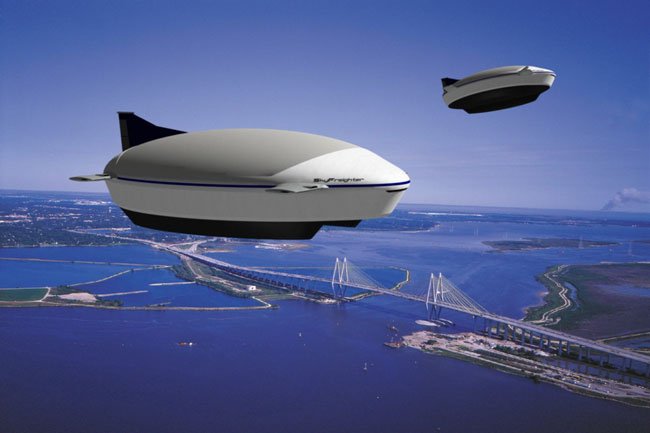
Airship?
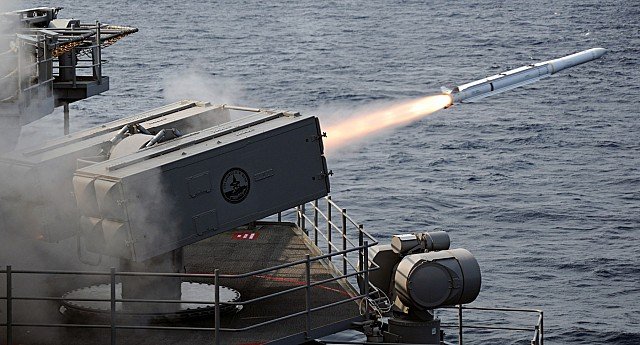
Idea if airship modern sense seems silly and they are because stability concerns however advantage is improved coverage. Even low power radar in sky is better than higher power radar at sea. Surface/ship radar miss alot because of clutter or need higher signal power. At altitude radar can scans wider area. Armed 4 cell box full RIM-162 sea sparrow. Be it a drone or small cabin, 16 missiles a airship fire capability for many targets. At altitude 40-50 thousand feet, sea sparrow doesn't have expend majority of its fuel in altitude climb. Rockets and missiles fired from sea level burn 40% oft their fuel just achieve above 26000 feet. With 40% reserved, ESSM can potentially achieve altitude 280,000 feet or more, in atmosphere launch 6x less dense air it could reach Mach 5-6 and achieve hit kills against objects approaching terminal ballistic phase.
1000042342.jpg
 

Golden Dome Secrecy Poses Challenge for Estimating Costs​

https://www.airandspaceforces.com/golden-dome-secrecy-challenge-cost-estimates/
While Pentagon officials have revealed some details about the architecture behind the Golden Dome missile defense project, crafting an independent cost estimate for a largely classified program remains a challenge, experts said Aug. 19.
President Donald Trump issued an executive order in January 2025 directing the Pentagon to build a multilayered missile defense shield to protect the U.S. from traditional and advanced missile threats, to include hypersonic weapons. Defense Department officials have said the system will consist of command-and-control nodes, satellite sensors, and ground-and- space-based interceptors, but the finer details of that architecture—including numbers of satellites and interceptors—remain shrouded in secrecy
 
High altitude airship.
Ballistic missiles have altitude oriented transition before terminal phase.
At altitude 40-70 thousand feet a high altitude ship with a launcher has less resistance and clutter from terrain using radar.
Even lighter cheaper missiles work. At altitude 50,000 feet air is 1/6th as dense so missile with Mach 4 can do more on fuel range and altitude with less aerodynamic drag. This may sound silly, and it is but far less so than sending missiles up from initial velocity of 0 at sea level.
1000043854.jpg

1000043858.jpg
 
Wow, I'm pleasantly surprised there's a thread dedicated to this topic.

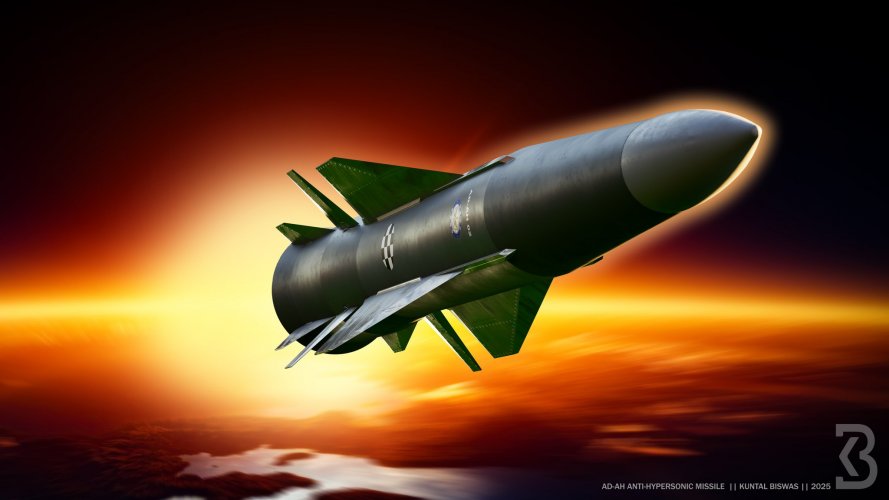
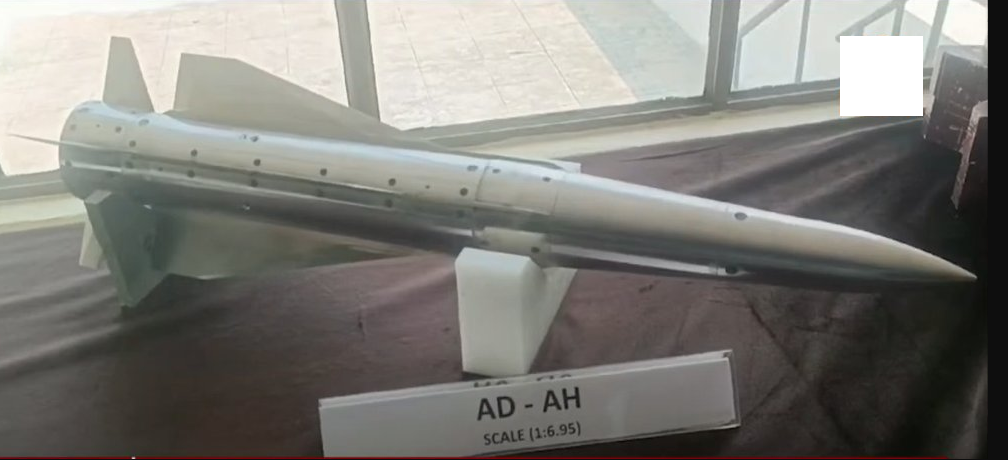
I think folks in India are particularly concerned about the DF-17/DF-ZF and similar Chinese HGVs. The upcoming Phase-III of India's BMD program primarily deals with countering hypersonics (AD-AH) & MIRVed BMs (AD-AM). AD-AH is of relevance to this thread.

Broadly, it seems to be similar in profile to Grumman's GPI (multi-stage solid rocket), but very few details are known at this point. Will keep an eye on it.

(2nd pic is a hypersonic wind tunnel model shown in 2024)
 

Attachments

  • Gggo81QaYAAEtOe.jpg
    Gggo81QaYAAEtOe.jpg
    156 KB · Views: 28
  • 1735018435223.png
    1735018435223.png
    334.4 KB · Views: 27
  • AD-AH.png
    AD-AH.png
    112.4 KB · Views: 26
IMO, the best defense against ballistic missiles and other high speed weapons is having an equivalent capability. I’ll trash your stuff too if you try.
 
Last edited:
IMO, the best defense against ballistic missiles and other high speed weapons is having an equivalent capability. I’ll trash your stuff too if you try.

Agreed.

But given how expensive (and as a consequence, relatively few in number) most modern principle surface combatants are, I cannot really fault any military for wanting to protect them at whatever cost. Besides, losing one of them can mean losing an important (and mobile) attack vector, as well.
 
I suspect that GPI and PAC3 would be "good enough" for ship self defense. Maybe SM6, if the fuzing is fast enough for high speed high-divers. SM2BlkIIICU would also be able to because it has the same fuzing as SM6. I don't think any older SM2s would be able to do so.

PAC3 is marginal in Ukraine versus hypersonics because the launchers are not located on top of the target.
But being on ship means being on top of the target. And that makes your interception geometry a lot easier.
 
I suspect that GPI and PAC3 would be "good enough" for ship self defense. Maybe SM6, if the fuzing is fast enough for high speed high-divers. SM2BlkIIICU would also be able to because it has the same fuzing as SM6. I don't think any older SM2s would be able to do so.

PAC3 is marginal in Ukraine versus hypersonics because the launchers are not located on top of the target.
But being on ship means being on top of the target. And that makes your interception geometry a lot easier.
Unless the incoming missile manoeuvres during intercept. Makes it difficult again.
 

Golden Dome test 'successes' arrive as independent MDA scrutiny disappears​

https://insidedefense.com/daily-new...es-arrive-independent-mda-scrutiny-disappears
Pentagon leaders are declaring a string of unusually rapid test successes for Golden Dome for America -- including what the program's director calls the most complex integrated missile defense test the nation has conducted -- just as the public has lost access to the independent assessments that historically scrutinized Missile Defense Agency testing and documented a persistent record of missed events, limited operational realism and other shortcomings.

MDA transfers HBTSS prototypes to Space Force after ending demonstration​

https://insidedefense.com/daily-new...otypes-space-force-after-ending-demonstration
The Missile Defense Agency has transferred its Hypersonic and Ballistic Tracking Space Sensor prototypes to the Space Force after concluding demonstration operations in May, shifting responsibility for the space-based missile tracking capability to the service as it moves toward an operational constellation. “MDA's HBTSS prototype demonstration concluded operations in May,” agency spokesman Mark Wright told Inside Defense on Aug. 19. “It has since transferred to the Space Force.”
 

MDA launches push for cheaper kill vehicles to expand missile-defense magazines​

https://insidedefense.com/daily-new...ill-vehicles-expand-missile-defense-magazines
The Missile Defense Agency is kicking off a new project to strip cost from the sophisticated kill vehicles at the heart of missile-defense interceptors, seeking mass-producible components and new designs that could drive down the price of defeating ballistic and hypersonic threats without sacrificing performance or reliability. On Aug. 19, MDA published a notice for Low Cost Kill Vehicle industry proposals , seeking technologies that can dramatically decrease the cost of kill vehicles and transition into future interceptors
 
Missile production on time/budget requires Ford level methods.
Peace time industry only produces an average 100 missiles a year which in a war or even protracted engagement can be exhausted in less 2 weeks.
Missiles need be produced in automotive style assembly lines where production numbers in 1000-2000 a year. One out of every 8 randomly picked from litter must be tested in live firing conditions for actual purpose either launcher system exactly as navy would use and by naval personnel. This would permit sailors to actually train even when not at sea.
SM2 which normally cost 2 million dollars per unit would be reduced and amortized down to low as 200,000. Small missiles like sea sparrow normally cost 700,000 would low 40,000. Even smaller missiles like Stinger for less 10,000. MORE point the missiles can be tested against ironically themselves. Thats why I said 1 out of 8. 1 thru 8 would be production batches 9 and 10 would be used in live firings one as adversary and other as defender. I'm sure automobile makers would love make disposebale target drones.

During 2016, the Houthi fired anti ship silkworm missiles at US navy, the destroyer USS Mason held 3 enagements in span several days; first encounter fired SM2 and sea sparrows to destroy one target essentially 11 million dollars worth stuff to destroy surplus. That needs change.

missile longevity can be addressed with recycling programs. Once a missile is 2-3 years old it is removed from service and recycled, But with such production numbers dozens can be expended in training/range day with little interruption; only warhead whose chemical longevity needs be destroyed or disposed of. Factory would essentially stay open 365 days a year. This would also create a surplus stockpile. Just like we stockpile bullets and artillery shells.


1787593226730.png
 

MDA taps unconventional vendor mix to develop low-cost missile interceptor​

https://insidedefense.com/daily-new...ndor-mix-develop-low-cost-missile-interceptor
The Missile Defense Agency has tapped five companies spanning a rocket-motor startup, autonomous weapons developer, major government technology contractor and smaller engineering and sensor specialists to develop a new class of low-cost missile interceptor -- moving beyond the traditional missile industrial base as the Pentagon seeks weapons it can afford to buy quickly and in large numbers to blunt increasingly dense missile attacks. MDA awarded contracts to X-Bow Systems, Anduril Industries, Leidos, Atea Engineering and Opto-Knowledge Systems to support developmen
 

Similar threads

Back
Top Bottom