
You are using an out of date browser. It may not display this or other websites correctly.
You should upgrade or use an alternative browser.
You should upgrade or use an alternative browser.
The Future of the Royal Navy and the 'Hybrid Navy' Initiative - News, Platforms, Development and Speculation
- Thread starter Reuben James
- Start date

Reuben James
ACCESS: Top Secret
- Joined
- 15 September 2024
- Messages
- 559
- Reaction score
- 1,133
https://www.navylookout.com/uk-plan...ft-capacity-as-ageing-ships-near-replacement/
These are sounding closer to the Littoral Strike Ship concept proposed as a replacement for the RN amphibs than to the existing Points.The RFI also explored fitting a helicopter or uncrewed air system flight deck, command facilities and modular mission spaces. Future ships are expected to operate closer to contested areas than conventional merchant Ro-Ro, so the requirement also considers provision for defensive weapons, electronic warfare and other protection measures. Each vessel is intended to be UK-registered and British-owned, with the whole fleet able to undertake at least four simultaneous global tasks. The future requirement also calls for continued high availability, each ship averaging 355 days a year and readiness for new tasking within 72 hours.
Future strategic sealift vessels may also have a role to play in the future hybrid navy, potentially transporting uncrewed systems into theatre. Small and medium-sized USVs generally lack the range and endurance to self-deploy over long distances, so may need to be transported by vessels of opportunity to forward operating bases, or to join up with warships operating closer to the action.

TorpedoJ
ACCESS: Secret
- Joined
- 11 October 2023
- Messages
- 447
- Reaction score
- 893
It makes sense, if the Army is largely either forwards deployed or road deploying (ie Boxer) that the Point replacements can fulfil a role closer to that of an LST or LSD and be closer to contested areas conducting over the beach logistics while also having flexibility as carriers for uncrewed systems. It fits with the ATS as a less logistics focussed commando fighting platform, too, and makes up for the reduction in size and numbers there.https://www.navylookout.com/uk-plan...ft-capacity-as-ageing-ships-near-replacement/
These are sounding closer to the Littoral Strike Ship concept proposed as a replacement for the RN amphibs than to the existing Points.
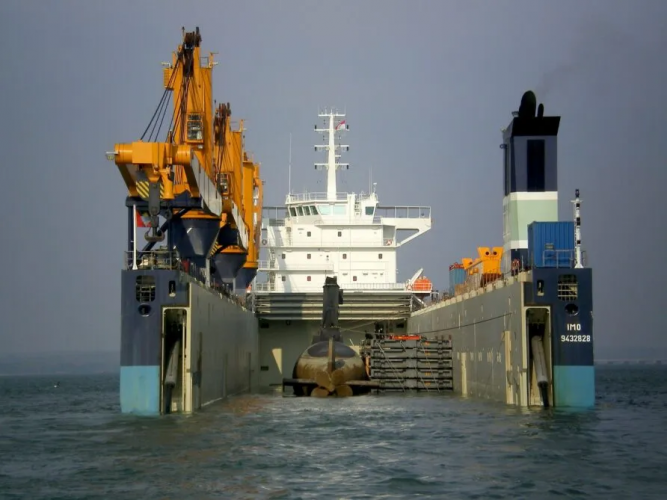
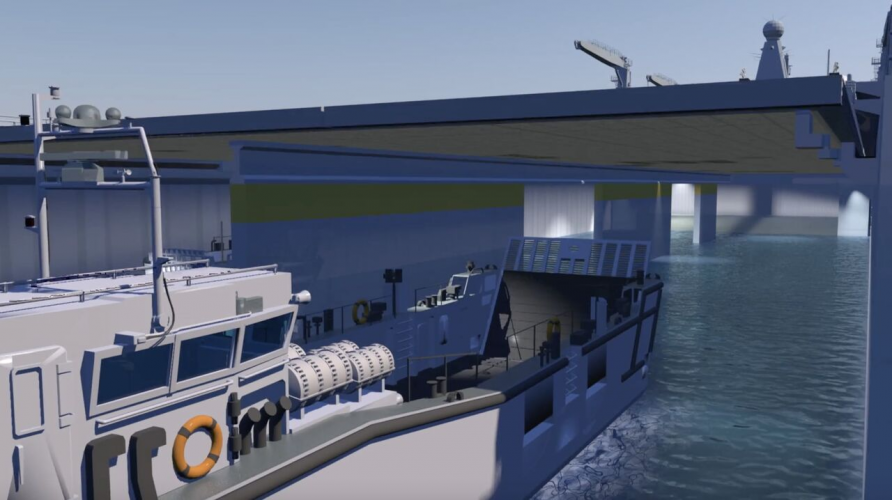
As I have said elsewhere in the past, for the sake of future flexibility we should be looking at something closer to Davie's CANFLO concept or the slightly smaller Combi Dock design with large cranes, partially submersible and with the ability to be reconfigured for a wide range of roles.
Reuben James
ACCESS: Top Secret
- Joined
- 15 September 2024
- Messages
- 559
- Reaction score
- 1,133
https://www.navylookout.com/mounting-concern-in-australia-over-uk-ability-to-deliver-ssn-aukus/
An interesting article, especially from an outsider perspective of British submarine woes, but it seems to me fundamentally flawed. The Australians are building Australian boats, not the UK.
The author seems to have forgotten that the SSN-A deal is not the same as the Virginia deal, and is attempting to apply the same criticisms of the American bottle-necked construction to the British bottle-necked maintenance. Those aren't the same things, though, for obvious reasons.
On the whole, plenty of accurate criticisms about the RN's submarine service, but a weak connection to Australia.
An interesting article, especially from an outsider perspective of British submarine woes, but it seems to me fundamentally flawed. The Australians are building Australian boats, not the UK.
The author seems to have forgotten that the SSN-A deal is not the same as the Virginia deal, and is attempting to apply the same criticisms of the American bottle-necked construction to the British bottle-necked maintenance. Those aren't the same things, though, for obvious reasons.
On the whole, plenty of accurate criticisms about the RN's submarine service, but a weak connection to Australia.

Stellerfella
ACCESS: Secret
- Joined
- 30 July 2026
- Messages
- 224
- Reaction score
- 142
I think that's because they no longer teach comprehension at school, or perhaps not in the UK at least. If you read and understood what was written you would have picked up these crucial points:The author seems to have forgotten that the SSN-A deal is not the same as the Virginia deal, and is attempting to apply the same criticisms of the American bottle-necked construction to the British bottle-necked maintenance. Those aren't the same things, though, for obvious reasons.
On the whole, plenty of accurate criticisms about the RN's submarine service, but a weak connection to Australia.
For Australia, which is relying on receiving a mature, fully debugged submarine design in time to commence construction, these UK baseline failures carry profound strategic risk.
What he's saying is that Australia is relying on the UK getting it right and debugging the first in class before we are meant to start construction, so we can sort those issues out in our first build and do so without any schedule slippage.the UK enterprise is in no condition to deliver the promised one boat every 18 months build rate, let alone support an allied construction line on the other side of the globe.
This would not be the first time that BAE has told us they have a mature design only discover it wasn't that mature and infact had some serious issues that needed resolving and put our delivery schedule back. That was the GCS/Type 26 and resulting Hunter class. HMS Glasgow was meant to be in the water ages ago so we could debug that as well.
The DIP didn't inspire confidence either, as well as the continued reluctance to spend money of defence. The admiral is Anti-Aukus and has a thing for the French, but unfortunately he also makes some good points.
We need Britain to do a perfect job with this one.
TorpedoJ
ACCESS: Secret
- Joined
- 11 October 2023
- Messages
- 447
- Reaction score
- 893
There's the slight difference that AUS and the RN will hopefully be operating identical submarines, whereas the Hunter fiasco stems largely from Australia's requirement to install one of the heaviest radar sets in the West on a frigate designed for a small rotating set.This would not be the first time that BAE has told us they have a mature design only discover it wasn't that mature and infact had some serious issues that needed resolving and put our delivery schedule back. That was the GCS/Type 26 and resulting Hunter class. HMS Glasgow was meant to be in the water ages ago so we could debug that as well.
Even last year the CEAFAR mast on Hunter was still changing in appearance with new panels.
PS Leh isn't someone to go after about reading comprehension
Stellerfella
ACCESS: Secret
- Joined
- 30 July 2026
- Messages
- 224
- Reaction score
- 142
That makes no sense for reasons I'm going to explain:There's the slight difference that AUS and the RN will hopefully be operating identical submarines, whereas the Hunter fiasco stems largely from Australia's requirement to install one of the heaviest radar sets in the West on a frigate designed for a small rotating set.
Even last year the CEAFAR mast on Hunter was still changing in appearance with new panels.
1) Installing the radar -which you don't know the weight of but somehow it's one of the heaviest in the west? - was part of the mandated program designs for the competition. BAE knew this -and they were a late entrant- and would have assured us these additions were possible.
2) Type 26 had rapidly gained 700t of weight and suddenly the 10% margin was gone. It was no longer the 6900t it was believed to be. Both teams in Australia and the UK had to put Type 26 on a diet to claw back margin. Australia had to widen the ship as well get their upgrades in.
3) If the radar is so heavy and caused the issues with the design, then why would they be adding more tiles late in the stage of development?
BAE are good at over-promising and under-delivering. And this is going to hit Australia really hard in the back pocket if they can't be competent shipbuilders for a change.
TorpedoJ
ACCESS: Secret
- Joined
- 11 October 2023
- Messages
- 447
- Reaction score
- 893
CEAFAR is always described as being unusually large and heavy, and regardless of its actual ranking is still miles beyond Artisan. BAE might well have thought they were able to install CEAFAR at the point they won the contract- though there were concerns right from the start that the spec was too large for a frigate- but as I said the mast has got bigger since.1) Installing the radar -which you don't know the weight of but somehow it's one of the heaviest in the west? - was part of the mandated program designs for the competition. BAE knew this -and they were a late entrant- and would have assured us these additions were possible
I'm probably misreading this but 700t of growth wiping out a 10% margin on a 6900t ship sounds pretty reasonable to me. The ship is overweight but the delays to Hunter have been exacerbated by the extra Aussie requirements, which won't be present on SSN-AUKUS2) Type 26 had rapidly gained 700t of weight and suddenly the 10% margin was gone. It was no longer the 6900t it was believed to be. Both teams in Australia and the UK had to put Type 26 on a diet to claw back margin. Australia had to widen the ship as well get their upgrades in.
No idea, but it's definitely happening. Look at the changes in the size of the mast from the early SEA5000 images to the gargantuan mushroom we have at the moment.3) If the radar is so heavy and caused the issues with the design, then why would they be adding more tiles late in the stage of development?
Reuben James
ACCESS: Top Secret
- Joined
- 15 September 2024
- Messages
- 559
- Reaction score
- 1,133
I think that's because they no longer teach comprehension at school, or perhaps not in the UK at least. If you read and understood what was written you would have picked up these crucial points:
- The section on maintenance problems is a category issue, and doesn't directly feed into his point about design readiness.
- His writing on V-boat safety protocols is reliant on assumed events about which he is not informed, whilst being presented as fact.
- He makes no mention of recovery efforts for the maintenance problems, choosing rather to present it as a constant state.
- His concern of design maturity relies on condensing timelines to an inaccurate degree.
- He criticises the use of reactor technologies as unproven, but brushes aside that those will be in operation and construction prior to his self-appointed deadline.
As the author is someone with an open dislike for the programme, and rumoured (but importantly not clearly evidenced) links to French industry, this article makes a lot of sense.
The insults aren't needed.
Reuben James
ACCESS: Top Secret
- Joined
- 15 September 2024
- Messages
- 559
- Reaction score
- 1,133
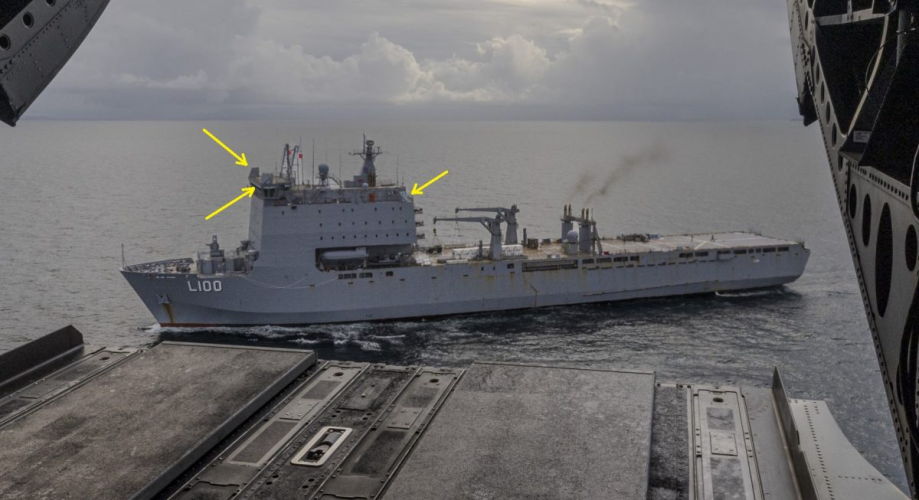
On a completely unrelated note to the submarines, I saw this image of HMAS Choules, and wondered whether the RN could spare Mounts Bay for use as a FADS trial platform, now that we don't have the barge anymore. The Australians have done the integration work already for the planned CEA radars.

Similar threads
-
 Norwegian/British Future Mothership Programme - Discussion and News
- Started by Reuben James
- Replies: 43
-

-

-
Offense and Defense against Medium Craft swarms in and around the Seas
- Started by MadRat
- Replies: 5
-
