MiG-21MF/bis vs Sea Harriers ?

  • Sea Harriers would have complete air superiority.

  • Sea Harriers would have had some losses.

  • Sea Harriers would have been blasted out of the sky.

  • None of the two aircraft would have gained air superiority.


Results are only viewable after voting.
Yes the crux is that Argentina didn’t prepare for the conflict.
That's what irritates me the most. The junta forces had been talking about retaking the Malvinas for how long, even before the Coup?

Yes, there are forces that need to be laser focused on the coup, but everyone else could be handed instructions saying "plan how to retake the Islas Malvinas" to keep them distracted from seeing the coup if nothing else.


They lacked the training and ability to sustain sorties to properly use what they already had… all of that would have to be addressed with funding and proper planning. Only then would it make sense to fix some of the equipment gaps.

As for Port Stanley you wouldn’t need anywhere like that much infrastructure with only 4 fighters on the ground at any time. Just metal matting for a pair of alert spots at the runway threshold, some matting at the runway end to help aircraft temporarily clear the runway after landing, and a hardstand area with 2 spots for quick turnaround (refuel & a few AIM-9 missile containers nearby). With so few sorties, pairs of fighters could taxi on the runway without blocking it for very long.

Protective revetments would be a nice to have, but not absolutely necessary. Given the low effectiveness of Harrier strikes and the presence of at most 2 widely dispersed pairs of fighters, it’s unlikely more than 1 or 2 could be hit. And that would be an acceptable risk considering the alternative which is to not have fighters at all, wasting the Mirages’ potential.

I think the infrastructure requirements do increase if you want the ability to simultaneously refuel strike aircraft, as even small numbers of strike aircraft (2-6 at a time) would eat up runway and hardstand availability as well as increasing fuel logistical requirements.
Just with the size of the airfield, I think the best plan is to keep a couple of fighters there, no attackers. Maybe 2 pairs, 1 pair for QRA and chasing the Harriers off, and 1 pair for spares, while everyone else flies in in the morning to fuel and then do a CAP mission or two before flying home at the end of the day. While the visitors are refueling, the QRA is airborne, so that there's only about 4 planes on the ground at a time. This would require staggering the arrivals of the daily forces into pairs maybe 15min apart. However long it takes to refuel a Mirage/Dagger, so that 1 pair is landing and going to the hardstand while the pair that arrived before them is going to the turning loops to take off.

Since the airfield engineers will be doing a lot of work laying matting etc, we can ask them to make revetments at the end.
 
My thoughts on planning is that in Argentina's case it has strict limitations. Argentina had a huge problem by winging the entire war, not even knowing what they had and to what use it might be put for what reason. Good planning would likely have seen much better results just by deploying equipment they had in service according to a pre-arranged schedule. We've gone over a lot of the possibilities in this informative thread.

However, once the plans make good use of the equipment and forces they already have the ability to go beyond that is severely restricted. In 1982 Argentina had been under embargo by the US for the previous 4 or so years and was restricted to buying from Europe and Israel, but even then the mix of equipment was not uniformly of a high calibre that might be expected of a top tier medium power. Good planning isn't going to allow the Argentine Air Force to match the sortie rates of 'NATO standard' air forces for example, or foster good relations between officers and their soldiers, or produce Red Flag and Top Gun graduate level pilots.

When it's all said and done the reason the war was close is because Britain also rushed and winged their war, but they were simply better across the board with planning on the fly, sortie rate generation and combat capability from the front line individual upwards.
 
Oh no I agree it would be a formidable opponent in the air, just not flown by Argentina.

Argie fliers were totally untrained and inexperienced in the tactics needed to confront RN aircraft and pilots. After the first few attempts they withdrew their fast-movers in most cowardly fashion, leaving the Skyhawks to their fate.

The air victories would have gone to Britain even without the AIM-9L.
I would not dismiss the A-4 as a threat in air to air mode. It is a very maneuvrable dogfigther, let`s not forget that the americans used it as a disimilar air combat threat at Top Gun, against the best Navy fighters, right at the period of the Falkland conflict. And it constantly made kills.
https://nationalinterest.org/blog/buzz/heres-why-a-4-skyhawk-made-such-good-enemy-plane-hk-122625

It has comparable speed performance, while beeing lighter and with a bigger wing area as the Harrier. It has an excellent instantaneous turn rate. This makes the A-4 a very dangerous close range gunfighter. The difference in the air combat win rate over Falkland resulted mainly because the pilot training, not the machines.
 
You might say I’m being quite provocative! I enjoy the "what if" line of thinking...

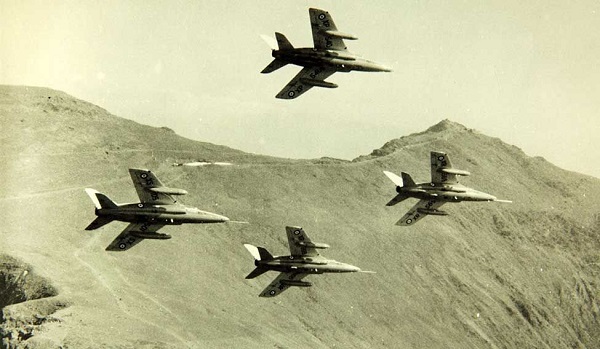
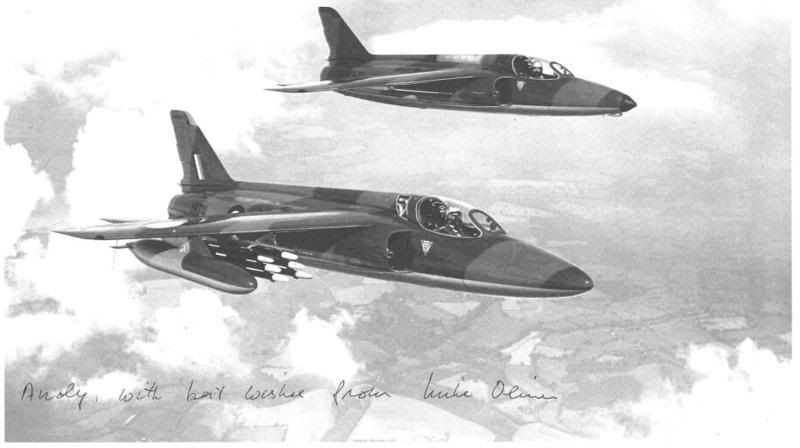
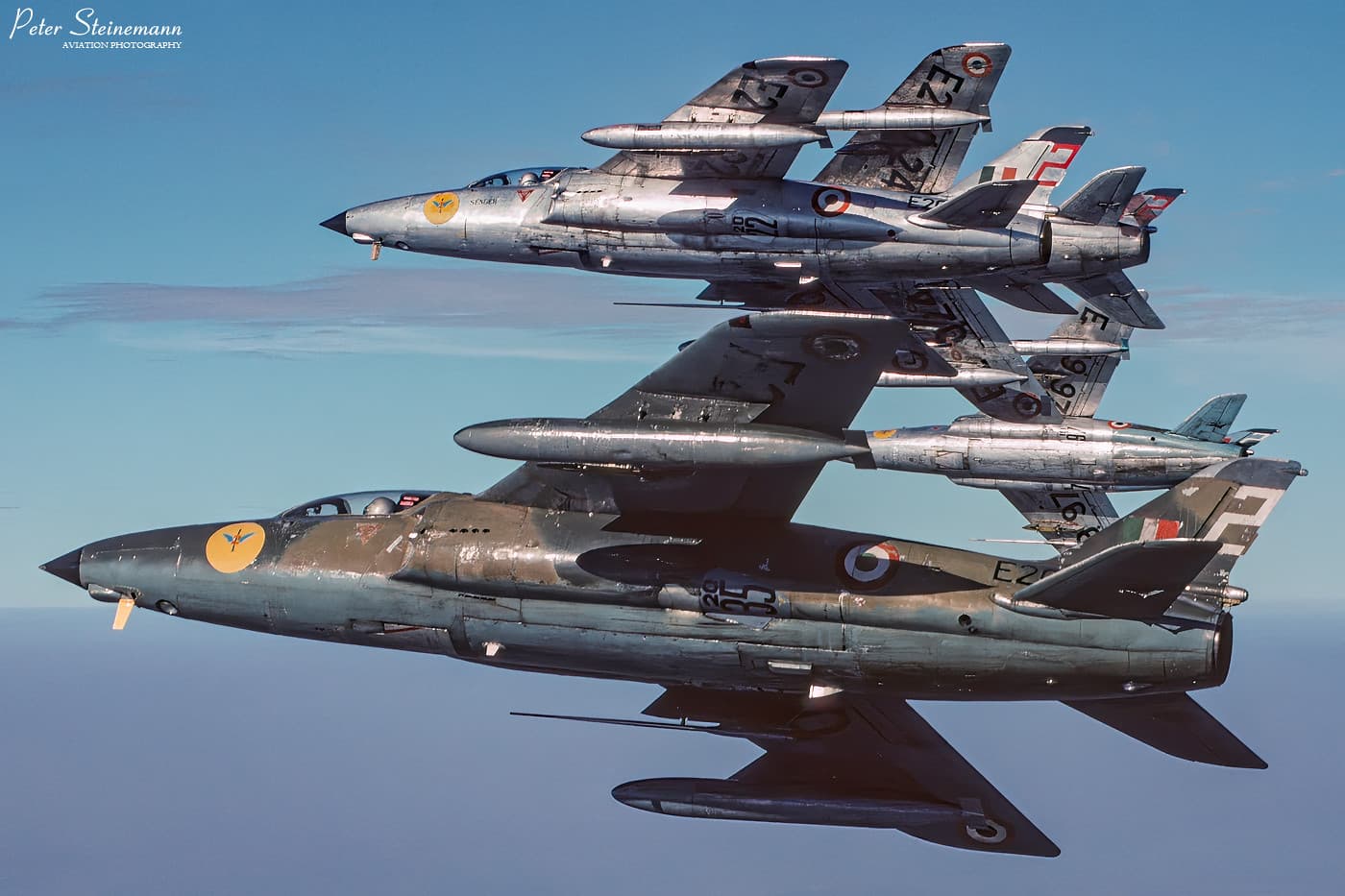
What kind of hardware could a Third World country with no established tradition implement without drastically altering the actual timeline? The Pucará proved far too limited. This speaks volumes about the importance of equipment selection for an inventory. The Argentines built and operated over 55 of them at the time, deploying 24 to the islands. Had Argentina opted to build the Gnat—specifically the Indian *Ajeet* version—in the 1970s, they would have possessed a weapon that was resilient against poor decision-making and extremely versatile. Equip the *Ajeet* with the AIM-9B (I know it’s vastly inferior to the AIM-9L), and it would still have posed a difficult tactical problem for the aircraft carriers.

Whether configured for air defense with two AIM-9Bs, armed with 18 to 36 76mm rockets for anti-ship strikes, or carrying 250kg or 125kg bombs, such an asset would have created a major dilemma for the continental air force. There is no doubt the Harrier was far superior when armed with the AIM-9L; however, beyond merely securing an extra kill or two during the campaign, the *Ajeet* would have placed immense strain on the Harriers—which were already busy intercepting A-4s and Daggers as they withdrew from ship attacks. They wouldn't have needed to win the dogfight; simply preventing the Harriers from focusing on Combat Air Patrols (CAPs) would have sufficed. Even the Vulcan would have faced risks. As for the ships, those rockets could have blinded their combat systems, leaving the vessels defenseless against A-4 bombing runs...


weapons.jpg
 
gnat-3.jpg


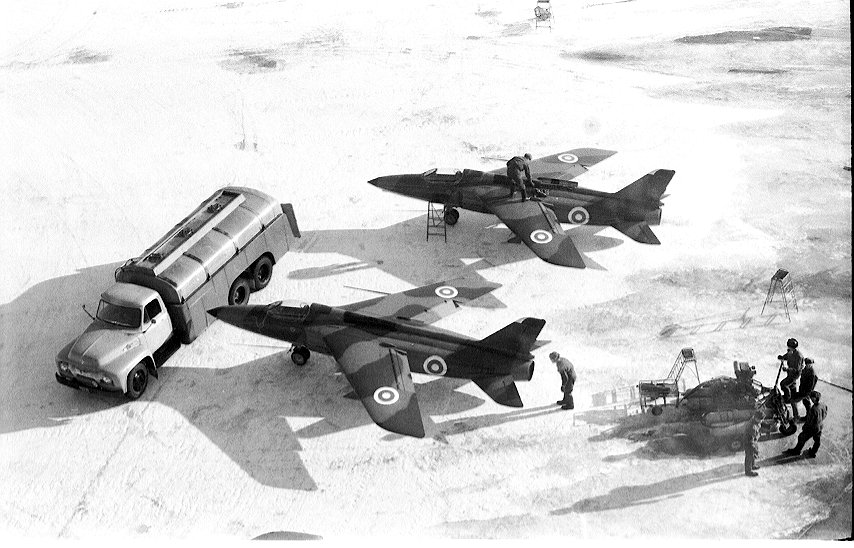
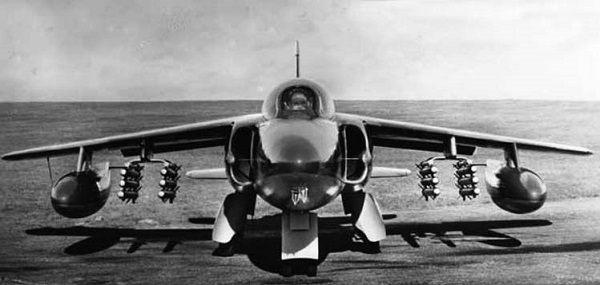
The Indian Ajeet version featured increased internal fuel capacity and extended range. This left four weapon hardpoints available, with an external payload capacity of up to 900 kg.

Maximum speed of 1,152 km/h.

Simple, inexpensive, and highly versatile equipment for that operational scenario.
 
Equip the *Ajeet* with the AIM-9B (I know it’s vastly inferior to the AIM-9L), and it would still have posed a difficult tactical problem for the aircraft carriers.
What does the Ajeet offer that the A-4 Skyhawk couldn't have done though? Skyhawks could launch AIM-9 and use rocket pods already.
 
This type of rocket launcher is advantageous for anti-ship attack missions. It eliminates the aerodynamic drag associated with conventional launchers—drag that is particularly detrimental during the return phase of a mission. Firing 76mm rockets in salvos was less risky than flying directly over the ship to drop bombs, as the attack could be initiated from a slightly greater distance. While it would not sink the ship, it would riddle the hull with holes and damage fire-control antennas, turrets, anti-aircraft missile systems, and other equipment, rendering the vessel combat-ineffective. It is worth noting that the low-altitude firing profile would be the same as that used for bombs. Similarly, the aircraft could carry two to four 250 kg bombs or six 125 kg bombs...

01e4d941e67d47ddf6f0d570ba4f5369.jpg
 
Last edited:
Operate more easily from Port Stanley?
Exactly! And it is worth noting that the premise here is based on the idea that Argentina’s domestic aeronautical program had focused on the Ajeet rather than developing the Pucará. Under this scenario, even if Ajeets were destroyed by special operations or bombing raids at Port Stanley, each one could have been replaced and replenished from mainland stocks. The Pucará did not offer such a favorable cost-benefit analysis, as the turboprop lacked any anti-ship or air-to-air combat capability. The Ajeet, however—despite being vastly inferior to the Harrier—was a different story. It didn't need to defeat the Harrier in every engagement; it simply needed to prevent British Combat Air Patrols (CAPs) from targeting the A-4s and Daggers. This alone would have significantly increased the survival rate of the A-4s, Mirages, and Daggers in aerial combat—after all, it would be difficult to attack them and leave one's own "six o'clock" position exposed with Ajeets right on one's tail.

ea2c9e2fdaaf4a9893757d945ac73b125fdea83a.jpeg


hal-ajeet-invincible_2.jpg
 
In other words, the premise would be that the Argentines never produced or manufactured the Pucará, but rather the Ajeet.

The Ajeet would occupy the Pucará's position throughout the Argentine inventory.
 
In other words, the premise would be that the Argentines never produced or manufactured the Pucará, but rather the Ajeet.

The Ajeet would occupy the Pucará's position throughout the Argentine inventory.
Not sure that the Ajeet would make a good COIN bird like the Pucara, though.
 
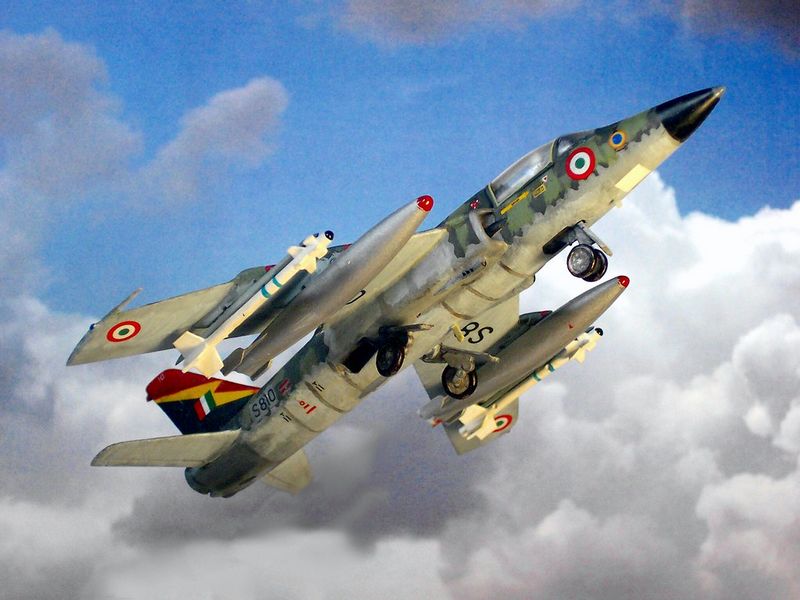
They are different niches. Argentine could have made good use of both aircrafts, and a factory able to produce the Pucara would also be able to build an Ajeet. Though, a posible problem would have been the engine, a Hal built under licence HAL/Bristol Siddeley Orpheus. The brits could have opossed the sale of these engines by India. An under licence production in Argentina would have been even less likely.
 
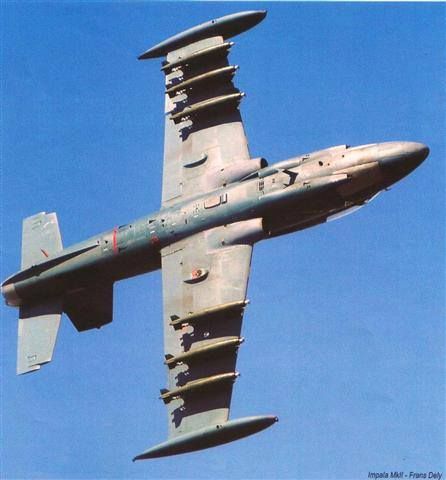
Brazil followed this same path around that time... it built and operated over 140 EMB 326 GB Xavantes (Aermacchi MB 326).

I don't see it as being all that different. Anyway, "what if"....


impl-i.jpg

cb7a5fc56f359a50bafbdb965b6acb23.jpg
Atlas Impala Version
 
Back
Top Bottom