- Joined
- 29 November 2010
- Messages
- 2,303
- Reaction score
- 5,268
I guess they could do what they did with all those new warships they bought from Korea.. lots of export credits and financing, and a long payment schedule

They say increased internal fuel on the EX. I wonder how they'll achieve that while also fitting the internal weapons bay? Could conformal tanks be fitted to the sides (like the F-15), or the upper fuselage (like the F/A-18 & Rafale)? Enlarged spine (Mig-29SMT)? Fuselage stretch?More Sheldon graphics, this time with some additional details
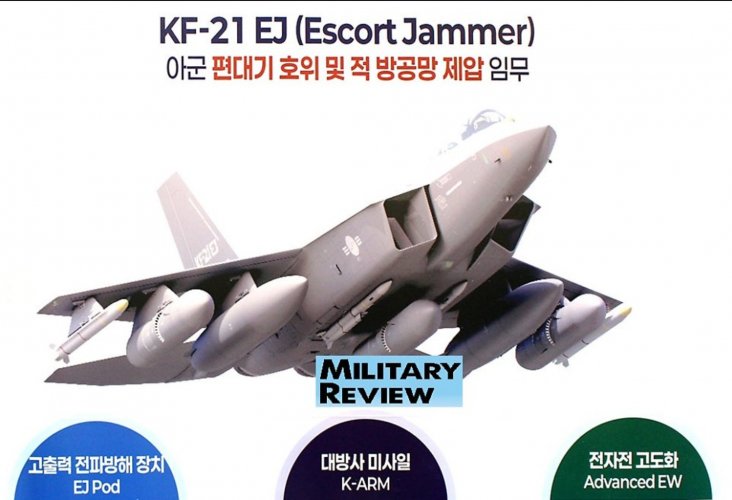
The official ROKAF project designation reads "Korean Low-Observable Fighter" programme, and it is focused on upgrading the pre-existing block 2 airframes, which ROKAF will be operating 120 of.They say increased internal fuel on the EX. I wonder how they'll achieve that while also fitting the internal weapons bay? Could conformal tanks be fitted to the sides (like the F-15), or the upper fuselage (like the F/A-18 & Rafale)? Enlarged spine (Mig-29SMT)? Fuselage stretch?
From what I know, the new F414 equivalent turbofan and Doosan/Hanwha Aerospace was not part of the discussion. Though, recently there has been a mandatory (since they are a publicly traded company, and the contract value exceeded their annual revenue-based threshold) single sales/supply agreements disclosure by Hanwha Aerospace concerning the engine development contract So things are proceeding behind the scenes.Thanks. Interestingly the graphic doesn’t say anything about the engine. Did the conference provide an update about the domestic engine?
Also are there any Korean source materials about the KF-21’s development cost or how much has been spent until now?
Yes, according to recent announcements on several different conferences.was it ever specifically mentioned that EXT goes for 2000lb?

|

|

|


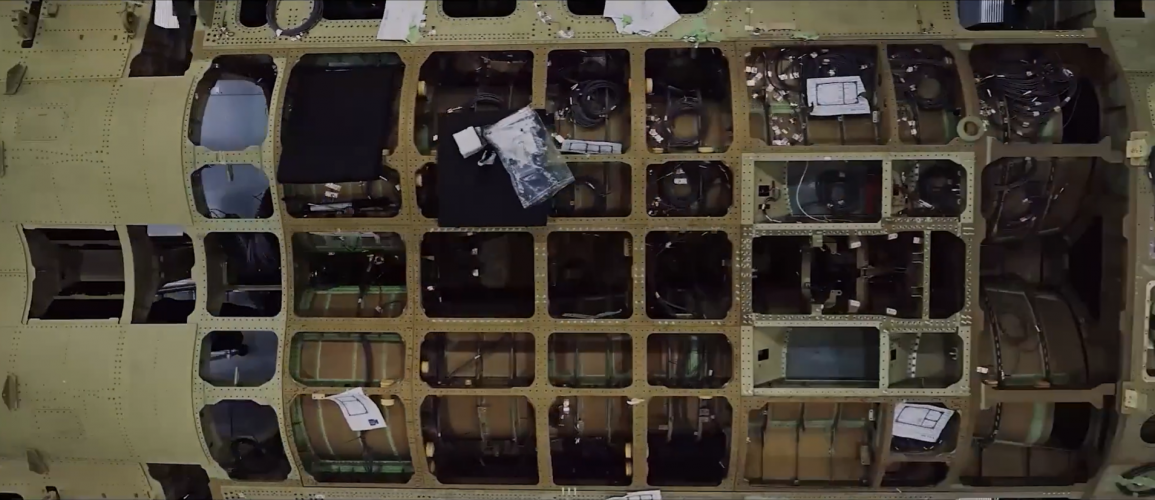
Looks like there are 12 KF-21s on the assembly line...
This video features the KF-21 test pilot himself explaining the behind-the-scenes story of the aircraft's development.
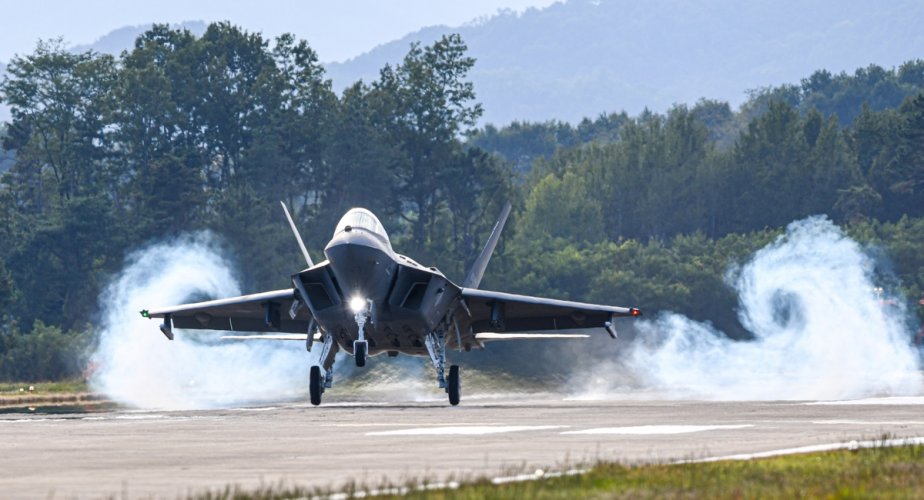
What I’ve recently learned are the subtle differences between the KF-21 prototype and the production models.
This is the tail boom of the first production model.
According to the test pilot's explanation, the production model features a thicker tailboom design to reduce airframe vibration.
In response to feedback that the aircraft was somewhat sensitive along the roll axis during flight, the control stick design was modified and the OFP was improved.
According to rumors circulating online, the first production model will be delivered to the Air Force on the 17th of next month.
The first Meteor launch from the KF-21 Block II prototype is scheduled for this month, August. The Block II prototype is equipped with not only the EO TGP but also a 480-gallon external fuel tank as standard. This test is intended to verify whether the Meteor can be launched safely with this configuration.
Philippines Eyes 40 KF-21 Fighters—A Major Indo-Pacific Airpower Shift
The Philippines is reportedly leaning toward a single fleet of 40 KF-21 Boramae fighters, potentially strengthening Manila’s combat-aircraft mass and expanding South Korea’s strategic influence across the Indo-Pacific.

I am thinking the financial aspects will be especially pertinent here.to be fair, this article also highlights limitations such as the financial aspects and immaturity of the KF-21
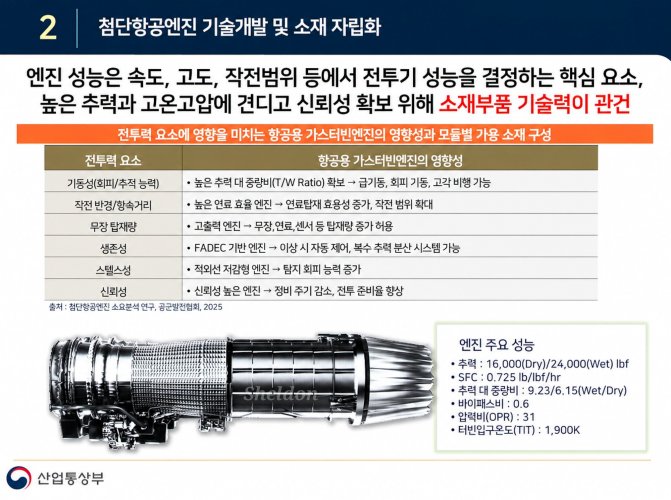
3 fan stages, 6 compressor stages, 1 HPT, 1 LPTView attachment 818009
16,000 lbf class engine concept layout from Hanhwa Aerospace - ADD engine concept study('23 ~ '24).
Seems like a really low compressor count

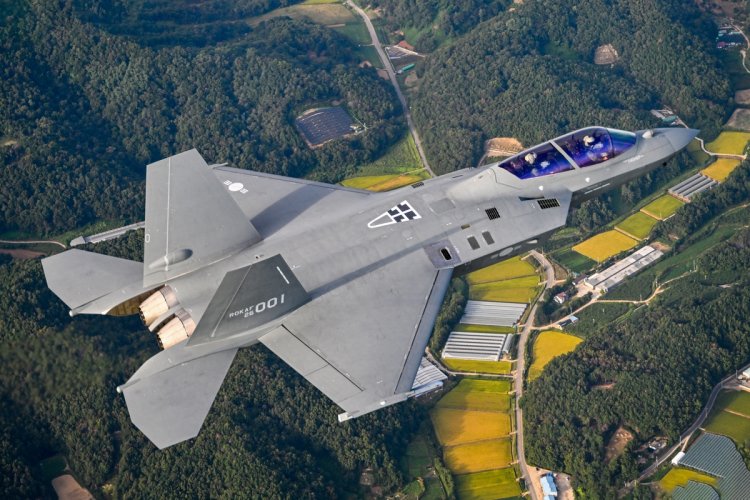


depends what you want to count as the start..So, what was the total design time (from early mandated study, paid by Korea, to this first delivery) ?
IIRC LockMart had an assist contract, but couldn't share anything specific. So if you look at the KF-21, it doesn't have any skin-integrated arrays, they're all either inset or scabbed on top. I believe those LockMart engineers said "It took us a really long time to figure out how to do that, we recommend continuing to develop the ability in-house but do not recommend planning on having them on the early KF-21s."It is a very nice looking bird and they developed it fairly quickly out of necessity and good for them. Based on the features, I think the US assisted based upon requested input but it's their design all the way.
2016-18 might be the better starting point for the KF-21 design in its current form, as that's when their preliminary design started wind tunnel testing and evolved from C105 to C107 and the final C109.depends what you want to count as the start..
Government interest in a new fighter jet = 1999
Start of KFX studies = 2001
Selection of design that would lead to the KF-21 = around 2014 (before that, they were looking at different forms, such as canard deltas, single engine, twin engined, etc)
Following approximately two years of wind tunnel experiments and continued domestic technology development, the C109, jointly proposed by ADD and KAI, was selected in 2018 as the prototype design for the KF-X. The preliminary design was finalised in June 2018, and a critical design review in September 2019, examining 390 technical data sets, confirmed that the KF-X met ROKAF's requirements.
very unlikelyI wonder if the USAF could end up buying some KF-21s once they're in production?

It's basically an F-15E with an OML more reminiscent of the F/A-18E/F.I wonder if the USAF could end up buying some KF-21s once they're in production?
It would be the perfect aircraft for Mexico, especially the Mk1 two-seaters. Could even set up another production line if Korea wants to expand into the South America market.
Only if we were smart, levels of fighter (F-22, F-35, F-15, F-16, F-21) capability based upon platform type theater and probably decently priced. As an example, we could have had (an our allies) the F-20 which scared GD (lets lobby again to destroy an outstanding Northrop design), drawbacks were range and fuel load with some fuel stored in the lower part of vertical tail due to the F404 but an outstanding and much lower cost aircraft.I wonder if the USAF could end up buying some KF-21s once they're in production?
Maybe if a Block 3 (internal weapons bays) was ever built.I wonder if the USAF could end up buying some KF-21s once they're in production?
Block 3 is more or less a worsened F-35 (though, as mentioned above, I somewhat suspect they may be underselling their bays).Maybe if a Block 3 (internal weapons bays) was ever built.
Otherwise, I don't think that the flyaway cost of a KF21 is going to be all that different from an F-35 or Gripen.

Just for clarification, is the Philippines abandoning or postponing their considerations into buying the 20 F-16s in exchange for 20 more KF-21s?https://defencesecurityasia.com/en/philippines-40-kf-21-fighters-indo-pacific-airpower/
to be fair, this article also highlights limitations such as the financial aspects and immaturity of the KF-21
Might also have something to do with the US not wanting to share some of their capabilities even with their allies, since out of the 25 planned technologies to be shared for the KF-21's development, 4 were disapproved, and only 21 were allowed. They even listed the four technologies that were disapproved:IIRC LockMart had an assist contract, but couldn't share anything specific. So if you look at the KF-21, it doesn't have any skin-integrated arrays, they're all either inset or scabbed on top. I believe those LockMart engineers said "It took us a really long time to figure out how to do that, we recommend continuing to develop the ability in-house but do not recommend planning on having them on the early KF-21s."
Just for clarification, is the Philippines abandoning or postponing their considerations into buying the 20 F-16s in exchange for 20 more KF-21s?
Yeah, I stand corrected on that one. Personally, I do like the F-16 as a fighter but realistically, the Boramae would be the better choice. However I doubt the Philippines would have the money for 40 Boramaes though, given recent...government spending issuesThe F-16 was never on order. It's been approved for sale by the US government, and its one of the planes the Philippines is considering.
If they go for KF-21s instead, the idea is for a single fleet to save money, so the F-16 would be out.
Given the F-16s backlog, I'm curious to which would be delivered first between the viper and boramae.
I think it´s the right answer. Pretty damn fast on overall. (albeit Block 2, with IWB, would be more in line with what was really sought at program launch)2016-18 might be the better starting point for the KF-21 design in its current form, as that's when their preliminary design started wind tunnel testing and evolved from C105 to C107 and the final C109.
Prior to that they were doing concept studies. From Wikipedia: