A very, VERY annoying case of "Start-stop", "Start-stop" development programmes and people wonder why the US never seems to be able to field operational ramjet powered missiles, this really, REALLY has to stop.

You are using an out of date browser. It may not display this or other websites correctly.
You should upgrade or use an alternative browser.
You should upgrade or use an alternative browser.
Current US hypersonic weapons projects. (General)

- Joined
- 21 April 2009
- Messages
- 14,366
- Reaction score
- 9,476
It would be nice if in addition to the URL if you also quoted the first two or three paragraphs please.

dark sidius
ACCESS: Top Secret
- Joined
- 1 August 2008
- Messages
- 1,634
- Reaction score
- 1,736
Hypersonic cruise missile or reusable craft the notional rendering ?

FroggyFrog
ACCESS: Restricted
- Joined
- 12 February 2024
- Messages
- 18
- Reaction score
- 87
Looks like the old HALO rendering again?
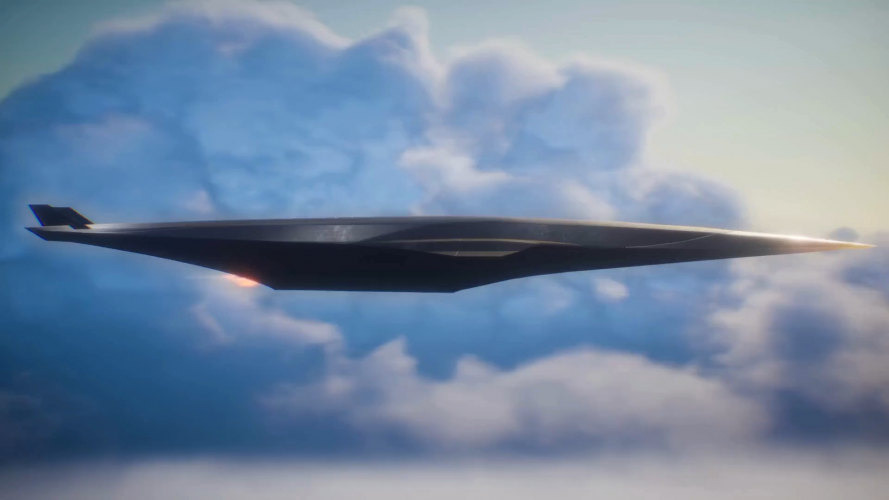 (from today)
 (old)
(old)Attachments


- Joined
- 21 April 2009
- Messages
- 14,366
- Reaction score
- 9,476
Navy Awards $200M for Blackbeard Hypersonic Missile for Carrier Fighters
https://news.usni.org/2026/09/16/na...0OHJZFeI-9cqwZLcDQ_aem_kHyxEvLhyi3Pnu7La_CaUgScott Kenny
ACCESS: USAP
- Joined
- 15 May 2023
- Messages
- 19,668
- Reaction score
- 28,152
I mean, why bother doing a new model when you can just use the old model in a new render?Looks like the old HALO rendering again?View attachment 824011(from today)View attachment 824013(old)
dark sidius
ACCESS: Top Secret
- Joined
- 1 August 2008
- Messages
- 1,634
- Reaction score
- 1,736
Looks like the old HALO rendering again?View attachment 824011(from today)View attachment 824013(old)
Is it a TBCC on the rendering of the Left , we see like an engine embeded in the fuselage ?Looks like the old HALO rendering again?View attachment 824011(from today)View attachment 824013(old)
Scott Kenny
ACCESS: USAP
- Joined
- 15 May 2023
- Messages
- 19,668
- Reaction score
- 28,152
I don't think so. Looks like it's just a plug nozzle for a ramjet or scramjet.Is it a TBCC on the rendering of the Left , we see like an engine embeded in the fuselage ?
dark sidius
ACCESS: Top Secret
- Joined
- 1 August 2008
- Messages
- 1,634
- Reaction score
- 1,736
We don't know if Lockheed still working on Reusable TBCC craft like the SR-72. It completly disappear.I don't think so. Looks like it's just a plug nozzle for a ramjet or scramjet.

Forest Green
ACCESS: USAP
- Joined
- 11 June 2019
- Messages
- 14,596
- Reaction score
- 31,707
My guess is yes but classified.We don't know if Lockheed still working on Reusable TBCC craft like the SR-72. It completly disappear.
Scott Kenny
ACCESS: USAP
- Joined
- 15 May 2023
- Messages
- 19,668
- Reaction score
- 28,152
People have been working on TBCC since the 1960s or 70s, my A&P class talked to a retired engineer who had been working on them using J34 compressors.We don't know if Lockheed still working on Reusable TBCC craft like the SR-72. It completly disappear.
class talked to a retired engineer who had been working on them using J34 compressors.
J34s? Wow! That's old!

bring_it_on
I really should change my personal text
- Joined
- 4 July 2013
- Messages
- 4,223
- Reaction score
- 5,769
OUSW R&E - Low-Cost High-Speed Extended-Range Missile System Prototypes for Contested Environments - Supersonics
The Department of War Research and Engineering announces an open trade space challenge for innovative approaches to ground-launched, high-speed, extended-range missile systems designed to deliver conventional payloads with precision against high-value stationary and moving targets in contested operational environments. This challenge directly supports the Department's strategic priority to maximize mass and momentum while minimizing cost per kill, enabling the United States to maintain overmatch against peer and near-peer adversaries in scenarios where position, navigation, and timing capabilities may be degraded or denied. The operational environment is characterized by sophisticated integrated air defense systems, electronic warfare threats, and the need for long-range strike capabilities that combine speed, survivability, and affordability. Successful prototypes will demonstrate the ability to achieve threshold range performance of approximately 1,000 nautical miles from a ground-launched vector, with strike accuracy maintaining a circular error probable of less than 10 meters in contested conditions. This challenge explicitly encourages first-principles engineering solutions across ground-launched missile types and propulsion architectures, including but not limited to cruise, ballistic, and hypersonic glide systems employing solid rocket, liquid rocket, ramjet, scramjet, or hybrid propulsion. A ground-launched configuration is preferred: it removes dependency on host aircraft and runway infrastructure, simplifies mission integration and kill chain complexity for the warfighter, and aligns with a family-of-affordable-mass approach alongside existing Army PEO Fires ground-launched efforts such as LCCM and Blackbeard GL. The Department recognizes that achieving 1,000 nautical mile range from a ground-launched vector is a more demanding propulsion and energy-management challenge than an air-launched equivalent, and considers that added technical complexity an acceptable tradeoff for the operational simplicity, runway independence, and scalability a ground-launched system provides. Stakeholders include warfighters requiring responsive long-range strike options without reliance on scarce or vulnerable host-aircraft and airfield infrastructure, acquisition authorities seeking cost-effective force multipliers that scale and integrate into existing ground fires formations, and operational commanders responsible for conducting operations in anti-access and area-denial environments. The strategic importance of this effort lies in its potential to deliver operationally relevant prototypes that balance technical performance, mission effectiveness, and program affordability, with successful demonstrations potentially transitioning to follow-on production awards based on demonstrated utility and cost-effectiveness.
Overall Objective
Problem StatementCurrent long-range precision strike capabilities face significant limitations in contested operational environments where adversaries employ sophisticated integrated air defense systems and electronic warfare threats that degrade or deny position, navigation, and timing capabilities. Warfighters and operational commanders currently lack sufficient inventory depth of cost-effective, high-speed, ground-launched missile systems that can achieve extended ranges while maintaining precision accuracy against high-value stationary and moving targets in these contested conditions. Much of the current long-range strike inventory depends on airborne launch platforms, which introduces host-aircraft availability constraints, added kill chain complexity and cost, and combined survivability risk that compounds the challenge of achieving affordable mass at scale. The capability gap is defined by the need for ground-launched strike systems that balance technical performance parameters including speed, range, survivability, and accuracy with the strategic imperative to minimize cost per kill and maximize mass and momentum available to the force, while also scaling and integrating efficiently into existing ground fires formations without reliance on runway or airfield infrastructure. Solving this problem is operationally important because peer and near-peer adversaries continue to expand anti-access and area-denial capabilities that threaten freedom of maneuver, put fixed airfields and host-aircraft availability at risk, and impose stand-off distances on United States forces, limiting the ability to hold adversary targets at risk across the required range spectrum. If this prototyping effort is not pursued, the Department will continue to face inventory constraints, cost-per-unit limitations, runway and host-aircraft dependencies, and capability gaps that reduce operational flexibility and strategic overmatch in scenarios requiring responsive, runway-independent, long-range conventional strike against defended targets in contested environments where existing systems may be insufficient in quantity, survivability, or cost-effectiveness.
The challenge aims to deliver operationally relevant, ground-launched, high-speed, extended-range missile system prototypes that enhance the Department's long-range strike capability against high-value stationary and moving targets in contested operational environments. The desired end state is a demonstrated ground-launched prototype system capable of achieving approximately 1,000 nautical miles range with circular error probable of less than 10 meters in contested position, navigation, and timing environments, optimized to maximize mass and momentum while minimizing cost per kill. A ground-launched approach is preferred because it eliminates dependence on host aircraft and runway infrastructure, reduces mission integration complexity and combined kill-chain risk for the warfighter, and scales and integrates more readily into existing ground fires formations and launch infrastructure than an air-launched equivalent. Successful prototypes will enhance mission effectiveness by providing warfighters with responsive, survivable, runway-independent, and affordable strike options that maintain overmatch against peer and near-peer adversaries in anti-access and area-denial scenarios. The effort will improve operational readiness by demonstrating technical performance, mission fit, program affordability, and compatibility or commonality with existing ground-launched fires programs (such as LCCM and Blackbeard GL) sufficient to support potential transition to follow-on production awards, thereby increasing the Department's inventory of cost-effective, scalable, precision strike capabilities that combine speed, survivability, mobility, and stealth characteristics appropriate to the operational threat environment.
https://marketplace.gocolosseum.org/public/challenges/fa9ffd55-3875-414a-8748-b6479d75dc7e

- Joined
- 30 May 2023
- Messages
- 674
- Reaction score
- 1,450
Low-cost, High-speed, Extended-range?
MFers stole the tag-line for my cannon based fresh fruit delivery business.
MFers stole the tag-line for my cannon based fresh fruit delivery business.
I think that illustrates how DoW, and this administration in general, has a problem with Aviation and Air Dominance. Sour perspectives for F-47 and F/A-XX when I see all this money routed away from sane practices that are as simple as a plane releasing bombs over some targets (or other Stand In weapons).
People should look at the sorties numbers generated in the past wars and scale that against the number of long range missiles needed to achieve battlefield dominance: this is completely unrealistic.
People should look at the sorties numbers generated in the past wars and scale that against the number of long range missiles needed to achieve battlefield dominance: this is completely unrealistic.
Forest Green
ACCESS: USAP
- Joined
- 11 June 2019
- Messages
- 14,596
- Reaction score
- 31,707
Can't see it being low cost. Relatively low cost maybe.
bring_it_on
I really should change my personal text
- Joined
- 4 July 2013
- Messages
- 4,223
- Reaction score
- 5,769
Not even if they take a first principles approach?Can't see it being low cost. Relatively low cost maybe.

Reddington777
ACCESS: Top Secret
- Joined
- 23 March 2025
- Messages
- 849
- Reaction score
- 2,815
I am by no means a fan of most things this admin (and particularly sec def) has done but... how can relying on stand in weapons let alone bomb release over target be the desired approach when the peer in question has an area denial network that extends 1000NM + from their shoreline and all their important assets require you to at least make it to within range of the shoreline? How will you get in and out? Where do you even launch from? Whats going to be carrying enough bombs? The $300m stealth fighter with limited weapons bay capacity? CCAs that arent all that more survivable on their own?I think that illustrates how DoW, and this administration in general, has a problem with Aviation and Air Dominance. Sour perspectives for F-47 and F/A-XX when I see all this money routed away from sane practices that are as simple as a plane releasing bombs over some targets (or other Stand In weapons).
Unless the US public is willing to accept russian casualty numbers and the US industrial base is ready for that level of attrition, its in my view impractical to rely on stand in munitions either.
I dont think there is an over-reliance on standoff weapons at all. In fact Id argue there isnt enough long range munitions with enough speed to hit time sensitive targets. There are plenty of stand in weapons available to the two 6th gens or to F-35s. But there is simply no way you will be flying and loitering at stand in distances to hit high value targets with just VLO fighter aircraft and CCAs.
Standoff weapons also enables much more 4th gen assets to be useful in theater. Otherwise they would either be flyig suicide sorties or doing nothing useful.
I dont think anyone even in this admin is solely relying on standoff munitions. Its always been discussed as both are needed.
Last edited:

- Joined
- 3 June 2011
- Messages
- 20,986
- Reaction score
- 19,254
There are probably a lot of areas where they go for 100% when 80% would do. Or, "we always did it this way".Not even if they take a first principles approach?
Scott Kenny
ACCESS: USAP
- Joined
- 15 May 2023
- Messages
- 19,668
- Reaction score
- 28,152
It will take time to engineer to be cheap.Can't see it being low cost. Relatively low cost maybe.
"Fast, cheap, good; pick two"
Forest Green
ACCESS: USAP
- Joined
- 11 June 2019
- Messages
- 14,596
- Reaction score
- 31,707
The missile shall be called 'Rumplestiltskin'.Not even if they take a first principles approach?
bring_it_on
I really should change my personal text
- Joined
- 4 July 2013
- Messages
- 4,223
- Reaction score
- 5,769
I think a lot of this was in the works long before this current admin arrived on the scene. I have heard several previous political appointees and uniformed officials, for example, want a large ground based fires capability even if that overlaps with air delivered capability. We see that in virtually all LRPF decisions the Army has made post INF to include PrSM extending past 500 km to 1,000+ km by 2030, fielding of LRHW, Mid Range Capability with TLAM and SM-6 and other long range fires efforts (long range cannon etc etc). This has survived both Trump administrations and the Biden administration scrutiny. I think this trend is only going to grow because it is most likely being fueled by INDO PACOM and other COCOMs. This effort for a 1,000 mile high speed weapon, is also paired with a 1,000 mile subsonic weapon effort from the R&E which is basically seeking a low cost TLAM analog.I think that illustrates how DoW, and this administration in general, has a problem with Aviation and Air Dominance...
Coming back to this. An SM-6 delivers a puny warhead 200 nautical miles out while costing upwards of $4 Million a pop. The LRHW costs upwards of $25 Million a pop. If the Army can field say a 1,000 - 1,500 MRBM inventory even say with a PrSM class warhead/payload, and ability to strike time-critical and perhaps even moving/relocatable targets then that would be a pretty good capability for the joint force to have. Now the real question is whether something like this can be fielded at that scale (1000-1500 weapons) under $5 Billion..or under $10 Billion...etc. and within a reasonable amount of time. But when you add 'time' to to the calculus then land based fires becomes very atractive. Far cheaper and faster to field ground launchers and missiles than new fighter jets, new bombers, and trained crews.
- Joined
- 3 June 2011
- Messages
- 20,986
- Reaction score
- 19,254
Personally, I think they're off by an order of magnitude. Or two. Consider how many weapons we've used against Iran to what effect? Now multiply that by XX for the number of targets in China, across much larger ranges. They need to take a 1,000lb warhead 2,000 miles in 30 minutes for like. . .a million bucks.I think a lot of this was in the works long before this current admin arrived on the scene. I have heard several previous political appointees and uniformed officials, for example, want a large ground based fires capability even if that overlaps with air delivered capability. We see that in virtually all LRPF decisions the Army has made post INF to include PrSM extending past 500 km to 1,000+ km by 2030, fielding of LRHW, Mid Range Capability with TLAM and SM-6 and other long range fires efforts (long range cannon etc etc). This has survived both Trump administrations and the Biden administration scrutiny. I think this trend is only going to grow because it is most likely being fueled by INDO PACOM and other COCOMs. This effort for a 1,000 mile high speed weapon, is also paired with a 1,000 mile subsonic weapon effort from the R&E which is basically seeking a low cost TLAM analog.
Coming back to this. An SM-6 delivers a puny warhead 200 nautical miles out while costing upwards of $4 Million a pop. The LRHW costs upwards of $25 Million a pop. If the Army can field say a 1,000 - 1,500 MRBM inventory even say with a PrSM class warhead/payload, and ability to strike time-critical and perhaps even moving/relocatable targets then that would be a pretty good capability for the joint force to have. Now the real question is whether something like this can be fielded at that scale (1000-1500 weapons) under $5 Billion..or under $10 Billion...etc. and within a reasonable amount of time. But when you add 'time' to to the calculus then land based fires becomes very atractive. Far cheaper and faster to field ground launchers and missiles than new fighter jets, new bombers, and trained crews.
bring_it_on
I really should change my personal text
- Joined
- 4 July 2013
- Messages
- 4,223
- Reaction score
- 5,769
We will see what requirements for the subsonic and supersonic efforts around this 1,000 nmi or better requirement offers. My guess would be the tried and tested approach of shrinking warheads down to sub 200 lbs and slapping a 'factory is the product' sticker and calling it a day. We are seeing that with the low cost cruise missile approaches presently (Anduril, Zone 5, Coaspire etc) and with the 'hypersonic' BlackBeard. While these will be critical for a narrower target set they certainly lack the flexibility of having a warhead that can serve a much broader range of targets.Personally, I think they're off by an order of magnitude. Or two. Consider how many weapons we've used against Iran to what effect? Now multiply that by XX for the number of targets in China, across much larger ranges. They need to take a 1,000lb warhead 2,000 miles in 30 minutes for like. . .a million bucks.
Forest Green
ACCESS: USAP
- Joined
- 11 June 2019
- Messages
- 14,596
- Reaction score
- 31,707
They'll be of very limited use even against lightly buried bunkers if that's the case, and ungerground targets are officially a thing these days. Could do with a Mach 10 missile with a boosted ~1,000lb warhead that can hammer through earth to reach buried targets.We will see what requirements for the subsonic and supersonic efforts around this 1,000 nmi or better requirement offers. My guess would be the tried and tested approach of shrinking warheads down to sub 200 lbs and slapping a 'factory is the product' sticker and calling it a day. We are seeing that with the low cost cruise missile approaches presently (Anduril, Zone 5, Coaspire etc) and with the 'hypersonic' BlackBeard. While these will be critical for a narrower target set they certainly lack the flexibility of having a warhead that can serve a much broader range of targets.
Some interesting stuff in here (writted 14 years ago):
DEFEATING HARD AND DEEPLYBURIED TARGETS IN 2035
https://www.airuniversity.af.edu/Portals/10/CSAT/documents/researchpapers/2012/bh_2012_hart.pdf
- Joined
- 21 April 2009
- Messages
- 14,366
- Reaction score
- 9,476
Feel free to delete as no new info I just liked the imbedded video
View: https://x.com/lockheedmartin/status/2102424322271011136?s=46
View: https://x.com/lockheedmartin/status/2102424322271011136?s=46
Similar threads
-
-
DARPA APO Next Generation Responsive Strike (NextRS)
- Started by GeorgeA
- Replies: 22
-
-

-
 Lockheed Martin AGM-183 Air-Launched Rapid Response Weapon (ARRW)
- Started by Moose
- Replies: 730