Norwegian/British Future Mothership Programme - Discussion and News

Reuben James

ACCESS: Top Secret
Joined
15 September 2024
Messages
551
Reaction score
1,121
https://ukdefencejournal.org.uk/uk-joins-norways-mine-warfare-mothership-project/
https://www.gov.uk/government/news/...ea-threat-through-major-new-defence-agreement
This is a thread about the planned motherships and offshore support vessels intended to be procured jointly between both the UK and Norway. The Royal Navy has expressed in interest in the past for the three mine countermeasures motherships to operate alongside HMS Stirling Castle, but I less clear on what the Norwegians want from the programme, so if anyone could help me out, that'd be fantastic.

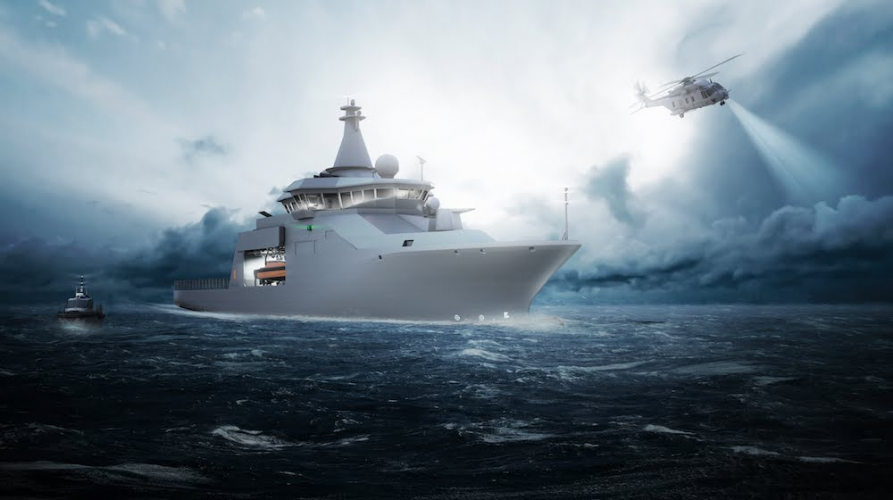
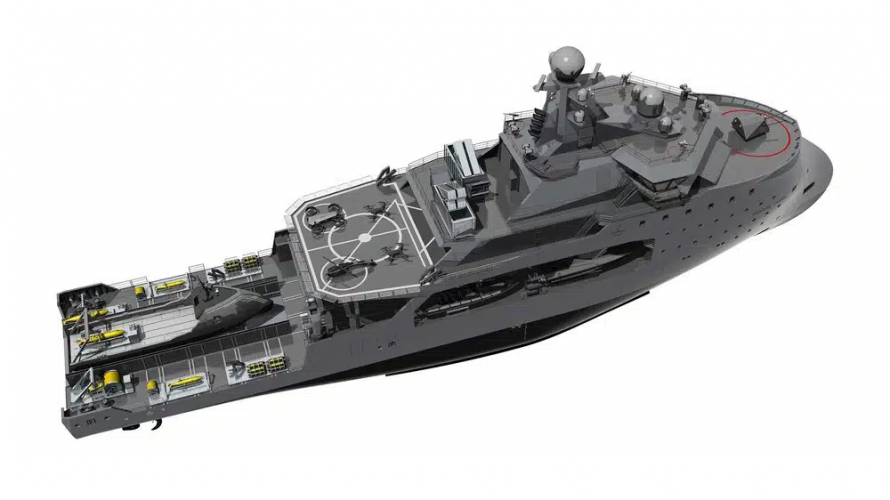
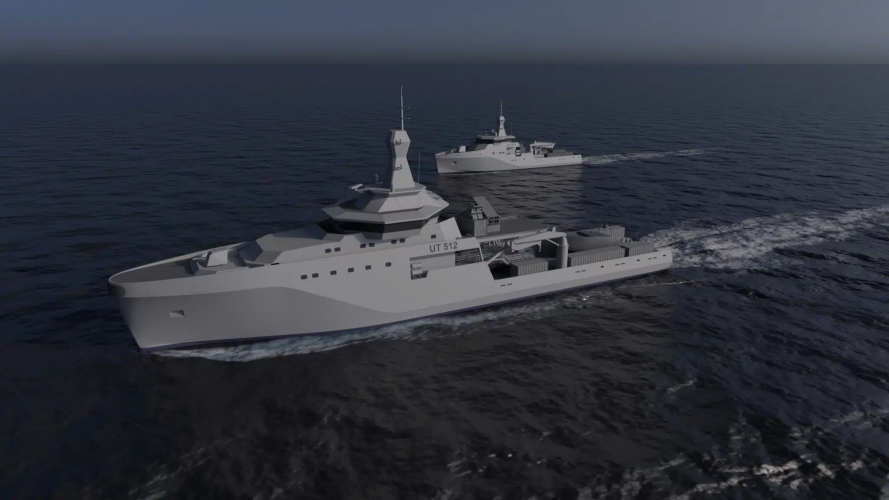
The Kongsberg Vanguard appears to be one proposal that's being pushed for the procurement - this is essentially two ships, a largish, bluewater, offshore patrol vessel, or a smaller inshore patrol vessel, both equipped for operating UAVs, USVs and UUVs. Kongsberg advertise a modular shipping container-based solution, with shown modules including ASW, ASuW and AAW. Very interesting design.

https://www.kongsberg.com/kda/what-we-do/defence-and-security/vanguard/vanguard-solution/
0445_single.jpg

That's the offshore support vessel version.


1765418102301.png
That's the inshore support vessel version.
 
Last edited:
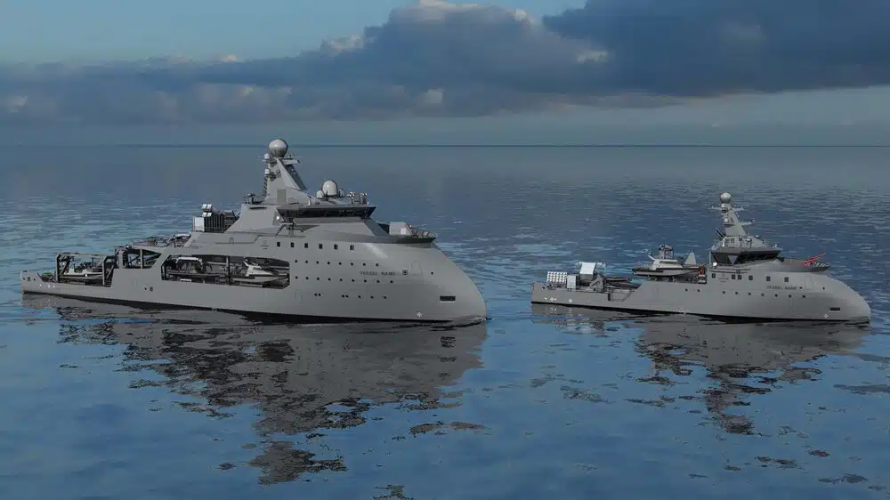
For those interested in armament, the larger variant (the one the RN are reportedly interested in acquiring three of) carries eight containerised Naval Strike Missiles and a 57mm naval gun. It look as though there might be room for a larger air search radar on the mast as well.

The shape of the bow is common to Ulstein-designed ships, and supports the function of the vessel in rough conditions in the Norwegian and North Seas, and the North Atlantic.
 
Norway plans to purchase up to 28 of these motherships (the selection for the design has not yet concluded), split between 18 coastal vessels and 10 bluewater-capable vessels. They're intended to replace patrol craft, minehunters, light corvettes, and auxiliaries across 12 classes in the RNoN. So far, the RN has committed to three of the larger variants.

If this goes through, and I suspect it will, the RN has the opportunity to get their hands on three large missile-armed OSVs that can supplement the escort and patrol roles currently being performed by frigates, OPVs and minesweepers.

My most pressing question now centres of whether these will be RN-operated or RFA-operated, and as such, will they be built in the UK, or in Norway, and whether, should they be RFA-operated, they'll be fitted with offensive weaponry.
 
My most pressing question now centres of whether these will be RN-operated or RFA-operated, and as such, will they be built in the UK, or in Norway, and whether, should they be RFA-operated, they'll be fitted with offensive weaponry.
I'd expect RN and FFBNW.
 
No air defense at all, not even a phalanx?
Perhaps a 40mm, but that'd require an air search radar. Phalanx is a bit of a toss up - there should be a few lying around now the Albions are being sold, but those could be being transferred to the frigates and FSSS.
 
No air defense at all, not even a phalanx?
Air defence on the Sandown class Minehunters, which they'd be functionally replacing, is one 30mm DS30B, and three .50s. The Rivers have much the same if they're also taking the home waters OPV role.
 
Be those standard shipping container size?
If so there's a possibility of containerised CAMM if need be.
 
It all depends.
The better the ships radar, tje better the performance of yhe miss.
But obviously an attendant frigate should be good to provide high quality target data.

Containers opens up the whole PODS concept being used on such vessels. Giving an ability to be equipped for particular roles.

Maybe drones to deliver torpedoes.
Mine clearing equipment.
Medical office.
Maybe a bathysphere for divers.
 
https://www.navylookout.com/royal-navy-in-talks-to-sell-batch-i-offshore-patrol-vessels-to-uruguay/
Knowing this, any possibility of extending the B1s past 2028 seems unlikely. The established plan is to withdraw at least three of the B2s (presumably one from Singapore, the one from the Caribbean, and the one in the Med - unless both Singapore-OPVs are pulled back), that will then theoretically be replaced by Type 31 frigates post-2030.

This is a neat rearrangement, but leaves the RN down three of its most useful hulls, and three of its most consistent overseas assets.

Assuming that the capability will not simply be left unfilled (a brave assumption), this seems like the perfect opportunity for this Norwegian programme to step in.

3 for minehunting, and three for homewaters OPV duties?
 
Kongsberg Defence and Aerospace and Salt Design got the contract to develop the Norwegian standardised vessels:

KONGSBERG and Salt Ship Design to design Norway’s standardised vessels
Kongsberg Defence & Aerospace (‘KONGSBERG’) and Salt Ship Design (‘SALT’) have jointly won the contract to design the new standardised vessels for the Norwegian Navy.

30 Mar 2026

The Norwegian Defence Material Agency (NDMA) announced today that SALT and KONGSBERG have been awarded a contract to develop a design concept for standardised vessels. The companies have worked closely for years to secure a Norwegian programme, while also pursuing a international opportunities.

“This marks an important step forward for KONGSBERG and the Norwegian defence and maritime industry, and we look forward to contributing our expertise and technology to develop the standardised vessels of the future in Norway and internationally,” said Eirik Lie, President of Kongsberg Defence & Aerospace. “A standardised fleet based on KONGSBERG and SALT’s expertise, in support of the Armed Forces and NDMA, will simplify maintenance, reduce costs and ensure more efficient operations for the Navy,” said Lie.

In January, the Norwegian Defence Materiel Agency initiated a prequalification process for the design of up to 28 new standardised vessels for the Norwegian Navy. The current fleet of more than 10 vessel classes we be reduced to a standardised fleet to streamline operations, increase operational flexibility and extend the service life of the vessels. After two months, KONGSBERG and SALT have been selected as the winning team.

“Through our new office in Bergen, we have strengthened our team and in collaboration with KONGSBERG we are establishing ourselves as a solid and trustworthy partner for the Norwegian Defence Materiel Agency locally and in the international naval market,” said Torbjørn Bringedal, General Manager of Salt Ship Design Bergen.

The Norwegian assignment facilitates the establishment of an international class of standard vessels, based on KONGSBERG and SALT design expertise.

In March, KONGSBERG, SALT and Ottawa-based Adaptive Marine Solutions Inc. won a contract for the design of the Canadian Coast Guard's new vessels, which will be built under Canada's national shipbuilding strategy.

In the revised long-term plan for the defence sector announced on Friday, March 27, the Government said the deliveries of standardised vessels to the United Kingdom are part of the strategic agreement in connection with the Norwegian frigate procurement. Norwegian authorities have also entered into an agreement with Lithuania on the delivery of standardised vessels.

The Norwegian government said its goal was to contribute to increased allied standardisation through closer and more binding cooperation with allies, and at the same time strengthen its national maritime and defence industry.
 
Beat me to it :)

It'll be some variant or development of the Vanguard family, then. Very interesting.

The phrasing of 'deliveries to the United Kingdom' suggests these will be built in Norway.
 
Last edited:
The Norwegian Defence Material Agency shows the following planned timeline:
Completion of requirements specification and reference design: by the end of 2026
Shipbuilding tender: autumn 2026 – spring 2027
Planned construction contract: from 2027
First vessel: delivery in 2030
 
Beat me to it :)

It'll be some variant or development of the Vanguard family, then. Very interesting.

The phrasing of 'deliveries to the United Kingdom' suggests these will be built in Norway.
Another thing we can be reasonably sure will be included in the DIP? Finger in the air, they will use a seabed warfare and energy security justification. Shadow fleet meddling and Hormuz mines are a heady combination for the RN MPHC teams.
 
Last edited:
Another thing we can be reasonably sure will be included in the DIP? Finger in the air, they will use a seabed warfare and energy security justification, Shadow fleet meddling and Hormuz mines are a heady combination for the RN MPHC teams.
It's definitely a useful political situation for those seeking to have these ships purchased for the UK.

It'll have to be balanced with the likely backlash from procuring vessels from a foreign yard. Surely, these will be RN operated?
 
It's definitely a useful political situation for those seeking to have these ships purchased for the UK.

It'll have to be balanced with the likely backlash from procuring vessels from a foreign yard. Surely, these will be RN operated?
The RB1s are as were the MCMVs so I'd say so. My view is that even the Bays were a step too far, much too LPD-shaped to be RFA. They should keep to resupply ships.
And Norwegian built but made clear that they are the offset for the T26s, value wise we would still be very much better off.
 
Pretty sure the press has the wrong idea here. It should be more offshore support vessels like HMS Stirling Castle
 
Pretty sure the press has the wrong idea here. It should be more offshore support vessels like HMS Stirling Castle
I'm 50/50. I think for the purely mine-countermeasures role, you want a platform with loads of space, and rapid deliverability. OSVs like Stirling Castle are good in that regard. Then, if you intend to take your mine-countermeasures capability overseas, you load the systems into one of your amphibious transport ships and leave your OSVs at home.

On the other hand, opting for the Standards makes you worse at mine-countermeasures, because they'll almost certainly have less working space, but better at patrol and escort. With the B1 OPVs being retired, having a ship that can part-time some of those patrol roles would also be useful, rather than needing to pull back three of the B2 OPVs.

I think most people (including myself) are leaning towards the Standard option as the more likely choice because of this quote from the Norwegian government:

'the deliveries of standardised vessels to the United Kingdom are part of the strategic agreement in connection with the Norwegian frigate procurement.'
https://ukdefencejournal.org.uk/norway-vessel-project-links-to-possible-uk-naval-purchase/
 
Those OSV have long distance ocean going performance. I think we'll continue to see these systems integrated on them and thats where they'll stay.

The partnership with Norway makes sense because Norway designs and builds a lot of these heavy industry vessels and they build them well. Another "joint fleet" extension, but for the new autonomous delivery of missions.

As regards the Rivers, they also take these containerised packages and use them abroad. I wouldn't be surprised if the MoD is working on a design for the next class of OPV built to DEFSTAN. No offence to Kongsberg, but commerical standards is not really what you want for fighting ships.
 
Those OSV have long distance ocean going performance. I think we'll continue to see these systems integrated on them and thats where they'll stay.
I don't dispute their performance, but their survivability in combat areas (like the Persian Gulf) doesn't really make them ideal. They'd work for peacetime around the UK, but if you needed them somewhere else, you're better off loading them onto an ATS for safety reasons.

All the rest seems plausible.
 
I don't dispute their performance, but their survivability in combat areas (like the Persian Gulf) doesn't really make them ideal. They'd work for peacetime around the UK, but if you needed them somewhere else, you're better off loading them onto an ATS for safety reasons.

All the rest seems plausible.
Yet another job for very few ATS to be doing. Sigh. They're going to need to be Dokdo sized, ideally also Dokdo shaped.
 
I don't dispute their performance, but their survivability in combat areas (like the Persian Gulf) doesn't really make them ideal. They'd work for peacetime around the UK, but if you needed them somewhere else, you're better off loading them onto an ATS for safety reasons.

All the rest seems plausible.
You wouldn't send in a dedicated minesweeper either into a hot warzone without first neutralizing the threat or making the conditions safe for them to operate.
 
You wouldn't send in a dedicated minesweeper either into a hot warzone without first neutralizing the threat or making the conditions safe for them to operate.
Maybe 'combat zone' was poor phrasing. There is a difference in threat level though between the British regional waters, and ME even at 'peace'. Almost all modern MCMV have some light armament (20mm, 30mm).

The UK could have sent Stirling Castle along with Dragon to the ME this spring, but they sent Lyme Bay instead. Clearly there remains a need for some onboard safety.
 
Maybe 'combat zone' was poor phrasing. There is a difference in threat level though between the British regional waters, and ME even at 'peace'. Almost all modern MCMV have some light armament (20mm, 30mm).

The UK could have sent Stirling Castle along with Dragon to the ME this spring, but they sent Lyme Bay instead. Clearly there remains a need for some onboard safety.
So it could be done by a Patrol Vessel
 
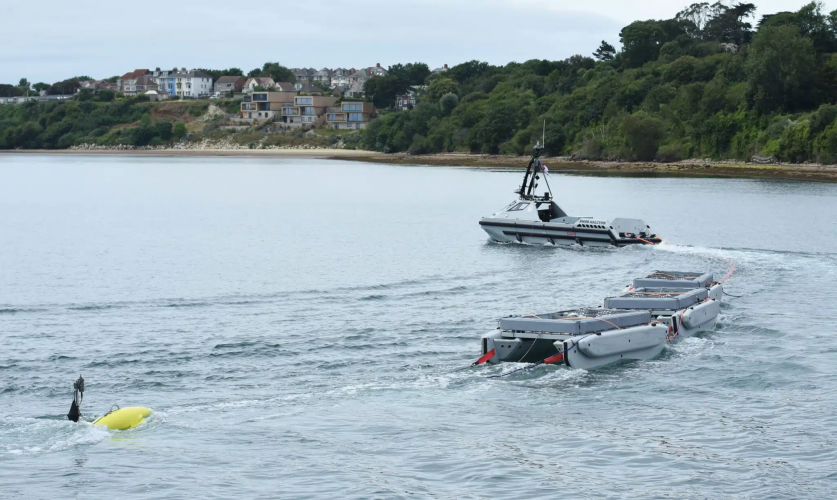
To support systems like this?
1789517538253.png
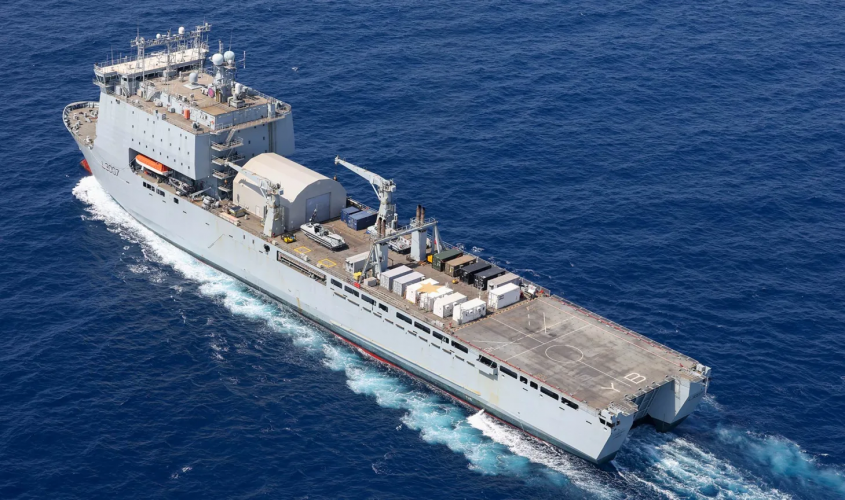
They're a little large for maintenance by a single OPV. Something like an OSV or an LPD can conduct maintenance and transport of these unmanned mine-hunters and mine-sweepers en masse. IIRC, Lyme Bay had something like three USVs, four command modules, a host of smaller UUVs and 110 mine countermeasures personnel for potential operations in the Gulf.

An OPV couldn't support nearly that much equipment.

I know Tamar did some mine-hunting in Korea, but I don't think it's a regular thing. You'd get maybe one uncrewed boat, a couple of command modules, and some hand-launched drones. If you want to move a large amount of MCM equipment, and the operators to support it, you want something bigger. The OPVs could be used to support operations as a additive platform, I guess. Then again, does the RN want to pull those ships away from their patrol and eventually escort operations?
 
Last edited:
They're a little large for maintenance by a single OPV.
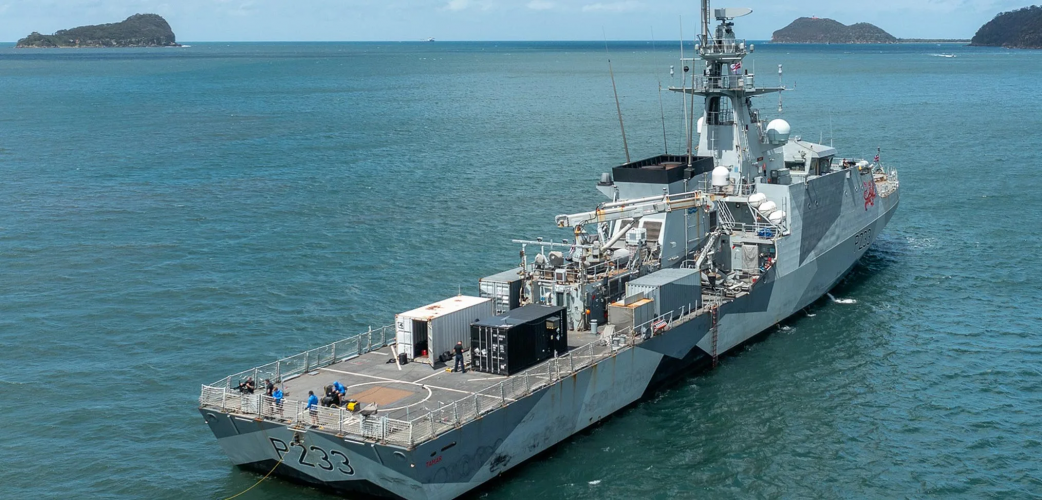
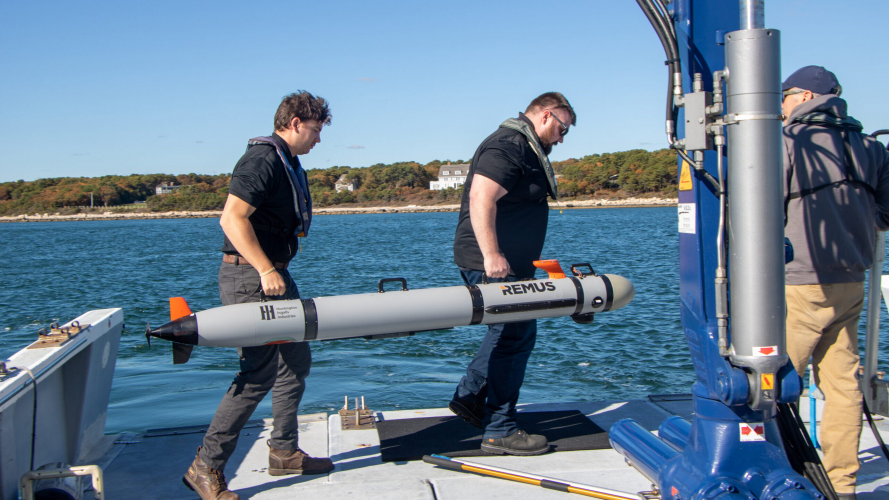
Nah, not even. Plenty of space. These are basically just like carrying a rhib. Only weigh 4t. Look how much deck space a River has for carrying this stuff:
Progress-with-PODS-Royal-Navy.png
Yes that's Tamar doing MCM work. Plenty of room for a small USV, some floats, a few drones. Plus the Remus 300 and other equipment they carry in PODS. Remus-300-Crew-scaled-e1666962508833.png
You'd probably want the OSV and LPD for DDS, proper minefield coverage, but the above do just fine.
 
You'd probably want the OSV and LPD for DDS, proper minefield coverage, but the above do just fine.
But that's what I'm advocating for. As I said above, 'If you want to move a large amount of MCM equipment, and the operators to support it, you want something bigger'.
1789555510866.png
Lyme Bay is carrying three times the amount of equipment as Tamar did in Korea, and 50% more mine-countermeasures personnel than Tamar could ever accommodate, whilst still having space for helicopter operations, and having the self-defence armament suitable for these low-intensity environments.

I agree with you that the OPVs could be dual-purposed as MCMV when they return to the UK in 2027/28. But to replicate the amount of capability that could be brought to bear by an amphib, you'd need three OPVs, and you still wouldn't get the same degree of capability. The OSV model shown by Navy Lookout had even more onboard equipment than Lyme Bay.

The reason I'm against using the OSVs overseas is that I think it's going to become rare to see an environment that requires MCM and is also completely safe. UAVs, USVs, even semi-submersible UUVs are proliferating, and it wouldn't be prudent to send a civilian-standard OSV into those zones.

The other thing (and this isn't particularly in response to your points, but I think it's relevant) is that I think 'MCMV' are going to evolve into general-purpose seabed security vessels, supporting the operations of XLUUVs, and monitoring bases, as well as their mine countermeasures role. A hybrid of RFA Proteus and HMS Stirling Castle. For that role, I think it's better to build them bigger.
 
I agree with you that the OPVs could be dual-purposed as MCMV when they return to the UK in 2027/28. But to replicate the amount of capability that could be brought to bear by an amphib, you'd need three OPVs, and you still wouldn't get the same degree of capability. The OSV model shown by Navy Lookout had even more onboard equipment than Lyme Bay.
Right... But the original argument was about the Kongsberg standards. Rivers are superior boats in most metrics. With OSVs, OPVs, and LPDs, the RN has MCMV and Patrol thoroughly covered.

The RN wouldn't be interested in these Standards that are more civilian commerical standard than naval standards, especially when what they have is already better. OSVs are just in another league of versatility, capability, and affordability. It's the most likely direction for UK & Norway.
 
Last edited:
Right... But the original argument was about the Kongsberg standards. Rivers are superior boats in most metrics. With OSVs, OPVs, and LPDs, the RN has MCMV and Patrol thoroughly covered.

The RN wouldn't be interested in these Standards that are more civilian commerical standard than naval standards, especially when what they have is already better. OSVs qre just in another league of versatility, capability, and affordability. It's the most likely direction for UK & Norway.
I thought we were arguing about whether an OPV could provide an equivalent overseas mine-hunting mothership capability to an amphib.

My first post in this exchange already said that for the pure MCMV role, the OSVs were probably a better shout. Look at Post 26.
 
Last edited:
I thought we were arguing about whether an OPV could provide an equivalent overseas mine-hunting mothership capability to an amphib.

My first post in this exchange already said that for the pure MCMV role, the OSVs were probably a better shout. Look at Post 26.
Well the argument became about survivability and your thought that an OSV was unsuitable. I didn't say it could do the job to the same level, but that it could it very well; especially in a dangerous environment. And if the threat was credible, you wouldn't send any of them without escort anyway, especially the amphibs. The OPVs would be the most survivable.
I don't dispute their performance, but their survivability in combat areas (like the Persian Gulf) doesn't really make them ideal. They'd work for peacetime around the UK, but if you needed them somewhere else, you're better off loading them onto an ATS for safety reasons.

All the rest seems plausible.
 
Last edited:
Back
Top Bottom