Im not sure anyone wants to intercept at the absolute minimum range but if theres a class of target thats hard to kill with guns, that option is still available. You dont delete the shorter range weapons just because you dont like using them.
Im not sure anyone wants to intercept at the absolute minimum range but if theres a class of target thats hard to kill with guns, that option is still available. You dont delete the shorter range weapons just because you dont like using them.
Well CAMM gives you a potential choice of baseline or ER if you have big enough VLS so its more flexible, but in effect its either/or. CAMM also seems to tempt navies into fewer installed cells compared to ESSM + RAM. For example, ANZAC frigates originally had 8 Mk-41 cells for Sea Sparrow (could have been replaced by 32 ESSM) + Phalanx, compared to the NZ ones now having the Mk-41 replaced by only 20 mushrooms. Being able to fill Albatros MR or ER cells with baseline CAMM would also reduce numbers available for longer range.
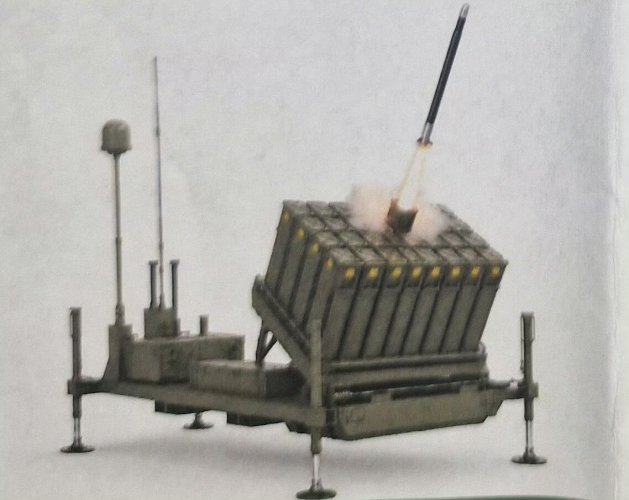
Looks like a very basic rendering of a CV90 chassis with a SAM launcher in a cocoon on top. Designed to protect the systems from extreme cold and icing conditions, I assume.
Looks like a very basic rendering of a CV90 chassis with a SAM launcher in a cocoon on top. Designed to protect the systems from extreme cold and icing conditions, I assume.
I wonder how will the final product look like. Just an iLauncher-style TEL adapted for the CV90 chassis or something more similar to what Diehl is currently doing with the newest IRIS-T SLS variants?
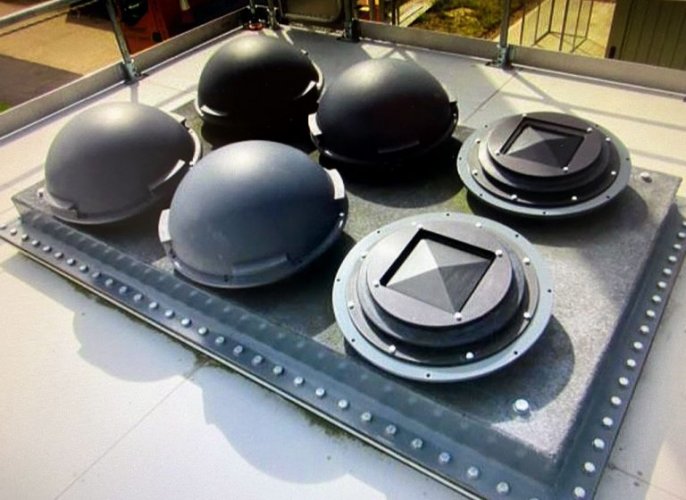
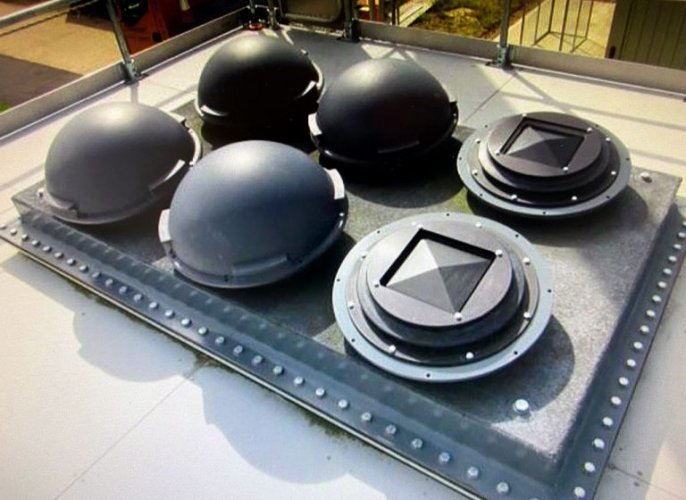
An impossible task because same bolt designs can have different sizes and the resolution isn't good enough to find the model. Im gonna try using the diameter for the VLS case and then that for 1 mushroom to then use here. Tought its gonna take a week until im back home again
That drawing was a depiction of how many CAMM launch containers one could fit into a Sylver-sized VLS module (40-48 depending on how tightly these can be packed, instead of 24 which Naval Group proposes), I honestly have no idea how big the 6 cell mushroom farm module might be. Could try to estimate the dimensions based on the models and photos though, I'll see what I can do.
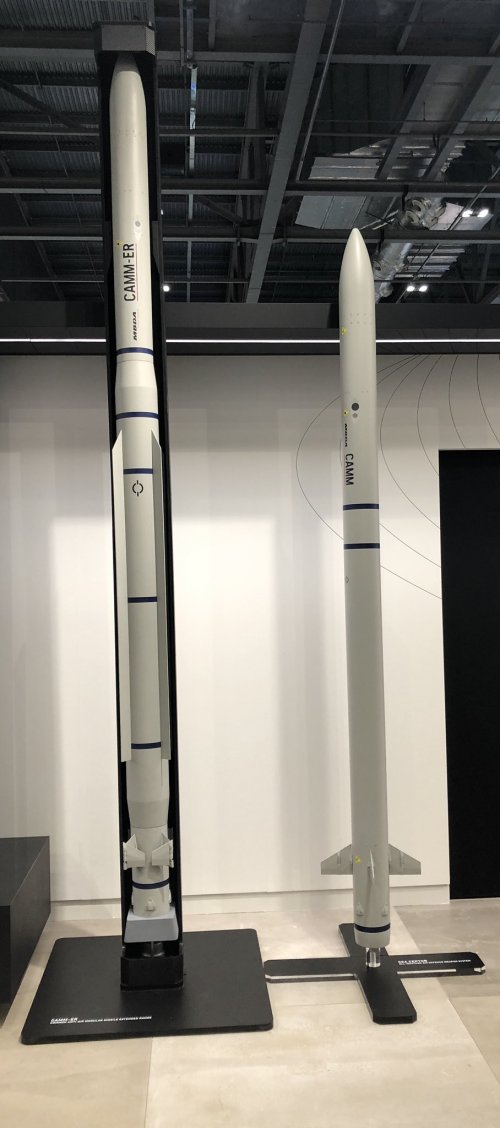
Missile & Canister Dimensions (Pic 1)
CAMM: 4mmwide in image 166mm actual missile diameter.
Length: 7.9cm in image approx 3.2m actual length.
CAMM-ER (Upper Section): 4 mm wide approx 166mm same as CAMM
Rocket Motor (Lower Section): Almost 5 mm wide approx 207.5mm which fits roughly the expected profile.
Canister (Top & Bottom): Around 6.5 mm wide, putting the canister width at roughly 270 mm.
Overall Container Height: 13.6 cm in image approx 5.64m.
Conclusion: This makes the 275 × 275 × 4400mm spec seem roughly accurate, though there is a slight inconsistency in overall length.
Albatros VLS launcher (Pic 2)
Assuming the four bolts around the central square mark the edges of the canister, then rounded up it gives 10mm width which allows for a scale of 1mm to 27.5mm.
Measured length approx 7cm or 1925mm
Measured width: approx 3.9 cm or 1072.5 mm
This gives ous a estimated Launch Cell Footprint of 1925mm × 1072.5mm.
I may try do to a pixel count too but this seems reasonable in size given what we are shown
2×1 meters? That's not as bad as I thought, not nearly as bad. That means 30 CAMMs in the footprint of 2 Sylver modules, so something actually worth considering as of now, before that Sylver-sized VLS for 24 CAMMs becomes available.
2×1 meters? That's not as bad as I thought, not nearly as bad. That means 30 CAMMs in the footprint of 2 Sylver modules, so something actually worth considering as of now, before that Sylver-sized VLS for 24 CAMMs becomes available.
Well CAMM gives you a potential choice of baseline or ER if you have big enough VLS so its more flexible, but in effect its either/or. CAMM also seems to tempt navies into fewer installed cells compared to ESSM + RAM. For example, ANZAC frigates originally had 8 Mk-41 cells for Sea Sparrow (could have been replaced by 32 ESSM) + Phalanx, compared to the NZ ones now having the Mk-41 replaced by only 20 mushrooms. Being able to fill Albatros MR or ER cells with baseline CAMM would also reduce numbers available for longer range.
ANZAC frigates have topweight issues. The RNZN didn't want to enclose the quarterdeck & ballast their frigates down, increasing draught & reducing top speed & perhaps range. For the RAN, that wasn't just to allow the carriage of 32 ESSM, but also CEAFAR, but even without the heavier mast, I think the mods had a significant effect on topweight.
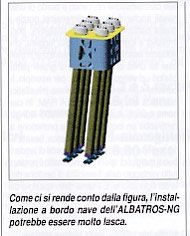
If this render from the Italians also applies to the British mushrooms, then the canisters are indeed angled.
Though I'm pretty sure this angle is independent from the design of the top part, so that the canisters can be angled away from the centerline, no matter in which orientation the modules are mounted (3×2 or 2×3). And they could be probably also mounted vertically.
Btw, a small off-topic - I was bored yesterday so I calculated the dimensions of the VL MICA containers, and it turns out that CAMMs in mushrooms aren't the worst offenders when it comes to missile density, as a single VL MICA container is around 650 × 1000 mm, so twice as bad (and over twice as bad when it comes to mass).
Btw, a small off-topic - I was bored yesterday so I calculated the dimensions of the VL MICA containers, and it turns out that CAMMs in mushrooms aren't the worst offenders when it comes to missile density, as a single VL MICA container is around 650 × 1000 mm, so twice as bad (and over twice as bad when it comes to mass).
MICA-VL apparently has a wingspan of 48cm, with fixed fins.
CAMM-ER has a diameter of 19cm, plus strakes. The tailfins fold.
ESSM has 254mm diameter, plus strakes.
CAMM - 166mm diameter. Folding fins.
It's the fixed fins. Same with Aster. The booster has folding fins. You could put a much fatter main missile on top of that booster
Fixed fins and in this case also the efflux duct integrated into each launch container, as using one duct per missile instead of sharing one between two to four missiles is just a waste of space.
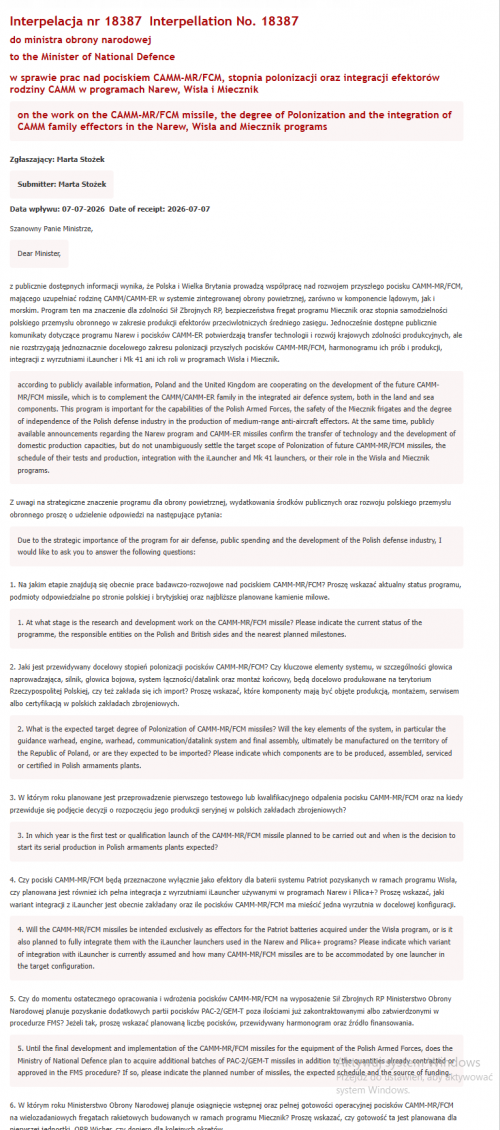
Haven't heard about anything new. For now that is, since there is a chance we'll get some info from the Polish MoD in maybe a month or so, as this interpellation (which I may or may not have co-authored) appeared on the Polish parliament website. The recipient of such an inquiry, in this case our minister of defense, is legally obliged to answer these questions within 21 days. That being said, the answer may just boil down to "it's classified" as it's defense matters we're talking about here. So we might actually get some official answers even before the MSPO expo, where there will likely be some news on the MR anyways.
Fixed fins and in this case also the efflux duct integrated into each launch container, as using one duct per missile instead of sharing one between two to four missiles is just a waste of space.
It's very space-inefficient. The only real advantage is its flexibility. If you only want to install 1, 2, 3 etc missiles somewhere you can. You don't have to reserve space for an entire 6 or 8 cell launcher.
The Musherib-class OPV is a good example of this : 2x4 with a hallway in between.
Also for a hot launch system it's pretty simple to integrate.
The only real advantage is its flexibility. If you only want to install 1, 2, 3 etc missiles somewhere you can. You don't have to reserve space for an entire 6 or 8 cell launcher.
True. But then again, they could've just designed a launch container without the duct and then a dedicated single, double and quadruple VLS module. That would also prevent the ground based version of the VL MICA from being such an abomination.
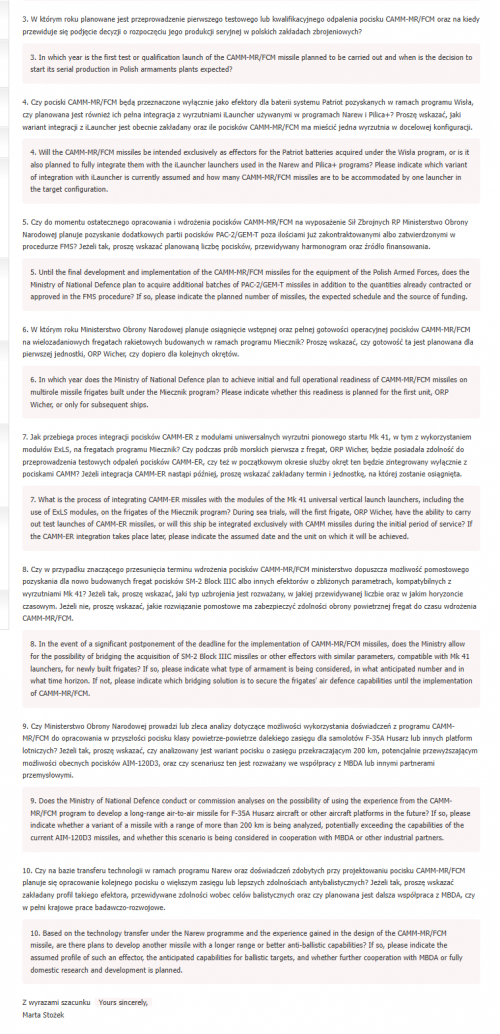
Btw, one thing I forgot about yesterday, here is the translation of the questions I mentioned:
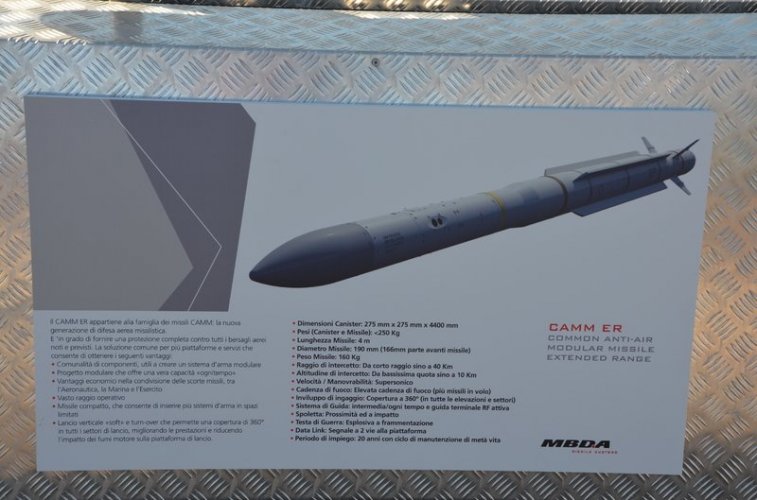
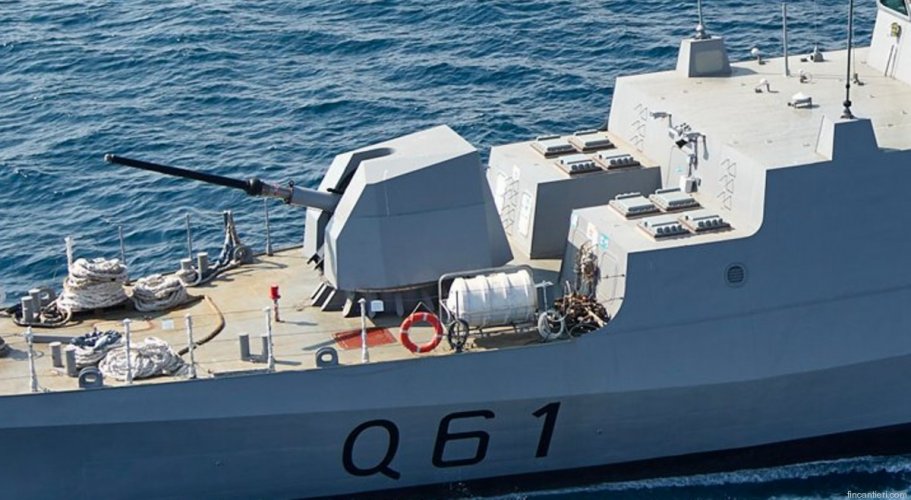
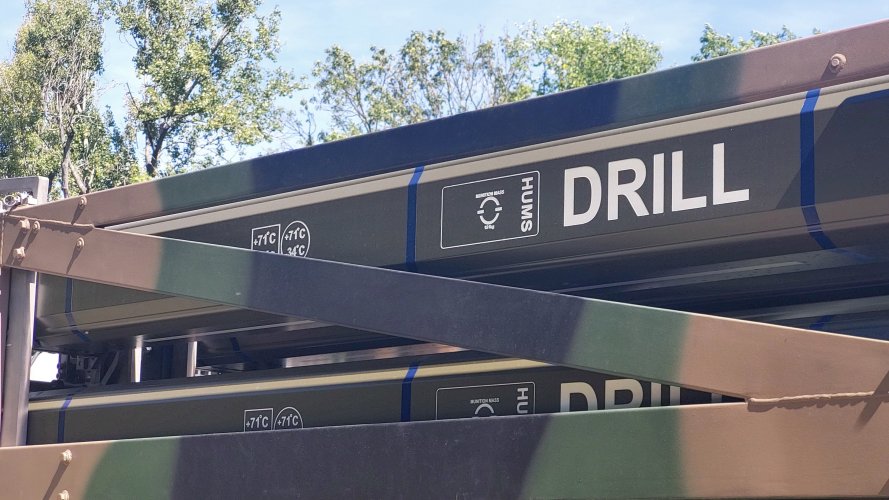
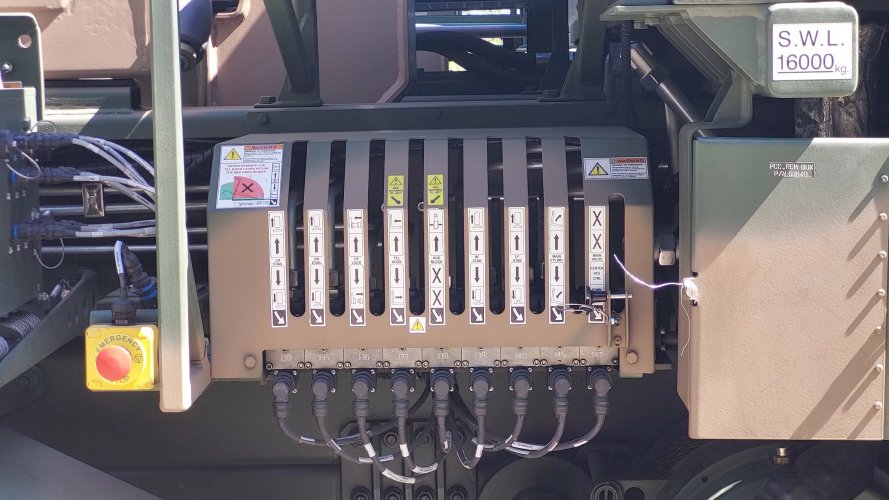
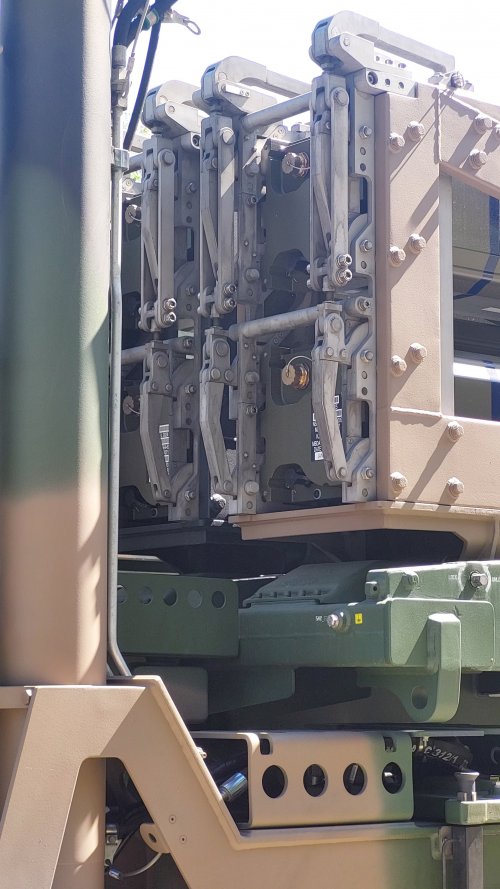
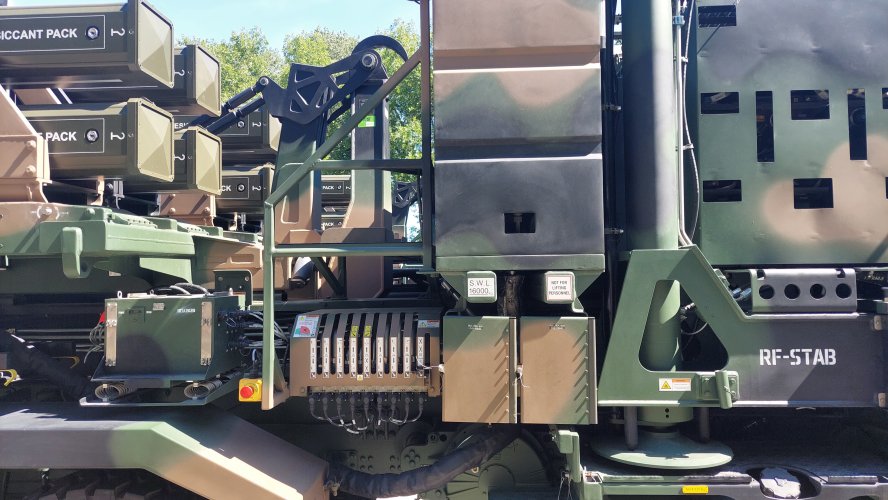
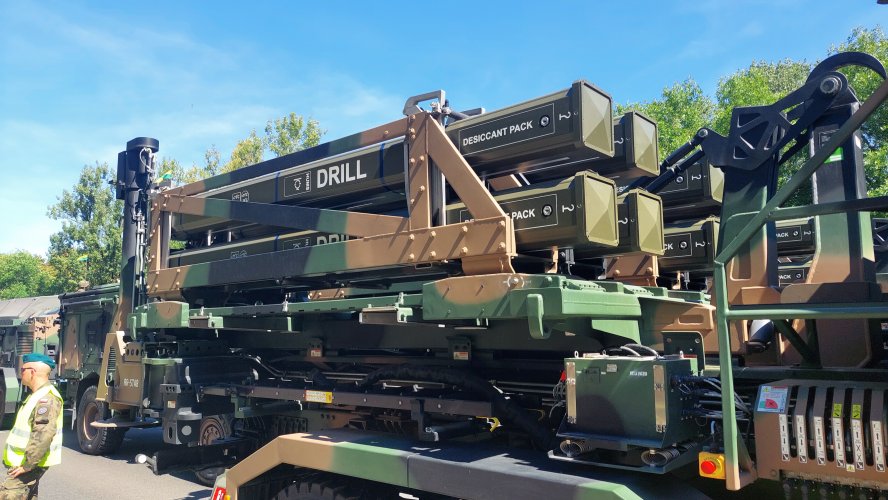
Some details of the CAMM launch containers and the iLauncher, from the Armed Forces Day parade in Warsaw, Poland. Including info that I haven't seen stated publicly before, such as the container mass and the operating temperatures range.
Some details of the CAMM launch containers and the iLauncher, from the Armed Forces Day parade in Warsaw, Poland. Including info that I haven't seen stated publicly before, such as the container mass and the operating temperatures range.
Seems like you could fit 16x CAMM launchers in a 20ft container (4x4 cell arrangement), with a simplified elevation mechanism similar to Rheinmetall's CML launcher, and the individual launch containers themselves would weigh less than 3t.
Seems like you could fit 16x CAMM launchers in a 20ft container (4x4 cell arrangement), with a simplified elevation mechanism similar to Rheinmetall's CML launcher, and the individual launch containers themselves would weigh less than 3t.
Well, they've shown a containerized SL-ASRAAM launcher on one of their renders, so maybe they'll explore the idea of using the CAMM for the same purpose. Not the biggest fan of such launchers though, I think a 20ft container floor as a base for the launcher is enough modularity. I'm also pretty sure the existing iLauncher could fit more CAMMs if the current missile rack got redesigned to have 6 columns of missiles instead of 4, the same way it was on the FLAADS(L) launcher.
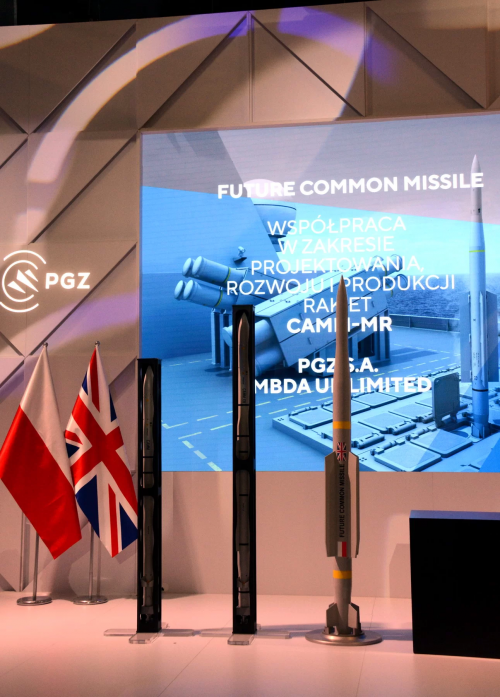
Booster as in the MR's rocket motor or as in its 1st stage? Because from what I know and from what we can see from the mock-up that MBDA shows the MR will be a single stage missile, so no booster. As for who will be responsible for the MR's rocket motor, we'll see, but my bet is either on Avio or on some of the Polish defense companies, but we'll see.
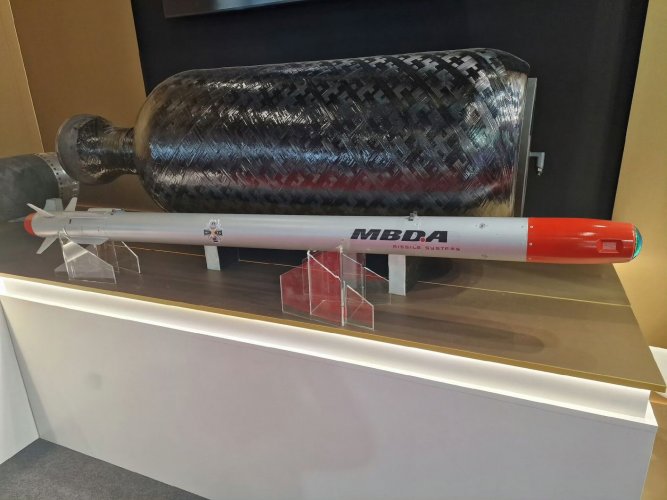
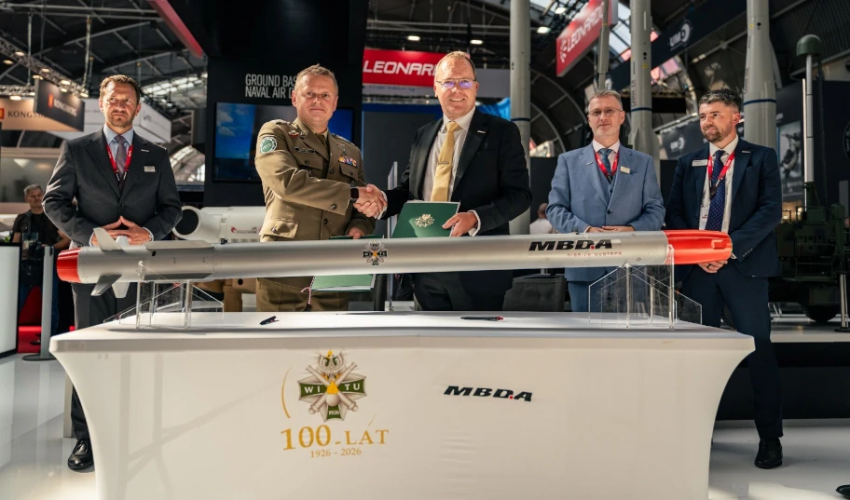
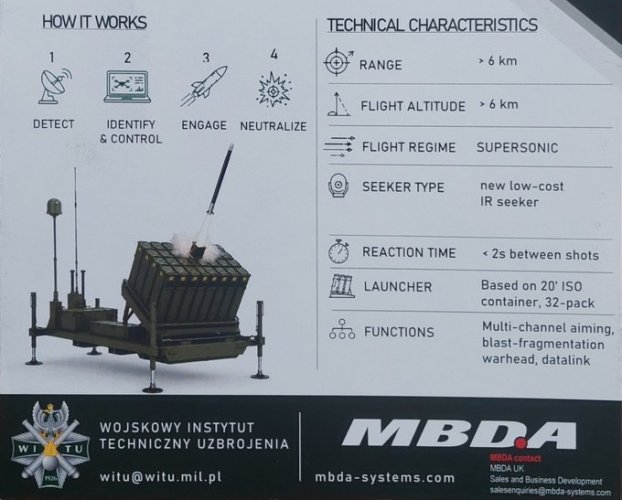
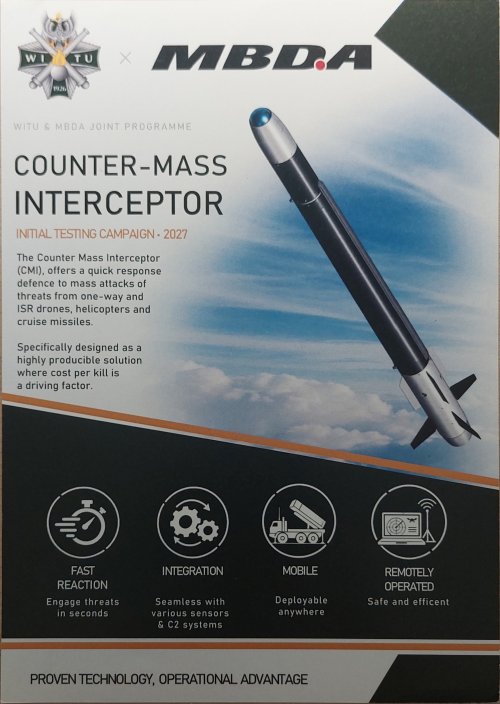
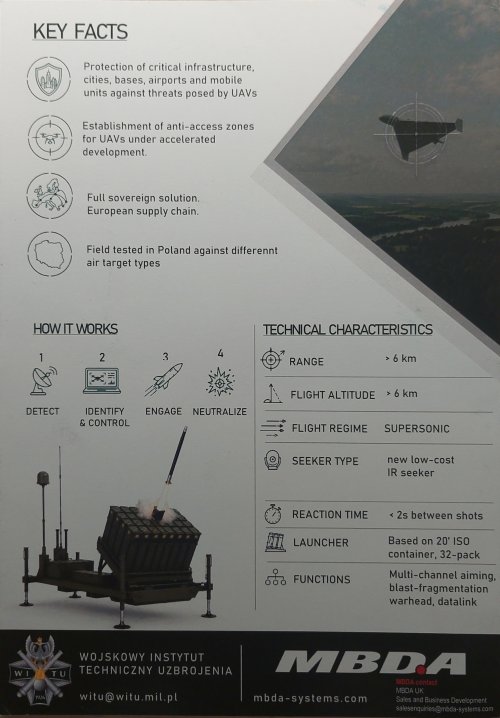
It's the Counter Mass Interceptor as it was already mentioned here. And as for what it physically is as a missile, it's essentially a CAMM-SR that I remember someone in this thread was advocating for. MBDA UK's low cost IIR seeker, WITU's 105 mm rocket motor, range of "over 6 km", though when I talked with people from the WITU stand they were quoting up to 7-8 km if I recall. Cold start also, similar to the CAMM, but with the turnover pack (with 6 motors) being jettisoned by the ignition of the main rocket motor instead of being integrated into the missile like on the CAMM. The launcher itself is a Polish proposal, actually older as a concept than the cooperation with MBDA, and despite being angled, it's essentially a vertical launcher in that it doesn't rotate and the missile is positioned towards its target after it leaves the tube. As of now it's the only launcher they are planning to integrate the missile with (I've asked specifically about the one on the HMT, from Farnborough, and they said they have persuaded MBDA away from that idea), but WITU has also developed a hardpoint for aircraft integration, mainly with unmanned systems in mind. They're aiming at a price of around 75 000 USD, so quite cheap for the missile's planned performance.
Also, while its main selling point is that the missile is meant to be cheap, the maximum target speed they're aiming for is the high subsonic range (with the missile itself achieving around Mach 1,5), so it will be able to hit not just the Geran family of cheap cruise missiles (or OWA UAVs), but also the "true" subsonic CMs like the Kh-101, Kh-555 or the Banderol. As for the 2 seconds between each shot, that is a safe estimate which they want to verify during the test launches (until they reach the point when the missiles start colliding mid-air after launch), so that number will likely decrease. All 32 missiles can be in the air at once, the launcher is planned to have 32 guidance channels.
Yeah, about that…
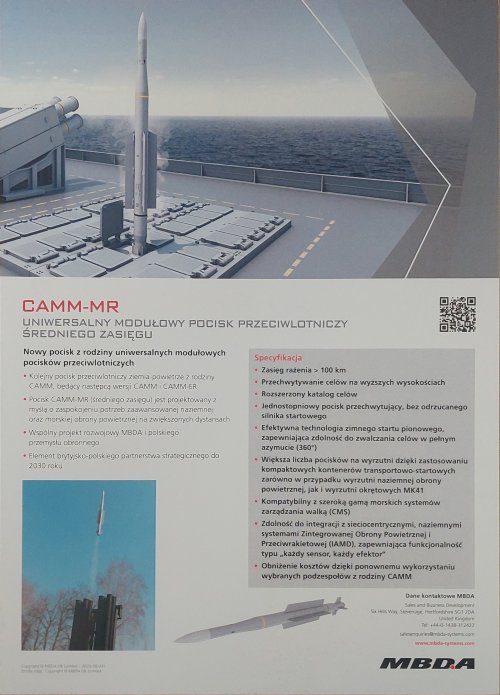
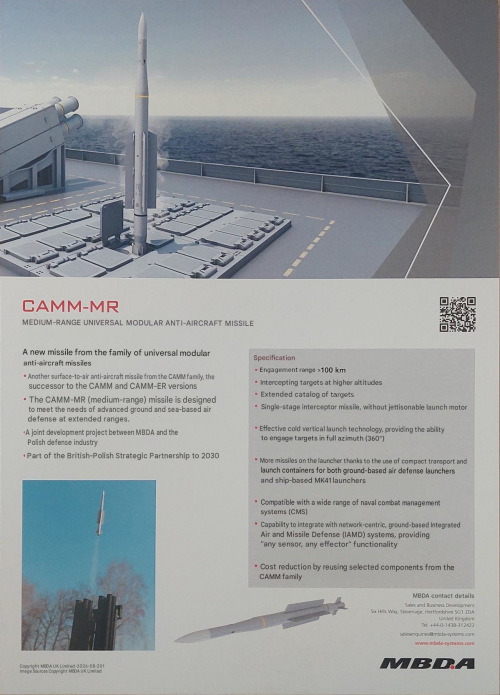
The program is at a very early stage - the technical assumptions have been formulated, you can see them on the brochure that I took from their booth (the 2nd image is a Google Translate translation), and MBDA is waiting for these assumptions to be accepted by both the Polish and the British MoD and for the project to be financed. As for the Polish side, there still are some talks regarding the workshare between MBDA and PGZ (and the companies within PGZ as they do have some substantial degree of independence - it's kind of similar to MBDA and its national subsidiaries actually, and can lead to internal competition).
Yeah, about that…
The program is at a very early stage - the technical assumptions have been formulated, you can see them on the brochure that I took from their booth (the 2nd image is a Google Translate translation), and MBDA is waiting for these assumptions to be accepted by both the Polish and the British MoD and for the project to be financed. As for the Polish side, there still are some talks regarding the workshare between MBDA and PGZ (and the companies within PGZ as they do have some substantial degree of independence - it's kind of similar to MBDA and its national subsidiaries actually, and can lead to internal competition).
Right totally wrong on my part i meant the Control Fin Section all 3 have seemingly the same tapered down section there which looks the same as the upper part.
Right totally wrong on my part i meant the Control Fin Section all 3 have seemingly the same tapered down section there which looks the same as the upper part.
That is a bit odd, you'd think that MBDA would take advantage of the wider rocket motor to have a larger diameter seeker even if it used all of the same components. 100km feels a long way to be using the same seeker as a local defence missile, though I've never been very clear on how powerful missile seekers actually are and the differences between them.
Even the rocket motors taper down towards the nozzles, which is a feature I've never seen on any other missile.
This site uses cookies to help personalise content, tailor your experience and to keep you logged in if you register.
By continuing to use this site, you are consenting to our use of cookies.