The Future of the Royal Navy and the 'Hybrid Navy' Initiative - News, Platforms, Development and Speculation

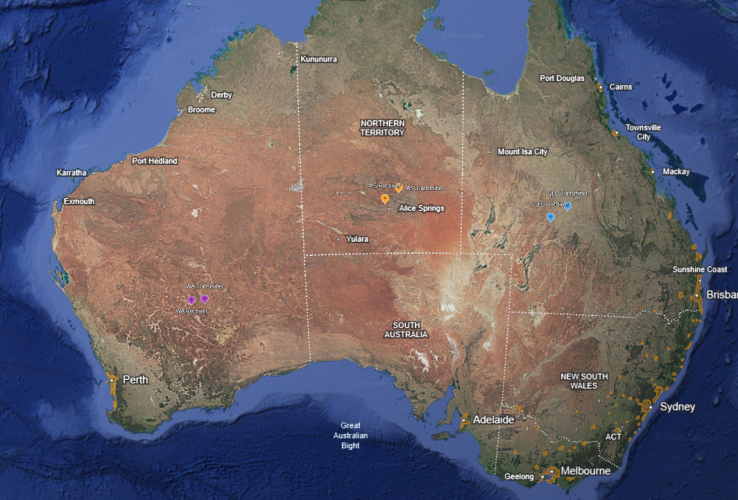
The endurance is very attractive, but we have a long-endurance USV industry of our own thank you very much :)
Both ACUA Pioneer and Oceanus 17 have more payload and are faster than the Bluebottle but not quite so much endurance.
Do they also send GPS data back to China? :p
 
The Optics11 array will be fitted onto the dutch Orka-class submarines … one day on british subs ?
 
Also, that's part of Japanes planned industrial capacity. They're always building ships, and don't start retiring a class until the class after the successor class starts arriving. They always operate at least two classes of ships of the same nominal type, the class currently in production and the class before it. And more usually, they operate three classes: the class that is being replaced, the class that is no longer in production, and the class being produced.

It's a significant advantage for their designers and shipyards, because there's always designs for a new class being worked on and always work for the shipyards.
Yes, they manage their defence industrial policy well - unlike the UK. Here it's been atrociously mismanaged.
 
Well articulated article, and it agrees with many of my own thoughts on the programme.

The CCV is a practical admission that the RN doesn't have the money to be a miniature USN. It must pick an area to make a peer-level investment, stick with it, and admit that other areas will rely on less-capable mass, or foreign imports.

For the UK, the obvious choice for the former is its submarines. If losing an air defence cruiser means gaining a submarine or two, I'd take it any day of the week.

CEAFAR is a very decent radar, and whilst not my first choice as an import, is both politically palatable and scalable. BAE might have to settle for local production and the software side of this one, sadly, but it is what it is.
 
he CCV is a practical admission that the RN doesn't have the money to be a miniature USN. It must pick an area to make a peer-level investment, stick with it, and admit that other areas will rely on less-capable mass, or foreign imports.
For the UK, the obvious choice for the former is its submarines. If losing an air defence cruiser means gaining a submarine or two, I'd take it any day of the week.
Agreed, with the caveat that any extra investment in Carrier Strike has an outsize effect due to us already having a carrier. An extra submarine is just an extra submarine, but either an extra air defence ship or a more capable one may allow us to use a CSG where previously we couldn't and so unlock a whole extra portion of capability.
It's really frustrating that having built the centre of a really capable deployable navy and the support ships to go along with it we are now too cheap to support it with escorts.
CEAFAR is a very decent radar, and whilst not my first choice as an import, is both politically palatable and scalable. BAE might have to settle for local production and the software side of this one, sadly, but it is what it is.
The author didn't have a clue about BAE developing a new radar module so I'd take his opinion on radar purchases with a handful of salt.
 
Agreed, with the caveat that any extra investment in Carrier Strike has an outsize effect due to us already having a carrier. An extra submarine is just an extra submarine, but either an extra air defence ship or a more capable one may allow us to use a CSG where previously we couldn't and so unlock a whole extra portion of capability.
It's really frustrating that having built the centre of a really capable deployable navy and the support ships to go along with it we are now too cheap to support it with escorts.
Sorry, I phrased that poorly. I don't think they should cut numbers, more so that I'd trade an air defence cruiser for an air defence frigate, if the savings contributed to an expanded submarine fleet.

I'm starting to that if given the option today, and the funds, the modern RN wouldn't choose to build the carriers in their current form.
 
Last edited:
Sorry, I phrased that poorly. I don't think they should cut numbers, more so that I'd trade a air defence cruiser for an air defence frigate, if the savings contributed to an expanded submarine fleet.

I'm starting to that if given the option today, and the funds, the modern RN wouldn't choose to build the carriers in their current form.
That's exactly what I'm saying. Dropping spending below the top tier of air defence by downgrading the ships causes an outsize decrease in the deterrence output because it means the enemy just has to use a better missile, whereas the most capable air defence ships today just about keep pace with the state of the art of anti-ship missiles and so provide an actual safety bubble. Generalising hugely, of course.

If you told the Navy in 1995 that they'd end up like this they'd cancel the carriers, yes, and then quite a lot of admirals would jump off bridges.
 
That's exactly what I'm saying. Dropping spending below the top tier of air defence by downgrading the ships causes an outsize decrease in the deterrence output because it means the enemy just has to use a better missile, whereas the most capable air defence ships today just about keep pace with the state of the art of anti-ship missiles and so provide an actual safety bubble. Generalising hugely, of course.
I don't think that's necessarily true. There are ways around reducing the overall size of a air defender (and therefore also its radar), and any large warship can cart around the requisite missile.

It's not like the RN are the only ones discovering that modern air defence ships are hideously pricey; there are rumours of problems with the German programmes, and the Dutch aren't targeting a cruiser either.
 
The author didn't have a clue about BAE developing a new radar module so I'd take his opinion on radar purchases with a handful of salt.
His point in referencing how long Sampson went from development to deployment shows he understands exactly how far behind BAE is. While they might be ready to test a demonstrator next year, it's years away from deployment. CEAFAR is ready now.
Pretty much what we've discussed here, a well written and thought out article nonetheless.

The bit that caught my attention was about Navantia, suspect that a variant of the new F-110 flight II being built by H&W would make some RN chaps to salivate... Its not going to happen but its a nice "what if".
Not really what's been discussed here. The author is talking about CCV and the drones being a ruse to pivot from a Type 83 unreality to a "Type 46" reality.

The F110 flight II is a compromised ship. The added weight has left it with minimal range and efficiency for a ship of its size and engine configuration. The RN would be much better off with a clean sheet design
 
It's not like the RN are the only ones discovering that modern air defence ships are hideously pricey; there are rumours of problems with the German programmes, and the Dutch aren't targeting a cruiser either.
Stuff costs money. Ships are now packed with more technology than ever and drones require them to be armed to the teeth. Settling for less is not a great plan.
 
Not really what's been discussed here. The author is talking about CCV and the drones being a ruse to pivot from a Type 83 unreality to a "Type 46" reality.
This is the most likely outcome of the processes ongoing.

What CEA technology 'might' allow is a USV so equipped to intigrate it's radar 'intimately' into the generation of Air Picture.

Practically that's extension of horizon limit and a potential increase in detection and tracking ranges.

Physical separate 'tiles' working as one.
 
His point in referencing how long Sampson went from development to deployment shows he understands exactly how far behind BAE is. While they might be ready to test a demonstrator next year, it's years away from deployment. CEAFAR is ready now.
The exact quote was
There is an industrial vacuum in the UK when it comes to developing a brand-new, high-end replacement for the BAE Systems Sampson radar. There is frankly a distinct lack of investment, or even interest, which is not entirely surprising.
That simply isn't true due to the BAE development, which the author seems not to be aware of.
Also blithely ignores that the reason Sampson took so long was the NFR-90, Horizon shenanigans, not a fundamental limit. It's yet another case of slowing down costing more money, not less.

We don't need a radar to be ready now. We need one to be completely ready in about 2035, which is when the first ship, at a breakneck pace, could be fitting out.
 
That simply isn't true due to the BAE development, which the author seems not to be aware of.
Hey may be unaware of the regeneration at Cowes, but its certainly true that lack of interest lead to the waning.
Also blithely ignores that the reason Sampson took so long was the NFR-90, Horizon shenanigans, not a fundamental limit. It's yet another case of slowing down costing more money, not less.
Lol. Horizon shenanigans had nothing to do with Sampson development. In fact it's kind of the reason the UK left the alliance, because they had a better radar. But the prototypes weren't operational until the early to mid noughties. Sampson can trace it's roots back to 1989... And a bit beyond.
We don't need a radar to be ready now. We need one to be completely ready in about 2035, which is when the first ship, at a breakneck pace, could be fitting out.
BAE won't have anything ready by then. They're technologies their working on now are considered (by them) to be post 2035 technology. Some of the technology milestones they're aiming for, CEA has already achieved.
 
Interesting take on the programme. Thoughts?
It's assessment of AAW USV survivability is completely unrealistic. The point of a USV is to decentralize not just the missile launch capability, but anything else you can, and to do it proportionately with the size of the drone platform. That may not mean USVs toting SPY-4, Samson or equivalent sensors, but the next step down isn't a Nav radar. One of the roles you want a USV to be able to do is to act as a picket further up the threat axis, that requires it to have the sensors to do that. No one doubts that ASW USVs will be trailing towed arrays, so why does this article assume an AAW USV will be electronically blind? And of course the same argument goes for the EW and countermeasures suites, and point defence.

If it's this wrong in its basic assessment of the whole point of the programme, how wrong is it in its assessment of everything else?
 
BAE won't have anything ready by then. They're technologies their working on now are considered (by them) to be post 2035 technology. Some of the technology milestones they're aiming for, CEA has already achieved.
BAE has a bunch of stuff over various timescales, some of it could be available by 2030 and some is well past 2040 at best.

NGRD is a 'near product', the design is all there. That's the first introduction of multistatic radar and passive modes on top of the Sampson upgrades to signal processing.

Hyperion currently has a demonstrator for the core panel based on Highly/Tightly Coupled Dipole Arrays, which allows a single panel to transmit and receive across an essentially unlimited frequency band and in all polarities. That means a single array can do normal radar, passive ESM and data comms all at once. Not a product, but the technology and the UK supply chain are there.

I struggle to understand what AKERU is, all of this is what I can find online. It seems to be an over the horizon radar based on pumping a bunch of different frequencies in the atmosphere and then using loads of small single antennae collecting the whole frequency band to try and pick up as much of the return as possible and make it into a single air picture, adjusting the transmitter based on the frequencies best returned to the receivers. Deep wizardry stuff that isn't going to make it into service any time soon.
 
It's assessment of AAW USV survivability is completely unrealistic. The point of a USV is to decentralize not just the missile launch capability, but anything else you can, and to do it proportionately with the size of the drone platform. That may not mean USVs toting SPY-4, Samson or equivalent sensors, but the next step down isn't a Nav radar. One of the roles you want a USV to be able to do is to act as a picket further up the threat axis, that requires it to have the sensors to do that. No one doubts that ASW USVs will be trailing towed arrays, so why does this article assume an AAW USV will be electronically blind? And of course the same argument goes for the EW and countermeasures suites, and point defence.
The problem is that adding all that drives your costs way way up.

For example: CAPTAS-1 is ~20mil a unit and the ASW USV needs two towed arrays. I'd roughly figured 30mil for the hull, 40mil for sonars, and 30mil for everything else and some nice-to-haves, so call it 100mil per USV.

How much is say, Sea Giraffe-S or whatever, a decent 3d air search radar? A couple million? (I'm seeing Brave report numbers in single digit millions)


If it's this wrong in its basic assessment of the whole point of the programme, how wrong is it in its assessment of everything else?
Likely very.
 
Not sure how I missed this:
This article looks at the BAES proposals for the Type 83 - they considered a number of sizes, cut like sausage to suit budgets. The smallest version, based on their proposal for the Type 32, an 'Adaptable Strike Frigate', was paused because it could not accommodate the power and cooling systems for a large radar. That doesn't bode well for a 'Type 94.'
No, it doesn't.

But like I said, I think someone is in for a very rude awakening on prices and size for the Type 94 USVs. Hopefully the Minister's assistant times the presentation of the prices for right as the Minister is taking a drink of tea. The spit-take should be epic. [insert evil emoji here]


That's why UK radar efforts include distributed models. Where single über massive radars be not necessary.
Using SPY6 for an example, the cost per "radar set" is basically the same whether it's four USVs with 3x9RMAs each or one ship with 4x24RMAs. In either case you'd have about 100RMAs at sea.

Except that you actually need about six USVs with 3x9RMAs to provide 360 coverage of a carrier or whatever group. So instead you're talking about the difference between ~162RMA and 148RMA (4x37, which IIRC would cover about the same area as the six 3x9RMAs, using SPY6 data. I assume that radars are radars once you're talking the same type. AESAs versus AESAs, PESAs versus PESAs, parabolics versus parabolics, and Luneburg versus Luneburgs)
 
It's assessment of AAW USV survivability is completely unrealistic. The point of a USV is to decentralize not just the missile launch capability, but anything else you can, and to do it proportionately with the size of the drone platform. That may not mean USVs toting SPY-4, Samson or equivalent sensors, but the next step down isn't a Nav radar. One of the roles you want a USV to be able to do is to act as a picket further up the threat axis, that requires it to have the sensors to do that. No one doubts that ASW USVs will be trailing towed arrays, so why does this article assume an AAW USV will be electronically blind? And of course the same argument goes for the EW and countermeasures suites, and point defence.

If it's this wrong in its basic assessment of the whole point of the programme, how wrong is it in its assessment of everything else?
It's actually totally realistic. More realistic than many drone The assumption is that the Type 94 radar picket will be providing the picture of the battlespace which is then relayed to the CCV and Type 91 missile barge. Let's assume that it has a decent radar for sea skimmers/missiles and that it can automatically engage without the CCV giving the go ahead; the radar, the power systems, cooling systems, VLS... These are all complex systems that need technicians and engineers to look after them and fix them when there's a problem. With no one there, the USV can be disabled until an engineering crew can be helo'd or boated across. If it's an electrical fire... There's little time before that can get out of hand and then your expensive USV has exploded and in its way to the bottom. And there's always a problem. Especially in the Royal Navy.

BAE has a bunch of stuff over various timescales, some of it could be available by 2030 and some is well past 2040 at best.

NGRD is a 'near product', the design is all there. That's the first introduction of multistatic radar and passive modes on top of the Sampson upgrades to signal processing.

Hyperion currently has a demonstrator for the core panel based on Highly/Tightly Coupled Dipole Arrays, which allows a single panel to transmit and receive across an essentially unlimited frequency band and in all polarities. That means a single array can do normal radar, passive ESM and data comms all at once. Not a product, but the technology and the UK supply chain are there.

I struggle to understand what AKERU is, all of this is what I can find online. It seems to be an over the horizon radar based on pumping a bunch of different frequencies in the atmosphere and then using loads of small single antennae collecting the whole frequency band to try and pick up as much of the return as possible and make it into a single air picture, adjusting the transmitter based on the frequencies best returned to the receivers. Deep wizardry stuff that isn't going to make it into service any time soon.
NGTRM might be ready by late 2027, early 2028— Might! The demonstrator might be ready by 2030. It's highly unlikely you're getting a production ready version for the ship before 2035. Choices for CCV need to be locked in soon.

Hyperion is an ambitious project. Receive might be easy but transmit sounds difficult. Sounds like it might be ground based. EW is already fielded in some MFRs and communications are not that far from entering service.

Akeru is basically JORN. It might integrate some new technologies to sharpen it up, but Australia is already working on those upgrades.
 
I have a more speculative question - assuming that the UK does succeed in building the T9X series of vessels, how would they be categorised?

Would they be small frigates, or corvettes, or are those labels going to be reserved for crewed escorts? I've seen 'sloop' thrown around specifically in reference to the T92, but could that become a more broad label for all large uncrewed surface ships?

Are these going to be commissioned vessels, with the 'HMS' prefix and pennant numbers? If so, what do those pennant numbers look like? Which letter is used for the flag superior? I think 'Q' is interesting. The American use that for their unmanned aerial vehicles (MQ-9, for example).
 
I have a more speculative question - assuming that the UK does succeed in building the T9X series of vessels, how would they be categorised?

Would they be small frigates, or corvettes, or are those labels going to be reserved for crewed escorts? I've seen 'sloop' thrown around specifically in reference to the T92, but could that become a more broad label for all large uncrewed surface ships?

Are these going to be commissioned vessels, with the 'HMS' prefix and pennant numbers? If so, what do those pennant numbers look like? Which letter is used for the flag superior? I think 'Q' is interesting. The American use that for their unmanned aerial vehicles (MQ-9, for example).
IIRC the status of a commissioned vessel is largely tied to the absolute responsibility of its captain for its actions. Remove the crew and there is no longer a captain holding a comission from the crown/state.
So the legal status of USVs will be very dubious without clarification under the laws of the sea.
 
Hyperion is an ambitious project. Receive might be easy but transmit sounds difficult. Sounds like it might be ground based. EW is already fielded in some MFRs and communications are not that far from entering service.

Akeru is basically JORN. It might integrate some new technologies to sharpen it up, but Australia is already working on those upgrades.
Transmit is difficult, but BAE think they can do it with some collaboration with academia. Not entirely behind CEA, eh?

AKERU differs from JORN in that the receiving array would be based on many antennae distributed across a large geographical area, rather than all on one site. That allows better resolution and less dependence on atmospheric conditions. The Australian upgrades as far as I can tell are more based on processing and sensitivity for the existing dense arrays.
 
Transmit is difficult, but BAE think they can do it with some collaboration with academia. Not entirely behind CEA, eh?

AKERU differs from JORN in that the receiving array would be based on many antennae distributed across a large geographical area, rather than all on one site. That allows better resolution and less dependence on atmospheric conditions. The Australian upgrades as far as I can tell are more based on processing and sensitivity for the existing dense arrays.
Right... But that's technology thats way way away. CEA blends 3 bands together into the same picture, which kind of does that job already. It will be a better bridge to that technology.

Now... I see you might be getting your information from chatgpt young man. JORN is built on many many many antennas distributed over a vast land called Australia, it just seems like one site compared to the UK, it's bloody huge and we have the empty space to do it. We actually have three of them covering different approaches. You're still bound by atmospheric conditions no matter how big your array is. Of course you can play with frequency ranges and refine signal processing with better ane faster equipment.

Run this through chatgpt and then let me know what it says. ;)
 
Right... But that's technology thats way way away. CEA blends 3 bands together into the same picture, which kind of does that job already. It will be a better bridge to that technology.

Now... I see you might be getting your information from chatgpt young man. JORN is built on many many many antennas distributed over a vast land called Australia, it just seems like one site compared to the UK, it's bloody huge and we have the empty space to do it. We actually have three of them covering different approaches. You're still bound by atmospheric conditions no matter how big your array is. Of course you can play with frequency ranges and refine signal processing with better ane faster equipment.

Run this through chatgpt and then let me know what it says. ;)

3 bands on different panels producing a single air picture is not the same as one massive wideband doing everything in between, it's been a feature of air defence for decades. A bridge to Hyperion would be more like SPY-6s dual band capacity.

Let's not throw shade, I read up JORN and the less powerful but more flexible French OTHR when suggesting similar for the UK last year. JORN's receive arrays are several km long, yes, but the antennae are still within a couple of wavelengths of each other; the wavelength is 1000 times bigger than S band so it's a reasonably linear scale-up. What BAE are proposing is closer to having individual antennae spread across the whole of Australia.
 
I have a more speculative question - assuming that the UK does succeed in building the T9X series of vessels, how would they be categorised?

Would they be small frigates, or corvettes, or are those labels going to be reserved for crewed escorts? I've seen 'sloop' thrown around specifically in reference to the T92, but could that become a more broad label for all large uncrewed surface ships?
I like it.


Are these going to be commissioned vessels, with the 'HMS' prefix and pennant numbers? If so, what do those pennant numbers look like? Which letter is used for the flag superior? I think 'Q' is interesting. The American use that for their unmanned aerial vehicles (MQ-9, for example).
I doubt that the UK would use the Q-for-UAV, as not even the US uses Q for anything but unmanned planes.
 
It's assessment of AAW USV survivability is completely unrealistic. The point of a USV is to decentralize not just the missile launch capability, but anything else you can, and to do it proportionately with the size of the drone platform. That may not mean USVs toting SPY-4, Samson or equivalent sensors, but the next step down isn't a Nav radar. One of the roles you want a USV to be able to do is to act as a picket further up the threat axis, that requires it to have the sensors to do that. No one doubts that ASW USVs will be trailing towed arrays, so why does this article assume an AAW USV will be electronically blind? And of course the same argument goes for the EW and countermeasures suites, and point defence.

If it's this wrong in its basic assessment of the whole point of the programme, how wrong is it in its assessment of everything else?
I've always assumed another purpose of the unmanned ships and air vehicles, was to push them into 'contested' space, and see what shoots at them, so you can zap another layer of the enemies onion. This would of course make them semi-disposable, which so far doesn't really fit with UK budget etc.
 
IIRC the status of a commissioned vessel is largely tied to the absolute responsibility of its captain for its actions. Remove the crew and there is no longer a captain holding a comission from the crown/state.
So the legal status of USVs will be very dubious without clarification under the laws of the sea.
Going back to predators, they are remotely operated- there is a human crew, just not sitting in the aircraft. Are these ships going to be the same? Hence there would be a 'captain', maybe even 3 captains. Accident reports will be fun....
 
Going back to predators, they are remotely operated- there is a human crew, just not sitting in the aircraft. Are these ships going to be the same? Hence there would be a 'captain', maybe even 3 captains. Accident reports will be fun....
No, always only one Captain, but there may be 3+ Officers of the Deck (the person in charge of the ship at the moment and holding legal responsibility for everything that happens to it)
 
If a single tile is effectively a complete AESA and by software and 'timing' multiple tiles 'connected' become a integrated 'single' AESA.....

Then communications between tiles can conceptually handle any distance between each tile as long as software can handle timing of signals output.

Producing one 'single' AESA spread across various vessels. As long as they orient in the same direction. In theory software can compensate for actual divergence of tile orientation. As long as they all orient in roughly the same direction.

Probably quite a slow system, but synthetic apature size is measured in the distance between furthest tiles mounted on different ships. Meaning absurd detection and tracking ranges and resolutions.
 
3 bands on different panels producing a single air picture is not the same as one massive wideband doing everything in between, it's been a feature of air defence for decades. A bridge to Hyperion would be more like SPY-6s dual band capacity.
It hasn't. Because they've normally all been seperate systems which are then combined after signal processing. CEAFAR fuses then all together at the element level and it's tri-band. Also SPY-6 isn't dual band... It's S band only. Deary me
Let's not throw shade, I read up JORN and the less powerful but more flexible French OTHR when suggesting similar for the UK last year. JORN's receive arrays are several km long, yes, but the antennae are still within a couple of wavelengths of each other; the wavelength is 1000 times bigger than S band so it's a reasonably linear scale-up. What BAE are proposing is closer to having individual antennae spread across the whole of Australia.
What are you talking about? Do you know how OTHR radars work? Why are you even comparing the radio wavelengths to microwave?
 
Last edited:
It hasn't. Because they've normal all been seperate systems which are them combined after signal processing. CEAFAR fuses then all together at the element level and it's tri-band. Also SPY-6 isn't dual band... Deary me
CEAFAR isn't multi band in the way Hyperion is supposed to be. Unless I'm reading all the wrong sources it has separate panels for X, S and L-band. So do Kronos Dual Band and the SPY-3 based DBR, which is what I was trying to reference. Sorry.
The idea of HCDA in Hyperion is that a single panel does everything, and as far as I can find no such radar is in service or projected to be on any currently concepted vessel.
What are you talking about? Do you know how OTHR radars work? Why are you even comparing the radio wavelengths to microwave?
JORN, like any other fixed array, consists of antennae where the phase difference between signals can be used to determine direction, yes? That's how an ordinary phased array works. In JORN's case at the Western Australia receiving site you have two perpendicular 3.1km long double lines of vertical pole antennae spaced about 3.5m deep and 6.5m between each pair. In most cases the spacing is an integer fraction of the wavelength, but unless there's weird stuff going on with Google Earth it appears not in this case.

What AKERU seems to be about is closer to having the same number of antennae with a spacing measured in km, truly spread across an entire country rather than several distinct arrays hundreds of km apart. The term MISO is also used to describe it, which seems usually to refer to communications systems in which a phased array aims a signal at a single receiving antenna. I don't know how that would apply to OTHR, maybe ask ChatGPT?

EDIT: Also even in JORN's huge network each transmission site only works with a single receiving site, which in each case is around 100km apart. A truly multistatic network would allow all of the sites to work with each other and detect each other's signals as a single large array electronically rather than tactically speaking.
1788724818271.png
 
Last edited:
Let's assume that it has a decent radar for sea skimmers/missiles and that it can automatically engage without the CCV giving the go ahead; the radar, the power systems, cooling systems, VLS... These are all complex systems that need technicians and engineers to look after them and fix them when there's a problem.
What's the meantime between failure on a marine diesel? What's the meantime between failure on an AESA radar? What's the meantime between failure on a CAMM round in the VLS? (Remember when answering that CAMM has a zero-maintenance encapsulated service life of 20 years....) These things may happen, but, like all military and aerospace equipment their use is predicated on known serviceability rates, failure analysis and adequate redundancy (which for USVs may be provided by another vessel).

With no one there, the USV can be disabled until an engineering crew can be helo'd or boated across. If it's an electrical fire... There's little time before that can get out of hand and then your expensive USV has exploded and in its way to the bottom. And there's always a problem. Especially in the Royal Navy.

Where I come from we call that a strawman argument. Everything could go wrong, therefore everything will go wrong. If that was true no aircraft would ever be allowed to fly, no ship to sail, no car to drive.
 
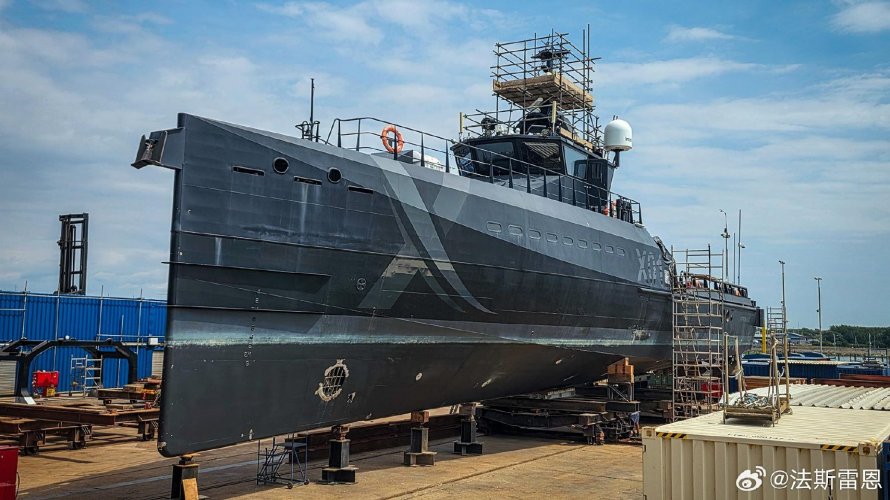
The Royal Navy's trials vessel HMS Patrick Blackett (X01) has undergone modifications at Trafalgar Wharf (Figures 1–8), including the replacement of her mast with a new, more robust structure and the installation of a Giraffe 1X radar procured from Saab UK. These upgrades prepare the ship for enhanced capability trials, while various preparatory activities are being actively advanced to support the Royal Navy's ambitious autumn experimentation programme, as it moves toward a "hybrid navy" concept. 1000107360.jpg
 

Similar threads

Back
Top Bottom