Kat Tsun
eeeeeeeeeeeeeee
- Joined
- 16 June 2013
- Messages
- 1,887
- Reaction score
- 2,666
Boeing delivers again.
The Iran War is what is disrupted it. Bush was supposed to conduct testing but got sent to bomb impenetrable bunkers instead.

Boeing delivers again.

Not sure theres a reason to make such a pricey and large stand in jammer.I guess aircraft designs tied to the UCLASS program might also make a comeback for Navy EW missions.
An innovative ram air turbine, customized to produce power and provide cooling that will be located entirely within EA-18 pod, is proposed.

Not sure theres a reason to make such a pricey and large stand in jammer.
Per the SBIR release on the F-18's next gen jammer mid band:
Jammer pods support most of the power and cooling by themselves already. The internals should in theory fit well into a store sized UAS deployable from fighters and the MQ-25. Stuff like the MALD-J and SPEAR-EW are already made to do stand in jamming.
These options are cheaper, distributed, and more flexible than doing EW from even a large CCA or UAS.
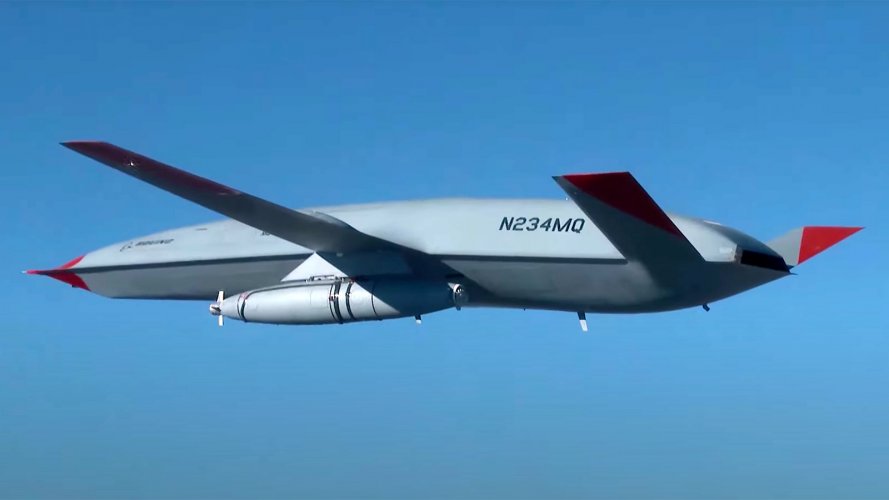
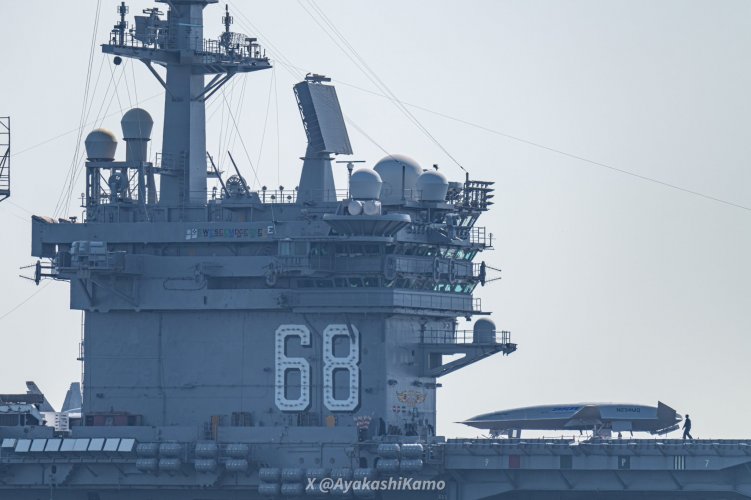
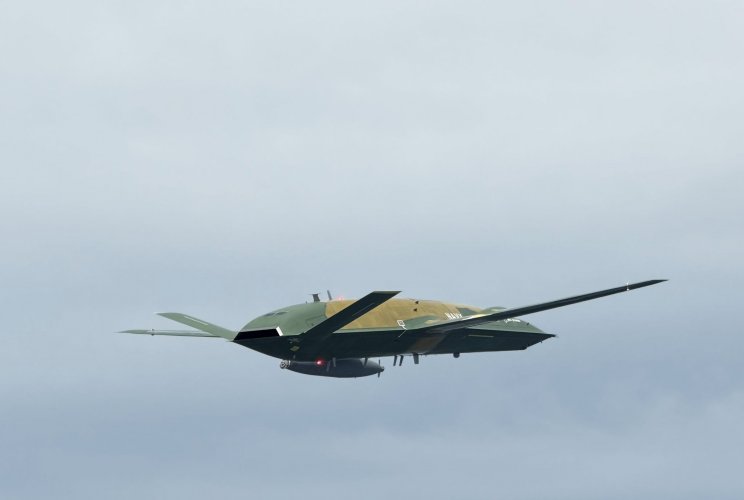
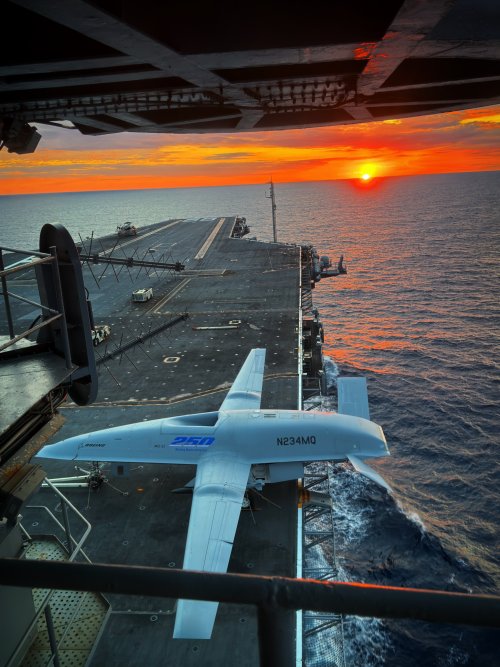
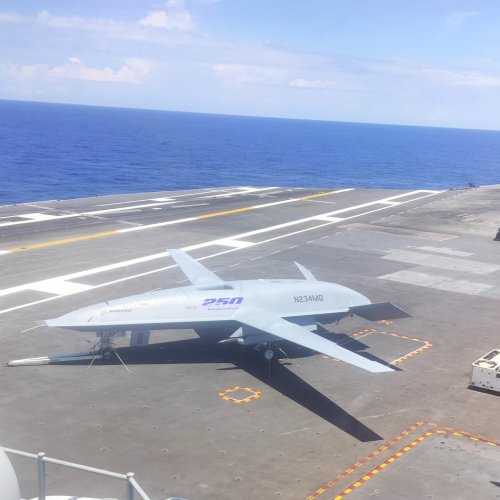
Good find. Another image confirms the airframe is the Boeing Demonstrator and not an EMD or LRIP airframe. Carries the same N234MQ as the initial Boeing test aircraft, T-1, which shouldn't surprise given this is just a PR stunt.

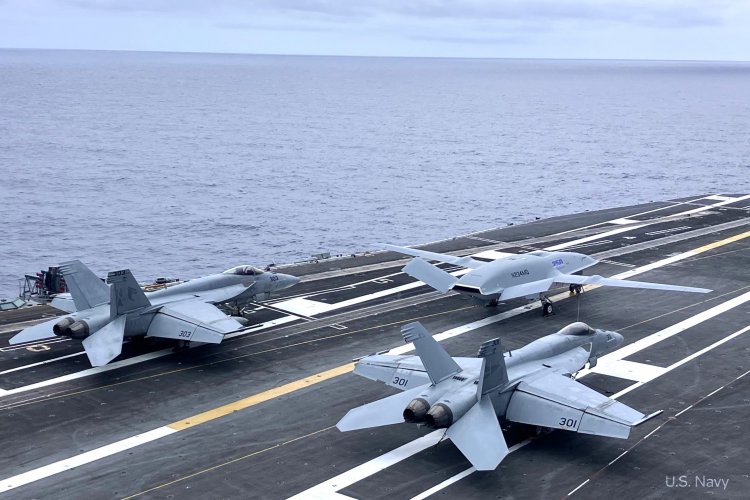
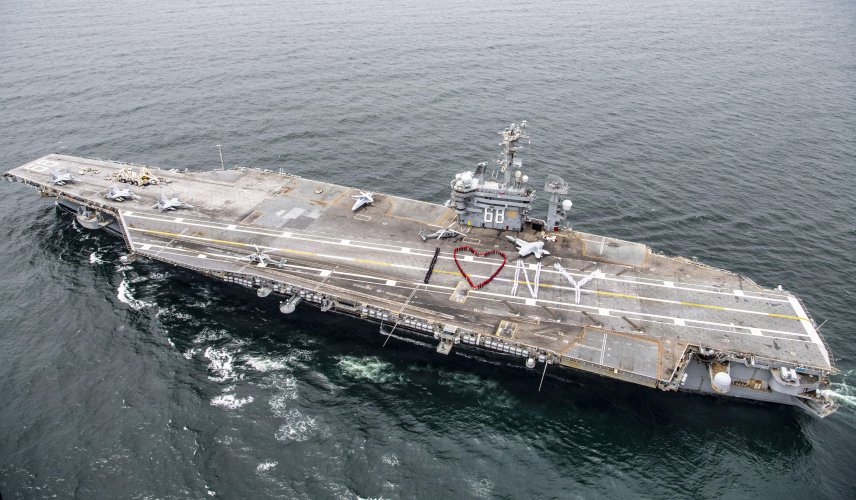
he U.S. Navy has confirmed to TWZ that the MQ-25 Stingray demonstrator drone, also known as T-1, is embarked on the supercarrier USS Nimitz.
The program reported a 2½-year delay to initial operational capability and a 26-month delay to the end of initial operational testing. Program officials attributed this to difficulties building its first test units—such as wire testing and vibration monitoring—as well as challenges in qualifying parts, though all had at least an intermediate solution. MQ-25 Stingray continues to plan for concurrent testing and low-rate initial production (LRIP), which could result in cost increases and further delays if changes are needed based on testing. Program officials told us that they delayed the LRIP decision until after the aircraft’s first flight, planned for the second quarter of fiscal year 2026. MQ-25 plans to acquire three LRIP units before it completes developmental testing in the second quarter of fiscal year 2028. This leaves 24 months to resolve key issues before making a full-rate production decision. Program officials told us that they resolved two of the seven component-level obsolescence issues that we reported on last year. The program continues to address the five remaining issues.
Think that is the wrong link...
Page 152, 2nd paragraph.Think that is the wrong link...

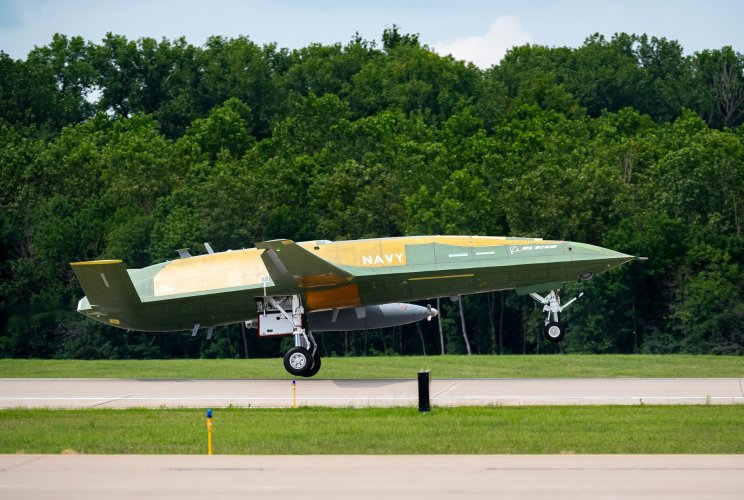
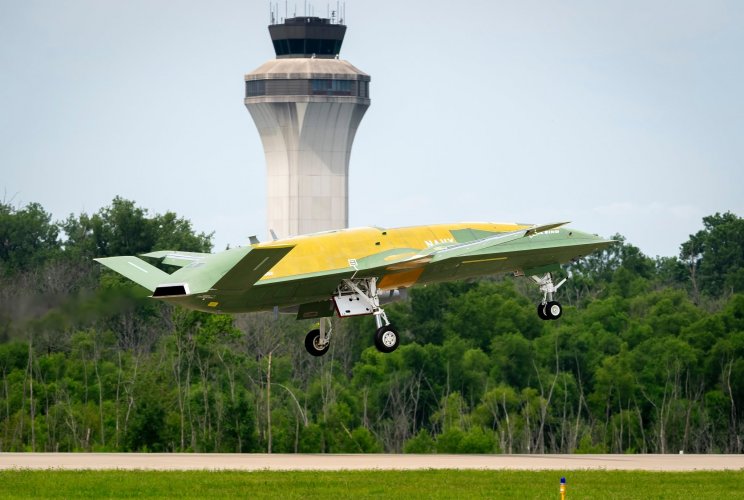
Or that MQ-25 flights from before (like way before the production contract) had already done the more conservative profiles.you’d think for the first few flights Boeing would run more conservative CTOL profiles. Wonder if this was purposeful or the autonomous flight control stack is currently more limited than I would have thought…
I think, yes.Is that bulge for the wing-fold mechanism?

Seems intentional. Landed that way both times.Or that MQ-25 flights from before (like way before the production contract) had already done the more conservative profiles.
Pretty sure something as significant as "not flaring before a landing" would not be missed as part of an automation scheme unless it was intentional.
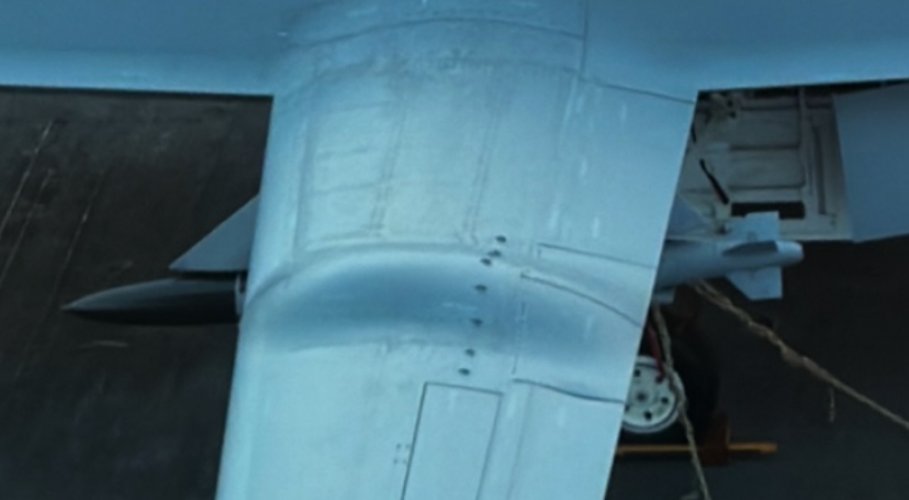
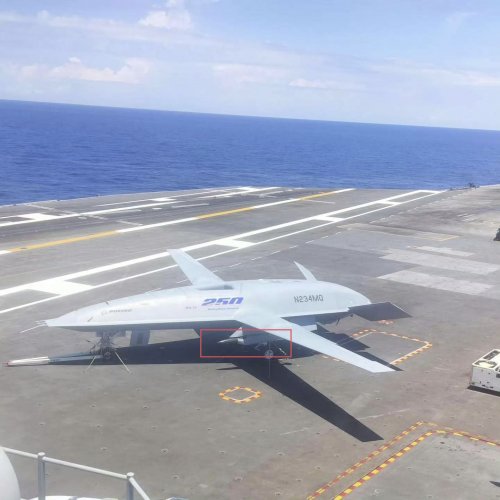
It's mentioned many times on this page.Has anyone noticed the T-1 (MQ-25) on the USS Nimitz carrying a JDAM-LR?

Can we believe anything Boeing says on MQ-25?Boeing says MQ-25 + JDAM-LR work queries should be referred to the customer, the Navy, for further information. As it is *NOT* internally funded demo. Says JDAM-LR is a sign of things to come for MQ-25.
How about the USN and Boeing just focus on actually getting it onto the carrier before 2029 and then worry about the rest...Navy says it is now exploring many different pathways for the MQ-25 with industry partners as the battlefield evolves.
The most recent current estimate from the MSAR, from April, indicates it will beDid some number-crunching about the MQ-25.
With an MTOW of 45,000lbs, a fuel offload of 15k at 500nmi, and 3000lbs reserve fuel at landing, the total fuel onboard works out to about 25,000lbs and the bird maybe burning close to 5000lbs/hr at cruise. That seems way high unless the MQ-25 isn't doing 500kts, as the sea level TSFC of the engine is 0.36lb/lbt/hr, and a Citation X with two of those engines burns about 1400lbs/hr in cruise. So I'd expect more like 700lbs/hr burn rate. But even if the MQ-25 is only doing 250kts it's burning ~1400lbs out and 1400lbs back. A half hour of reserve fuel would be less than 500lbs at that burn rate.
New math:
45,000lbs MTOW, minus 14,000lbs empty, minus 3000lbs for buddy store and pylon, minus 1000lbs of reserve fuel, minus 3000lbs of fuel to refueling point and back; equals 24,000lbs transferrable fuel at ~2hrs from carrier.
I struggled a little to find the data for the 31-301 Buddy Fueling Store, so I am attaching the data sheet from the manufacturer I found.
I admit my back-of-the-envelope math was assuming fuel burn (and therefore drag) roughly comparable to a Citation X. That may not be a valid assumption.The most recent current estimate from the MSAR, from April, indicates it will be
KPP 2: Air Refueling KPP
Current Estimate 4/21/2026 >= 14K lbs of give at 500 nm from CVN
https://www.esd.whs.mil/Portals/54/Documents/FOID/Reading Room/Selected_Acquisition_Reports/PB_2027_MSARs/MQ-25_MSAR_FY2027_PBv2.pdf
That doesn't look promising. USN could be way underselling the offload but I don't see a valid reason to and given delays to date there has been plenty of time to update informed assessments but the KPP threshold hasn't changed since 2018.
It's basically not, unless things have gone very wrong and the SH is at the "trap now or hit the tanker" level of fuel onboard.24k offload would be a much more relevant capability. At 15k it won't be particularly effective, that would be 3k of fuel across a four ship of SH with some of that being burnt just waiting for the rest of the flight to refuel. When a SH with three bags is 24k lbs of fuel how much of a difference is 3k making?
That's not how refueling works or is determined. The iron rule is to refuel at 50% (at latest). Because 50% is combat fuel requirement. And it's inefficient to do early unless tanker position calls for it.At 15k it won't be particularly effective, that would be 3k of fuel across a four ship of SH