
You are using an out of date browser. It may not display this or other websites correctly.
You should upgrade or use an alternative browser.
You should upgrade or use an alternative browser.
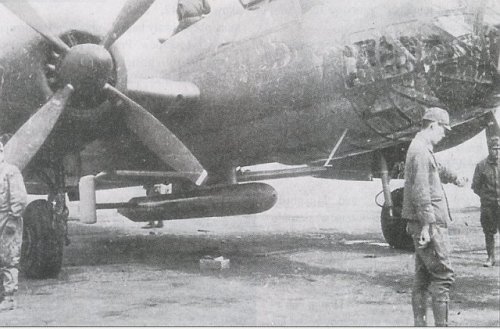
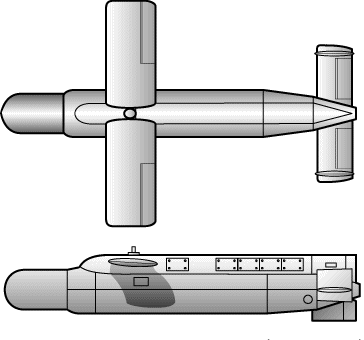
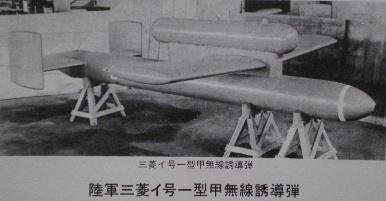
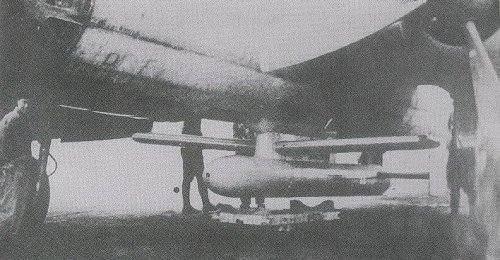
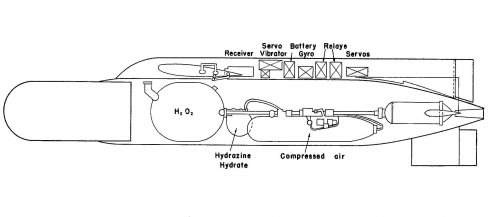
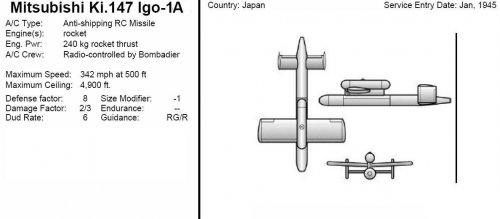
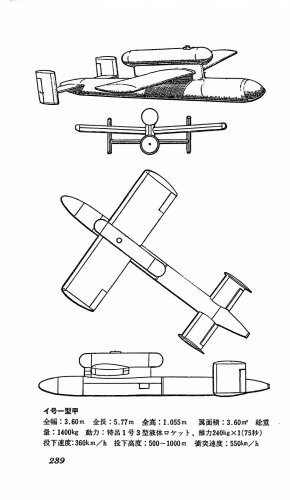
Japanese Air-to-Ground/Air-to-Ship Missiles in WW2
- Thread starter blackkite
- Start date


windswords
ACCESS: Secret
- Joined
- 19 May 2009
- Messages
- 392
- Reaction score
- 257
windswords
ACCESS: Secret
- Joined
- 19 May 2009
- Messages
- 392
- Reaction score
- 257
lastdingo
Blogger http://defense-and-freedom.blogspot.de/

Dilandu
I'm dissatisfied, which means, I exist.
Yep, there was an acoustic-guided version of I-Go (IRRC, I-Go-1c), that was supposed to be used for coastal defense batteries. The idea was, that it's acoustic seeker would home on the sound of enemy ship gunfire,

JEngO-23
ACCESS: Restricted
- Joined
- 14 February 2026
- Messages
- 37
- Reaction score
- 71
I attended the RAeS HQ lecture, which gave a fascinating overview of the range of guided weapons developed by the Japanese in a relatively short period of time. This included the Ke-Go anti-ship infrared-guided bomb. The Ke-Go incorporated a number of innovative design features, but had an extremely slow guidance-and control update rate due to the use of a bolometer as the IR detector. The 2-second time constant of the bolometer required a very slow rotation rate of the collecting mirror which focused the energy on the fixed bolometer detector. The overall design concept appears sound apart from this fundamental design flaw. The quoted "Success rate" of around 10%, in the 50 to 60 guided drop tests, is a bit misleading as a drop was counted as a success if a trace of its trajectory indicated that the trajectory had been modified by the bomb's guidance-and-control system, irrespective of whether the bomb got anywhere near the target.
Following the lecture, I sent the attached short paper to the RAeS lecturer, Dr Malcolm Claus, with my assessment of the Ke-Go. This is based largely on the information in a report by the U.S. Naval Technical Mission to Japan, dated 29 November 1945. Any comments or additional information would be appreciated.
Following the lecture, I sent the attached short paper to the RAeS lecturer, Dr Malcolm Claus, with my assessment of the Ke-Go. This is based largely on the information in a report by the U.S. Naval Technical Mission to Japan, dated 29 November 1945. Any comments or additional information would be appreciated.
Attachments
What's an RAeS lecture?I attended the RAeS HQ lecture, which gave a fascinating overview of the range of guided weapons developed by the Japanese in a relatively short period of time. This included the Ke-Go anti-ship infrared-guided bomb. The Ke-Go incorporated a number of innovative design features, but had an extremely slow guidance-and control update rate due to the use of a bolometer as the IR detector. The 2-second time constant of the bolometer required a very slow rotation rate of the collecting mirror which focused the energy on the fixed bolometer detector. The overall design concept appears sound apart from this fundamental design flaw. The quoted "Success rate" of around 10%, in the 50 to 60 guided drop tests, is a bit misleading as a drop was counted as a success if a trace of its trajectory indicated that the trajectory had been modified by the bomb's guidance-and-control system, irrespective of whether the bomb got anywhere near the target.
Following the lecture, I sent the attached short paper to the RAeS lecturer, Dr Malcolm Claus, with my assessment of the Ke-Go. This is based largely on the information in a report by the U.S. Naval Technical Mission to Japan, dated 29 November 1945. Any comments or additional information would be appreciated.
Thank you! I'll definitely check it outThe one-hour lecture was held at the Headquarters (HQ) of the Royal Aeronautical Society (RAeS) in London. Post #4 on this forum thread, by lastdingo, has a link to the youtube video of the lecture.
Similar threads
-
Japanese Anti-Aircraft Rockets WW2
- Started by moin1900
- Replies: 9
-

-
Admiralty 1920's 'Hornet' guided ground to air missile system
- Started by PMN1
- Replies: 2
-
 IAI/IMI Rampage Supersonic Air-To-Ground Missile
- Started by litzj
- Replies: 8
-
 The Japanese Shusui Missile Project.
- Started by klem
- Replies: 0