Well battleships are WWII logic afterall...I thought you said putting fantasies aside? This is getting right back to the Zumwalts and hiding your next gen stealthy missile platform in eyesight of the enemy coast.
Seriously?

You are using an out of date browser. It may not display this or other websites correctly.
You should upgrade or use an alternative browser.
You should upgrade or use an alternative browser.
BBG(X) - DISCUSSION ONLY
- Thread starter Training_Dummy
- Start date
Not really, considering it’s supposed to be like 3x the size, double the VLS, and however much the imaginary technology of a railgun would cost.
The nuke plant is going to drive prices more than the weapons or sensor fit.
I was talking about effective range. So how many rounds needed at a given range to take out an equivalent target. Probably 35mm AHEAD with on-mount fire control radar is more effective than Mk38, and probably Bofors 40mk4 more so.Everyone else is busy adding Mk 38 Mod 4* equivalents for counter UAV/USV roles. Even if you prefer something longer ranged for the counter-missile role, the counter drone role is growing in a different direction that demands magazine depth, not simply extended range.
But i do agree that surface targets deserve different ammo than air targets, and I don't think Rheinmetal does dual feed mounts so there are plenty of other choices to replace both Mk38 and Phalanx. Buy the Turkish one lol.

- Joined
- 11 February 2007
- Messages
- 4,155
- Reaction score
- 8,907
The Mk 38 Mod 4 is dual feed, and the Mk 44 can be fitted for AHEAD, Meanwhile the Aselsan SMASH uses the 30mm Mk 44 so it's a question of whether you want the British-built one, or the Turkish-built one. Meanwhile the Mk 44 has an upgrade path to 40mm via a 5 part change to the XM813 variant if the USN wants it.I was talking about effective range. So how many rounds needed at a given range to take out an equivalent target. Probably 35mm AHEAD with on-mount fire control radar is more effective than Mk38, and probably Bofors 40mk4 more so.
But i do agree that surface targets deserve different ammo than air targets, and I don't think Rheinmetal does dual feed mounts so there are plenty of other choices to replace both Mk38 and Phalanx. Buy the Turkish one lol.
We don’t need a nuclear cruiserThe nuke plant is going to drive prices more than the weapons or sensor fit.
Edit
I think I misunderstood the point you were making.
My bad
Last edited:
Manning requirements have plummeted from the 40s…I have it from one of the books on a WWII cruiser class design but I can't remember which one atm. Eventhough I have it finding this minute detail isn't trivial.

EmoBirb
ACCESS: Top Secret
- Joined
- 18 January 2025
- Messages
- 2,733
- Reaction score
- 6,993
But you'd have to arm, man and maintain three Burkes to get similar capability. In that sense the single hull BBGX is more efficient than three DDGs. Aside from less tangible things like being a clean sheet design versus borderline ancient destroyers from the Cold War era.But the cost is north of ten billion, which would buy you three Burkes.
Doesn’t matter if the burkes are ‘borderline ancient’ they’re still the best warships afloat.But you'd have to arm, man and maintain three Burkes to get similar capability. In that sense the single hull BBGX is more efficient than three DDGs. Aside from less tangible things like being a clean sheet design versus borderline ancient destroyers from the Cold War era.
Yes 3 ships cost more to operate and maintain, but when one big ship goes into a yard it’s useless. One of 3 burkes goes into the yard there’s 1 more in a training phase and one more on deployment.
EmoBirb
ACCESS: Top Secret
- Joined
- 18 January 2025
- Messages
- 2,733
- Reaction score
- 6,993
According to whom?they’re still the best warships afloat.
You're still paying significantly more in operational costs for ships that are individually far less capable. One in yard and two out means you're now light years away from matching the capabilities of a larger warship for almost the same cost.Yes 3 ships cost more to operate and maintain, but when one big ship goes into a yard it’s useless. One of 3 burkes goes into the yard there’s 1 more in a training phase and one more on deployment.
According to their combat records and not getting sunk the first time a missile was launched at them.According to whom?
You're still paying significantly more in operational costs for ships that are individually far less capable. One in yard and two out means you're now light years away from matching the capabilities of a larger warship for almost the same cost.
It doesn’t matter how capable a single ship is, if it cant cover the missions and needs of the navy its serving in.
We don’t even have railguns, so we don’t need them.
We don’t need a massive ship with 100+ VLS to carry CPS.
We don’t need 2 5” guns up front.
The ship this administration wants to build is pointless.
The extra ‘capabilities’ it brings are pointless and unneeded…otherwise the only capability it brings that’s greater than a burke’s is simply VLS count….so we can just build a cruiser with 100+ VLS, save money by not building a 35k ton wunderweapon…I’d much rather have 2 $6b cruisers that are just a reasonable step up from a Burke, than a single $12-15b battleship that has absolutely no purpose in existing.
Also, I don’t care if I’m paying for operational costs…for ships that are operational, over having a ship that isn’t operational at all for 1/3 or more of its service life…more than that if it’s a nuclear powered ship…
But you'd have to arm, man and maintain three Burkes to get similar capability. In that sense the single hull BBGX is more efficient than three DDGs. Aside from less tangible things like being a clean sheet design versus borderline ancient destroyers from the Cold War era.
Mk41 Magazine wise, no. Two ish.

- Joined
- 19 July 2016
- Messages
- 4,820
- Reaction score
- 4,279
I have zero idea why this is still playing out ad infinitum.
EmoBirb
ACCESS: Top Secret
- Joined
- 18 January 2025
- Messages
- 2,733
- Reaction score
- 6,993
The Arleigh-Burke destroyers have a non-existent combat record against peer adversaries. If your definition of "best warship afloat" isn't being sunk by missiles developed and manufactured by insurgents and a heavily sanctioned middle eastern country, then every warship currently afloat is the best in the world. Your claims are baseless and admittedly bordering on ridiculous if one has broadly kept up with international shipbuilding (Burkes are, at best, the third most capable surface combatants in the Pacific Ocean. If one is being realistic and not stuck in the 1990s, mentally speaking).According to their combat records and not getting sunk the first time a missile was launched at them.
It doesn’t matter how capable a single ship is, if it cant cover the missions and needs of the navy its serving in.
We don’t even have railguns, so we don’t need them.
We don’t need a massive ship with 100+ VLS to carry CPS.
We don’t need 2 5” guns up front.
The ship this administration wants to build is pointless.
The extra ‘capabilities’ it brings are pointless and unneeded…otherwise the only capability it brings that’s greater than a burke’s is simply VLS count….so we can just build a cruiser with 100+ VLS, save money by not building a 35k ton wunderweapon…I’d much rather have 2 $6b cruisers that are just a reasonable step up from a Burke, than a single $12-15b battleship that has absolutely no purpose in existing.
Also, I don’t care if I’m paying for operational costs…for ships that are operational, over having a ship that isn’t operational at all for 1/3 or more of its service life…more than that if it’s a nuclear powered ship…
Extensive gun armaments, theoretical or practical, are meant to address the real world threats of today, conceptually at least. Same applies for the ever emphasized DEW, which so far haven't made a strong showing, and in the form their development is being sold are equally in the realm of non-existent as the much touted rail guns.
That a ship designed for the modern WESTPAC theater needs plenty of endurance (thus size) and magazine depth should be obvious though. While CPS is more or less mandatory if you want the ability to meaningfully strike time sensitive sea or land based targets. You know, like warships or TELs with AShMs and AShBMs that are scattered across the Pacific islands. Ditching CPS would mean that regular VLS cells would have to be filled with more strike weapons. That inefficient way of doing things is currently common practice, but VLS is best served when it's loaded with defensive armaments like SAM or ASROC. The fewer land attack/strike weapons are loaded into the cells, the better. You're essentially arguing for stuffing your entire belongings into the trunk of your car rather than just adding a roof box.
It's not like CPS is even much of a trade off, because the ship has to be large anyway to provide sufficient range, endurance, support a large sensor suite, command facilities and the necessary magazine depth to be somewhat survivable in the environment it's meant to operate in.
You can rave about it all you want, be upset about it's name and it being labeled a battleship. You can clench your fist at the thought of railguns being a pipe dream, most likely being replaced by more conventional armaments down the line of it's design path. But what doesn't change, no matter what, is that the USN needs a capable, large, modern surface combatant that can take on missions left behind by the Ticonderoga (AAW command, magazine depth, being the eyes of the battle group) and the missions that the aging Arleigh-Burkes can't fully satisfy on their own.
If that ship is named DDG(X), BBG(X), BBGN(X) of whatever, that's besides the point. The matter at hand is that the USN needed a such a ship, preferably already yesterday. What is shaping up to happen is that DDG(X) got scrapped, the successive BBG gets scrapped upon the next boomer induced cyclical political upheaval in the US (some may call that process elections) and then the USN won't get any new large surface combatants into the water until the 2040s if one is hopelessly optimistic, 2050s if one is being realistic. Meanwhile countries like the PRC or ROK are penning designs that replace their current LSCs which are already making the DDG-51s look like second rate vessels. Not to mention that ships like the F127 are also in development, essentially AB Flight III but better and not restricted by being conceptually older than the average forum user here.
And given that the USN can't match the output and cost factor of East Asian naval powers, there's not much choice but going for "silver bullets", even if they are pricey. It's not like that's much of a deviation from current USN doctrine either, which revolves entirely around 11 silver bullets that are devouring the GDP of a small country over their service life.
Lastly, and this is less directed at you and more so at people before you and the general sentiment. Whenever I read "they should rather get more Burkes", or "they should restart production of X" or "rather refurbish Y", it's no wonder that equipment wise the US forces are among the oldest in the world. When that's seemingly the commonly held sentiment of people adjacent to such matters, it's no surprise that the US armed forces are geriatric and notoriously allergic to progress and new developments. When the rest of the world moved on to the stars, the USN still sailed with Burkes, the AF still flew F-16s and the Army still used M109s...
Last edited:
Iran isn’t insurgents. The Houthis use missiles developed by Iran and China…they didn’t develop their own ramshackle terrorist missile.The Arleigh-Burke destroyers have a non-existent combat record against peer adversaries. If your definition of "best warship afloat" isn't being sunk by missiles developed and manufactured by insurgents and a heavily sanctioned middle eastern country, then every warship currently afloat is the best in the world. Your claims are baseless and admittedly bordering on ridiculous if one has broadly kept up with international shipbuilding (Burkes are, at best, the third most capable surface combatants in the Pacific Ocean. If one is being realistic and not stuck in the 1990s, mentally speaking).
Extensive gun armaments, theoretical or practical, are meant to address the real world threats of today, conceptually at least. Same applies for the ever emphasized DEW, which so far haven't made a strong showing, and in the form their development is being sold are equally in the realm of non-existent as the much touted rail guns.
That a ship designed for the modern WESTPAC theater needs plenty of endurance (thus size) and magazine depth should be obvious though. While CPS is more or less mandatory if you want the ability to meaningfully strike time sensitive sea or land based targets. You know, like warships or TELs with AShMs and AShBMs that are scattered across the Pacific islands. Ditching CPS would mean that regular VLS cells would have to be filled with more strike weapons. That inefficient way of doing things is currently common practice, but VLS is best served when it's loaded with defensive armaments like SAM or ASROC. The fewer land attack/strike weapons are loaded into the cells, the better. You're essentially arguing for stuffing your entire belongings into the trunk of your car rather than just adding a roof box.
It's not like CPS is even much of a trade off, because the ship has to be large anyway to provide sufficient range, endurance, support a large sensor suite, command facilities and the necessary magazine depth to be somewhat survivable in the environment it's meant to operate in.
You can rave about it all you want, be upset about it's name and it being labeled a battleship. You can clench your fist at the thought of railguns being a pipe dream, most likely being replaced by more conventional armaments down the line of it's design path. But what doesn't change, no matter what, is that the USN needs a capable, large, modern surface combatant that can take on missions left behind by the Ticonderoga (AAW command, magazine depth, being the eyes of the battle group) and the missions that the aging Arleigh-Burkes can't fully satisfy on their own.
If that ship is named DDG(X), BBG(X), BBGN(X) of whatever, that's besides the point. The matter at hand is that the USN needed a such a ship, preferably already yesterday. What is shaping up to happen is that DDG(X) got scrapped, the successive BBG gets scrapped upon the next boomer induced cyclical political upheaval in the US (some may call that process elections) and then the USN won't get any new large surface combatants into the water until the 2040s if one is hopelessly optimistic, 2050s if one is being realistic. Meanwhile countries like the PRC or ROK are penning designs that replace their current LSCs which are already making the DDG-51s look like second rate vessels. Not to mention that ships like the F127 are also in development, essentially AB Flight III but better and not restricted by being conceptually older than the average forum user here.
And given that the USN can't match the output and cost factor of East Asian naval powers, there's not much choice but going for "silver bullets", even if they are pricey. It's not like that's much of a deviation from current USN doctrine either, which revolves entirely around 11 silver bullets that are devouring the GDP of a small country over their service life.
Moskva was sunk by an off shoot of the harpoon…
Also size doesn’t equal endurance. Legend class cutters have huge endurance and are small…they have like twice the endurance of a Burke and are like 1/3 the size…so no we don’t need an 800ft long ship to have high endurance.
Have fun living in delulu land
Last edited:
I have zero idea why this is still playing out ad infinitum.
Good call, I’m leaving.
EmoBirb
ACCESS: Top Secret
- Joined
- 18 January 2025
- Messages
- 2,733
- Reaction score
- 6,993
Iran isn’t insurgents.
I said:
You can take a wild guess which country was meant. And compared to what the PLA deploys, what the Houthis and yes even what Iran uses is certainly "ramshackle", especially when one considers the differences in guidance systems, software, manufacturing and just the sheer resources available during development. Running your models on the worlds most powerful supercomputers certainly makes a bit of a difference I'd say.and a heavily sanctioned middle eastern country
EmoBirb
ACCESS: Top Secret
- Joined
- 18 January 2025
- Messages
- 2,733
- Reaction score
- 6,993
Because this will only end when the program gets either axed or the first hull hits the water. No service branch in the western hemisphere is as mismanaged as the United States Navy, subsequently discussions around it exist. And to say that this program in particular is controversial is an understatement.I have zero idea why this is still playing out ad infinitum.
Doesn't seem to matter in operational thinking...Manning requirements have plummeted from the 40s…
see Navsea's SFAC Report Number 9030-04-C1 "HISTORICAL REVIEW OF CRUISER CHARACTERISTICS, ROLES AND MISSIONS"
Since the LCC’s in commission today are already cruiser size ships, even with their more modest speed, any future CC would
probably be over 20,000 tons.
Japan is gonna mount railguns on Mogami & their DDG(X) and prestige demands it we do the same.We don’t even have railguns, so we don’t need them.
That's why the "cheaper" alternative seems to be DDG(X) with 128 cell Mk41 and 12(-16) CPS. Some 2000 CPS in total is needed.We don’t need a massive ship with 100+ VLS to carry CPS.
Cannons in the traditional use aren't as much needed anymore but you never know. And piracy patrol is common place again.We don’t need 2 5” guns up front.
If recall right the navy said they wanted to use hypersonic MACE/Blackbeard to replace some TLAM. I'm guessing this applies to those also earmarked for anti-ship ... so about 8.The 2018 proposed loadout I found online gives 32x Tomahawks and 6x VL-ASROCs. Which brings us to about 84-90 cells full of air defenses.
That loadout is why I was still putting around 16-24x Tomahawks into Mk41/57 on my BBG proposed loadouts, along with ~24x CPS missiles.
As for the rest I'm looking at 6 SM-3, 20 SM-6, 60 SM-2, and 16 ESSM for 90 cells.
With the new Naval Modular Missile(NMM) the SM-2 will become 120 NMM-ER (DP) and ESSM becomes 16 NMM-MR (QP). With this plentyness I think there would be more room to assigne more to MR. So perhaps more like 48 NMM-MR and 104 NMM-ER.
5in is way more than what’s needed for any sort of interdiction patrols, whether it’s piracy or smuggling.Doesn't seem to matter in operational thinking...
see Navsea's SFAC Report Number 9030-04-C1 "HISTORICAL REVIEW OF CRUISER CHARACTERISTICS, ROLES AND MISSIONS"
Japan is gonna mount railguns on Mogami & their DDG(X) and prestige demands it we do the same.
That's why the "cheaper" alternative seems to be DDG(X) with 128 cell Mk41 and 12(-16) CPS. Some 2000 CPS in total is needed.
Cannons in the traditional use aren't as much needed anymore but you never know. And piracy patrol is common place again.
If recall right the navy said they wanted to use hypersonic MACE/Blackbeard to replace some TLAM. I'm guessing this applies to those also earmarked for anti-ship ... so about 8.
As for the rest I'm looking at 6 SM-3, 20 SM-6, 60 SM-2, and 16 ESSM for 90 cells.
With the new Naval Modular Missile(NMM) the SM-2 will become 120 NMM-ER (DP) and ESSM becomes 16 NMM-MR (QP). With this plentyness I think there would be more room to assigne more to MR. So perhaps more like 48 NMM-MR and 104 NMM-ER.
When we were doing MIO missions the mk38 was manned, not the 5” gun.
Two upfront is pretty pointless. One forward one aft is much more useful.
As for Japan’s railgun, I’m not seeing anything reliable saying they’ll be mounted on a Mogami. I’ve seen plans to mount them on a ‘13DDX’ ship.
But it doesn’t really matter either way unless we’re planning to buy a Japanese railgun because our railgun program has been basically defunct for several years, and it was no where near an operational prototype when the funding was cut, so we’re likely at least a decade away from our own domestic railgun at the moment.
And that’s all ignoring the extremely limited utility of a railgun…
Not James Stockdale
ACCESS: Secret
- Joined
- 29 August 2025
- Messages
- 262
- Reaction score
- 481
The railgun and 5" guns appear to be there for air defense against ASBMs with HVPs. It looks like it is designed to steer into a raid to engage inbound missiles with guns. My guess is that the battleship is supposed to sit near Guam to shoot LRHWs towards the Chinese coast while defending against DF-21 and DF-26 attacks. I seriously doubt anyone wants to fight Chinese surface ships or coastal defenses with guns at close range.
Which leaves the most of the ship still exposed to drones and USVs attack from the rear.The railgun and 5" guns appear to be there for air defense against ASBMs with HVPs. It looks like it is designed to steer into a raid to engage inbound missiles with guns. My guess is that the battleship is supposed to sit near Guam to shoot LRHWs towards the Chinese coast while defending against DF-21 and DF-26 attacks. I seriously doubt anyone wants to fight Chinese surface ships or coastal defenses with guns at close range.
Not James Stockdale
ACCESS: Secret
- Joined
- 29 August 2025
- Messages
- 262
- Reaction score
- 481
That's probably why the C-UAS systems, DEWs, and autocannons are mounted on the broadsides and above the hangars.Which leaves the most of the ship still exposed to drones and USVs attack from the rear.
The Battle of Leyte Gulf showed us why fighting with obsolete platforms, no matter how much you overmatch them with units, can turn a situation completely around even when you dominate the actual battle. Japan paid a heavy price that ultimately it could never recover from. While the big guns would eventually route a few carriers, the planes from the carriers hit back with much more potent force. It was a blessing that Halsey went north, otherwise we would have taken a similar lesson trying to close into gun range against waves of long lance torpedoes.
The 5 inch and 155 mm (6.1 inch) guns are not for primary battles. They were never going to be used that way. But both can be incredibly useful for their crew. I wouldn't want to throw every gun caliber on the BBGN, but having several types is a plus. I will not pass judgment on usefulness of lasers once they demonstrate their effects. Until then I will not assume they replace guns.
The 5 inch and 155 mm (6.1 inch) guns are not for primary battles. They were never going to be used that way. But both can be incredibly useful for their crew. I wouldn't want to throw every gun caliber on the BBGN, but having several types is a plus. I will not pass judgment on usefulness of lasers once they demonstrate their effects. Until then I will not assume they replace guns.
How do you know he doesn’t have dedicated consoles in a containerized modules? You’re just making shit up.Not directly, no.
But the AAW flag isn't sitting the the ship CIC, he needs to be doing things that would distract the ship's CIC operators. Which means that he's somewhere without dedicated consoles.
Zumwalts are 16ktons, boss.
And they lost both 155mm guns to take CPS tubes. Each 155+magazine only gave enough space for 2x APMs, they swapped both guns to get 4x APMs to hold 12x CPS (or 28x Tomahawks if someone is bored). APMs are terribly space-inefficient, but they're what the USN seems to be determined to use instead of the advanced VLS proposed.
Okay, my point for the Mk38 mount battery was that it would have auto-targeting capabilities on the mount and would be able to function in full auto even if ship's power went out.
I'd also set up both Mk38 and Phalanx or CIWS-II to automatically switch to weapons free full automatic if ship's power ever failed and they went on battery power only. Fail-deadly. Tag out the gun mounts before taking down ship's power.
My thinking was 4-6 Mk38s. One on each corner of the ship covering over 180deg of arc, and if you have 6 the two extra are amidships broadside with 180 arcs.
Because only having a pair of Mk38s is manifestly inadequate.
Even on the off chance you are correct, who cares? Does it work? Yes, then a little bit of discomfort on a deployment is pretty well expected.
Zumwalts may have lost both mounts, but the housing for the aft gun (mount 6-2?) is still there meaning there’s plenty of room for a gun 5” or 155mm it doesn’t matter, there’s enough room for either
Zumwalt class are $15.6k tons that’s within the 15k ton range of 15,000-15,999.
Sure if you round up its 16k, but colloquially it’s 15k tons.
I know very little about the mod4s but I don’t believe they currently have an auto engagement option at all, and almost guaranteed they don’t if the ship loses power since they don’t have their own radar
I 100% agree the minimum on a ship 15k tons or more in the drone age should be 4 mk38 mod4 equivalents or better is the minimum
Last edited:
spikedpsycho
ACCESS: Secret
- Joined
- 14 March 2026
- Messages
- 336
- Reaction score
- 484
Japan isn't mounting any railguns.Doesn't seem to matter in operational thinking...
see Navsea's SFAC Report Number 9030-04-C1 "HISTORICAL REVIEW OF CRUISER CHARACTERISTICS, ROLES AND MISSIONS"
Japan is gonna mount railguns on Mogami & their DDG(X) and prestige demands it we do the same.
That's why the "cheaper" alternative seems to be DDG(X) with 128 cell Mk41 and 12(-16) CPS. Some 2000 CPS in total is needed.
Cannons in the traditional use aren't as much needed anymore but you never know. And piracy patrol is common place again.
If recall right the navy said they wanted to use hypersonic MACE/Blackbeard to replace some TLAM. I'm guessing this applies to those also earmarked for anti-ship ... so about 8.
As for the rest I'm looking at 6 SM-3, 20 SM-6, 60 SM-2, and 16 ESSM for 90 cells.
With the new Naval Modular Missile(NMM) the SM-2 will become 120 NMM-ER (DP) and ESSM becomes 16 NMM-MR (QP). With this plentyness I think there would be more room to assigne more to MR. So perhaps more like 48 NMM-MR and 104 NMM-ER.
Rail guns are still scifi crap, because their enormous power demands. Japan's railgun prototype is weaker general Atomics and fire small 40mm projectile. It's useless.
Rounds hypersonic initial velocity means it'll encounter too much drag the second it leaves the barrel.
If Navy want hypersonic gun the Army has em the M829 leaves Abrams tank gun at Mach 5. To maximize mass, it uses depleted uranium flachette, yet it maximum range is 9km and useful range is 2 kilometers.
It's in the plans until they cancel it that's the truth.Japan isn't mounting any railguns.
No more than tank guns energetically.Rail guns are still scifi crap, because their enormous power demands. Japan's railgun prototype is weaker general Atomics and fire small 40mm projectile. It's useless.
Yes, at 2-3.5 km/s they are far from spaceworthy.
What size do you think tank APFSDS are?
And exactly because it's smaller than the USN's it's more practical and feasible.
They are almost the same, yes. The difference is in not having explosive material in the magazine while having about 2x capacity. Storing fuel for electricity is more efficient and improves range etc. when never used. Guns aren't used often these day, even if the railgun does lead to more usage it would still unlikely to ever use up the magazine.Rounds hypersonic initial velocity means it'll encounter too much drag the second it leaves the barrel.
If Navy want hypersonic gun the Army has em the M829 leaves Abrams tank gun at Mach 5.
Nope. It's (tank cannon) maximum range is like with all limited by LOS, Earth's curvature and gravity called visual horizon. Since tanks mosty only fire in direct mode they can't shoot at anything below the horizon.To maximize mass, it uses depleted uranium flachette, yet it maximum range is 9km and useful range is 2 kilometers.
Fired from a higher ground it(APFSDS) could easily fly a 1000 km.
The usefulness you refer to depends on armor piercing performance which won't matter for ships.
The ship's gun will use indrect fire more often than tanks.
Anyhow, since many want to mount more guns on the after section I went ahead and made a minor modiication to the design to make that possible. As is the aft section is covered by emitters (radar, SEWIP) that would interfer or vice versa.
So I just added a raised plateform on the hangar structure, and raised the sensor structure along, too, ofc. This would allow deck penetrating turrets to be installed above the hangar control room. And offers space for SeaRAM turrets on the previous roof level. The downside is an elevated risk to the VLS farm as well as added risk due to the proximity of a cannon turret/magazine.
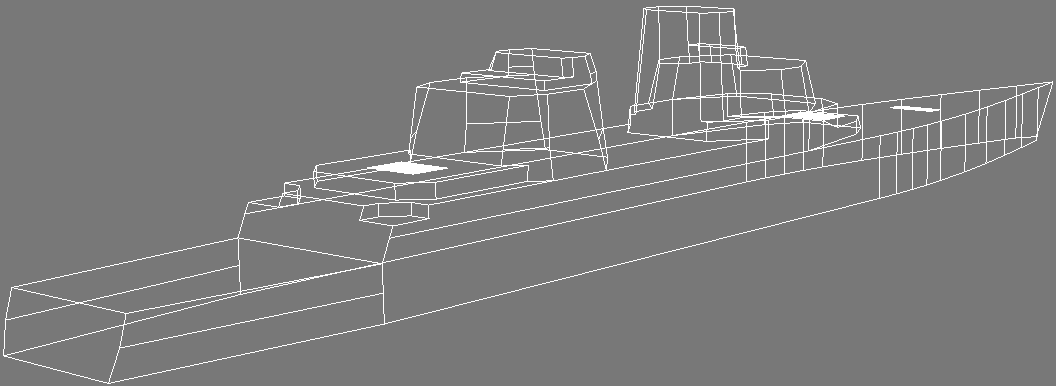
I also added a topview plan at a scale of ~10px=1m (it's not precise unfortunately).
Attachments

spikedpsycho
ACCESS: Secret
- Joined
- 14 March 2026
- Messages
- 336
- Reaction score
- 484
Take a look at any of the numerous live fire gunnery exercise videos available on YouTube. What stands out about all those videos is the extraordinarily high percentage of misses. Granted these are exercises but a visual estimate ‘average’, based on splashes versus flashes (impacts), suggests an accuracy of 10-25%. Also Note, that these gunnery exercises are, invariably, conducted under ideal conditions where the target is generally stationary or slow. The unfortunate Iran Air 655 incident was because USS Vincennes had been under duress from Iranian boats. It fired 100 rounds 5 inch gun, hit likely Nothing.It's in the plans until they cancel it that's the truth.
No more than tank guns energetically.
Yes, at 2-3.5 km/s they are far from spaceworthy.
What size do you think tank APFSDS are?
And exactly because it's smaller than the USN's it's more practical and feasible.
They are almost the same, yes. The difference is in not having explosive material in the magazine while having about 2x capacity. Storing fuel for electricity is more efficient and improves range etc. when never used. Guns aren't used often these day, even if the railgun does lead to more usage it would still unlikely to ever use up the magazine.
Nope. It's (tank cannon) maximum range is like with all limited by LOS, Earth's curvature and gravity called visual horizon. Since tanks mosty only fire in direct mode they can't shoot at anything below the horizon.
Fired from a higher ground it(APFSDS) could easily fly a 1000 km.
The usefulness you refer to depends on armor piercing performance which won't matter for ships.
The ship's gun will use indrect fire more often than tanks.
Anyhow, since many want to mount more guns on the after section I went ahead and made a minor modiication to the design to make that possible. As is the aft section is covered by emitters (radar, SEWIP) that would interfer or vice versa.
So I just added a raised plateform on the hangar structure, and raised the sensor structure along, too, ofc. This would allow deck penetrating turrets to be installed above the hangar control room. And offers space for SeaRAM turrets on the previous roof level. The downside is an elevated risk to the VLS farm as well as added risk due to the proximity of a cannon turret/magazine.
View attachment 819913
I also added a topview plan at a scale of ~10px=1m (it's not precise unfortunately).
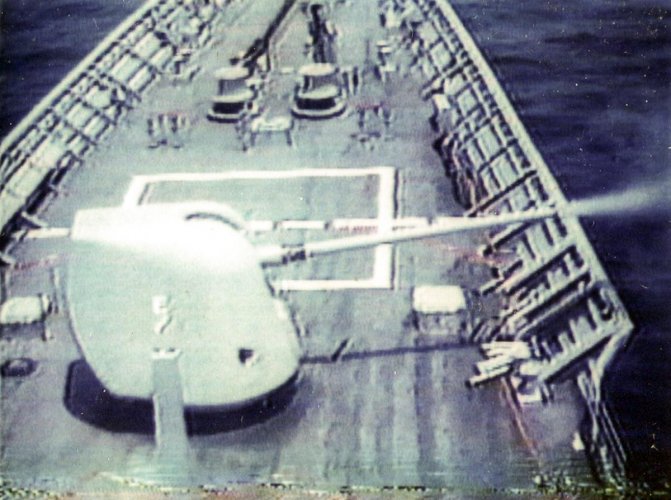
Railgun high initial velocity may be seen advantageous but it's only as good as fire control system. Near Miss is still MISS.
Other aspects that always irked me is where Navy tests it's weapons. One is China Lake in Nevada desert. It's out middle nowhere in case catastrophic failure and it's on land so researchers can search for pieces of what blows up to analyze. Never the less very thing makes it good test range for scientists is bad test range realistic naval conditions. The Nevada desert is hot, dry. The sky is clear, atmospheric humidity virtually non-existent and salt/minerals do a not acrue. Nor does the land move unlike oceans which has waves and tides, fog, rain, salt spray. Desert is sterile. Thus environmental hazards that could impede weapons performance and yield real data are omitted.
Second is Dahlgren Range in Viriginia. Brackish bay, more realistic. However it's maximum range is 25 miles. If GA/BAE was Promising railguns hit out past 90-120 miles it'd fired a round by now. Because they know the laws of physics we've known them decades. Plug in rail gun projectile into any ballistic computer. With initial velocity of Mach 7, the round lose 80-90% it's kinetic energy to aerodynamic drag first 1-2 miles because you're firing hypersonic weapons in the troposphere. Firing up at aeriel target may mitigate that but still lose energy up 5-10 thousand feet. Again hitting a target with bullet is luck, which is why CIWS systems fire LOTS of bullets to counteract luck. Second ship needing railgin to defend against more one target, need several railguns in essence a battery. Or network small railguns as point defense. All which requires huge complex power demands.
In lieu artillery use. High speed kinetic energy projectile is useless for area bombardment unless it just happens to hit something substantial. Unlike an explosive projectile which can still occur damage with a near miss, a kinetic projectile has zero near miss damage potential. We saw this WWI ,craters made by artillery didn't kill any soldiers. When shells could detonate above ground carnage ensues. Firing railguns in parabolic arc like artillery or mortar is also useless because they are not dovetail heavy mass shell shapes designed to return to explode. They are rocket shaped. Have no warhead or guidance package, of which you can have neither since you're gonna zap it with magnetic flux of 10 MRI machines.
As ship weapons railgun only fire within line of sight. Conventional artillery and naval guns rely projectiles mass to succeed in its travel arc, modern ballistic computers eliminate most guess work where shell will hit. Railguns have their own unique setup aerodynamics. And thwarting threats meansn explosive rail gun projectile warhead (again, negating the benefit of an inert magazine) is needed if we wish to effectively cover the full range of targets. Historically, the main target set for a naval gun is land area bombardment. Even in WW1 and 2 ship against ship engagements were the rare exception, not the rule. During WWII there were 100 battleships in service , yet only 5 engagements in span 6 years. Shore bombardment was far more common. Kinetic rail guns are next to useless for this application. This, alone, has to lead one to wonder why we would install rail guns at all.
energy storage required to fire a railgun will also be catastrophically destructive if it is hit when fully charged. There is no free lunch. In addition you are now dealing with multiple high energy electrical connections and switchgear to maintain in a salt-air environment, any one of which can explode with comparable levels of force to high explosives if they fail.
Last edited:
You do not know that, let alone the constraints imposed during training. These guns should not be under estimated.Take a look at any of the numerous live fire gunnery exercise videos available on YouTube. What stands out about all those videos is the extraordinarily high percentage of misses.
That is not a terrible use of resources. Redundancy is a strength.Edit: So overall I think you need 4x Mk38 type weapons AND 4x CIWS. Yes, it's going to look like it has guns everywhere. It's going to have guns everywhere!
I think modern naval gunnery just sucks. I do have hands on professional military experience with arti among many others I got to enjoy while serving btw.Take a look at any of the numerous live fire gunnery exercise videos available on YouTube. What stands out about all those videos is the extraordinarily high percentage of misses. Granted these are exercises but a visual estimate ‘average’, based on splashes versus flashes (impacts), suggests an accuracy of 10-25%. Also Note, that these gunnery exercises are, invariably, conducted under ideal conditions where the target is generally stationary or slow.
The main reason might be because military math says a 3"/76mm causes between 32 and 112 m^3 of destruction to a ship so a dispersion of 3-4m is sufficient. And so they never bothered to invest into better precision fire turret technology.
Now having some dispersion estimates from those videos would be nice to have.
How much more difficult is it for a tank at "full" speed over the country side to hit another moving target? (They keep averting it.)Railgun high initial velocity may be seen advantageous but it's only as good as fire control system. Near Miss is still MISS.
Other aspects that always irked me is where Navy tests it's weapons. One is China Lake in Nevada desert. It's out middle nowhere in case catastrophic failure and it's on land so researchers can search for pieces of what blows up to analyze. Never the less very thing makes it good test range for scientists is bad test range realistic naval conditions. The Nevada desert is hot, dry. The sky is clear, atmospheric humidity virtually non-existent and salt/minerals do a not acrue. Nor does the land move unlike oceans which has waves and tides, fog, rain, salt spray. Desert is sterile. Thus environmental hazards that could impede weapons performance and yield real data are omitted.
Ships swaying in the waves doesn't change their relative position. It's all about stabilized gun, wind, air temp/humidity etc. Naval guns don't seem to have that kind of probe like tanks do. We can't do much for indirect fire but at least LOS should work, right?
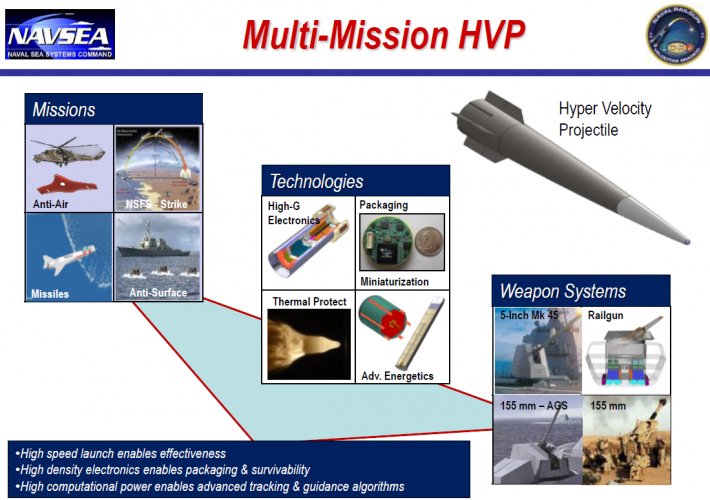
Yes, firing from the ground certainly isn't ideal. I wonder why an aerospike was never tried. Small fechette size worked fine for guns so even if it depletes it should be sufficient for the crucial first seconds.Second is Dahlgren Range in Viriginia. Brackish bay, more realistic. However it's maximum range is 25 miles. If GA/BAE was Promising railguns hit out past 90-120 miles it'd fired a round by now. Because they know the laws of physics we've known them decades. Plug in rail gun projectile into any ballistic computer. With initial velocity of Mach 7, the round lose 80-90% it's kinetic energy to aerodynamic drag first 1-2 miles because you're firing hypersonic weapons in the troposphere. Firing up at aeriel target may mitigate that but still lose energy up 5-10 thousand feet. Again hitting a target with bullet is luck, which is why CIWS systems fire LOTS of bullets to counteract luck. Second ship needing railgin to defend against more one target, need several railguns in essence a battery. Or network small railguns as point defense. All which requires huge complex power demands.
CIWS systems fire a lot of bullets because they don't fragment. For some reason the USN relies on solid bullets. As such gatling dispersion is their substitute for fragmentation and the need for volume fire >>220 shots/hit.
I don't see railguns as true CIWS replacement but covering between CWIS and any missile range.
In lieu artillery use. High speed kinetic energy projectile is useless for area bombardment unless it just happens to hit something substantial. Unlike an explosive projectile which can still occur damage with a near miss, a kinetic projectile has zero near miss damage potential. We saw this WWI ,craters made by artillery didn't kill any soldiers. When shells could detonate above ground carnage ensues. Firing railguns in parabolic arc like artillery or mortar is also useless because they are not dovetail heavy mass shell shapes designed to return to explode. They are rocket shaped.
Area bombardment is not a goal for the railgun but busting fortification/bunkers might be. Artillery bombardment start at 105mm anything below is for breaching. Naturally, it has to do with fragmentation lethal range and boom powerHistorically, the main target set for a naval gun is land area bombardment. Even in WW1 and 2 ship against ship engagements were the rare exception, not the rule. During WWII there were 100 battleships in service , yet only 5 engagements in span 6 years. Shore bombardment was far more common. Kinetic rail guns are next to useless for this application. This, alone, has to lead one to wonder why we would install rail guns at all.
UAV precision strike has made the old way obsolete. This will just be left to the aviators or other missile artillery delivery system.
Magnetic shielding is a thing. You see this in eletronics where there is a thin metalic sheet covering something. By thin I mean sub-milimeter. In the case of the railgun, it's the sabot ofc. After all the sabot has to take in as much EM energy as possible to convert it into kinetic movement. The more efficient the more it shields.Have no warhead or guidance package, of which you can have neither since you're gonna zap it with magnetic flux of 10 MRI machines.
Apparently, we got new fascinating shielding material a few months ago. Railgun projectile can have eletronics. Ofc they don't compare to those designed for planetary penetrators done like a decade ago.
The plan is to fire beyond, too, though. With the help of ISR and other sensor contributors ofc. Just like oldschool observer fire conrection etc.As ship weapons railgun only fire within line of sight. Conventional artillery and naval guns rely projectiles mass to succeed in its travel arc, modern ballistic computers eliminate most guess work where shell will hit. Railguns have their own unique setup aerodynamics.
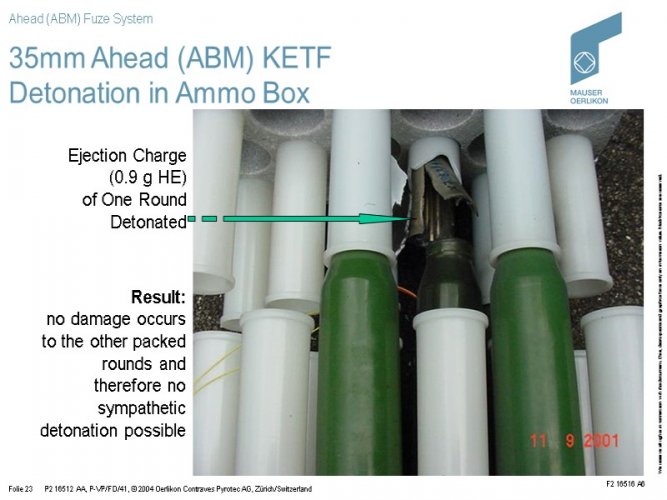
It only takes a few grams (0.9g for 35mm) to fragment a projectile. Far from enough to damage the sabot let alone affect a magazine.And thwarting threats meansn explosive rail gun projectile warhead (again, negating the benefit of an inert magazine) is needed if we wish to effectively cover the full range of targets.
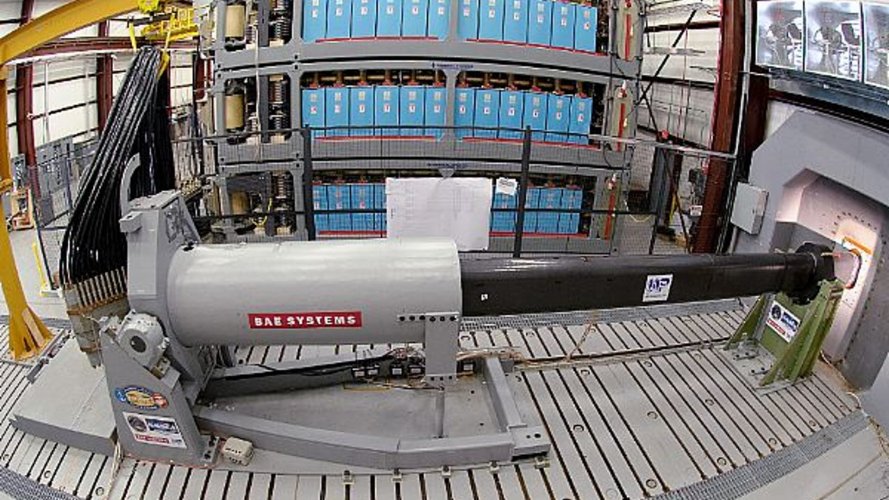
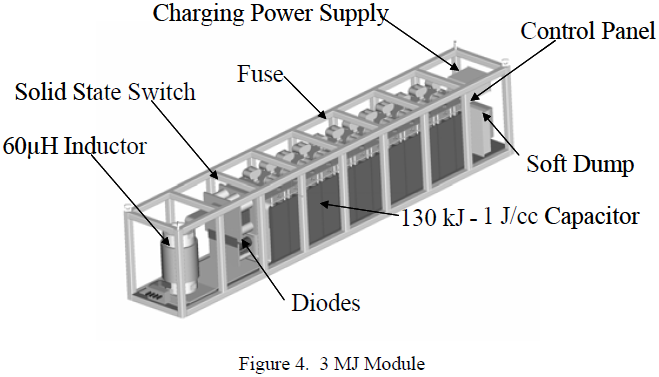
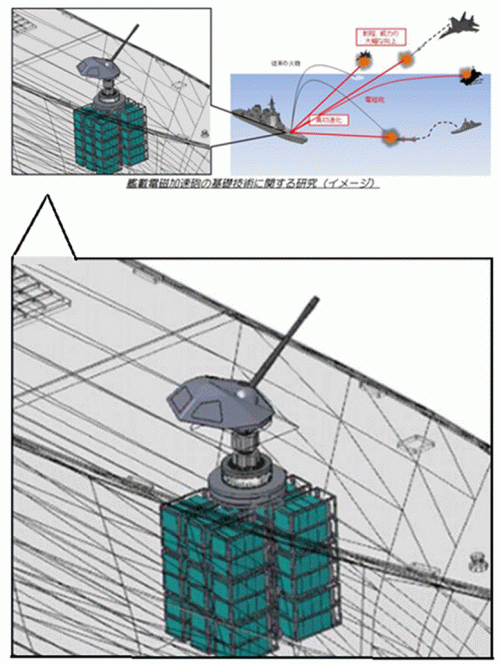
The batteries/capacitors are all containerized in small cases/boxes. A civilian electric vehicle's is far more dangerous imho. The japanese setup arranged them in even smaller groupings within structural constructs, hence, more spacing.energy storage required to fire a railgun will also be catastrophically destructive if it is hit when fully charged. There is no free lunch. In addition you are now dealing with multiple high energy electrical connections and switchgear to maintain in a salt-air environment, any one of which can explode with comparable levels of force to high explosives if they fail.
Yeah, shipboard "switchboards" are house sized the same as powerplants on land. Add railgun doesn't change this anymore than it aready is. People need hoisters to replace the subboards.
Sure the shorting explosion can be big, but then again the need to keep the railgun elments from flying away is for the full power.

Energy storage is smaller than the switchboard. Even the up to 4 ISO containers our ships would need would be just about parrity.
Attachments

shin_getter
ACCESS: Top Secret
- Joined
- 1 June 2019
- Messages
- 1,491
- Reaction score
- 2,192
God, surface ships are just the greatest target of bike shedding where people can have fun discussing turret configurations.
I guess discussing the application of CPS or capability of larger radar arrays are just too hard.
I guess discussing the application of CPS or capability of larger radar arrays are just too hard.
Last update I saw, it wasnt getting the biggest possible radar, but we already know it will be a SPY6. If the smallest possible drone/missile gets past your obsolete Phalanx then your expensive radar becomes valuable scrap metal.I guess discussing the application of CPS or capability of larger radar arrays are just too hard.
…yes the gunhouse is still there, meaning they can fit a gun there. It’s a pretty straightforward and obvious thing…No, the only things left of the gun systems are the deckhouses that hid the barrels when not actively firing. IIUC those were left for RCS reasons.
And the USN is requiring that BOTH gun and CPS tubes be on a single ship going forward. Zumwalts get an exception since there's only 3 of them, so effectively only one at sea. So they're testing CPS for everyone else.
Because we still have a bunch of brand new Burke IIIs, and failed to build either Zumwalts or CG21s 20 years ago.
Plus, bluntly, the bare minimum capability for a front line combatant ship these days is just short of a Burke.
So? If you can't fit both CPS tubes and gun the USN says it fails requirements.
Mk38 is not ideal as a CIWS, it's barely capable if you give it a radar. But given the sheer numbers of Shaheds people are throwing around I want more guns on new ships. Because 30x173 or even the 40x173 for more HE/fragments is adequate versus Shaheds.
So I'm really talking about a Mk38 "Mod5" mount, with dual feed on the gun plus search and fire control AESAs added. Over and above the EOTS/thermal imager the Mod4 has. One feed, probably the larger-capacity one, has HEDP or whatever is preferred versus USVs. The other feed has AHEAD-type PFF for Shahed swarms.
I really hope so, the APM/APT is terribly space-inefficient. On the other hand, it does give pretty solid protection to each set of tubes inside, because it's submarine-hull-thick HY80. And the HY-series steels were developed from the STS battleship armor plate.
Correct. Gun set at "safe" in CIC, Danger tag hung. Unscrew the access panel and physically disconnect a single electrical connection, what the aircraft guys call a "cannon plug". The kind that has many pins and a huge outer screw connection. This plug (or plugs if the size for one plug is absurd) has power from battery to everything on the mount (ship power goes into the battery, not direct to mount). Radar, EOTS, traverse and elevation motors, gun motor, everything. Danger tag hung on the plug(s). Work on mount.
Work done?
Clear Danger tag from plug(s), run mount tests that require electrical power. Now clear Danger tag from gun console in CIC, ship is back in fighting condition.
And yes, there's probably a few other Danger and/or Caution tags that would need to be hung, but those two I described would cover the big points.
Look at where the RAM and Phalanx are located on Burkes. And where the 5" guns got placed on the later US WW2 cruisers.
2x CIWS on centerlines can both fire into either broadside. (IMO this should be the minimum fit for a frigate, or rather 2x RAM and 2x CIWS.)
4x CIWS with 2 on the centerline and 2 amidships puts 3x CIWS into either broadside. While 4x CIWS on the corners can only put 3 into the quarters not the broadside.
I will accept that with radar-guided AShMs it may be better to angle the ship instead of broadside. Not sure about IIR-guided. @Dilandu you're the resident missile expert, do you have an opinion on this?
spikedpsycho
ACCESS: Secret
- Joined
- 14 March 2026
- Messages
- 336
- Reaction score
- 484
https://breakingdefense.com/2026/08/first-battleship-could-cost-more-than-23-billion-cbo-says/
Navy says Trumps yacht class battleship cost 23 billion. Sad state affairs
Navy says Trumps yacht class battleship cost 23 billion. Sad state affairs
Scott Kenny
ACCESS: USAP
- Joined
- 15 May 2023
- Messages
- 19,705
- Reaction score
- 28,207
No, it does not. Though I am also questioning their estimated price of 8bil per reactor/ship power set. That seems very high, even assuming that they plugged in the numbers from the A1Bs used in the Ford-class. Crud, it seems high even assuming that they used a pair of A1Bs and the full carrier generator set!Over 23 billion dollars and 8 years for the first ship doesn't seem ideal.
Bigger problem yet is that every BBGN is taking a carrier construction slot if USN doesn't certify another yard for nuclear construction.
In theory, if its big enough but aiming with precision... fat chance.Can EFPs actually reach ~8km? Because RAM, 57mm and 76mm are all advertized as 8km for CIWS work.
means lots of small (gun) items can be inserted without much impact/notice.Over 23 billion dollars and 8 years for the first ship doesn't seem ideal.
Well, the reactor math says the single reactor system should weight like close to 6000 t...No, it does not. Though I am also questioning their estimated price of 8bil per reactor/ship power set. That seems very high, even assuming that they plugged in the numbers from the A1Bs used in the Ford-class. Crud, it seems high even assuming that they used a pair of A1Bs and the full carrier generator set!

Dilandu
I'm dissatisfied, which means, I exist.
How much time reactor installation into assembled hull would took on average? I meant, installing reactor on carrier took only a fraction of total construction time, right? So it might be possible to "squeeze" a BBGN reactor installation process between those for carriers?Bigger problem yet is that every BBGN is taking a carrier construction slot if USN doesn't certify another yard for nuclear construction.
Installing doesn't take long as the reactor is just dropped into place and connected. The certification and qualification process of the whole system is what takes the most time. Even if the system could be tested without the core you still would need to run it under specific cases that can't be done otherwise. This would only reduce troubleshooting the subsystem, though.How much time reactor installation into assembled hull would took on average? I meant, installing reactor on carrier took only a fraction of total construction time, right? So it might be possible to "squeeze" a BBGN reactor installation process between those for carriers?
Dilandu
I'm dissatisfied, which means, I exist.
So to summarize: installing the reactor into assembled hull would not actually took much of shipyard resources, and likely could be performed without affecting carrier construction?Installing doesn't take long as the reactor is just dropped into place and connected. The certification and qualification process of the whole system is what takes the most time. Even if the system could be tested without the core you still would need to run it under specific cases that can't be done otherwise. This would only reduce troubleshooting the subsystem, though.
I wouldn’t call the space a pedestal. It’s like 8x8 at least and tall enough a shortish person could stand up inside of it.The places I've been talking about putting Mk38s would be poor locations for AA guns.
They'd work, but you wouldn't want most of your AA down low at the weather decks at places optimized for surface target field of fire anyways. That's why your C-UxV guns are not your only CIWS guns. Your C-UxV guns are a backup to the last-ditch CIWS guns, for when there are more targets than CIWS guns.
Well, the Zumwalts were supposed to be using 57mm Mk110s for their CIWS till the "Good Idea Fairy" came along.
Then someone somehow decided that the 30mm Mk44s from LCS ASuW modules were "better"/good enough. The same 30mm Mk44 mounts that had issues hitting targets and with gun reliability when installed on LCS!
Good point. And that would likely help with topweight, as a 1m mirror like used on YAL-1 is heavy (plus the other 4 mirrors in the turret).
I'm still going to want to stick the laser up higher than a 76mm or even a RAM launcher, for maximizing distance to horizon. Plus keeping said laser away from big gun muzzle blast.
By that standard, Phalanx never was effective as it was always a "drop-in where there was room" system.
Power in and cooling. Phalanx technically sits on a (very low) pedestal like the base of the Mk38. I thought batteries were inside the mount as well, but if not I'm not sure it should count as a deck penetration.
The problem is belted ammunition versus single loading. Belts are less fun to reload, more fun to shoot. If you put I dunno, 3000 rounds into a single belt it would probably need powered feeds down in the belly of the beast. While 550-1200 on the mount is viable.
Not to mention that even a gatling is going to be rounds-cooking-off hot after a full 5-15 seconds of firing. As will be a single-barrel air-cooled gun like a Mk44.
Plus, the GM I knew in college was able to get his Phalanx back up in under 10 minutes.
No, a deck penetration is a restriction on where you can drop the guns.
It'd take a large sponson to stick a Goalkeeper, let alone a 57mm mk110, out with the barrel at the normal edge of the weather deck, while you can pretty much just run a couple of girders out past the sheer for a Mk38 or Phalanx to sit on. Close in underneath to keep salt spray away from the power and cooling.
Take the Zumwalts. Look at the big SATCOM warts on the side of the superstructure. You could stick a Phalanx on there instead of the SATCOM.
FFS OTO-Melara even makes a non-deck-penetrating 76mm mount, the Sovraponte. Specifically for dropping someplace it happens to fit or that can't have anything coming down from the weather decks. IIRC most Italian Navy ships have a Sovraponte 76mm on top of their helo hangars.
(edit: relocated this whole paragraph) Can't stick a penetrating mount on top of the bridge. Can't stick one on top of the hangar. But you could put Phalanx guns on top of the bridge and the hangar, port and starboard sides, and now you've got three guns firing into each forward quarter.
With the 20mm, Phalanx is using APDS or APFSDS (not sure which). But you can set a mechanical time fuze in a 20mm, the radar-guided 20mm guns were doing that in WW2!
The pedestal of of the mk38 is just that. Phalanx still requires an entire space beneath it.
And no, phalanx was not just drop it in where ever there’s room. Burkes were definitely designed to include them specifically, but yes they were retrofitted onto a lot of ships that were built before it was created, but ‘drop in where every there’s space’ was not why it was created. It was created as a dedicate missile defense system meant to be included in designs of new construction ships.
However the fact that there have been multiple ships that have had phalanx installed had munitions used against them, and phalanx has only ever once successfully defeated a munition in real life afaik…I’d say yeah they are pretty ineffective.
Last edited:
Similar threads
-
 DARPA/USAF/USN Aerospace Innovation Initiative Experimental (AII-X) Demonstrator Program [NEWS ONLY]
- Started by quellish
- Replies: 5
-

-
 Tanker Transport Training System (TTTS) USAF competition
- Started by Stargazer
- Replies: 0
-
-
 Pentagon Running Out of U.S. Suppliers of Energetic Materials
- Started by bobbymike
- Replies: 149