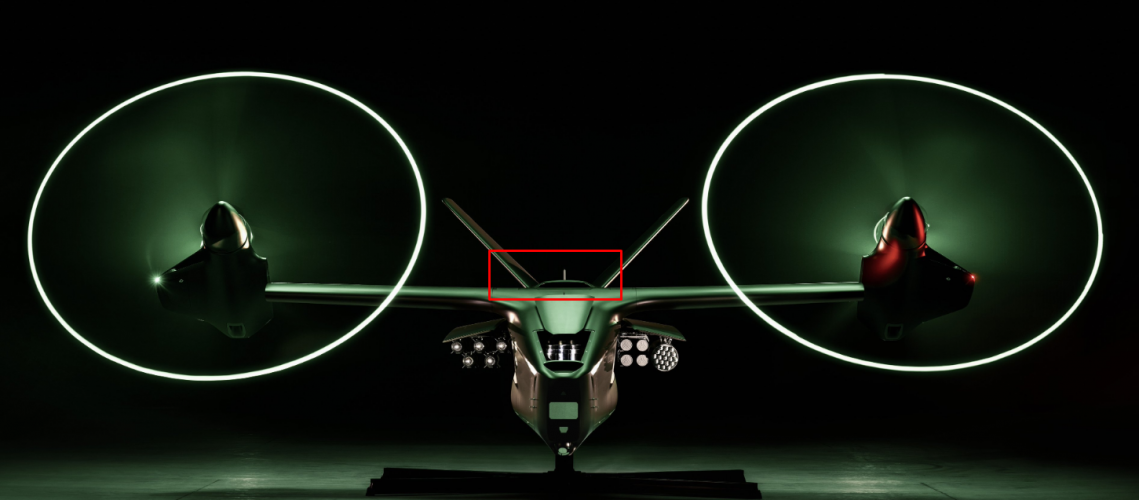
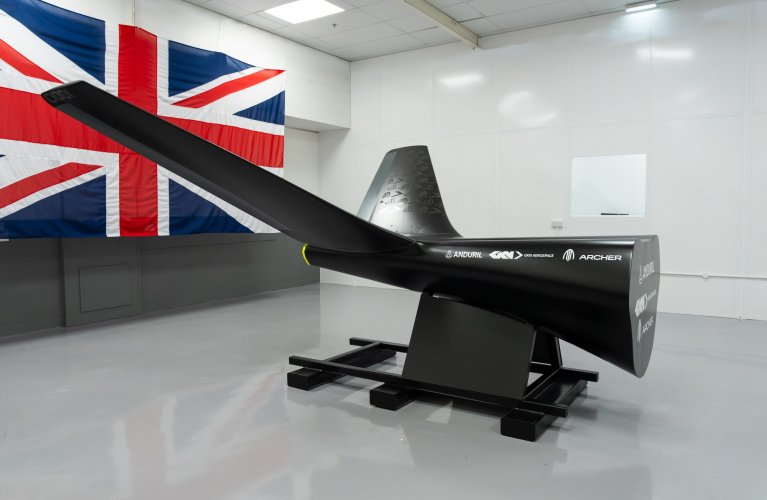
I would like to more a bit on this project - what's the powerplant, range, what's the intended weight, how powerful are the motors driving the screws etc - to make sense of what they're going for.
As for the VTOL layout - it took like 50 years to make the V-22 Osprey, if we count the time from experimental VTOL to service entry, and its an enormously complex machine, whose existence has been called into question.
Generally the argument goes that the V-22 is worse at hovering, and doing helicopter things than a helicopter, and worse at cruising than a screw-propelled aircraft. It all comes down to the sizes of the rotors. The V-22's rotors are smaller than an equivalent helicopters, giving it a more powerful downwash and less efficient hover, while they're bigger than one designed for an airplane, making it draggier and limiting tip speed.
That said, while the V-22, is worse than both in their dedicated roles, it can do both, and some cases do require that, mostly ones having to do with carrying personnel, such as special ops insertion/extraction and medevac. This being an unmanned drone, and an attack aircraft means this doesn't apply here - it's unlikely this is going to be carrying personnel in any form, so I can't shake the feeling that they should figure out whether they want a helicopter or an attack plane, and build that.
Looking at the airplane, the screws look proportionally smaller than the Osprey's and the winds block a lot of the airflow, so this thing will have an even harder time hovering than the V-22. All that said, if they're going with electric motors, and a hybrid battery/turbine propulsion, I think this *might* make sense: modern electic motors are crazy power dense, easily 10x of what a turbine can do, even if such performance cannot be sustained, it might be good enough for short hovers, vertical takeoff and landing, if not more. But in flight, this approach gains you nothing - your screws are still bigger than needed for efficient flight, and getting the power from a turbine to a screw via this complex electrical scheme (rather than a simple shaft) is just crazy overkill.
Likewise batteries can supply tremendous amounts of power (in these small drones, power draw can be like 50x capacity at peak, or more), but their density sucks.
So with regards to the screw design, VTOL results in an unhappy compromise, but without the special mission set to justify it, like the V-22 has.
If this is a VTOL attack plane, I'd say just drop the VTOL part and operate from a short runway with a much more traditional attack aircraft. like a Bronco, but drone.





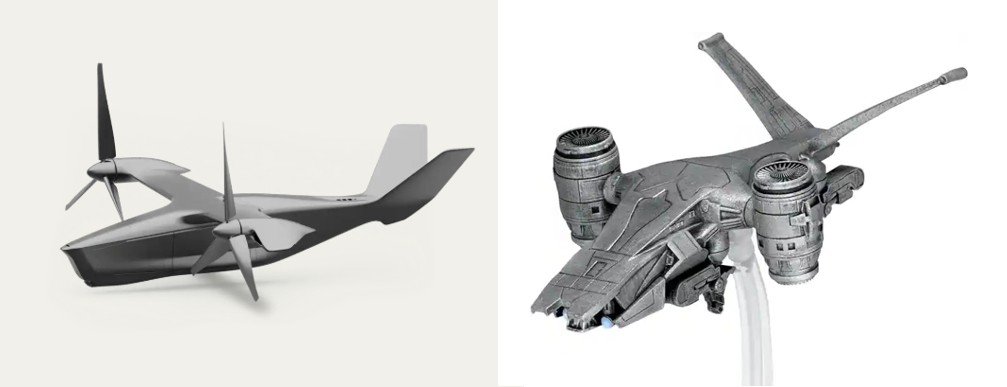


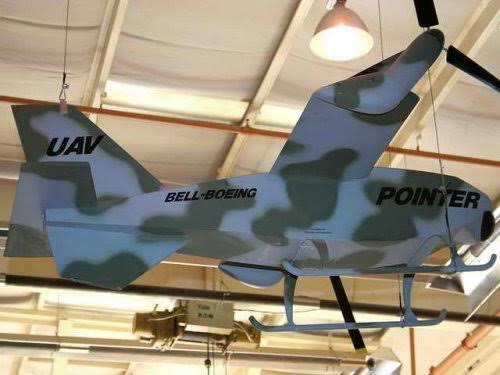
 . The GI-Joe Bro animation - idk.