
You are using an out of date browser. It may not display this or other websites correctly.
You should upgrade or use an alternative browser.
You should upgrade or use an alternative browser.
KAI KF-21 Boramae (KFX Korean Indigenous Fighter program)
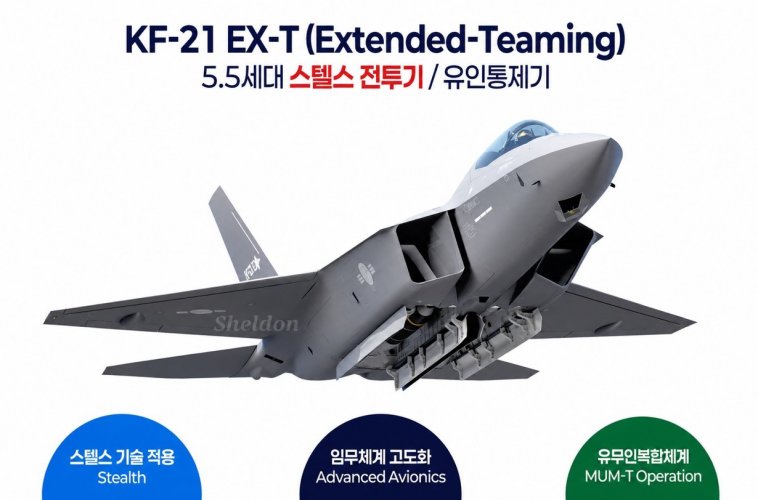
Is that confirmed, informed speculation, or just an illustrative concept by this "Sheldon"?KF-21EX-T
A new direction that makes sense.

synetic
ACCESS: Restricted
- Joined
- 14 July 2025
- Messages
- 39
- Reaction score
- 227
The Air Force has once again surprised and humbled me... I think I need to set aside my previous impression of the South Korean Air Force—which was heavily focused on high-end assets—and update my view.
Alongside the upgrade to a manned-unmanned teaming system, they are simultaneously pursuing a new requirement to enhance the KF-21's low-observability capabilities.
I think I need to set aside my previous impression of the South Korean Air Force—which was heavily focused on high-end assets—and update my view.Alongside the upgrade to a manned-unmanned teaming system, they are simultaneously pursuing a new requirement to enhance the KF-21's low-observability capabilities.
Ainen
I really should change my personal text
- Joined
- 25 August 2011
- Messages
- 2,819
- Reaction score
- 4,925
Rather than KF-21EXT, maybe just KF-35?
Just do it already, it'll indeed solve 21s' half-hearted weirdness. Now literally an alternativeJF-35, thanks to these juicy deep 2000lb bays. Until now, western fighters tended to cover supplementary niches around F-35. Now it's a first direct shot over the bow. Won't LM feel bitter about their KAI affair?
Also interestingly, original AA-centric IRST is gone, replaced by EOTS-like sensor. Flat airframe dreams apparently for now move to the right; too risky?
Finally, given relatively parallel timeframe, would be interesting who'll get it better between Korea(own domestic program starting from US assistantance) and Japan(UK-IT).
Just do it already, it'll indeed solve 21s' half-hearted weirdness. Now literally an alternative
Also interestingly, original AA-centric IRST is gone, replaced by EOTS-like sensor. Flat airframe dreams apparently for now move to the right; too risky?
Finally, given relatively parallel timeframe, would be interesting who'll get it better between Korea(own domestic program starting from US assistantance) and Japan(UK-IT).
Last edited:

snne
ACCESS: Top Secret
- Joined
- 3 July 2022
- Messages
- 2,408
- Reaction score
- 8,848
Yes, it'd be nice to have an alternative to the F-35 within the American-aligned camp, but the F-35 still has it beat thanks to its IWB-door-mounted AAMs (thanks to single engine config.), superior radar performance, and greater maturity.Now literally an alternativeJF-35, thanks to these juicy deep 2000lb bays.
Do they really need an "F-35-seok" at this point, and is there even a legitimate market for it? F-35 will gradually lose its critical position within the American tech tree, and I can already see them beginning to export it to "allies of lesser importance" or M,E, allies approved by Israel throughout the 2030s...
Countries capable of fielding such advanced aircraft that (for whatever reason) haven't joined the F-35 camp yet will already have a multitude of existing options, many of which can promise superior inherent performance, albeit at a higher operational cost, than this "F-35-seok"...
I don't blame the RoKAF one bit for choosing to move directly to a 6th-generation effort rather than investing resources (time, money, etc.) into this when they'll already have a fleet of 60+ F-35s to cover the LO requirement in the meantime... (as well as any indigenous LW)
Ok, I'd forgotten that its canopy isn't coated... I still don't think it's "full of RAM" though, that's clearly an intentional future milestone for them...Clean configuration is not even a start. It's IRST, it's visibly untreated cockpit, it's all rwr and comm antennas.
As if the effect of a spherical IRST on an aircraft's signature (AFAIK, ~0.025 m2) were still an unknown subject at this point, or that its mirror turret can't be rotated to reduce its impact on the frontal RCS, or that no aircraft featuring a spherical IRST window could ever be LO.
The point is that the KF-21B1/B2 isn't even trying to be another "Su-57 case", let alone tackle the LOity problem in a more hardcore way; so the lack of directional multi-band conformal antennas is fine IMO -- especially considering its rivals never even attempted to develop a baseline for an LO aircraft.
As said, Its entire purpose was to serve as a mature, stable baseline for a future evolution into a true LO aircraft -- but that got derailed the moment the Block 30 LO evolution plan was scrapped.
It's a bit unfair to say it is a mistake
Yeah, I came off too harsh there due to my wording. I meant they technically could've developed racks instead of buried, recessed mounts, but that ultimately wasn't a viable option for the reason I'll mention below.Lack of internal carriage is part of conscious engineering choice - i.e. just not carrying weapons won't make the jet disappear.
As you mentioned before, this design choice was made because Block 10 was always meant to focus on A2A, while A2G-capability would mature by the time Block 20 came out; and they'd finally conclude everything/address any design disadvantages with the Block 30.
And, in order to keep the designs as close to one another as possible and thereby shorten Block 30's development as much as possible, they chose to implement recessed mounts within the IWB surface area instead of going down the same config. route as the Typhoon (or Superbug), which would've allowed for greater payload flexibility in typical non-LO design philosophy.
Last edited:

- Joined
- 29 November 2010
- Messages
- 2,275
- Reaction score
- 5,186
at the moment, i tried to look it up, and could not find any other sources for this too. it's entirely from this Sheldon account.Is that confirmed, informed speculation, or just an illustrative concept by this "Sheldon"?
Ainen
I really should change my personal text
- Joined
- 25 August 2011
- Messages
- 2,819
- Reaction score
- 4,925
Graphics are kinda good and specific for just speculation though(like the das(?) aperture between bays) ...and match the official styling well.at the moment, i tried to look it up, and could not find any other sources for this too. it's entirely from this Sheldon account.
By the way, looking at EX-T graphics (speculative, pending confirmation?), it's interesting how it overturns the specialization.As you mentioned before, this design choice was made because Block 10 was always meant to focus on A2A, while A2G-capability would mature by the time Block 20 came out; and they'd finally conclude everything/address any design disadvantages with the Block 30.
KF-21 "as is" is indeed a A2A 4.5 gen specialist(generous low drag conformal comb taking good 1/3 of suspension real estate, IRST), with about as much attention to A2G in it's design as in the Eurofighter.
EXT adds deep bay, EOTS(instead of IRST) and throws it directly into a different comparison group(F-35, J-35, T-75, AMCA), where it really starts looking like a great...ground attack centric design instead. And that's something notable, as all aircraft in this group are already interdictors by design; being more focused is remarkable.
All that, despite gaining massively in A2A capability over the baseline A2A-centric design.
Last edited:
- Joined
- 29 November 2010
- Messages
- 2,275
- Reaction score
- 5,186
Sheldon can be like that Mason account people keep referring to, where they take official pictures, but manipulate them by putting in their own texts and interpretation. Although they're just general fans, people seem to pass them off as official accounts. You can see his account below. Pictures of the KF-21 CG with its bays open has been around since 2023.Graphics are kinda good and specific for just speculation though(like the das(?) aperture between bays) ...and match the official styling well.
https://x.com/mason_8718
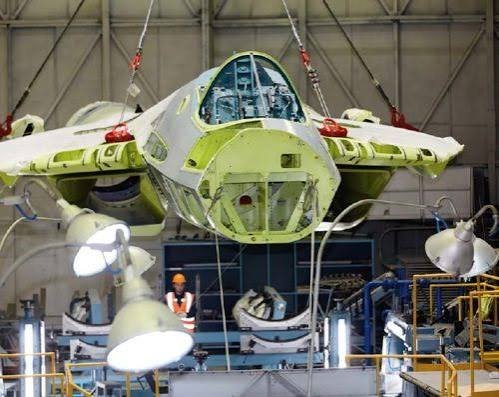
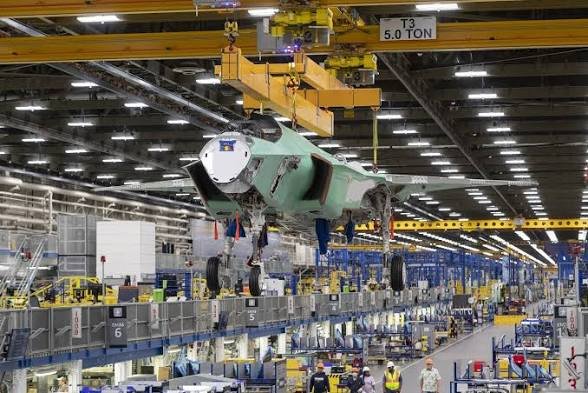
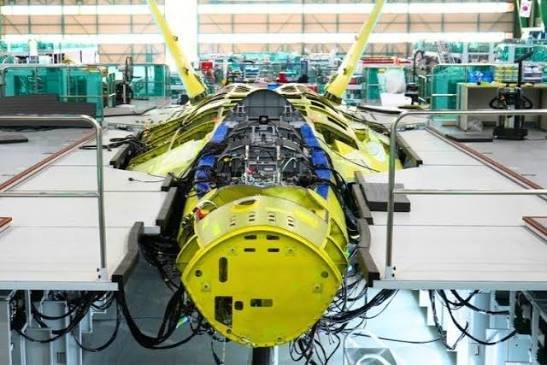
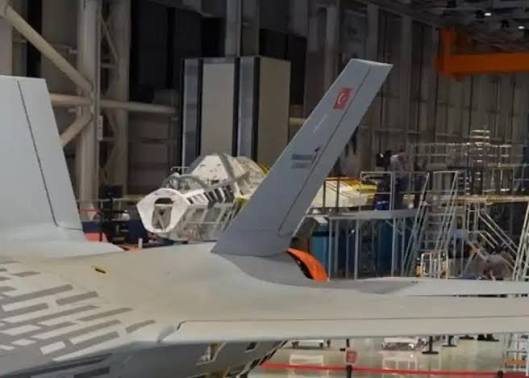
Besides its famous issue of having no internal weapons bay, the KF-21 has other smaller stealth drawbacks: sensors are not embedded, fuselage hatches and skin seams lack serrations, and the engine has no stealth modifications. These could potentially be upgraded in Block 3, but is it really worthwhile?
Compared to fifth-gen jets, the KF-21’s nose does not have a proper diamond cross-section. I mean even if we ignore the internal bay and all those fine details, the airframe may not be engineered for serious stealth in the first place.
Compared to fifth-gen jets, the KF-21’s nose does not have a proper diamond cross-section. I mean even if we ignore the internal bay and all those fine details, the airframe may not be engineered for serious stealth in the first place.
Attachments
Ainen
I really should change my personal text
- Joined
- 25 August 2011
- Messages
- 2,819
- Reaction score
- 4,925
The more i read, the more I assume they're opposite cases.The point is that the KF-21B1/B2 isn't even trying to be another "Su-57 case", let alone tackle the LOity problem in a more hardcore way; so the lack of directional multi-band conformal antennas is fine IMO -- especially considering its rivals never even attempted to develop a baseline for an LO aircraft.
KF-21 is a proper workpiece for a future low observable strike fighter, but with all the tech left to the future. ADD/KAI always wanted to proceed in this direction, but ultimate aribter is air force and government(DAPA), together with a certain international dimension (F-35/US government). US isn't in the same position as with Israel/IAI/Lavi here, but everyone who've been to Seoul would notice the role US embassy plays in this country.
So Korea now (speculatively) decided to now commit to development and application of this tech stack. That (possibly) will be KF-21EXT, developed in parallel with MUMT (which would need VLO tech anyway).
Su-57 is all the tech for the LO fighter, applied only to the degree sensible. The request was inherently unstealthy, and there was only so much Sukhoi could do. But solutions themselves are already there, and continue to get investment/evolve..
But with that at hand, Russia can affordably go for proper LO aircraft projects. That's S-70, T-75, Article 80 and so on.
Last edited:
Whatever the speculation may have been—or still is—the development of a fully fledged stealth variant of the so-called 5.5th generation (whether it ultimately ends up being designated KF-21EX-T, KF-25, KF-35, or something else entirely is beside the point) is a thoroughly rational step and fully consistent with the program's remarkably smart evolutionary approach.
A tailless fighter represents an enormous technological challenge and is unlikely to be ready before around 2040.
Downplaying North Korea's capabilities is a sign of ignorance and of being mentally stuck in the era of grainy VHS footage depicting the country's "Arduous March." A West-centric, formulaic view of the world is no longer sufficient. The paradigms are shifting rapidly with the pace of developments in East Asia—including both the northern and southern parts of the Korean Peninsula. We should be prepared for this, and we certainly should not be relying on calculations of "economic viability." Those old assumptions simply no longer hold under the new strategic realities.
A tailless fighter represents an enormous technological challenge and is unlikely to be ready before around 2040.
Downplaying North Korea's capabilities is a sign of ignorance and of being mentally stuck in the era of grainy VHS footage depicting the country's "Arduous March." A West-centric, formulaic view of the world is no longer sufficient. The paradigms are shifting rapidly with the pace of developments in East Asia—including both the northern and southern parts of the Korean Peninsula. We should be prepared for this, and we certainly should not be relying on calculations of "economic viability." Those old assumptions simply no longer hold under the new strategic realities.
It's confirmed, and it's from Aerospace Weapons Systems Technological Afvancement Conference 2026 held by ROKAF, attended by KAI, ADD and other parties. The VLO version of KF-21 is now being actively pursued by ROKAF, contrary to what I've said a few pages ago on this thread.Is that confirmed, informed speculation, or just an illustrative concept by this "Sheldon"?
I personally wouldn't compare the two as they are pretty different.Sheldon can be like that Mason account people keep referring to, where they take official pictures, but manipulate them by putting in their own texts and interpretation. Although they're just general fans, people seem to pass them off as official accounts. You can see his account below. Pictures of the KF-21 CG with its bays open has been around since 2023.
https://x.com/mason_8718
Sheldon most of the times doesn't used edited image but mostly only official images, except putting his water mark on them. Even if he does, it's mostly for explanatory purposes. Mason on the other hand is your typical fanboy account regularly found on the internet. I'm glad that I am seeing much less of his contents being linked on this forum compared to before.
Sheldom doesn't exaggerate things but is closer to a reporter of sorts. He actively visits different trade shows and conferences first hand and reports on the news from those. He is, imho, one of the more trusted, if not the most trustable source currently on internet concerning Korean military development, unless you are digging up documents on your own from primary sources. Only downside I see, if I have to list any, to his contents is that they are paywalled but I find his price reasonable for the amount of content he produces.
A true GCAP conterpart from Korea, the next generation fighter jet programme succeeding KF-21 that will most likely replace the KF-16s and F-15Ks is being pushed back according to the ROKAF presentation from the aforementioned co ference, and there will be considerable time gap between the GCAP and the Korean programme.Finally, given relatively parallel timeframe, would be interesting who'll get it better between Korea(own domestic program starting from US assistantance) and Japan(UK-IT).
Considering the development of NK air defence force in the recent years, it is quite understandable to see why ROKAF wants to further future-proof the KF-21. I am still doubtful that NK will be able to sufficiently modernize their fighter jet fleet, even with helping hand from Russia, so that it could pose actual threat against ROKAF and other ROK services, but their surface based assets are indeed hard to ignore.Downplaying North Korea's capabilities is a sign of ignorance and of being mentally stuck in the era of grainy VHS footage depicting the country's "Arduous March." A West-centric, formulaic view of the world is no longer sufficient. The paradigms are shifting rapidly with the pace of developments in East Asia—including both the northern and southern parts of the Korean Peninsula. We should be prepared for this, and we certainly should not be relying on calculations of "economic viability." Those old assumptions simply no longer hold under the new strategic realities.
Anyways, for my part the new direction from the ROKAF is a welcome one and also resolves quite a few of my personal questions concerning programme timelines of various ongoing projects, but on the other hand the new directions makes the replacement timeline of the KF-16s a bit puzzling.
A SLEP for KF-16s is on the book, but keeping block 72 F-16s until early 2050s will mean that they will essentially serve the role F-5s and FA-50s are currently serving on ROKAF until replacement comes. There are new-build F-16Vs being rolled out of Greenville SC and as a result will mean that there is potential for a new series of MLU programmes that continues from MSIP, CCIP and Viper, but I'm doubtful ROKAF will be silling to invest on a major upgrade programme beyond block 72.
A SLEP for KF-16s is on the book, but keeping block 72 F-16s until early 2050s will mean that they will essentially serve the role F-5s and FA-50s are currently serving on ROKAF until replacement comes. There are new-build F-16Vs being rolled out of Greenville SC and as a result will mean that there is potential for a new series of MLU programmes that continues from MSIP, CCIP and Viper, but I'm doubtful ROKAF will be silling to invest on a major upgrade programme beyond block 72.
Thanks. Interestingly the graphic doesn’t say anything about the engine. Did the conference provide an update about the domestic engine?It's confirmed, and it's from Aerospace Weapons Systems Technological Afvancement Conference 2026 held by ROKAF, attended by KAI, ADD and other parties. The VLO version of KF-21 is now being actively pursued by ROKAF, contrary to what I've said a few pages ago on this thread
Also are there any Korean source materials about the KF-21’s development cost or how much has been spent until now?
Ainen
I really should change my personal text
- Joined
- 25 August 2011
- Messages
- 2,819
- Reaction score
- 4,925
GCAP, in all likelihood, won't be that much(if any) of a jump over the world level. Rather, it's more of a tornado story - a delayed catch-up with some world level parts.A true GCAP conterpart from Korea, the next generation fighter jet programme succeeding KF-21 that will most likely replace the KF-16s and F-15Ks is being pushed back according to the ROKAF presentation from the aforementioned co ference, and there will be considerable time gap between the GCAP and the Korean programme.
(Electronic) hardware part is not something that Korea will do worse than Europe, speaking mildly; commodity market speaks for itself.
Tailless deltas are "hotter" than conservative classics and are more optimal for the current understanding of air warfare, but they aren't any generational jump over the classical layout. "All horizontal" aircraft are, but GCAP is just not amongst them.
As such, while EXT (presumably) will be a slightly lesser(if at all!) F-35, 20 years later - i don't see any particular reasons EXT won't match GCAP level. Rather, a more proper 6 gen effort will be higher than that.
Last edited:
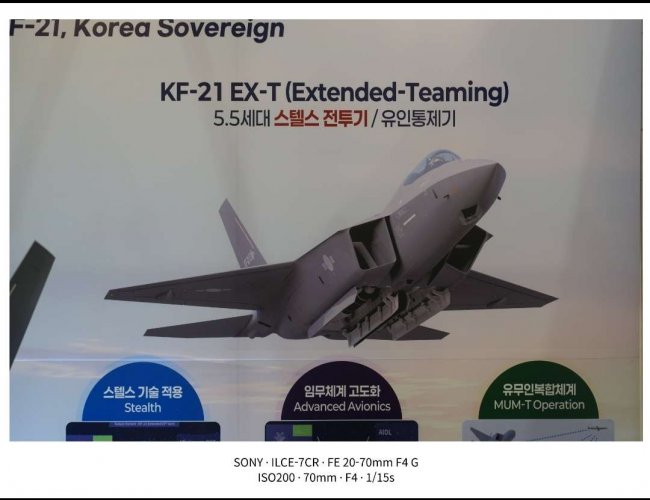
He deleted his tweet. Here’s the image
Attachments

Kat Tsun
eeeeeeeeeeeeeee
- Joined
- 16 June 2013
- Messages
- 1,887
- Reaction score
- 2,666
Yes, it'd be nice to have an alternative to the F-35 within the American-aligned camp, but the F-35 still has it beat thanks to its IWB-door-mounted AAMs (thanks to single engine config.), superior radar performance, and greater maturity.
Do they really need an "F-35-seok" at this point, and is there even a legitimate market for it? F-35 will gradually lose its critical position within the American tech tree, and I can already see them beginning to export it to "allies of lesser importance" or M,E, allies approved by Israel throughout the 2030s...
Ukraine has shown that even close allies can become enemies very quickly, within a few years, so having a diversity of options away from the superpowers is a good idea in general. Not everyone wants the strings attached to F-35 or J-35. That's why GCAP exists in the first place, but GCAP is more NGAD than JSF, so KF-X still has a place as an ITAR free F-35. It'll depend on how Hanwha develops the engines as it otherwise suffers from the same issue Gripen has but the Block 3 will solve that.
Might be a good idea for Sweden to try to swing into development to replace Gripen with a more advanced, and American proof, fighter.
I think we had enough of "GCAP vs KF-21" by now. That kind of discussion belongs in places like f-16.net rather than SPF, shall we agree? We also have a few other threads in the forum that suits some of the discourse much better, like what constitutes a "6th gen" fighter, etc.
Besides, I personally think it's kind of premature to presume a lot of things for either the GCAP or KF-21 EX-T. I could chime in and correct/comment on few things from the previous conversation, but I find that meaningless.
Most importantly, KF-21 block III/EX/EX-T have all been just a concept by ADD/KAI. There has not been any requirements layed out by ROKAF themselves, untill the recent conference and the notion of "VLO".
Besides, I personally think it's kind of premature to presume a lot of things for either the GCAP or KF-21 EX-T. I could chime in and correct/comment on few things from the previous conversation, but I find that meaningless.
Most importantly, KF-21 block III/EX/EX-T have all been just a concept by ADD/KAI. There has not been any requirements layed out by ROKAF themselves, untill the recent conference and the notion of "VLO".
Frogfigther
ACCESS: Confidential
- Joined
- 30 August 2020
- Messages
- 54
- Reaction score
- 221
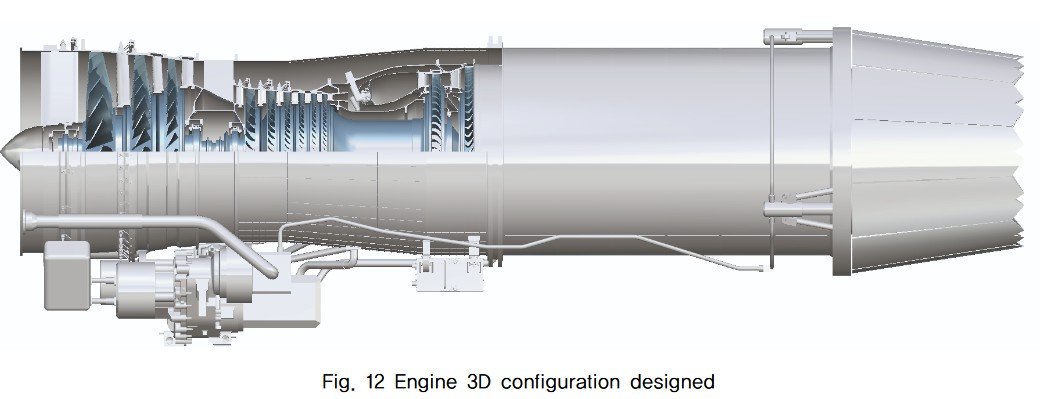
16,000 lbf class engine concept layout from Hanhwa Aerospace - ADD engine concept study('23 ~ '24).
Choi, J., Ko, K., & Shim, H. (2025). A Study on Maximum Performance Range and Architecture of an Advanced Aero Engine within constraints for Next-generation Fighter. The KSFM Journal of Fluid Machinery, 28(3), 15–24
24,000 lbf with A/BView attachment 818009
16,000 lbf class engine concept layout from Hanhwa Aerospace - ADD engine concept study('23 ~ '24).
Choi, J., Ko, K., & Shim, H. (2025). A Study on Maximum Performance Range and Architecture of an Advanced Aero Engine within constraints for Next-generation Fighter. The KSFM Journal of Fluid Machinery, 28(3), 15–24
https://breakingdefense.com/2024/07...t-engine-says-could-enter-service-in-9-years/
Frogfigther
ACCESS: Confidential
- Joined
- 30 August 2020
- Messages
- 54
- Reaction score
- 221
Yeah. It is 16,000 (Dry) / 24,000(Wet) lbf thrust engine with TIT 1900K+ combustor. Hanhwa and DAPA have consistently referred to this Advanced Aero Engine Program in terms of its dry thrust, which is why I described it as a 16,000-pound-class engine.
- Joined
- 29 November 2010
- Messages
- 2,275
- Reaction score
- 5,186
Agreed, we don't need this GCAP vs KF-21 BS. I've deleted them and instigators may potentially be thread banned in the future.I think we had enough of "GCAP vs KF-21" by now. That kind of discussion belongs in places like f-16.net rather than SPF, shall we agree? We also have a few other threads in the forum that suits some of the discourse much better, like what constitutes a "6th gen" fighter, etc.
Besides, I personally think it's kind of premature to presume a lot of things for either the GCAP or KF-21 EX-T. I could chime in and correct/comment on few things from the previous conversation, but I find that meaningless.
Most importantly, KF-21 block III/EX/EX-T have all been just a concept by ADD/KAI. There has not been any requirements layed out by ROKAF themselves, untill the recent conference and the notion of "VLO".
We want to avoid a repeat of what happened in the FCAS thread where it was constantly country A vs country B
Ainen
I really should change my personal text
- Joined
- 25 August 2011
- Messages
- 2,819
- Reaction score
- 4,925
By the way, if graphics are illustrative;
(1)bays' main volume is in-between caret intake and the main body, rather than in the main body itself.
(2)Both EX-T bays appear to be on the narrow side (2000lb bomb sits right in the middle of the bay), i.e., each of the two has only 1 station. It doesn't mean it can carry only 1 weapon, but it's quite likely to be only 1 full-size weapon; not only a bomb, but also meteor/amraam.
(3)I.e, again, if graphics are illustrative, A2A capacity will take a substantial hit, and the jet has a rather minimal self-escort capability.
(4)It may mean that block 0 aircraft are likely to remain relevant long-term, especially if we take fuel into account.
(1)bays' main volume is in-between caret intake and the main body, rather than in the main body itself.
(2)Both EX-T bays appear to be on the narrow side (2000lb bomb sits right in the middle of the bay), i.e., each of the two has only 1 station. It doesn't mean it can carry only 1 weapon, but it's quite likely to be only 1 full-size weapon; not only a bomb, but also meteor/amraam.
(3)I.e, again, if graphics are illustrative, A2A capacity will take a substantial hit, and the jet has a rather minimal self-escort capability.
(4)It may mean that block 0 aircraft are likely to remain relevant long-term, especially if we take fuel into account.
Last edited:
Frogfigther
ACCESS: Confidential
- Joined
- 30 August 2020
- Messages
- 54
- Reaction score
- 221
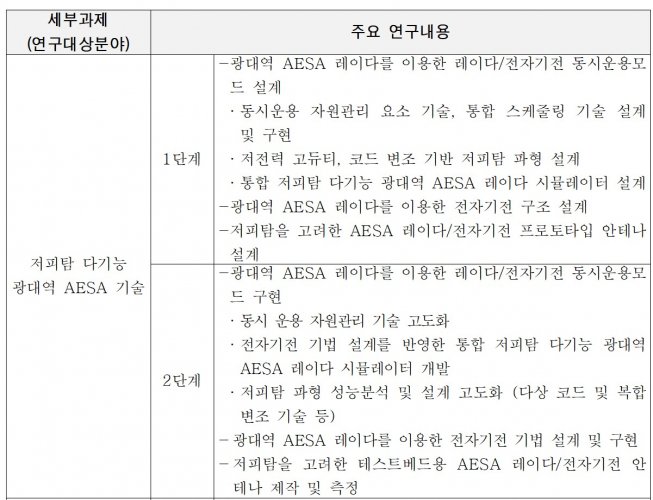
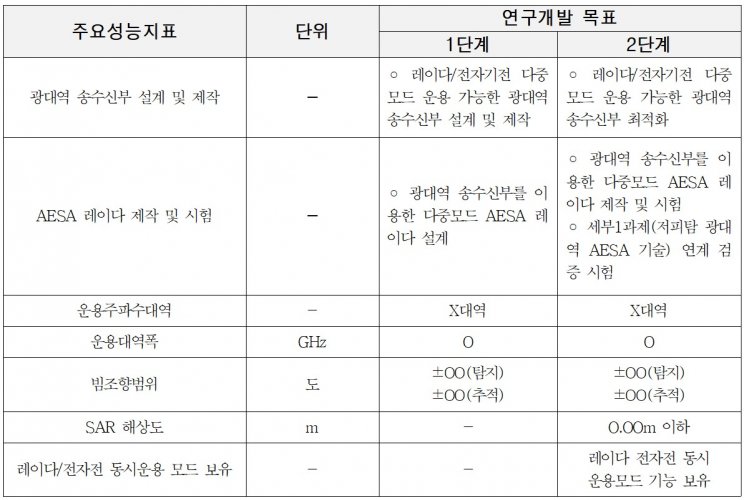
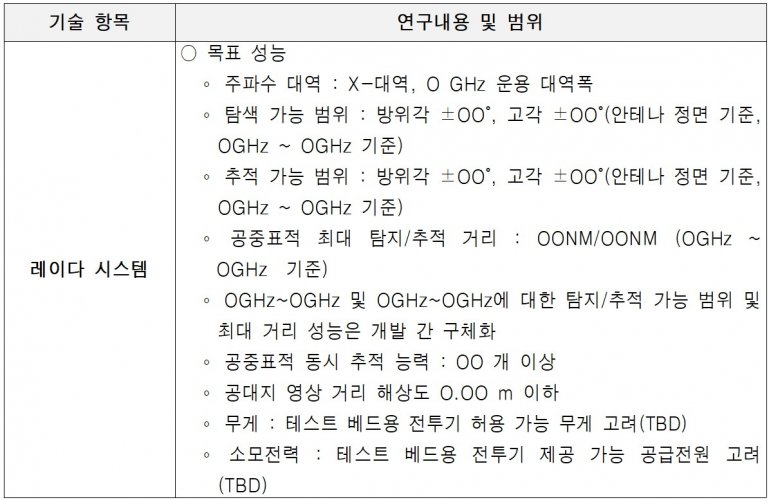
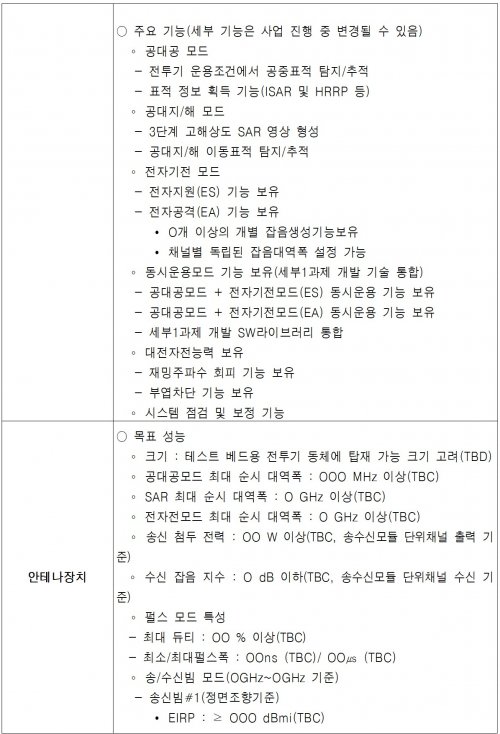
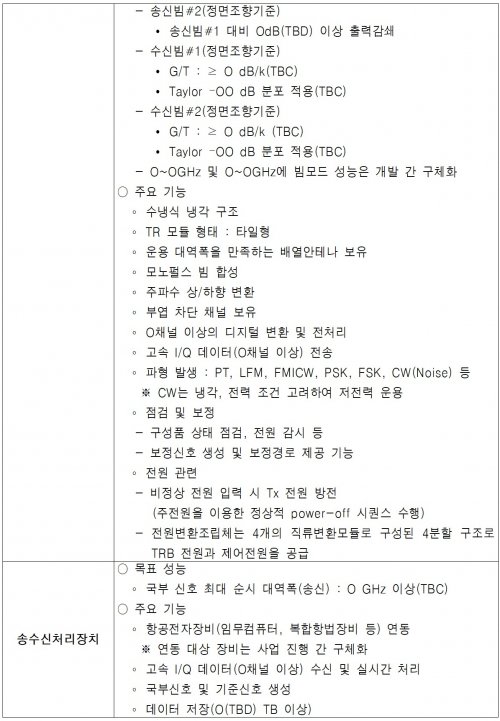
Low Observable Wideband Multifuncional AESA Radar Prototype RFI, which (RFI says) will be used core technology for KF-21 performance enhancement program and Next gen fighter program, has been released at last month. Specific values are censored, but we can find its basic functionality.
- Operating Frequency: X-band, O GHz bandwidth
- A2A instantaneous bandwidth: wider than OOO MHz
- SAR instantaneous bandwidth: wider than O GHz
- EW instantaneous bandwidth : wider than O GHz
- Implement Air2Air, Air2Surface, Electic Support, Electric Attack mode
- A2A + EW stimultaneous mode support
- Low power - High duty multi phase code modulation LPI waveforms
- Support PT, LFM, FMICW, PSK, FSK, CW waveforms
- EA mode can transmit several numbers of noise waveforms simultaneously and each channel's noise can be controlled independently.
- Water cooled
- Tile architecture w\ OO W transmit power and O db receive noise figure per each TRM
- Mono pulse beam synthesis, Frequency up-conversion/down-conversion
- Digital conversion and pre-processing is done by O channels
Last edited:
- Joined
- 29 November 2010
- Messages
- 2,275
- Reaction score
- 5,186
https://aerospaceglobalnews.com/news/kf-21-first-delivery-export-customers/
TLDR: Discussions with Indonesia, Philippines, UAE, Malaysia
TLDR: Discussions with Indonesia, Philippines, UAE, Malaysia

ComradeVortex
Air Combat is a Beautiful Ballet of Death.
- Joined
- 11 April 2025
- Messages
- 908
- Reaction score
- 2,579
AGN reported that part of Indonesia’s compensation is to receive one of the prototype aircraft. It had been expected to order 48 KF-21s, but now the number is estimated at 16.
https://m-sedaily-com.cdn.ampprojec...ttps://m.sedaily.com/article/2006833320068333
<<Indonesia, the development partner for the KF-21, is the top priority potential customer. Initially, the plan was to bear about 20% of the total development costs and acquire up to 48 fighter jets, but the contract was modified by reducing the contribution to 600 billion won and narrowing the scope of technology transfer, and negotiations for the export of completed aircraft are currently underway.The estimated volume is 16 units, and the contract value is approximately 3 trillion won.>>
Korean media claims that Indonesia order of 16 KF-21 will be valued for KRW 3 Trillion or USD 2 Billion. However, the total number of aircraft is still at 48. 16 is just the initial order of Blk 1 aircrafts, which we have less interest in.
snne
ACCESS: Top Secret
- Joined
- 3 July 2022
- Messages
- 2,408
- Reaction score
- 8,848
Oof. This is baseless speculation on my part and nothing more, but I guess Infonesia tried to cancel the contract and structure their near-term procurement plans around 48+ (~60) Rafales due to more favorable terms (?) but still couldn't get out --I mean, the signs have been there for quite a while!Initially, the plan was to bear about 20% of the total development costs and acquire up to 48 fighter jets, but the contract was modified by reducing the contribution to 600 billion won and narrowing the scope of technology transfer, and negotiations for the export of completed aircraft are currently underway.The estimated volume is 16 units, and the contract value is approximately 3 trillion won.>>
Otherwise, inducting only a single squadron's worth of aircraft simply doesn't justify the logistics at all...
Indonesia and Philippines are obviously the main prospective export destinations for this jet...TLDR: Discussions with Indonesia, Philippines, UAE, Malaysia
Geopolitically, UAE is the Arabian counterpart to Israel in the MENA (having burned bridges with everyone), and they can't get the F-35 or the Kaan --that leaves only the KF-21 in the Western camp that will become available in the near future... Then again, they're already receiving the first aircraft from their large Rafale F4 order...
Malaysia, however, makes no sense from a requirements standpoint unless their bureaucracy is being courted again, if you know what I mean. This is a great opportunity for them to consolidate their small fleet (7 F/A-18 + 18 Su-30MKM) around a single type, and inducting a small number of 4.5th-generation jets (Block 1/2 --5th-gen Boramae isn't due until ~2030 at the earliest imho) as a Hornet (or even a Flanker) replacement makes no sense in this case either...
Last edited:
Ainen
I really should change my personal text
- Joined
- 25 August 2011
- Messages
- 2,819
- Reaction score
- 4,925
They just announced EXT basically. Even if all development was already done, if it's flown this year - 2030 would've been unrealistic.Malaysia, however, makes no sense from a requirements standpoint unless their bureaucracy is being courted again, if you know what I mean. This is a great opportunity for them to consolidate their small fleet (7 F/A-18 + 18 Su-30MKM) around a single type, and inducting a small number of 4.5th-generation jets (Block 1/2 --5th-gen Boramae isn't due until ~2030 at the earliest imho) as a Hornet (or even a Flanker) replacement makes no sense in this case either...
2035 is the earliest possible day from current inputs, and for they have to execute with same vigor as now.
2037-8ish IOC sounds most realistic.
snne
ACCESS: Top Secret
- Joined
- 3 July 2022
- Messages
- 2,408
- Reaction score
- 8,848
Yeah, I had the earliest theoretically possible emergence -- i.e., the accelerated development and maiden flight of the "basic shell" of the aircraft -- in mind when I wrote that; but they've certainly been working on it for a while...They just announced EXT basically. Even if all development was already done, if it's flown this year - 2030 would've been unrealistic.
2035 is the earliest possible day from current inputs, and for they have to execute with same vigor as now.
2037-8ish IOC sounds most realistic.
All the testing, sensor integration, indigenous engine integration/certification, IWB certification, upgrades, etc., would certainly take much longer than that, with deliveries taking even longer.
Last edited:
ComradeVortex
Air Combat is a Beautiful Ballet of Death.
- Joined
- 11 April 2025
- Messages
- 908
- Reaction score
- 2,579
I guess Infonesia tried to cancel the contract and structure their near-term procurement plans around 48+ (~60) Rafales due to more favorable terms (?) but still couldn't get out --I mean, the signs have been there for quite a while!
Otherwise, inducting only a single squadron's worth of aircraft simply doesn't justify the logistics at all...
Huh? There is no final decision regarding the Rafale, that's also pure speculation. It makes no sense to dump the KF-21 when we're a part supplier. No FAL doesn't mean dumping KF-21. Indonesia is still getting the 5th prototype airframe, technical documentation, and operational experience.
snne
ACCESS: Top Secret
- Joined
- 3 July 2022
- Messages
- 2,408
- Reaction score
- 8,848
Huh? There is no final decision regarding the Rafale, that's also pure speculation.
This is baseless speculation on my part and nothing more, but I guess
- Joined
- 29 November 2010
- Messages
- 2,275
- Reaction score
- 5,186
some interesting tables from this link
https://www.asiae.co.kr/en/article/2026072209151686038
Translation of the two tables:
Countries Interested in Acquiring the KF-21
Status of Indonesia’s Fighter Aircraft Acquisition Efforts
Currency: South Korean won
That's some very aggressive pricing from the KF-21 and I have some doubts.
https://www.asiae.co.kr/en/article/2026072209151686038
Translation of the two tables:
Countries Interested in Acquiring the KF-21
| Country | Potential order | Requirement/interest |
|---|---|---|
| Saudi Arabia | 54 aircraft | Requests fifth-generation-or-higher capabilities |
| United Arab Emirates | 48 aircraft | Requests fifth-generation-or-higher capabilities |
| Philippines | 20 aircraft | Requests a financing-assistance program |
Status of Indonesia’s Fighter Aircraft Acquisition Efforts
Currency: South Korean won
| Aircraft | Quantity and estimated value | Status |
|---|---|---|
| Rafale | 42 aircraft — approximately ₩10.7 trillion | Contract completed; financed through loans from French banks |
| F-15EX | 36 aircraft — approximately ₩17 trillion | MOU signed with the manufacturer, U.S.-based Boeing |
| KF-21 | 48 aircraft — approximately ₩7.7 trillion | Government-to-government MOU signed in July 2010 |
| TF-X | 48 aircraft — approximately ₩14 trillion | Government-to-government MOU signed in July 2025 |
That's some very aggressive pricing from the KF-21 and I have some doubts.
Ainen
I really should change my personal text
- Joined
- 25 August 2011
- Messages
- 2,819
- Reaction score
- 4,925
KAI did the same thing in Poland.That's some very aggressive pricing from the KF-21 and I have some doubts.
(and tbh one more stone in my belief that KF-21, for now at least, is a MiG-29 reincarnation haha)
ComradeVortex
Air Combat is a Beautiful Ballet of Death.
- Joined
- 11 April 2025
- Messages
- 908
- Reaction score
- 2,579
Korean media claims that Indonesia order of 16 KF-21 will be valued for KRW 3 Trillion or USD 2 Billion.
120-122 million USD per aircraft.
ComradeVortex
Air Combat is a Beautiful Ballet of Death.
- Joined
- 11 April 2025
- Messages
- 908
- Reaction score
- 2,579
Some of us aren't willing to pay...
Ainen
I really should change my personal text
- Joined
- 25 August 2011
- Messages
- 2,819
- Reaction score
- 4,925
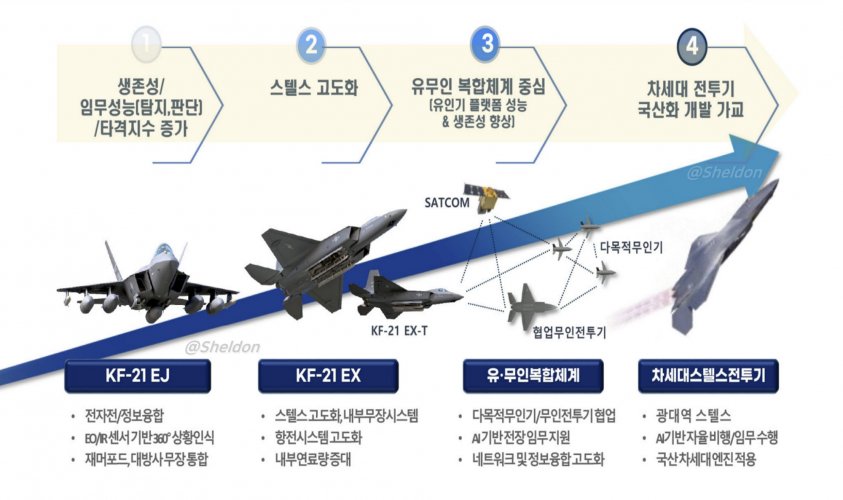
View: https://x.com/sheldon3103/status/2079810291143999683?s=20
More Sheldon graphics, this time with some additional details on EJ(former EA?). Interestingly, strike and EW expansion("Krowler") is a single step, and quite possibly more or less a single airframe(twin seater?).
Will get sensor fusion and EODAS.
Last edited:

I have to seriously question the Philippines ability to afford the KF-21. I am sure they would like it but does anyone seriously think they will have the budget to acquire and operate, even if the Koreans offer favourable terms?some interesting tables from this link
https://www.asiae.co.kr/en/article/2026072209151686038
Translation of the two tables:
Countries Interested in Acquiring the KF-21
Country Potential order Requirement/interest Saudi Arabia 54 aircraft Requests fifth-generation-or-higher capabilities United Arab Emirates 48 aircraft Requests fifth-generation-or-higher capabilities Philippines 20 aircraft Requests a financing-assistance program
Status of Indonesia’s Fighter Aircraft Acquisition Efforts
Currency: South Korean won
Aircraft Quantity and estimated value Status Rafale 42 aircraft — approximately ₩10.7 trillion Contract completed; financed through loans from French banks F-15EX 36 aircraft — approximately ₩17 trillion MOU signed with the manufacturer, U.S.-based Boeing KF-21 48 aircraft — approximately ₩7.7 trillion Government-to-government MOU signed in July 2010 TF-X 48 aircraft — approximately ₩14 trillion Government-to-government MOU signed in July 2025
That's some very aggressive pricing from the KF-21 and I have some doubts.

