Super Rafale

insidersource

ACCESS: Top Secret
Joined
24 March 2025
Messages
521
Reaction score
745
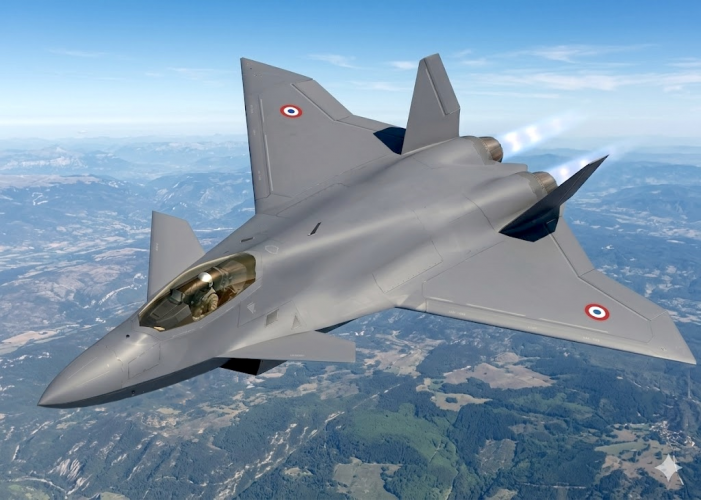
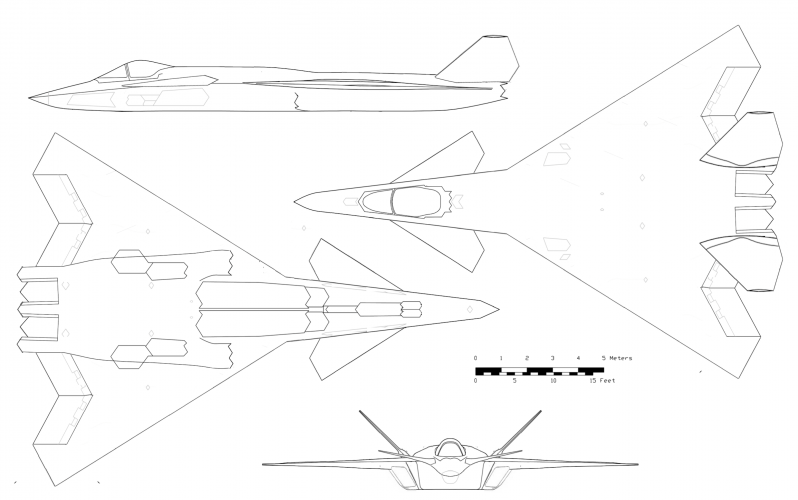
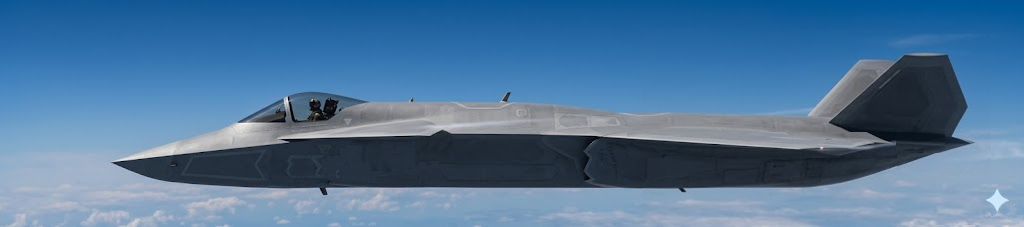
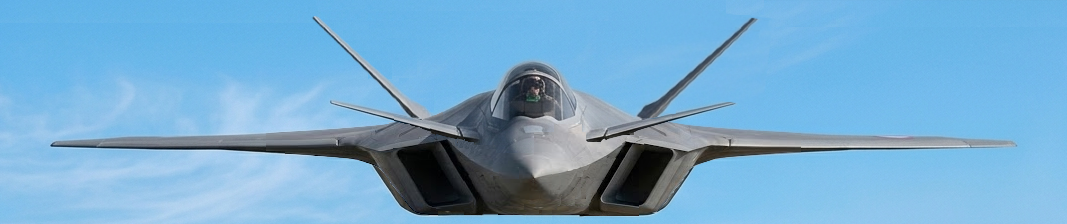
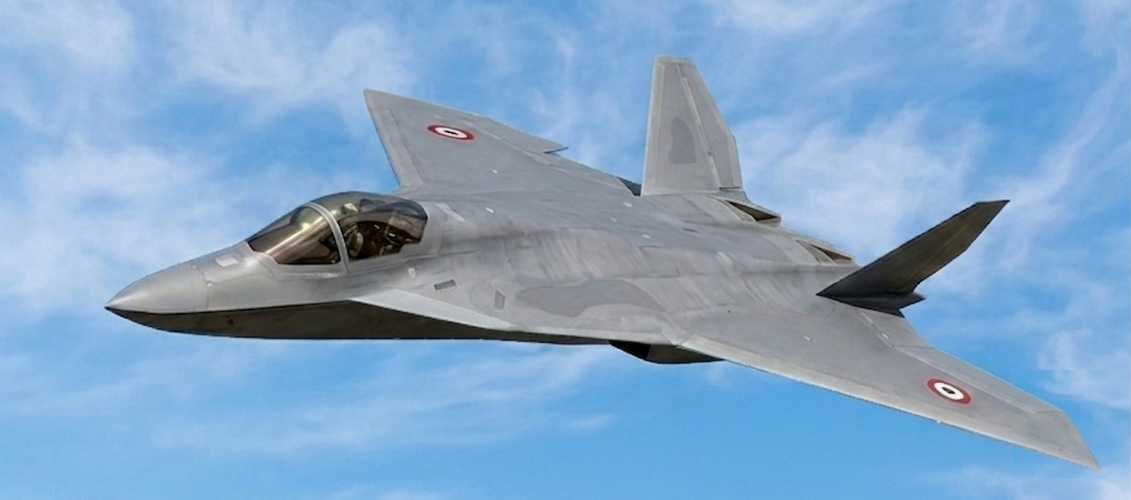
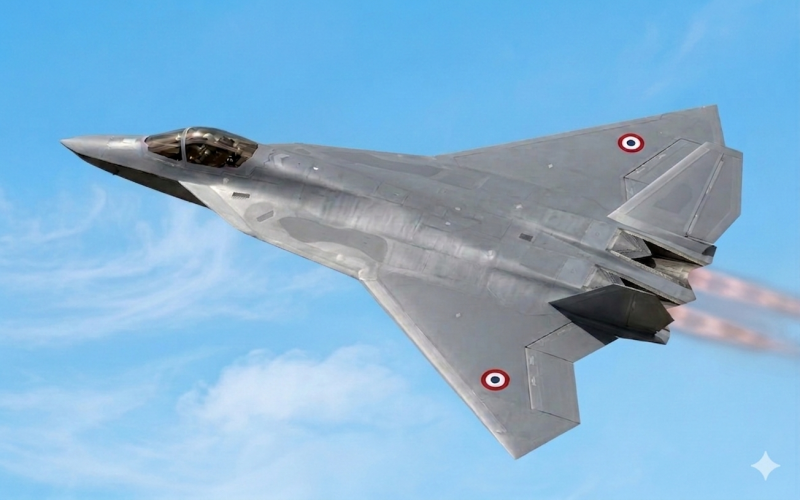
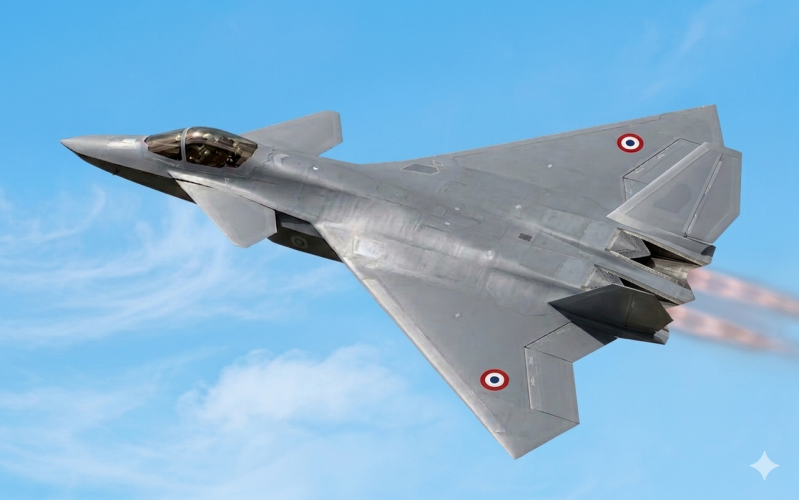
Over the years I have seen countless people discuss theoretical designs for a Super Rafale. Quite a few people have used the Super Hornet as an example where all the expensive systems were fitted into a slightly larger airframe with a reduced radar cross section. This allowed the Super Hornet to be a relative low cost development and it might be something France is forced to do due to budget constraints.

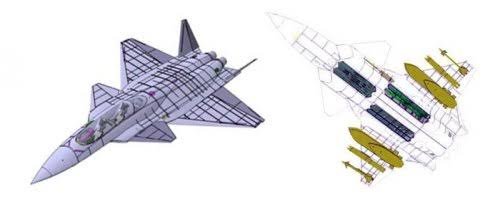
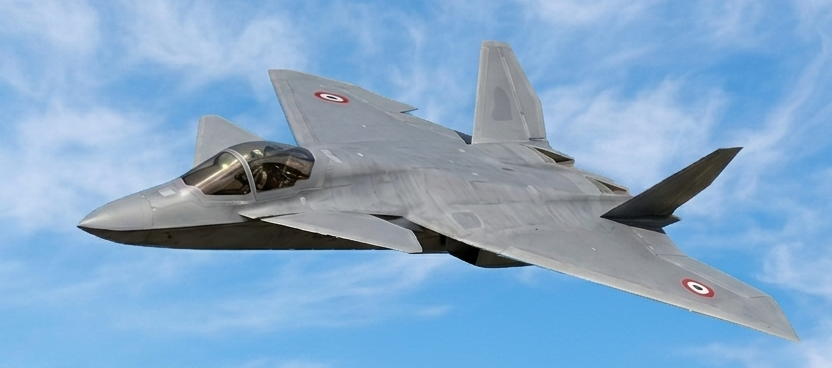
super rafale.jpg rafale bottom.jpg

This theoretical design will reuse all the key systems from the Rafale F5. All avionics, cockpit displays, radar, ECM, hydraulics, fly by wire systems, life support, landing gear and engines.

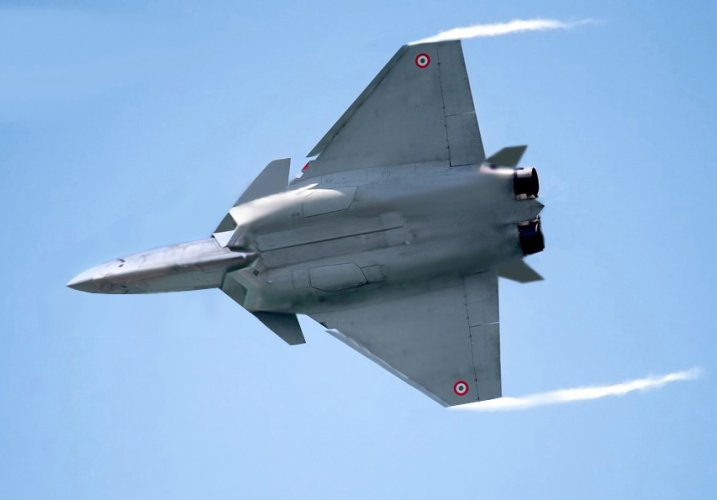
Like with the Super Hornet how it went from circular intakes square intakes the Super Rafale will go from circular intakes to square intakes similar to the F-22 and KF-21. Twin canted tails are fitted.

The theoretical design moves the engines apart by a couple feet to make space for a single narrow but deep central weapon bay. This decision was made to allow a single fairly large French nuclear missile.

France has many weapons that are highly suitable for internal carriage. The weapon bay would allow for six MICA medium range missiles on a simple rotary launcher. The MICA missiles are about 75% of the size of an AMRAAM.

Short range defenses would use Mistral missiles that have capability between a Stinger missile and a Sidewinder missile. As they are tube launched Four Mistral missiles take up the same internal volume as a Sidewinder. Two Mistral missiles take up the same internal volume as a typical fighter cannon. With the USAF fitting 70mm rockets to their aircraft to shoot down drones I think the Mistral is a perfect compromise. Mistral is good enough to take out an enemy fighter in the dogfight but cheap and small enough to carry quite a few for the anti-drone work.

In terms of engines the M88 T-rex engines on the Rafale F5 will have 20% increased thrust and will exceed 20,000lb of thrust. This should be sufficient for a Super Rafale with an empty weight around 25,000lb.

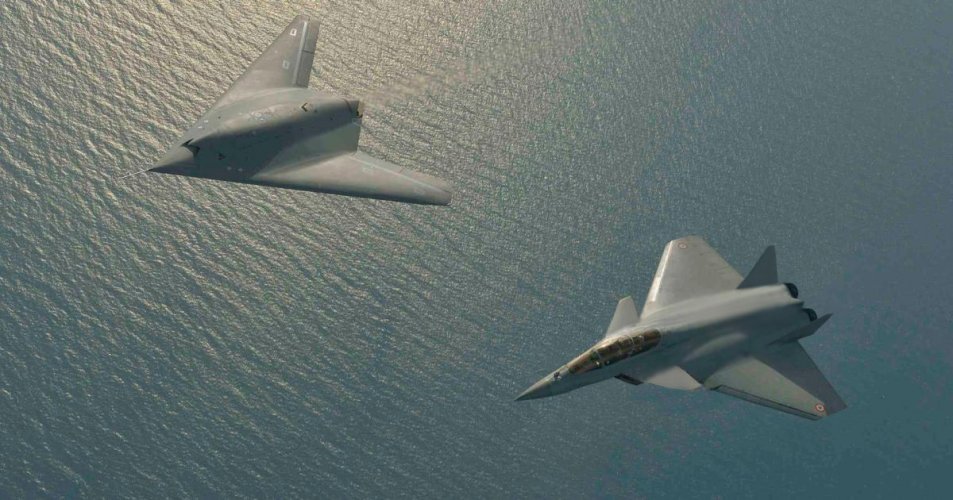
In terms of radar cross section it does not need to achieve US 6th generation standards to be competitive. It will still be a huge improvement over the Rafale. If it could achieve F-35 levels of stealth that would be great. The Super Rafale would be paired with the Dassault Neuron loyal wingman drone in high threat environments.
 
Last edited:
If they go with canards I think a lambda wing like the Airbus Loyal Wingman and some of the early Tempest renderings is more likely, due to the better RCS signature from the aligned trailing edges.

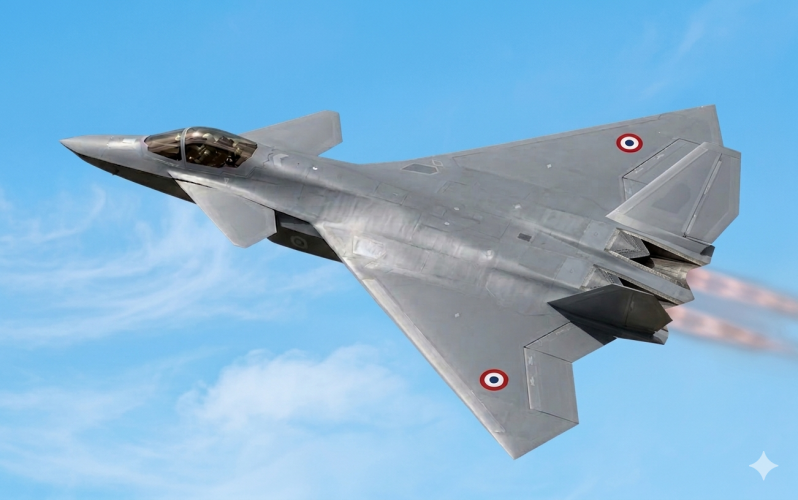
Something like this... (I used Gemini to turn the Airbus LW into a manned twin engine fighter). The rendering isn't perfect but a configuration similar to this could certainly provide plenty of lift and control authority for carrier compatibility.

As for size and weight I don’t see how they can make it smaller than the 15t empty that’s been widely quoted. If that means a scaled up M88 T-REX with a larger diameter fan to get to 12t thrust well that’s not an unreasonable investment.
 

Attachments

  • FCAS NGF Airbus Gemini  v2.png
    FCAS NGF Airbus Gemini v2.png
    1,008.1 KB · Views: 126
Last edited:
As for size and weight I don’t see how they can make it smaller than the 15t empty that’s been widely quoted. If that means a scaled up M88 T-REX with a larger diameter fan to get to 12t thrust well that’s not an unreasonable investment.
The F-35A is only 13.3 ton and it has more than enough range and internal weapons bays volume for the French requirement. There is no need for the French aircraft to be heavier than the F-35.

A pair of the Safran normal diameter M88 engines can easily match the thrust of the single F135 engine in the F-35.
 
A pair of the Safran normal diameter M88 engines can easily match the thrust of the single F135 engine in the F-35.
The M88 T-REX is billed as "almost 9 tonnes" thrust, so let's say 17.5t thrust with 2x M88s.
The F135 is a 19.5t thrust engine (43,000lbf)

So that's a 10% thrust gap. Given that the F-35 is hardly known for being the most dynamic performer, I can't see M88 T-REX being acceptable. However could make a great starting point for scaling with a larger diameter fan...
 
So that's a 10% thrust gap. Given that the F-35 is hardly known for being the most dynamic performer, I can't see M88 T-REX being acceptable. However could make a great starting point for scaling with a larger diameter fan...
To be fair, F-35 not being dynamic is mostly due to the length limitation and resulting compromise.
F414s apparently can carry a reasonable bay jet around; so can the T-REX?

Just don't try to fit AASM-1000 inside...
 
So that's a 10% thrust gap. Given that the F-35 is hardly known for being the most dynamic performer, I can't see M88 T-REX being acceptable.
It is a 8.2% thrust gap with the current T-rex M88 variant. This gap could close with normal growth without fitting a bigger fan.

Thrust-to-weight ratios peaked at the end of the 20th century to provide good sustained turn performance in a multi turn dog fight. This has become less of a priority with the newest designs. Tempest and the original NGAD renderings showed large F-111 sized designs. High speed is more about aerodynamics and the French aircraft would have much better transonic aerodynamics than the F-35.

The original Rafale had reasonable kinematic performance. The latest M88 engines have 20% more thrust. If we bump the Rafale empty weights up by 20% that gives an empty weight of 11.8 ton and 12.7 ton for the land and naval version. The KF-21 is 11.8 ton and it has space internally for two 2,000lb bombs. Dassault can reuse the existing Rafale landing gear if the weight doesn't increase too much.

This forum has a few lightweight stealth designs using a single F414 engine including your Zephyr NG design. They have empty weights under 7 ton with a small weapon bay. I don't think France needs a 15 ton design.
 
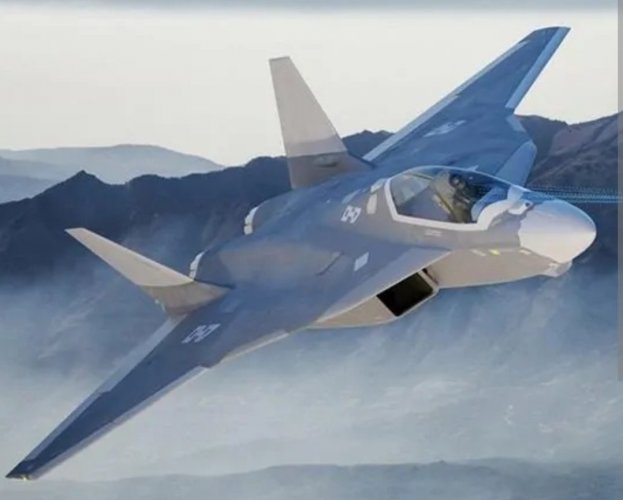
Personally I like this version of FCAS as a Super Rafale:

FCAS-Fighter.jpg
 
I don't think France needs a 15 ton design.
Oh we wants and we needs: our Phantom (Mirage IVC, 1958), then our Tornado, our F-15.
BUT, fact is, every time we tried, it failed at the procurement cost step - Mirage G4/G8, then ACF, then 4000. All three wholly unaffordable. Dassault complied with the AdA flawed RFPs despite being painfully aware of that procurement cost brickwall, the end result was four splendid prototypes - G8-01, G8-02, ACF, 4000 - none of them affordable (the ACF wasn't even finished nor flown and scrapped in 1976 - total waste)

Rafale "magic" was to shrink the turbofans from F100 to F404 size (M53 to M88) and de facto the plane around them shrunk from F-15 to F-18 mass and size, which dropped the unit cost - somewhat. Still it remained too expensive and the solution was to enlist the Aéronavale on top of the AdA and replace every single type.

Very broadly speaking (not direct replacement by Rafale I mean) if we compare today with the 1993 french military, gone are: Mirage IIIE, Mirage V, Crusader, Etendard IVP, Super Etendard, Mirage IVP, Mirage F1C/CR/CT, Mirage 2000B/C/N and Jaguar: 13 planes / variants, or even 15 when the 2000D/ -5F will be replaced too.

The AdA procured 473 Mirage III of every kind, then 160 Jaguars, then 246 +315 F1 & 2000. Quite a lot of planes.

During the Cold War the AdA staunchly refused to shrink its combat jet force below a 450 treshold; even if it meant keeping obsolete types. Meanwhile the Aéronavale hovered around 100 combat jets: between Crusader losses and reduction in Super Etendard numbers from 90 (like the Etendard IV before) to 71. All in all, that was a 500+ combat jet pool to replace.

Rafale did not directly replaced all of them but certainly can do every single mission of all them. This is how it was afforded: a "great replacement", to say the least..
 
Last edited:
Isn't that the Airbus FCAS Design?
Yes it is.

Now I assume the leading edge extensions, the lighter shaded area are movable. Similar to the Su-57 and Tejas.
FCAS.jpg


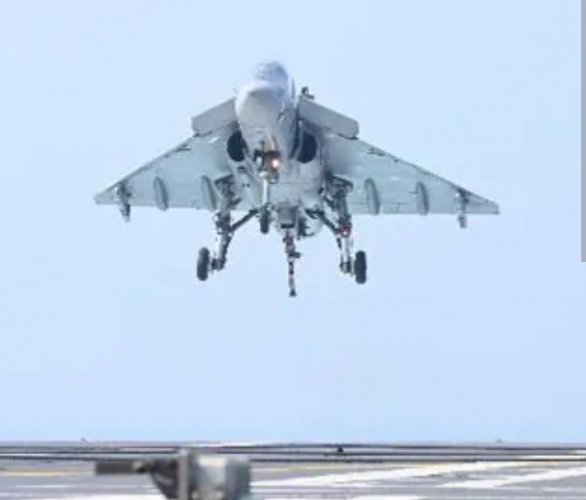
Here is the Tejas Mk1 landing. The leading edge extensions point upwards. However note that no wing flaps can be used. The trailing edge of the Tejas wing effectively acts like an elevator causing the aircraft to pitch down. The aircraft's angle of attack was extremely high during the carrier trials making it unsuitable.
Tejas.jpg

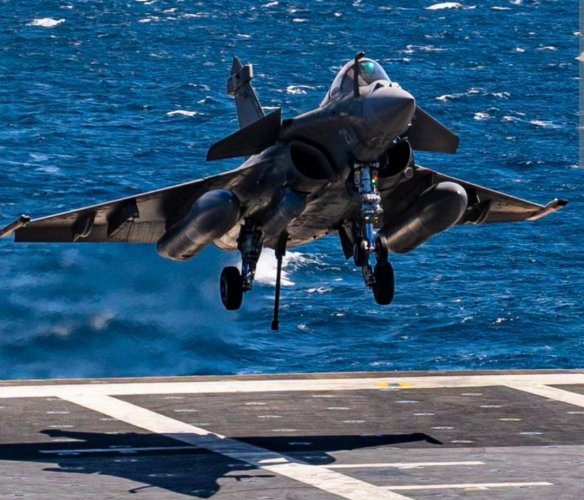
The Rafale by comparison can have the trailing edge of the wing angled down. This produces extra lift at the rear of the aircraft. The front canards provide extra lift to then compensate for the pitching down movement.

Rafale M.jpg

This highlights the superior carrier performance of the delta canard layout. The Tejas Mk2 now has proper canards like the Rafale.

The French must stick with canards. This will also be the primary reason Boeing went with canards it allows one general design to be offered to both services.
 
Last edited:
Fact is, every time we tried, it failed at the procurement cost step - Mirage G4/G8, then ACF, then 4000. All three wholly unaffordable. Dassault complied with the AdA RFP despite being painfully aware of that procurement cost brickwall, the end result was four splendid prototypes - G8-01, G8-02, ACF, 4000 - none of them affordable.
I think the key will be to use as many of the existing Rafale systems to keep the costs down. The avionics, engines and systems now make up the vast majority of the development cost of the latest fighter designs.

Now if France only needs to make a Rafale sized airframe then this will easily pass the procurement cost step. With digital design I think the airframe part is becoming increasingly cheaper.

France has been extremely smart when it comes to Rafale procurement. They have been ordering far more aircraft than they need to keep the line running smooth. They then sell half used Rafale on the second hand market to make way for brand new aircraft. This not only keeps the fleet fresh but allows the Rafale to picked up by countries that would only be able to afford F-16's. It is a brilliant strategy.

Rafale did not directly replaced all of them but certainly can do every single mission of all them. This is how it was afforded: a "great replacement", to say the least..
Similar to what the US Navy did with the Super Hornet when the budgets started shrinking. The Super Hornet proves ita not always about maximum performance.

I don't think France needs to aim for a radar cross section lower than the F-35. I also don't think it needs any extra speed or agility over the F-35. These will cause the project to fail the procurement cost step. Rafale sold very well to countries that didn't have access to the latest US technology. No country could block a sale. France has always made great value for money and medium capability fighters. France should then build an $100 million aircraft that would be 5th generation by definition/performance.

Building a $200 million aircraft that is 6th gen by definition and vastly exceeds the F-35 would be a very bad move.
 
Over the years I have seen countless people discuss theoretical designs for a Super Rafale. Quite a few people have used the Super Hornet as an example where all the expensive systems were fitted into a slightly larger airframe with a reduced radar cross section. This allowed the Super Hornet to be a relative low cost development and it might be something France is forced to do due to budget constraints.

View attachment 815193View attachment 815194

This theoretical design will reuse all the key systems from the Rafale F5. All avionics, cockpit displays, radar, ECM, hydraulics, fly by wire systems, life support, landing gear and engines.

Like with the Super Hornet how it went from circular intakes square intakes the Super Rafale will go from circular intakes to square intakes similar to the F-22 and KF-21. Twin canted tails are fitted.

The theoretical design moves the engines apart by a couple feet to make space for a single narrow but deep central weapon bay. This decision was made to allow a single fairly large French nuclear missile.

France has many weapons that are highly suitable for internal carriage. The weapon bay would allow for six MICA medium range missiles on a simple rotary launcher. The MICA missiles are about 75% of the size of an AMRAAM.

Short range defenses would use Mistral missiles that have capability between a Stinger missile and a Sidewinder missile. As they are tube launched Four Mistral missiles take up the same internal volume as a Sidewinder. Two Mistral missiles take up the same internal volume as a typical fighter cannon. With the USAF fitting 70mm rockets to their aircraft to shoot down drones I think the Mistral is a perfect compromise. Mistral is good enough to take out an enemy fighter in the dogfight but cheap and small enough to carry quite a few for the anti-drone work.

In terms of engines the M88 T-rex engines on the Rafale F5 will have 20% increased thrust and will exceed 20,000lb of thrust. This should be sufficient for a Super Rafale with an empty weight around 25,000lb.

In terms of radar cross section it does not need to achieve US 6th generation standards to be competitive. It will still be a huge improvement over the Rafale. If it could achieve F-35 levels of stealth that would be great. The Super Rafale would be paired with the Dassault Neuron loyal wingman drone in high threat environments.
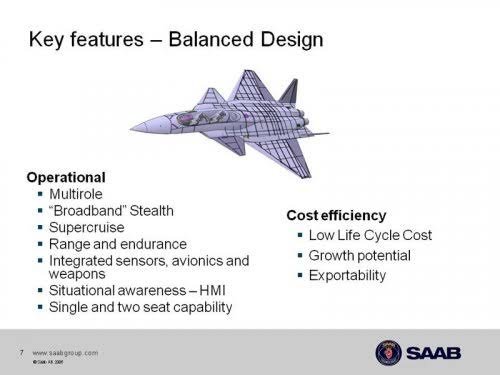
"This theoretical design will reuse all the key systems from the Rafale F5. All avionics, cockpit displays, radar, ECM, hydraulics, fly by wire systems, life support, landing gear and engines." This is what SAAB is planning for their next fighter.
 
"This theoretical design will reuse all the key systems from the Rafale F5. All avionics, cockpit displays, radar, ECM, hydraulics, fly by wire systems, life support, landing gear and engines." This is what SAAB is planning for their next fighter.

SAAB wants to use the F-414 and a GAAS based radar antena in... 2050/60?
I have some troubles believing that.
The old SAAB FS2020/GFF concept was designed around a "new" 17 tons thrust engine.
 
SAAB wants to use the F-414 and a GAAS based radar antena in... 2050/60?
I have some troubles believing that.
I also don't believe that. A small design with a single F414 engine would have a fairly small weapon bay. 2 or 3 air to air missiles is not really sufficient even for Sweden.

The old SAAB FS2020/GFF concept was designed around a "new" 17 tons thrust engine.
Yes, I remember this. Weights and thrust would be very similar to the Rafale. The Swedish requirement is extremely close to the French requirement in terms of size. The slow landing performance would also be similar with Sweden operating from short roads while France operates from carriers.

If we look at the lightweight stealth fighter proposals on this forum. It's nearly impossible to get the empty weight below 10 ton while keeping 4+ internal missions and 500nm combat radius. Going about 10% smaller/lighter than the F-35A would be as small as you want to go for a manned stealth fighter. To get this smaller size then weapon bays have to be smaller. I've dropped down to a single central weapon to allow a single large 2,000lb bomb or JASSM sized cruise missile. That bay is then big enough for a rotary launcher for air-to-air missiles.

The Saab FS2020 even has a small twin engine layout. Very similar to a Super Rafale in size.
Saab 2020.jpeg
Saab 2020 fighter.jpeg
Now for a twin engine design I assume Saab was going to use a pair of Gripen F414 engines which means it's a F-35 sized fighter. I doubt they were going to make their own ~15,000lb thrust engine to keep it a light fighter. The M88 engines are actually the smallest western fighter engine about 10% smaller/lighter than the EJ200 and F414. A pair of M88 engines giving nearly 40,000lb of thrust would be perfect for a smaller manned stealth fighter. A single F110 with only 32,500lb of thrust would probably be insufficient. A single XA102 or XA103 would actually be perfect for a smaller manned fighter.
 
Given that the F-35 is hardly known for being the most dynamic performer,
Are you pulling our legs ?
F-35 is even not supercruising, so definitively not "the most dynamic performer".
 
To be fair, F-35 not being dynamic is mostly due to the length limitation and resulting compromise.
F414s apparently can carry a reasonable bay jet around; so can the T-REX?

Just don't try to fit AASM-1000 inside...
Among these compromises, the VTOL version has a bad impact on the 2 others. It was the main error of the whole program.
 
To be fair, F-35 not being dynamic is mostly due to the length limitation and resulting compromise.
F414s apparently can carry a reasonable bay jet around; so can the T-REX?

Just don't try to fit AASM-1000 inside...
I agree.
To limit the size, so the cost, of a futur jet it is possible to design the internal bays just for AA missiles and some light air to ground ones, just to destroy SAM and radars. Once air superiority acquired, you can put heavy ordances under the wings to destroy all the rest.
 
Are you pulling our legs ?
F-35 is even not supercruising, so definitively not "the most dynamic performer".
H_K meant that the F-35 is NOT a dynamic performer. I always use clear English in my posts to make it easy for non-english speakers to understand.

Among these compromises, the VTOL version has a bad impact on the 2 others. It was the main error of the whole program.
Most people agree with this. The VTOL version caused the design to be short and fat. A few other factors when combined causes a large performance hit.

For instance the Rafale only has a 8% empty weight increase for its carrier version and the carrier version can still supercruise. The Rafale is actually the fastest carrier aircraft in history when it comes to not using afterburners. There is very little compromise. The F-35 carrier version had an 18% empty weight increase and it is a slower than a 1950's fighter.

Most of the early JSF renderings had a delta canard design. But it was always slightly heavier compared to a simple mid wing design. The delta canard design offers supersonic performance while being slightly heavier. Weight is a big problem when the design needs VTOL so they had to sacrifice some supersonic performance to get the VTOL.

Delta canard is clearly the way to go. With minor improvement a Mach 1.5 supercruise speed is achievable while still having a low landing speed. I think it is 99% likely that France will go with a delta canard design.
 
The SH18 versus F/A18 exemple is not the best possible !
At its time F/A 18 suffered from lower performances than intended, specially range.
It is worst with SH18, with wings buffer problems hard so solve, and only marginally improved performances over its young brother.

See how the external stores are out canted on SH ! It adds drag, and aerodynamic forces on the stores. A sign of an average aerodynamic solution.

So a Super Rafale built on a 120 or 125% scale Rafale may not be fine.

For me the solution, at least for the beginning, is to rely on the mature and with strong road map weapon system of Rafale (ie F5, F6, F7...) in a brand new frame. 2040 entry in service seems then easy, as it is the weapon system, fully multimission, that takes time to be fine tune.
And in a second time, refresh totally the weapon system, in 2050 if needed.
 
Most people agree with this. The VTOL version caused the design to be short and fat. A few other factors when combined causes a large performance hit.
It wasn't VTOL, it was the hard length limitation.

VTOL with second lift axis(auxiliary jets or fan) itself can be long/slender without any problem...

Anyway, the point stands - you most certainly can make a feasible bay jet on 2x T-REX. The only french length limitation should be the carrier, and it was by default planned for a larger jet than the one we're talking about.
 
It wasn't VTOL, it was the hard length limitation.

VTOL with second lift axis(auxiliary jets or fan) itself can be long/slender without any problem...

Anyway, the point stands - you most certainly can make a feasible bay jet on 2x T-REX. The only french length limitation should be the carrier, and it was by default planned for a larger jet than the one we're talking about.
onother constraint : if this new jet has to carry internally the ASN4G deterrence missile, quite long !
 
onother constraint : if this new jet has to carry internally the ASN4G deterrence missile, quite long !
Well, don't carry it inside then! 5m bay is a huge structural problem.
If you're stealthy, come closer. If your missile is longer ranged, no need to come as close; earth isn't flat...
 
So a Super Rafale built on a 120 or 125% scale Rafale may not be fine.

For me the solution, at least for the beginning, is to rely on the mature and with strong road map weapon system of Rafale (ie F5, F6, F7...) in a brand new frame.
The Super Rafale would also be a brand new frame. To reach the required radar cross section nearly every exterior surface would have to be changed from the current Rafale. Only from a cosmetic perspective would it look slightly similar to Rafale. The twin canted tails is obviously a big cosmetic change. To

The Super Hornet was mostly a brand new frame but it was executed badly. The Super Rafale would not make the same mistake of the Super Hornets canted pylons.

The idea of using existing systems in mostly a brand new frame was a great idea in the Super Hornet. The Super Hornet has done a surprisingly good job over the last 20 years.
 
Well, don't carry it inside then! 5m bay is a huge structural problem.
If you're stealthy, come closer. If your missile is longer ranged, no need to come as close; earth isn't flat...
Indeed.
Some think the deterrent missile to be carry by a UCAV...
 
The idea of using existing systems in mostly a brand new frame was a great idea in the Super Hornet. The Super Hornet has done a surprisingly good job over the last 20 years.
The result was not at the expected level. See how it was badly exported for a US jet.
 
The result was not at the expected level. See how it was badly exported for a US jet.
This has nothing to do with performance and only has to do with keeping the production lines open. Boeing makes both the F-15 and Super Hornet.

When the Super Hornet entered service in 2001 it had 20+ years of production booked for the US Navy. The F-15 in 2001 had no US orders at all. Boeing then pushed every export customer towards the F-15 to keep the line open.

As soon as export customers started buying F-35 Boeing was once again faced with shutting down the F-15 production line. Boeing then conveniently received another USAF order.
 
I like the concept for sure. However, this "Super Rafale" would suffer the same wetted area/"fat"problem the F-35 does, and I'd expect the empty weight to creep quite high compared to the actual Rafale. It's surprising the Rafale can supercruise so well, and widening it out will only be offset so much by internal missile stowage.
 
I like the concept for sure. However, this "Super Rafale" would suffer the same wetted area/"fat"problem the F-35 does, and I'd expect the empty weight to creep quite high compared to the actual Rafale. It's surprising the Rafale can supercruise so well, and widening it out will only be offset so much by internal missile stowage.
Indeed.
From the beginning I though it is interesting to have "small" internal bays for Air to Air missiles and only light air to ground ones, for 2 reasons :
-To carry air to air missiles inside aim a better life span for them.
-You need to stay stealthy until the SAM air radars are destroyed. It can be made by small guided air to ground missiles or bombs.
Once the air superiority obteined, no need to be stealth : so carry heavy ordnances uder the wings.
 
If they go with canards I think a lambda wing like the Airbus Loyal Wingman and some of the early Tempest renderings is more likely, due to the better RCS signature from the aligned trailing edges.

Something like this... (I used Gemini to turn the Airbus LW into a manned twin engine fighter). The rendering isn't perfect but a configuration similar to this could certainly provide plenty of lift and control authority for carrier compatibility.
Here are a couple of updated views of what a twin engine canard/lambda wing NGF might look like. The wing and canard planform is from the Airbus loyal wingman. The overall fuselage shaping is from the YF-23 NATF.

The Airbus LW wing appears to be heavily optimized for low-supersonic drag and supercruise. With the canard providing low speed lift generation, the combination would hopefully provide a good balance of carrier compatible take-off and approach characteristics, and supersonic acceleration & maneuverability.

(The front view doesn't show the intake arrangement very well. These would be recessed under the wing, similar to the YF-23 or Hornet/Super Hornet)
 

Attachments

  • NGF Airbus LW banking front Gemini2.png
    NGF Airbus LW banking front Gemini2.png
    477.1 KB · Views: 73
  • NGF Airbus LW banking rear Gemini2.png
    NGF Airbus LW banking rear Gemini2.png
    1.5 MB · Views: 81
  • F-23N NATF Airbus LW mod 100px=1m.png
    F-23N NATF Airbus LW mod 100px=1m.png
    702.8 KB · Views: 78
  • NGF Airbus LW side Gemini2.png
    NGF Airbus LW side Gemini2.png
    196.6 KB · Views: 48
  • NGF Airbus LW front Gemini2.png
    NGF Airbus LW front Gemini2.png
    365.5 KB · Views: 56
Last edited:
Among these compromises, the VTOL version has a bad impact on the 2 others. It was the main error of the whole program.
Disagree, the weight reductions required by the -B greatly improved the -A.


See how the external stores are out canted on SH ! It adds drag, and aerodynamic forces on the stores. A sign of an average aerodynamic solution.
The canted pylons were caused by a bad CFD analysis program. For whatever reason it wasn't until after the wings were designed that someone thought to validate the program against the Legacy Bug, and the program showed the same stores separations issues happening on Legacy bugs that had not been seen in 20+ years of combat operations.

Then the USN refused to pay for the design change to straight pylons. IMO they should have forced Boeing to do that change due to failed design.


Indeed.
Some think the deterrent missile to be carry by a UCAV...
Not sure I like that idea.

Just a simple reminder that 3 SDBs in tandem are roughly 5.7m long with enough clearance to drop. So there's arguments for a single bay 5.7m long that are not ASN4G.


I like the concept for sure. However, this "Super Rafale" would suffer the same wetted area/"fat"problem the F-35 does, and I'd expect the empty weight to creep quite high compared to the actual Rafale. It's surprising the Rafale can supercruise so well, and widening it out will only be offset so much by internal missile stowage.
All aircraft with IWBs have a fat wetted area. At best you get YF-23 or Su-57.
 
Here are a couple of updated views of what a twin engine canard/lambda wing NGF might look like. The wing and canard planform is from the Airbus loyal wingman. The overall fuselage shaping is from the YF-23 NATF.

The Airbus LW wing appears to be heavily optimized for low-supersonic drag and supercruise. With the canard providing low speed lift generation, the combination would hopefully provide a good balance of carrier compatible take-off and approach characteristics, and supersonic acceleration & maneuverability.
And now here is the NGF in the "Superman" configuration studied by Onera/DLR, i.e. delta wing + LEVCONs (though keeping the lambda trailing edge from the Airbus Loyal Wingman). The fuselage could remain relatively similar to the canard configuration above.

Overall, the result is a slightly more streamlined look than the canard configuration. The LEVCONs should improve stealth and also slightly increase internal fuel capacity (thanks to the volume gained in the wing root). On the other hand, you probably lose performance in low-speed flight and maneuverability in general... which might be less than ideal for the carrier-based version.

While this is just a thought exercise and it's possible that a more conventional configuration could be chosen, such as a cropped delta with tail stabilizers (F-22, F-35) or big delta (GCAP), the navalisation requirement would strongly favor either canards or LEVCONs showing up in the final NGF design in order to achieve maximum lift and better controlability while minimizing weight and drag.
 

Attachments

  • NGF LEVCON Gemini2.png
    NGF LEVCON Gemini2.png
    1.5 MB · Views: 61
  • NGF Levcon banking rear Gemini2.png
    NGF Levcon banking rear Gemini2.png
    1.4 MB · Views: 63
Last edited:
This seems to have almost nothing to do with the Rafale fighter anymore; it looks more like a completely new aircraft.
 
This seems to have almost nothing to do with the Rafale fighter anymore; it looks more like a completely new aircraft.
Well that’s the crux of the question. Why would anyone want to keep any of the Rafale’s shape, beyond the basic aerodynamic concept, ie. Tailless delta with forward control effectors to provide a good balance between supersonic and low speed performance for multirole & carrier operations?

So you have a delta + canard (or LEVCON) with Rafale F5 avionics and a scaled up, upgraded M88 engine. The outer mold line however is going to be entirely new and there’s no reason to carry over anything from Rafale (beyond possibly a few details such as landing gear positioning).
 

Similar threads

Back
Top Bottom