
You are using an out of date browser. It may not display this or other websites correctly.
You should upgrade or use an alternative browser.
You should upgrade or use an alternative browser.
French 6th generation fighter
- Thread starter Titus K
- Start date
Can I ask the obvious questions
1. How much is it expected to cost to develop and field a 6th gen aircraft and how does Fance expect to pay for it?
2. What partners do people see coming onboard a French 6th gen effort or will France chose to go alone as they did with Rafale?
3. 2040 for a single nation effort all of a sudden seems very soon...
In answer to question 1, I don't see how France currently affords this effort
In answer to question 2, India, the UAE and maybe even Indonesia are some obvious partners but that would require France and Dassault to hand over some non production work to future partners.
1. How much is it expected to cost to develop and field a 6th gen aircraft and how does Fance expect to pay for it?
2. What partners do people see coming onboard a French 6th gen effort or will France chose to go alone as they did with Rafale?
3. 2040 for a single nation effort all of a sudden seems very soon...
In answer to question 1, I don't see how France currently affords this effort
In answer to question 2, India, the UAE and maybe even Indonesia are some obvious partners but that would require France and Dassault to hand over some non production work to future partners.
1. How much is it expected to cost to develop and field a 6th gen aircraft and how does Fance expect to pay for it?
I've estimated €20-25B for development based on historical programs including F-22, Rafale etc. Certainly possible to spend a lot more (you could easily spend double that)... but also possible to spend less (see KF-21 and Kaan, or F/A-18E in the 1990s) by adopting a more incremental technology approach in some areas (e.g. scaling up the M88 T-REX engine and re-using Rafale F5 avionics for the initial production standard, packaged inside a new 6th gen airframe).
Production costs would be another ~€25B for 200 stealth fighters assuming a 30% unit cost increase over Rafale (primarily due to the increased empty weight, higher thrust engines etc). Total program cost ~€50B in 2025 currency, spread over 35-40 years.
This is assuming good control of requirements, technical risk, and therefore costs. Also some exports to increase efficiencies of scale. Of course the sky's the limit if you set overly ambitious requirements and manage the program inefficiently.
2. What partners do people see coming onboard a French 6th gen effort or will France chose to go alone as they did with Rafale?
Spain or Saab (or both) would the ideal partners. Neither seems particularly likely as they may prefer collaborating with Germany or another program (Kaan for Spain?). However both were involved in Neuron so there's some past history.
3. 2040 for a single nation effort all of a sudden seems very soon...
2040 is 14 years from now. F-35 was delivered in the same amount of time (1996-2010). Korea and Turkey are on track to deliver KF-21 and Kaan in less than that, starting with much less but re-using existing technology building blocks to reduce risk and accelerate development.
A rough timeline example (based on those other projects) would be to get the demonstrator to fly in 2030-31 (initial target was 2029), the first prototype to fly in ~2035, and the first series production aircraft delivered in 2040.
For Dassault, the Rafale F5 technologies that may be reusable are the avionics + M88 T-Rex engine, which could serve as a starting point for derivative development (much like the Super Hornet's F414 engine and avionics were derived from the F/A-18). Perhaps also the FCS (flight data processing, control logic, autopilot modes including terrain following, carrier auto-land etc), obviously with new parameters adapted to a different aerodynamic configuration). The key is to balance risk by setting a high bar for the stealthy airframe, but packaging it internally with lower risk, known technologies... potentially leaving some avionics and engine upgrades for later Blocks.
Last edited:
insidersource
ACCESS: Top Secret
- Joined
- 24 March 2025
- Messages
- 521
- Reaction score
- 745
Do you have a source where they said 6th generation? Every source I can find has always said "next" generation.Not much to post yet, but i'm creating a thread for the french 6th generation program.
The Minister of the Armed Forces just annonced at the senate a target in service date of 2040.
France and Dassaults backup plan has always been to make a 5th generation aircraft. The engines, avionics and internal systems is 80+% of the development and construction cost of a new fighter. The plan was to use Rafale systems and place them into a brand new stealthy air frame.
The M88 T-rex engines have already been tested to 20,000lb of thrust. A pair of these engines is sufficient for a KF-21, F-35, J-35 sized aircraft. Development cost would not be compatible to existing programs where every internal system and avionics was brand new.
As everyone here seems to love weapon bay discussions. The big advantage is France has the Mica and Mistral missiles that would be very space efficient for internal carriage. Side bays for instance could carry three Mistral missiles in half of the volume of a single Sidewinder. Mistral in terms of capability is half way between the 70mm rockets now being used and a normal Sidewinder. The Mica missiles have gained range due to seekers getting smaller allowing a longer rocket motor. Mica now has longer range than the original AMRAAM while taking up 75% of the volume.
I think Dassault will stay with the delta canard configuration as it allows supercruise capability with a normal engines while still being carrier capable. Delta canards allow a great first turn in a dog fight but poor sustained performance. This compromise is ideal as I doubt we will have multi turn dogfights in the future.
I think the best weapon bay layout would be for a single central weapon bay with a compact rotary launcher for six Mica medium range missiles. Then conformal bays with six tube launched Mistral short range missiles.
The aircraft would be paired up with the Dassault Neuron loyal wingman.
insidersource
ACCESS: Top Secret
- Joined
- 24 March 2025
- Messages
- 521
- Reaction score
- 745
by adopting a more incremental technology approach in some areas (e.g. scaling up the M88 T-REX engine and re-using Rafale F5 avionics for the initial production standard, packaged inside a new 6th gen airframe).
I don't think there is much difference between a 5th gen and 6th gen airframe. Most likely 6th generation has a slightly lower radar cross section. I think any speed improvements from the 6th gen airframe comes from the engines. Using the M88 T-rex engines could never result in an aircraft considered 6th gen fighter. I do not think France would need a radar cross section lower than the F-35.
This would be the only way forward for France. The cost savings would be extremely large and these systems make up most of the cost. The Super Hornet is the best example and it was a quick development. I even think the landing gear from the Rafale could even be reused. This would easily allow France to have the aircraft in service by 2040.For Dassault, the Rafale F5 technologies that may be reusable are the avionics + M88 T-Rex engine, which could serve as a starting point for derivative development (much like the Super Hornet's F414 engine and avionics were derived from the F/A-18). Perhaps also the FCS (flight data processing, control logic, autopilot modes including terrain following, carrier auto-land etc), obviously with new parameters adapted to a different aerodynamic configuration). The key is to balance risk by setting a high bar for the stealthy airframe, but packaging it internally with lower risk, known technologies... potentially leaving some avionics and engine upgrades for later Blocks.
Development could be fast like the Mitsubishi X-2 stealth demonstrator. That program was based around making a stealth airframe and didn't concentrate on new avionics. The avionics and engines then come straight from the Rafale.
Last edited:
martinbayer
ACCESS: Above Top Secret
- Joined
- 6 January 2009
- Messages
- 5,081
- Reaction score
- 6,998
Since it's French, I expect it to sport yet another mustache, n'est-ce pas?
Last edited:
The French Air Force Chief of Staff General Bellanger described it as a "6th generation aircraft" in his parliamentary hearings 2 months ago. There's a public transcript of that somewhere.Do you have a source where they said 6th generation? Every source I can find has always said "next" generation.
Ainen
I really should change my personal text
- Joined
- 25 August 2011
- Messages
- 2,868
- Reaction score
- 4,976
It makes it quite confusing when there's going this 5 v 6 gen discussion without any specific on what does it mean.
Best I can understand is that 5 is some current spec (more or less rafale F6 in a stealthy airframe) or 6 (everything anew to a next standard...btw which one).
Even more confusing as "5" and "6" have no reason to be any different airframes.
On a broader level, fall of FCAS probably means result is going to be something more sensible and European, rather than some H class battleship.
Best I can understand is that 5 is some current spec (more or less rafale F6 in a stealthy airframe) or 6 (everything anew to a next standard...btw which one).
Even more confusing as "5" and "6" have no reason to be any different airframes.
On a broader level, fall of FCAS probably means result is going to be something more sensible and European, rather than some H class battleship.
Event_Horizon
ACCESS: Restricted
- Joined
- 21 April 2025
- Messages
- 13
- Reaction score
- 37
From my perspective, the first question should focus on how much extra will France have to spend to develop an indigenous next generation fighter, compared to buying it from another supplier (if that's even possible, because not all nations will export their cutting edge technology) and not the total program cost. Let's take for example a force structure of around 400 fighters of which around 100 would be carrier based. Trump has said that the US might be willing to sell slightly downgraded (by 10%) versions of their 6th generation fighters. If we take him at face value, France might have the option of buying the F-47 and the F/A-XX but it will still be incredibly expensive to buy and when it comes to such numbers I am not sure if the extra 20-30-40 billion they might have spend on R&D alone will be that much in the grand scheme of things. I wouldn't be surprised if at the numbers France needs the total end cost of buying externally vs developing internally are very similar if not lower for an indigenous solution.Can I ask the obvious questions
1. How much is it expected to cost to develop and field a 6th gen aircraft and how does Fance expect to pay for it?
2. What partners do people see coming onboard a French 6th gen effort or will France chose to go alone as they did with Rafale?
3. 2040 for a single nation effort all of a sudden seems very soon...
In answer to question 1, I don't see how France currently affords this effort
In answer to question 2, India, the UAE and maybe even Indonesia are some obvious partners but that would require France and Dassault to hand over some non production work to future partners.
And that is before we consider 2 very important factors:
- Clearly there is a very strong appetite on a global scale for a modern fighter jet that is not from neither of the major superpowers (USA, Russia and China). France is well positioned to leverage their historic export success and the recent success of the Rafale and it would be unwise to throw that away.
- Even developing a domestic solution ends up costing let's 20-30 billions more than buying from the US, so what? The entire program cost will be spent in France towards creating high tech R&D and manufacturing jobs in a strategic industry, whereas if they buy US or another foreign solution they will be subsidizing other nations' industries and technology.
For their target of 2040 we should remember that the FCAS development still made some progress, so they have a running start.
Last edited:
insidersource
ACCESS: Top Secret
- Joined
- 24 March 2025
- Messages
- 521
- Reaction score
- 745
I would love to see proof of that. That would be the first time someone with actual link to the program has called it a 6th generation aircraft.The French Air Force Chief of Staff General Bellanger described it as a "6th generation aircraft" in his parliamentary hearings 2 months ago. There's a public transcript of that somewhere.
For years all the official documentation called this the next generation fighter. That means a generation after Rafale/Typhoon. Only forum members and amateur journalists have called it a 6th generation fighter.It makes it quite confusing when there's going this 5 v 6 gen discussion without any specific on what does it mean.
France can afford to do the former and have it in service by 2040. This will not be a 6th generation fighter.Best I can understand is that 5 is some current spec (more or less rafale F6 in a stealthy airframe) or 6 (everything anew to a next standard...btw which one).
If we consider Rafale and Eurofighter as 4.5 generation fighters we definitely should be open to the idea of a 5.5 generation fighter.
Rafale and Eurofighter lacked the key feature of stealth to be called a 5th generation fighter but the avionics and kinematics were up to the standard of a 5th gen fighter.
A key 6th genersation feature are adaptive engines with high power generation. The engines allow for greater supercruise performance while maintaining good subsonic range. The power generation allows for higher powered avionics and sensors. Now a 6th generation fighter design fitted with normal comventional engines should be called a 5.5 gen fighter.
The problem with France calling it a 5th generation fighter is that it makes the aircraft appear out of date. In 2040 it is 40 years behind the 5th generation F-22. This will make it hard to get funding.
France calling it 6th generation will help secure funding as it makes politicians think France isn't far behind the USA. But the aircraft in no shape or form would be a 6th gen fighter. We should stick with calling it a next generation fighter on this forum.
Last edited:
F-47, GCAP and F/A-XX will all have conventional engines. They’ve abandoned adaptive engines… so now none of them are 6th generation??A key 6th genersation feature are adaptive engines with high power generation. Now a 6th generation fighter design fitted with normal comventional engines should be called a 5.5 gen fighter.
Ainen
I really should change my personal text
- Joined
- 25 August 2011
- Messages
- 2,868
- Reaction score
- 4,976
My understanding is that "even" Rafale F3 in stealthy package (which is not just airframe) would fully count as 5th gen.Rafale and Eurofighter lacked the key feature of stealth to be called a 5th generation fighter but the avionics and kinematics were up to the standard of a 5th gen fighter.
It may not have been the best one(as if there are only best and strongest fighters), but qualifying trait is indeed stealth, and ability to fight in such a way that doesn't devalue it(aesa, lpi comms, etc).
Even how much stealth you're is negotiable, as long as it is significant and consistent.
With F5 as a base standard, it'll obviously be wastly better, as many underlying technologies are quite far from the original tech stack which was first introduced back in 2006, or even fighters which emerged in 2015-20.
Solutions that were rather high end back in 2010s(MESA) are now emerging everywhere(poor gripen) and basically in plug-in manner.
Last edited:
The F-47 won't have adaptive engines? Really?F-47, GCAP and F/A-XX will all have conventional engines. They’ve abandoned adaptive engines… so now none of them are 6th generation??

- Joined
- 3 June 2011
- Messages
- 20,991
- Reaction score
- 19,255
https://breakingdefense.com/2026/05/air-force-sees-another-year-delay-for-next-gen-engines/The F-47 won't have adaptive engines? Really?
Maybe they'll outfit them with TF30s for the A model. (We'll get the F401 in the B model.)
The overall shape of that fighter will be interesting
-classic F-22 / Boramae / Kaan / J-35 shape : trapeze wings plus four control surfaces
-"kinda FB-22": delta wing, still with a V-tail
-"kinda J-50" : delta wing and nothing else
Folks do you think Dassault could directly jump to a J-50 shape ?
Remember that the last non-delta Dassaults were the F1 in 1967 (operationnal) and the ACF 1975 (never flown). That's why my bet would be on the "FB-22 like" design.
But the J-50 shows that a delta wing can now do away with big control surfaces, I mean V-tail.
Hmmm thinking about it further: starting from Rafale F5, then: back to the Mirage 4000 in size and weight, 12 to 15 mt; then back to ACT-92, except without any canard, fin or tail and stealth features ?
https://www.secretprojects.co.uk/threads/dassault-rafale-projects.345/#post-18473
-classic F-22 / Boramae / Kaan / J-35 shape : trapeze wings plus four control surfaces
-"kinda FB-22": delta wing, still with a V-tail
-"kinda J-50" : delta wing and nothing else
Folks do you think Dassault could directly jump to a J-50 shape ?
Remember that the last non-delta Dassaults were the F1 in 1967 (operationnal) and the ACF 1975 (never flown). That's why my bet would be on the "FB-22 like" design.
But the J-50 shows that a delta wing can now do away with big control surfaces, I mean V-tail.
Hmmm thinking about it further: starting from Rafale F5, then: back to the Mirage 4000 in size and weight, 12 to 15 mt; then back to ACT-92, except without any canard, fin or tail and stealth features ?
https://www.secretprojects.co.uk/threads/dassault-rafale-projects.345/#post-18473
Last edited:
We should temporarily set aside the dispute over how to define sixth generation fighters. However, if France's next generation fighter and GCAP want to be called sixth-generation fighters, they should at least have capabilities or characteristics that are clearly distinct from or superior to existing or future fifth-generation fighters like the F-35 Block 4, J-20A/S, and Su-57M. In my opinion, it's unlikely that these two can achieve that.

Titus K
ACCESS: Top Secret
- Joined
- 6 September 2025
- Messages
- 839
- Reaction score
- 2,848
I would love to see proof of that. That would be the first time someone with actual link to the program has called it a 6th generation aircraft.
For years all the official documentation called this the next generation fighter. That means a generation after Rafale/Typhoon. Only forum members and amateur journalists have called it a 6th generation fighter.
Because you don't read the small print.
For years the NGF has been clearly defined as :
https://www.senat.fr/leg/tas22-162.html
| NGF | Avion de chasse de sixième génération (Next generation fighter) |
| NGF | Sixth generation fighter (Next generation fighter) |
From the military programming law voted in 2023
Last edited:

Sintra
ACCESS: Confidential
- Joined
- 7 April 2008
- Messages
- 199
- Reaction score
- 548
The overall shape of that fighter will be interesting
-classic F-22 / Boramae / Kaan / J-35 shape : trapeze wings plus four control surfaces
-"kinda FB-22": delta wing, still with a V-tail
-"kinda J-50" : delta wing and nothing else
Folks do you think Dassault could directly jump to a J-50 shape ?
Remember that the last non-delta Dassaults were the F1 in 1967 (operationnal) and the ACF 1975 (never flown). That's why my bet would be on the "FB-22 like" design.
But the J-50 shows that a delta wing can now do away with big control surfaces, I mean V-tail.
Hmmm thinking about it further: starting from Rafale F5, then: back to the Mirage 4000 in size and weight, 12 to 15 mt; then back to ACT-92, except without any canard, fin or tail and stealth features ?
https://www.secretprojects.co.uk/threads/dassault-rafale-projects.345/#post-18473
Suspect that Dassault will simply carry on with the work already done with FCAS...
- Joined
- 28 January 2008
- Messages
- 1,669
- Reaction score
- 4,263
The French are going it alone just like with Rafale when they dropped out of Eurofighter. Looks like GCAP is not fairing any better. Again, too many players can and will in this case, potentially kills or severely alters programs.
elitegamer
ACCESS: Restricted
- Joined
- 12 May 2025
- Messages
- 20
- Reaction score
- 42
this is cap they have showed tons of development for it i think the f35 is going to get a Adaptvie Cycle engine first thoThe F-47 won't have adaptive engines? Really?
elitegamer
ACCESS: Restricted
- Joined
- 12 May 2025
- Messages
- 20
- Reaction score
- 42
tho 6th gen might have some other technologies defining it here wont make much sense until the aircraft is out
- Joined
- 3 June 2011
- Messages
- 20,991
- Reaction score
- 19,255
The F-35 isn't getting one.this is cap they have showed tons of development for it i think the f35 is going to get a Adaptvie Cycle engine first tho
Didnt the USAF specifically reject the VCE upgrade for the F35.............................this is cap they have showed tons of development for it i think the f35 is going to get a Adaptvie Cycle engine first tho

- Joined
- 30 May 2023
- Messages
- 674
- Reaction score
- 1,451
Didnt the USAF specifically reject the VCE upgrade for the F35.............................
Yes but Kendall said that was a matter of insufficient funding to transition AETP into a program or record, iirc. Money aside, the USAF would love to get an ACE into its Block 4 and beyond F-35s.
If FAF and MN is happy with a 15T class plane, yes I would make sense to continue with FCAS.Suspect that Dassault will simply carry on with the work already done with FCAS...
But I suspect that France prefers a 13T plane in the F-35 class.

FighterJock
ACCESS: Above Top Secret
- Joined
- 29 October 2007
- Messages
- 7,256
- Reaction score
- 8,571
But would such a fighter carry the new nuclear missile that France is currently designing internally?
insidersource
ACCESS: Top Secret
- Joined
- 24 March 2025
- Messages
- 521
- Reaction score
- 745
The central weapon bay I would make it 2 feet wide, 2 feet deep and 12 feet long.But would such a fighter carry the new nuclear missile that France is currently designing internally?
Six Mica missiles would fit nicely on a rotary launcher.
It would also allow a single very large weapon. As the new nuclear missile is planned to enter service in 10 years time I would change the design so the dimensions are similar to the AGM-131 SRAM II nuclear missile.
https://en.wikipedia.org/wiki/AGM-131_SRAM_II
Length: 10 ft 5 in (3.18 m)
Diameter: 15.3 in (390 mm)
Weight: 2,000 lb (910 kg)
I would also make an air-to-ground weapon that is similar dimensions to the Mica missile. So that the rotary launcher can carry a combo of both.
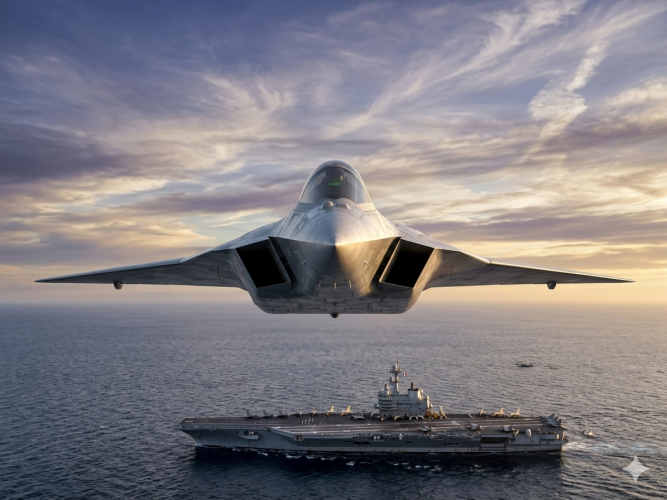
*edit This discussion was related to the two renderings I posted. Members were discussing putting Rafale systems into a stealthy frame so I posted two pictures of what a stealthy Rafale could look like.
Last edited:
insidersource
ACCESS: Top Secret
- Joined
- 24 March 2025
- Messages
- 521
- Reaction score
- 745
Renderings and discussion for a theoretical Super Rafale that reuses all of the Rafale F5 key systems is now here.
https://www.secretprojects.co.uk/threads/super-rafale.51837/
https://www.secretprojects.co.uk/threads/super-rafale.51837/
Ainen
I really should change my personal text
- Joined
- 25 August 2011
- Messages
- 2,868
- Reaction score
- 4,976
Or make it 4 engines and call it Rafale 4, i don't know.
Interesting data point is that SCAF/FCAS was/is meant to carry a missile too big for Rafale.
Implies likely central external station and, as such, side bays?
Interesting data point is that SCAF/FCAS was/is meant to carry a missile too big for Rafale.
Implies likely central external station and, as such, side bays?
insidersource
ACCESS: Top Secret
- Joined
- 24 March 2025
- Messages
- 521
- Reaction score
- 745
Unless it has a lift fan like the F-35B to reduce the landing speed then it has no chance of landing on the carrier.View attachment 815256
I asked ai to render a front view of Dassault's tailless NGF concept. Scary stuff.
The F-47 has proven that a stealth aircraft can have canards. Maybe Europe's lack of stealth knowledge means they are still believing that canards aren't stealthy. Those were just lies over the last 15 years to discredit the J-20.
France will most likely stick to their trademark delta canard layout.
FighterJock
ACCESS: Above Top Secret
- Joined
- 29 October 2007
- Messages
- 7,256
- Reaction score
- 8,571
Same thoughts here too insidersource about the canard delta layout for the SCAF it would make sense for Dassault to stick with what it knows best.

kqcke for you
PUMA PUMA PUMA
- Joined
- 3 November 2022
- Messages
- 1,867
- Reaction score
- 2,705
It never couldn't be Stealthy. Its just an extra hassle to make them stealthy just like any extra surface on your stealth plane
insidersource
ACCESS: Top Secret
- Joined
- 24 March 2025
- Messages
- 521
- Reaction score
- 745
Hundreds of forum posts say otherwise. I love using this forums search function. Pour yourself a drink and put "Canard stealth" into the search box. Enjoy.It never couldn't be Stealthy. Its just an extra hassle to make them stealthy just like any extra surface on your stealth plane
Isn't the UCAS carrier compatible? One might see the drone program being a de-risking exercise before the next big thing.Unless it has a lift fan like the F-35B to reduce the landing speed then it has no chance of landing on the carrier.
The F-47 has proven that a stealth aircraft can have canards. Maybe Europe's lack of stealth knowledge means they are still believing that canards aren't stealthy. Those were just lies over the last 15 years to discredit the J-20.
France will most likely stick to their trademark delta canard layout.

pedrospe
ACCESS: Secret
- Joined
- 9 February 2010
- Messages
- 413
- Reaction score
- 272
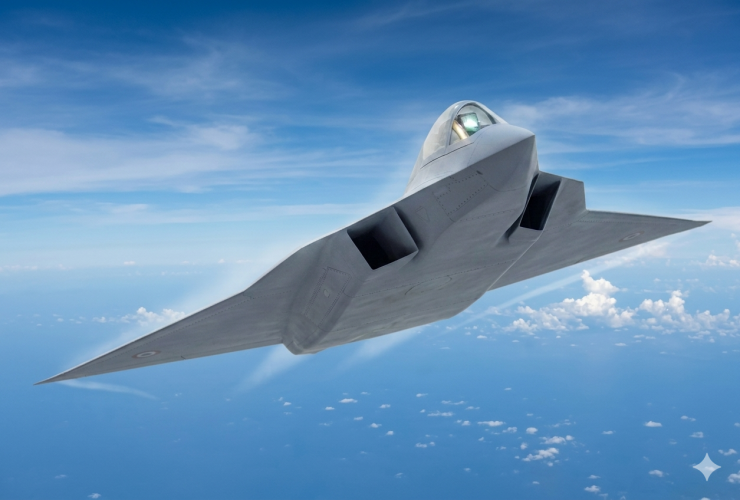
Looks really good, which ai program did you used?View attachment 815256
I asked ai to render a front view of Dassault's tailless NGF concept. Scary stuff.
Google's nano banana 2. It helps quite a lot that you can upload images in the prompt. Another one:Looks really good, which ai program did you used?
Attachments
Scott Kenny
ACCESS: USAP
- Joined
- 15 May 2023
- Messages
- 19,674
- Reaction score
- 28,153
I don't think France was ever aiming for a J-36 battlecruiser.On a broader level, fall of FCAS probably means result is going to be something more sensible and European, rather than some H class battleship.
Remember the weight limits of the carrier are ~90-100klbs MTOW and 55klbs landing.
We've run a bunch of numbers for FAXX that say ~96klbs in beast mode, ~80klbs stealthy, and about 40klbs empty.
Well, development costs of a joint/international program go up about at the square root of the number of parties involved.From my perspective, the first question should focus on how much extra will France have to spend to develop an indigenous next generation fighter,
So SCAF development costs were likely going to be 1.7x that of France doing it alone.
But this does mean that instead of paying ~17/30 (0.5666...) of the 1.7x larger development costs (or whatever the weighted split ended up being), they're paying the full solo costs.
Let's use the upper end of HK's range, 25bn development costs. 25 * 1.7 * 0.57 = 24.225bn.
Well, crud, that's a much lower cost increase than I expected!
Let's see what happens with weighted-average cost split.
France: replacing 225 Rafales
Germany: replacing ~200ish Typhoons
Spain: replacing ~70-82 Hornets and ~70 Typhoons, total of ~150 airframes
~575 total production
Assuming each country would pay for a proportion of the development costs equal to their % of the number of airframes to be procured, this suggests that France would have paid 25 * 1.7 * (225 / 575) = 16.63bn for their share of the development of SCAF.
That would be an increase of 8.37bn to go it alone, assuming the upper end of 25bn development costs.
Lower end of range is 13.3bn for Frances % of SCAF versus 20bn going it alone, an increase of 6.7bn.
Either way you're looking at nearly a 50% increase in costs.
You're forgetting point 3.And that is before we consider 2 very important factors:
- Clearly there is a very strong appetite on a global scale for a modern fighter jet that is not from neither of the major superpowers (USA, Russia and China). France is well positioned to leverage their historic export success and the recent success of the Rafale and it would be unwise to throw that away.
- Even developing a domestic solution ends up costing let's 20-30 billions more than buying from the US, so what? The entire program cost will be spent in France towards creating high tech R&D and manufacturing jobs in a strategic industry, whereas if they buy US or another foreign solution they will be subsidizing other nations' industries and technology.
3. France absolutely requires a carrier capable aircraft. At the moment the choices for manufacturers of carrier capable aircraft are: the US, China, Russia (historically), France (historically), and eventually India (maybe?). Either France builds their own bird or they permanently align themselves with one of the other powers.

BonPlan2
ACCESS: Top Secret
- Joined
- 5 June 2025
- Messages
- 581
- Reaction score
- 744
From the beginning my bet was a brand new frame (stealthy, with internal bays, with more range than euro canards) but with a direct Rafale derivative weapon system.Not much to post yet, but i'm creating a thread for the french 6th generation program.
The Minister of the Armed Forces just annonced at the senate a target in service date of 2040.
Why?
Because the Rafale weapon system road map is strong and effective.
Because it give a fighter immediatly mature, with complete air to air, air to ground and air to sea capacities.
Because it give to actual or very next legacy Rafale purchasers the assurance it will evolve beyond F6 or F7 block.
Because Rafale F5 will pave the way to gen 5,99 attributes (communication node for exemple).
BonPlan2
ACCESS: Top Secret
- Joined
- 5 June 2025
- Messages
- 581
- Reaction score
- 744
ASN4G will be carried by Rafale. Entry date is 2035, far too early for a new jet.Interesting data point is that SCAF/FCAS was/is meant to carry a missile too big for Rafale.
Similar threads
-

-
6th generation fighter with Levcons?
- Started by kcran567
- Replies: 2
-

-
USAF/USN 6th Gen Fighters - F/A-XX, F-X, NGAD, PCA, ASFS News & Analysis [2008- 2025]
- Started by Matej
- Replies: 10K
-
